Technical Knowledge
Take precautionary measures and say goodbye to the troubles of operating the laser leveler in rainy season!
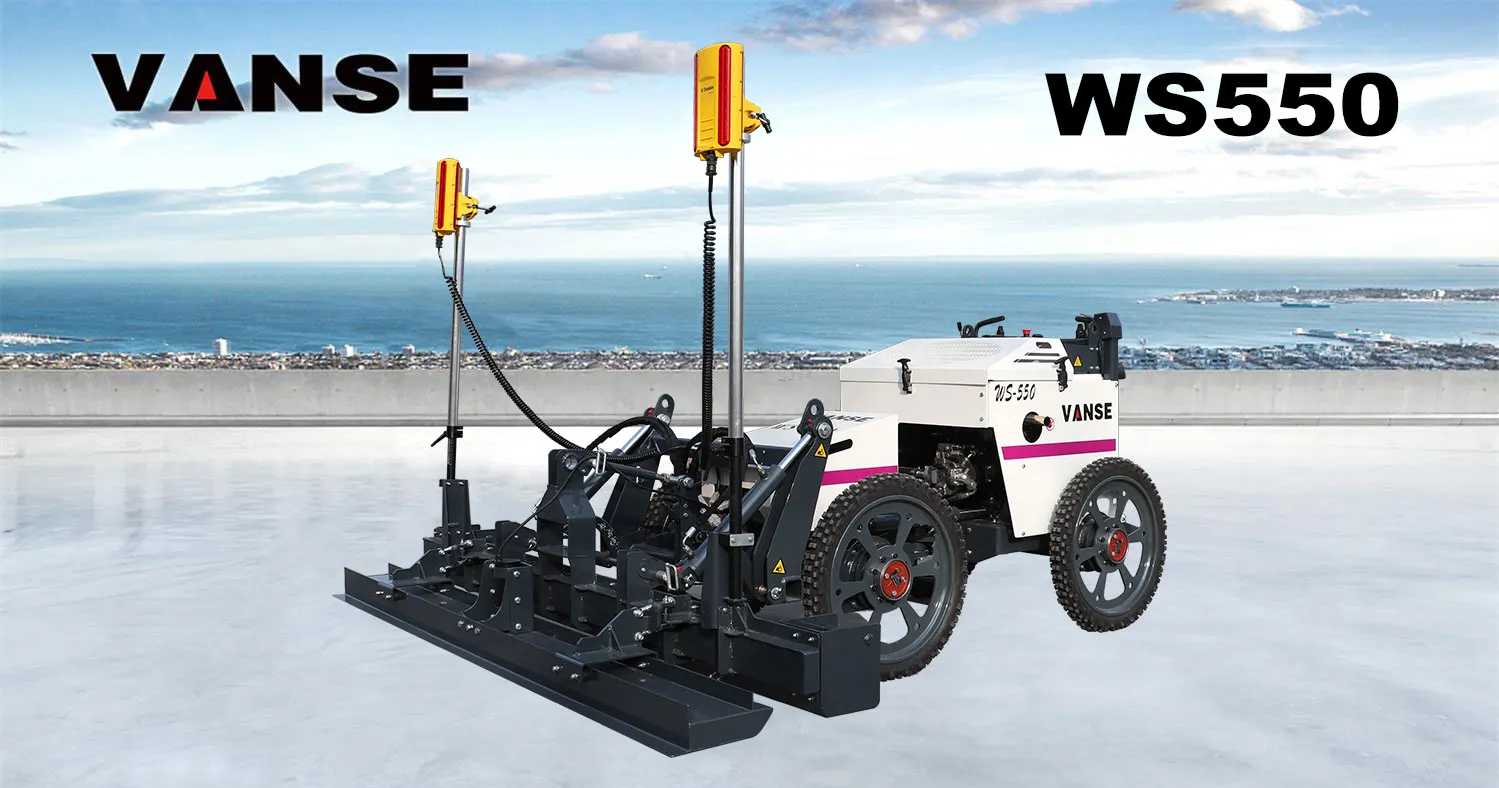
| Any road construction machinery will inevitably be affected by external environmental factors, and this is no exception for laser levelers, especially in the hot and rainy summer. Once the laser leveler is exposed to too much rain, it is very likely to cause a series of problems such as rust on the leveler body and damage to parts. In order to avoid unnecessary maintenance costs and extend the service life of the leveler, it is particularly necessary to do a good job of laser leveling maintenance in the rainy season. Below, our company will combine its own years of work experience to make several suggestions on how to do a good job of protecting the leveler in the rainy season. |
| First, before parking the laser leveler, you should use your naked eyes to observe and judge whether the surrounding geographical environment is safe, stay away from rivers or hillsides that may cause landslides. Under a big tree is not a good parking place. It is easy to be struck by lightning in thunderstorms, and if a big tree is blown down on the laser leveler in windy weather, it will also cause great losses. Choose a place with a solid road surface to park. It is good to be able to park on cement or asphalt, but our leveling machine usually rarely has cement roads. Most of them are operated in the field. In this case, you should choose to park on a stable ground for a long time, and try to avoid parking on the fill ground. |
| Second, if necessary, you need to install anti-skid chains on the laser leveler to increase the safety factor. The installation of anti-skid chains should be carried out in advance. Do not start installing them in an emergency environment. Such hasty installation is unsafe and troublesome. If it is a special case, safety warning signs must be placed before and after the laser leveler. Do not install anti-skid chains when the tire pressure is insufficient. Also pay attention to the different sizes of anti-skid chains. Choose anti-skid chains that match the size of the wheel hub and wheel width. After installing the anti-skid chain, pay attention to the driving speed of the roller should not be too fast, and also pay attention to avoid sudden acceleration or deceleration to cause damage to the anti-skid chain. |
| Third, if conditions permit, you can park in the garage, and try to avoid parking in an overly humid environment and choose indoor storage. The rust prevention of laser leveling machines is very important. If the machine is parked for a long time, it should be started and driven once a month to charge the battery. After the machine is stored for a long time, the grease on the piston rod should be wiped dry and all parts should be filled with grease. When the machine is parked, the working device should be kept dry and clean, and water should not be put in to avoid rust and make the machine inconvenient to operate. |
| In fact, in addition to the above aspects, there are many details that need to be paid attention to during the construction of the laser leveling machine in the rainy season. This site will continue to pay attention to, organize and share related content. Interested users can directly visit the official website of this site to inquire and obtain it. I believe it will be helpful for your future use. |
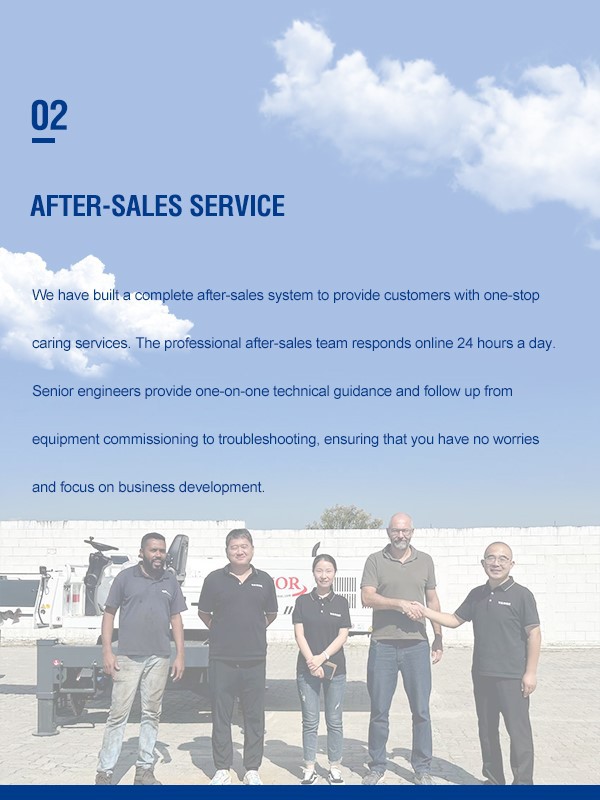
Thanks to All the Friends Who Support and Trust Shandong Vanse Machinery Technology Co., Ltd.
If you want to know more about Shandong Vanse Machinery Technology Co., Ltd. or have any questions, please feel free to contact us:
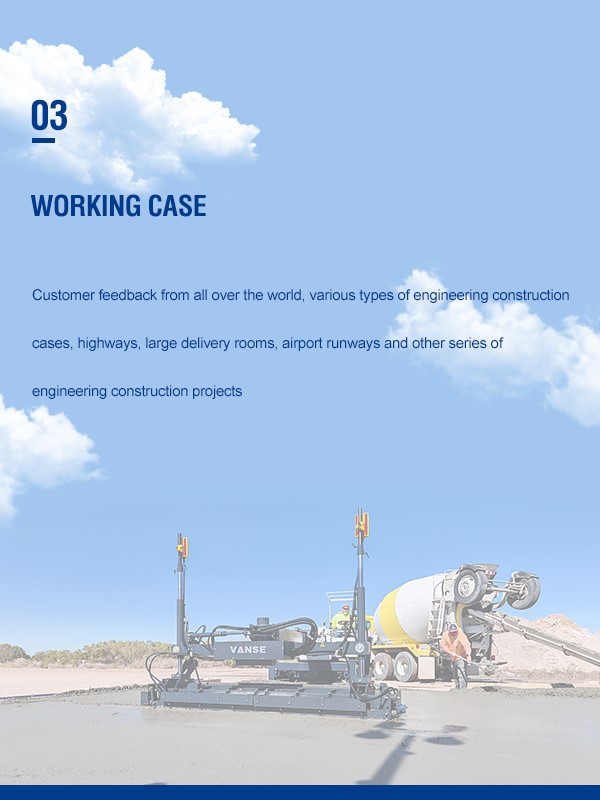
Our Factory
Shandong Vanse Machinery Technology Co., Ltd.
Share this article

About the Author: Shandong Vanse Machinery Technology Co., Ltd.
Shandong Vanse Machinery Technology Co., Ltd. is a high-tech manufacturer specializing in concrete construction machinery, including laser screeds and related equipment. The company integrates R&D, production, and global sales, with products exported to over 60 countries and widely used in infrastructure projects worldwide.
Previous Post
Next Post
Related Articles
You Might Also Like
Important considerations for long-term storage of power trowel machines
Long-term storage of power trowel machines requires thorough preparation to prevent corrosion, fluid degradation, and damage to mechanical parts. These steps are crucial to ensure the machine starts up reliably and performs optimally when you need it next. Here are the most important considerations, broken down by category: Thorough cleaning is the foundational step, as concrete and dirt residue can trap moisture and accelerate corrosion. Remove All Concrete/Debris: Use a scraper, wire brush, and/or a pressure washer to completely remove all hardened concrete, mortar, and dirt from the blades, chassis, guard rings, and around the engine/gearbox. Crucial Note: Ensure the machine is completely dry after washing to prevent immediate rust formation. Engine/Motor Cleaning: Use low-pressure air or a brush to clear dust and debris from the heat sink, cylinder block, and any cooling fins. Clean any oil stains or grease from the exterior. Inspect and Repair: Before storing, check for and replace any worn-out or damaged parts like drive belts, clutch plates, spark plugs, or air filters Fluids can degrade and cause serious damage if left in the machine for an extended period. Drain Completely: Modern gasoline, especially with ethanol, can absorb water and corrode the fuel lines and carburetor. Completely drain all fuel from the tank. Run Until Stop: Set the fuel switch to "Off," start the engine, and let it run until it stops naturally. This clears residual fuel from the carburetor/fuel lines. Change Oil: Drain the old engine oil (ideally when the engine is warm) and replace it with new oil. New oil contains better anti-corrosion properties and lacks acidic contaminants from use. Internal Rust Prevention: For extreme long-term storage, remove the spark plug, drip a small amount of new engine oil (about one tablespoon) into the cylinder, and manually pull the starter rope a few times to coat the cylinder wall. Reinstall the spark plug. Hydraulic Systems (Ride-On Trowels): Check the hydraulic fluid quality and level. If replacing the fluid, circulate it briefly. Ensure all piston rods of the hydraulic cylinders are fully retracted to protect the chrome surface from exposure and rust. Protecting exposed metal and moving components is vital to prevent seizing. Trowel Blades: Remove the blades, clean them, and apply a layer of heavy grease or a dedicated anti-rust oil (like WD-40 or a specialized coating) to all metal surfaces. Consider wrapping them in oiled paper and storing them separately. Exposed Metal Surfaces: Spray a thin layer of anti-rust agent or a rust-preventative spray on all exposed metal surfaces, including the chassis, guard rings, and any areas where paint has been scratched off. Lubrication: Apply grease or oil to all designated lubrication points, including: Gearbox gears (if applicable) Clutch forks Height and tilt adjustment screws and their threaded parts If the machine has an electric start or motor, special attention is needed. Air Filter: Remove the air filter element for cleaning or replacement. Seal the air inlet with a clean cloth or plug to prevent dust and pests from entering the engine. Disassemble and Charge: Disconnect and remove the battery. Fully charge it. Store Separately: Store the battery in a cool, dry place off the concrete floor. Maintenance Charge: Recharge the battery periodically (e.g., once every 1-2 months) to maintain its charge and lifespan, or use a "smart" maintenance charger. The physical location where the machine is stored is the final defense against damage. Indoor and Dry: Store the power trowel indoors in a clean, dry, and well-ventilated area. Avoid storage outdoors or in areas with high humidity or extreme temperature fluctuations, which can cause condensation and rust. Off the Ground: Place the machine on a flat wooden pad, pallet, or trolley to lift it off the concrete floor, which can draw moisture. Protection: Cover the machine with a breathable, waterproof tarp or a specialized equipment cover. Avoid using plastic sheeting, as it can trap moisture and encourage rust or mildew. Pest Control: Ensure the storage area is free of rodents, as they can chew on wiring, hoses, and filters. Would you like the specific steps for winterizing the engine, as that is the most common form of long-term storage? Note: The parameters provided in this document are for reference only and are not mandatory. Due to differences in technical characteristics between different brands and models of laser levelers, please consult the manufacturer for a suitable solution before actual operation. This reference document assumes no responsibility for any issues arising from failure to follow the manufacturer's instructions.Application of Spreaders in Anti-corrosion Concrete Flooring (e.g., Acid-resistant, Oil-resistant)
In the construction of anti-corrosion concrete floors (e.g., those resistant to acids, oils, and chemical corrosion), **spreaders** play a crucial role in transforming the process from "manual, extensive work" to "standardized, precise construction." Unlike ordinary wear-resistant floors, anti-corrosion floors have stringent requirements for the uniformity and density of material distribution. The following is an analysis of the specific applications of spreaders in this field: When constructing anti-corrosion concrete floors (typically involving hardeners, aggregates, or special resin mortars), spreaders primarily address the following three major challenges: Precise Quantity Control: Anti-corrosion materials (such as quartz sand, corundum, or alloy aggregates) are generally more expensive than ordinary materials. Spreaders can precisely control the amount spread per square meter within an error range (e.g., 5 kg/m²), avoiding localized areas that are too thin (easily corroded) or too thick (easily cracked) due to manual spreading. Physical Density: Spreaders are typically used in conjunction with laser leveling machines to uniformly spread the material over a large area during the initial setting phase of the concrete. This uniformity ensures a tight bond between the anti-corrosion surface layer and the base concrete, reducing porosity and thus improving the floor's impermeability-a key factor in anti-corrosion. Synchronized Progress: The construction window for anti-corrosion flooring is extremely short. The high efficiency of spreaders ensures that, during large-area construction, the material is pressed into the surface in the optimal hydration state of the concrete. This type of flooring requires extremely high sealing properties. Application: Use a spreader to evenly distribute non-metallic hardened aggregate. Effect: The resulting dense layer effectively prevents engine oil and cutting fluid from seeping into the concrete through capillaries, avoiding a loose or crumbling base layer. Although concrete itself is not resistant to strong acids, modern processes often involve applying a vinyl ester mortar or epoxy anti-corrosion mortar to the surface. Application: When laying anti-corrosion aggregate layers over large areas, the spreader ensures a consistent distribution density of the corrosion-resistant filler. Effect: Eliminates "weak points and gaps" left by manual operation, preventing acidic media from "drilling" through sparsely distributed areas and corroding the reinforcing steel. Links Manual material application Automatic spreading machine application Uniformity Relies on experience, easily resulting in uneven application and weak areas. Uniform height, fully automated control. Denseness Secondary leveling is difficult. Instant bonding with the substrate after application, minimizing air bubbles. Corrosion resistance life Due to localized weaknesses, premature pitting corrosion is likely. Uniform coating thickness, extending overall lifespan by over 30%. Material loss Loss rate is approximately 10%-15%. Loss rate controlled below 3%. Timing: In anti-corrosion flooring construction, spreading the aggregate too early will cause it to settle to the bottom, negating its anti-corrosion protective effect; spreading it too late will prevent it from forming a cohesive whole with the concrete, leading to peeling later. Overlapping Area Treatment: The spreader's path should have slight overlap to ensure that the anti-corrosion performance at the joints is not compromised. Multiple Process Coordination: After spreading, a power trowel must be used for multiple finishing processes to further improve the surface layer's wear resistance and impermeability through mechanical pressure. When pursuing high-performance corrosion protection, the material spreader is not only a tool for improving efficiency but also a physical line of defense for quality control. Through its uniform physical structure, it provides the most stable carrier for chemical corrosion-resistant materials. Are you planning a specific factory flooring project? If you have specific corrosion protection requirements (such as resistance to 5% sulfuric acid or deep grease penetration), I can provide you with more targeted material proportioning suggestions or construction plan guidance. Note: The parameters provided in this document are for reference only and are not mandatory. Due to differences in technical characteristics between different brands and models of laser levelers, please consult the manufacturer for a suitable solution before actual operation. This reference document assumes no responsibility for any issues arising from failure to follow the manufacturer's instructions.Regarding environmental awareness education, how can the environmental awareness of workers using a concrete laser leveling machine be raised?
To enhance environmental awareness among concrete laser leveling operators during environmental awareness education, it's necessary to consider the specific construction scenarios, the cognitive patterns of operators, and the operational characteristics of the equipment. A comprehensive education program encompassing "cognition – skills – habits – supervision" should be designed to ensure that environmental protection concepts are translated into concrete construction behaviors. The following are possible optimization directions: First, identify the core issues directly related to environmental protection in concrete laser leveling construction to ensure that educational content is relevant and targeted, avoiding generalities. Three key pain points should be addressed: easily seep into the soil and contaminate groundwater); exhaust emissions from the equipment's engine (including NOx and particulate matter); and the indiscriminate discharge of wastewater from post-operation equipment cleaning (which contains cement residue and can cause soil compaction). Consumables and resource waste include: improper operation leading to misaligned concrete levels, resulting in rework and waste of raw materials; and the careless disposal of waste oil during equipment oil and hydraulic oil changes (which can contaminate soil). Environmental impacts include: noise from equipment operation (especially disturbing in residential areas) and dust from operation (dust spread due to failure to cover or water the surface). The first step in education: Use "case studies + data" to help construction workers intuitively understand the hazards. For example, show real-life cases such as "A project was fined 50,000 yuan by the environmental protection department for excessive wastewater discharge from a laser leveling machine" and "Waste oil seeping into the soil caused the withering of surrounding vegetation." Or calculate, "If a laser leveling machine reduces concrete rework by 10% per operation, it can save approximately 20 tons of cement per year (equivalent to reducing CO₂ emissions by 18 tons)." Use concrete consequences and benefits to build environmental awareness. Differentiated educational content is designed based on the differences in responsibilities of different positions (operators, auxiliary workers, and on-site managers) to avoid a "one-size-fits-all" approach and ensure that the content is directly related to the work of the personnel. Positions Core Educational Content Educational Objectives Laser leveling Operator 1. Environmentally Friendly Equipment Operation: such as precisely controlling concrete paving thickness (to reduce rework and waste) and promptly shutting down the engine after work (to reduce idling exhaust emissions); Master environmental protection skills in all aspects of "operation – maintenance – emergency" 2. Environmentally Friendly Equipment Maintenance: such as standardized waste oil recovery (designated containers and transfer to qualified personnel) and recycling equipment cleaning wastewater (e.g., connecting to a sedimentation tank); 3. Emergency Response: such as quickly sealing slurry leaks (covering with impermeable cloth) and absorbing oil spills (using absorbent cotton); Field Assistant 1. Consumables Management: such as recycling concrete residue (to avoid careless disposal) and dustproof covering (covering unhardened surfaces with geotextiles promptly after work); Clarify environmental protection responsibilities in auxiliary work and reduce hidden pollution 2. Waste Separation: such as separating equipment packaging materials (plastic, cardboard) from construction waste. Field Manager 1. Implementation of Environmental Protection Systems: such as establishing environmental standards for equipment operations (e.g., exhaust emission standards and wastewater discharge locations); Possess overall management capabilities to control environmental risks from the source 2. Risk Assessment: such as proactively identifying sensitive groundwater areas in the work area to prevent slurry infiltration. Construction workers tend to prefer hands-on learning and are averse to purely theoretical indoctrination. Therefore, environmental education should be more accessible through scenarios, practical exercises, and engaging content. ① Scenario-Based Practical Training: "Learning by Doing" on the construction site Environmental Protection Operation Demonstration Post: Experienced operators are selected to demonstrate environmentally friendly practices during laser leveling operations, such as "How to adjust equipment parameters to reduce concrete waste" and "How to properly clean equipment after operation (connecting a wastewater bucket to prevent turbulence)." Other personnel observe and practice on-site, while administrators simultaneously explain the environmental significance of each action (e.g., "Recycling one bucket of wastewater can reduce soil pollution by one square meter"). Environmental Protection Emergency Drill: Simulating scenarios such as "laser leveling hydraulic oil leak" and "concrete slurry flowing into green belts," construction personnel practice on-site techniques such as "contain oil stains with absorbent cotton" and "intercept slurry with sandbags and recycle it." They are evaluated on "handling speed and environmental effectiveness" to strengthen their emergency environmental protection skills. ② Visual Promotion: Making Environmental Protection Knowledge Visible and Remembrance-Friendly On-site "Environmental Warning Walls": Near the laser leveling machine operating area, use images and brief text to illustrate "wrong versus correct operation"-for example, the image on the left shows "Waste oil spilled on the ground withers vegetation" and the image on the right shows "Waste oil poured into a dedicated bucket and handed over to a recycling truck." Below, it's labeled "1 liter of waste oil = 1,000 liters of water contaminated." Equipment "Environmental Reminder Stickers": Stickers are placed on the laser leveling machine's operating panel, fuel tank cap, and other locations, such as "Check exhaust filter before starting (operate only if it meets standards)" and "Pour waste oil into the red bucket after oil change" to constantly remind operators to pay attention to environmental details. ③ Interactive Incentives: Reinforce Environmental Habits with Positive Feedback Environmental Points System: Create an environmental points account for construction workers-for example, "5 points for recycling a barrel of waste oil in a proper manner," "10 points for no concrete rework," and "3 points for notifying others of environmental violations." Points can be redeemed for daily necessities (such as laundry detergent and hard hats) or priority access to skills training, using incentives to drive proactive environmental protection. Environmental Complaints: Regularly organize gatherings for construction workers to share environmental issues they've encountered (e.g., "There was no place to drain wastewater during previous operations, so it just flowed randomly") and discuss solutions (e.g., "Requesting a temporary sedimentation tank in the work area"). This helps workers move from passive acceptance to active participation in environmental improvements. Education must be accompanied by supervision to prevent the "learned and forgotten" approach. Through a combination of "institutional constraints and positive guidance," environmental protection can become a conscious behavior of construction workers. Clarify environmental responsibility lists: Environmental requirements for laser leveling operations are included in job responsibilities, such as "Operators must ensure the concrete rework rate is ≤3% for each operation" and "Managers must inspect equipment exhaust emissions daily." This assigns responsibilities to specific individuals to prevent "no one in charge." Daily Inspections + Regular Assessments: During daily inspections, on-site managers will focus on environmental aspects of laser leveling operations (e.g., "Is there any wastewater discharge?" and "Is waste oil recycled?") and record environmental compliance. Environmental performance will be included in monthly performance appraisals. Those who maintain compliance for three consecutive months will be awarded the title of "Environmental Model" and receive rewards. Those who violate regulations will receive retraining and a deadline for rectification. Introduce "Environmental Supervisors": One or two "Environmental Supervisors" (optional) will be selected from construction personnel (part-time positions available) to regularly remind colleagues to adhere to proper operation procedures and collect feedback on environmental issues to management, fostering a culture of mutual monitoring and shared participation. Leveraging external expertise, we can help construction workers understand that environmental protection isn't a burden, but a long-term benefit, thereby increasing their willingness to proactively practice environmental protection. Invite environmental protection officials to provide on-site presentations: Environmental enforcement officers will use local case studies (e.g., "A construction site was penalized for pollution caused by a laser leveling") to explain environmental regulations (e.g., construction-related provisions in the Air Pollution Prevention and Control Law and the Soil Pollution Prevention and Control Law) and clarify the consequences of violations (fines, work suspension, and impact on corporate credit). Introduce green construction case studies: Invite project teams implementing "environmentally friendly construction" to share their experiences. For example, "A project used precise laser levelinging and waste material recycling to save 30 tons of concrete, reduce costs by 20,000 yuan, and even earn the local "Green Construction Site" designation." This allows construction workers to see that "environmental protection equals cost reduction and honor," dispelling the misconception that "environmental protection increases costs." Through the above methods, environmental awareness can be transformed from a "slogan" into the "daily operation" of concrete laser leveling machine construction workers, which not only reduces the impact of construction on the environment, but also reduces the environmental risks of the project, and achieves a dual improvement in "project quality + environmental benefits". Note: The parameters provided in this document are for reference only and are not mandatory. Due to differences in technical characteristics between different brands and models of laser levelers, please consult the manufacturer for a suitable solution before actual operation. This reference document assumes no responsibility for any issues arising from failure to follow the manufacturer's instructions.