Technical Knowledge
Don’t be impulsive when buying a laser leveler! First check whether the vehicle meets the design requirements
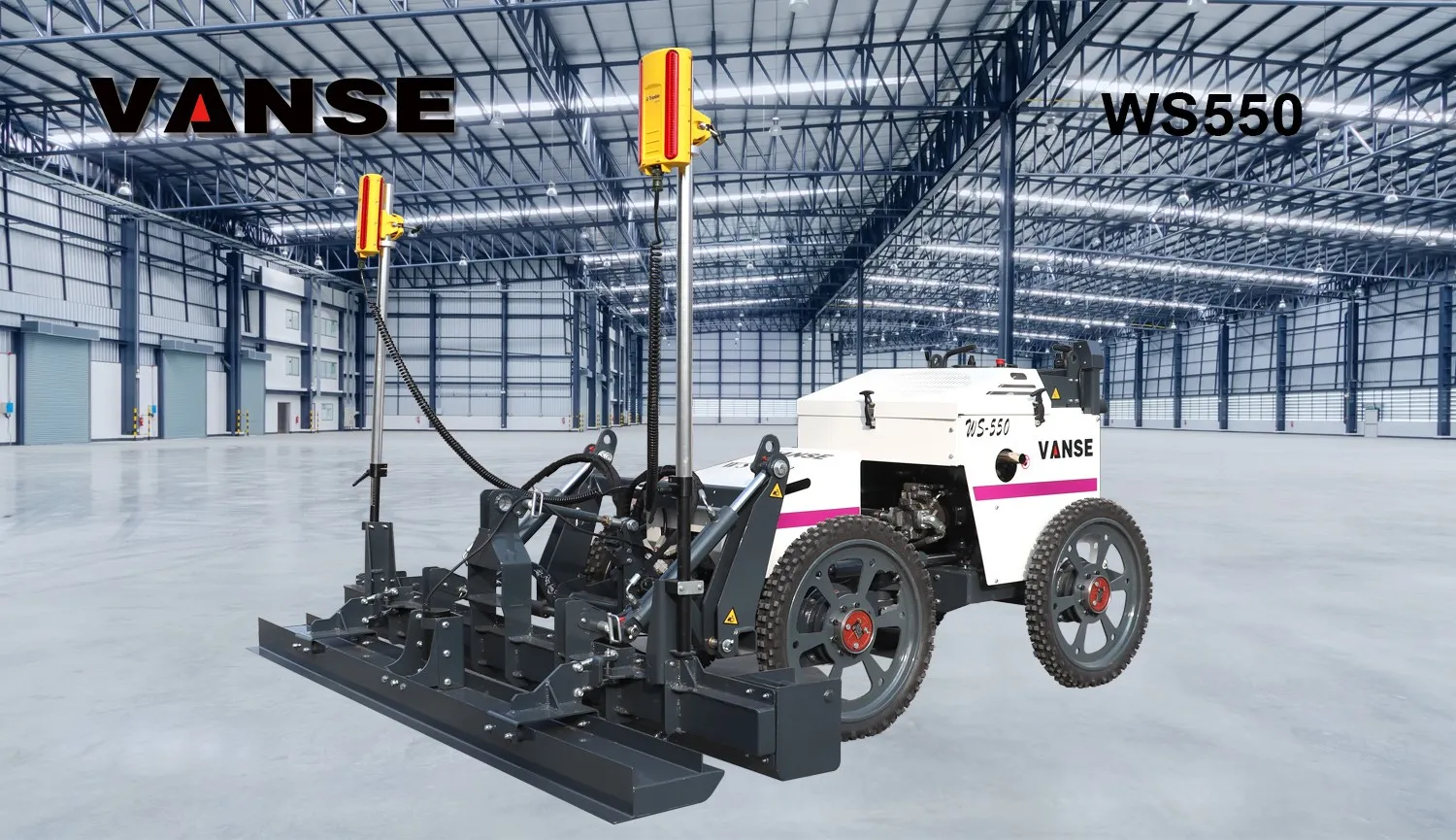
In recent years, with the continuous improvement of modern industry and commerce's requirements for floor decoration, laser leveling machines have been used more and more widely, and have been widely recognized and favored by customers with their significant technical advantages. However, when actually purchasing a laser leveling machine, in addition to the price, its use effect and the quality of accessories also need to be fully considered, such as the leveling machine's car. So, what requirements should the laser leveling machine produced by regular manufacturers meet in the design of the car? Specifically, there are the following points.
First of all, it is necessary to look at the structure and material of the concrete laser leveling machine car. The car structure and the body material directly affect the body strength. At present, there are some models on the market, and the top cover and other parts are still made of fiberglass materials, which have weak anti-collision ability. At present, there are excavator cars with all-steel frame structure and 1mm thick high-strength steel plate on the market. In addition, equipped with high-horsepower engine compression braking technology, it can effectively reduce the wear of brake pads and tires, prevent the brake system from overheating and causing brake failure, and brake safety and efficiency.
The second is the appearance color. This color should not be very dazzling and should give the operator of the laser leveling machine a visually comfortable feeling. We know that driving for a long time will make you very tired, so we must pay attention to the choice of the color of the car.
After looking at the appearance, we have to look at the inside. The so-called inside is the comfort of the laser leveling machine car. Among them, the seat is more important. One is that the driver sits for a long time, and the other is a kind of vision. The seat must be comfortable. Driving for a long time is very hard. It is very important to have a comfortable seat, which can relieve the driver's driving fatigue. And the visual sight is also very reasonable. Another thing is safety. Needless to say, everyone knows the importance of safety, especially in the concrete laser leveling machine. The set of equipment used by the driver must ensure safety. This requires us to pay special attention to these points when choosing a high-quality car.
Of course, in order to better extend the service life of the laser leveling machine car, in addition to strengthening the design quality, regular maintenance should be carried out during actual use. For example, pay attention to avoid sharp objects such as key chains and iron buttons on clothes from touching the seat to prevent scratches on the leather surface. If you want to clean it, first wipe off the dust with a semi-dry rag to keep the seat dry and clean. If it is a leather seat, you can use a transparent soap with good decontamination and low corrosiveness: first soak a clean soft towel in warm water, then evenly apply the soap on the towel, gently wipe the seat, and ventilate to dry; ensure that the leather surface is clean, fluffy, and fresh as before.
In order to facilitate everyone to better understand and master, the basic design requirements of the laser leveling machine are briefly analyzed and discussed here. In order to produce leveling machine equipment that better meets customer needs and has higher work efficiency, it is also hoped that relevant R&D companies must strengthen the design of various parts of the leveling machine and improve the technology in a timely manner to better serve the construction.
Thanks to All the Friends Who Support and Trust Shandong Vanse Machinery Technology Co., Ltd.
If you want to know more about Shandong Vanse Machinery Technology Co., Ltd. or have any questions, please feel free to contact us:
Our Factory
Shandong Vanse Machinery Technology Co., Ltd.








Share this article

About the Author: Shandong Vanse Machinery Technology Co., Ltd.
Shandong Vanse Machinery Technology Co., Ltd. is a high-tech manufacturer specializing in concrete construction machinery, including laser screeds and related equipment. The company integrates R&D, production, and global sales, with products exported to over 60 countries and widely used in infrastructure projects worldwide.
Previous Post
Next Post
Related Articles
You Might Also Like
Compaction Degree of Sub-base in Superflat Floors and Its Impact on Final Flatness
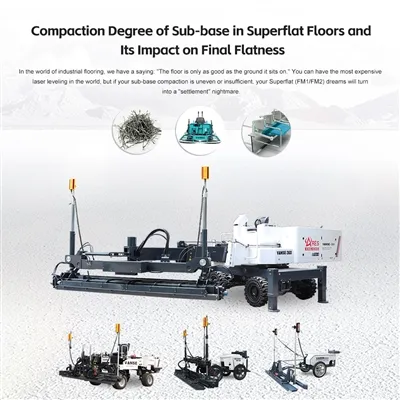
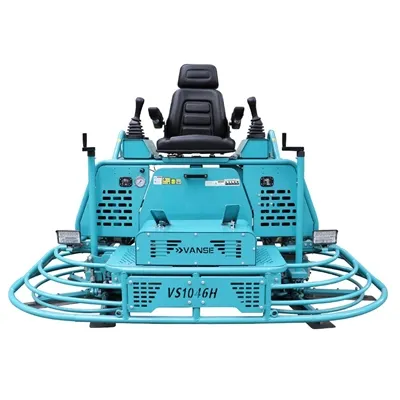
In the world of industrial flooring, we have a saying: "The floor is only as good as the ground it sits on." You can have the most expensive laser leveling in the world, but if your sub-base compaction is uneven or insufficient, your Superflat (FM1/FM2) dreams will turn into a "settlement" nightmare. If you're a contractor or facility owner, understanding the link between sub-base compaction degree and final flatness (FF/FL numbers) is critical. Here's a professional breakdown of how to get the foundation right, featuring the technical workflow from Vanse Machinery. Think of the sub-base as an anvil. When you use a Power Trowel to densify the concrete, the concrete is being compressed between the blades and the sub-base. If the sub-base has "soft spots" (low compaction degree), the slab will deflect under the weight of the machines and the concrete itself. The Impact: Even a 2mm settlement in the sub-base during the pour can tank your FL (Levelness) scores. This is why a compaction degree of at least 95% to 98% Proctor density is usually the standard for high-spec warehouses. A common mistake is compacting the sub-base perfectly, then driving heavy concrete trucks over it, creating deep ruts that ruin the uniformity. The Vanse Solution: Instead of heavy trucks, pro contractors use a Vanse Concrete Distributor or the Vanse Mini Dumper. These machines are designed to be agile. The Vanse Mini Dumper (available in electric or gasoline) allows you to move concrete to the exact spot without the massive point-load of a transit mixer, preserving the integrity of your compacted sub-grade. Even with good compaction, the weight of a leveling machine can sometimes cause micro-movements in the sub-base. The Vanse Solution: This is where the Vanse YZ30-4E Telescopic Boomed Laser leveling is a game-changer. Unlike traditional "drive-in" leveling, the telescopic boom allows the leveling head to reach out 6 meters while the machine stays stationary. This minimizes the "footprint" on the compacted sub-base, ensuring that the laser-accurate strike-off is based on a stable reference point, not a moving one. If the sub-base isn't uniform, the concrete will cure at different rates, leading to "curling" at the joints-the #1 enemy of long-term flatness. Use a Vanse Automatic Topping Spreader to apply hardener uniformly. This ensures the "skin" of the concrete is as tough as the base. Follow up with a Vanse VS1046H Ride-on Power Trowel. The high-torque 35HP BRIGGS & STRATTON engine provides the force needed to "burnish" the floor. If your sub-base is solid, this troweling process creates a rock-hard, Superflat surface that won't shift over time. Finally, protect those joints with a precision Vanse Concrete Cutting Machine (Floor Saw) to ensure stress is relieved exactly where it should be. Factor Poor Compaction Result Vanse-Enabled Professional Result FF/FL Scores Fails due to micro-settlement. Hits FM1/FM2 consistently. Joint Health Spalling and curling. Clean, stable transitions with Floor Saws. Labor Cost High (due to rework/grinding). Low (Get it right the first time). Equipment Performance Machines "sink" or vibrate poorly. Maximum precision with Telescopic leveling. You can't cheat the physics of a Superflat floor. Hitting ±1mm over 3 meters requires a solid sub-base and the world's most precise machinery. By combining the placement agility of the Mini Dumper with the telescopic reach of the Vanse Laser leveling (www.vansemac.com), you ensure that your floor stays flat from the day of the pour until decades of forklift traffic later. Don't build on a weak foundation. Explore the full Vanse fleet today and see how our technology supports your highest-spec projects. Note: The parameters provided in this document are for reference only and are not mandatory. Due to differences in technical characteristics between different brands and models of laser levelers, please consult the manufacturer for a suitable solution before actual operation. This reference document assumes no responsibility for any issues arising from failure to follow the manufacturer's instructions.What large outdoor scenes are ride-on concrete power trowels suitable for?
– Large squares have a large ground area and are usually paved with concrete or stone. For example, city center squares, commercial squares, etc., may range from several thousand square meters to tens of thousands of square meters. The thickness of the concrete square floor is generally around 10-20 cm, while the stone floor has different thicknesses and specifications. – The ground flatness requirements are high, and it is necessary to ensure the comfort of pedestrians and the stable placement of activity facilities (such as sculptures, fountains, etc.). At the same time, the square floor may need a certain drainage slope to prevent water accumulation. With its high power and large trowel diameter, the driving trowel can quickly and effectively trowel large square floors, and the slope and glossiness of the ground can be controlled by adjusting the operating parameters of the trowel, so that the square floor can achieve the ideal construction effect. – The ground of airport runways and aprons is a thick layer of high-strength concrete structure. The runway length can reach several thousand meters and the width is tens of meters. The apron area is also quite large. The thickness of runway concrete is generally around 30-50 cm, and it needs to withstand the huge impact force when the aircraft takes off and lands. – There are extremely strict standards for ground flatness and roughness. The driving trowel can accurately control the troweling process to ensure that the flatness error of the runway and apron is within a very small range (for example, the longitudinal flatness error of the runway does not exceed 3-5 mm), and can set different roughness according to different areas (such as runways, connecting roads, aprons, etc.) to meet the safety requirements of aircraft take-off and landing and taxiing. Its efficient working performance can also complete large-scale airport ground construction in a short time, reducing the impact on airport operations. – Large parking lots have a large ground area and are generally concrete structures. The ground may have a certain slope design for drainage and vehicle driving guidance. The parking lot ground also needs to be divided into parking spaces and passages. – The driving trowel can smooth the ground according to the design requirements of the parking lot on the basis of ensuring construction efficiency. For example, during the polishing process, the operation can be carried out according to the drainage slope requirements, and at the same time, the ground of the parking space and the passage has appropriate flatness and friction, which is convenient for the parking and entry and exit of vehicles. Moreover, the driving trowel can quickly complete the polishing work of a large area of parking lots and shorten the construction period. – The ground area of roads and sites in industrial parks is large, and the materials are mostly concrete. The roads need to meet the requirements of vehicle transportation (including heavy trucks), and the sites are used for placing equipment and stacking goods. – The driving trowel can provide efficient polishing services for the ground of industrial parks. For the road ground, it can make the road surface flat and enhance the bearing capacity and durability of the road. For the site ground, it can ensure that the goods are stacked stably and the equipment installation foundation is good. It has high working efficiency and is suitable for large-scale industrial park ground construction, which can effectively reduce labor costs and construction time.FF 100 / FL 60 ultra-smooth floor: The complete schedule table of the laser leveling machine + ride-on trowel + topping spreader
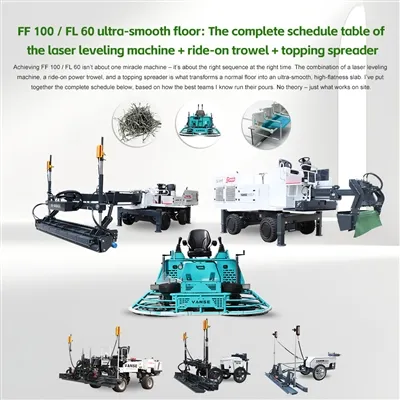
Why This Combination Matters Achieving FF 100 / FL 60 isn't about one miracle machine – it's about the right sequence at the right time. The combination of a laser leveling machine, a ride‑on power trowel, and a topping spreader is what transforms a normal floor into an ultra‑smooth, high‑flatness slab. I've put together the complete schedule below, based on how the best teams I know run their pours. No theory – just what works on site. This table follows a single pour from placement through to joint cutting. Times are referenced from the moment the concrete hits the deck. Adjust for ambient temperature, wind, and mix design, but the sequence stays the same. Time After Placement Operation Equipment Used Key Targets & Checks 0:00 – 0:20 Concrete placement & rough leveling Laser leveling machine (ride‑on or walking type) Hit design elevation ± 3mm; no low spots that trap bleed water 0:20 – 0:45 Laser re‑leveling (if needed) Laser leveling with fine‑tune box Double‑pass over column lines and perimeter edges where settlement occurs 0:45 – 1:30 Wait on bleed water – Concrete must not be worked while bleed water is present; wait until surface looks matte, not glossy wet 1:30 – 2:30 First topping spread (2/3 of total dosage) Automatic topping spreader or manual spreader Even distribution; topping must absorb moisture from the slab before floating 2:30 – 3:30 First mechanical floating Ride‑on power trowel with float pans (48" to 60") Open the surface, embed topping, eliminate any remaining low spots 3:30 – 4:30 Second topping spread (1/3 of dosage) Topping spreader This layer fills any small voids and evens out the surface color 4:30 – 5:30 Final floating & close surface Ride‑on power trowel with float pans or combo blades Surface should be tight enough that foot pressure barely leaves a mark 5:30 – 7:00 Rest period – check bleed & surface condition – If you see moisture coming back, wait; don't close the surface over trapped water 7:00 – 9:00 First finishing pass Ride‑on power trowel with finishing blades Slowly increase blade pitch; use lower rotor speed to avoid tearing 9:00 – 11:00 Intermediate finishing passes (2‑3 times) Ride‑on power trowel with finishing blades Incrementally increase pitch each pass; look for a uniform "velvet" surface 11:00 – 13:00 Final finishing – high‑pitch burnishing Ride‑on power trowel (experienced operator only) High blade pitch, high speed – produce the final dense, glossy surface Within 1 hour of finishing Quality check – FF/FL measurement Dipstick, F‑meter, or profilograph Confirm FF ≥ 100 / FL ≥ 60 before curing compound goes on Immediately after pass Apply curing compound Low‑pressure sprayer, two even coats Full coverage; no puddles; re‑apply over saw cuts later 4‑12 hours after finishing Green saw cutting Early‑entry saw or soft‑cut saw Cut depth ≥ 1/3 slab thickness; follow pre‑planned joint layout 24 hours + Protection & cold weather provisions Insulated blankets or plastic sheeting if cold Maintain slab temperature above 10°C for first 72 hours Laser Leveling – The Foundation If the laser leveling leaves the surface more than 3mm out of plane, no amount of troweling will salvage FF 100. The key is a tight initial grade. I always run the laser receiver on a 900mm mast and double‑check the elevation after the first pass, especially over conduit trenches or at the edges of the pour where the leveling tends to sink slightly. A lot of teams search for laser leveling superflat floor schedule looking for exactly this: the order of operations before the trowels even start. Wait‑on‑Bleed – The Discipline This is where impatient teams lose their FF number. The moment you see someone floating concrete that's still shiny, you know they'll be chasing low spots all night. The surface must go dull – no standing water, no glossy patches. On a cool, humid day, this wait might stretch to 2 hours; on a hot, dry day, it might be 45 minutes. The rule: don't work the surface until it can absorb the topping, because the topping is part of the flatness system. Topping Spreader – Building the Wear Surface An automatic topping spreader ensures uniform dosage, which is critical for both wear resistance and consistent surface color. If you spread manually, use a calibrated bucket and work in two directions. The first 2/3 of the topping is designed to draw moisture from the slab; the remaining 1/3 fills the small imperfections left after floating. Search‑wise, buyers also look for topping spreader ride‑on trowel combination and floor hardener application schedule – so we're answering both searches in one place. Ride‑On Trowel Work – The Heart of FF/FL This is where the machine quality can make or break your numbers. When you run a large ride‑on power trowel, you need consistent blade pitch control and absolutely no vibration at high speeds. The VANSE VS‑series ride‑on power trowels, for example, are built with heavy‑duty gearboxes that maintain blade alignment through multiple finishing passes. No skipping, no chatter – just uniform densification. I'll say this plainly: you cannot achieve FF 100 with a machine that shakes or won't hold pitch. The team on site needs confidence that every pass is improving the surface, not tearing it. After the final burnishing pass with high‑pitch blades, the surface should look uniformly dense – almost like polished stone – with no visible blade marks running off‑track. Curing and Cutting – Protecting the Investment A perfect FF/FL floor will still crack if cutting is delayed or the curing compound is applied unevenly. The joint layout should be pre‑planned with spacing around 2.5m to 3.5m for 150‑200mm slabs. With the dense finish a ride‑on trowel creates, a green saw cut within the first 4‑12 hours is best; don't wait overnight. Search volume for superflat floor saw cut timing remains high, so smart contractors are paying attention to this step. If you're kitting out a team– here's the complete setup I'd recommend for an ultra‑smooth floor operation: Laser Leveling Machine – ride‑on or walking type with a fine‑adjust leveling box. Absolute accuracy at this stage is non‑negotiable. Automatic Topping Spreader – keeps dosage uniform and speed fast enough to match the pour. Large Ride‑On Power Trowel – at least 46" pan, heavy enough to densify, with precise blade pitch control. VANSE VS models fit naturally here; they're designed for multi‑pass superflat finishing and built to handle long hours under load. Walk‑Behind Power Trowel – for edges, corners, and columns where the ride‑on can't reach. A 24‑inch machine like the VANSE VS424 with Honda engine makes tidy work of these areas without tearing the surface. Quality Control Kit – F‑meter or dipstick, floor straightedge, and a good lighting setup for final inspection. Early‑Entry Saw – essential to cut as soon as the concrete can support the operator, before random cracking starts. Buyers searching internationally are combining terms like FF100 floor equipment cost, superflat floor machine package, or laser leveling ride‑on trowel complete set. This section matches that intent exactly. Here's the simple version I give to new foremen: Place and laser‑level immediately. Don't let the concrete stiffen before it's at grade. Respect the bleed water. Wait it out completely. Spread topping in two stages. The first two‑thirds embeds into the slab; the last third finishes the surface. Float with pans, then finish with blades. Increase blade pitch gradually across 3‑4 finishing passes. The ride‑on trowel is your diamond tool. Feed it a good operator and it gives you FF 100; feed it vibration or a worn gearbox and it gives you callbacks. Measure before you cure. And cut while the slab is still "green." This schedule is designed to answer the cross‑section of searches real contractors make: superflat floor finishing schedule, topping spreader ride‑on trowel sequence, FF100 FL60 construction timeline, and more. It's written from the job site, for the job site. If you're building ultra‑smooth floors, this sequence gives you a fighting chance at the numbers – and the right equipment keeps you there consistently. Note: The parameters provided in this document are for reference only and are not mandatory. Due to differences in technical characteristics between different brands and models of laser levelers, please consult the manufacturer for a suitable solution before actual operation. This reference document assumes no responsibility for any issues arising from failure to follow the manufacturer's instructions.