Technical Knowledge
There are many things to pay attention to when adding oil to a laser leveling machine. Don’t operate it recklessly if you don’t understand it!
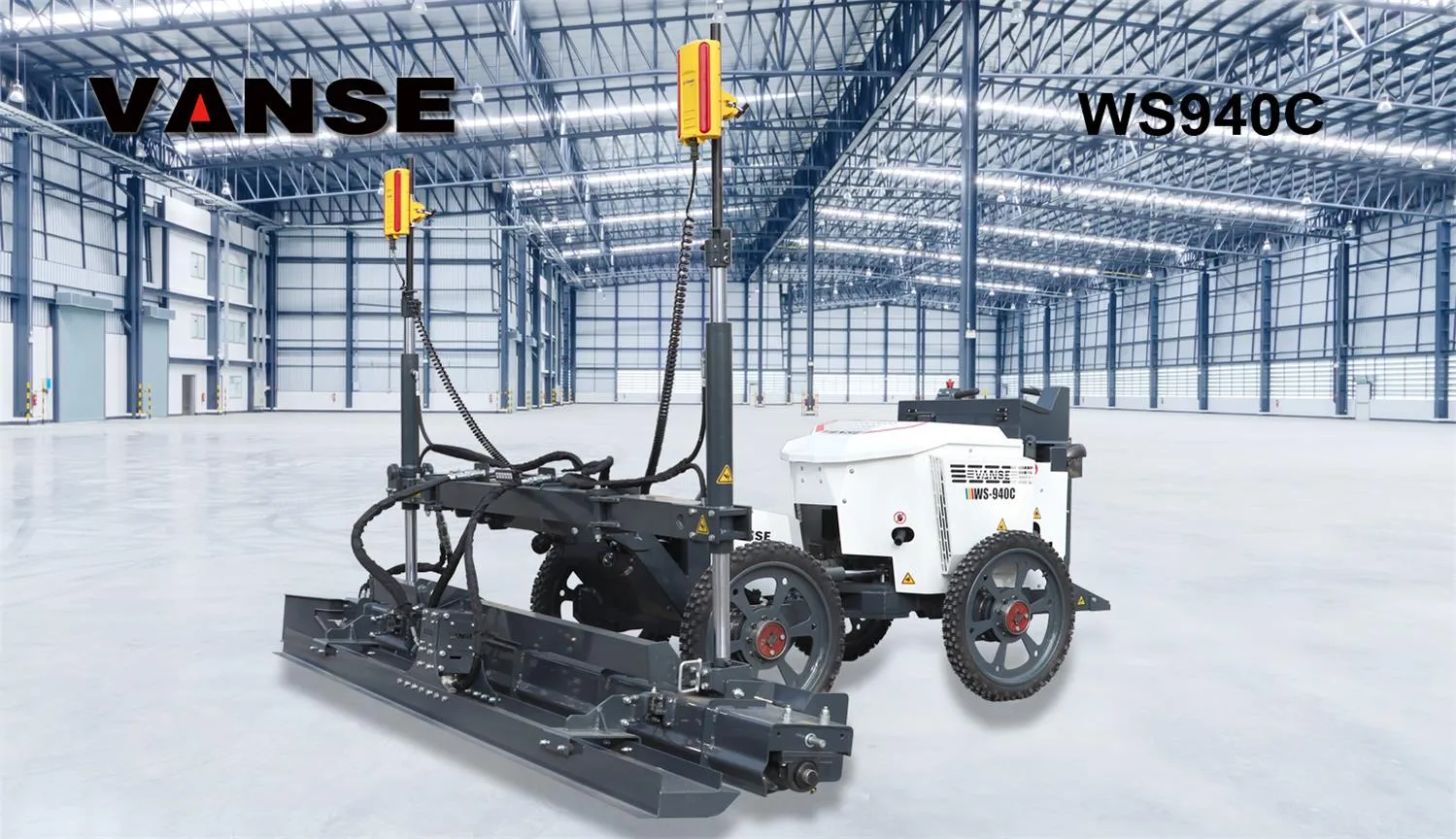
Any kind of mechanical equipment needs to add an appropriate amount of oil during normal use to ensure the safe operation and service life of the machinery. This is no exception for the laser leveling machine, a new type of concrete pavement leveling equipment. Although the addition of oil to the laser leveling machine seems simple, it is actually quite a science. In order to avoid unnecessary trouble, our company has specially sorted out several common misunderstandings when adding oil to the laser leveling machine. I hope everyone will avoid them in time.
▼ Do not use the lubricating oil if it turns black: the lubricating oil turns black, which means that the lubricating oil has deteriorated: modern lubricating oils have added appropriate amounts of various additives to improve their lubrication properties. It is normal for the lubricating oil of internal combustion machinery with detergent dispersant to turn black shortly after use. It cannot be easily replaced because it is considered that the "oil has deteriorated"; lubricating oil with additives often makes the bearing surface black during use, which is also a normal phenomenon. Therefore, when we determine whether the lubricating oil has deteriorated, we cannot judge it by sight alone, but conduct a comprehensive analysis. When conditions permit, the oil should be tested and tested to ensure that the oil is changed according to the quality;
▼ The oil grade specified in the laser leveling machine manual is for general working conditions. In the practice of machine oil change and maintenance, the actual use conditions must also be considered. If the actual use conditions are more stringent than the specified use conditions, a higher grade oil should be selected (through testing) or the oil change cycle should be appropriately shortened;
▼ It is better to have more oil than less: We know that a small amount of laser leveling oil will cause insufficient oil supply and poor lubrication, leading to mechanical accidents. Therefore, when refueling, you should not "prefer to add more" for fear of insufficient oil. In fact, too much oil will not only increase the power consumption of the crankshaft due to increased rotational resistance, but also the oil is prone to bubbles, emulsification and leakage, resulting in poor lubrication;
▼ Using high-viscosity oil can solve the problems of engine powerlessness and oil leakage: Engine powerlessness, oil consumption and oil leakage are external characteristics of the deterioration of the engine's technical condition. There is insufficient basis for "using high-viscosity oil to solve the above problems". On the contrary, it will increase the starting resistance of the laser leveling machine engine, deteriorate the lubrication performance, and aggravate the wear of the parts;
▼ Oil with high viscosity is more beneficial to the engine than oil with low viscosity: If the viscosity grade of lubricating oil is too high, it will cause poor pumping performance of the oil pump, reduce flow, and deteriorate its lubricity, washing and heat dissipation, which will easily cause semi-dry friction of the laser leveling machine parts, causing failures such as burning and shaft sticking.
The above are several common wrong behaviors when adding oil to the laser leveling machine. In order to ensure the normal use of the equipment and avoid unnecessary maintenance costs, it is also hoped that the relevant maintenance managers must strictly follow the product manual to reasonably add oil and actively avoid common misunderstandings.
Thanks to All the Friends Who Support and Trust Shandong Vanse Machinery Technology Co., Ltd.
If you want to know more about Shandong Vanse Machinery Technology Co., Ltd. or have any questions, please feel free to contact us:
Our Factory
Shandong Vanse Machinery Technology Co., Ltd.








Share this article

About the Author: Shandong Vanse Machinery Technology Co., Ltd.
Shandong Vanse Machinery Technology Co., Ltd. is a high-tech manufacturer specializing in concrete construction machinery, including laser screeds and related equipment. The company integrates R&D, production, and global sales, with products exported to over 60 countries and widely used in infrastructure projects worldwide.
Previous Post
Next Post
Related Articles
You Might Also Like
What Are The Construction Steps Concrete Laser Leveling Machine ?
Main Construction Process: Civil engineering formwork support (bottom formwork)→rebar tying→concrete pouring and laser leveling device elevation control→"VANSE" laser leveling machine for concrete leveling→professional technicians use a 3-meter scraper for precise leveling→single-disc troweling Machine pulping and smoothing→Professionals use a 3-meter scraper for precise leveling→Professional operation of double-disc driving troweling machine→Surface finishing→Product protection. 1. Civil engineering formwork (bottom formwork): Civil engineering formwork support (bottom formwork) is strictly controlled in elevation as in normal drawing design and construction specification acceptance standards, and the scaffolding is firmly supported. It should be noted that the "clear water concrete" building (ground) Surface and concrete pouring shall be constructed at the same time. In order to facilitate mechanical construction, there shall be no formwork or supporting elements higher than the building (ground) level, except for the reserved and pre-embedded levels. 2. Reinforcement tie-up: Because the surface layer is a building (ground) surface formed at one time by using the protective layer of reinforced concrete, the reinforcement must ensure that the concrete protective layer is sufficient, and the reinforcement, stirrup or weldment is not allowed to be placed in the wrong place. The concrete pouring surface layer is exposed, causing the machine to hit the steel bar, which not only destroys the machine but also destroys the surface layer of the building (ground). 3. Laser leveling instrument controls concrete pouring: set the elevation on the column reinforcement before concrete pouring, and lead the accurate elevation to the laser leveling instrument control system, and the concrete pouring personnel will control the elevation to be 5 times higher than the design elevation when scraping – Within the range of 10mm, lay a solid foundation for the leveling of the next laser leveling machine. 4. "VANSE" laser leveling machine leveling: In the case of accurate elevation setting by professional technicians, mechanical operators will precisely level the concrete surface under the control of the laser leveling instrument, and the leveling machine will automatically to calibrate and control the leveling machine to ensure the accuracy of leveling. 5. Leveling by professionals: This process is to re-measure the puddles with a laser sweeper when the bleeding of the concrete pouring surface is completed, fill the puddles with concrete, and use a 3-meter scraper to level the surface layer with a 360° rotation. To fully control the flatness and smooth the edge details of the column root formwork, use a laser sweeper to repeatedly detect until the requirements are met. 6. Single-disk troweling machine for smoothing and lifting slurry: while the concrete is poured in an orderly manner according to the specifications, the concrete poured earlier will reach the initial setting earlier by using the time difference of the concrete construction. 2-3mm footprint), it is convenient to use the "VANSE" single-disc troweling machine and troweling disc to carry out cross-breaking troweling to ensure the smooth control of the mechanical operation process.Design and manufacture of concrete laser leveling machines
The concrete laser leveling is an efficient and precise concrete construction equipment. Its design and manufacture need to take into account many factors to ensure the performance, stability and durability of the equipment. The design and manufacturing of concrete laser leveling machines will be discussed below from several aspects. Overall design The design of the concrete laser leveling should take into account the environment and construction needs of the construction site. For example, for large-scale construction projects, you need to choose equipment with a larger construction area; for small construction environments, you need to choose compact equipment. In addition, factors such as the equipment's weight, power consumption, noise and emissions must also be taken into consideration during design. Laser technology The concrete laser leveling machine uses advanced laser technology to achieve high-precision concrete leveling. Among them, the laser transmitter will emit a laser beam, which will illuminate the receiver to form a reference line. Through the control system, the equipment can monitor and adjust the position and height of the baseline in real time. Therefore, special attention should be paid to the laser and control system during the design and manufacturing process to ensure that its performance is stable and reliable. Mechanical structure The mechanical structure of the concrete laser leveling machine includes scrapers, driving wheels and driven wheels. The scraper is used to scrape the concrete flat, and the driving wheel drives the scraper to work. Driven wheels are used to support and balance equipment. In addition, it also includes power system, lubrication system and safety protection system. The design and manufacturing of the mechanical structure should ensure stable, safe and reliable operation of the equipment. Control System The control system of the concrete laser leveling machine includes controllers, sensors and operating interfaces. The controller is used to control the operation mode and actions of the equipment, the sensor detects the status and position of the equipment, and the operation interface provides human-computer interaction functions. The design and manufacturing of the control system must ensure precise equipment control and easy operation. Manufacturing process The manufacturing process of concrete laser levelinging machine includes casting, processing, welding, assembly and other links. During the casting process, the structure and usage environment of the equipment must be taken into consideration, and appropriate materials and processes must be selected; during the processing process, the accuracy and parallelism of the equipment must be ensured; during the welding process, attention must be paid to welding quality and deformation issues; during the assembly process, the Factors such as equipment operation stability and maintenance convenience. The quality of the manufacturing process directly affects the performance and service life of the equipment, so all aspects of the manufacturing process must be strictly controlled. Quality inspection Concrete laser levelings require quality testing during the design and manufacturing process to ensure that the performance and quality of the equipment meet requirements. Quality inspection includes appearance inspection, functional inspection, performance inspection and safety inspection and other aspects. Appearance inspection mainly detects whether the appearance of the equipment is beautiful and has no obvious defects; functional inspection mainly detects whether the functions of the equipment are complete and normal; performance inspection mainly detects whether the performance indicators of the equipment meet the design requirements; safety inspection mainly detects whether the safety protection devices of the equipment are Whether it is effective and whether the safety performance meets the standards, etc. Quality inspection is an important part of ensuring the quality of equipment and must be strictly controlled. In short, the design and manufacture of concrete laser leveling machines need to take into account many aspects, including overall design, laser technology, mechanical structure, control system, manufacturing process and quality inspection. Only through careful design and strict manufacturing can high-performance, high-quality concrete laser leveling machines be produced to meet different construction environments and construction needs.Common Sense of Using the Power Section of the Small Road Roller
First, the use of precautions1. When using, adjust and maintain according to the maintenance methods and various regulations described in the corresponding product manual. 2. It is not allowed to work at full speed and full load immediately after starting. It must be gradually transitioned from low speed and no load to high speed full load. 3. The fuel used in the diesel engine must be clean and should be allowed to stand for more than 72 hours. 4. The normal water temperature (75 °C ~ 95 °C) should be maintained for the diesel engine with radiator. When releasing the cooling water, you must first open the radiator cover (after the water temperature is lowered, then open it to avoid burns), and then unscrew the water discharge switch on the cylinder block. 5. The normal working oil pressure should be 0.2~0.4MPa. 6, the load must be strictly controlled, no overload is allowed, otherwise it will affect the reliability and service life of the diesel engine. 7. After the new or replacement injector, the medium-speed low-load running-in should be carried out, and the running-in time should not be less than 30 minutes. Before installation, the parts should be cleaned with clean kerosene or light diesel oil to remove anti-rust oil. 8. In the course of operation, if abnormal phenomena are found, stop in time. Second, fuel, oil and cooling water 1. Fuel Users should select the light diesel grades to be used according to the season and ambient temperature of the region. Recommendation: Use diesel fuel with a sulfur content below 0.5%. If the sulfur content is high, the oil change cycle will be shortened. Diesel filling and precautions Before the diesel engine is injected into the diesel engine, it must be allowed to stand for more than 72 hours, then the upper layer of clean diesel oil without water and impurities or filtered with silk cloth. Warning: (1) Do not fill fuel tank with fuel while the engine is running. (2) Do not smoke when filling the fuel tank with diesel fuel. (3) Use a clean oil pipe when refueling. Do not splash diesel oil outside. (4) Wipe off the spilled fuel. Materials that are fueled must be moved to a safe place. 2. Lubricating oil The oil must be selected according to the regulations. The viscosity of the oil is greatly affected by the temperature, and the user needs to correctly select the corresponding brand oil according to the ambient temperature. 3.cooling water should use clean soft water: rain, tap water or river water. If you use well water, spring water or other hard water with more minerals, you should add appropriate amount of softener, such as sodium carbonate (soda). The easiest way to do this is to boil the water and then precipitate it to remove impurities and use. In the cold winter, antifreeze can be added to the cooling system to prevent freezing. The most commonly used antifreeze is an aqueous solution of ethylene glycol (glycol) or alcohol. The use of antifreeze should be noted: Since the antifreeze has the characteristics of increasing volume with increasing temperature, when adding the cooling medium, the addition amount should be 5% to 6% less than the total capacity of the cooling system. Ethylene glycol – water-based antifreeze is toxic, special care should be taken when using it, and no entry is allowed. The boiling point of ethylene glycol is 194.4 ° C, so the water in the antifreeze is easy to evaporate, and the alcohol should be properly added after a period of use. If it is not anti-rust antifreeze, it should be removed regularly. When the diesel engine is used for a long time, the surface of the cooling water chamber will form scale, which will affect the heat dissipation of the diesel engine. For this reason, the scale should be cleaned regularly. The cleaning method is as follows: When cleaning, 25% hydrochloric acid solution can be injected into the water chamber and parked for 10 minutes. After that, the solution was drained and washed with water. If the scale is not removed, repeat it again Cooling water filling and precautions: (1) Fill the cooling water to the mark of the filling port. (2) Note that the drain valve is closed after the cooling water flows out from the drain valve. (3) Tighten the filler cap. (4) Start the engine and run to normal temperature until the thermostat is turned on (the cooling water pipe is obviously warmed up during the big cycle). (5) After the first operation, stop cooling and check the liquid level. Inspection and preparation before starting 1. When the new machine is started for the first time, carefully check the tight connection of each part, whether the attachment is complete, and whether the operating mechanism is flexible. 2. Check the oil level of the oil pan and the fuel injection pump between the upper limit mark and the lower limit mark of the oil scale. 3. Check the fuel storage capacity of the fuel tank. Turn on the fuel tank switch to allow diesel to flow to the fuel injection pump and remove air from the fuel system. 4. Check the battery and wiring. Check the electrolyte level in the battery. 5. Check the cooling system and add enough water. 6. In case of cold and freezing weather, the diesel engine should be placed in a cold-proof place. When working in the field, heat the oil sump and add two or three times of hot water to warm the diesel engine before starting. 7. The clutch should be in the separated state when the diesel engine starts. Startup After the preparation work before starting is completed and confirmed to meet the requirements, it can be started. The clutch should be disengaged when starting. The starting steps are as follows: 1. Push the lock switch to start the diesel engine. The starting time is less than 5 seconds each time to protect the starter and battery. After each failed start, stop for 1-2 minutes and start again. If the start fails three times in a row, you should find out the cause and troubleshoot before starting again. Once the diesel engine is started, the starter switch key should be released immediately and the lock switch should be returned to its original position. 2. Check the oil pressure immediately after starting. When the diesel engine is running at idle speed, the oil pressure should not be lower than 0.05MPa. After the newly assembled diesel engine is started for 5 minutes, stop the oil level of the oil pan and check if necessary, add oil so that the oil level is between the upper and lower marks on the oil scale. 3. Within one minute after starting the diesel engine, the water temperature gauge should be checked immediately to confirm that the cooling system is working properly. V. Operation After the diesel engine is started, the full-load operation should not be carried out immediately. The diesel engine should be heated in the idle mode at low speed and medium speed. 1. When operating, always pay attention to the oil pressure and cooling water temperature. When the speed is calibrated, the oil pressure should be 0.2~0.4MPa (2~4kgf/cm) 2. The temperature of the cooling water outlet is controlled at 80-90 °C. 3. When the diesel engine is running, always pay attention to observe whether the reading on the instrument panel is normal, whether there is abnormal sound. If it is found, it should be stopped immediately to check and find the cause and then allow it to start and run again. 4, always pay attention to the sealing of the oil and water connections, if there is a leak, it should be immediately removed. 5. The charging generator must be charged to the battery during operation, and the ammeter pointer points to “+”. 6. New or overhauled diesel engines are allowed to run at full speed at full speed after 50 to 100 hours of operation. Small roller parking 1. Remove the load and gradually reduce the speed to idling for 3 to 5 minutes before parking. 2. When the temperature is lower than 5 °C, if antifreeze is not used, the cooling water should be drained in time after parking to prevent cracking of the body. 3. After each stop, the faults found during operation must be discharged in time, and necessary inspections should be carried out. The diesel engine should be inspected and maintained frequently, and some sporadic faults should be eliminated in time to keep the diesel engine working properly and avoid serious faults. The necessary conditions for good economic returns. Daily maintenance of small road roller: (in combination with inspection preparation work), the driver usually carries out maintenance every day; check the fuel tank fuel quantity and add enough; check the oil level in the oil sump, when it is insufficient, it should be added; check and eliminate leakage and leakage Oil and gas leakage; check the stability of each accessory device; check the liquid level of the water tank.