Technical Knowledge
What Are The Construction Steps Concrete Laser Leveling Machine ?
What Are The Construction Steps Concrete Laser Leveling Machine ?

Main Construction Process:
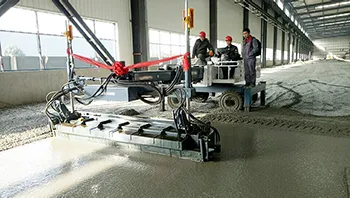
Civil engineering formwork support (bottom formwork)→rebar tying→concrete pouring and laser leveling device elevation control→"VANSE" laser leveling machine for concrete leveling→professional technicians use a 3-meter scraper for precise leveling→single-disc troweling Machine pulping and smoothing→Professionals use a 3-meter scraper for precise leveling→Professional operation of double-disc driving troweling machine→Surface finishing→Product protection.
1. Civil engineering formwork (bottom formwork): Civil engineering formwork support (bottom formwork) is strictly controlled in elevation as in normal drawing design and construction specification acceptance standards, and the scaffolding is firmly supported. It should be noted that the "clear water concrete" building (ground) Surface and concrete pouring shall be constructed at the same time. In order to facilitate mechanical construction, there shall be no formwork or supporting elements higher than the building (ground) level, except for the reserved and pre-embedded levels.
2. Reinforcement tie-up: Because the surface layer is a building (ground) surface formed at one time by using the protective layer of reinforced concrete, the reinforcement must ensure that the concrete protective layer is sufficient, and the reinforcement, stirrup or weldment is not allowed to be placed in the wrong place. The concrete pouring surface layer is exposed, causing the machine to hit the steel bar, which not only destroys the machine but also destroys the surface layer of the building (ground).
3. Laser leveling instrument controls concrete pouring: set the elevation on the column reinforcement before concrete pouring, and lead the accurate elevation to the laser leveling instrument control system, and the concrete pouring personnel will control the elevation to be 5 times higher than the design elevation when scraping – Within the range of 10mm, lay a solid foundation for the leveling of the next laser leveling machine.
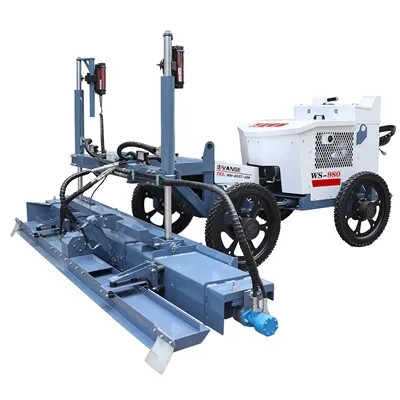
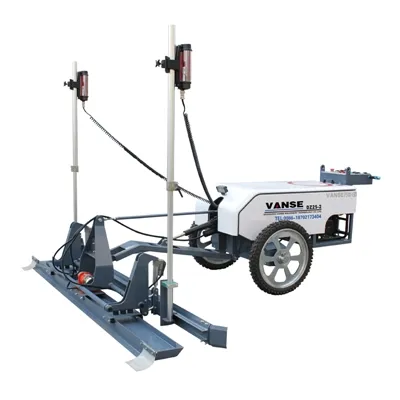
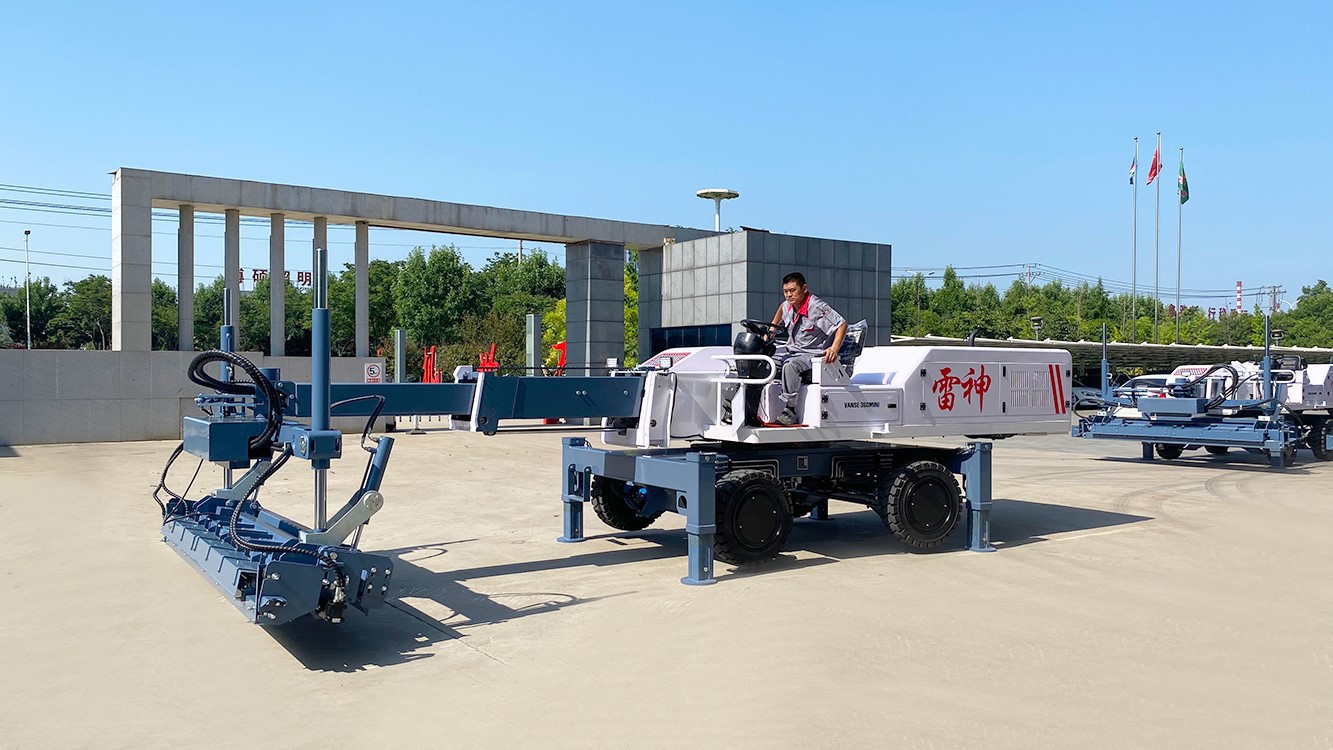
4. "VANSE" laser leveling machine leveling: In the case of accurate elevation setting by professional technicians, mechanical operators will precisely level the concrete surface under the control of the laser leveling instrument, and the leveling machine will automatically to calibrate and control the leveling machine to ensure the accuracy of leveling.
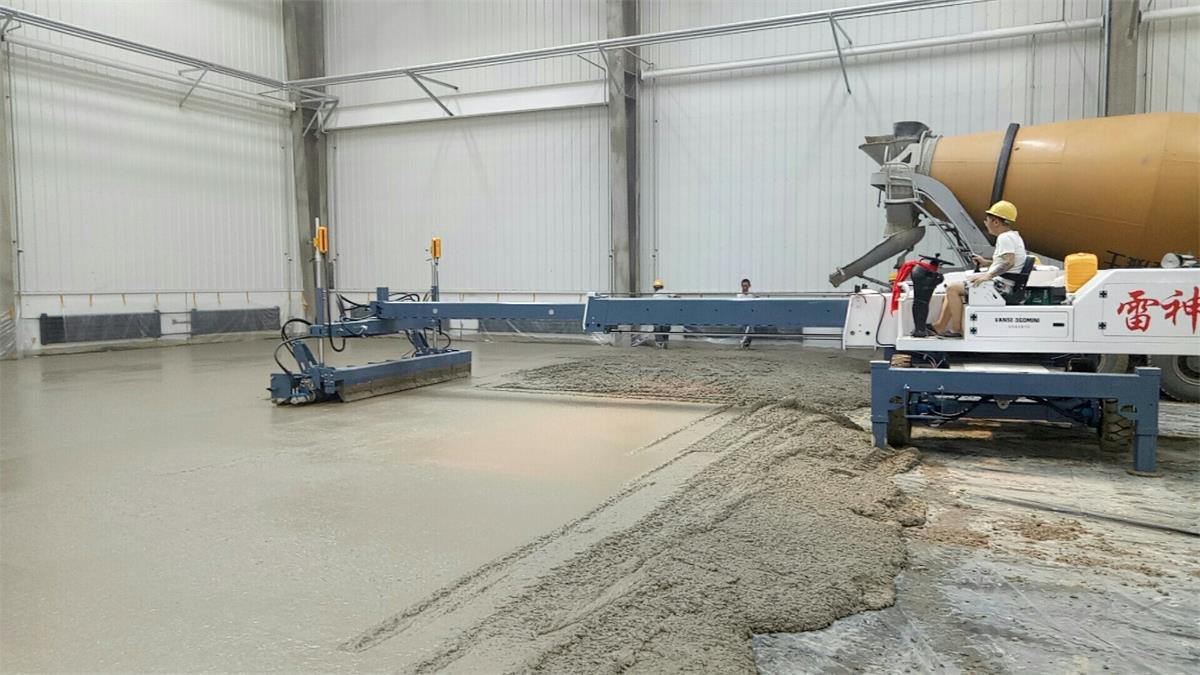
5. Leveling by professionals: This process is to re-measure the puddles with a laser sweeper when the bleeding of the concrete pouring surface is completed, fill the puddles with concrete, and use a 3-meter scraper to level the surface layer with a 360° rotation. To fully control the flatness and smooth the edge details of the column root formwork, use a laser sweeper to repeatedly detect until the requirements are met.
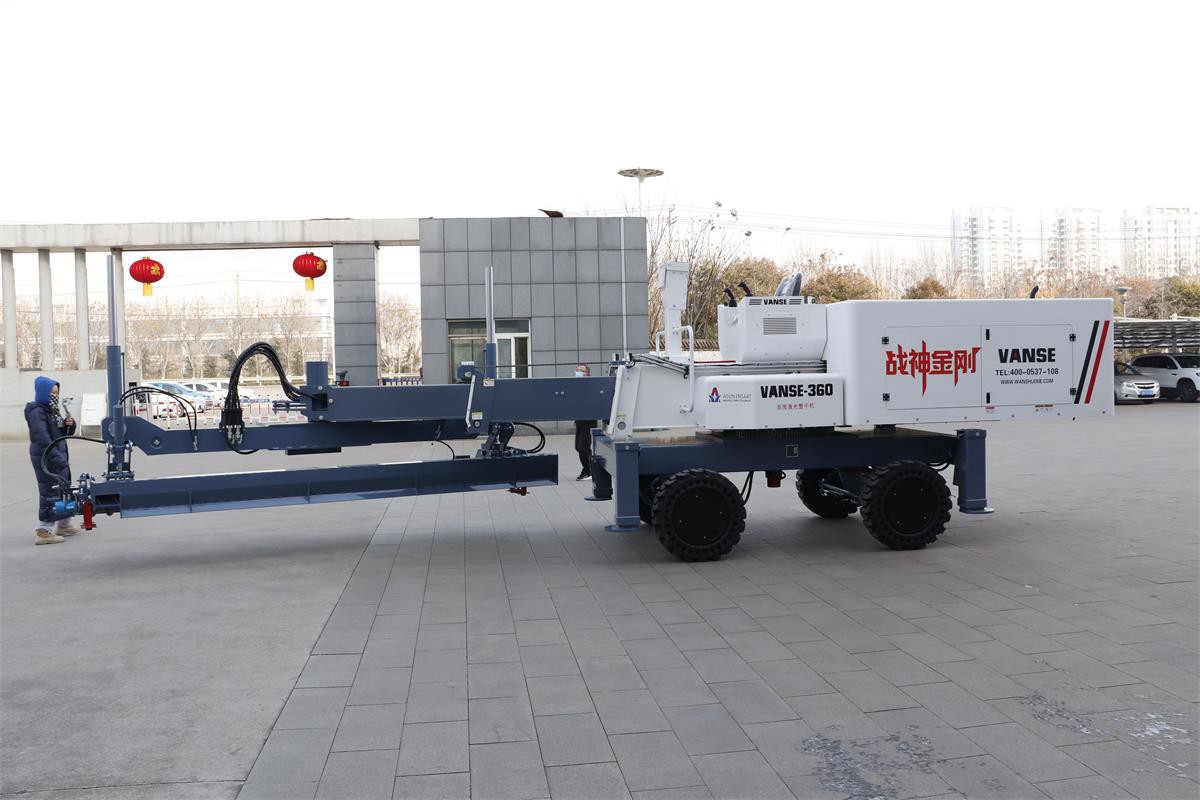
6. Single-disk troweling machine for smoothing and lifting slurry: while the concrete is poured in an orderly manner according to the specifications, the concrete poured earlier will reach the initial setting earlier by using the time difference of the concrete construction. 2-3mm footprint), it is convenient to use the "VANSE" single-disc troweling machine and troweling disc to carry out cross-breaking troweling to ensure the smooth control of the mechanical operation process.
Thanks to All the Friends Who Support and Trust Shandong Vanse Machinery Technology Co., Ltd.
If you want to know more about Shandong Vanse Machinery Technology Co., Ltd. or have any questions, please feel free to contact us:
Our Factory
Shandong Vanse Machinery Technology Co., Ltd.








Share this article

About the Author: Shandong Vanse Machinery Technology Co., Ltd.
Shandong Vanse Machinery Technology Co., Ltd. is a high-tech manufacturer specializing in concrete construction machinery, including laser screeds and related equipment. The company integrates R&D, production, and global sales, with products exported to over 60 countries and widely used in infrastructure projects worldwide.
Previous Post
Next Post
Related Articles
You Might Also Like
The maintenance of the five parts of the laser leveling machine is very important
The maintenance of the five parts of the laser leveling machine is very important Laser leveling machine is also called laser paver or paving leveling machine. The name is different for each place. It is mainly a kind of reference plane based on the laser emitted by the transmitter, which can achieve high-precision and rapid concrete leveling. device of. While it is convenient to use, we must also remember to maintain it. The maintenance of the five parts of the laser tanning machine is very important, namely engine oil level, hydraulic oil level, water pump oil level, engine oil replacement, and hydraulic oil replacement. Talk about it. 1. Check the oil level of the engine oil: the machine is on a horizontal plane. After stopping the engine for 2-3 minutes, remove and clean the oil dipstick. The oil level should be at the hole (upper limit) position of the dipstick. 2. Check the hydraulic oil level: put the machine in a horizontal position, stop the engine and open the seat assembly. Illuminate the hydraulic oil level gauge next to the valve set with a flashlight, check the oil level from the front panel pane of the machine, and the oil level at 3 is suitable. 3, check the pump oil level: the machine in a horizontal position, stop the engine. Open the cover of the machine's electrical box and irradiate the oil level window of the water pump with a flashlight to check the oil level. The lubricating oil should be in the center of the window. 4. Change the engine oil: stop the machine on the slope, with the front high and the back low. Stop the engine and remove the oil drain wire at the back of the machine to release the oil. Drain the oil and reinstall the drain wire plug. Open the engine oil filling cap and readd the recommended oil to the upper limit position of the oil gauge (no oil change filter is about 1.5L; Oil filter replacement is about 1.7L). Replace the oil gauge and oil filling cap. When the engine is warm, change the oil quickly and thoroughly. If the oil is seriously contaminated, flush the machine with fresh oil. 5. Replace hydraulic oil: Hydraulic oil should be replaced regularly to prevent damage to hydraulic components. When the hydraulic oil to the service life, the chemical additives in the hydraulic protection will be reduced, the efficiency of the hydraulic oil will also be reduced. Therefore, regularly replace as much new oil as possible. It is also impractical to replace all the hydraulic fluids in the system because the hydraulic fluids in many components of the system cannot be completely replaced.Laser leveling machine needs temperature control! ! !
LASER LEVELING MACHINE NEEDS TEMPERATURE CONTROL ! ! ! No matter it is winter or summer, the use of laser leveling machine is inseparable from road construction. In the process of using leveling machine in summer, some parts inside the machine may overheat due to the increase in temperature. Thus affecting the leveling effect of the laser leveling machine. In order to improve the use value of the equipment and improve work efficiency, we need to do a good job of temperature control during the working process of the laser leveling machine. First of all, controlling the temperature of the laser leveling machine is one of the keys to ensure the quality of leveling. When the equipment is being leveled, it should meet the requirements of relevant standards according to the type of asphalt, label, consistency, ambient temperature, and leveling thickness. Secondly, when the construction temperature of expressways and highways is lower than 10°C, and when the construction temperature of other grades of roads is lower than 5°C, leveling is not suitable. If it is necessary to carry out leveling work, the temperature of the road leveling machine should be increased, and there are also low-temperature leveling requirements that meet the regulations. The transport vehicle must have insulation measures, and high-precision leveling machines should be used as much as possible to start paving. After the plate is heated and leveled, it is pressed immediately to shorten the length of the press. It should be remembered that during leveling, the requirements of relevant standards should be met according to the type of asphalt, label, consistency, ambient temperature, leveling thickness, etc. In this case, it is relatively simple and easy to control the temperature. Mastering the performance characteristics of the laser leveling machine will help us do a good job in temperature control. The above is the relevant knowledge that the manufacturer told you. I hope that through our narration, you can understand the temperature control method of the laser leveling machine during the construction process, and hope that your equipment can run smoothly. Contact us, we look forward to cooperating with you.Is there a big difference between hardened floors and ordinary concrete floors?
Hardened floors and ordinary concrete floors are two types of flooring materials commonly used in modern-day construction. While they may look similar, these materials have significant differences that set them apart. In this article, we'll explore the key differences between hardened floors and ordinary concrete floors and why hardened floors are a better option for industrial and commercial facilities. What are hardened floors? Hardened floors are concrete floors that have undergone a specialized process to increase their hardness and durability. This is typically done by adding a surface hardener or a densifier to the concrete mix and then grinding and polishing the surface to a high gloss or matte finish. Hardened floors are available in a vast range of colors and designs, making them a popular flooring choice in commercial and industrial applications. Benefits of hardened floors Improved durability One of the most significant benefits of hardened floors is their improved durability compared to ordinary concrete floors. Hardened floors are much harder and denser than standard concrete flooring, making them resistant to wear and tear caused by heavy foot traffic, vehicle traffic, and machinery. They are also highly resistant to chemicals and staining, which makes them an excellent option for industrial and manufacturing facilities. Easy maintenance Another benefit of hardened floors is that they are incredibly easy to maintain. Unlike traditional concrete floors, hardened floors do not require regular waxing or coatings to keep them looking their best. Instead, they only require daily cleaning with a mild detergent and occasional polishing to maintain their shine. Versatility Hardened floors are available in a broad range of colors and finishes, making them highly versatile. They can be customized to match any design or aesthetic, making them suitable for a wide range of commercial and industrial applications. Additionally, they can be used indoors or outdoors and can withstand extreme weather conditions. Eco-friendliness Hardened floors are an eco-friendly flooring option because they utilize the existing concrete surface. By using the existing surface, there is less waste, fewer resources used, and less carbon emissions from transportation. Hardened floors also have low VOC emissions, making them ideal for eco-conscious facilities. What are ordinary concrete floors? Ordinary concrete floors are typically made up of cement, sand, and aggregates such as gravel and stone. They are poured onto a base layer of subgrade material and then left to cure over time. While traditional concrete floors are highly durable, they lack the strength and resilience of hardened floors. Disadvantages of ordinary concrete floors Susceptibility to damage Ordinary concrete floors are more susceptible to damage than hardened floors. They are prone to cracking and chipping over time, especially in high traffic areas. Additionally, they can be damaged by chemicals, such as oils and solvents and can become stained and discolored. Difficult to maintain Ordinary concrete floors require a lot of maintenance to keep them looking their best. They need to be regularly coated with a wax or sealer to protect them from damage and staining. Additionally, they require frequent cleaning with a specialized detergent and regular polishing to maintain their shine. Limited design options Traditional concrete floors offer limited design options, leaving little room for customization. They usually come in a standard gray color, and attempts to stain or color them can lead to uneven coloring. Conclusion In conclusion, while both hardened floors and ordinary concrete floors are popular flooring options, hardened floors offer significant benefits that make them a better choice for commercial and industrial facilities. With their improved durability, easy maintenance, versatility, and eco-friendliness, hardened floors are the way to go for businesses looking for a long-lasting, low-maintenance, and cost-effective flooring option.