Technical Knowledge
The laser leveling machine needs to be temperature controlled to avoid high temperature ‘burns’

Whether it is winter or summer, the use of laser leveling machines is indispensable for road construction. In the summer, the use of leveling machines may cause some parts inside the machine to overheat due to the increase in temperature, thus affecting the leveling effect of the laser leveling machine. In order to improve the use value of the equipment and improve work efficiency, we need to do a good job of temperature control during the operation of the laser leveling machine.
First of all, controlling the temperature of the laser leveling machine is one of the keys to ensure the quality of leveling. When leveling, the equipment should meet the requirements of relevant standards according to the asphalt type, grade, consistency, ambient temperature, leveling thickness, etc. Secondly, when the construction temperature of highways and roads is lower than 10℃ and the construction temperature of other grades of roads is lower than 5℃, it is not suitable for leveling.
If leveling work is required, the temperature of the road leveling machine should be increased, and there should be low-temperature leveling requirements that meet the regulations. The material transporter should have insulation measures, and high-precision leveling machines should be used as much as possible to start paving, and the trade plate should be heated and leveled immediately after the pressure is applied to shorten the length of the pressure. Remember that leveling should meet the requirements of relevant standards based on asphalt type, grade, consistency, ambient temperature, leveling thickness, etc., so that it is relatively simple and easy to control the temperature.
Mastering the performance characteristics of the laser leveling machine will help us do a good job of temperature control.
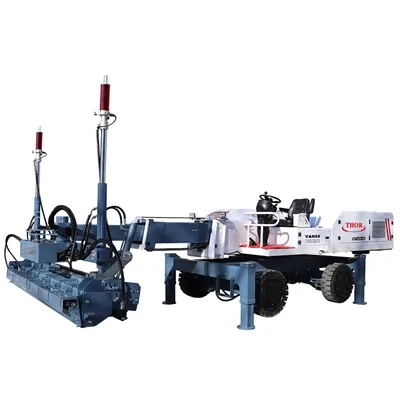
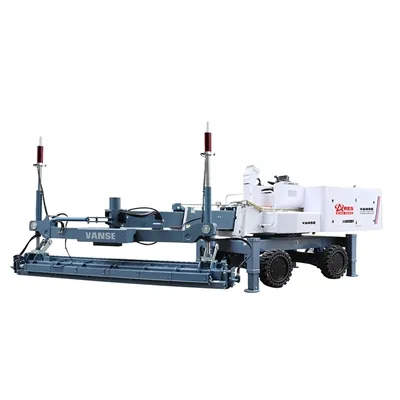
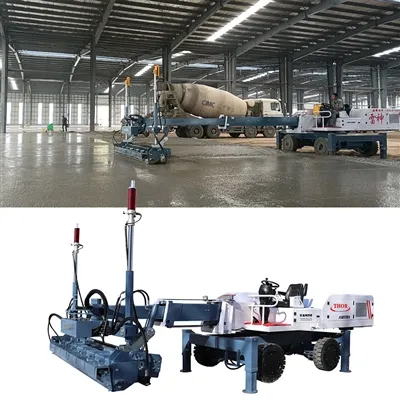
(1) The leveling principle of the laser leveling machine is to use advanced laser technology, closed-loop control technology and high hydraulic system, and realize it under the automatic control of the computer. This is its outstanding feature different from other floor construction processes.
(2) The leveling principle of the leveling machine is to rely on the hydraulically driven leveling head, cooperate with the laser system and computer control system to complete the leveling work while automatically leveling. The leveling head is equipped with an integrated scraper, vibrator and leveling plate, which integrates all leveling, leveling, vibration and compaction work into one, and completes it at one time. The computer control system automatically adjusts the elevation in real time 10 times per second, and the vibration frequency of the balanced vibrator reaches 3000 times/minute.
(3) The laser transmitter used to control the ground elevation is arranged independently, so that the floor elevation is not controlled by the template and no cumulative error will be generated.
(4) The laser leveling machine can also automatically control the longitudinal and transverse slopes, which is also completed by the laser system, computer system, hydraulic system, and mechanical system. For complex-shaped ground with high requirements such as drainage, a three-dimensional special-shaped ground processing system can also be selected to achieve it.
The above is the relevant knowledge told by the manufacturer. We hope that through our narration, you can understand the temperature control method of the laser leveling machine during the construction process, and hope that your equipment can run smoothly and correctly. If you have any questions, please contact us in time. We look forward to cooperating with you.
Thanks to All the Friends Who Support and Trust Shandong Vanse Machinery Technology Co., Ltd.
If you want to know more about Shandong Vanse Machinery Technology Co., Ltd. or have any questions, please feel free to contact us:
Our Factory
Shandong Vanse Machinery Technology Co., Ltd.








Share this article

About the Author: Shandong Vanse Machinery Technology Co., Ltd.
Shandong Vanse Machinery Technology Co., Ltd. is a high-tech manufacturer specializing in concrete construction machinery, including laser screeds and related equipment. The company integrates R&D, production, and global sales, with products exported to over 60 countries and widely used in infrastructure projects worldwide.
Previous Post
Next Post
Related Articles
You Might Also Like
Concrete Laser Levelings Machine User Manual And Operating Guide
♢ • ♢ • ♢ • ☆ Equipment Overview ☆ • ♢ • ♢ • ♢ The concrete laser leveling machine is an efficient and accurate ground leveling equipment that is widely used in various construction projects. It combines modern laser technology and mechanical engineering technology, captures the signal from the laser transmitter through the laser receiver, controls the scraper height of the leveling machine, and realizes automatic leveling of newly poured concrete, greatly improving work efficiency and leveling quality. . This equipment is suitable for large-area, high-precision concrete ground construction, such as commercial complexes, parking lots, warehouses and other places. ♢ • ♢ • ♢ • ☆ Equipment composition ☆ • ♢ • ♢ • ♢ The concrete laser leveling machine mainly consists of the following parts: 1. Main machine: including core components such as engine, traveling system, leveling system, control system, etc., it is the main working mechanism of the leveling machine. 2. Laser transmitter: used to emit laser signals to provide a reference plane for the leveling machine. 3. Laser receiver: installed on the leveling machine, used to capture laser signals and convert them into mechanical control signals. 4. Water source and water spray system: Provide an appropriate amount of moisture to the concrete during the leveling process to ensure that the concrete surface is flat and smooth. 5. Accessories: including various to ols, measuring tools, etc., used to assist the use and maintenance of the leveling machine ♢ • ♢ • ♢ • ☆ Safety Instructions ☆ • ♢ • ♢ • ♢ When operating a concrete laser leveling, the following safety regulations must be strictly observed: 1. Operators must receive professional training, be familiar with the equipment structure and operating points, and must obtain operating qualifications before taking up their posts. 2. Before starting the equipment, you must check whe ther all components are intact and whether the fasteners are firm and reliable to ensure that the equipment is in good working condition. 3. During operation, overloading, overspeeding, and over-range use are strictly prohibited to avoid equipment damage due to overload. 4. At the construction site, obvious safety war ning signs must be set up to ensure that non-workers stay away from the work area. 5. When the equipment has a fault or abnormality, it should be stopped immediately for inspection and the fault can be eliminated before continued use. 6. Operators must wear complete safety protective equipment, such as hard hats, protective glasses, gloves, etc., to ensure personal safety. ♢ • ♢ • ♢ • ☆ Preparation ☆ • ♢ • ♢ • ♢ Before operating the concrete laser leveling machine, you need to make the following preparations: 1. Check whether the appearance of the equipment is intact and whether there is any obvious damage or deformation. 2. Check whether the engine oil, water tank water level, etc. are within the specified range to ensure that the equipment lubrication and cooling systems are working properly. 3. Check whether each connection part is fastened reliably to prevent the equipment from loosening or falling off during work. 4. Check whether the laser transmitter and receiver are installed correctly to ensure that the laser signal can be transmitted and received normally. 5. According to the conditions of the construction site, reasonably arrange the position of the laser transmitter to ensure that the leveler can receive stable laser signals. 6. Prepare the water source and water spray system to ensure that the concrete surface can be fully moistened during the leveling process. ♢ • ♢ • ♢ • ☆ Operational procedures ☆ • ♢ • ♢ • ♢ The operation process of the concrete laser leveling is as follows: 1. Start the engine, preheat the equipment, and check whether each system is working properly. 2. Set the parameters of the laser transmitter according to the construction drawings and site conditions to ensure that the laser signal emitted meets the leveling requirements. 3. Connect the laser receiver to the leveling machine to ensure stable and reliable signal transmission. 4. Adjust the height and angle of the scraper of the leveling machine to maintain an appropriate distance and angle from the laser signal. 5. Turn on the water spray system to provide the appropriate amount of moisture to the concrete surface. 6. Start the leveling operation. According to the construction progress and the initial setting time of the concrete, reasonably control the walking speed of the leveling machine and the lifting frequency of the scraper. 7. During the leveling process, always observe the flatness and wetness of the concrete surface, and adjust the scraper height and water spray volume in a timely manner. 8. After the leveling operation is completed, turn off the engine and water spray system, and disconnect the laser receiver from the leveling machine. 9. Clean the equipment surface and construction site to ensure that the equipment is tidy and the environment is clean. ♢ • ♢ • ♢ • ☆ Care and Maintenance ☆ • ♢ • ♢ • ♢ In order to ensure the long-term stable operation of the concrete laser leveling machine, regular maintenance and upkeep work must be performed, including: 1. Regularly replace the engine oil and clean the oil filter to ensure that the engine lubrication system is clean and effective. 2. Check whether the cooling system components such as water tanks and water pipes are leaking or blocked, and keep the cooling system unimpeded. 3. Check the wear of scrapers, running wheels and other wearing parts, and replace damaged parts in time to ensure stable equipment performance. 4. Clean dust, oil and other debris on the surface and inside of the equipment to keep the equipment clean and tidy. 5. Regularly check the working status of key components such as electrical systems, laser transmitters and receivers to ensure their normal operation. 6. In accordance with the requirements of the equipment instruction manual, conduct regular comprehensive inspections and maintenance of the equipment to ensure long-term stable operation of the equipment. ♢ • ♢ • ♢ • ☆ Troubleshooting ☆ • ♢ • ♢ • ♢ During use, the concrete laser leveling may encounter some malfunctions or abnormal situations. To solve these problems, we can take the following measures to eliminate them: 1. Difficulty starting the engine: Check whether the battery power is sufficient, whether the starter motor is working normally, whether the fuel supply is smooth, etc. If there is any problem, replace the battery, start the motor or clean the fuel system in time. 2. Poor leveling effect: Check whether the laser transmitter and receiver are installed correctly and whether the signal is stable and reliable; check whether the height and angle of the scraper are adjusted appropriately; check whether the concrete surface is even and moist. If there is any problem, adjust or replace relevant parts in time. 3. The equipment is running abnormally: check whether the running wheels are seriously worn, whether the bearings are damaged, whether the transmission chain is loose, etc. If there is any problem, replace the running wheel, bearing or adjust the transmission chain in time. 4. The laser signal is unstable: Check whether the laser transmitter and receiver are interfered, whether the reflective surface is clean, whether the lens is damaged, etc. If there is any problem, promptly eliminate the interference, clean the reflective surface or replace the lens. 5. Electrical system failure: Check whether the cables are damaged, whether the wiring is loose, whether the components are damaged, etc. If there is a problem, repair the cable, tighten the wiring or replace the components in time. When troubleshooting, operators should strictly follow the requirements of the equipment instruction manual and are strictly prohibited from dismantling or repairing the equipment at will. If you encounter a fault that cannot be solved, you should contact professional maintenance personnel in time to handle it. ♢ • ♢ • ♢ • ☆ Transportation and Storage ☆ • ♢ • ♢ • ♢ When transporting and storing the concrete laser leveling, you need to pay attention to the following points: 1. Before transportation, make sure the device is turned off and disconnect the power supply and cables to prevent accidental startup during transportation. 2. During transportation, the equipment should be fixed and protected to prevent the equipment from being collided or damaged during transportation. 3. After arriving at the destination, the equipment should be fully inspected to ensure that the equipment has not been damaged or deformed during transportation. 4. When storing equipment, you should choose a dry, ventilated, and dark place to prevent the equipment from moisture, rust, or other damage. 5. During the storage period, the equipment should be maintained and maintained regularly to ensure that the equipment can work normally the next time it is used. In short, the warm concrete laser leveling machine is an efficient and accurate ground leveling equipment, but during use it needs to strictly abide by safety regulations, make preparations, follow operating procedures, perform regular maintenance and troubleshooting, and troubleshoot in a timely manner , and take necessary protective measures during transportation and storage. Only in this way can the long-term stable operation and service life of the equipment be ensured.Quality Control And Precautions In The Construction Process Of Concrete Laser Leveling Machine
Quality Control And Precautions In The Construction Process Of Concrete Laser Leveling Machine Concrete laser leveling machine is an indispensable equipment in construction machinery, and it is indispensable in the construction of building floors. Doing the following points well during construction will have a great effect on improving the productivity and construction quality of the concrete laser leveling machine. 1. Line setting and leveling on the wall (column): Since the laser leveling machine on the side of the wall cannot be touched, manual leveling is required within 40 cm along the side of the wall (formwork), so line setting is required as a reference for manual leveling . 2. Set up formwork (steel formwork is recommended) along the scope of pouring on the same day, reserve holes for dowel rods, and control the elevation of the formwork to avoid large deviations in the flatness of the joints of different warehouses. 3. Set templates or thin sheets along the walls, equipment foundations, columns, etc. (thickness and position are determined according to design requirements), and leave separation joints to avoid cracking of the concrete floor. 4. Laser transmitter erection: (1) The laser transmitter should be erected at the best position, and there should be no clips to be tightened; (2) There should be no large vibration sources around; (3) Reasonably set the concrete paving direction and leveling direction, and determine a reasonable construction walking route of the leveling machine to avoid leveling blind spots. (4) Feeding: The concrete conveying speed should be guaranteed to be a certain amount, and the feeding speed should be uniform, and the pause interval should be reduced in the middle to prevent cold joints and affect the progress of the project. The slump and initial setting time of the concrete sent to the site each time must be consistent. The concrete slump should be controlled at 14~16cm, and the initial setting time should be controlled at about 3 hours. Note: Some content of this quality control is for reference only, and the actual construction should be formulated according to the floor design requirements and the characteristics of the construction site.What is the slump of concrete during the concrete pavement construction?
Slump: 120~180mm (about 150mm is appropriate) Applicable scenarios: Applicable to laser leveling machine or paver construction to ensure that the fluidity of concrete meets the requirements of mechanical paving and vibration. High slump: 180~220mm (when adding water reducer) Applicable scenarios: Complex reinforcement structure or high temperature dry environment, it is necessary to improve the fluidity of concrete to avoid segregation. Low slump: 80~120mm (dry hard concrete) Applicable scenarios: Construction with slipform paver, or projects with high early strength requirements. Laser leveling machine: requires a higher slump (120~180mm) to facilitate mechanical vibration and leveling. Slipform paver: The slump should be strictly controlled at 80~120mm to avoid deformation of the structure due to excessive fluidity. Hot and dry weather: The slump can be appropriately increased (+20~30mm) to reduce the slump loss caused by water evaporation. Low temperature or rainy season: The slump can be appropriately reduced (-10~20mm) to prevent concrete segregation. When the coarse aggregate particle size is large and the grading is poor, the slump needs to be increased to ensure workability. Adding water reducer can reduce the water-cement ratio and improve strength while maintaining the slump. Each truck of concrete needs to be tested for slump before unloading. If the deviation exceeds ±20mm, it needs to be adjusted (such as adding admixtures or secondary mixing). The mixing and pouring of concrete must be completed before the initial setting (usually ≤2 hours) to avoid slump loss due to too long time. Slump is too large: it is easy to cause bleeding and segregation, which can be improved by adding fly ash or reducing the water-cement ratio. Slump is too small: poor fluidity, it is necessary to add water reducer or increase the water consumption appropriately (need to be verified by the laboratory). "Technical Specifications for Construction of Highway Cement Concrete Pavement" (JTG/T 3650-2020): The recommended slump is 100~180mm, which is adjusted according to the construction machinery. "Concrete Structure Engineering Construction Quality Acceptance Code" (GB 50204-2015): The slump detection frequency is required to be no less than once every 100m³. Reasonable control of slump can ensure the construction quality, durability and appearance smoothness of concrete pavement. The specific parameters need to be determined in combination with design requirements, construction technology and environmental conditions.