Technical Knowledge
Laser leveling machines have a wide range of applications and significant leveling effects

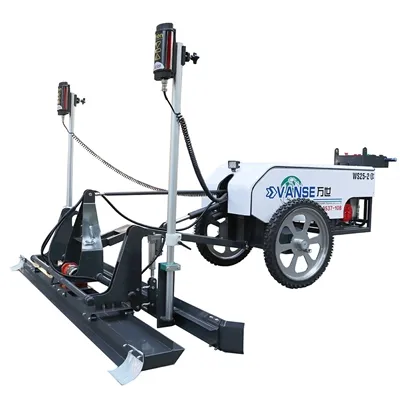
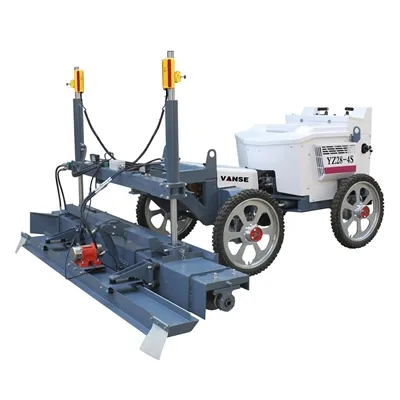
As the construction industry develops faster and faster, traditional concrete leveling methods and technologies can no longer meet the needs of the current industry. Laser leveling machines can use laser technology for scientific leveling, so they have gradually replaced traditional construction methods and survived in the process of development. In order to let everyone gradually deepen their understanding of laser leveling machines, it is also necessary for the majority of users to master the situation of the equipment itself. Let us understand the scope of application of the leveling machine.
The first place to use the laser leveling machine is the square and relatively open places. For many squares, leveling is always required in the later stage of construction, because this will directly affect the beauty of the entire square. Another point is that for the square, the leveling machine using laser technology can complete the work faster.
The first place to use the laser leveling machine is the open space inside the house. For some houses, it is often difficult to grasp whether the corners are leveled using traditional leveling machines, because there are always some dead corners when operating manually. Laser technology can solve this problem very well, so that the entire house is leveled.
During concrete construction, it is usually leveled manually, and the emergence of laser leveling machines completely liberates the inconvenience of manual operation. It greatly reduces the labor cost for the construction site, and has a significant improvement in the leveling effect of concrete. Therefore, the mechanized operation of this era can have a very large impact on the construction industry. Concrete laser leveling is a scientific and reasonable design, and there is no need for manual assistance during the operation of the equipment. This is the convenience, scientificity, and technicality of the design process. Of course, the laser leveling equipment used in different construction fields is different. Due to the diversified models and sizes of laser leveling machines in the production process, they are widely used. All of this needs to improve the advantages and technical characteristics in this aspect during the leveling process, so that it can occupy an advantage in the industry and improve the brand characteristics.
In the work of concrete leveling, the use of laser leveling machines is required to enable its use effect to meet various needs, and because of the performance characteristics of the equipment itself, it has an advantage and position, and has been recognized and trusted by more builders, so it has been widely promoted in construction sites across the country.
Thanks to All the Friends Who Support and Trust Shandong Vanse Machinery Technology Co., Ltd.
If you want to know more about Shandong Vanse Machinery Technology Co., Ltd. or have any questions, please feel free to contact us:
Our Factory
Shandong Vanse Machinery Technology Co., Ltd.








Share this article

About the Author: Shandong Vanse Machinery Technology Co., Ltd.
Shandong Vanse Machinery Technology Co., Ltd. is a high-tech manufacturer specializing in concrete construction machinery, including laser screeds and related equipment. The company integrates R&D, production, and global sales, with products exported to over 60 countries and widely used in infrastructure projects worldwide.
Previous Post
Next Post
Related Articles
You Might Also Like
How to improve the construction quality of concrete laser leveling machine?
Improving the construction quality of concrete laser leveling machines is one of the key factors to ensure the overall quality of construction projects. Concrete laser leveling machines use laser technology to control the flatness and precision of the ground, but to achieve high-quality construction results, multiple factors need to be considered comprehensively. The following is a detailed analysis of how to improve the construction quality of concrete laser leveling machines. Introduction In the field of construction, concrete laser leveling machines are widely used in ground leveling operations due to their high efficiency and high precision. However, the improvement of construction quality depends not only on the equipment itself, but also requires strict construction management and operation procedures. 1. Preparation before construction Sufficient pre-construction preparation is the basis for improving construction quality: – **Equipment inspection: Ensure that the laser leveling machine is in the best working condition, including the laser system, control system and mechanical components. – **Construction plan formulation: Develop a detailed construction plan according to the project requirements, including concrete mix ratio, pouring thickness and leveling process. – **Operator training: Ensure that the operator is familiar with the equipment operation and construction process, and understands the key points of quality control. 2. Quality control of construction materials The quality of construction materials directly affects the final construction quality: – **Concrete ratio: strictly control the ratio of concrete to ensure that it meets the design requirements. – **Raw material quality: select high-quality cement, aggregates and additives to avoid material problems affecting the construction quality. 3. Quality monitoring during construction Quality monitoring during construction is the key to ensuring construction quality: – **Laser system monitoring: real-time monitoring of the stability of the laser system to ensure the accuracy of the laser plane. – **Flatness detection: regularly use professional equipment to detect the flatness of the concrete surface and adjust the working parameters of the leveling machine in time. 4. Accurate operation of construction equipment Accurate operation is a direct means to improve construction quality: – **Equipment adjustment: adjust the height and speed of the leveling machine in time according to the actual situation of the concrete and the construction environment. – **Operation continuity: maintain the continuity of operation to avoid inconsistent flatness due to interruptions in operation. 5. Control of construction environment A good construction environment is an external condition to ensure construction quality: – **Environmental factor control: Control the temperature, humidity and light conditions of the construction site to avoid adverse factors affecting the coagulation and hardening of concrete. – **Construction site management: Reasonably arrange the layout of the construction site to ensure the smooth construction process. 6. Maintenance management after construction Reasonable maintenance management is crucial to ensure construction quality: – **Timely covering: Cover the concrete surface in time after construction to prevent moisture from evaporating too quickly. – **Curing time: Ensure sufficient curing time to fully harden the concrete. 7. Recording and analysis of construction data Detailed recording and analysis of construction data will help to continuously improve construction quality: – **Data recording: Record various parameters during the construction process, such as concrete temperature, pouring speed, leveling speed, etc. – **Data analysis: Analyze data, find out factors that affect construction quality, and continuously optimize construction plans. 8. Acceptance standards for construction quality Establish strict acceptance standards for construction quality: – **Acceptance process: Establish a standardized acceptance process to ensure that each construction link meets quality requirements. – **Acceptance tools: Use professional tools for quality acceptance, such as flatness measuring instruments, strength testers, etc. 9. Problem solving during construction Quickly identify and solve problems during construction: – **Problem identification: Quickly identify problems that occur during construction, such as concrete segregation, surface bubbles, etc. – **Problem handling: Take appropriate measures to deal with the problem according to the nature of the problem, such as re-leveling, repairing, etc. 10. Technological innovation and application Technological innovation is an important way to improve construction quality: – **New process exploration: Continuously explore and experiment with new construction processes to improve construction efficiency and quality. – **Technology integration: Integrate the latest technologies, such as intelligent control systems, to improve the level of construction intelligence. 11. Conclusion Improving the construction quality of concrete laser leveling machines is a systematic project, which requires comprehensive consideration and management from multiple aspects such as pre-construction preparation, quality control of construction materials, quality monitoring during construction, precise operation of construction equipment, control of construction environment, maintenance management after construction, recording and analysis of construction data, acceptance standards for construction quality, problem solving during construction, and technological innovation and application. Through the implementation of these measures, the construction quality of concrete floors can be effectively improved to meet the construction quality and use requirements.How to monitor the status of concrete laser leveling machine in real time through vibration sensor?
To monitor the status of the concrete laser leveling in real time through a vibration sensor, the following steps can be taken: 1. Install vibration sensors: Install vibration sensors on key parts of the concrete laser leveling machine, such as the scraper or leveling beam. 2. Connect the sensor and control system: Connect the vibration sensor to the control system of the concrete laser leveling. 3. Set the alarm value: Set the alarm value of the vibration sensor as needed. When the vibration of the leveling machine exceeds the preset alarm value, the system will automatically sound an alarm and notify the operator to take appropriate action. 4. Real-time monitoring: The control system will monitor the data of the vibration sensor in real time and display the data to the operator through the control interface. The operator can check the vibration status of the leveler at any time and understand the operation of the leveler. 5. Abnormal handling: When the vibration sensor detects abnormal vibration, the control system will immediately issue an alarm and automatically take corresponding measures, such as shutting down or adjusting working parameters, etc., to protect the leveling machine from damage. 6. Recording and data analysis: The control system will also automatically record vibration data, and process and analyze the data through data analysis software. Through these data, the operator can fully understand the status of the leveling machine and provide a basis for equipment maintenance and upkeep. In summary, real-time monitoring of the status of the concrete laser leveling through vibration sensors requires steps such as connecting the vibration sensor to the control system, setting alarm values, real-time monitoring, recording and data analysis. In this way, abnormal conditions of the leveling machine can be discovered in time, ensuring the normal operation of the equipment, and improving construction efficiency and construction quality.Case Study: How Laser Leveling Technology Enhances Construction Efficiency for a 10,000 Square Meter Logistics Warehouse Floor
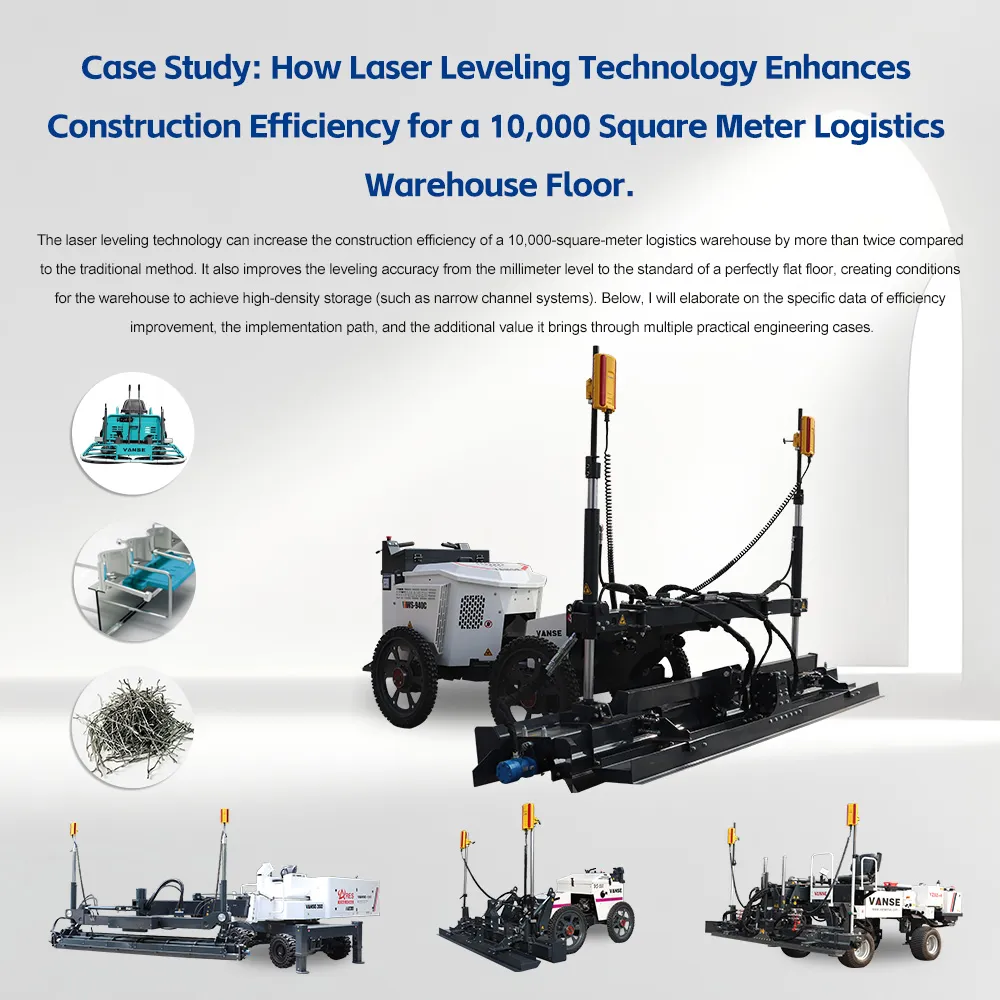
The laser leveling technology can increase the construction efficiency of a 10,000-square-meter logistics warehouse by more than twice compared to the traditional method. It also improves the leveling accuracy from the millimeter level to the standard of a perfectly flat floor, creating conditions for the warehouse to achieve high-density storage (such as narrow channel systems). Below, I will elaborate on the specific data of efficiency improvement, the implementation path, and the additional value it brings through multiple practical engineering cases. Based on the actual application data of Jiangxi Jian Gong San Jian Co., Ltd. in the Yida Logistics Industrial Park in Yushan (approximately 35,000 square meters of ground area), the efficiency advantage of the laser leveling machine is extremely significant: Comparison dimensions Traditional manual method Laser leveling machine Efficiency improvement Construction speed Approximately 800 square meters per day Approximately 2,000㎡ per day 2.5 times Personnel allocation 4 to 6 people 1 person operation Reduce by 3-5 people Flatness accuracy ±4mm ±3mm or less Accuracy increased by more than 25% Pass rate About 70% Over 90% Increase by 20-25 percentage points Based on this efficiency calculation, for a 10,000-square-meter area, using a laser leveling machine can complete the main leveling work in just 5-6 days, which is nearly half the construction period compared to the traditional method. The laser leveling machine can significantly enhance efficiency mainly due to the following technical advantages: Human-machine collaboration, streamlined process: One operator can plan the route in advance, and the machine can automatically perform high-precision leveling construction. In traditional construction, a large number of workers were required to carry out tasks such as stringing lines, leveling, and vibrating, but all these have now been integrated into the machine. Laser guidance, one-time completion: The machine is equipped with a vibrating plate, which can complete vibration while leveling. There is no need for additional manual vibration processes. Laser recognition measurement and real-time control technology ensure that the machine can complete the three processes of scraping, vibrating, and leveling in one trip. Simplified formwork, faster turnover: When using the laser leveling method, only the formwork needed for the area to be poured on the same day needs to be erected, instead of setting up all the formwork as in the traditional method. This greatly reduces the amount of formwork and the material turnover time. Laser leveling not only brings about an increase in efficiency, but also a significant improvement in quality standards, which is particularly important for logistics warehouses. Case 1: Xingang Meikai Long Smart Logistics City (60,000㎡) The Xingang Meikai Long Smart Logistics City project in Xianyang, which was constructed in 2019, used a large telescopic arm laser leveling machine in conjunction with a spreading machine for construction. The floor design thickness of this project was 15 cm, and steel fiber reinforcement (with a dosage of 12 kg/m³) was adopted. The surface was spread with wear-resistant aggregates. Despite encountering unfavorable factors such as rainy weather and high sand and stone moisture content during the construction period, the construction team maintained a stable progress of 1,500㎡ per day, ensuring the project was advanced on schedule. Ultimately, the floor reached the flatness standard required for high-rack warehouses. Case 2: Prologus Warehouse (Suzhou) After adopting laser leveling technology, a certain Prologus warehouse in Suzhou Industrial Park successfully solved the long-standing problems of unsatisfactory flatness, surface fine cracks, and slow construction pace in traditional construction. The acceptance of this project adopted the FF/FL value standard of the American Concrete Institute (ACI), which is an internationally accepted evaluation system for super-flat floors, capable of providing statistical information on the surface condition of the floor and providing quality assurance for high-density storage. The high-precision floor achieved through laser leveling brings significant value to logistics warehouses, far beyond the efficiency gains during the construction phase. Implementing the narrow aisle (VNA) system: In a warehouse project, a 1,500㎡ seamless floor system was laid using laser leveling technology, achieving the "defined movement" (DM) flatness standard for the floor, enabling the warehouse to introduce ultra-narrow aisle (VNA) shelf systems. This renovation significantly increased the storage capacity of the warehouse and maximized the property value. Extending floor lifespan: Laser leveling combined with steel fiber reinforcement and wear-resistant aggregates can form a seamless, crack-resistant, and wear-resistant floor surface layer, significantly reducing the maintenance costs in the later stages. Preparing the ground for automation: With the development of the Internet of Things and intelligent warehousing, AGVs (automated guided vehicles) and automated storage warehouses have higher requirements for floor flatness. Floors constructed using laser leveling technology provide conditions for the future intelligent upgrade of the warehouse. For a 10,000-square-meter logistics warehouse floor, the use of laser leveling technology can shorten the construction period from 10-12 days to 5-6 days, while saving 3-5 workers and increasing the qualification rate of the leveling to over 90%. More importantly, it brings an ultra-flat floor quality level to the warehouse, creating the necessary conditions for future high-density storage and automated operations. Do you have any plans for using narrow aisle shelves or AGV handling equipment in your logistics warehouse project in the future? Please tell me the specific storage plan so that I can help you further confirm the required floor leveling grade and corresponding construction parameters. Contact us NOW Note: The parameters provided in this document are for reference only and are not mandatory. Due to differences in technical characteristics between different brands and models of laser levelers, please consult the manufacturer for a suitable solution before actual operation. This reference document assumes no responsibility for any issues arising from failure to follow the manufacturer's instructions.