Technical Knowledge
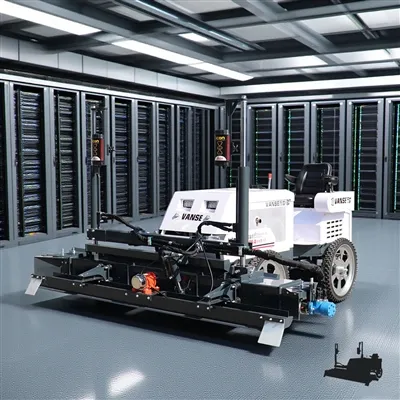
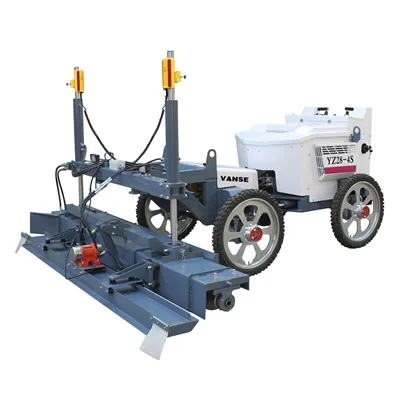
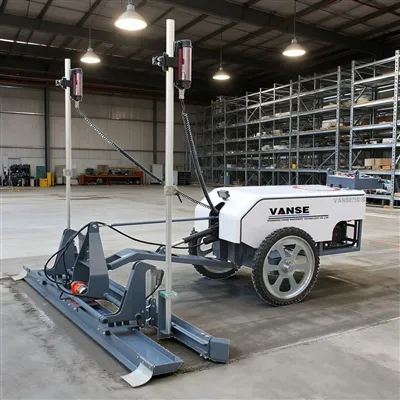
Summer maintenance tips for hybrid laser leveling machines

In the hot summer, the construction of concrete laser leveling machines has not stopped. The high temperature construction environment in summer is a heavy test for engineering machinery and equipment such as concrete laser leveling machines. Therefore, it is very important to do a good job of daily maintenance of laser leveling machines in summer. Today, the editor of Shandong Vanse will explain to you some construction precautions for concrete laser leveling machines in summer for your reference.
1. In summer construction, we must first prevent the engine from overheating. Under normal circumstances, the engine temperature should not exceed 95°. If the temperature is too high, we should choose a relatively cool area to shut down and cool down. At the same time, we can lift the engine hood for ventilation and heat dissipation.
2. The amount of cooling water should be detected in time. When the water radiator reaches 100°, do not rush to add cooling water. Instead, we should shut down the engine immediately to cool down the engine at idle speed, and then add coolant.
3. The construction temperature in summer is high. We should check the tire pressure and tire temperature frequently. If the tire temperature is too high, we should shut down the engine in time and place it in a cool place to cool down. Remember to use the wrong method of deflation or pouring cold water to cool down.
4. Check the battery level frequently, add distilled water in time, dredge the vents, pay attention to the density of the electrolyte, and maintain a good charging state.
5. Prevent engine explosion. Before entering the summer, the carbon deposits in the combustion chamber, valve top and other parts should be thoroughly removed to maintain good heat dissipation and normal compression ratio; and the fuel supply advance angle should be checked and adjusted to prevent engine explosion.
6. Check the temperature of hydraulic oil and hydraulic transmission oil frequently. If the temperature is too high, stop the machine for a rest, and never exceed high temperature operation.
In short, engineering machinery such as concrete laser leveling machines are subjected to the test of long-term continuous operation during summer construction, and are also affected by high temperature environments. Therefore, summer construction must pay attention to the above conditions, and regular inspections and maintenance work must be carried out regularly, which is not only related to the service life of the concrete machine leveling machine, but also to the construction hidden dangers and the smoothness of the concrete laser leveling machine at work.
Thanks to All the Friends Who Support and Trust Shandong Vanse Machinery Technology Co., Ltd.
If you want to know more about Shandong Vanse Machinery Technology Co., Ltd. or have any questions, please feel free to contact us:
Our Factory
Shandong Vanse Machinery Technology Co., Ltd.








Share this article

About the Author: Shandong Vanse Machinery Technology Co., Ltd.
Shandong Vanse Machinery Technology Co., Ltd. is a high-tech manufacturer specializing in concrete construction machinery, including laser screeds and related equipment. The company integrates R&D, production, and global sales, with products exported to over 60 countries and widely used in infrastructure projects worldwide.
Previous Post
Next Post
Related Articles
You Might Also Like
How should maintenance standards for equipment used in concrete construction be established?
When developing maintenance standards for concrete construction equipment, it's necessary to consider the technical characteristics of each equipment type (such as mixing equipment, conveying equipment, pouring equipment, and vibrating equipment), construction scenario requirements, and industry standards. This approach aims to create a systematic standard that covers the entire lifecycle, is quantifiable and implementable, and assigns specific responsibilities. The following is the specific framework and core content: Before developing standards, it's important to first clarify the underlying foundations to ensure they are legally compliant, practical, and avoid being divorced from equipment characteristics or industry requirements. Equipment Technical Documentation Based on the manufacturer's operating and maintenance manuals, key parameters (such as lubrication cycles, replacement thresholds for wearing parts, and maintenance tool models) are extracted. For example, for a mixer, "mixing blades should be replaced if wear is ≤3mm" and "gear oil should be changed every 500 hours for the reducer" are standard "technical baselines." Industry and national standards Reference mandatory or recommended specifications, such as: Technical Regulations for Safety in the Use of Construction Machinery (JGJ33-2012): Clarifies safety requirements for equipment maintenance (such as powering off before maintenance and posting warning signs); Technical Specifications for Concrete Mixing Plants (Buildings) (GB/T 10171-2021): Specifies maintenance cycles and performance testing indicators for mixing equipment; Technical Specifications for Concrete Pumps (GB/T 13333-2014): Clarifies maintenance requirements for the hydraulic system and piping of concrete pumps. Construction scenarios and equipment load Based on project specific adjustments (e.g., high temperature, high humidity, or high-frequency construction scenarios require shortened maintenance intervals): For example, for concrete mixer trucks in tropical regions, the hydraulic oil filter replacement interval needs to be shortened from the standard 1,000 hours to 800 hours. For example, when continuously pouring large volumes of concrete, the insulation layer of the vibrator needs to be inspected every 8 hours instead of every 8-hour shift. Concrete construction equipment varies greatly. Based on the principle of "classification and standardization," the standard should be broken down into "equipment classification modules." Each module covers four dimensions: daily maintenance, scheduled maintenance, fault prevention, and safety requirements, ensuring coverage of the entire equipment lifecycle. Using the four most critical types of equipment in concrete construction as examples, this standard specifies specific maintenance content, cycles, standards, and responsible individuals: Device Type Maintenance Dimension Maintenance cycle Core maintenance content (quantifiable standards) 1. Mixing equipment (mixing machine, batching machine, cement silo) Daily Maintenance Daily before/after construction 1. Mixer: Clean any remaining concrete in the drum (no lumps or adhesion), and check the blade/liner fastening bolts (no looseness, torque ≥ 80 N·m). 2. Batching machine: Clean any debris from the hopper, and check the conveyor belt for deviation (≤ 50 mm/10 m). 3. Cement silo: Check the sensitivity of the level gauge (analog signal response time ≤ 2 seconds), and the safety valve for leaks. Periodic Maintenance (Medium Repair) Every 300-500 man-hours 1. Replace the mixer liner (if wear ≥ 5 mm). 2. Change the gear oil in the reducer (oil quality test: viscosity ≥ 220 cSt, no metal debris). 3. Adjust the tension of the batching machine conveyor belt (deflection ≤ 15 mm/1 m span). Periodic Maintenance (Major Repair) Every 2000-3000 man-hours 1. Disassemble the mixer shaft and check the bearing clearance (≤ 0.05 mm). 2. Calibrate the batching scale for accuracy (error ≤ ±1%). 3. Repair the anti-corrosion coating on the cement silo interior (no rust on ≥ 0.1 m2). 2. Conveying equipment (concrete pump trucks, trailer pumps, mixer trucks) Daily Maintenance Daily after construction 1. Pump Truck: Flush the delivery pipeline (no concrete residue, smooth water flow), check the outrigger cylinder seals (no oil leakage, no scratches on the piston rod); 2. Mixer Truck: Clean the tank (no hardening on the tank wall), check the tire pressure (±0.2 bar). Periodic Maintenance Every 1000 km / 500 man-hours 1. Pump Truck: Replace the hydraulic oil filter (pressure differential ≥ 0.3 MPa), inspect the boom welds (no cracks, weld height ≥ 8 mm); 2. Mixer Truck: Replace the tank liner (wear ≥ 10 mm), and maintain the drive system (bearing temperature ≤ 60°C). 3. Vibrating equipment (insertion vibrator, flat plate vibrator) Daily Maintenance Every 8-hour shift 1. Check the cable insulation (no damage, ground resistance ≤ 4Ω); 2. Vibrator: Test run (amplitude ≥ 0.8 mm, no abnormal noise), and check the connectors for looseness. Periodic Maintenance Every 50 shifts 1. Replace the vibrator bearing (clearance ≥ 0.1 mm); 2. Clean the motor cooling vents (no dust blockage, temperature rise ≤ 40°C). 4. Measuring equipment (sand and gravel scales, cement scales, admixture scales) Daily Maintenance Daily 1. Clear the scale hopper of any accumulated material (no material hanging, no skew); 2. Calibrate the zero point (error ≤ ±0.5kg) and check the sensor wiring (no looseness). Periodic Maintenance Every 30 days 1. Perform dynamic calibration (load 100% of the rated weight, error ≤ ±1%); 2. Check the sensor protection (no moisture, no deformation due to impact). Lubrication Management Standards Follow the "Equipment Lubrication Chart" (specify the lubricant type, filling point, cycle, and amount). For example, use 3# lithium-based grease for the mixer bearings, refilling every 100 working hours at a rate of 50g each time. After lubrication, record the "lubrication time, person performing the lubrication, and oil quality" to avoid over-lubrication or under-lubrication. Consumable Parts Management Standards Maintain a "consumable parts ledger" (including model, inventory threshold, and replacement cycle), such as for agitator blades, conveyor belts, vibrators, and cables, with a minimum inventory of three sets. When replacing consumable parts, "model matching" is required. Substitution with non-genuine parts is prohibited (exceptional circumstances require approval from the technical director). After replacement, a test run is required to confirm compliance. Safety Maintenance Standards Before maintenance, power and gas must be turned off, and a warning sign must be posted (e.g., "Equipment under maintenance, do not start"). Safety belts must be worn and a warning area must be set up for overhead work (e.g., pump truck boom maintenance). Electrical equipment maintenance requires a "certified operator" (electrician's license). Hydraulic system maintenance must be depressurized (reduced to 0 MPa) to prevent hydraulic fluid spray and injury. Record and traceability standards Establish an "Equipment Maintenance Record Form" (electronic or paper) that includes: equipment number, maintenance date, maintenance items, test data, abnormalities, person responsible, and inspector. Record retention period should be ≥ the equipment's service life to facilitate tracing the cause of a malfunction (e.g., if a mixer blade breaks, the record can be used to verify whether it has not been replaced beyond the specified time limit). Clarify the responsibility system Responsibilities are divided into different levels: Operators are responsible for "daily maintenance" (cleaning, inspection, and simple tightening); repair workers are responsible for "regular maintenance" (disassembly, replacement, and calibration); technical leaders are responsible for "standard review and exception handling"; and project managers are responsible for "resource support (spare parts, tools, and funding)." A "Equipment Maintenance Responsibility Letter" is signed, linking maintenance effectiveness to performance appraisals (e.g., if equipment failure occurs due to inadequate maintenance, the responsible individual's performance will be deducted). Supervision and Inspection Mechanism Daily Inspections: Technicians will spot-check the Maintenance Record Form daily and verify maintenance effectiveness on-site (e.g., randomly checking the wear of the mixer blades to see if it matches the records). Regular Assessments: Monthly "Equipment Maintenance Evaluations" are conducted, rewarding teams/individuals with a maintenance compliance rate ≥95%. Those failing to meet the standards will be given a deadline to rectify the situation. Fault Review: After equipment failure, analysis will be conducted to determine whether the cause was maintenance failure, and standards will be updated (e.g., if a crack on a pump truck boom was caused by untimely weld inspection, the weld inspection cycle will be shortened). Personnel Training Standards New employees must pass "equipment maintenance training + practical assessment" (e.g., identifying wearing parts of the mixing unit and completing maintenance records) before they can begin work. Maintenance skills training is organized quarterly (manufacturer technicians are invited to explain key maintenance points and common troubleshooting for new equipment) to ensure personnel skills meet standard requirements. Concrete construction equipment technology evolves rapidly (e.g., new intelligent mixing plants and electric pump trucks), necessitating regular standard updates: Update Cycle: A comprehensive review is conducted annually. Revisions are required immediately if equipment upgrades, construction scenarios change, or industry standards are updated. Update Process: The technical department collects equipment failure data, maintenance feedback, and new regulatory requirements. Discussions are held with maintenance workers, operators, and manufacturer representatives. After revisions are made public, training sessions are held to ensure full awareness. The standards established through the above framework can not only cover the technical requirements of equipment, but also be implemented in specific positions and operations, avoiding "empty" concepts and ultimately achieving the goal of "reducing equipment failures, extending service life, and ensuring construction continuity." Note: The parameters provided in this document are for reference only and are not mandatory. Due to differences in technical characteristics between different brands and models of laser levelers, please consult the manufacturer for a suitable solution before actual operation. This reference document assumes no responsibility for any issues arising from failure to follow the manufacturer's instructions.What is the importance of a test run before using a concrete laser leveling?
Compared with the laser leveling / leveling machine, the trial run process is an experimental process before it is officially put into use, and only the equipment that has been successfully tested can be officially put into use. It can be seen that in the process of using the laser leveler, the test run is a very important step. In order to help everyone realize the necessity of this step, the following article mainly introduces the importance of the test run process before using the laser leveling. 1. Clean the laser leveling machine, the surface of each component, and check whether all joints are firmly fastened. 2. All lubricating parts of the laser leveling machine are filled with oil, check whether the electrical system is intact, whether the limit switch is set correctly, whether the connection is reliable, no-load test, and the lifting motor is lifted and lowered no less than 10 times, requiring flexible transmission and high precision , stop, the resistance of the main drive is stable, and the sound is normal. After the empty car is put into trial operation, a load test is carried out. 3. Adjust the position of the frame according to the width of the corrected I-beam flange plate, and adjust the correct position of the guide rod according to the thickness of the plate. 4. Start by the power supply, start the laser leveling / leveling machine to run dry, ensure the normal operation of the parts and components of each transmission part, no cassette tape, no overheating, load can be loaded, and the welded H-beam is suspended on the roller table by a row crane superior. 5. Start the drive roller to transport the steel into the laser leveler/ leveling machine. This end exceeds the frame leveler, and this end stops after exceeding the center of the correction wheel by about 150mm. Press the upper roller to reduce the linkage. When the upper roller touches the workpiece Immediately stop, and then press the upper and lower pressure rollers, the pressure may have errors, and can be adjusted at any time. 6. Correctly adjust the amount of depression during the test run of the laser leveling / leveling machine. The dial of the screw rod is indicated as 0.5mm per grid, and the amount of over-deformation under pressure must not exceed 1mm. However, the adjustment of the upper pressure roller can only be done during the stop process. Carried out, the output of the workpiece is about 200mm, and the flange plate after the initial correction is perpendicular to the web to prevent over-correction. 7. If it is necessary to adjust the correction amount, retract the workpiece into the main unit (the end is about 150mm from the center of the correction wheel) to adjust the shrinkage of the correction roller, start the main drive motor, and perform normal correction output. If multiple corrections are required on one side, the workpiece should be stopped immediately after the end of the workpiece is about 100mm from the center of the correction wheel, and the workpiece should return to the front end of the front end about 150mm beyond the center of the correction wheel. The above article is all the content introduced by the manufacturer about the importance of the test run process before using the laser leveling machine. Do you understand it? If you feel interested in our products after reading the article, you can call us for details, thank you for your reading and support.How does the concrete laser leveling’s high-frequency vibration system affect the quality and density of the concrete slab?
Excellent question. The high-frequency vibration system in a laser leveling is the core technology that directly addresses your inquiries about strength, compaction, and surface defects. Its impact is profound and multifaceted. Here's a detailed breakdown of how it affects concrete slab quality and density: The system uses rapidly vibrating (high-frequency, typically 3,500 – 6,000+ VPM) blades or pans. This vibration is transmitted directly into the concrete mass, momentarily liquefying the cement paste. This reduces internal friction, allowing aggregate particles to settle and rearrange under gravity into a denser, more efficient packing arrangement. Achieving Higher Strength Reduced Void Ratio: The primary driver of increased compressive and flexural strength is the reduction of entrapped air voids. Less air means more solid material per unit volume, allowing the concrete to bear higher loads. Improved Cement Paste Contact: Better particle packing brings aggregate surfaces into more intimate contact with the cement paste, enhancing the bond and the efficiency of the hydration process. Homogeneity: Vibration eliminates pockets of weak, aggregate-deficient mortar or paste, creating a uniformly strong matrix throughout the slab. Achieving Better Compaction Consolidation from Bottom-Up: Unlike hand-held vibrators that work from the top down, the laser leveling's vibrating pan acts across the entire surface area, consolidating the entire lift (up to its design depth, typically 10-12 inches) uniformly and simultaneously. Elimination of Entrapped Air: The high-frequency waves effectively force entrapped air bubbles to rise to the surface. This is critical for density. The result is a specific gravity much closer to the theoretical maximum of the mix design. Handles Stiff Mixes: It allows the use of lower slump (stiffer) concrete mixes, which have higher potential strength and reduced shrinkage, by providing the energy needed to consolidate them properly-a task difficult with manual methods. Reducing Surface Defects (Honeycombing, etc.) Prevents Honeycombing: Honeycombing is the direct result of inadequate consolidation, where aggregate pockets form without surrounding mortar. The laser leveling's comprehensive vibration ensures mortar completely fills all spaces between aggregates. Minimizes Bug Holes: While not eliminating all surface air voids (which often requires surface vibration or finishing techniques), the system dramatically reduces the larger bug holes caused by poor consolidation. Creates a Level, Closed Surface: The combination of vibration and precise strike-off creates a densified, uniform surface that is ideal for subsequent finishing operations. This reduces the likelihood of surface defects like scaling or crusting later on. The vibration system doesn't work in isolation; its effectiveness is magnified by the laser-guided automation: Speed and Consistency: The machine moves steadily and quickly. The concrete is vibrated and struck off immediately upon placement, before any initial set can begin. This eliminates the variability and delays of manual methods. Optimal Vibration Duration: The machine applies vibration for a consistent, appropriate time as it passes-neither under-vibrating (causing defects) nor over-vibrating (which can cause aggregate segregation or bleed water channels). Perfect Flatness on a Dense Base: It achieves exceptional flatness (FF/FL numbers) on top of a fully consolidated substrate. A flat but poorly compacted slab is a future failure waiting to happen. To achieve the stated benefits, the system must be used correctly: Lift Thickness: It is designed for specific depths. Placing concrete too deep in a single lift will result in inadequate consolidation at the bottom. Concrete Mix Design: The mix must have a cohesive aggregate gradation and appropriate admixtures to respond well to vibration without segregating. Operator Skill: The operator must manage the head speed and ensure adequate overlap between passes. High-Frequency Vibration → Fluidizes the concrete mix → Forces entrapped air out and particles into dense packing → Results in: Increased Density (lower porosity, higher specific gravity). Higher Strength (direct result of increased density and better bond). Reduced Permeability (denser matrix resists water and chloride ingress, improving durability). Elimination of Consolidation Defects (no honeycombing, reduced bug holes). Superior Surface for Finishing (uniformly dense, flat, and closed surface). In essence, the laser leveling's vibration system is a controlled, consistent, and powerful consolidation method that ensures the as-placed concrete slab achieves the maximum potential density and integrity inherent in its mix design. This directly translates to the higher strength, durability, and surface quality you are inquiring about. Note: The parameters provided in this document are for reference only and are not mandatory. Due to differences in technical characteristics between different brands and models of laser levelers, please consult the manufacturer for a suitable solution before actual operation. This reference document assumes no responsibility for any issues arising from failure to follow the manufacturer's instructions.