Technical Knowledge
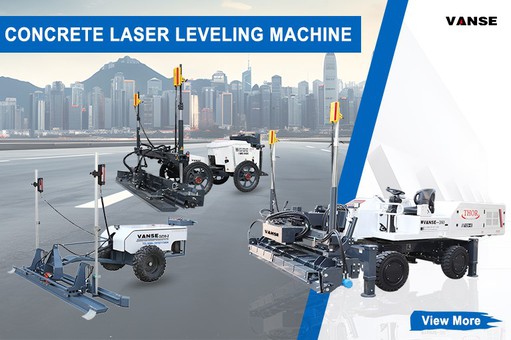
Concrete laser leveling machines are very popular due to their performance advantages

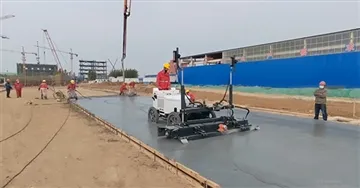
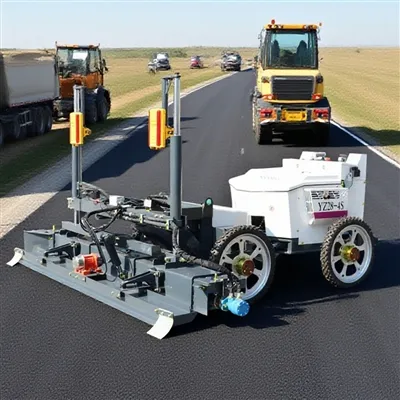
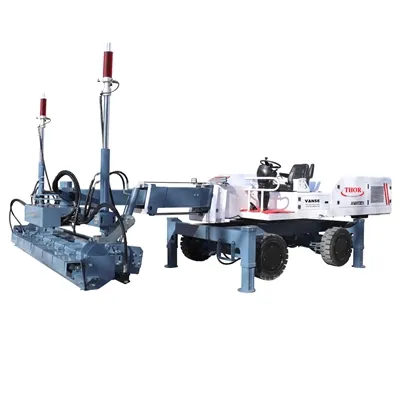
Once the concrete laser leveling machine was launched, it quickly occupied the market. Major construction factories and manufacturers abandoned traditional construction and chose leveling machines for concrete leveling construction. This equipment also became the new "darling" of the construction industry. So, why do people favor leveling machine construction so much? What performance advantages does the concrete laser leveling machine have that makes it so "favored" by user units? Next, let's take a look.
The reason why the concrete laser leveling machine is so "favored" is not accidental, but inevitable due to its unique performance advantages. Next, let's take a look at the specific performance advantages:
1. The design elevation of the top surface of the floor is automatically controlled by laser and computer, and adjusted in time (adjusted 10 times per second) to ensure the accuracy of the leveling machine. Tests have shown that the leveling quality of the concrete laser leveling machine is at least 3-5 times higher than that of the traditional construction method;
2. The longitudinal and transverse slopes are completed by the computer-automatic hydraulic system. Compared with the traditional construction method, it can better ensure the accurate control and implementation of the ground slope;
3. The operating efficiency of the concrete laser leveling machine is greatly improved. Tests have shown that the floor paving and leveling can complete a workload of 4,000 square meters per day; using the traditional method, the vibration beam floor leveling can complete a workload of about 900 square meters per day;
4. The laser transmitter of the equipment is arranged independently, and the floor construction can be paved over a large area and can ensure the ground mark High consistency, the elevation is not controlled by the template, and no cumulative error will be generated. Compared with the traditional method, it can greatly reduce the additional construction joints of the floor, greatly reducing the later maintenance costs and the use of templates on the ground;
5. The leveling head of the concrete laser leveling machine consists of four parts: scraper, cloth spiral, vibrator, and leveling beam. During construction, the process (scraping excess concrete with a scraper, roller rolling, wooden rubbing, etc.) is integrated together, and the machine is completed at one time, which improves efficiency and saves labor;
6. The vibration frequency of the vibrator of the concrete laser leveling machine is 3000 times/min, which can be used for dry hard concrete, steel fiber concrete, and large aggregate concrete;
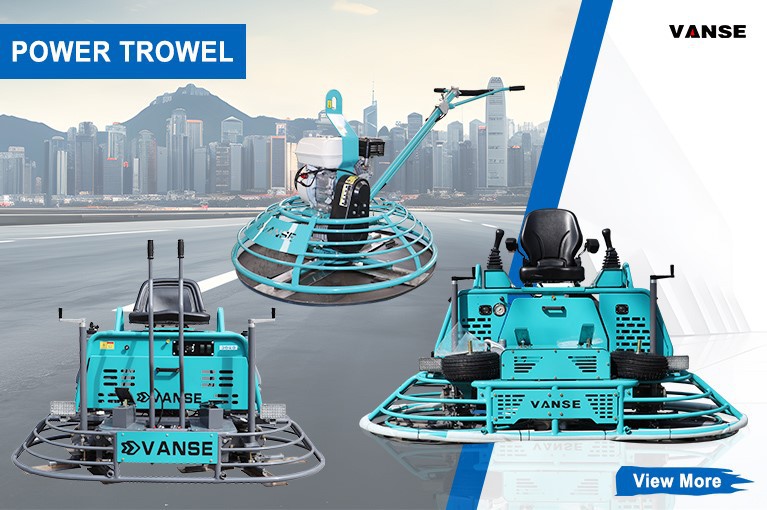
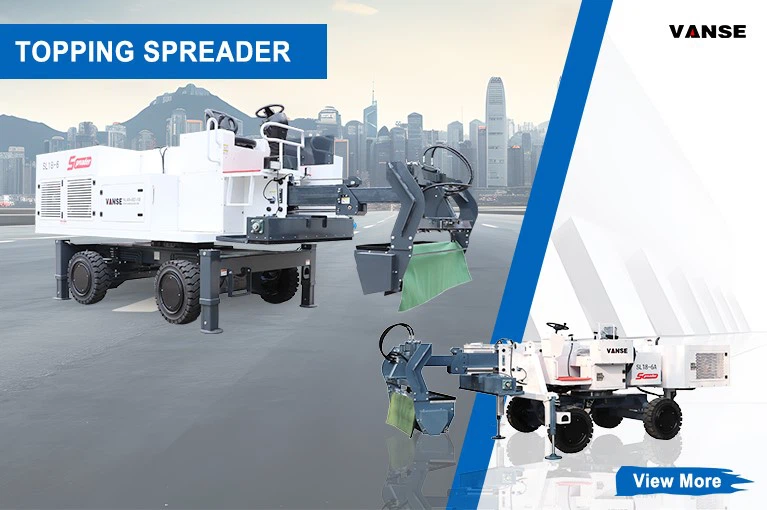
7. According to the performance of the concrete laser leveling machine, it is equipped with auxiliary equipment such as trowel, spreader, soft cutter, and fast straight edge machine.
After reading this article, everyone must have a new understanding and understanding of the excellent performance of the concrete laser leveling machine. I hope that the introduction of this article can bring certain help to everyone. Of course, we still have a lot of knowledge in this area, and we will continue to share it with you. You can continue to pay attention to our website.
Thanks to All the Friends Who Support and Trust Shandong Vanse Machinery Technology Co., Ltd.
If you want to know more about Shandong Vanse Machinery Technology Co., Ltd. or have any questions, please feel free to contact us:
Our Factory
Shandong Vanse Machinery Technology Co., Ltd.

Share this article

About the Author: Shandong Vanse Machinery Technology Co., Ltd.
Shandong Vanse Machinery Technology Co., Ltd. is a high-tech manufacturer specializing in concrete construction machinery, including laser screeds and related equipment. The company integrates R&D, production, and global sales, with products exported to over 60 countries and widely used in infrastructure projects worldwide.
Previous Post
Next Post
Related Articles
You Might Also Like
VANSE Telescopic Boom Concrete Laser Leveling Machine Helps You Take Over Large Projects
Shandong Vanse Machinery Technology Co., Ltd. is a domestic set manufacturing, sales, technical services in one, specializing in concrete laser leveling machine,Concrete Floor Surface Grinder enterprises. The company is located in the ancient Kyushu one of Shandong Yanzhou, the geographical location of the more, convenient transportation. Has passed National High-tech Enterprise certificationIS09001 quality certification, ISO1400 environmentalProducts have CE certification and SGS and BV approved factory checking reportsthe engines for machines have EURO 5 and EPA, emission meet EU and USA standard. With the rapid development and prosperity of the floor industry, laser leveling machines are more and more used in floor construction, especially in the construction of large-area concrete floors, the use of laser leveling machines can greatly improve construction efficiency. Vanse large-scale telescopic arm laser leveling machine adopts the most advanced laser system and full hydraulic control system to make the concrete construction ground leveling with higher precision and stronger compactness, and to meet high-standard construction requirements at the same time of high-efficiency construction. Another major feature of Vanse large-scale telescopic arm laser leveling machine is that it saves labor and improves efficiency. It can shorten the construction period by two thirds and reduce labor by more than half. The key quality is better, the cost performance is very high, and the maintenance cost can also be reduced. so for the general construction team, the cost is not too high, and the price of the floor industry is also acceptable. Leasing or buying and selling large laser levelers is a very good choice. Shandong Vanse Machinery has experienced senior engineers who serve customers wholeheartedly, develop together, and cooperate for win-win results.Superflat Floor Flatness Standards (FF/FL Values) Interpretation and Testing Methods
In logistics warehousing, precision manufacturing, and other fields, **superflat floors** are fundamental to ensuring the smooth operation of high-reach forklifts, automated guided vehicles (AGVs), and high-precision equipment. The core indicator for measuring floor quality is the F-Numbers (F-value), which mainly includes two values: FF and FL. The following is an in-depth summary of its standard interpretation and testing methods: Compared to the traditional "3-meter straightedge test method," the F-value system uses statistical analysis of the undulations of the floor surface to more scientifically reflect the actual working performance of the floor. Meaning: Describes the degree of "undulation" (local unevenness) of the floor surface. Calculation Principle: Calculates the curvature change by measuring the height difference every 300mm (1 foot). Performance Characteristics: A higher FF value indicates a smoother floor, resulting in less shaking and bumping when forklifts are in motion. Meaning: Describes the overall inclination of the floor relative to the design horizontal plane (macro slope). Calculation Principle: Measures the total height difference over a distance of 3000mm (10 feet). Performance Characteristics: A higher FL value indicates a floor closer to absolute level. This is crucial for the verticality of high-bay racking (VNA). According to ACI (American Concrete Institute) 302.1R standard, floor grades are typically classified as follows: Flooring Classification Specify overall flatness (FF) Specify overall flatness (FF) Applicable Scenarios Standard 20 15 Machine rooms, parking lots, general warehouses Standard Grade 25 20 Light industrial and commercial office buildings Flat Grade 35 25 Narrow aisle warehouses (non-high-rise), laboratories Extra Flat Grade 45 35 Ice rinks, precision manufacturing plants Super Flat Grade 60+ 40+ High-rise VNA warehouses (above 12 meters), television studios The internationally accepted testing standard is ASTM E1155. Domestically, this standard or industry regulations are typically referenced for acceptance testing. This is currently the most widely recognized testing tool. It is a walking electronic level; the operator pushes it across the ground, and the device automatically records the elevation difference between every two points (usually 300mm apart). Golden Time: Testing should be conducted within 24 to 72 hours after concrete pouring. Reason: Because concrete undergoes long-term shrinkage and warping, early testing reflects construction quality, while later testing is affected by structural deformation. Test Line Layout: Multiple parallel and perpendicular test lines are typically laid out within each test section. Total Length Requirement: At least 34 elevation measurements are required per 1000 square feet (approximately 93 square meters) to ensure the validity of the statistical data. The acceptance report will show two key evaluation dimensions: Specified Overall Value (SOV): The average score for the entire floor slab, which must meet the design specifications. Minimum Local Value (MLV): The permissible baseline for quality (typically 60%-70% of the SOV). Even if the overall score is acceptable, if a local MLV fails to meet the standard, that area must be repaired. Laser leveling: Using a high-precision laser leveling is essential to achieving an F-value > 40. Repeated Scraping with a Highway Straightedge: Before the concrete initially sets, repeated cross-scraping with a large leveling (Highway Straightedge) is crucial for improving the F-value. Segmented Construction: Using a long-strip construction method makes it easier to control precision compared to large-area pouring. Note: The parameters provided in this document are for reference only and are not mandatory. Due to differences in technical characteristics between different brands and models of laser levelers, please consult the manufacturer for a suitable solution before actual operation. This reference document assumes no responsibility for any issues arising from failure to follow the manufacturer's instructions.How to ensure the safety of laser leveling machine during construction?
– Reasonable center of gravity design: The laser leveling machine should be designed to ensure that the center of gravity is low and reasonably distributed, so that it can effectively prevent rollover during operation, especially when working on uneven ground or when the machine is turning. Before the equipment is put into use, it is necessary to check whether its center of gravity related parameters meet the design requirements. For example, for large laser leveling machines, the center of gravity is located in the center area of the bottom of the machine by reasonably arranging the positions of components such as the engine and working device. – Good support device: The support legs or stabilizers of the machine should be able to work normally. Before construction, check whether the support legs are flexible and the locking device is reliable. When the laser leveling machine is working on a slope or does not move for a long time for fixed-point construction, a stable support device can prevent the machine from accidentally sliding or shaking. – Guardrails and protective covers are installed in place: For the rotating parts, transmission parts (such as sprockets, pulleys, etc.) of the machine, and moving parts such as scrapers, sturdy guardrails and protective covers should be installed. These protective devices should be able to withstand certain external impacts and be firmly installed to prevent loosening due to vibration and other reasons during construction. For example, a guardrail should be set at the edge of the scraper, and the height should meet safety standards, which can prevent operators from accidentally touching the scraper without affecting the construction line of sight. – Regularly check the wear of mechanical parts: Mechanical parts will wear after long-term use. For example, excessive wear of the scraper may reduce work efficiency and even cause the risk of breakage. The degree of wear of the parts should be checked regularly, and the parts should be replaced in time according to the wear limit. For example, an inspection plan should be formulated to check key parts such as scrapers and travel wheels every certain working hours (such as 100 hours) and record wear data. – Operation skills training: Operators should receive professional training, be familiar with the functions of various operating buttons and handles of the laser leveling machine, and master the correct operation methods. The training content includes various aspects of the machine's start, stop, travel, and leveling operations. For example, during the training process, operators should practice multiple times in an environment that simulates the construction site to master the operating skills under different ground conditions. – Safety knowledge education: Operators are given comprehensive safety knowledge education, including possible safety risks of the equipment and safety precautions at the construction site. For example, operators are informed that when the laser leveler is working, people around should keep a certain safe distance to prevent being hit by the machine; when the equipment is abnormal, how to properly make an emergency stop and other safety knowledge. At the same time, operators should obtain the corresponding operation qualification certificate to ensure that they have the ability to operate safely. – Safety helmets and protective shoes: Operators must wear safety helmets that meet the standards to prevent being hit on the head by falling objects from heights at the construction site. Protective shoes should have anti-slip and anti-smashing functions. When walking in the working area of the machine, avoid slipping or being hit by heavy objects on the feet. – Earplugs and goggles: The laser leveler will generate noise during operation, and long-term exposure may cause damage to the operator's hearing, so earplugs are required. At the same time, in certain construction environments, such as cutting materials or when there is a possibility of foreign objects splashing, goggles can protect the eyes from injury. – Clearing site debris: Before construction, the construction site should be thoroughly cleaned to remove stones, wood blocks, metal fragments and other debris on the ground. These debris may affect the normal operation of the laser leveler and even damage the parts of the machine. For example, when constructing on a site after the demolition of an old building, carefully clean up the construction waste and ensure that the ground is level before starting construction. – Marking underground obstacles: If there are obstacles such as underground pipelines and cables on the construction site, they should be clearly marked on the ground. Warning stakes, colored markings and other methods can be used to remind operators to avoid them. During the construction process, communicate with relevant departments to obtain detailed location and depth information of underground obstacles to avoid the machine from damaging underground facilities during construction and causing safety accidents. – Setting safety distance: Set a safety distance around the laser leveler. Generally, a safety range of at least 2-3 meters is maintained around the machine. Unrelated personnel are prohibited from entering this range to prevent being hit by the machine or injured by splashing materials during construction. Warning tapes, fences and other facilities can be used for isolation. – Divide the construction area: For large construction sites, divide different construction areas, such as concrete pouring area, leveling area, material stacking area, etc. Maintain reasonable passages between each area to ensure that material transport vehicles and construction equipment can pass safely. At the same time, mark the degree of danger in different areas, such as marking warning information such as "Beware of the collapse of stacked materials" in the material stacking area. – Insulation inspection: Regularly check the insulation performance of the electrical system of the laser leveler, including wires, cables, motors and other components. Use tools such as insulation resistance meters to detect whether the insulation resistance meets safety standards. If the insulation resistance is too low, it may cause leakage and cause electric shock accidents. For example, conduct an insulation inspection once a month, record the inspection data, and repair or replace components with reduced insulation performance in a timely manner. – Grounding protection: Ensure that the electrical equipment of the laser leveler has good grounding protection. The grounding device should be firmly connected and the grounding resistance should meet the specified requirements. In the event of an electrical fault, grounding protection can introduce current into the earth to prevent electric shock to operators and damage to equipment. – Laser radiation limit: The laser radiation intensity of the laser transmitter should comply with national safety standards. When selecting equipment, you should choose a laser transmitter that has been safety certified, and its laser wavelength, power and other parameters should be within the safe range. For example, for a laser leveler used for floor construction, the laser radiation intensity should be controlled within a range that will not cause harm to human eyes and skin. – Laser warning signs: Set up obvious laser warning signs around the laser transmitter and construction area to inform personnel to pay attention to laser radiation. The signs should include information such as laser hazard levels and protective measures. At the same time, operators should be trained in laser safety knowledge, such as not looking directly into the laser beam and avoiding exposure to laser radiation when the laser is working.