Technical Knowledge
In addition to municipal engineering,in what other fields are laser leveling machines also used?

Laser leveling machines are widely used in many fields due to their high precision and high efficiency. In addition to municipal engineering, they also include but are not limited to the following fields:
1. **Commercial and retail facilities**:
– Ground construction in large shopping malls, supermarkets, and shopping centers requires the ground to be flat and without bumps to facilitate the passage of carts and pedestrians, and is also conducive to cleaning and maintenance.
2. **Industrial plants**:
– Modern industrial plants, especially those that require the use of heavy machinery and production lines, the flatness of the ground directly affects the installation and operation efficiency of the equipment.
3. **Warehouses and logistics centers**:
– Logistics warehouses and distribution centers, ground flatness is essential for automated warehousing systems and forklift operations, which can improve cargo handling efficiency and safety.
4. **Airports and runways**:
– The aprons, runways, and taxiways of airports require extremely high flatness and strength to withstand the take-off and landing and taxiing of aircraft.
5. **Sports venues**:
– Floors of indoor and outdoor sports venues, such as basketball courts, volleyball courts, tennis courts, etc., flat floors help athletes to perform and prevent injuries.
6. **Parking lots**:
– Underground and above-ground parking lots, flat floors not only facilitate vehicle access, but also extend the service life of the floor and reduce maintenance costs.
7. **Exhibition centers**:
– Exhibition centers and conference halls, flat floors are convenient for arranging booths and activities, providing a good visiting experience.
8. **Educational institutions**:
– Indoor gymnasiums, libraries and classroom floors of schools and universities, flat floors are conducive to furniture placement and daily activities.
9. **Medical facilities**:
– Hospitals, clinics and laboratories, flat floors are very important for sanitation and barrier-free access.
10. **Residential buildings**:
– Public areas of high-end residential areas and apartment buildings, such as lobbies, corridors and underground parking lots, flat floors improve living comfort and aesthetics.
11. **Historical Relic Restoration**:
– In the restoration of historical buildings or sites, laser leveling machines are sometimes needed to restore the original state of the ground.
12. **Agricultural Facilities**:
– In the construction of large greenhouses, livestock houses or agricultural warehouses, a flat ground helps mechanized operations and animal welfare.
The application range of laser leveling machines is wide, covering almost all construction projects that require high-quality concrete floors. It can improve construction efficiency and reduce labor costs, while ensuring the flatness and strength of the ground to meet various high-standard engineering needs.
Thanks to All the Friends Who Support and Trust Shandong Vanse Machinery Technology Co., Ltd.
If you want to know more about Shandong Vanse Machinery Technology Co., Ltd. or have any questions, please feel free to contact us:
Our Factory
Shandong Vanse Machinery Technology Co., Ltd.








Share this article

About the Author: Shandong Vanse Machinery Technology Co., Ltd.
Shandong Vanse Machinery Technology Co., Ltd. is a high-tech manufacturer specializing in concrete construction machinery, including laser screeds and related equipment. The company integrates R&D, production, and global sales, with products exported to over 60 countries and widely used in infrastructure projects worldwide.
Previous Post
Next Post
Related Articles
You Might Also Like
Concrete laser leveling technology is used in floor slab construction
Discussion on the use of concrete laser leveling technology in floor slab construction 1. Introduction: Current status of floor slab construction With the rapid development of modern construction technology, the quality and efficiency of floor slab construction have become key factors affecting the overall performance and construction cycle of buildings. Traditional floor slab construction methods often rely on manual operation, which not only makes it difficult to ensure construction accuracy, but also has low construction efficiency, making it difficult to meet the high-precision and high-efficiency requirements of modern buildings. Therefore, seeking a new floor slab construction technology to improve construction quality and efficiency has become an urgent problem to be solved in the current construction industry In recent years, laser leveling technology, as an advanced construction technology, has been widely used in floor slab construction. This technology uses the laser beam plane as the control reference and realizes high-precision control of floor slab construction through high-precision measurement and positioning tools. This paper aims to explore the specific application and advantages of concrete laser leveling technology in floor slab construction, in order to provide a useful reference for the development of the construction industry. 2. Overview of laser leveling technology Laser leveling technology is an advanced construction technology that uses the laser beam plane to replace the human visual control reference in conventional mechanical leveling. It controls the leveling and scraping machinery through the same hydraulic system to achieve the refinement and automation of land leveling operations. This technology combines high-tech laser control technology with conventional mechanical leveling technology, which can greatly improve construction accuracy and efficiency. In floor slab construction, concrete laser leveling technology can achieve high-precision leveling of the floor slab surface, effectively eliminate surface unevenness, and improve the overall performance of the floor slab. Compared with traditional construction methods, laser leveling technology has the advantages of high construction accuracy, high efficiency, and stable quality, so it has been widely used in floor slab construction. 3. Preparation and requirements before construction Before using concrete laser leveling technology for floor slab construction, full preparation is required. First, a detailed construction plan should be made to clarify the construction method, material selection, construction plan, etc. Secondly, determine the type and quantity of materials required according to the construction plan, and purchase and distribute them to ensure that there is enough material supply during the construction process. At the same time, it is also necessary to clean and level the construction site to ensure that there is no debris, dust, etc. on the construction site to create a good environment for construction. In addition, the requirements for construction personnel are relatively high. Construction personnel need to have certain professional skills and experience, and be able to master the operation methods and techniques of laser leveling technology. At the same time, it is also necessary to pay enough attention to safety issues during the construction process and take corresponding safety protection measures to ensure the safe and smooth progress of the construction. 4. Detailed explanation of the construction process The application of concrete laser leveling technology in floor slab construction mainly includes the following steps: ❶ Formwork installation and adjustment: According to the requirements of the building design, the formwork is set up and adjusted according to the construction plan. Ensure that the level and slope of the formwork meet the design requirements, laying the foundation for subsequent concrete pouring and leveling work. ❷ Concrete pouring: After the formwork is installed, the concrete is poured. During the pouring process, attention should be paid to controlling the field fall and uniformity of the concrete to ensure the stability of the quality of the concrete. ❸ Laser leveling machine operation: After the concrete is initially set, use a laser leveling machine to level the surface of the floor slab. The laser leveling machine uses the laser beam plane as the control reference to achieve high-precision leveling of the floor slab surface. The operator needs to make precise adjustments and operations according to the instructions of the laser leveling machine to ensure that the flatness of the floor slab surface meets the requirements. ❹ Maintenance and finished product protection: After the floor slab construction is completed, proper maintenance work is required to improve the strength and durability of the concrete. At the same time, the finished product needs to be protected to prevent damage or contamination during subsequent construction. 5. Quality control and testing When using concrete laser leveling technology in floor slab construction, quality control and testing are key links to ensure construction quality and performance. First, each link in the construction process must be strictly monitored and managed to ensure that the construction operation meets the specifications and requirements. Secondly, after the construction is completed, the floor slab needs to be fully inspected for quality. Quality inspection mainly includes the following aspects: First, surface flatness inspection. Use a ruler or level to inspect the flatness of the floor slab surface to ensure that the surface is flat without ripples, protrusions or depressions; Second, size and thickness inspection. Use measuring instruments to measure the length, width and thickness of the floor slab to ensure accurate size and uniform thickness; Third, strength and durability inspection. Through sampling testing and experimental analysis, evaluate whether the strength and durability of concrete meet the design requirements. Through comprehensive quality control and testing, the stable quality and reliable performance of floor slab construction can be effectively ensured, providing strong guarantee for the safe use and long-term maintenance of buildings. 6. Technical advantages and cost-effectiveness Concrete laser leveling technology has significant technical advantages and cost-effectiveness in floor slab construction. First, this technology can achieve high-precision leveling of the floor slab surface, effectively eliminate surface unevenness, and improve the overall performance and service life of the floor slab. Secondly, laser leveling technology can greatly improve construction efficiency, reduce manpower and time investment, and shorten the construction cycle. In addition, this technology can also reduce material waste and loss during construction, improve material utilization, and further reduce construction costs. In the long run, floor slab construction using concrete laser leveling technology can also bring many benefits to the use and maintenance of buildings. For example, a flat floor slab surface can reduce the workload of cleaning and maintenance and reduce maintenance costs; at the same time, high-quality floor slabs can also improve the sound insulation, heat insulation and other properties of the building, and improve the comfort of living and use. 7. Practical application case analysis In practical applications, concrete laser leveling technology has been successfully applied in multiple floor slab construction projects. Taking a high-rise residential project as an example, the project used concrete laser leveling technology for floor slab construction, which effectively improved the construction quality and efficiency. During the construction process, through precise laser control and automated mechanical equipment operation, the flatness of the floor slab surface was significantly improved, meeting the design requirements. At the same time, the construction period was greatly shortened, reducing labor costs and time costs. In addition, the project cost was effectively controlled due to the reduction of material waste and loss. In another commercial complex project, concrete laser leveling technology also played an important role. The floor slab area of this project is large and the construction requirements are high, which is difficult to meet with traditional construction methods. By introducing laser leveling technology, not only the construction accuracy and efficiency are improved, but also the quality of the floor slab is stable. After the completion of the project, it has received unanimous praise from the owner and the supervision unit These practical application cases fully demonstrate the advantages and value of concrete laser leveling technology in floor slab construction, and provide useful reference and reference for the construction of similar projects. 8. Future development and prospects With the continuous advancement of science and technology and the continuous development of the construction industry, concrete laser leveling technology will play a more important role in floor slab construction. In the future, this technology will further realize the development of personalization and multifunctionality, adapting to the needs of different engineering categories, materials and construction environments. At the same time, with the trend of extending both miniaturization and large-scale, laser leveling machinery and equipment will be more flexible and diverse, meeting the construction needs of different scales and complexities. In addition, as the concepts of green building and sustainable development are deeply rooted in the hearts of the people, concrete laser leveling technology will also pay more attention to environmental protection and energy saving. By optimizing the construction process and equipment configuration, reducing energy consumption and emissions, improving the efficiency of stealing source utilization, and realizing the green and sustainable development of floor slab construction. In short, concrete laser leveling technology has broad application prospects and huge development potential in floor slab construction. With the continuous innovation of technology and the continuous expansion of the market, it is believed that this technology will bring more opportunities and challenges to the development of the construction industry in the future. In summary, as an advanced floor slab construction method, warm-melting soil laser leveling technology is gradually replacing traditional construction methods with its advantages of high precision, high efficiency, high quality and low cost. Through the discussion of this article, we have an in-depth understanding of the principles, application processes, quality control and actual application cases of laser leveling technology, and fully demonstrated its advantages and value in floor slab construction. In the future, with the continuous advancement of technology and the continuous expansion of the market, concrete laser leveling technology will play a more important role in floor slab construction and inject new vitality into the development of the construction industry. Of course, we must also see that there are still some challenges and problems in the actual application of laser leveling technology, such as high equipment cost and strict operating technical requirements. Therefore, we need to further increase research and development efforts, improve the performance and stability of equipment, reduce the cost of use, and at the same time strengthen the training and education of operators, improve their skills, and ensure that laser leveling technology can better serve the floor slab construction work. In addition, we should also pay attention to the integration and application of laser leveling technology with other new technologies. For example, it can be combined with intelligent control technology, Internet of Things technology, etc. to realize the intelligence and automation of floor slab construction, and further improve construction efficiency and quality. At the same time, it is also possible to explore the application of laser leveling technology in other fields, such as road paving, water conservancy projects, etc., to expand its application scope and market prospects. In short, as an innovative method for floor slab construction, concrete laser leveling technology has broad development space and huge application potential. Through continuous technological innovation and market expansion, I believe it will bring a better future for the development of the construction industry.How to deal with the existing cracks in the diamond wear-resistant floor?
How to deal with existing cracks in diamond wear-resistant flooring Diamond wear-resistant flooring has been widely used in industrial plants, warehouses, parking lots and other places due to its high wear resistance, high strength and beautiful appearance. However, during use, cracks may appear in the floor due to the influence of various factors such as materials, construction, and environment. Cracks not only affect the aesthetics of the floor, but also the durability and performance of the floor. Therefore, for cracks in diamond wear-resistant flooring that have already appeared, appropriate treatment methods must be adopted. This article will combine actual cases to explore how to deal with cracks in diamond wear-resistant flooring that have already appeared. 1. Crack type and cause analysis Before dealing with cracks in diamond wear-resistant flooring, it is necessary to first analyze the types and causes of cracks. Crack types mainly include transverse cracks, longitudinal cracks, mesh cracks and irregular cracks. The causes of these cracks are varied, and may involve various factors such as material quality, construction technology, temperature changes, humidity changes, foundation settlement, etc. Therefore, different treatment methods are needed for cracks of different types and causes. 2. Preparation before crack treatment Before treating the cracks in the diamond wear-resistant floor, a series of preparations need to be carried out. First, the cracks need to be inspected and recorded in detail, including the length, width, depth and distribution of the cracks. Secondly, it is necessary to clean up the debris and oil in the cracks to ensure that the surface of the cracks is clean and dry. Finally, according to the type and cause of the cracks, a suitable treatment plan is formulated. 3. Crack treatment method ☑ Filling method For cracks with smaller width and shallower depth, the filling method can be used for treatment. First, select the filling material suitable for the floor material, such as elastic caulking agent, polyurethane sealant, etc. Then, apply the filling material evenly on the crack surface to ensure that the filling material fully fills the crack. Finally, use a sharp plate to level the excess filling material so that it is flush with the floor surface. The filling method is simple to operate and low in cost, and is suitable for treating minor cracks. ☑ Expansion method For cracks with larger width and deeper depth, the filling method may not be effective. At this time, the expansion method can be used for treatment. First, use a cutting machine or a drilling machine to widen and deepen the profile joint so that the profile joint forms a V-shaped groove. Then, fill the special floor repair material into the V-shaped groove to ensure that the repair material fully fills the entire crack. Finally, use a scraper to scrape off the excess repair material and maintain it until the repair material is completely solidified. The crack expansion method can effectively improve the quality of crack repair, but the operation is relatively complicated and the cost is high. ☑ Pressure grouting method For cracks with larger width and deeper depth, the crack position is more special, and it is difficult to expand the crack, the pressure grouting method can be used. First, set a grouting hole at one end of the crack and an exhaust hole at the other end. Then, use a grouting machine to inject special grouting materials (such as epoxy resin, polyurethane, etc.) into the crack through the grouting hole. During the grouting process, the grouting pressure and grouting speed are controlled to make the grouting material fully fill the crack. Finally, after the grouting material is solidified, the crack surface is polished and processed. Pressure grouting can effectively improve the density and strength of crack repair, but the operation is difficult and requires professional equipment and personnel. 4. Maintenance and precautions after crack treatment ☑ Maintenance After the crack treatment is completed, the repaired part needs to be maintained. During the maintenance period, heavy objects should be avoided from rolling over and sharp objects should be avoided from scratching the repaired part to avoid affecting the repair effect. At the same time, the repaired part should be kept dry and clean to avoid water or other liquids from penetrating into the repaired part. The maintenance time is generally determined by the curing time of the repair material and environmental conditions. ☑ Precautions (1) When dealing with cracks, the appropriate treatment method should be selected according to the type and cause of the cracks. Avoid blind treatment or inappropriate treatment methods that may cause crack expansion or poor repair effect. (2) When selecting repair materials, ensure that the performance of the repair materials matches the original floor materials. Avoid using inferior or incompatible repair materials that may cause problems such as falling off and cracking at the repaired part. (3) When dealing with cracks, safety protection measures should be taken. Avoid dust and splashes generated during the treatment process that may cause harm to personnel and the environment. At the same time, relevant safety operating procedures must be followed to ensure the safety and stability of the construction process. 5. Case Analysis After a period of use, the diamond wear-resistant floor of a large industrial plant had multiple horizontal cracks and mesh cracks. After a detailed inspection and cause analysis of the cracks, it was found that the cracks were mainly caused by factors such as temperature changes, humidity changes and foundation settlement. In response to this situation, the expansion method was adopted for treatment. First, the cracks were widened and deepened to form a V-shaped groove. Then, a special floor repair material was used to fill the V-shaped groove to ensure that the repair material fully filled the entire crack. Finally, the repaired part was maintained and polished. After treatment, the cracks were effectively repaired, and the flatness and aesthetics of the floor were restored. 6. Summary and Outlook The treatment of diamond wear-resistant floor cracks is a complex and important task. By analyzing the types and causes of cracks and selecting appropriate treatment methods, the quality of crack repair and the performance of the floor can be effectively improved. At the same time, attention should be paid to safety protection and maintenance work during the crack treatment process to ensure the safety of the construction process and the durability of the repair effect. With the continuous advancement of science and technology and the emergence of new materials, the crack treatment technology of diamond wear-resistant floor will be more mature and perfect in the future. For example, advanced non-destructive testing technology can be used to accurately measure and locate cracks to improve the accuracy and efficiency of treatment: more excellent repair materials can be developed to improve the strength and durability of the repaired parts: more environmentally friendly and energy-saving crack treatment methods can be explored to reduce the impact on the environment during the treatment process. In addition, in addition to crack treatment, daily maintenance and care are also the key to keeping diamond wear-resistant floor in good condition. The floor should be cleaned and maintained regularly, and small cracks and damage should be discovered and treated in time to prevent them from expanding and deteriorating. At the same time, care should be taken to avoid collisions with heavy objects and scratches with sharp objects to avoid damage to the floor. In summary, the treatment of diamond wear-resistant floor cracks is a systematic project, which requires comprehensive consideration of the types, causes, treatment methods and daily maintenance of cracks. Only by scientific analysis, reasonable treatment and careful maintenance can the long-term use effect and aesthetics of diamond wear-resistant floor be ensured. In practical applications, we also need to constantly sum up experience and lessons, combine specific engineering practices, and explore crack treatment methods that are more suitable for different environments and needs. At the same time, strengthening the training and education of relevant personnel and improving their professional skills and operation level are also important measures to ensure the quality and effect of crack treatment. In the future, with the continuous advancement of science and technology and the continuous development of floor materials, we have reason to believe that the treatment of diamond wear-resistant floor cracks will become simpler, more efficient and more reliable. This will provide safer, more beautiful and more durable floor solutions for industrial plants, warehouses, parking lots and other places, and provide a more comfortable and convenient environment for people's production and life. In the process of crack treatment, in addition to the traditional methods such as the expansion method and pressure grouting method mentioned above, some new technical means can also be tried. For example, using drones or robots to automatically detect and identify cracks, accurately determine the location and size of cracks through image recognition technology, and improve processing efficiency and accuracy. In addition, it is possible to consider the use of new self-healing materials that can automatically fill and repair cracks when they occur, thereby extending the service life of the floor. At the same time, with the continuous improvement of environmental awareness, attention should also be paid to environmental protection and sustainable development in the process of crack treatment. Select repair materials with excellent environmental performance, reduce waste and pollutants generated during the treatment process, and ensure that the impact of the treatment process on the environment is minimized. In addition, energy-saving technologies should be actively promoted and applied to reduce energy consumption in the treatment process and improve resource utilization efficiency. In short, the treatment of cracks in diamond wear-resistant floor is a field that is constantly developing and improving. Through continuous exploration of new technical means, improving treatment efficiency and accuracy, and focusing on environmental protection and sustainable development, we are expected to provide more high-quality, efficient and environmentally friendly solutions for the treatment of cracks in diamond wear-resistant floor. This will bring a better experience to industrial production and people's daily life. Before ending this article, it should be emphasized that for the treatment of cracks in diamond wear-resistant floor, prevention is always better than treatment. Therefore, in the design and construction stages, factors such as material selection, construction technology, and foundation treatment should be fully considered to avoid the occurrence of cracks as much as possible. At the same time, during use, the maintenance and care of the floor should be strengthened, potential problems should be discovered and dealt with in a timely manner, and the long-term stable operation of the floor should be ensured. Looking to the future, with the advancement of science and technology and the development of floor materials, we look forward to seeing more innovative solutions applied to the treatment of cracks in diamond wear-resistant floor. This will bring a broader development prospect to the flooring industry and make greater contributions to the sustainable development of society. In summary, the treatment of diamond wear-resistant flooring is a complex process that requires comprehensive consideration of multiple factors. Through scientific analysis, reasonable treatment methods and careful maintenance, we can effectively solve this problem and ensure the long-term stable operation and aesthetics of the floor. At the same time, we should also pay attention to the application of new technologies and new materials to promote the continuous innovation and development of the flooring industry. This article discusses in detail the treatment methods, precautions, case analysis and future prospects of diamond wear-resistant floor cracks, and strives to provide readers with a comprehensive and in-depth understanding. It is hoped that this article can provide certain reference and reference value for practitioners and researchers in related fields, and jointly promote the continuous progress and development of diamond wear-resistant floor crack treatment technology.How to ensure the construction quality of laser leveling machine during construction?
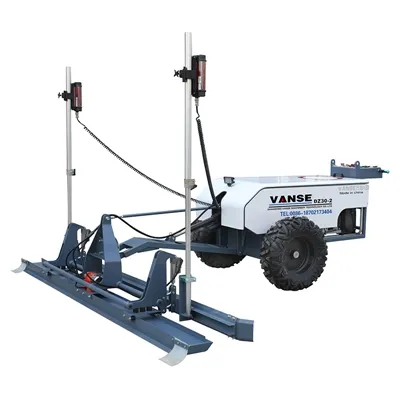
Designed for small commercial, upper deck, and residential projects—-the WALK-BEHIND concrete laser leveling provides you and your customers with high quality, professionally produced floors at a fraction of the cost of conventional methods. DZ30-2 CONSTRUCTION SITE DZ30-2 CONSTRUCTION SITE DZ30-2 CONSTRUCTION SITE DZ30-2 CONSTRUCTION SITE The methods for laser leveling machines to ensure construction quality during construction include: 1. **Precise laser control system**: – Use high-precision laser transmitters and receivers to ensure flatness and elevation control during construction. 2. **Automated operation**: – Use the automated control system of the laser leveling machine to adjust the height and angle of the leveling head in real time to adapt to different construction conditions. 3. **High-quality construction materials**: – Select appropriate concrete mix ratios and aggregates to ensure the fluidity and plasticity of concrete and reduce cracks and unevenness. 4. **Professionally trained operators**: – Ensure that operators receive professional training, are familiar with the operation and maintenance of the equipment, and understand the key points of quality control during construction. 5. **Real-time monitoring and adjustment**: – Use monitoring equipment to monitor the laying of concrete in real time during construction, and adjust the working parameters of the laser leveling machine in time. 6. **Strict construction plan and process**: – Develop a detailed construction plan and process, arrange the construction sequence reasonably, and avoid cross-construction and construction interruption. 7. **Environmental adaptability**: – Adjust equipment settings according to the characteristics of the construction environment, such as taking corresponding measures under high temperature or high humidity conditions. 8. **Post-construction maintenance management**: – Perform maintenance in time after construction, such as covering and moistening maintenance, to ensure that the concrete reaches the designed strength. 9. **Quality inspection and acceptance**: – Use professional tools to test flatness, levelness and strength to ensure that the construction quality meets the standards. 10. **Risk management**: – Identify possible risk factors during the construction process and formulate corresponding prevention and response measures. 11. **Technology upgrade and maintenance**: – Regularly upgrade and maintain the laser leveling machine to ensure that the equipment is in the best working condition. 12. **Construction data recording and analysis**: – Record key data during the construction process, such as concrete temperature, pouring speed, etc., and analyze the data to optimize the construction plan. Through the above measures, the laser leveling machine can ensure construction quality during the construction process, reduce rework and maintenance costs, and improve the overall quality and efficiency of the project.