Technical Knowledge
What is the precaution for daily maintenance and care of the hydraulic system of the concrete laser leveling machine?

The following are the precautions for daily maintenance and care of the hydraulic system of the concrete laser leveling machine
✨Oil management:
– Check the hydraulic oil level regularly,
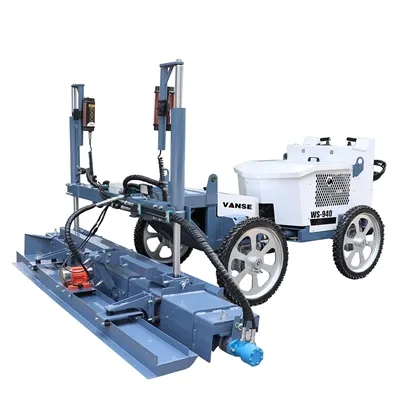
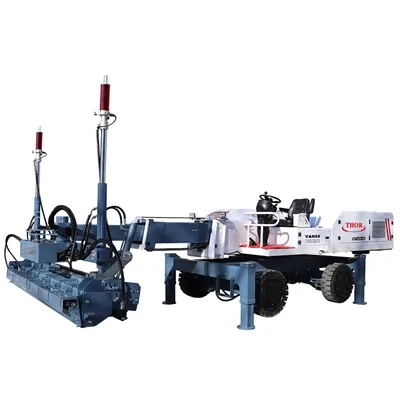
park the เครื่องปรับระดับคอนกรีตด้วยเลเซอร์ on a level surface, turn off the engine and check to ensure that the oil level is within the normal scale range. If the oil level is found to be too low, add hydraulic oil that meets the equipment requirements in time. Different models of concrete laser leveling machines, such as vanse concrete laser leveling machine or mini concrete paver leveling machine, may have different requirements for hydraulic oil, and must be selected strictly according to the instructions.
– Pay attention to the quality of the oil.
Hydraulic oil will age and deteriorate after long-term use. If the oil is found to be black, has a pungent smell, is turbid or has precipitation, it should be replaced immediately even if the specified replacement cycle has not been reached. When replacing, drain the old oil thoroughly, clean the oil tank and filter, and then add new oil. At the same time, pay attention to the equipment with higher vanse laser leveling price, and use high-quality hydraulic oil to ensure the performance and life of the hydraulic system.
✨Filter maintenance:
– The filter in the hydraulic system plays a key role and should be replaced regularly.
Generally speaking, the filter needs to be replaced every certain number of working hours or every few months. The specific interval can be referred to the equipment manual. For places with harsh working environment and large dust, the replacement cycle should be appropriately shortened to ensure the cleanliness of the hydraulic oil and protect the precision parts of the hydraulic system.
–
When replacing the filter, carefully check whether there are impurities such as metal particles and fibers on the filter.
If a large amount of impurities are found, it may mean that there are worn parts inside the hydraulic system, which requires further inspection and repair to avoid the expansion of the fault and affect the normal use of the เครื่องปรับระดับคอนกรีตด้วยเลเซอร์ or Extendedoras de hormigón.
✨System component inspection:
– Check the working status of the hydraulic pump and hydraulic motor,
listen to whether the running sound is normal, and whether there is abnormal vibration and noise. Observe whether its working pressure is stable and whether it is within the specified range. If the pressure is unstable or there is an abnormal sound, it may be due to wear of the internal parts of the pump or motor, damage to the seal, etc., which needs to be repaired or replaced in time to ensure the stable power output of the Máy cán sàn bê tông bằng Laser hydraulic system.
– Check whether there is oil leakage in the oil pipe and joints,
and whether the oil pipe is damaged, aged, cracked, etc. If the oil pipe is found to be damaged, it should be replaced in time; loose joints should be tightened in time to prevent oil leakage from causing the pressure of the hydraulic system to drop and affect the normal operation of the equipment. At the same time, keep the surface of the system clean, clean up oil and dust in time to prevent them from entering the hydraulic system.

In short, doing a good job of daily maintenance and maintenance of the hydraulic system of the concrete laser leveling machine can effectively extend the service life of the equipment, improve work efficiency, reduce maintenance costs, and ensure that the equipment can operate stably and reliably under various working conditions.
Thanks to All the Friends Who Support and Trust Shandong Vanse Machinery Technology Co., Ltd.
If you want to know more about Shandong Vanse Machinery Technology Co., Ltd. or have any questions, please feel free to contact us:
Our Factory
Shandong Vanse Machinery Technology Co., Ltd.








Share this article

About the Author: Shandong Vanse Machinery Technology Co., Ltd.
Shandong Vanse Machinery Technology Co., Ltd. is a high-tech manufacturer specializing in concrete construction machinery, including laser screeds and related equipment. The company integrates R&D, production, and global sales, with products exported to over 60 countries and widely used in infrastructure projects worldwide.
Previous Post
Next Post
Related Articles
You Might Also Like
How does the concrete laser leveling machine work?
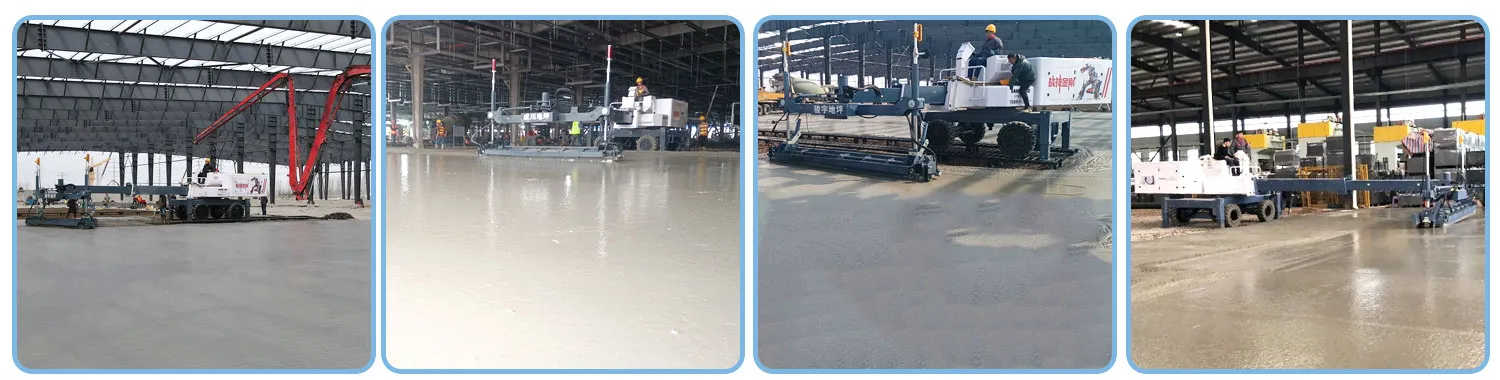
Concrete laser leveling machine is a device that uses laser technology for floor leveling. Its working principle is mainly based on laser measurement and control systems, combined with mechanical automation technology, to achieve high-precision and efficient floor leveling. During the specific work process, the laser leveling machine first emits a laser beam through the laser transmitter, which is projected onto the ground to be constructed and received by the laser receiver. The receiver then feeds back the received signal to the control system, and the control system adjusts the position and height of the leveling head based on the feedback signal to ensure that the leveling head always remains at the set elevation position for operation. The leveling head is the core part of the laser leveling machine. It integrates functional modules such as scraper, spiral and vibrating plate, and can complete the initial leveling, vibration and leveling of concrete at one time. During the leveling process, the role of the scraper and spiral is to evenly distribute the concrete, while the vibrating plate vibrates the concrete to achieve the desired flatness. At the same time, the laser leveling machine adopts a computer laser control system, which receives and processes laser signals through the laser receiver of the mechanical head to make real-time adjustments at a monitoring frequency of 10 times per second to accurately control the floor elevation. This allows the flatness of the entire floor to be accurately controlled and avoids manual errors and construction joint problems in traditional construction methods. In addition, in order to achieve large-area construction, laser leveling machines are usually equipped with automatic navigation systems or remote control systems to achieve automated and efficient construction. This construction method can not only improve construction efficiency and shorten the construction cycle, but also reduce manual operating errors and improve construction quality. To sum up, the working principle of the concrete laser leveling machine is based on the laser measurement and control system. By accurately controlling the floor elevation and flatness, combined with mechanical automation technology, efficient and high-precision floor leveling can be achieved.Concrete Laser Levelings Machine User Manual And Operating Guide
♢ • ♢ • ♢ • ☆ Equipment Overview ☆ • ♢ • ♢ • ♢ The concrete laser leveling machine is an efficient and accurate ground leveling equipment that is widely used in various construction projects. It combines modern laser technology and mechanical engineering technology, captures the signal from the laser transmitter through the laser receiver, controls the scraper height of the leveling machine, and realizes automatic leveling of newly poured concrete, greatly improving work efficiency and leveling quality. . This equipment is suitable for large-area, high-precision concrete ground construction, such as commercial complexes, parking lots, warehouses and other places. ♢ • ♢ • ♢ • ☆ Equipment composition ☆ • ♢ • ♢ • ♢ The concrete laser leveling machine mainly consists of the following parts: 1. Main machine: including core components such as engine, traveling system, leveling system, control system, etc., it is the main working mechanism of the leveling machine. 2. Laser transmitter: used to emit laser signals to provide a reference plane for the leveling machine. 3. Laser receiver: installed on the leveling machine, used to capture laser signals and convert them into mechanical control signals. 4. Water source and water spray system: Provide an appropriate amount of moisture to the concrete during the leveling process to ensure that the concrete surface is flat and smooth. 5. Accessories: including various to ols, measuring tools, etc., used to assist the use and maintenance of the leveling machine ♢ • ♢ • ♢ • ☆ Safety Instructions ☆ • ♢ • ♢ • ♢ When operating a concrete laser leveling, the following safety regulations must be strictly observed: 1. Operators must receive professional training, be familiar with the equipment structure and operating points, and must obtain operating qualifications before taking up their posts. 2. Before starting the equipment, you must check whe ther all components are intact and whether the fasteners are firm and reliable to ensure that the equipment is in good working condition. 3. During operation, overloading, overspeeding, and over-range use are strictly prohibited to avoid equipment damage due to overload. 4. At the construction site, obvious safety war ning signs must be set up to ensure that non-workers stay away from the work area. 5. When the equipment has a fault or abnormality, it should be stopped immediately for inspection and the fault can be eliminated before continued use. 6. Operators must wear complete safety protective equipment, such as hard hats, protective glasses, gloves, etc., to ensure personal safety. ♢ • ♢ • ♢ • ☆ Preparation ☆ • ♢ • ♢ • ♢ Before operating the concrete laser leveling machine, you need to make the following preparations: 1. Check whether the appearance of the equipment is intact and whether there is any obvious damage or deformation. 2. Check whether the engine oil, water tank water level, etc. are within the specified range to ensure that the equipment lubrication and cooling systems are working properly. 3. Check whether each connection part is fastened reliably to prevent the equipment from loosening or falling off during work. 4. Check whether the laser transmitter and receiver are installed correctly to ensure that the laser signal can be transmitted and received normally. 5. According to the conditions of the construction site, reasonably arrange the position of the laser transmitter to ensure that the leveler can receive stable laser signals. 6. Prepare the water source and water spray system to ensure that the concrete surface can be fully moistened during the leveling process. ♢ • ♢ • ♢ • ☆ Operational procedures ☆ • ♢ • ♢ • ♢ The operation process of the concrete laser leveling is as follows: 1. Start the engine, preheat the equipment, and check whether each system is working properly. 2. Set the parameters of the laser transmitter according to the construction drawings and site conditions to ensure that the laser signal emitted meets the leveling requirements. 3. Connect the laser receiver to the leveling machine to ensure stable and reliable signal transmission. 4. Adjust the height and angle of the scraper of the leveling machine to maintain an appropriate distance and angle from the laser signal. 5. Turn on the water spray system to provide the appropriate amount of moisture to the concrete surface. 6. Start the leveling operation. According to the construction progress and the initial setting time of the concrete, reasonably control the walking speed of the leveling machine and the lifting frequency of the scraper. 7. During the leveling process, always observe the flatness and wetness of the concrete surface, and adjust the scraper height and water spray volume in a timely manner. 8. After the leveling operation is completed, turn off the engine and water spray system, and disconnect the laser receiver from the leveling machine. 9. Clean the equipment surface and construction site to ensure that the equipment is tidy and the environment is clean. ♢ • ♢ • ♢ • ☆ Care and Maintenance ☆ • ♢ • ♢ • ♢ In order to ensure the long-term stable operation of the concrete laser leveling machine, regular maintenance and upkeep work must be performed, including: 1. Regularly replace the engine oil and clean the oil filter to ensure that the engine lubrication system is clean and effective. 2. Check whether the cooling system components such as water tanks and water pipes are leaking or blocked, and keep the cooling system unimpeded. 3. Check the wear of scrapers, running wheels and other wearing parts, and replace damaged parts in time to ensure stable equipment performance. 4. Clean dust, oil and other debris on the surface and inside of the equipment to keep the equipment clean and tidy. 5. Regularly check the working status of key components such as electrical systems, laser transmitters and receivers to ensure their normal operation. 6. In accordance with the requirements of the equipment instruction manual, conduct regular comprehensive inspections and maintenance of the equipment to ensure long-term stable operation of the equipment. ♢ • ♢ • ♢ • ☆ Troubleshooting ☆ • ♢ • ♢ • ♢ During use, the concrete laser leveling may encounter some malfunctions or abnormal situations. To solve these problems, we can take the following measures to eliminate them: 1. Difficulty starting the engine: Check whether the battery power is sufficient, whether the starter motor is working normally, whether the fuel supply is smooth, etc. If there is any problem, replace the battery, start the motor or clean the fuel system in time. 2. Poor leveling effect: Check whether the laser transmitter and receiver are installed correctly and whether the signal is stable and reliable; check whether the height and angle of the scraper are adjusted appropriately; check whether the concrete surface is even and moist. If there is any problem, adjust or replace relevant parts in time. 3. The equipment is running abnormally: check whether the running wheels are seriously worn, whether the bearings are damaged, whether the transmission chain is loose, etc. If there is any problem, replace the running wheel, bearing or adjust the transmission chain in time. 4. The laser signal is unstable: Check whether the laser transmitter and receiver are interfered, whether the reflective surface is clean, whether the lens is damaged, etc. If there is any problem, promptly eliminate the interference, clean the reflective surface or replace the lens. 5. Electrical system failure: Check whether the cables are damaged, whether the wiring is loose, whether the components are damaged, etc. If there is a problem, repair the cable, tighten the wiring or replace the components in time. When troubleshooting, operators should strictly follow the requirements of the equipment instruction manual and are strictly prohibited from dismantling or repairing the equipment at will. If you encounter a fault that cannot be solved, you should contact professional maintenance personnel in time to handle it. ♢ • ♢ • ♢ • ☆ Transportation and Storage ☆ • ♢ • ♢ • ♢ When transporting and storing the concrete laser leveling, you need to pay attention to the following points: 1. Before transportation, make sure the device is turned off and disconnect the power supply and cables to prevent accidental startup during transportation. 2. During transportation, the equipment should be fixed and protected to prevent the equipment from being collided or damaged during transportation. 3. After arriving at the destination, the equipment should be fully inspected to ensure that the equipment has not been damaged or deformed during transportation. 4. When storing equipment, you should choose a dry, ventilated, and dark place to prevent the equipment from moisture, rust, or other damage. 5. During the storage period, the equipment should be maintained and maintained regularly to ensure that the equipment can work normally the next time it is used. In short, the warm concrete laser leveling machine is an efficient and accurate ground leveling equipment, but during use it needs to strictly abide by safety regulations, make preparations, follow operating procedures, perform regular maintenance and troubleshooting, and troubleshoot in a timely manner , and take necessary protective measures during transportation and storage. Only in this way can the long-term stable operation and service life of the equipment be ensured.Crack Control of Superflat Floors Optimization of Cutting Timing, Depth and Spacing
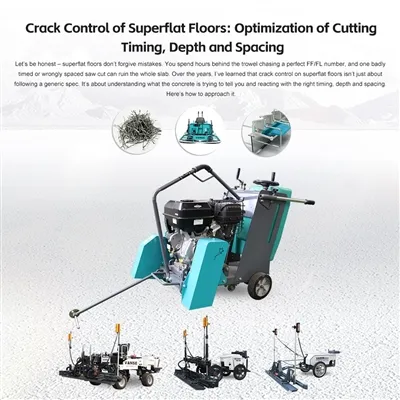
Let's be honest – superflat floors don't forgive mistakes. You spend hours behind the trowel chasing a perfect FF/FL number, and one badly timed or wrongly spaced saw cut can ruin the whole slab. Over the years, I've learned that crack control on superflat floors isn't just about following a generic spec. It's about understanding what the concrete is trying to tell you and reacting with the right timing, depth and spacing. Here's how to approach it. Superflat slabs are a different animal. Because we place them with very tight tolerances and often use large‑area finishing techniques, they tend to be denser at the surface and have less bleed water than a typical commercial floor. That dense, well‑closed surface is great – it's what gives you the flatness – but it also means the top dries and shrinks a little faster than the body of the slab. If you don't plan your cuts to relieve that stress at the right moment, you'll see random cracks appear in the first 24 to 48 hours, before you even think about loading the floor. Takeaway: A superflat slab puts more emphasis on early crack control because the tight‑finished surface concentrates drying shrinkage stress near the top. Your saw‑cutting game has to be spot on. Forget the overnight‑wait-and‑see approach. With superflat floors, you want to be in what I call the "Green Cut" window – as soon as the concrete can support the saw operator and the saw itself without raveling the aggregate. How early is too early? If your saw blade pulls out stones and leaves a ragged edge, you're too early. Back off and wait another 30 to 60 minutes. How late is too late? If you can see even a hairline random crack starting somewhere on the slab, you've already missed the boat. on superflat jobs, I want saw cuts in before the internal concrete temperature starts to drop from its peak, which is often 4 to 12 hours after finishing, depending on the weather and mix design. Search‑friendly rule of thumb: "Cut as soon as possible without spalling." This simple statement gets typed into Google a lot by floor guys asking when to cut concrete superflat floor or green saw cut timing. A pro tip: On hot or windy days when the slab is losing moisture fast, start cutting earlier. On cool, damp days you might have a slightly longer window, but never wait more than 12 hours on a superflat floor – the risk of random cracks skyrockets after that. The old rule says "depth = one‑quarter of the slab thickness." That's a minimum, not the target for superflat work. My rule of thumb: aim for one‑third of the slab thickness when you can. Here's why. Superflat floors are often 150 mm to 200 mm (6″ to 8″) thick and may contain steel fibers or light reinforcement. A deeper cut creates a stronger plane of weakness that reliably directs the shrinkage crack down into the joint, rather than letting it wander off sideways. I've seen too many floors where a shallow cut simply didn't do its job and the crack ran parallel to the joint, ruining the flatness. Soft‑cut (early) work: With a power trowel concrete floor this dense, use a soft‑cut saw with a thicker blade to make a wider kerf, especially with steel fibers. Depth for fibers: For fiber‑reinforced superflat slabs, I increase the cut depth to 35‑40% of slab thickness. Fibers bridge the joint slightly, so a deeper cut is needed to overcome that and ensure the crack forms where you want it. Search‑friendly note: People are Googling superflat concrete saw cut depth and control joint depth superflat warehouse floor. If your article includes these, you match buyer intent. Spacing formulas like "24 to 36 times the slab thickness" are a starting point, but on superflat floors you have to consider material handling traffic patterns and the flatness spec itself. Here's what I design by: Typical spacing: 2.5 m to 3.7 m (8 ft to 12 ft) on center for a 150 mm slab. Column lines matter: Always place joints directly over column lines and internal footings, no exceptions. If you don't, you'll get a classic restraint crack. Aspect ratio: Keep panels as square as possible. A long, skinny panel (over 1.5:1) will try to crack across the middle every time. Free‑movement joints at perimeters: Leave a proper isolation joint around columns and walls, filled with compressible material, because the superflat floor will shrink and move as a whole. Now here's where the finishing machine comes in. When you use a reliable walk‑behind power trowel like the VANSE VS424 with Honda GX160 power, you get a very consistent blade pressure and speed across the slab. That consistent finish means the concrete surface behaves uniformly during shrinking, so your joint plan works more predictably. I've had far fewer problems with erratic cracks after switching to a machine that holds blade pitch and rpm consistently – the slab doesn't have weak, rougher spots where shrinkage stress concentrates. How you cut matters as much as when and where. A few points from the job site: Use a straightedge guide for the initial cut, especially in very open areas. Any wobble looks terrible on a superflat floor. Match the saw blade to your aggregate. Hard aggregate, like granite or quartzite, needs a soft‑bond blade so it wears and exposes new diamonds. Soft aggregate needs a hard‑bond blade. This is a common question guys search: best blade for cutting superflat concrete. Clean the joints immediately. Use compressed air or a wet/dry vac – do not let slurry dry in the joint, because it stops the joint from closing properly during thermal expansion and can cause edge spalling later. Cure the slab before and after cutting. Apply a high‑quality curing compound right behind the finishing operation, and re‑apply over the saw cuts. This keeps the joint edges hard and chip‑free. If you're promoting your floor finishing service or selling equipment to guys who do this work, you need to talk about crack control in a way that builds trust. Your buyer is searching for crack control superflat floors, saw cut depth for superflat, and also concrete power trowel for superflat. They want to know two things: how to avoid call‑backs, and which machine gives a surface that's easy to cut cleanly. That's where a machine like the VANSE VS424 walk‑behind power trowel comes into the conversation naturally. It produces a dense, high‑quality finish that: Reduces micro‑cracking before sawing even starts, Holds blade pitch precisely, so the surface is uniformly closed, Is lightweight enough (62 kg) to be lifted onto a superflat slab without rutting the fresh concrete. When you finish a superflat floor with a consistent machine, the cutting operation goes more smoothly – fewer random cracks, better‑looking joints, and a floor that stays flat for years. Here's a no‑nonsense list you can pin to your job‑box – and it also works well as a featured snippet in search results: Timing: cut as soon as you can walk on the slab without leaving marks deeper than 3 mm, typically 4‑12 hours after finishing. Depth: minimum 1/4 slab thickness, but aim for 1/3 thickness; go deeper for fiber‑reinforced slabs. Spacing: 2.4 m to 3.6 m on center for 150–200 mm slabs; always cut over columns. Pattern: keep panels as square as possible; no aspect ratio over 1.5:1. Equipment: use a steady, well‑balanced power trowel to get a uniform surface before you start cutting – a 24‑inch walk‑behind power trowel like the VS424 is the sweet spot for superflat detail work and edging. Clean and cure: blow out joints immediately; apply cure over cuts. Listen, crack control on superflat floors isn't rocket science, but it does require discipline. Don't push the cutting to the next morning just because "the concrete needs to harden." That's old thinking. With today's fast‑track construction, you want early‑entry saws and a crew that's ready to go while the finishers are still packing up. Note: The parameters provided in this document are for reference only and are not mandatory. Due to differences in technical characteristics between different brands and models of laser levelers, please consult the manufacturer for a suitable solution before actual operation. This reference document assumes no responsibility for any issues arising from failure to follow the manufacturer's instructions.