Technical Knowledge
Large-area ultra-flat wear-resistant floor concrete laser leveling machine one-time forming construction method

One-time forming construction method of large-area ultra-flat wear-resistant floor laser leveling machine
1. Introduction
At the moment when the construction field is constantly innovating, the pursuit of flatness, strength and construction efficiency in large-area floor construction has reached a new height. Traditional construction methods are difficult to accurately control flatness when dealing with large-scale ground operations, and the construction period is long. The use of concrete laser leveling machine Beton – Laser – Nivelliermaschine to implement one-time forming construction has become an effective solution to break through these bottlenecks and provide strong guarantees for creating high-quality ultra-flat wear-resistant floors.

2. Features of the method
Excellent precision:
With the help of advanced laser systems, Macchina livellatrice laser per calcestruzzo has extremely high control accuracy for ground elevation, and can control flatness deviation within a very small range, far exceeding traditional construction methods, and meeting the stringent requirements of high-standard ultra-flat floors.
Efficient operation:
The equipment has a leading degree of automation, and a large area of ground leveling can be completed in a single operation. Compared with traditional manual leveling, the construction period is greatly shortened and the construction efficiency is greatly improved.
Material optimization:
With precise elevation control, it can effectively avoid the situation of too much or too little concrete laying, reduce material waste and construction costs.
Performance enhancement:
Uniform vibration during the leveling process makes the internal structure of the concrete more compact and uniform, significantly enhances the strength and wear resistance of the ground, and extends the service life of the ground.

3. Scope of application
This method is widely used in various large-area places with high requirements for ground flatness and wear resistance, such as industrial plants that need to withstand the operation of heavy equipment; logistics warehouses, where frequent cargo handling causes great damage to the ground; large shopping malls, where there is a large flow of people and the ground needs to be beautiful; parking lots, where vehicles frequently enter and exit and test the durability of the ground, etc.

4. Process principle
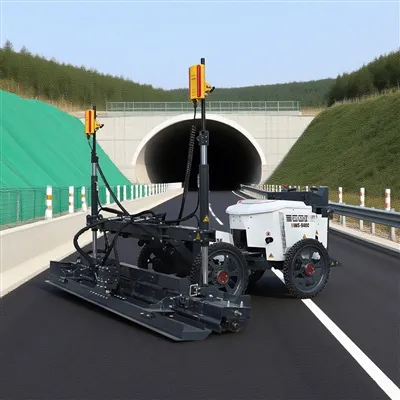
The core of Extendedoras de hormigón lies in the collaborative work of high-precision laser transmitters and receivers. The laser transmitter emits a stable horizontal laser beam, just like building a precise reference plane in the air. The laser receiver is installed on the leveling machine frame to capture the laser signal in real time and quickly transmit it to the control system. The control system automatically and accurately adjusts the height of the screed blade according to the received signal to ensure accurate leveling of the concrete surface during the process. At the same time, the vibrating device equipped with the screed works synchronously to fully vibrate the concrete, ensure its density, and lay the foundation for high-quality ground.

5. Construction process and key points of operation
(I) Construction process
Base treatment → measurement and layout → installation of formwork → concrete pouring → laser leveling machine leveling → surface treatment (smoothing, spreading wear-resistant materials, etc.) → maintenance
(II) Key points of operation
Base treatment
Thoroughly remove debris, dust, oil and other pollutants on the surface of the base to ensure that the surface of the base is clean and flat, providing a good foundation for subsequent construction.
Use compaction machinery to compact the base. For weak foundations, effective measures such as replacement and reinforcement piles are required to improve the bearing capacity of the base and prevent later ground settlement.
Measurement and layout
Use precision measuring instruments such as total stations to accurately measure and lay out the elevation control lines and construction boundaries of the floor according to the requirements of the design drawings.
Set firm control points at a certain distance (usually 3-5 meters) on the base. These control points serve as key references for the initial positioning and calibration of the laser leveling machine to ensure the accuracy of the equipment's running trajectory and elevation control.
Install the formwork
Install the formwork strictly according to the measured layout position. The formwork should be made of materials with high strength and good rigidity, such as high-quality steel formwork or reinforced wooden formwork.
Use a level to accurately adjust the elevation of the top surface of the formwork so that it is completely consistent with the design elevation. The joints of the formwork should be tight, and sealing strips or tapes can be used to seal to prevent leakage during concrete pouring and affect the quality of the ground.
Concrete pouring
Preferably use commercial concrete, and its mix ratio needs to be professionally optimized according to factors such as engineering design strength, durability, and construction environment to ensure that the concrete performance meets the construction requirements.
Concrete is efficiently transported to the construction area through equipment such as concrete pump trucks or mixer trucks. Pour in layers and sections from one end to the other. The pouring thickness should be 2-3 cm higher than the design elevation, and space for leveling should be reserved.
During the pouring process, use an inserted vibrator or a flat vibrator to vibrate the concrete in time. The vibration points should be evenly distributed to avoid leakage or over-vibration and ensure the density of the concrete.
Laser leveling machine leveling
After the concrete pouring is completed, the laser leveling machine should be driven into the construction area as soon as possible to avoid the initial setting of the concrete affecting the leveling effect.
Start the laser transmitter and laser leveling machine in turn, calibrate and debug the equipment comprehensively, and check whether the laser signal reception, scraper lifting control, and vibration device operation are normal.
The operator sets a reasonable leveling machine route and speed according to the shape and area of the construction site. The general speed is controlled at 1-3 meters per minute. During the leveling machine's movement, pay close attention to the equipment's operating status and the concrete surface. If local unevenness, depressions or convexities are found, stop the machine immediately and use manual filling or shoveling to repair.
Surface treatment
For ordinary floors, use a trowel machine for mechanical troweling after the initial setting of the concrete and before the final setting. The trowel machine operates in a horizontal and vertical cross-pattern, and generally needs to be troweled 3-5 times until the ground surface is flat, smooth, and free of smear marks.
For wear-resistant floors, when the concrete is initially set, the wear-resistant materials (such as metal aggregates and non-metallic aggregate wear-resistant materials) selected according to the design requirements will be evenly spread on the concrete surface, and the spreading amount will be determined according to the material description and design requirements. After spreading, use a trowel to smooth the surface so that the wear-resistant materials and concrete are fully integrated to form a solid and wear-resistant floor surface.
Maintenance
After the ground construction is completed, maintenance work should be carried out immediately. Sprinkling maintenance can be used. The number of sprinkling times per day is determined according to the temperature and humidity, generally not less than 3-5 times, to keep the ground moist; plastic film can also be covered to prevent water evaporation and maintain the internal humidity of the concrete; curing agent can also be sprayed to form a protective film on the ground to achieve the maintenance effect. The curing time is usually not less than 7-14 days, and the specific duration is determined according to the concrete strength growth and relevant specifications.
During the maintenance period, it is strictly forbidden for people and vehicles to walk or roll on the ground to prevent damage to the ground strength growth process and ensure that the final strength of the ground meets the design requirements.

6. Materials and Equipment
(I) Materials
Concrete: must strictly meet the design strength grade requirements, have good workability, fluidity and durability, and ensure easy pouring and vibration during construction.
Wear-resistant materials: accurately select wear-resistant materials according to the actual needs of the project and design standards. Metal aggregate wear-resistant materials have the characteristics of high hardness and high strength; non-metal aggregate wear-resistant materials have excellent performance in impact resistance and anti-static, and can be selected as needed.
Formwork materials: steel formwork has the advantages of high strength and high turnover; wooden formwork has certain advantages in shape adaptability and splicing flexibility. Appropriate formwork materials can be selected according to construction conditions and cost considerations, but their strength and rigidity must meet construction requirements.
(II) Equipment
Extendedoras de hormigón:
According to the size of the construction site, the complexity of the shape and the ground design requirements, reasonably select equipment models with power, leveling width and accuracy.
Laser transmitter and receiver:
Closely matched with laser leveling machine, laser transmitter emits stable and accurate laser beam, receiver accurately captures signal, the two work together to ensure high precision of elevation control, and their performance directly affects the quality of ground leveling.
Concrete delivery equipment:
Concrete pump truck has strong mobility and is suitable for concrete delivery in different site conditions; mixer truck can ensure the uniformity and working performance of concrete during transportation, and can be reasonably used according to the construction site conditions.
Trowel machine:
Divided into hand-held type and driving type, selected according to the ground area and construction efficiency requirements. Its high-speed rotating trowel compacts and smoothes the ground to make the ground flat and smooth.
Measuring instruments:
Total station is used for large-area high-precision measurement and layout; level can accurately measure elevation; theodolite assists in determining angles and verticality. These measuring instruments jointly provide accurate data support for positioning and elevation control during construction.

7. Quality control
Quality management system construction:
Set up a professional quality management team to clarify the specific responsibilities of each member in the stages of construction preparation, construction process and quality acceptance. Formulate a detailed quality management system and set clear and quantifiable quality goals, such as controlling the ground flatness deviation within ±2 mm.
Raw material quality control:
Each batch of raw materials such as concrete and wear-resistant materials entering the site shall be inspected and tested strictly in accordance with relevant standards. Concrete needs to be tested for slump, compressive strength and other indicators; wear-resistant materials need to be tested for their wear resistance, hardness and other properties to ensure that the quality of raw materials fully meets the design and specification requirements and ensure the quality of the project from the source.
Construction process quality supervision:
Arrange professional quality management personnel to supervise the entire construction process and strictly follow the established construction process and operation points. Focus on monitoring whether the laser operation is standardized, including equipment calibration, travel speed and route control; whether the concrete pouring and vibration meet the requirements, such as pouring sequence, vibration time and depth, etc.; the timing of polishing in the surface treatment process, the uniformity of wear-resistant material spreading, etc., and timely rectification when problems are found.
Quality acceptance:
After the construction is completed, the ground is comprehensively inspected in accordance with the current relevant national specifications and standards. Use professional measuring tools to detect the flatness and elevation deviation of the ground; use equipment such as rebound testers to detect the ground strength; and use wear resistance testers to test the wear resistance of wear-resistant floors. Only after all indicators meet the requirements after testing can the project quality be determined to be qualified.

8. Safety measures
Building a safety management system:
Develop a complete safety management system covering all aspects such as construction site safety protection, equipment operation specifications, and personnel safety training. Clarify the safety responsibilities of personnel in various positions, and implement safety responsibilities at all levels from project managers to front-line construction personnel.
Safety education and training:
Regularly organize construction personnel to participate in safety education and training, including safety regulations, safety operating procedures, accident case analysis, etc. New employees must undergo three-level safety education and training and pass the assessment before they can take up their posts. Special types of work (such as electricians, welders, machine operators, etc.) must be certified to work, and continuously improve the safety awareness and operating skills of construction personnel.
Safety protection at the construction site:
Set up obvious safety warning signs at the entrance of the construction site and dangerous areas (such as deep foundation pits, high-altitude working areas, etc.). Set up protective railings and safety nets for high-altitude working surfaces; equip construction workers with qualified personal protective equipment such as safety helmets, safety belts, safety shoes, and supervise their correct wearing and use.
Equipment safety management:
Establish a regular inspection and maintenance system for construction equipment such as laser levelers and concrete conveying equipment, conduct equipment appearance inspections and performance tests before and after each use, and conduct regular comprehensive maintenance and repairs. During the operation of the equipment, operators must strictly abide by the operating procedures, and illegal operations are strictly prohibited to prevent safety accidents caused by equipment failures or improper operations.
9. Environmental protection measures
Construction dust control:
Harden the main roads in the construction site, and arrange special personnel to sprinkle water to reduce dust regularly. Sand, stone and other materials that are prone to dust are stored in closed silos, or covered with dustproof nets to reduce dust pollution.
Construction noise control:
Plan construction time reasonably to avoid high-noise operations during residents' rest time (such as 22:00 to 6:00 the next day). Take noise reduction measures for high-noise equipment such as concrete pumps and vibrators, such as installing silencers and setting up soundproof covers, to reduce the impact of construction noise on the surrounding environment.
Waste treatment:
Set up classified trash cans and waste storage sites at the construction site to classify and collect construction waste and domestic waste generated during the construction process. Recyclable waste (such as scrap steel, waste wood, etc.) is recycled and reused; non-recyclable waste is transported to designated locations for proper disposal in accordance with the requirements of local environmental protection departments to prevent environmental pollution.
10. Benefit Analysis
Economic benefits:
The one-time forming construction method of the laser leveling machine has greatly improved construction efficiency, shortened the construction period, and correspondingly reduced labor costs and equipment rental costs. Accurate leveling effectively reduces concrete waste and saves material costs. Comprehensive calculations can significantly improve the economic benefits of the project.
Social benefits:
The high-quality, ultra-flat, wear-resistant floor created by this method can effectively improve the performance and durability of the building, reduce the cost of later maintenance and renovation, provide the society with better building space, and create good social benefits.
Environmental benefits:
By implementing a series of environmental protection measures, such as dust control, noise control, and reasonable disposal of waste, the pollution of the surrounding environment during the construction process is reduced, which conforms to the concept of green environmental protection and sustainable development, and produces positive environmental benefits.
Thanks to All the Friends Who Support and Trust Shandong Vanse Machinery Technology Co., Ltd.
If you want to know more about Shandong Vanse Machinery Technology Co., Ltd. or have any questions, please feel free to contact us:
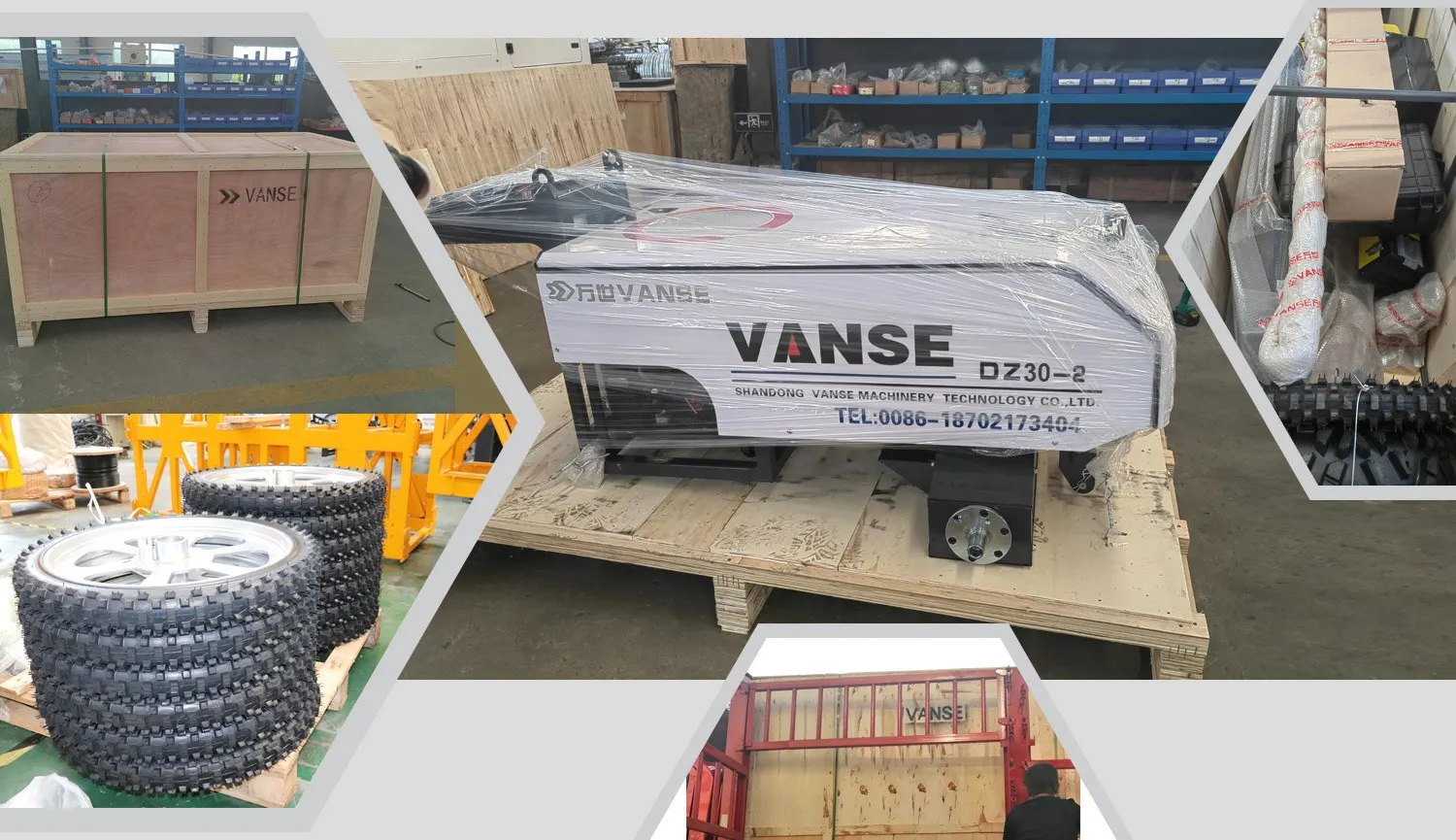
Our Factory
Shandong Vanse Machinery Technology Co., Ltd.








Share this article

About the Author: Shandong Vanse Machinery Technology Co., Ltd.
Shandong Vanse Machinery Technology Co., Ltd. is a high-tech manufacturer specializing in concrete construction machinery, including laser screeds and related equipment. The company integrates R&D, production, and global sales, with products exported to over 60 countries and widely used in infrastructure projects worldwide.
Previous Post
Next Post
Related Articles
You Might Also Like
How are complex slopes, two-way drains,or 3D floor designs poured using a concrete laser leveling?
Excellent question. You've pinpointed the exact transition from basic to advanced laser leveling. Moving beyond flat slabs to complex slopes, drains, and 3D designs is where modern laser leveling technology truly becomes revolutionary. It shifts from being a simple leveling tool to a robotic 3D concrete printing and finishing system. Here's a detailed breakdown of how it's done, focusing on the advanced systems you mentioned. The critical leap is abandoning the single spinning laser plane (which only creates a flat surface at a fixed grade). Instead, 3D Profiler Systems or 3D Machine Control is used. This system integrates three key components: The 3D Design Model: A digital blueprint (CAD file) of the finished slab, including all slopes, drains, and elevations. This is often a Digital Terrain Model (DTM). The Positioning System: Typically a robotic total station or GPS rover that tracks the leveling's exact location (X, Y, and Z) on the job site in real-time. The Laser leveling's Onboard Computer: This brain takes the design model and the real-time position, calculates the exact required height of the leveling head at that precise coordinate, and automatically adjusts the machine. Design: Engineers create a precise 3D model of the slab. For a two-way drain, this is a warped surface (a parabola or cone) sloping to a central point. For a ramp with a cross-slope, it's an inclined plane. For truly complex 3D floors (e.g., skate parks, test tracks), it's a fully sculpted surface. Site Calibration: The 3D model is geo-referenced to the physical job site. Surveyors establish control points. The robotic total station is set up with a clear view, and its position is registered in the same digital coordinate system as the design model. Machine Setup: A prism or GPS receiver is mounted on the laser leveling. The total station now "sees" the leveling and relays its position 5-10 times per second to the leveling's computer. This is where the magic happens. The process is fully model-driven. For a Two-Way Drain (Warped Surface): The operator drives the leveling onto the fresh concrete in a systematic pattern (e.g., spiral out from the drain or back-and-forth passes). In real-time, for every inch the machine moves: The total station reports: *"You are at coordinate X=105, Y=87."* The computer checks the 3D model: *"At coordinate (105,87), the design elevation is Z=100.25 inches."* The computer commands the leveling's hydraulic cylinders: *"Raise/Lower the strike-off head to exactly 100.25 inches NOW."* The leveling head continuously adjusts, tilting subtly in all directions, to perfectly match the design's curvature. It creates a smooth, mathematically perfect bowl without any manual grade checking. For a Slope or Ramp (Inclined Plane): The process is identical. The model defines a constant slope. As the leveling moves up the ramp, the computer constantly updates the target height, keeping the leveling head precisely on the inclined plane. For Complex 3D Terrain (e.g., a Skate Park Bowl): The operator drives in a tight, overlapping pattern (like mowing a lawn). The leveling head acts like a 3D printer nozzle, constantly adjusting its height and tilt to "touch" the virtual design surface. One pass might place the concrete for the transition, the next for the flat bottom, all seamlessly. Eliminates Physical Forms: No need to build intricate wood forms to define curved drains or slopes. This saves immense labor and material. Unmatched Accuracy & Consistency: Achieves tolerances of ±1/8" (3mm) or better over the entire complex surface. Manual sloping is prone to waves, flat spots, and inconsistencies. Speed: Complex geometry can be placed and finished at the same speed as a flat slab-often 10,000+ sq. ft. per day. Monolithic Quality: Large, complex areas are poured in one continuous operation, eliminating cold joints and ensuring uniform density and strength, which is critical for waterproofing in drainage applications. Data Verification: The system can log "as-built" data, proving the floor was built to specification. The operator's role shifts from "grade checker" to machine pilot and concrete manager: Path Planning: Choosing the optimal driving pattern to efficiently cover the area without trapping the machine. Managing Concrete Supply: Ensuring a consistent volume of concrete is placed ahead of the leveling, critical for maintaining the design profile. Monitoring Systems: Watching for signal loss from the total station and ensuring the system is functioning. Edgework & Finishing: The laser leveling does not do edges. Skilled finishers still hand-work perimeter details, using the levelinged surface as their guide. They also perform final finishing (bullfloating, troweling) on the perfectly placed surface. Multi-Prong Laser leveling: For very large pours, machines with multiple, independently controlled vibrating heads can cover more area faster, with each head adjusting to the 3D model. Gyroscope & Inertial Systems: Used in tandem with GPS for areas where satellite signal is lost (e.g., inside buildings), ensuring continuous accuracy. Think of it like this: The 3D Model is the sheet music. The Robotic Total Station is the conductor, keeping time and position. The Laser leveling's Computer is the musician reading the score. The Hydraulic Cylinders & Vibrating Head are the instrument, playing the exact notes (elevations) to produce the final product: a perfectly shaped, densely consolidated concrete slab. This technology has transformed complex concrete flooring from a high-skill, labor-intensive craft into a precise, digital fabrication process, enabling designs that were previously too costly or difficult to achieve with consistent quality. Note: The parameters provided in this document are for reference only and are not mandatory. Due to differences in technical characteristics between different brands and models of laser levelers, please consult the manufacturer for a suitable solution before actual operation. This reference document assumes no responsibility for any issues arising from failure to follow the manufacturer's instructions.Advantages of concrete laser leveling vs paver
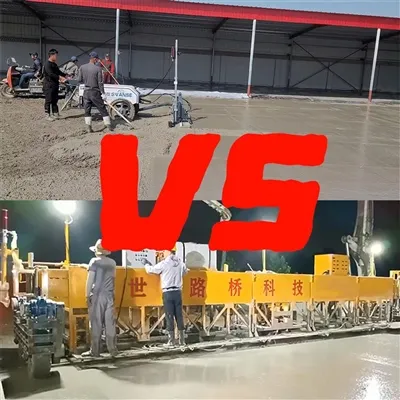
There are certain differences in functions and applicable scenarios between concrete laser levelings and pavers, so each has its own advantages. 1. Flatness: The laser leveling machine achieves high-precision control through laser technology, which can ensure a higher flatness of the ground. It is especially suitable for places that require high-precision floors. 2. Construction efficiency: Due to the easy operation and high degree of automation of laser leveling machines, the construction efficiency is usually higher than that of paver. Especially in large-area floor construction, the advantages of laser leveling machines are even more obvious. 3. Material waste: Laser leveling machines can accurately control the amount and laying of concrete, thereby reducing material waste and costs. 4. Applicability: The paver is suitable for laying ordinary concrete pavement, especially for long-distance and large-area construction projects such as roads. The laser leveling machine is more suitable for places that require high-precision and high-strength floors, such as large-scale Dingye factories, logistics centers, etc. 5. Maintenance cost: The structure of the paver is relatively simple and the maintenance cost is relatively low. The complex structure of the laser leveling machine requires regular maintenance and upkeep, but its high efficiency and high-quality construction results may offset this cost after long-term use. 6. Operation difficulty: Paver requires operators to have a high level of skills and experience, while laser leveling machines are relatively simple to operate and require lower skills from workers. 7. Flexibility: The paver is suitable for a variety of different terrains and construction environments and has high flexibility. The laser leveler is more suitable for flat and regular terrain, and has limited adaptability to complex terrain. To sum up, concrete laser levelings and pavers each have their own applicable scenarios, advantages and disadvantages. In places where high-precision and high-efficiency floor construction is required, such as large industrial plants, logistics centers, etc., laser levelings have significant advantages; and in the construction of large-area ordinary concrete pavements such as roads, the application of paver may More extensive. The choice of which equipment to use also needs to be comprehensively considered based on specific construction needs and conditions.How do power trowel machines and concrete laser levelers work together?
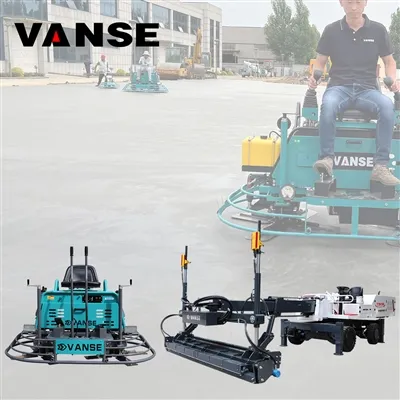
△ Applicable stage: Before initial setting after concrete pouring (about 1-2 hours after pouring, the specific time depends on the concrete ratio and ambient temperature). △ Operation points: The laser leveler sets the reference plane through the laser transmitter, automatically levels and vibrates the concrete, and quickly completes the rough leveling of a large area. Focus on the corners, column roots and other areas that are difficult for the laser leveler to cover, and manually assist in scraping. △ Applicable stage: after the initial setting of concrete (when there is a slight indentation when pressing with fingers but it is not sticky). Operation steps: △ Disc trowel: First use a disc trowel to perform preliminary slurry lifting and compaction to eliminate surface bumps. △ Blade trowel: After the concrete strength is further improved, use a blade trowel for fine finishing to form a smooth surface. △ Note: The trowel needs to be divided into 2-3 Operate over and adjust the blade angle (from low to high) each time to gradually increase the surface density. △ The laser leveling machine needs to complete the rough leveling before the initial setting of the concrete to avoid the difficulty of vibrating the concrete after hardening. △ The trowel machine needs to start working after the initial setting of the concrete. Too early will cause sand on the surface, and too late will make it difficult to compact. △ The laser leveling machine is responsible for efficient leveling of large areas, and the trowel machine is responsible for local finishing and surface treatment. △ For the corners that the laser leveling machine cannot reach, it is necessary to manually use a scraper to initially level it, and then the trowel machine will handle it. △ The leveling accuracy of the laser leveling machine must meet the design requirements (such as ±3mm/3m), providing a good foundation for the trowel. △ The angle and speed of the trowel blade need to be adjusted according to the strength of the concrete to avoid over-grinding or under-grinding. Cover and maintain in time after the operation is completed to prevent surface cracking. The operation interval should be shortened in hot and dry weather to avoid excessive water loss of concrete. The laser leveling machine needs to calibrate the laser transmitter regularly, and the trowel blade needs to clean the concrete residue in time. Through reasonable process arrangement and equipment coordination, the quality and efficiency of concrete construction can be significantly improved, which is suitable for large-scale ground projects such as industrial plants, parking lots, and airport runways.