Technical Knowledge
How to check whether the laser receiver of the concrete laser leveling machine is working properly?

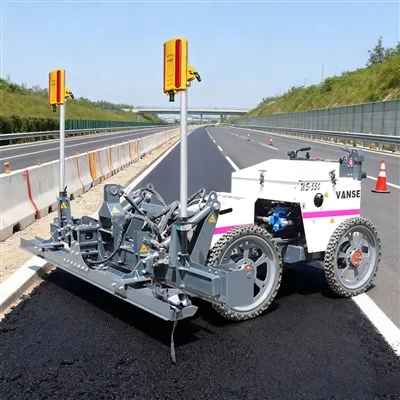
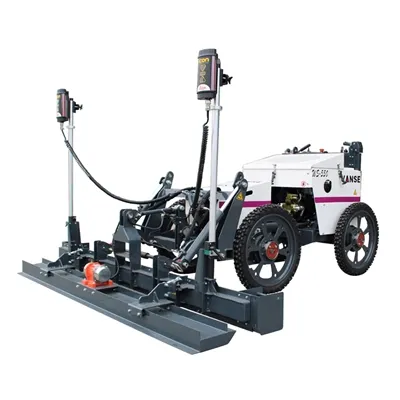
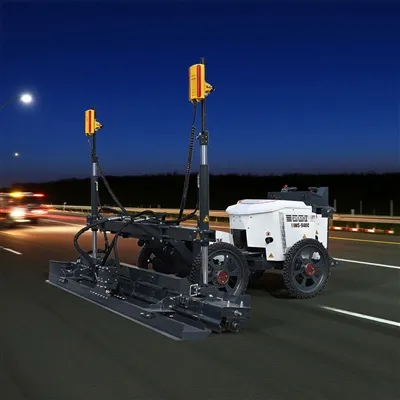
To check whether the laser receiver of the concrete laser leveling machine (Beton – Laser – Nivelliermaschine, Macchina livellatrice laser per calcestruzzo, Extendedoras de hormigón, เครื่องปรับระดับคอนกรีตด้วยเลเซอร์, Máy cán sàn bê tông bằng Laser) is working properly, you can follow the steps below
1. Preliminary inspection
– Appearance inspection:
Carefully check whether the shell of the laser receiver is damaged or cracked, and whether the connecting line is damaged or loose. If these problems exist, it may cause signal transmission failure, and the damaged parts need to be repaired or replaced in time.
– Power supply check:
Make sure the receiver is connected to the power supply and the power indicator is on normally. If the indicator light is off, check whether the power socket and power cord are normal, and whether the power switch of the receiver is turned on.
2. Signal reception check
– Observe the signal indicator:
Most laser receivers have a signal indicator. When receiving a laser signal, the indicator will have a corresponding display, such as lighting up or flashing. When the laser transmitter is turned on, observe the signal indicator of the receiver. If the indicator does not respond, the receiver may not receive the signal and further investigation is required.
– Manual blocking test:
When the laser transmitter is emitting laser normally, use an opaque object to temporarily block the receiving window of the laser receiver and observe the changes in the signal indicator. If the indicator light goes out or changes state when blocked, it means that the receiver responds to the laser signal, and the initial judgment is that the receiving function is normal; if the indicator light does not change, the receiver may have a fault.

3. Function test
– Slope control function test:
If the concrete laser leveler has a slope control function, set different slope parameters and observe whether the laser receiver can accurately control the leveler to perform construction according to the set slope. If the leveler cannot work according to the set slope, there may be a problem with the slope control function of the laser receiver.
– Flatness detection function test:
Run the concrete laser leveler on a test platform or ground with known flatness, let the laser receiver work and record the flatness data it measures. Compare the data with the actual flatness to check whether the measurement result is within the allowable error range. If the deviation is large, it means that the flatness detection function of the laser receiver may be inaccurate and needs to be calibrated or repaired.
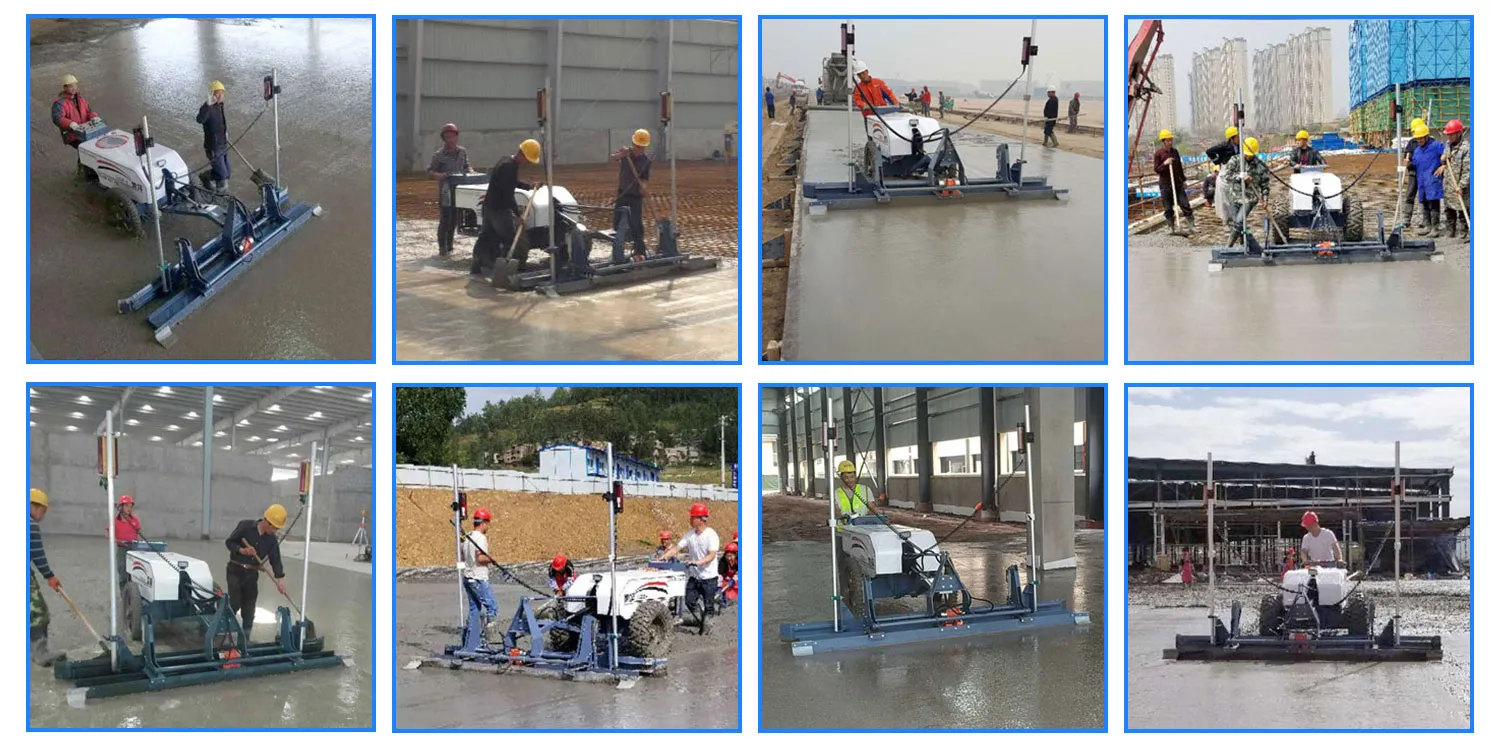
4. Receiving range and accuracy test
– Different position test:
In the working area of the concrete laser leveler, select multiple different positions, including positions close to, far from, and at different angles from the laser transmitter, and observe whether the laser receiver can receive signals normally and work accurately at these positions. If the signal is lost or works abnormally at certain positions, it means that there is a problem with the receiver's receiving range or angle.
– Accuracy calibration test:
Use professional measuring tools, such as high-precision levels, to compare with the measurement results of the laser receiver. Perform measurement comparisons at multiple different positions to check whether the measurement accuracy of the laser receiver meets the equipment requirements. If the accuracy deviation is found to exceed the allowable range, the laser receiver needs to be calibrated and debugged.

5. Software and parameter check
Enter the setting interface of the laser receiver and check whether the software settings and parameters are
correct. Make sure that the parameters such as working mode, laser wavelength, sensitivity, etc. match the laser transmitter and the entire leveling machine system. Incorrect parameter settings may cause the receiver to work abnormally, and it is necessary to set it correctly according to the equipment manual.
6. Professional equipment detection
If conditions permit, professional optical detection equipment such as optical power meter, laser interferometer, etc. can be used to perform more accurate detection of the laser receiver. These devices can measure the laser power, wavelength stability, beam quality and other parameters received by the receiver, and compare them with the technical specifications of the receiver to accurately determine whether it is working properly.
7. Comparison and replacement
If there are multiple concrete laser leveling machines of the same model, the suspected problematic laser receiver can be interchanged with the receivers on other machines that are working properly. Then observe the working conditions of the two machines. If the original normal machine has the same problem as before, and the original problematic machine returns to normal, it can be determined that the laser receiver itself is faulty and needs to be repaired or replaced.
Thanks to All the Friends Who Support and Trust Shandong Vanse Machinery Technology Co., Ltd.
If you want to know more about Shandong Vanse Machinery Technology Co., Ltd. or have any questions, please feel free to contact us:
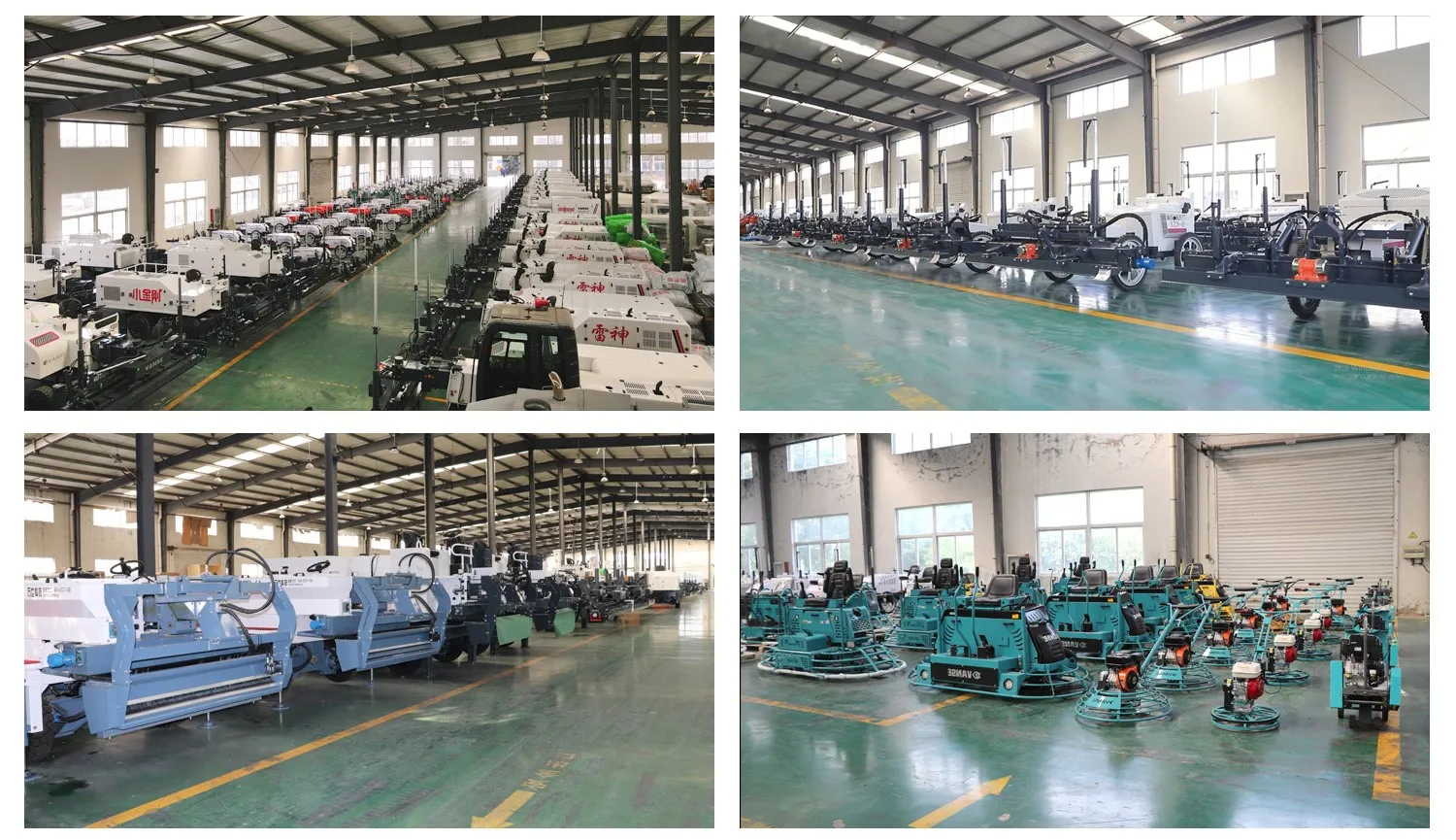
Our Factory
Shandong Vanse Machinery Technology Co., Ltd.








Share this article

About the Author: Shandong Vanse Machinery Technology Co., Ltd.
Shandong Vanse Machinery Technology Co., Ltd. is a high-tech manufacturer specializing in concrete construction machinery, including laser screeds and related equipment. The company integrates R&D, production, and global sales, with products exported to over 60 countries and widely used in infrastructure projects worldwide.
Previous Post
Next Post
Related Articles
You Might Also Like
What inspection & maintenance work needs to be done before a long-idle concrete laser leveling machine is reactivated?
Before a concrete laser leveling machine that has been idle for a long time is reactivated, a systematic inspection should be carried out to eliminate potential faults (such as component rust, circuit aging, hydraulic jamming, etc.), and the equipment performance should be restored in combination with maintenance to avoid construction quality problems or safety accidents caused by component failure when it is reactivated. The following are the specific inspection and maintenance steps, which are disassembled according to the logic of "appearance → core system → auxiliary components → trial operation" First, inspect thex eterior of the equipment and its easily worn parts, with a focus on checking for physical damage, rust or loosening caused by long-term idleness. This is the foundation for ensuring subsequent system checks. Check whether the frame of the machine body, the leveling scraper and the vibration beam have any deformation or cracks (especially at the welding parts). If there is any slight deformation, it needs to be corrected. If there are cracks, they need to be repaired by welding and ground smooth. Check whether all exposed metal parts (such as bolts, pins, and connecting brackets) are rusted. Rusted areas should be cleaned with a wire brush and then coated with anti-rust oil. Severely rusted parts (such as pins that are stuck) need to be replaced. If it is a wheeled model: Check whether the tire pressure is normal (refer to the standard value in the equipment manual), whether there are cracks, bulges or foreign objects embedded in the tire surface, and whether the valve stems are leaking. If it is a tracked model: Check whether the track plate is excessively worn (the tread depth should be replaced if it is less than 1mm), whether the track tension is appropriate (press the middle section of the track with your hand, and the subsidence should be controlled within 10-15mm), and whether the track pin shaft is stuck (try to rotate it after injecting grease). Check whether the protective covers of the emergency stop button and the operating handle are intact. After the emergency stop button is pressed, it should be able to immediately cut off the power and start normally after resetting. Check whether the warning lights and buzzers are functioning properly (test after power-on), and whether the safety guardrails and anti-slip steps are firm, without any looseness or missing parts. The core performance of the laser leveling machine machine relies on the power system, hydraulic system and laser control system. It is necessary to check each internal potential hazard one by one to avoid "breaking down" or precision failure when it is put into use. Type Inspection items Maintenance measures Diesel engine 1. Oil level and quality If the engine oil is below the mark, it needs to be replenished (using the same type of engine oil). If it deteriorates (turns black or contains impurities), it should be completely replaced 2. Fuel tank and fuel quality 2. Drain the deteriorated diesel from the fuel tank, clean the tank and then add new diesel. Check if the fuel filter element is clogged (if it is clogged, it needs to be replaced). 3. Coolant level 3. If the coolant is insufficient, it needs to be replenished. (Mix the antifreeze in proportion and avoid adding tap water directly.) 4. Air filter element 4. Remove the air filter element and blow it clean in reverse with compressed air (if the filter element is damaged, it needs to be replaced). 5. Spark plugs/fuel injectors 5. Remove the spark plugs to clean the carbon deposits (if the gap is abnormal, adjust it). The fuel injectors need to be disassembled to check the atomization effect (if the atomization is poor, clean it). Electric motor 1. Motor housing and terminal blocks Clean the dust off the motor casing and check if the terminal blocks are loose or oxidized (oxidation should be sanded with sandpaper). 2. Carbon brushes (if any) When the carbon brush is worn down to one-third, it needs to be replaced to ensure good contact between the carbon brush and the commutator 3. Insulation resistance 3. Measure the insulation resistance with a megohmmeter. A resistance of ≥0.5MΩ is qualified (to avoid leakage). Long-term idleness of the hydraulic system is prone to deterioration of the oil and aging of the sealing parts, which requires special inspection: Hydraulic oil inspection: Open the oil tank cover and observe the color of the oil (normally light yellow. If it turns black or becomes turbid, it needs to be replaced) and the liquid level (it should be within the range of "MIN-MAX" on the oil gauge. If it is insufficient, add the same type of hydraulic oil). If the oil has been idle for more than six months, it is recommended to replace it even if its appearance is normal (the oil will oxidize and become ineffective). Leakage inspection: Check the hydraulic oil pipes, joints, and cylinders (especially the leveling cylinder and traveling cylinder) for any leakage marks. If leakage is found, replace the sealing parts or damaged oil pipes. The joint should be re-tightened according to the manual torque (to avoid over-tightening and damaging the thread). Maintenance of hydraulic components Clean the hydraulic oil filter element (if it is a paper filter element, replace it if it is clogged) to prevent impurities from entering the cylinder and causing wear. Manually push the piston rod of the oil cylinder to check for any jamming (if there is jamming, disassemble the oil cylinder to clean the internal impurities and refill the hydraulic oil). Before starting the equipment, manually rotate the coupling of the hydraulic pump to ensure there is no jamming (to avoid damage to the pump body). The laser system is the "eyes" of the leveling machine. When idle, it is prone to sensor moisture and poor circuit contact, and precise inspection is required Laser emitter Clean the dust off the transmitter lens (wipe it with a soft cloth to avoid scratches), and check the battery power (replace it if insufficient). Power on and test whether the transmitter can emit laser normally (the laser line should be uniform and free of flicker). If the laser is weak or there is no laser at all, check the internal circuit or replace the transmitter. Laser receiver Check whether the receiver probe is damaged or damp (if damp, it needs to be dried), and whether the terminal blocks are loose. Bring the receiver close to the transmitter to test if it can receive signals normally (the indicator light needs to switch normally according to the "high and low positions"). If the signal is unstable, the receiver needs to be calibrated (perform zero point calibration according to the steps in the equipment manual). Control circuit: Check whether the connection lines of the laser control system (from the receiver to the controller, and from the controller to the hydraulic valve) are damaged or aged. The line joints need to be re-plugged and unplugged to ensure good contact (to avoid signal interruption and accuracy deviation). Apart from the core system, minor issues with auxiliary components may also cause the equipment to fail to operate normally. Each one needs to be confirmed Check the battery level (measure the voltage with a multimeter. For a 12V battery, a voltage of ≥12.4V is normal. If it is insufficient, it needs to be charged; if it has been idle for more than 3 months, it needs to be charged before use to avoid battery depletion and scrapping). Clean the dust inside the distribution box, check whether the fuses are intact (replace the fuses of the same specification if they are blown), and whether the contacts of the relays and contactors are oxidized (if oxidized, sand them with sandpaper). Apply grease to the "lubrication points" marked in the equipment manual (such as walking bearings, scraper connection shafts, and laser receiver rotating shafts) (use lithium-based grease and avoid mixing different types of grease). Each lubrication point should be filled until grease overflows (ensure adequate lubrication). Diesel model: Check whether the fuel pump and fuel line are unobstructed (you can manually pump fuel to remove air), and whether the exhaust pipe is blocked (clean carbon deposits). For electric models: Check if the charger is functioning properly (the indicator light needs to switch normally during charging), and if the cable is damaged (any damage should be repaired with insulating tape to prevent leakage). After completing all inspections and maintenance, it is necessary to conduct a trial run to confirm that the equipment is free of faults and avoid direct construction under load. Start the equipment (engine/motor), let it idle for 5 to 10 minutes, and observe whether the power system is stable (without abnormal noise or vibration) and whether there is any leakage in the hydraulic system. Test each action of the operation handle: walking (forward/backward, turning), lifting and lowering of the leveling scraper, and vibration of the vibrating beam. Ensure that the actions are smooth and without any lag. The laser control system can normally control the leveling height (for example, when the receiver detects the laser offset, the equipment can automatically adjust the height of the scraper). Lay a small amount of concrete (about 10-15cm thick) in an open area, start the equipment for leveling operation, and inspect: Whether the walking speed is uniform (no sudden fast or slow); Whether the vibration frequency of the vibrating beam is normal (no abnormal noise, no obvious honeycomb on the concrete surface); The flatness of the concrete surface after leveling (measured with a 2-meter straightedge, the error should be ≤3mm/2m, meeting the construction standards). During the trial operation, if any abnormality is detected (such as noise, leakage, or accuracy deviation), the machine must be stopped immediately and the fault rechecked. Refer to the equipment manual: The structure of laser leveling machine machines of different brands may vary. All inspections and maintenance should be based on the parameters in the equipment manual (such as hydraulic oil type, lubrication point position, torque value) to avoid misoperation. Pre-idle record: If conditions permit, a record should be made before the next idle period (such as the time of oil change and the status of components) to facilitate targeted inspection during the next activation. Safety precautions: During inspection and maintenance, the power source must be cut off (remove the key, disconnect the negative terminal of the battery) to prevent accidental start-up. Safety belts must be worn during high-altitude inspections (such as the installation of laser emitters) to prevent falls. Through the above steps, the potential risks of long-term idleness can be comprehensively eliminated, ensuring that the laser leveling machine machine performs stably and meets the precision standards after being reactivated, and avoiding rework or safety accidents caused by equipment failure during construction. Note: The parameters provided in this document are for reference only and are not mandatory. Due to differences in technical characteristics between different brands and models of laser levelers, please consult the manufacturer for a suitable solution before actual operation. This reference document assumes no responsibility for any issues arising from failure to follow the manufacturer's instructions.Main methods for leveling concrete pavement
– Working principle: The laser concrete leveler uses the laser beam emitted by the laser transmitter as the reference plane, receives the laser signal through the laser receiver, and automatically controls the scraper height of the leveler. During the leveling process, the scraper of the leveler is raised and lowered according to the height of the laser reference plane to accurately level the concrete, which can effectively control the flatness and levelness of the road surface. – Operation points: First, the laser transmitter should be reasonably arranged at the construction site to ensure that the laser beam it emits can cover the entire construction area and is not blocked by obstacles. Then, the operator drives the leveler at a constant speed on the concrete, and the machine will automatically adjust the scraper height according to the laser signal to level the concrete. During the construction process, pay attention to the working status of the laser receiver and the leveling effect of the machine. If there is any abnormality, stop the machine in time for inspection and adjustment. At the same time, for corners that are difficult for the leveler to reach, manual assistance is still required. – Working principle: The paver evenly distributes concrete on the roadbed through the spiral distributor, and uses the vibrator to compact the concrete, forming a preliminary flat road surface during the process. – Operation points: Before construction, the paver parameters, such as the spiral distributor height, vibration frequency and amplitude, need to be adjusted according to the width and thickness of the road surface. During construction, the paver should be kept moving at a constant speed to ensure that the concrete paving thickness is uniform, thus laying the foundation for subsequent road leveling work. – Working principle: The vibration beam relies on its own vibration to squeeze and compact the aggregate particles in the concrete, and vibrate the cement mortar on the surface, so as to further level the road surface and improve the density. – Operation points: When using, the vibration beam needs to move slowly along the concrete road surface, and the vibration frequency and walking speed should be reasonably adjusted according to the slump of the concrete and the road surface conditions. For local uneven areas, the vibration beam can be manually assisted to carry out key treatment. – Working principle: The disc or blade of the trowel squeezes and smears the concrete surface when rotating, making the surface smoother and more compact, and improving the density and wear resistance. – Operation points: The surface should be troweled after the water on the concrete surface is slightly dry, and the appropriate trowel operation speed should be selected according to the coagulation of the concrete. For large-area pavement, a driving trowel can be used to improve efficiency, and narrow areas such as corners can be carefully processed with a hand-held trowel. – Working principle: Construction workers use wooden trowels, iron trowels and other tools to carefully trim the pavement with experience and feel, and deal with local uneven areas that are difficult for equipment to take care of. – Operation points: Mainly fine-tune the corners of the pavement, around the construction joints, and the traces left by the equipment, requiring construction workers to be skilled and able to accurately judge and deal with uneven areas to achieve higher flatness requirements.What level of (FF) Floor Flatness and (FL) Floor Levelness can a concrete laser leveling machine guarantee
The concrete laser leveling machine, often called a Laser Leveling, can achieve significantly higher Floor Flatness (FF) and Floor Levelness (FL) numbers compared to traditional manual methods. While the maximum guaranteed level can depend on the specific machine, operator skill, slab preparation, and concrete mix, here is a general breakdown of the guaranteed capabilities and the high-end results that can be achieved: Laser Leveling routinely achieve floor tolerance specifications that fall into the "Flat" to "Very Flat" range, meeting or exceeding what is required for most industrial and commercial projects. FF/FL Classification FF (Flatness) Range FL (Levelness) Range Typical Application Laser Leveling Capability Moderately Flat FF 25 FL 20 General-purpose slab-on-grade Easily Exceeded Flat FF 35 FL 25 Standard warehouses, retail, offices Routine Minimum Very Flat FF 45 FL 35 Warehouses with high-lift forklifts (over 15-20 ft) Routinely Achieved Super Flat FF 50 and higher FL 40 and higher Robotics, Automated Guided Vehicles (AGVs), high-speed racks, TV studios, ice rinks High-End Capability Routine Performance: A good laser Leveling operation can routinely achieve FF 45 / FL 35 or better. Many industrial floors finished with a laser Leveling aim for and achieve FF 50+ / FL 40+. Accuracy (Deviation): Some manufacturers state a high-precision laser Leveling can achieve millimeter-level accuracy for leveling, or an overall flatness accuracy within about 3mm on industrial floors. Maximum Potential: With the latest technology (including 3D laser guidance systems) and meticulous finishing, projects have reported achieving FF 90+ / FL 85+, which is considered Super Flat and is necessary for advanced automated warehouse systems. The F-Number system (ASTM E1155) provides a standardized way to measure the quality of a concrete floor. FF (Floor Flatness): Measures the local bumpiness or waviness of the surface over a short distance (typically a 2-foot interval). This is controlled primarily by the finishing operations after the concrete is placed. Higher FF numbers mean a smoother surface. FL (Floor Levelness): Measures the conformity of the floor to the specified elevation or slope over a longer distance (typically a 10-foot interval). This is controlled mainly by the accuracy of the Leveling machine. Higher FL numbers mean a more level floor. Feature Impact on FF/FL Laser Guidance Ensures the Leveling head maintains a precise and consistent elevation across the entire slab, directly improving the FL (Levelness) number. Integrated Vibrator Provides consistent, high-frequency vibration and compaction across the full width of the Leveling head, reducing the surface defects and local variations that affect the FF (Flatness) number. Would you like me to find out the standard FF/FL requirements for a specific type of building, such as a warehouse or a sports facility? Note: The parameters provided in this document are for reference only and are not mandatory. Due to differences in technical characteristics between different brands and models of laser levelers, please consult the manufacturer for a suitable solution before actual operation. This reference document assumes no responsibility for any issues arising from failure to follow the manufacturer's instructions.