Technical Knowledge
Comparison of Traditional Technology and Modern Construction Technology of Concrete Laser Leveler
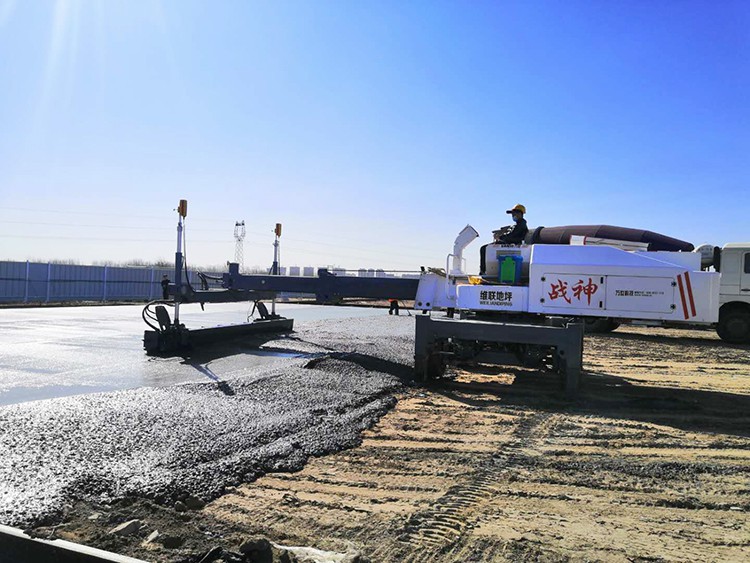
1 to find a flat support template, RBI, red band to the level of laser as the base control surface, so as to ensure the level of the ground
2 single area width 6M area of 2000 square meters within 3000 ㎡ ~ 5000 ㎡ any block construction
3 flatness of less than the national norms exceed the national norms
4 work efficiency 700-800 ㎡ / single class 2500 ~ 3500 ㎡ / single class
5 construction joints how much
6 Uneven density is uniform and dense
7 appearance is not beautiful, stubble more beautiful, stubble less
8 teams about 17 of about 8
9 cost level
10 tool chute, roller, scraper, vibrating bar channel, machine
11 operation complicated operation, the program cumbersome one machine operation, one-time vibration, mention pulp, scratching.
Thanks to All the Friends Who Support and Trust Shandong Vanse Machinery Technology Co., Ltd.
If you want to know more about Shandong Vanse Machinery Technology Co., Ltd. or have any questions, please feel free to contact us:
Our Factory
Shandong Vanse Machinery Technology Co., Ltd.








Share this article

About the Author: Shandong Vanse Machinery Technology Co., Ltd.
Shandong Vanse Machinery Technology Co., Ltd. is a high-tech manufacturer specializing in concrete construction machinery, including laser screeds and related equipment. The company integrates R&D, production, and global sales, with products exported to over 60 countries and widely used in infrastructure projects worldwide.
Previous Post
Next Post
Related Articles
You Might Also Like
In commercial facilities, how can laser leveling machines ensure floor flatness to provide a better customer experience?
A laser leveling is a piece of equipment used in concrete construction that uses laser technology to measure and adjust the flatness of concrete floors. Here are some of the ways a laser leveling ensures floor flatness: Laser transmitter: The laser leveling is equipped with a laser transmitter that emits a horizontal laser beam. This laser beam is used as a reference line to determine if the concrete floor is flat. Receiver: The laser leveling is also equipped with a receiver that detects the position of the laser beam and compares it to the actual floor. If the floor is not flat, the receiver sends a signal to the operator indicating that adjustments need to be made. Automatic adjustment: Some advanced laser levelings have an automatic adjustment function that automatically adjusts the height and angle of the machine based on the information received to ensure the flatness of the concrete floor. High-precision sensors: Laser levelings are usually equipped with high-precision sensors that can accurately measure the flatness of the concrete floor and transmit data to the control unit for necessary adjustments. Through the above methods, laser levelings can ensure the flatness of concrete floors in commercial facilities, providing customers with a better experience. For example, in places such as shopping malls and hotels, a flat floor is essential for walking comfort and safety. In addition, a flat floor can improve space utilization and make commercial facilities look neater and more professional.How environmental factors affect the performance of concrete laser leveling machines
Environmental factors affect the performance of concrete laser levelings across multiple dimensions, including equipment operation, construction accuracy, efficiency, and service life. Different environmental conditions can indirectly or directly cause performance fluctuations by affecting the equipment's mechanical system, laser positioning system, and concrete working conditions. The following details the specific impact mechanisms and countermeasures based on three core categories: climate, geology, and site conditions, and electromagnetic and light environments: Climatic factors (temperature, humidity, precipitation, wind) not only affect the stability of the mechanical components of the laser leveling machine, but also change the initial setting speed and fluidity of the concrete, thereby indirectly affecting the leveling accuracy and efficiency. Climate Type Specific impact Performance differences High temperature environment (≥30℃) 1. Equipment hydraulic system: Hydraulic oil viscosity decreases, seals age faster, and leaks and pressure shortages are more likely to occur. – Increased probability of mechanical failure (e.g., decreased hydraulic pump efficiency, motor overload); 2. Engine/motor: Heat dissipation efficiency decreases, potentially triggering overheat protection and causing shutdown. – Shrinkage cracks are more likely to form on the concrete surface, increasing flatness deviation after leveling; 3. Concrete: Moisture evaporation accelerates, shortening initial setting time and narrowing the leveling window (necessitating faster vibration and leveling). – Work efficiency is forced to increase, which can lead to decreased accuracy due to hasty operation. Low temperature environment (≤5℃) 1. Hydraulic System: Increased hydraulic oil viscosity increases flow resistance in pipelines, slowing equipment response (e.g., delayed raising and lowering of the leveling blade); – Decreased equipment operational sensitivity (laser signal feedback and mechanical movement become out of sync); 2. Batteries/Circuits: Reduced lead-acid battery capacity makes circuit connectors susceptible to oxidation due to condensation, leading to poor contact; – Concrete density after leveling is insufficient, resulting in a lower surface flatness compliance rate; 3. Concrete: Prolonged initial setting time, reduced fluidity, increased difficulty in vibrating, and the tendency to develop honeycombs and rough surfaces. – Equipment startup is difficult, requiring warm-up time, and overall construction efficiency decreases by 30%-50%. High humidity/rainfall environment 1. Laser System: Condensation or water ingress on the laser transmitter/receiver lens can cause laser signal attenuation or scattering, resulting in positioning accuracy drift. – Laser positioning error increases (from ±2mm to over ±5mm), failing to meet high-precision floor requirements; 2. Electrical System: Moisture in the control panel and motor junction box can lead to short circuits or leakage. – The risk of electrical failures (such as motor failure) increases dramatically, potentially causing "faults" on the concrete surface; 3. Concrete: Excessive moisture content can lead to slow strength development and sanding and powdering of the surface after leveling. – Additional rain protection measures (such as temporary sheds) are required, increasing construction costs. Strong wind environment (≥ level 5) 1. Laser Signal: Strong winds can move the laser transmitter bracket (if not securely fixed), causing the laser reference line to shift. – Laser reference line deviation (a single operation can vary by 5-10mm), resulting in a "wavy" surface; 2. Equipment Stability: Small laser levelers (such as hand-push models) can easily tilt due to wind, affecting the leveling trajectory. – Equipment operation becomes more difficult, requiring additional manual stabilization, and accuracy fluctuations due to human intervention; 3. Concrete Surface: Wind erosion can cause rapid moisture loss from the surface, resulting in cracks. – Concrete surface quality deteriorates, requiring secondary repairs later. The geological conditions of the site (hardness, flatness), obstacle distribution and ground bearing capacity directly affect the load of the laser leveling machine's travel system and vibration system, which in turn leads to performance deviation or mechanical damage. Soft soil (e.g., uncompacted soil): The equipment is prone to "sinking" during travel, causing the leveling blade to lose its level position (although the laser positioning is correct, the machine's posture is tilted), resulting in local depressions on the leveling surface. Furthermore, the vibration force of the vibrating system may cause further subsidence, exacerbating flatness errors. Hard soil (e.g., old concrete, rock formations): Wheels/tracks wear faster, increasing the vibration amplitude of the equipment, making precise control difficult for the operator. If the foundation surface has protrusions (e.g., stones, rebar heads), these can get stuck in the leveling blade, causing "skipping" and resulting in scratches or uneven surfaces. Narrow spaces (such as indoor rooms and elevator shafts): Large laser levelings (such as ride-on models) are difficult to steer and require frequent adjustments, causing the laser receiver to frequently deviate from the baseline and reduce accuracy. Furthermore, insufficient heat dissipation space can easily lead to motor overheating. Dense obstacles (such as pre-buried pipelines and pillars): Operation requires frequent starts and stops, as well as detours. This prevents continuous leveling during the initial setting period of the concrete, leading to the appearance of "joints." Accidental collisions with obstacles can cause the laser transmitter to shift, requiring recalibration and delaying the project. If the ground's bearing capacity is lower than the equipment's own weight (e.g., temporary formwork or uncured concrete), the ground will deform as the equipment moves, causing the entire surface to deform accordingly, resulting in "wavy" patterns. In severe cases, this can cause the formwork to collapse and damage the equipment. The core accuracy of the laser leveling machine depends on the signal matching between the laser transmitter and the receiver. Electromagnetic interference, strong light or dust will directly block or distort the signal, resulting in positioning failure. Sources of interference: Strong electromagnetic equipment at the construction site, such as welding machines, tower cranes, high-voltage cables, and walkie-talkies. Mechanism of Impact: Electromagnetic signals can interfere with the laser receiver's circuitry, causing it to misinterpret the laser reference line (e.g., misinterpreting a "horizontal signal" as a "tilt signal"), leading to incorrect control of the leveling blade. Performance: Irregular height differences appear on the leveling surface, with accuracy plummeting from ±2mm to over ±10mm, or even completely disrupting normal operation. High-light environments (such as midday sun or strong spotlights): When direct sunlight shines on the laser receiver lens, the strong light can drown out the laser signal (laser is red or green visible light, and strong light reduces signal contrast). The receiver cannot accurately capture the baseline, resulting in "signal loss," causing the device to automatically shut down or enter "manual mode" (significantly reducing accuracy). High-dust environments (such as dry-mix mortar mixing and earthmoving operations): Dust adhering to the surface of the laser transmitter/receiver lens can scatter or block the laser signal, causing signal attenuation. If dust enters the lens, it can damage the optical components, permanently reducing positioning accuracy over time. In response to the above environmental factors, performance loss can be reduced through "device adaptation + environment optimization + operation adjustment": High Temperature: Use high-temperature resistant hydraulic fluid, install a cooling fan on the engine, and shorten the concrete pouring interval (to prevent initial setting). Low Temperature: Preheat the hydraulic system (e.g., with electric heating), use early-strength concrete, and cover with insulation film after work. Rainfall/High Humidity: Install a rain cover on the laser system, ensure waterproof sealing of electrical components, and clean condensation from the lens after rain. Soft soil foundation: Use a roller to compact the foundation first, or lay steel plates to distribute the load on the equipment. Hard soil foundation: Clean any surface protrusions in advance and replace wear-resistant wheels/tracks. Narrow spaces: Use a small, hand-push laser leveling, or employ a "segmented leveling + secondary finishing" process. Electromagnetic Interference: Keep the laser transmitter away from strong electromagnetic equipment (distance ≥ 10m) and use a shielded cable to connect to the receiver. Strong Light/Dust: Install a polarizing filter (to mitigate strong light) on the lens. Dedicated personnel should be assigned to clean dust from the lens during operation. Set up a dustproof booth if necessary. In summary, environmental factors impact concrete laser levelings in a multi-dimensional and interlinked manner-from the core laser positioning system to the mechanical execution system to the concrete workpiece-all of which can experience performance degradation due to environmental fluctuations. In actual construction, it's crucial to assess environmental conditions in advance and adjust equipment parameters and operating procedures accordingly to maximize the equipment's precision advantages. ARMOUR JOINT CONCRETE LASER LEVELING MACHINE POWER TROWEL SLIPFORM MACHINE STEEL FIBER TOPPING SPREADERSuperflat Floor Flatness Standards (FF/FL Values) Interpretation and Testing Methods
In logistics warehousing, precision manufacturing, and other fields, **superflat floors** are fundamental to ensuring the smooth operation of high-reach forklifts, automated guided vehicles (AGVs), and high-precision equipment. The core indicator for measuring floor quality is the F-Numbers (F-value), which mainly includes two values: FF and FL. The following is an in-depth summary of its standard interpretation and testing methods: Compared to the traditional "3-meter straightedge test method," the F-value system uses statistical analysis of the undulations of the floor surface to more scientifically reflect the actual working performance of the floor. Meaning: Describes the degree of "undulation" (local unevenness) of the floor surface. Calculation Principle: Calculates the curvature change by measuring the height difference every 300mm (1 foot). Performance Characteristics: A higher FF value indicates a smoother floor, resulting in less shaking and bumping when forklifts are in motion. Meaning: Describes the overall inclination of the floor relative to the design horizontal plane (macro slope). Calculation Principle: Measures the total height difference over a distance of 3000mm (10 feet). Performance Characteristics: A higher FL value indicates a floor closer to absolute level. This is crucial for the verticality of high-bay racking (VNA). According to ACI (American Concrete Institute) 302.1R standard, floor grades are typically classified as follows: Flooring Classification Specify overall flatness (FF) Specify overall flatness (FF) Applicable Scenarios Standard 20 15 Machine rooms, parking lots, general warehouses Standard Grade 25 20 Light industrial and commercial office buildings Flat Grade 35 25 Narrow aisle warehouses (non-high-rise), laboratories Extra Flat Grade 45 35 Ice rinks, precision manufacturing plants Super Flat Grade 60+ 40+ High-rise VNA warehouses (above 12 meters), television studios The internationally accepted testing standard is ASTM E1155. Domestically, this standard or industry regulations are typically referenced for acceptance testing. This is currently the most widely recognized testing tool. It is a walking electronic level; the operator pushes it across the ground, and the device automatically records the elevation difference between every two points (usually 300mm apart). Golden Time: Testing should be conducted within 24 to 72 hours after concrete pouring. Reason: Because concrete undergoes long-term shrinkage and warping, early testing reflects construction quality, while later testing is affected by structural deformation. Test Line Layout: Multiple parallel and perpendicular test lines are typically laid out within each test section. Total Length Requirement: At least 34 elevation measurements are required per 1000 square feet (approximately 93 square meters) to ensure the validity of the statistical data. The acceptance report will show two key evaluation dimensions: Specified Overall Value (SOV): The average score for the entire floor slab, which must meet the design specifications. Minimum Local Value (MLV): The permissible baseline for quality (typically 60%-70% of the SOV). Even if the overall score is acceptable, if a local MLV fails to meet the standard, that area must be repaired. Laser leveling: Using a high-precision laser leveling is essential to achieving an F-value > 40. Repeated Scraping with a Highway Straightedge: Before the concrete initially sets, repeated cross-scraping with a large leveling (Highway Straightedge) is crucial for improving the F-value. Segmented Construction: Using a long-strip construction method makes it easier to control precision compared to large-area pouring. Note: The parameters provided in this document are for reference only and are not mandatory. Due to differences in technical characteristics between different brands and models of laser levelers, please consult the manufacturer for a suitable solution before actual operation. This reference document assumes no responsibility for any issues arising from failure to follow the manufacturer's instructions.