Technical Knowledge
In commercial facilities, how can laser leveling machines ensure floor flatness to provide a better customer experience?

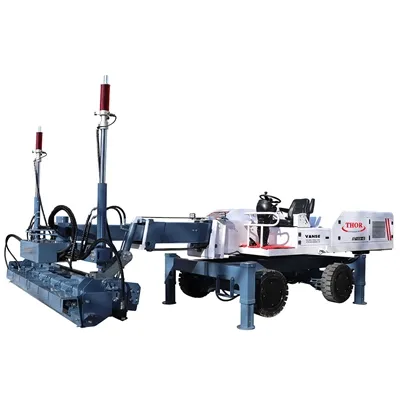
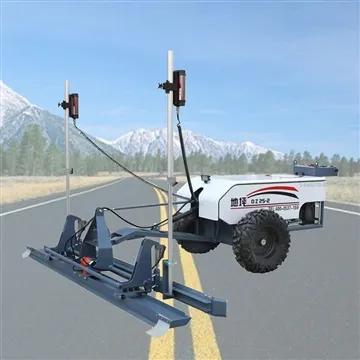
A laser leveling is a piece of equipment used in concrete construction that uses laser technology to measure and adjust the flatness of concrete floors. Here are some of the ways a laser leveling ensures floor flatness:
Laser transmitter: The laser leveling is equipped with a laser transmitter that emits a horizontal laser beam. This laser beam is used as a reference line to determine if the concrete floor is flat.
Receiver: The laser leveling is also equipped with a receiver that detects the position of the laser beam and compares it to the actual floor. If the floor is not flat, the receiver sends a signal to the operator indicating that adjustments need to be made.
Automatic adjustment: Some advanced laser levelings have an automatic adjustment function that automatically adjusts the height and angle of the machine based on the information received to ensure the flatness of the concrete floor.
High-precision sensors: Laser levelings are usually equipped with high-precision sensors that can accurately measure the flatness of the concrete floor and transmit data to the control unit for necessary adjustments.
Through the above methods, laser levelings can ensure the flatness of concrete floors in commercial facilities, providing customers with a better experience. For example, in places such as shopping malls and hotels, a flat floor is essential for walking comfort and safety. In addition, a flat floor can improve space utilization and make commercial facilities look neater and more professional.
Thanks to All the Friends Who Support and Trust Shandong Vanse Machinery Technology Co., Ltd.
If you want to know more about Shandong Vanse Machinery Technology Co., Ltd. or have any questions, please feel free to contact us:
Our Factory
Shandong Vanse Machinery Technology Co., Ltd.








Share this article

About the Author: Shandong Vanse Machinery Technology Co., Ltd.
Shandong Vanse Machinery Technology Co., Ltd. is a high-tech manufacturer specializing in concrete construction machinery, including laser screeds and related equipment. The company integrates R&D, production, and global sales, with products exported to over 60 countries and widely used in infrastructure projects worldwide.
Previous Post
Next Post
Related Articles
You Might Also Like
What should you pay attention to renting a concrete laser leveling machine?
When renting a concrete laser leveling, you need to pay attention to the following points: 1. Choose the right leasing method There are many ways to rent concrete laser leveling machines, including long-term rental, short-term rental, hourly rental, etc. Different leasing methods correspond to different needs and budgets, and you need to choose according to the actual situation. Long-term leasing usually requires higher rent, but can be used for a longer period of time, which is suitable for construction companies that need to use the leveling machine for a long time; short-term leasing and hourly leasing are suitable for situations that require short-term use of the leveling machine, such as a certain specific engineering projects. 2. Choose a regular lessor When choosing a lessor, you need to choose a formal and qualified lessor to ensure that the leased concrete laser leveling machine has reliable quality and guaranteed service. You can find regular leasing companies through online searches, friend recommendations, etc. 3. Understand the rental fees and deposit status Before signing a rental contract, you need to understand the specific rental fees and deposits. Rental costs include rental and transportation costs, etc. The specific price needs to be negotiated based on the actual situation. The deposit is to protect the rights and interests of both parties to the lease. After the contract expires, if the leveler is not damaged or causes no other losses, the lessor needs to return the deposit to the lessee. 4. Check the quality of the leveling machine Before taking delivery of a rental concrete laser leveling, the quality of the leveling needs to be inspected. The inspection content includes the appearance of the leveler, whether the spare parts are complete, and whether the performance is normal, etc. If there are any problems, you need to contact the lessor promptly and request replacement or repair. 5. Sign a lease contract When signing a lease contract, you need to read the terms of the contract carefully to clarify the rights and obligations of both parties. The contract content should include the lease term, rent and payment method, deposit and return method, equipment maintenance and repair responsibilities, etc. In addition, you also need to understand important terms such as liability for breach of contract and methods of resolving disputes. 6. Precautions during use During the rental period, you need to pay attention to the following points when using the concrete laser leveling: Comply with the operating specifications and precautions in the instruction manual, and use and maintain the leveling machine correctly; Avoid the leveler working in harsh environments, such as high temperature, low temperature, humidity, etc.; If any problems or malfunctions are found during use, stop the machine immediately and contact the lessor; Comply with safety regulations at the construction site to ensure the safety of construction workers; After use, the surface of the leveler should be cleaned in time to avoid affecting the next use. 7. Pay rent and maintenance fees on time In the process of using a concrete laser leveling machine, rent and maintenance fees need to be paid on time. The rent is the cost of leasing the leveling machine and needs to be paid according to the time and method agreed in the contract; the maintenance fee is to ensure the normal use and maintenance of the leveling machine and needs to be maintained and maintained in accordance with the requirements in the instruction manual. 8. Pay attention to the return of equipment At the end of the lease period, the concrete laser leveling needs to be returned to the lessor. Please note the following points when returning: Make sure the surface of the leveler is clean and tidy with no obvious damage; Make sure the spare parts of the leveling machine are intact; Make sure the leveler is functioning properly; Contact the lessor promptly and go through the return procedures. To sum up, when renting a concrete laser leveling, you need to pay attention to choosing the appropriate rental method, choosing a regular lessor, understanding the rental fees and deposits, checking the quality of the leveling, signing a rental contract, and paying attention to the precautions during use. Pay rent and maintenance fees on time and pay attention to the return of equipment. Only by carefully understanding and complying with the above precautions can we better use the concrete laser leveler and improve construction efficiency and quality.The necessity of choosing a laser leveling machine!
THE NECESSITY OF CHOOSING A LASER LEVELING MACHINE!!! The laser leveling machine uses laser to level the ground, which has higher accuracy and smaller ground error after paving. Moreover, the construction efficiency of this kind of equipment is basically more than three times that of manual work, and one piece of equipment can be done, saving labor investment and reducing capital cost investment. Definition of laser leveling machine: A device guided by a laser for leveling and leveling fresh concrete. A concrete construction method that uses a laser leveling machine to pave and level the newly poured concrete. Advantages of concrete laser leveling machine: 1. High construction quality The laser leveling machine can level the ground, which can significantly improve the flatness of the ground. For the ground constructed by the laser leveling machine and the traditional method, 22 points are detected (one point every 5mx4m), and the average flatness is 1.3mm and 4.1mm respectively. Laser leveling The leveling quality of equipment such as leveling machines is more than three times higher than that of traditional methods. The application of equipment such as laser leveling machines can realize large-scale construction, reduce a large number of construction joints, reduce the slump of concrete, ensure the strength of concrete, and make the ground integrity good and cracks are not easy to appear. 2. Fast construction speed The use of laser leveling machines and other equipment to construct large concrete slabs improves the work efficiency by 3 times compared with the traditional beam vibrator method and saves 30%. The construction area per hour is more than 300㎡, and the daily workload can be completed from 3000㎡ to 5000㎡. Work efficiency is greatly improved. Of course, high-quality and efficient large-area overall floor construction requires not only a high-quality and reliable laser leveler, but also a fast and convenient spreader. Somero STS-11M spreader equipment eliminates a series of defects that affect the final aesthetics and quality of the floor, such as uneven spread, dust pollution, footprints, and color differences caused by traditional wear-resistant aggregate spreader, and truly achieves high efficiency. Wear-resistant aggregate one-time mechanized distribution. 3. Save manpower and improve industrial efficiency 1)Integrated leveling head: It is composed of scraper, vibrator, vibrating plate, stirring cage and other components. It integrates multiple processes such as stirring, leveling, vibrating, and vibrating, and is completed by the machine at one time. Improve efficiency and save labor. 2)The high-frequency vibrator with 4000 times per minute and the uniform high-frequency vibration of the leveling head vibrating plate make the concrete floor dense and can avoid ground cracks caused by stress concentration caused by deformation. It can effectively solve the problems of hollowing, shelling, cracking and inequality on the ground. 3)The leveling head can maintain the level of the construction under the double transformation of the undulating foundation and the slope of the ground. 4)The laser measurement and control system automatically controls the elevation: the design elevation of the top surface of the floor is automatically controlled by the laser machine computer, which can ensure very high ground flatness, and can directly achieve accurate leveling on the concrete layer, and the ground flatness is not affected by the vibration of the construction formwork Influence, there is no need to support the formwork in the middle, reduce the input of artificial materials, reduce the construction procedure, and speed up the construction progress. Finally, it should be noted that if you want to use a concrete laser leveling machine, you must choose a professional concrete laser leveling machine brand equipment and pay attention to the method of use. Without professional training, the construction efficiency may not be able to keep up, and the effect will be poor. Big discount.What is the development trend of concrete trowel machines?
Concrete trowel is a kind of mechanical equipment widely used in concrete surface treatment. Its development trend is affected by many factors, including technological progress, market demand, environmental protection requirements, etc. The following is an analysis of the development trend of concrete trowel: 1. Technological progress promotes the development of concrete trowel machines towards high efficiency and intelligence With the continuous development of science and technology, the technology of compacting soil troweling machine is also constantly improving. The future concrete troweling machine will be more efficient and intelligent to meet the higher quality and higher efficiency stinging requirements. 1). Efficiency: Future concrete trowel machines will adopt more advanced drive systems and transmission systems to improve the operating speed and stability of the equipment. At the same time, advanced control technology is used to realize automated and intelligent operation of equipment to improve construction efficiency and quality. 2). Intelligentization: With the continuous development of artificial intelligence, Internet of Things and other technologies, future concrete trowels will be more intelligent. By introducing sensors, cameras and other equipment, real-time monitoring and feedback of equipment operating status and construction quality can be achieved, the self-diagnosis and repair capabilities of equipment can be improved, downtime can be reduced, and equipment utilization and construction efficiency can be improved. 2. Market demand drives the development of concrete trowelling machines towards multi-functional and personalized development As the construction industry continues to develop, the demand for concrete trowels is also increasing. In the future, concrete trowels will be more versatile and personalized to meet the needs of different customers. 1). Multi-functional: The future concrete troweling machine will have multiple functions, such as floor smoothing, compaction, polishing, etc. to meet different construction needs. At the same time, the equipment will also have multiple working modes and parameter adjustment functions to adapt to different construction environments and requirements. 2). Personalization: Future concrete trowels will be more personalized to meet the needs of different customers. The equipment will have a variety of appearance designs and color options to suit different architectural styles and decoration requirements. At the same time, the equipment will also have multiple operating modes and control interfaces to adapt to the habits and requirements of different operators. 3. Environmental protection requirements promote the development of green and environmentally friendly concrete trowel machines With the continuous improvement of environmental awareness, the environmental protection requirements for concrete trowels are also increasing. Future concrete trowels will be more green and environmentally friendly to reduce their impact on the environment. 1). Greening: Future concrete trowel machines will be made of environmentally friendly materials to reduce environmental pollution. At the same time, the equipment will have the characteristics of low noise and low energy consumption to reduce energy consumption and operating costs. In addition, the equipment will be driven by renewable energy sources, such as solar energy and wind energy, to reduce dependence on traditional energy sources. 2). Environmental protection: Future concrete troweling machines will use advanced waste treatment technology to classify and recycle waste generated during the construction process. At the same time, the equipment will be equipped with an advanced air purification system to reduce the impact of dust and harmful gases generated during the construction process on the environment. In addition, the equipment will also adopt advanced noise control technology to reduce the impact of noise generated during the construction process on the surrounding environment. 4. Summary To sum up, the development trends of concrete trowels include high efficiency, intelligence, multi-function, personalization, greenness and environmental protection. These trends will help improve the construction efficiency and quality of concrete trowels, meet the needs of different customers, and reduce the impact on the environment. With the continuous advancement of technology and changing market demands, concrete trowels will continue to innovate and develop, making greater contributions to the development of the construction industry.