Technical Knowledge
Concrete cutting
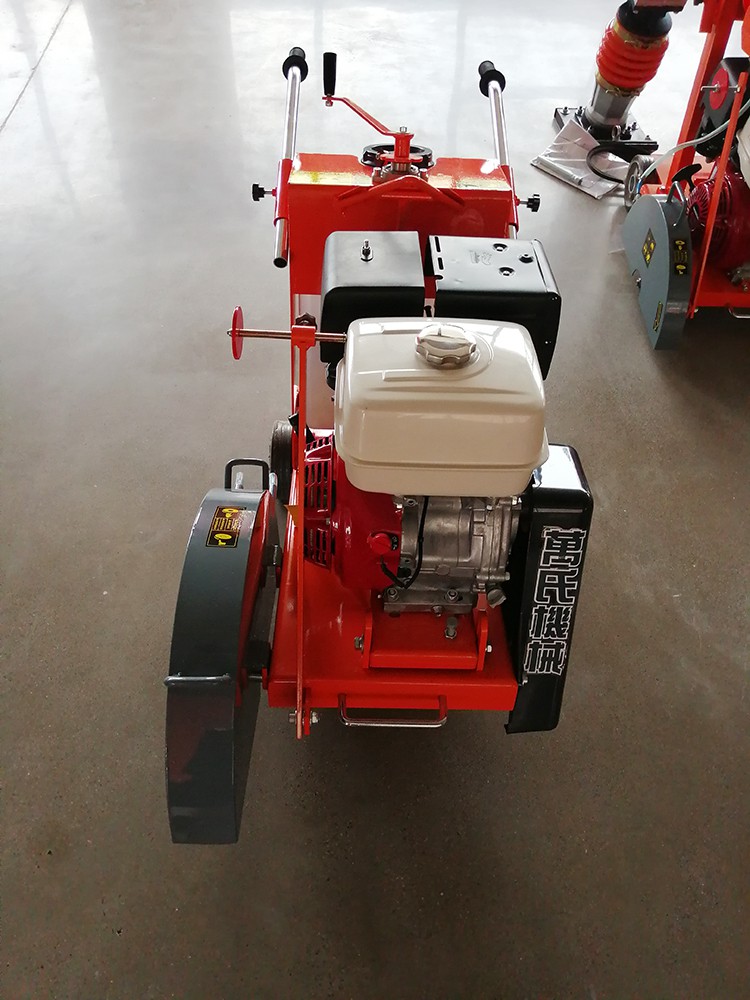
Concrete cutting, refers to the use of hydraulic wall sawing machine, electric dish saw machine, diamond or road cutting machine and other tools for concrete components, walls, pavement and other cutting technology. It has a strong cutting ability, static loss, high efficiency, the use of water cooling, no construction dust and so on.
Thanks to All the Friends Who Support and Trust Shandong Vanse Machinery Technology Co., Ltd.
If you want to know more about Shandong Vanse Machinery Technology Co., Ltd. or have any questions, please feel free to contact us:
Our Factory
Shandong Vanse Machinery Technology Co., Ltd.








Share this article

About the Author: Shandong Vanse Machinery Technology Co., Ltd.
Shandong Vanse Machinery Technology Co., Ltd. is a high-tech manufacturer specializing in concrete construction machinery, including laser screeds and related equipment. The company integrates R&D, production, and global sales, with products exported to over 60 countries and widely used in infrastructure projects worldwide.
Previous Post
Next Post
Related Articles
You Might Also Like
Concrete laser leveling machine usage tips and experience sharing
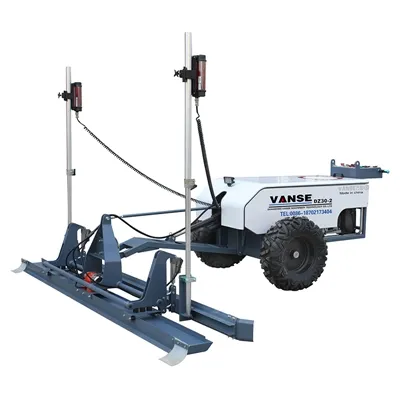
The concrete laser leveling is a high-precision concrete construction equipment that can quickly and accurately flatten and smooth the concrete surface. The following is a sharing of tips and precautions for using concrete laser levelingers. I hope it will be helpful to you. 1. Tips for using concrete laser leveling machine Preparation work before construction Before construction, you first need to select the appropriate concrete laser leveling machine model and specifications, and check whether its performance and accuracy meet the construction requirements. At the same time, corresponding construction auxiliary equipment needs to be prepared, such as templates, locators, etc. Operation details When operating the concrete laser leveling machine, you need to place the machine on the construction surface first, and adjust the horizontal and vertical angles of the machine to ensure that the machine is in a stable working condition. Then, set the corresponding parameters according to the construction requirements, such as flat thickness, flat width, etc. During operation, you need to pay attention to the following points: (1) During the smoothing process, keep the machine moving at a constant speed and avoid rapid acceleration or deceleration to avoid affecting the smoothing effect. (2) During the leveling process, pay attention to the vibration of the machine at all times. If the machine vibrates abnormally, it needs to be stopped in time to check and troubleshoot. (3) During the smoothing process, the quality of the flat surface needs to be observed at any time. If any unevenness or non-compliance is found, it needs to be repaired in time. Precautions When using a concrete laser leveling, you need to pay attention to the following points: (1) During operation, external forces such as collision and extrusion need to be avoided to avoid damage to the machine. (2) During use, the machine needs to be inspected and maintained regularly to keep the machine clean and in good condition. (3) During use, you need to pay attention to safety issues, such as wearing corresponding safety protective equipment and avoiding operating in environments with safety hazards. 2. Maintenance of concrete laser leveling machine Periodic inspection Regularly check various performance indicators and accuracy of the concrete laser leveling, including the working status of the laser transmitter, receiver, engine and other components, as well as the tightening of each connection part. If abnormalities or failures are found, they should be repaired or replaced in time. Lubrication and maintenance Regularly lubricate and maintain all lubricating parts of the concrete laser leveling, including mechanical transmission parts, electrical components and motors, to reduce mechanical wear and electrical failure of the equipment. Cleaning and maintenance Regularly clean the dust, debris and corrosive substances on the surface of the concrete laser leveling to keep the equipment clean and operating normally. In particular, pay attention to cleaning the lenses of the laser transmitter and receiver to ensure the laser beam transmission quality and reception accuracy of the equipment. Security protection When using the concrete laser leveling, you need to pay attention to safety protection issues. For example, wear appropriate safety equipment and avoid operating in environments with potential safety hazards. At the same time, it is necessary to regularly check whether the safety protection devices of the equipment are intact and effective to ensure the safe use of the equipment. 5. Record archiving During the use of the concrete laser leveling, it is necessary to record and archive the various performance indicators and operating status of the equipment for future maintenance and reference. At the same time, the equipment must be regularly upgraded or modified to improve its performance and service life. In short, the use skills and maintenance of concrete laser levelinging machines are systematic tasks that require users to continuously accumulate experience and summarize in actual operations. Only through scientific and reasonable use and maintenance can the normal operation of the equipment be ensured and efficiency improved.Concrete laser leveling machine helps you overcome the labor shortage problem!
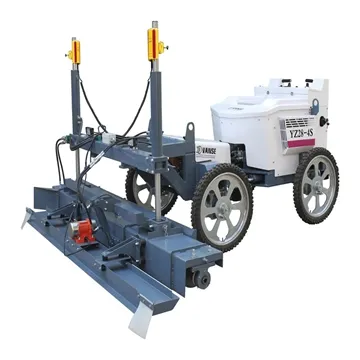
CONCRETE LASER LEVELING MACHINE HELPS YOU OVERCOME THE LABOR SHORTAGE PROBLEM! It is difficult to find labor force in the current market, especially for some industries that are tiring and often exposed to wind and sun. It is even more difficult to recruit people. What should we do in the market floor leveling industry facing a labor shortage? This situation had begun to emerge a few years ago, and VANSE, as a professional laser leveling machine manufacturer, developed a laser leveling machine that can replace manual labor, which greatly eased the current situation. For example, a construction company won 5 new bidding projects from January to February this year, a year-on-year increase of 66.0%. At the end of February, the surveyed companies had the largest number of construction projects in progress, 95. Despite the growth in business, there is still a shortage of skilled workers. The first reason is that there is a large market demand for skilled workers; the "demographic dividend" of low labor wages is gradually disappearing, and labor costs have greatly increased. But the construction industry has to continue to develop, so a better solution is to replace labor with machines. CONCRETE LASER LEVELING MACHINE HELPS YOU OVERCOME THE LABOR SHORTAGE PROBLEM! With the development of logistics and aviation industry, the golden age of floor construction has opened. Thousands of square meters of ground are only allowed to have a flatness error of 3 mm, which has become a new standard for floor construction. It is undoubtedly a dream to realize it by traditional manual labor. Owning a laser leveling machine has become an essential requirement for floor construction companies to undertake projects. CONCRETE LASER LEVELING MACHINE HELPS YOU OVERCOME THE LABOR SHORTAGE PROBLEM! 1. The leveling principle of the laser leveling machine is realized under the automatic control of the computer by using precision laser technology, closed-loop control technology and high-precision hydraulic system. This is the most prominent difference between it and other floor construction processes features. CONCRETE LASER LEVELING MACHINE HELPS YOU OVERCOME THE LABOR SHORTAGE PROBLEM! 2. The leveling principle of the precision laser leveling machine is to rely on the leveling head driven by hydraulic power, cooperate with the laser system and the computer control system to complete the leveling work while automatically leveling. The leveling head is equipped with an integrated scraper, vibrator and leveling plate, which integrates all leveling, leveling, vibration and compaction work, and completes it at one time. The computer control system automatically adjusts the elevation 10 times per second in real time, and the vibration frequency of the vibrator with a balanced design reaches 3000 times per minute. CONCRETE LASER LEVELING MACHINE HELPS YOU OVERCOME THE LABOR SHORTAGE PROBLEM! 3. The laser transmitter used to control the ground level is arranged independently, so that the level of the ground is not controlled by the template, and no cumulative error will occur. CONCRETE LASER LEVELING MACHINE HELPS YOU OVERCOME THE LABOR SHORTAGE PROBLEM! 4. The laser leveling machine can also automatically control the longitudinal and transverse slopes, which is also completed by the laser system, computer system, hydraulic system, and mechanical system. 5. There are many people in the construction of the traditional craft, which requires support formwork (channel steel), spotting, and paving. About 20 people are needed. The daily construction area is 2000㎡. The use of laser leveling machine can reduce the overall number of people to 4-8. Can be operated by one person. The daily construction area is increased to 3000㎡-5000㎡. Greatly reduced labor costs. In the long run, if we want to continue to develop in the flooring industry, we can only use laser leveling machines instead of labor. Now Shandong VANSE Machinery conforms to the needs of the development of the times.What’s the compatibility between spreaders and concrete textures?
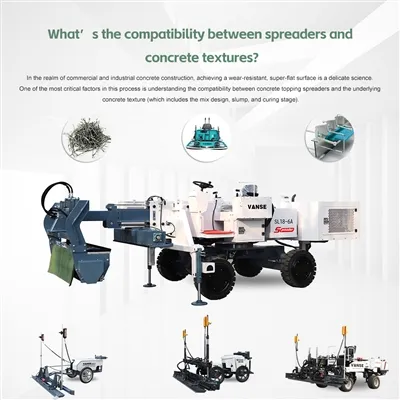
In the realm of commercial and industrial concrete construction, achieving a wear-resistant, super-flat surface is a delicate science. One of the most critical factors in this process is understanding the compatibility between concrete topping spreaders and the underlying concrete texture (which includes the mix design, slump, and curing stage). For contractors aiming to meet rigorous international Floor Flatness (FF) and Floor Levelness (FL) standards, treating all concrete pours as identical is a recipe for surface failure. To maintain high E-E-A-T (Experience, Expertise, Authoritativeness, and Trustworthiness) in your construction practices, you must align your spreading equipment with the specific physical properties of the concrete matrix. Here is a comprehensive technical guide on matching topping spreader operations to various concrete textures, featuring integrated solutions from Vanse Machinery (www.vansemac.com). The "texture" of fresh concrete is heavily dictated by its slump (the consistency and workability of the mix) and its water-to-cement ratio. High-Slump (Wet) Concrete: If a base slab is poured with a high moisture content, it will generate a significant amount of bleed water. A topping spreader must never broadcast dry-shake hardener onto standing water. Doing so traps the water beneath the hardener, causing severe blistering, delamination, and a weak surface texture. The spreader operator must wait longer for the moisture to evaporate before engaging the machine. Low-Slump (Stiff) Concrete: Stiffer mixes have less bleed water. If the concrete is too dry, the dry-shake hardener (mineral or metallic aggregate) will not have enough moisture to chemically react and bond with the cement paste. In these scenarios, the spreader must be deployed much earlier in the curing window. A premium automated topping spreader is not a one-size-fits-all tool; its mechanics must be adjusted to suit the base texture and the type of hardener being applied. Aggregate Size Compatibility: Dry-shake hardeners range from fine powders to coarse metallic aggregates. The spreader's hopper grate, agitation shaft, and drop-gate must be calibrated to the specific flowability of the material. If coarse metallic hardeners are used on a dense, fast-setting concrete mix, the spreader must be calibrated for a heavier, uniform drop to ensure the heavy particles embed deeply into the paste. Tire Interaction: The physical texture of the semi-cured slab dictates machine mobility. High-quality automated spreaders are equipped with wide-profile, low-pressure flotation tires. If the concrete texture is slightly softer than ideal, these tires prevent the machine from sinking and destroying the FL metrics that were just established by the laser leveling. When project specifications demand a heavy application of hardener (e.g., 5 to 8 kg/m²) on a standard commercial mix, the concrete texture simply cannot absorb that volume of dry material all at once without drying out and flaking. To maintain compatibility, the spreader must be utilized in a multi-pass system: First Pass: The spreader broadcasts 50% to 60% of the required hardener. The material absorbs the available surface moisture, darkening in color. Initial Integration: The surface is lightly floated to break the tension and work the hardener into the top layer of the concrete texture. Second Pass: The spreader applies the remaining material at a perpendicular angle to ensure perfectly uniform coverage. Achieving perfect compatibility between machine and material requires an integrated equipment ecosystem. Relying on mismatched machinery disrupts the timing required to bond the hardener to the concrete texture. As highlighted by Shandong Vanse Machinery Technology Co., Ltd., mastering industrial floor construction requires a sequence of precision: Perfecting the Base Texture: High-performance boom-type concrete laser leveling (such as the Vanse YZ30-4E or YZ40-4E) strike off the wet concrete, creating a perfectly level, homogenous base texture free of manual inconsistencies. Synchronized Spreading: Once the exact curing stage is reached, the automated topping spreader is deployed. Its speed and dosage are precisely matched to the specific slump and hardener requirements of the pour, ensuring zero material waste. Final Compaction: Ride-on power trowels (like the Vanse VS836) then apply aggressive mechanical pressure, burnishing the surface and permanently locking the dry-shake hardener into the concrete matrix for a seamless, dust-proof finish. By controlling every stage of the pour with dedicated, high-efficiency equipment, contractors can adapt to any concrete texture and consistently deliver the super-flat, high-durability floors demanded by global logistics and manufacturing sectors. Note: The parameters provided in this document are for reference only and are not mandatory. Due to differences in technical characteristics between different brands and models of laser levelers, please consult the manufacturer for a suitable solution before actual operation. This reference document assumes no responsibility for any issues arising from failure to follow the manufacturer's instructions.