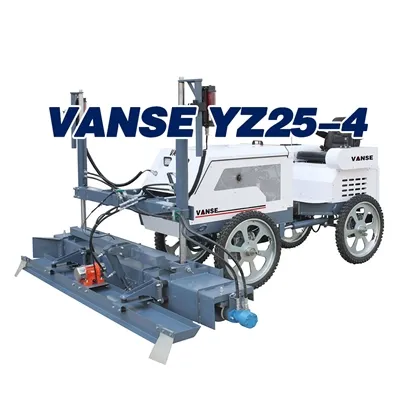
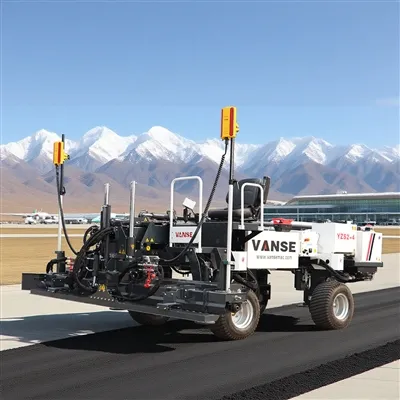
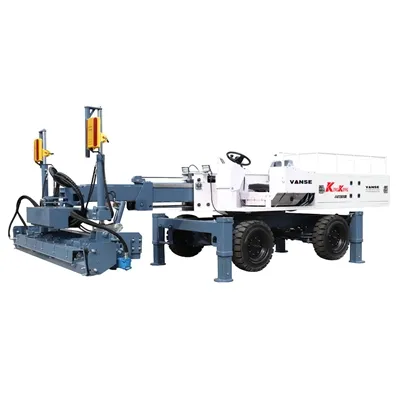
Technical Knowledge
Laser leveling For Sale In Good Price
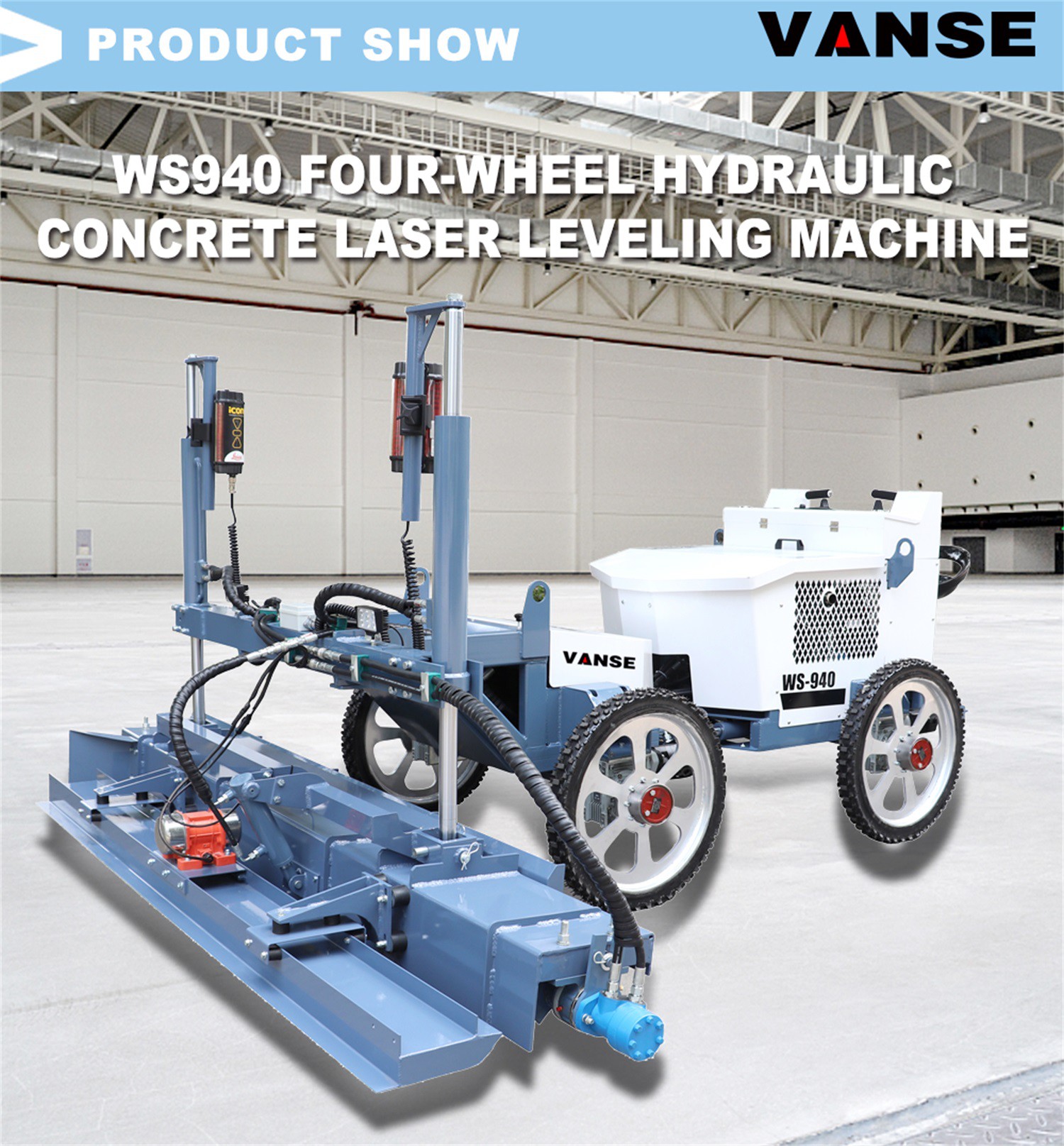
1. Shandong VANSE Machinery Technology Co., Ltd. is the only high-tech enterprise in China that integrates scientific research and development, production and sales, and technical services, and is professionally engaged in concrete laser positioning and leveling machines. Supporting services in one step.
2. The modular design of the electrical drive starting system is adopted to effectively reduce the failure rate.
3. The generator imported from Japan (Japanese generator) is more fuel-efficient, easy to start and quieter.
4. Originally imported laser leveling equipment, the laser leveling signal is more accurate and smoother.
5. The integrated shell is more beautiful: dust-proof, concrete splash-proof, and internal equipment protection.
6. Super vibration force, more compact. The vibration frequency is as high as 4000r/min to avoid honeycomb, foaming and other phenomena.
7. Imported button switch, more flexible, more durable and more accurate in operation.
8. Independent research and development of anti-tilt device, which is more conducive to the paving of concrete and improves the smoothness.
9. Tailor-made performance tires: 16-inch narrow tires, suitable for paving large areas and hardened ground, and compacting the ground. 21-inch wide tires are suitable for use on reinforced mesh ground.
10. The overall body is convenient for transportation. The whole part can be disassembled on site, which is convenient for transportation and hoisting, and more convenient to use.
Thanks to All the Friends Who Support and Trust Shandong Vanse Machinery Technology Co., Ltd.
If you want to know more about Shandong Vanse Machinery Technology Co., Ltd. or have any questions, please feel free to contact us:
Our Factory
Shandong Vanse Machinery Technology Co., Ltd.








Share this article

About the Author: Shandong Vanse Machinery Technology Co., Ltd.
Shandong Vanse Machinery Technology Co., Ltd. is a high-tech manufacturer specializing in concrete construction machinery, including laser screeds and related equipment. The company integrates R&D, production, and global sales, with products exported to over 60 countries and widely used in infrastructure projects worldwide.
Previous Post
Next Post
Related Articles
You Might Also Like
How should the daily maintenance of concrete laser leveling machines be carried out?
The daily maintenance of concrete laser leveling machines is crucial to maintaining the performance and extending the service life of the equipment. The following are the specific points of daily maintenance: – Cleaning the body: After work every day, use a high-pressure water gun or compressed air to completely remove concrete residues, dust and soil on the surface of the equipment. Focus on cleaning scrapers, spiral fabricators, vibrating plates and other components to prevent residual materials from corroding the equipment. – Check component connection: Check whether the connection bolts and nuts between each component are loose, such as the connection between engines, reducers, walking wheels, etc. Fasten it in time when it is found to be loose to avoid damage to parts or equipment failures due to looseness. At the same time, check whether the structural parts of the equipment are damaged by deformation, cracks, etc., especially key parts such as the frame and arm frame. If there are any problems, repair or replace them in time. – Cleaning laser transmitter and receiver: Use a clean, soft cloth to gently wipe the lens of the laser transmitter and receiver to ensure that no dust or stains block the laser signal. Avoid using hard objects to scratch the lens to avoid damage. – Check laser signal: Before each use, start the laser leveler to check whether the laser signal is stable and accurate. Observe whether the receiver can receive the laser signal normally. If there is any signal unstable or deviation, adjust the position of the transmitter and receiver in time to ensure the normal operation of the laser system. – Routine calibration: Calibrate the laser system regularly (usually quarterly or six months) according to the frequency of equipment usage and working environment to ensure its measurement accuracy and leveling effect. The calibration work should be carried out by professional and technical personnel using professional calibration equipment. – Check line connection: Check whether the electrical circuit connection is firm, whether there is any looseness or falling off, and whether the outer skin of the wire is damaged or aging. Repair or replace the line in time when problems are found to prevent electrical faults or safety accidents due to line problems. – Cleaning electrical components: Use compressed air or a clean brush to clean up dust and debris in the electrical control cabinet to keep the electrical components dissipating well. Check whether the contacts of electrical components such as contactors and relays are ablated or oxidized, and replace them in time if necessary. – Detection of Battery: For battery-powered laser levelers, regularly check the battery's power and performance. Keep the battery surface clean and avoid battery short circuit. In accordance with the requirements of the battery instruction manual, charge and discharge the battery regularly to extend the battery life. – Check oil level and oil quality: Before starting the machine every day, check the oil level of the hydraulic oil tank to ensure that the oil level is within the normal range. If the oil level is too low, add hydraulic oil that meets the requirements in time. At the same time, check the quality of the hydraulic oil regularly to observe whether the oil has discoloration, turbidity, and odor. If there is any abnormality, replace the hydraulic oil in time. – Check pipelines and joints: Check whether there are any leakage or damage in the hydraulic pipelines and whether the pipe joints are loose. If leakage is found, deal with it in time and replace damaged pipelines or seals. Tighten the pipe joint regularly to prevent loosening due to vibration and other reasons. – Cleaning hydraulic filter: Clean or replace the hydraulic filter regularly according to the cleaning level of the hydraulic oil and the use of the equipment. Generally, every 200-300 hours of work, the return oil filter should be checked and the hydraulic oil filter element should be replaced every 500-1000 hours of work to ensure the cleanliness of the hydraulic oil. – Check the oil level: Before starting the equipment every day, check the engine oil level to ensure that the oil level is within the normal scale range. If the engine oil level is too low, it will lead to poor engine lubrication and wear of the acceleration parts. Engine oil that meets the specifications should be added in time. – Check the air filter: Clean or replace the air filter element regularly, generally clean it every 50-100 hours of work, and replace the filter element every 500-1000 hours of work. Keeping the air filter clean ensures smooth engine air intake, improves combustion efficiency, and reduces engine wear. – Check the cooling system: Check the water level of the cooling water tank and add coolant in time when it is insufficient. Check whether there is any leakage in the cooling system, including radiator, water pump, water pipe and other parts. Regularly clean the dust and debris on the surface of the radiator to ensure good heat dissipation and prevent the engine from overheating. – Training and Qualifications: Operators must undergo professional training, be familiar with the operating methods, maintenance points and safety precautions of the equipment, and hold corresponding operating certificates. Unlicensed personnel are strictly prohibited from operating. – Correct operation: Operate strictly in accordance with the operating procedures of the equipment to avoid damage to the equipment due to illegal operations. Before starting the equipment, check whether there are people and obstacles around the equipment to ensure safety. During operation, pay attention to the operating status of the equipment. If abnormal sounds, vibrations or other signs of failure are found, the machine should be shut down immediately for inspection.What are the key points to keep in mind when using a concrete laser leveling machine?
The key points to pay attention to when using a concrete laser leveler are crucial, as they directly determine the flatness, quality, and service life of the floor. The following is a detailed summary of the key points to pay attention to in each step, from pre-construction preparation to post-construction maintenance: This phase is the foundation for a smooth construction process. Inadequate preparation will lead to numerous subsequent problems. Base treatment is key: Strength and Density: The base layer (usually crushed stone or stabilized layer) must be compacted to meet the specified bearing capacity requirements (usually ≥1.5 MPa) to prevent cracking caused by base subsidence. Elevation and Flatness: The base layer elevation must be strictly controlled to allow sufficient thickness for the surface concrete. Flatness should not be too poor, otherwise excessive concrete consumption will occur. Cleanliness and Moisture: The base layer surface must be thoroughly cleaned and free of loose dust, oil, and debris. Before pouring concrete, it should be thoroughly moistened with water, but no visible water should be allowed. This is to prevent the base layer from absorbing moisture from the concrete, which could lead to plastic shrinkage and cracking. Precise Formwork Installation: The top elevation of the formwork must align with the designed floor elevation, which is one of the benchmarks for laser leveling. The formwork must be securely supported to prevent displacement or deformation caused by the leveling's movement and concrete compression. The formwork is typically constructed of channel steel, which must possess sufficient rigidity and straightness. Laser transmitter installation and calibration: Location Selection: The transmitter should be mounted in the center or at a high point within the construction area to ensure signal coverage across the entire work surface and avoid signal blind spots. Secure Installation: The transmitter tripod must be securely mounted on solid ground, away from sources of vibration, and monitored during construction to prevent movement. Precise Calibration: The height and level of the laser transmitter must be precisely calibrated according to the design elevation. This is the "brain" of the entire automated leveling system; any error can lead to a complete breakdown. Repeated verification is essential. Equipment Inspection and Debugging: Check the leveling's hydraulic system, engine, scraper, vibrator, and other components for proper operation. Install and inspect the laser receiver, sensor, and control panel to ensure they can properly receive and process laser signals. As the saying goes, "A good cook cannot cook without rice." The quality of the concrete itself is crucial. Mix Design: Commercial concrete should be used, with a strength generally not lower than C25. Slump should be strictly controlled, generally recommended to be between 120mm and 140mm. Excessive slump can lead to segregation, significant shrinkage, and low strength; too little slump can result in poor fluidity and difficulty leveling. Aggregate Selection: The maximum aggregate particle size should be moderate (generally ≤25mm), with good gradation and a standard mud content. Transportation and Placement: The time from unloading to completion of placement should be short to prevent initial setting of the concrete. Segregation should be prevented during transportation. This is the core process and directly demonstrates the advantages of the laser leveling. Concrete pouring and initial paving: Discharge should be even, avoiding concentrated unloading to form large piles to prevent aggregate segregation. Preliminary paving can be performed using small equipment or manually, with the height slightly above the designed elevation (the virtual paving height). Key Points for Laser leveling Operation: Travel Direction: Typically, the paving is performed at a constant speed along the longitudinal direction. Coordination between the scraper and vibrating plate: The scraper is responsible for scraping away excess concrete and providing initial leveling; the vibrating plate uses high-frequency vibration to compact and fine-tune the concrete. The leveling's travel speed must be carefully controlled to ensure sufficient vibration time to achieve a compacting effect, but avoid excessive vibration that may cause concrete segregation. Real-time Adjustment: The operator must closely monitor the data on the control panel. The laser receiver monitors the elevation in real time and automatically adjusts the scraper's height via the hydraulic system, achieving unmanned, automatic leveling. The operator's primary responsibilities are to control movement and monitor equipment status. Critical Process Connection – Gun-Smoothing: After the laser leveling completes an area, but before the concrete begins to set (when a person steps on it and the concrete sinks approximately 3-5mm), gun-smoothing should be performed immediately using a double-disc ride-on trowel. Purpose: Removes minor blade marks left by the laser leveling, smoothes any excess cement slurry, seals surface pores, and prepares for subsequent finishing. This step is crucial to the final surface quality. Laser leveling only completes the "leveling" process. To achieve a high-strength, wear-resistant floor, finishing and maintenance are essential. Finishing (Slurry Calendering): After the concrete has initially set but before final set (when slight footprints remain), use a double or triple trowel with metal discs for rough grinding. Once the surface has further hardened and no visible water is visible, replace the trowel blade and perform a smooth finish. The frequency and timing of smoothing must be carefully controlled. Excessive or premature smoothing can cause surface bleeding and peeling. Smoothing further densifies the surface, improving wear resistance and impermeability. Slotting (Seam Cutting): Timing is critical: The concrete must reach a certain strength (usually 6-10 MPa compressive strength) but still be able to be cut smoothly by the cutter without causing edge cracking. This is generally done within 24-48 hours after pouring (the time varies depending on the temperature). Function: Guides concrete shrinkage cracks to develop in predetermined, uniform locations, avoiding random, irregular cracking. Joint Depth: Typically 1/4-1/3 of the slab thickness. Spacing: Generally determined by the concrete mix ratio and slab thickness, typically 24-36 times the slab thickness. Curing: Curing should begin immediately after the concrete has fully set (after finishing is complete). Recommended Method: Spraying a curing agent or covering with plastic sheeting. The curing agent should be evenly applied to form a dense film; the film should be tightly sealed to prevent evaporation. Time: Curing should last no less than 7 days, with the first 3 days being crucial. Purpose: Provide sufficient moisture for cement hydration to prevent rapid surface water loss, which can lead to cracking and reduced strength. A solid and level base: A weak foundation is destabilizing. Precise laser calibration: This is the system benchmark, and no mistakes can be made. Concrete slump control: Materials are fundamental, and 120-140mm is the optimal range. Timing of leveling and blasting: Mechanized, streamlined operations, seamlessly linked. Timing of finishing and slitting: Rely on experience; applying too early or too late can lead to problems. Timely and adequate curing: The final step that determines ultimate strength and cracking. Strict control of each of these steps can fully leverage the technical advantages of laser levelings to create high-strength, high-flatness, crack-free, high-quality concrete floors. Note: The parameters provided in this document are for reference only and are not mandatory. Due to differences in technical characteristics between different brands and models of laser levelers, please consult the manufacturer for a suitable solution before actual operation. This reference document assumes no responsibility for any issues arising from failure to follow the manufacturer's instructions.In a windy environment, how should the wind protection measures of the laser leveling machine be implemented?
In a windy environment, to ensure the normal operation of the laser leveler, windproof measures can be implemented from the following aspects: – **Weighted chassis**: Add appropriate weights to the chassis of the laser leveler. Sandbags or special metal weights can be used, evenly distributed around the chassis. For example, for a small laser leveler, a 20-30 kg sandbag can be placed at each corner of the chassis to lower the center of gravity of the equipment and enhance its wind resistance stability. – **Install windproof anchoring device**: Set anchor points at appropriate positions on the fuselage of the leveler and use ground anchors to fix the equipment to the ground. The ground anchor can be a spiral ground anchor or a metal ground anchor with expansion bolts. Drill a hole in the solid ground at the construction site, insert and fix the ground anchor, and then connect the leveler to the ground anchor with an iron chain or high-strength rope. – **Set up a windproof barrier**: Set up a windproof barrier in the upwind direction of the leveler operation area. Windbreaks can be made of materials such as canvas, color steel plates or plastic woven mesh. For example, a 2-3 meter high color steel plate windbreak wall can be built and placed at a certain angle (usually 70-90 degrees) to the wind direction, which can effectively reduce the direct impact of the wind on the leveler. – **Adjust the working time and location**: If the wind is too strong and continuous, you can consider adjusting the working time to avoid the strongest wind period. At the same time, choose a working location with natural windbreak obstacles (such as mountains, buildings, etc.) around to reduce the impact of the wind with the help of these natural barriers. – **Sensor windshield**: Install a windshield for the sensor on the laser leveler. The windshield can be made of transparent plexiglass or plastic, which can prevent wind and sand without affecting the signal reception of the sensor. For example, a hemispherical transparent plastic windshield is installed around the laser receiver, and there are small holes on the cover for ventilation to prevent internal fog from affecting signal reception. – **Laser system reinforcement and windproof**: Reinforce the laser transmitter to ensure that it can maintain a stable emission angle in the wind. At the same time, place the laser transmitter in a windproof location, such as a temporary shed or a sheltered place, to reduce the interference of wind on the propagation of the laser beam and ensure the accuracy of the laser signal. At the same time, we have professional customer service, online 24 hours a day, welcome to call.