Technical Knowledge
CONCRETE LASER LEVELING MACHINE IS DEEPLY ‘LOVED’

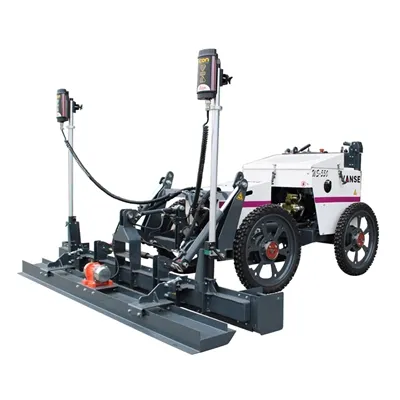
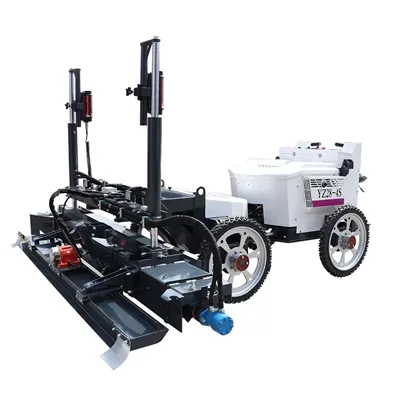
Once the concrete laser leveling machine was launched, it quickly occupied the market. Major construction factory manufacturers have abandoned the traditional construction, and then chose the leveling machine for concrete leveling construction. This equipment has also become the new "darling" of the construction industry. So, why do people favor leveling machine construction so much? What are the performance advantages of the concrete laser leveling machine, which is "favored" by the user unit? Next, let's take a look together.
The reason why concrete laser leveling machines are so popular is not accidental, but the inevitable result of unique performance advantages. Let's look at the performance advantages in detail:
1. The design elevation of the top surface of the floor is automatically controlled by laser and computer, and it is adjusted in a timely manner (10 times per second) to ensure accurate leveling of the leveling machine. The test proves that the leveling quality of the concrete laser leveling machine is at least as high as that of the traditional construction method. Improve by 3-5 times;
2. The vertical and horizontal slope is completed by the computer automatic control hydraulic system, which can ensure the precise control and implementation of the horizontal slope compared with the traditional construction method;
3. The operation efficiency of the concrete laser leveling machine has been greatly improved. The test proves that the daily workload of floor leveling can be 4000㎡; using traditional methods, the daily workload of vibrating beam leveling is about 900㎡;
4. The laser transmitter of the equipment is arranged independently. The floor construction can be laid on a large area and can ensure the consistency of the ground elevation. The elevation is not controlled by the formwork and will not produce cumulative errors. Compared with the traditional method, it can greatly reduce the floor The amount of construction joints greatly reduces the later maintenance costs of the ground and the use of formwork;
5. The leveling head of the concrete laser leveling machine consists of four parts: a scraper, a cloth screw, a vibrator, and a leveling beam. During construction, it is hidden in the process (scraping ruler to scrape excess concrete, roller rolling, wood rubbing, etc.) to integrate together , it can be completed by a machine at one time, improving efficiency and saving labor;
6. The vibration frequency of the concrete laser leveling machine vibrator is 3000 times/min, which can be applied to dry hard concrete, steel fiber concrete and large aggregate concrete;
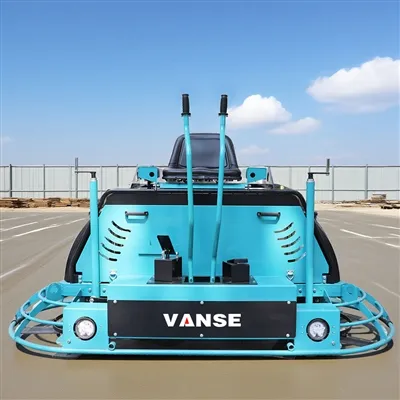
7. According to the performance of the concrete laser leveling machine, it is equipped with auxiliary equipment such as troweling machine, spreader, soft padding machine, and fast edge straightening machine.
Thanks to All the Friends Who Support and Trust Shandong Vanse Machinery Technology Co., Ltd.
If you want to know more about Shandong Vanse Machinery Technology Co., Ltd. or have any questions, please feel free to contact us:
Our Factory
Shandong Vanse Machinery Technology Co., Ltd.








Share this article

About the Author: Shandong Vanse Machinery Technology Co., Ltd.
Shandong Vanse Machinery Technology Co., Ltd. is a high-tech manufacturer specializing in concrete construction machinery, including laser screeds and related equipment. The company integrates R&D, production, and global sales, with products exported to over 60 countries and widely used in infrastructure projects worldwide.
Previous Post
Next Post
Related Articles
You Might Also Like
How to extend the service life of concrete laser leveling machine?
In the field of concrete construction, concrete laser leveling machine (concrete laser leveling machine or concrete laser leveler) has become a key equipment to improve construction efficiency and quality. With the vigorous development of the construction industry, the demand for high-precision, large-area concrete construction continues to grow, and the application of concrete laser leveling machine is becoming more and more extensive. According to a market research report, the global concrete laser leveling machine market size is expected to reach US$1.76 billion in 2025, with an annual growth rate of approximately 11.4%. During long-term high-intensity use, how to extend the service life of the concrete laser leveling machine has become the focus of many users. This is not only related to the return on equipment investment, but also affects the smooth progress and cost control of construction projects. After each operation with a concrete laser leveling machine, timely cleaning is essential. Since the equipment will be exposed to a large amount of concrete, mud and other impurities during operation, if it is not cleaned in time, these substances will adhere to the surface of the equipment and key components, accelerating component wear. For example, the body shell, leveling blade, vibrating device and other parts can be washed with a high-pressure water gun (but it should be noted that it is strictly forbidden to directly aim the water gun at the mesh part of the body to prevent water from entering the body and causing a short circuit) to remove the concrete residue and dust on the surface. For some stubborn stains that are difficult to wash off, use a soft cloth dipped in a neutral detergent dilution to wipe. Do not use strong alkali or strong acid cleaning agents to avoid corrosion of the paint and electroplating layer on the surface of the equipment, affecting the appearance and reducing the protective performance. Regularly check the connection and tightening of each component. During the operation of the equipment, the connecting bolts may become loose or even broken due to factors such as vibration and impact. For example, the connecting bolts of the frame, walking mechanism, laser transmitting and receiving device of the laser leveling machine should be carefully checked before and after each operation. If they are loose, tighten them in time. If the bolts are broken, they need to be replaced immediately. At the same time, check whether there is leakage in all parts of the equipment, including engine oil, coolant, hydraulic oil of the hydraulic system, etc. Once leakage is found, the cause should be promptly investigated and repaired to avoid problems such as poor lubrication and overheating of components due to oil leakage, which will affect the service life of the equipment. The timely replacement of wearing parts is the key to ensuring the continuous and stable operation of the equipment. For example, the leveling scraper, vibrator, tires (or rubber tracks) of the leveling machine will wear faster during frequent use. Generally speaking, the wearing parts should be checked after each use. If the wear exceeds the prescribed limit, they should be replaced immediately. Even if the wearing parts do not seem to be damaged during normal use, it is recommended to replace them every six months to ensure that the overall performance of the equipment is not affected. For example, a severely worn leveling scraper cannot effectively scrape the concrete, which will cause the ground flatness to decrease, and will also increase the workload of other parts of the equipment, accelerating the overall loss of the equipment. In a high temperature environment, the concrete laser leveling machine faces many challenges. The engine is prone to overheating, resulting in power reduction and increased wear of parts. Therefore, when constructing in high temperatures in summer, first ensure that the engine cooling system is working properly. Before daily operation, check the coolant level and add it in time if it is insufficient; regularly clean the dust and debris on the surface of the radiator to ensure that the heat dissipation duct is unobstructed. When the engine temperature is too high, you should choose a cool area to stop and cool down. Do not rush to add cooling water. You need to let the engine idle for a while and add it after the temperature drops slightly to prevent the engine cylinder from cracking due to excessive temperature difference. At the same time, high temperature will also affect the performance of the hydraulic system. Check the hydraulic oil temperature frequently. If the oil temperature is too high, stop the machine for a rest to avoid long-term operation of the equipment at high temperatures. For example, in some southern regions during summer construction, if you do not pay attention to the heat dissipation of the equipment, it may cause the hydraulic system seals to age faster and leak oil, which will seriously affect the normal use of the equipment. High humidity environment can easily cause the metal parts of the concrete laser leveling machine to rust and corrode, especially when constructing in coastal areas or rainy seasons. To cope with high humidity environments, the equipment should be parked in a dry place and avoid being placed in the open air. If it is unavoidable to operate in a humid environment, anti-rust oil can be applied to the surface of the equipment, especially to parts that are prone to rust, such as the frame and chassis. At the same time, the electrical circuit should be checked regularly to prevent short circuit failures caused by moisture. For the battery of the equipment, it is necessary to keep it clean and dry, check the electrolyte level and density regularly, and replenish distilled water in time to ensure good battery performance. For example, if the laser leveling machine used for a long time in a high humidity environment does not pay attention to anti-rust treatment, it may cause problems such as frame rust and strength reduction in a short period of time, affecting the safety and service life of the equipment. Concrete contains alkaline substances. If the protection is not appropriate during long-term contact, it will cause corrosion to the components of the concrete laser leveling machine. For parts that are in direct contact with concrete, such as leveling blades, vibrating devices, etc., they can be made of corrosion-resistant materials or undergo special surface treatment to improve their resistance to alkali corrosion. After each operation, clean the equipment thoroughly to remove residual concrete and prevent alkaline substances from adhering to the surface of the equipment for a long time. In a high-alkaline environment, attention should also be paid to the lubrication system of the equipment, and lubricating oils and greases with good alkali resistance should be selected and replaced regularly to ensure that all moving parts are well lubricated and reduce the occurrence of failures caused by corrosion and wear. For example, in the construction of some industrial plant floors, due to the strong alkalinity of concrete, if effective protective measures are not taken, the key components of the equipment may be severely corroded in a short period of time, shortening the service life of the equipment. Strictly operate in accordance with the rated working parameters of the concrete laser leveling machine to avoid operating in a condition that exceeds the equipment's bearing capacity. Overload operation will cause excessive pressure on the engine, hydraulic system, transmission components, etc., accelerate the wear of parts, and even cause equipment failure. For example, behaviors such as leveling thickness exceeding the maximum thickness specified by the equipment and forced operation on a site with a large slope will cause damage to the equipment. As an equipment manager, you should ensure that the operator is familiar with the equipment performance and operating procedures, and strictly prohibit illegal operations. Before construction, arrange construction tasks reasonably according to actual working conditions to ensure that the equipment operates stably within the normal load range. During the operation of the equipment, try to ensure smooth operation and avoid violent operations such as sudden acceleration, sudden braking and frequent steering. Sudden acceleration and sudden braking will cause the engine and transmission system to bear greater impact force instantly, which may easily cause damage to parts; frequent steering will aggravate the wear of tires (or tracks) and steering mechanisms. After starting the equipment, the engine should be allowed to idle for a period of time to allow all parts to be fully lubricated before operation. During the leveling operation, keep the equipment moving at a uniform speed to avoid speed fluctuations, which can not only ensure the construction quality but also reduce the wear of the equipment. For example, when driving a concrete laser leveler, smoothly controlling the throttle and steering wheel can effectively extend the service life of key parts of the equipment. The correct start and stop sequence also has an important impact on the service life of the concrete laser leveler. Before starting the equipment, check the environment around the equipment to ensure that there are no obstacles; check whether the liquid levels of fuel, engine oil, coolant, hydraulic oil, etc. are normal, and whether the indications of various instruments are normal. When starting, first turn the key to the power-on position, wait for the instrument self-check to complete, and then start the engine. After the engine is started, let it idle for a few minutes, observe the engine sound, vibration and whether the display of each instrument is normal, and then proceed to the next step after confirming that it is correct. When shutting down, first park the equipment on a flat and solid ground, lower the working device to the lowest position, and then turn off the engine. If the equipment is not used for a long time, the equipment should be sealed and maintained in accordance with the requirements of the equipment manual, such as draining fuel and coolant, lubricating and protecting key parts, etc. For example, the wrong starting method, such as forcibly starting the engine before the equipment completes the self-check, may damage the engine control system and affect the normal use of the equipment. The hydraulic system is an important part of the concrete laser leveling machine, and regular maintenance is essential. Hydraulic oil will be contaminated and its performance will deteriorate during use, so the hydraulic oil should be replaced regularly. Under normal circumstances, the hydraulic oil should be replaced every 1,000 working hours or so. The specific replacement cycle can be adjusted appropriately according to the equipment use environment and the oil quality monitoring results. When replacing the hydraulic oil, use a clean container to hold the oil. The hydraulic oil must be filtered through the oil filter before adding it to the hydraulic oil tank to ensure that the oil is clean. At the same time, clean the hydraulic oil radiator regularly to ensure good heat dissipation and prevent the hydraulic system from malfunctioning due to excessive oil temperature. In addition, the replacement cycle of the hydraulic oil filter should also be appropriately shortened, generally 750 hours is appropriate. When replacing a new filter, check carefully. It is strictly forbidden to use a deformed, contaminated or rusted filter. For example, at some construction sites, due to the harsh environment, the hydraulic oil is easily contaminated by dust and impurities. If the filter and hydraulic oil are not replaced in time, it may cause blockage, leakage and other faults in the hydraulic system, seriously affecting the normal operation of the equipment. Regularly check the electrical system of the concrete laser leveling machine to ensure that all electrical components are firmly connected and the circuits are not damaged or aged. Check the performance of the laser transmitting and receiving device to ensure that the laser signal is stable and accurate. Start the engine once every two months, charge the battery, and run all hydraulic actuators, such as rotary hydraulic motors, telescopic cylinders, etc., to prevent battery loss and rust and jamming of hydraulic system components. Do not remove the battery from the machine at will to avoid the loss of internal software program failures in the equipment control. At the same time, pay attention to check the grounding of the electrical system to ensure that the grounding is good to prevent safety accidents caused by leakage. For example, if the electrical line is aging and damaged, it may cause a short circuit, causing a fire, and endangering the safety of equipment and personnel. Perform a comprehensive performance test on the concrete laser leveling machine every once in a while (such as half a year or a year). The test content includes key performance indicators such as leveling accuracy, work efficiency, engine power, and hydraulic system pressure. Through testing, potential problems with the equipment can be discovered in time, and targeted repairs and adjustments can be made. For example, if the leveling accuracy is found to be reduced, it may be due to laser system failure, wear of the leveling blade, or looseness of the mechanical parts of the equipment. It is necessary to check and repair them one by one to ensure that the equipment always maintains a good working condition and extends its service life. Click the below to jump immediately!!! ARMOUR JOINT CONCRETE LASER LEVELING MACHINE LIGHT TOWER POWER TROWEL SLIPFORM MACHINE STEEL FIBER TOPPING SPREADER TRACKED MINI DUMPERAnalysis of the Causes & Treatment Measures for Black Smoke Emitted by the Power Trowel during operation
Black smoke emitted by a Power Trowel during operation is a typical malfunction phenomenon. The fundamental cause lies in incomplete fuel combustion, which leads to the direct discharge of tiny carbon particles. The following is a detailed analysis of the causes and handling measures, listed in the common order of investigation. Cause analysis: Engine combustion requires sufficient air. When the air filter is severely clogged with dust and debris, the intake volume is insufficient, resulting in the fuel injected into the cylinder not being able to mix with enough air, causing a "rich fuel" state. Unburned carbon particles then form black smoke. Handling measures Stop the machine immediately for inspection. Remove the air filter element. For paper filter elements, check by shining a flashlight. If the light transmission is poor or the surface is covered with dust, they need to be replaced. For sponge filter elements, they can be thoroughly cleaned with neutral detergent, completely dried, and then a few drops of engine oil should be added and kneaded evenly before being reinstalled. Note: In construction sites with a lot of dust, the air filter should be cleaned every day or every shift. Cause analysis: Excessive fuel supply or poor fuel quality. Handling measures Check the fuel: Use fresh and clean standard-grade gasoline. Inferior or deteriorated gasoline will affect combustion. Check the oil level: Pull out the oil dipstick and check if the oil level is between the upper and lower limits. Excessive oil filling will increase the pressure in the crankcase, causing the oil to seep into the combustion chamber and participate in combustion, generating blue-black smoke. Check the dampers: The dampers are used to thicken the mixed gas during cold machine startup. If the machine remains in the off state during hot operation or normal operation, it will cause the mixture to be too rich and black smoke to be emitted. Please ensure that after the machine is started and preheated, the choke door is fully opened to the "Running" position. Clean or inspect the carburetor: If all the above three points are normal, the problem is likely to lie with the carburetor itself. Excessive mixture: If the oil level in the float chamber inside the carburetor is too high, the main orifice is worn or blocked, or the needle valve is stuck, it can all lead to excessive fuel injection. Handling: The carburetor needs to be disassembled. Thoroughly clean all oil passages and measuring holes with carburetor cleaner. This is a highly technical operation. It is recommended that it be carried out by professional maintenance personnel or that the carburetor assembly be replaced directly. Cause analysis: Ignition system failure leads to incomplete combustion. Handling measures Check the spark plugs Remove the spark plug and observe the electrode part. If the carbon deposits are severe and appear black and velvety, it indicates poor combustion. Clean the carbon deposits with spark plug cleaner or a wire brush. Use a feeler gauge to check and adjust the electrode gap to the range specified in the equipment manual (usually 0.6-0.8mm). If the ceramic part of the spark plug is cracked or the electrode is severely eroded, please replace it with a new one directly. Cause analysis: When the concrete material is too soft, the operator presses down too deeply, or the flattening head is stuck by foreign objects, the engine will be forced to output more power due to a sharp increase in load. The control system will automatically thicken the mixture, and at this time, black smoke may be emitted briefly. Handling measures Master the correct construction timing: Start the smoothing operation when the concrete reaches the initial setting state (when a person stands on it and sinks by about 5-10mm). Standard operation: According to the hardening condition of the concrete, gradually switch from high speed and large Angle to low speed and small Angle to avoid excessive downward pressure in the initial stage. Safety Notice: All inspections and repairs must be carried out after the engine has been completely turned off and cooled down. Preventive maintenance recommendations Regular maintenance: Replace the air filter, engine oil, spark plugs and fuel filter strictly in accordance with the user manual. Use high-quality oils: Use clean gasoline and engine oil of the recommended grade. Form good habits: Conduct a simple visual inspection before each operation, pay attention to the engine sound during operation, and stop the machine immediately if any abnormality is found. By following the principle of starting from the simple to the complex for investigation, most black smoke problems can be solved by cleaning the air filter and checking the choke. Note: The parameters provided in this document are for reference only and are not mandatory. Due to differences in technical characteristics between different brands and models of laser levelers, please consult the manufacturer for a suitable solution before actual operation. This reference document assumes no responsibility for any issues arising from failure to follow the manufacturer's instructions.How to prevent flatness problems on concrete pavement?
To prevent the problem of flatness of concrete pavement, it is necessary to strictly control the quality in various links such as construction preparation, concrete pouring, pavement paving and subsequent maintenance. The specific measures are as follows: – Do a good job of roadbed treatment: The roadbed is the foundation of the road surface and must be guaranteed to be solid, stable and uniform. Before construction, the original ground should be carefully cleaned, weeds, tree roots, garbage and other debris should be removed, and the soft soil, silt and other unfavorable geological areas should be replaced and reinforced. Fill and compact the roadbed according to the design requirements, control the moisture content of the fill, fill and compact in layers, ensure that the compaction meets the standard, and avoid uneven settlement of the roadbed in the later stage and affect the flatness of the road surface. – Precise measurement and layout: Use high-precision measuring instruments, such as total stations, levels, etc., to accurately measure and lay out the center line, side line, elevation, etc. of the road surface. During the construction process, the measurement control points should be reviewed regularly to ensure the accuracy of the measurement data. At the same time, according to the measurement results, set the road template or the guide line of the paver to provide an accurate benchmark for road construction. – Check construction equipment: Ensure that the performance of construction equipment such as concrete mixing equipment, transport vehicles, pavers, and rollers is good and can operate normally. Carry out regular maintenance and maintenance of the equipment, and conduct a comprehensive inspection and commissioning of the equipment before construction. For example, check whether the screed of the paver is flat, whether the vibrating device is working properly, whether the roller wheel of the roller is evenly worn, etc., to ensure that the equipment operates stably during the construction process and avoid problems with the flatness of the road surface due to equipment failure. – Control concrete mix ratio: According to the road design requirements and construction conditions, determine the reasonable concrete mix ratio through experiments. Strictly control the quality and amount of raw materials such as cement, sand and gravel, water, and admixtures to ensure that the workability, strength, and durability of the concrete meet the requirements. In particular, attention should be paid to controlling the slump of concrete. The slump should not be too large or too small. If it is too large, it will easily cause concrete segregation and surface water seepage, affecting the smoothness of the road surface; if it is too small, it will make it difficult to spread and vibrate the concrete. – Ensure the quality of concrete mixing: Use a forced mixer to mix to ensure that the concrete is mixed evenly. Strictly control the mixing time. Determine the appropriate mixing time according to the mix ratio of concrete and the performance of the mixer. Generally, it should not be less than 90 seconds to ensure that the various components of the concrete are fully mixed to avoid uneven distribution of cement slurry and stone clumping, which will affect the working performance of the concrete and the smoothness of the road surface. – Reasonably arrange concrete transportation: Choose appropriate transportation vehicles to ensure that concrete does not segregate or leak during transportation. According to the distance and traffic conditions of the construction site, reasonably arrange the number of transportation vehicles and transportation routes to ensure that concrete can be supplied to the construction site in time, avoid waiting for too long during transportation, resulting in excessive slump loss, and affecting the quality of concrete spreading and vibration. – Standardize paving operation: When using a paver for concrete paving, adjust the working parameters of the paver, such as the elevation angle of the screed, vibration frequency, paving speed, etc. The paver should move forward at a uniform speed, and the speed is generally controlled at 2-3m/min to avoid too fast or too slow speed. During the paving process, a special person should be arranged to follow the machine and deal with the leakage and uneven parts on both sides of the paver in time. If manual paving is used, the paving thickness and surface flatness must be strictly controlled. Use tools such as scrapers and shovels to roughly flatten the concrete, and then vibrate it with a vibrating beam or a flat vibrator. – Strengthen vibration control: Vibration is a key link to ensure the density and flatness of concrete. According to the slump and paving thickness of the concrete, choose the appropriate vibration equipment and vibration method. Generally, a combination of an inserted vibrator and an attached vibrator is used for vibration. The inserted vibrator should be inserted vertically into the concrete, and the vibration points should be evenly distributed. The spacing should not be too large, generally about 1.5 times the radius of the vibrator. The vibration time is based on the concrete surface no longer having bubbles, slurry and sinking, generally 20-30 seconds. The attached vibrator should be installed on the formwork to make the concrete dense by vibrating the formwork. During the vibration process, the vibrator should be prevented from colliding with the formwork, steel bars and force transmission rods, so as not to affect the flatness and structural dimensions of the road surface. – Do a good job of finishing: After the concrete is vibrated, the finishing operation should be carried out in time. The finishing is generally done in two times. The first finishing is done after the concrete surface absorbs water. A wooden trowel is used to scrape the surface slurry, gravel, etc. to make the road surface flat. The second finishing is done before the concrete is initially set. An iron trowel is used for fine finishing to make the road surface flatter and smoother. At the same time, attention should be paid to controlling the strength and number of finishing to avoid excessive finishing, which may lead to excessive thickness of cement slurry on the surface, cracks, peeling, etc. – Standard roughening treatment: After finishing, roughening should be done in time to increase the roughness of the road surface and improve driving safety. The depth and spacing of roughening should be uniform. Generally, the depth of roughening is 2-3mm and the spacing is 2-4cm. Roughening can be done with tools such as a roughening machine or a broom. The roughening direction should be consistent with the driving direction of the road surface to ensure uniform and beautiful roughening quality. – Timely maintenance of the road surface: After the concrete road surface is poured, it should be maintained within 12 hours. The maintenance method can be to cover with moisturizing materials such as geotextiles and straw mats, and regularly sprinkle water to keep it moist, or spray curing agents for maintenance. The maintenance time is generally not less than 7 days. For high-strength concrete or concrete constructed in high temperature and dry environments, the maintenance time should be appropriately extended. During the maintenance period, it is necessary to ensure that the concrete surface is always moist to avoid shrinkage cracks caused by water loss in the concrete, which will affect the flatness of the road surface. – Strict traffic control: During the maintenance of the concrete pavement, strict traffic control must be carried out, and all vehicles and pedestrians are prohibited from passing on the road surface until the concrete reaches the design strength. Before the road surface is opened to traffic, the road surface must be inspected and accepted to ensure that the various indicators such as the flatness and strength of the road surface meet the design requirements. At the same time, obvious warning signs should be set up on the road surface to guide vehicles and pedestrians to bypass the construction area to avoid damage to the road surface that has not been fully formed. ARMOUR JOINT CONCRETE LASER LEVELING MACHINE LIGHT TOWER POWER TROWEL STEEL FIBER TRACKED MINI DUMPER