Technical Knowledge
How to extend the service life of concrete laser leveling machine?

Concrete laser leveling machine service life extension strategy
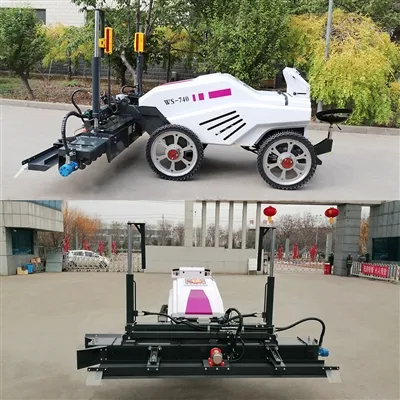
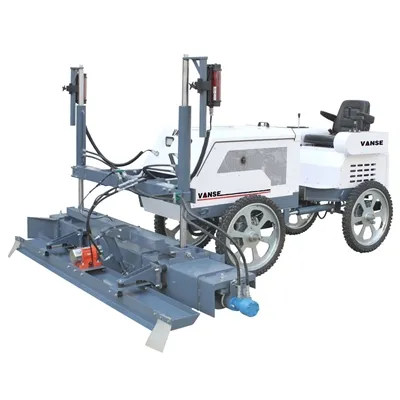
In the field of concrete construction, concrete laser leveling machine (concrete laser leveling machine or concrete laser leveler) has become a key equipment to improve construction efficiency and quality. With the vigorous development of the construction industry, the demand for high-precision, large-area concrete construction continues to grow, and the application of concrete laser leveling machine is becoming more and more extensive. According to a market research report, the global concrete laser leveling machine market size is expected to reach US$1.76 billion in 2025, with an annual growth rate of approximately 11.4%. During long-term high-intensity use, how to extend the service life of the concrete laser leveling machine has become the focus of many users. This is not only related to the return on equipment investment, but also affects the smooth progress and cost control of construction projects.
Daily maintenance points
(I) Cleaning after operation
After each operation with a concrete laser leveling machine, timely cleaning is essential. Since the equipment will be exposed to a large amount of concrete, mud and other impurities during operation, if it is not cleaned in time, these substances will adhere to the surface of the equipment and key components, accelerating component wear. For example, the body shell, leveling blade, vibrating device and other parts can be washed with a high-pressure water gun (but it should be noted that it is strictly forbidden to directly aim the water gun at the mesh part of the body to prevent water from entering the body and causing a short circuit) to remove the concrete residue and dust on the surface. For some stubborn stains that are difficult to wash off, use a soft cloth dipped in a neutral detergent dilution to wipe. Do not use strong alkali or strong acid cleaning agents to avoid corrosion of the paint and electroplating layer on the surface of the equipment, affecting the appearance and reducing the protective performance.
(II) Inspection and tightening of parts
Regularly check the connection and tightening of each component. During the operation of the equipment, the connecting bolts may become loose or even broken due to factors such as vibration and impact. For example, the connecting bolts of the frame, walking mechanism, laser transmitting and receiving device of the laser leveling machine should be carefully checked before and after each operation. If they are loose, tighten them in time. If the bolts are broken, they need to be replaced immediately. At the same time, check whether there is leakage in all parts of the equipment, including engine oil, coolant, hydraulic oil of the hydraulic system, etc. Once leakage is found, the cause should be promptly investigated and repaired to avoid problems such as poor lubrication and overheating of components due to oil leakage, which will affect the service life of the equipment.
(III) Replacement of wearing parts
The timely replacement of wearing parts is the key to ensuring the continuous and stable operation of the equipment. For example, the leveling scraper, vibrator, tires (or rubber tracks) of the leveling machine will wear faster during frequent use. Generally speaking, the wearing parts should be checked after each use. If the wear exceeds the prescribed limit, they should be replaced immediately. Even if the wearing parts do not seem to be damaged during normal use, it is recommended to replace them every six months to ensure that the overall performance of the equipment is not affected. For example, a severely worn leveling scraper cannot effectively scrape the concrete, which will cause the ground flatness to decrease, and will also increase the workload of other parts of the equipment, accelerating the overall loss of the equipment.
Coping with special environmental challenges
(I) High temperature environment response
In a high temperature environment, the concrete laser leveling machine faces many challenges. The engine is prone to overheating, resulting in power reduction and increased wear of parts. Therefore, when constructing in high temperatures in summer, first ensure that the engine cooling system is working properly. Before daily operation, check the coolant level and add it in time if it is insufficient; regularly clean the dust and debris on the surface of the radiator to ensure that the heat dissipation duct is unobstructed. When the engine temperature is too high, you should choose a cool area to stop and cool down. Do not rush to add cooling water. You need to let the engine idle for a while and add it after the temperature drops slightly to prevent the engine cylinder from cracking due to excessive temperature difference. At the same time, high temperature will also affect the performance of the hydraulic system. Check the hydraulic oil temperature frequently. If the oil temperature is too high, stop the machine for a rest to avoid long-term operation of the equipment at high temperatures. For example, in some southern regions during summer construction, if you do not pay attention to the heat dissipation of the equipment, it may cause the hydraulic system seals to age faster and leak oil, which will seriously affect the normal use of the equipment.
(II) Protection against high humidity environment
High humidity environment can easily cause the metal parts of the concrete laser leveling machine to rust and corrode, especially when constructing in coastal areas or rainy seasons. To cope with high humidity environments, the equipment should be parked in a dry place and avoid being placed in the open air. If it is unavoidable to operate in a humid environment, anti-rust oil can be applied to the surface of the equipment, especially to parts that are prone to rust, such as the frame and chassis. At the same time, the electrical circuit should be checked regularly to prevent short circuit failures caused by moisture. For the battery of the equipment, it is necessary to keep it clean and dry, check the electrolyte level and density regularly, and replenish distilled water in time to ensure good battery performance. For example, if the laser leveling machine used for a long time in a high humidity environment does not pay attention to anti-rust treatment, it may cause problems such as frame rust and strength reduction in a short period of time, affecting the safety and service life of the equipment.
(III) High-alkali environment protection
Concrete contains alkaline substances. If the protection is not appropriate during long-term contact, it will cause corrosion to the components of the concrete laser leveling machine. For parts that are in direct contact with concrete, such as leveling blades, vibrating devices, etc., they can be made of corrosion-resistant materials or undergo special surface treatment to improve their resistance to alkali corrosion. After each operation, clean the equipment thoroughly to remove residual concrete and prevent alkaline substances from adhering to the surface of the equipment for a long time. In a high-alkaline environment, attention should also be paid to the lubrication system of the equipment, and lubricating oils and greases with good alkali resistance should be selected and replaced regularly to ensure that all moving parts are well lubricated and reduce the occurrence of failures caused by corrosion and wear. For example, in the construction of some industrial plant floors, due to the strong alkalinity of concrete, if effective protective measures are not taken, the key components of the equipment may be severely corroded in a short period of time, shortening the service life of the equipment.
Standardized operation and reasonable use
(I) Avoid overload operation
Strictly operate in accordance with the rated working parameters of the concrete laser leveling machine to avoid operating in a condition that exceeds the equipment's bearing capacity. Overload operation will cause excessive pressure on the engine, hydraulic system, transmission components, etc., accelerate the wear of parts, and even cause equipment failure. For example, behaviors such as leveling thickness exceeding the maximum thickness specified by the equipment and forced operation on a site with a large slope will cause damage to the equipment. As an equipment manager, you should ensure that the operator is familiar with the equipment performance and operating procedures, and strictly prohibit illegal operations. Before construction, arrange construction tasks reasonably according to actual working conditions to ensure that the equipment operates stably within the normal load range.
(II) Smooth operation of equipment
During the operation of the equipment, try to ensure smooth operation and avoid violent operations such as sudden acceleration, sudden braking and frequent steering. Sudden acceleration and sudden braking will cause the engine and transmission system to bear greater impact force instantly, which may easily cause damage to parts; frequent steering will aggravate the wear of tires (or tracks) and steering mechanisms. After starting the equipment, the engine should be allowed to idle for a period of time to allow all parts to be fully lubricated before operation. During the leveling operation, keep the equipment moving at a uniform speed to avoid speed fluctuations, which can not only ensure the construction quality but also reduce the wear of the equipment. For example, when driving a concrete laser leveler, smoothly controlling the throttle and steering wheel can effectively extend the service life of key parts of the equipment.
(III) Correctly start and stop the equipment
The correct start and stop sequence also has an important impact on the service life of the concrete laser leveler. Before starting the equipment, check the environment around the equipment to ensure that there are no obstacles; check whether the liquid levels of fuel, engine oil, coolant, hydraulic oil, etc. are normal, and whether the indications of various instruments are normal. When starting, first turn the key to the power-on position, wait for the instrument self-check to complete, and then start the engine. After the engine is started, let it idle for a few minutes, observe the engine sound, vibration and whether the display of each instrument is normal, and then proceed to the next step after confirming that it is correct. When shutting down, first park the equipment on a flat and solid ground, lower the working device to the lowest position, and then turn off the engine. If the equipment is not used for a long time, the equipment should be sealed and maintained in accordance with the requirements of the equipment manual, such as draining fuel and coolant, lubricating and protecting key parts, etc. For example, the wrong starting method, such as forcibly starting the engine before the equipment completes the self-check, may damage the engine control system and affect the normal use of the equipment.
Regular in-depth maintenance and maintenance
(I) Hydraulic system maintenance
The hydraulic system is an important part of the concrete laser leveling machine, and regular maintenance is essential. Hydraulic oil will be contaminated and its performance will deteriorate during use, so the hydraulic oil should be replaced regularly. Under normal circumstances, the hydraulic oil should be replaced every 1,000 working hours or so. The specific replacement cycle can be adjusted appropriately according to the equipment use environment and the oil quality monitoring results. When replacing the hydraulic oil, use a clean container to hold the oil. The hydraulic oil must be filtered through the oil filter before adding it to the hydraulic oil tank to ensure that the oil is clean. At the same time, clean the hydraulic oil radiator regularly to ensure good heat dissipation and prevent the hydraulic system from malfunctioning due to excessive oil temperature. In addition, the replacement cycle of the hydraulic oil filter should also be appropriately shortened, generally 750 hours is appropriate. When replacing a new filter, check carefully. It is strictly forbidden to use a deformed, contaminated or rusted filter. For example, at some construction sites, due to the harsh environment, the hydraulic oil is easily contaminated by dust and impurities. If the filter and hydraulic oil are not replaced in time, it may cause blockage, leakage and other faults in the hydraulic system, seriously affecting the normal operation of the equipment.
(II) Electrical system inspection
Regularly check the electrical system of the concrete laser leveling machine to ensure that all electrical components are firmly connected and the circuits are not damaged or aged. Check the performance of the laser transmitting and receiving device to ensure that the laser signal is stable and accurate. Start the engine once every two months, charge the battery, and run all hydraulic actuators, such as rotary hydraulic motors, telescopic cylinders, etc., to prevent battery loss and rust and jamming of hydraulic system components. Do not remove the battery from the machine at will to avoid the loss of internal software program failures in the equipment control. At the same time, pay attention to check the grounding of the electrical system to ensure that the grounding is good to prevent safety accidents caused by leakage. For example, if the electrical line is aging and damaged, it may cause a short circuit, causing a fire, and endangering the safety of equipment and personnel.
(III) Comprehensive performance test
Perform a comprehensive performance test on the concrete laser leveling machine every once in a while (such as half a year or a year). The test content includes key performance indicators such as leveling accuracy, work efficiency, engine power, and hydraulic system pressure. Through testing, potential problems with the equipment can be discovered in time, and targeted repairs and adjustments can be made. For example, if the leveling accuracy is found to be reduced, it may be due to laser system failure, wear of the leveling blade, or looseness of the mechanical parts of the equipment. It is necessary to check and repair them one by one to ensure that the equipment always maintains a good working condition and extends its service life.
Click the below to jump immediately!!!


CONCRETE LASER LEVELING MACHINE


TRACKED MINI DUMPER
Thanks to All the Friends Who Support and Trust Shandong Vanse Machinery Technology Co., Ltd.
If you want to know more about Shandong Vanse Machinery Technology Co., Ltd. or have any questions, please feel free to contact us:
Our Factory
Shandong Vanse Machinery Technology Co., Ltd.








Share this article

About the Author: Shandong Vanse Machinery Technology Co., Ltd.
Shandong Vanse Machinery Technology Co., Ltd. is a high-tech manufacturer specializing in concrete construction machinery, including laser screeds and related equipment. The company integrates R&D, production, and global sales, with products exported to over 60 countries and widely used in infrastructure projects worldwide.
Previous Post
Next Post
Related Articles
You Might Also Like
Energy Consumption, Energy Saving And Environmental Protection Performance Of Concrete Laser Leveling Machine
Discussion on energy consumption and energy saving and environmental protection performance of concrete laser leveling machine ▷••◇•• Introduction As the world pays increasing attention to environmental protection and sustainable development, the construction industry has begun to shift towards more environmentally friendly and energy-saving construction methods. In this context, as a new type of construction equipment, the energy consumption, energy saving and environmental protection performance of the concrete laser leveling have become the focus of attention. This article will conduct an in-depth discussion on the energy consumption, energy saving and environmental protection performance of the concrete laser leveling, and analyze and evaluate it based on actual cases. ▷••◇•• Concrete laser leveling machine energy consumption analysis The energy consumption of the concrete laser leveler during the construction process mainly comes from the power system, laser measurement and control system and leveling device. Among them, the power system is the main source of energy consumption, generally using diesel or electricity as energy. Although the energy consumption of the laser measurement and control system and leveling device is relatively low, it will also have a certain impact on energy consumption when working continuously for a long time. Taking a certain model of concrete laser leveling machine as an example, its power system uses a diesel engine with a rated power of 150KW. Under normal working conditions, the fuel consumption per hour is about 15L. In addition, the energy consumption of the laser measurement and control system and leveling device is approximately 5kWh per hour. All things considered, the total energy consumption of this equipment is approximately 25kWh per hour. ▷••◇•• Energy saving and environmental protection performance of concrete laser leveling machine In order to reduce the energy consumption and emissions of concrete laser levelings and improve energy conservation and environmental protection performance, the new generation of equipment has made many improvements in design and functionality. 1. Power system optimization: The new generation of concrete laser leveling machines uses more efficient diesel engines or electric drive systems to reduce energy consumption and emissions by optimizing fuel injection and improving thermal efficiency. 2. Laser measurement and control system upgrade: The new laser measurement and control system uses a higher-precision laser sensor and a more sensitive control algorithm to improve leveling accuracy and efficiency, thereby reducing energy consumption. 3. Improvement of leveling device: The new generation leveling device uses lighter and more wear-resistant materials, which reduces the weight and friction loss of the equipment itself, further reducing energy consumption. In addition to technical improvements, concrete laser levelings also show good energy-saving and environmentally friendly performance in practical applications. The following is a practical case: In a highway construction project, a new generation of concrete laser leveling machine was used for road leveling operations. By comparing traditional leveling methods, it was found that using a concrete laser leveling machine not only improves leveling accuracy and efficiency, but also significantly reduces energy consumption and emissions. Specifically, under the same conditions, a concrete laser leveler is used to perform leveling operations. Compared with traditional methods, it can reduce fuel consumption and emissions by about 20%. This result shows that the concrete laser leveling has significant advantages in energy conservation and environmental protection. ▷••◇•• Energy saving and environmental protection performance evaluation and suggestions Based on the above analysis, the concrete laser leveling machine performs well in terms of energy consumption, energy saving and environmental protection performance. By adopting measures such as efficient power systems, upgrading laser measurement and control systems, and improving leveling devices, the new generation of equipment has achieved remarkable results in reducing energy consumption and emissions. However, the following points still need to be noted: 1. Equipment selection: When purchasing a concrete laser leveling, you should give priority to equipment with high efficiency, energy saving and environmental protection performance, and avoid purchasing old equipment with high energy consumption and large emissions. 2. Maintenance: Regularly maintain and maintain the equipment to ensure that the equipment is in good working condition and avoid increased energy consumption and excessive emissions caused by equipment failure or improper maintenance. 3. Construction personnel training: Strengthen the training and management of construction personnel, improve their operating skills and environmental awareness, and ensure that the equipment can fully exert its energy-saving and environmental protection performance during use. 4. Construction site management: Strengthen the management and supervision of the construction site to ensure that equipment operates under specified working conditions and avoid increased energy consumption and excessive emissions caused by illegal operations or poor management. ▷••◇•• Conclusion As a new type of construction equipment, concrete laser leveling machine has excellent performance in terms of energy consumption, energy saving and environmental protection performance. By adopting measures such as efficient power systems, upgrading laser measurement and control systems, and improving leveling devices, the new generation of equipment has achieved remarkable results in reducing energy consumption and emissions. In the future development of the construction industry, concrete laser levelings will continue to play an important role and contribute to promoting the green and sustainable development of the construction industry.See how the laser leveling machine can show its skills in leveling construction
Laser leveling machines are convenient to use, without complicated operating techniques. Even inexperienced users can flexibly operate them. Secondly, traditional leveling machines will cause uneven construction when used, which will bring a lot of trouble to the construction. Moreover, the equipment can achieve large-area construction when used. This construction method effectively shortens the construction time and effectively ensures the smooth progress of the later work. 1. Small error: Laser leveling machine is used for large-area construction ground. The ground elevation is easy to control and the ground flatness error is very small. Because of the laser point, the entire building only needs 1-2 reference point elevation, which can reduce the error caused by multiple reference points. The laser is independent of the decoration. The ground height rotates the laser to emit a beam of plane control. As long as the laser is not affected by interference, the laser leveling machine can ensure that the overall level of the paved ground is not affected. Therefore, the ground construction is laid in one area, and the level and smoothness of the entire ground can be ensured. The laser level measurement and control system of the laser leveling machine is controlled in real time. The leveling does not require the control of the line, nor does it require the middle horizontal template to control the ground elevation, avoiding the construction process due to the vibration (channel) of the template elevation error, and also reducing the elevation error caused by the traditional artificial block template. 2. The ground is more integrated: Laser leveling machine, concrete is used in ground construction, it is easy to achieve large-area paving, one-time whole-sound paving process can be carried out according to the needs of any panel block construction, continuous operation and whole-layer construction, so that the surface is complete, which is the traditional construction process, the traditional laser leveling machine construction process, one day of death, pouring concrete, one day only jumps to construction, even if it is a limitation, it cannot be operated continuously, and the integrity is not good, which is easy to cause construction joint cumulative errors. 3. The ground is more compact and more uniform: In ordinary concrete, the laser leveling machine always moves at a constant speed, and there is a high-frequency vibrator of 4000 times per minute, which makes the entire flat plate vibrate evenly, making the concrete floor more uniform. The above basic knowledge about the laser leveling machine is basically over here. If you have good suggestions or opinions, you can communicate with us in time. We will have professional technicians to help you solve the problem. Thank you for your attention and support.Which concrete cutting machines are suitable for making joint cuts on ultra-flat floors without damaging the flatness?
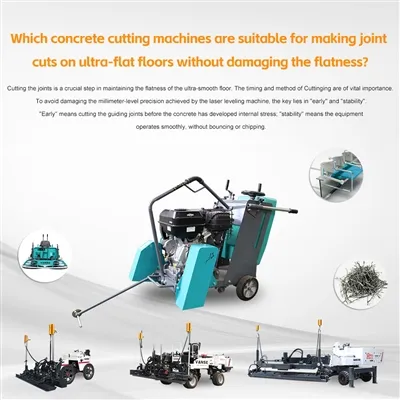
Cutting the joints is a crucial step in maintaining the flatness of the ultra-smooth floor. The timing and method of Cuttinging are of vital importance. To avoid damaging the millimeter-level precision achieved by the laser leveling machine, the key lies in "early" and "stability". "Early" means cutting the guiding joints before the concrete has developed internal stress; "stability" means the equipment operates smoothly, without bouncing or chipping. Based on this principle, there are mainly two types of equipment available on the market that are suitable for cutting joints in ultra-smooth floors. The core difference between them lies in the time window for cutting. To make it easier for you to compare, I have listed their features as follows: Comparison dimension Early-Entry Cutting Conventional Cutting The timing of the cut Within 1-4 hours after the concrete has been polished (commonly known as the "initial setting" stage) After 6-12 hours or longer of concrete curing (usually overnight waiting) Core Strengths Prevent cracks from forming at their source: Cut the joints before the concrete begins to contract, guiding the cracks to develop in a regular pattern. This is the best way to protect the flatness of the super-level floor. High flexibility: Suitable for all types of concrete, including hardened floors. Smooth cuts: Special blades and patented sliding plates are used, resulting in almost no chipping during cutting, and the joints are aesthetically pleasing. Adjustable depth and width: Capable of cutting deeper and wider joints. Potential risks The time window is narrow, and high requirements are placed on construction organization. Special cutting blades must be equipped. May cause random cracks: If the cutting is done too late, the internal stress of the concrete may have already caused micro-cracks or warping on the floor before the joint is made, thus damaging the flatness. The key to the decision lies in your ultimate pursuit of flatness and the scheduling of the project. Preferred solution: Early Cutting If your project aims for a super-flat floor with FF/FL 35 or above, or if the floor will be used in high-shelf warehouses or precision instrument workshops, then the early Cutting is the only recommended option. It actively guides the cracks before stress is formed, maximizing the protection of the perfect foundation created by the laser leveling machine. Alternative solution: Traditional precision joint Cutting If your project requires a slightly lower level of flatness (such as for ordinary commercial floors), or if you missed the early Cutting window due to construction schedule reasons, then choosing a high-precision, smooth-running traditional joint Cutting is necessary. The key lies in the stability of the equipment. No matter which equipment you choose, there are two points to keep in mind: Special blades: For the initial cutting, you must use the blades specifically designed for this purpose. The blade head connection and formula are specially tailored for un-hardened concrete, which can prevent the blade head from falling off and ensure the cutting quality. Smooth operation: The weight balance of the equipment and the design of the blade guard (such as whether it has a stabilizing slide) will directly affect the stability during cutting, and thereby influence the final flatness. I hope the above information can help you make a clearer choice. If you want to know more about how to select the appropriate blade type based on the specific concrete mix ratio (such as whether fibers are added), I can help you organize more detailed information for you. Contact us NOW Note: The parameters provided in this document are for reference only and are not mandatory. Due to differences in technical characteristics between different brands and models of laser levelers, please consult the manufacturer for a suitable solution before actual operation. This reference document assumes no responsibility for any issues arising from failure to follow the manufacturer's instructions.