Technical Knowledge
CORRECT USE OF LASER LEVELING MACHINE
CORRECT USE OF LASER LEVELING MACHINE
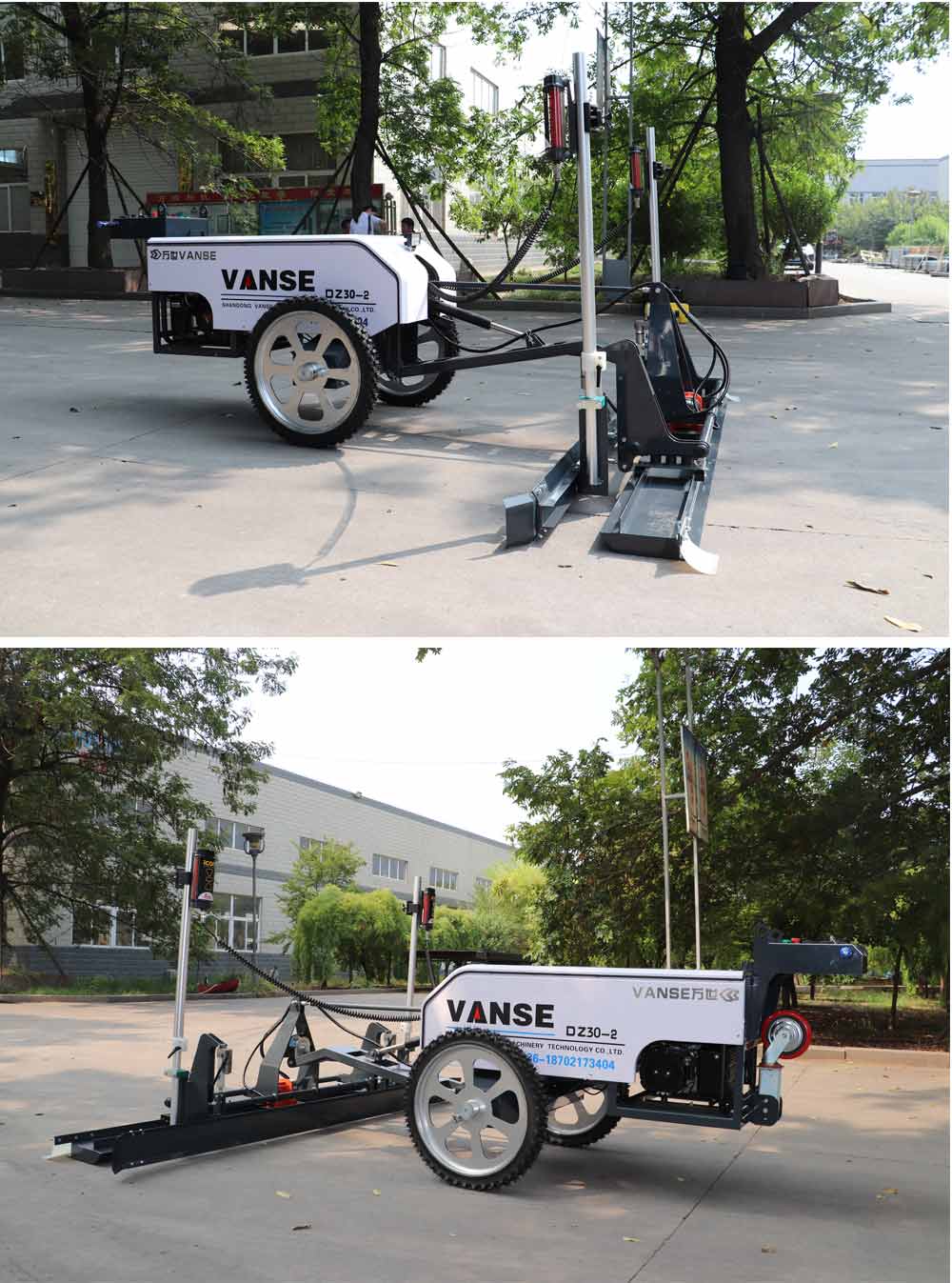
The laser leveling machine is an indispensable equipment in the construction industry. It is inseparable from the construction of large highways. To ensure the smooth progress of the construction and the smoothness of the road surface, it is necessary to master the correct use of the laser leveling machine. Secondly, read the instruction manual of the equipment before use, because in this way you can get familiar with the internal structure of the equipment as soon as possible, so as to achieve correct operation. The following laser leveling machine manufacturers will take you to understand the correct use of the laser leveling machine.
1. Laser leveling machine manufacturers explain from a professional point of view that they should pay attention not to work under the load that the machine can bear, and use the laser leveling machine as much as possible. As the laser leveling machine management personnel, in the specified operation When personnel are employed, the random materials and operation manuals of the laser leveling machine should be handed over to the operator so that they can normally grasp the mechanical properties and operating procedures, and the relevant materials should not be withheld at will.
2. Laser leveling machine manufacturers explain from a professional point of view that they should try their best to ensure the uniform addition and subtraction of the load of the laser leveling machine, so that the machine is in a relatively gentle load change. Specifically, it is necessary to increase and decrease the throttle more evenly to prevent the engine, The movement of the working device fluctuates greatly.
3. Laser leveling machine manufacturers explain the scientific use of lubricating oil from a professional point of view. According to statistics, more than half of the failures of the leveling machine are caused by poor lubrication. Due to the precision of the parts of the laser leveling machine, good Lubrication can make it maintain normal working clearance and suitable working temperature, thereby reducing the degree of wear of parts and reducing mechanical failures. Normal and reasonable lubrication is one of the effective measures to reduce mechanical failures. For this reason, one is to choose lubricants reasonably. During use, neither low-grade lubricants nor other types of lubricants can be used instead, let alone inferior products. The second is to always check the quantity and quality of lubricants.
4. The laser leveling machine should be maintained and repaired in a timely manner. Various failures will inevitably occur during the use of the laser leveling machine. Among these failures, some failures may have a very small impact on the mechanical equipment, and some are In more serious cases, it may even cause a major accident involving aircraft crashes and fatalities.
The knowledge shared by laser leveling machine manufacturers for you basically comes to an end here. If you have the intention to understand the equipment, you can contact us by phone, or log in to our official website and leave us a message. We will see it later. Thank you for your reading.
Thanks to All the Friends Who Support and Trust Shandong Vanse Machinery Technology Co., Ltd.
If you want to know more about Shandong Vanse Machinery Technology Co., Ltd. or have any questions, please feel free to contact us:
Our Factory
Shandong Vanse Machinery Technology Co., Ltd.








Share this article

About the Author: Shandong Vanse Machinery Technology Co., Ltd.
Shandong Vanse Machinery Technology Co., Ltd. is a high-tech manufacturer specializing in concrete construction machinery, including laser screeds and related equipment. The company integrates R&D, production, and global sales, with products exported to over 60 countries and widely used in infrastructure projects worldwide.
Previous Post
Next Post
Related Articles
You Might Also Like
How should maintenance standards for equipment used in concrete construction be established?
When developing maintenance standards for concrete construction equipment, it's necessary to consider the technical characteristics of each equipment type (such as mixing equipment, conveying equipment, pouring equipment, and vibrating equipment), construction scenario requirements, and industry standards. This approach aims to create a systematic standard that covers the entire lifecycle, is quantifiable and implementable, and assigns specific responsibilities. The following is the specific framework and core content: Before developing standards, it's important to first clarify the underlying foundations to ensure they are legally compliant, practical, and avoid being divorced from equipment characteristics or industry requirements. Equipment Technical Documentation Based on the manufacturer's operating and maintenance manuals, key parameters (such as lubrication cycles, replacement thresholds for wearing parts, and maintenance tool models) are extracted. For example, for a mixer, "mixing blades should be replaced if wear is ≤3mm" and "gear oil should be changed every 500 hours for the reducer" are standard "technical baselines." Industry and national standards Reference mandatory or recommended specifications, such as: Technical Regulations for Safety in the Use of Construction Machinery (JGJ33-2012): Clarifies safety requirements for equipment maintenance (such as powering off before maintenance and posting warning signs); Technical Specifications for Concrete Mixing Plants (Buildings) (GB/T 10171-2021): Specifies maintenance cycles and performance testing indicators for mixing equipment; Technical Specifications for Concrete Pumps (GB/T 13333-2014): Clarifies maintenance requirements for the hydraulic system and piping of concrete pumps. Construction scenarios and equipment load Based on project specific adjustments (e.g., high temperature, high humidity, or high-frequency construction scenarios require shortened maintenance intervals): For example, for concrete mixer trucks in tropical regions, the hydraulic oil filter replacement interval needs to be shortened from the standard 1,000 hours to 800 hours. For example, when continuously pouring large volumes of concrete, the insulation layer of the vibrator needs to be inspected every 8 hours instead of every 8-hour shift. Concrete construction equipment varies greatly. Based on the principle of "classification and standardization," the standard should be broken down into "equipment classification modules." Each module covers four dimensions: daily maintenance, scheduled maintenance, fault prevention, and safety requirements, ensuring coverage of the entire equipment lifecycle. Using the four most critical types of equipment in concrete construction as examples, this standard specifies specific maintenance content, cycles, standards, and responsible individuals: Device Type Maintenance Dimension Maintenance cycle Core maintenance content (quantifiable standards) 1. Mixing equipment (mixing machine, batching machine, cement silo) Daily Maintenance Daily before/after construction 1. Mixer: Clean any remaining concrete in the drum (no lumps or adhesion), and check the blade/liner fastening bolts (no looseness, torque ≥ 80 N·m). 2. Batching machine: Clean any debris from the hopper, and check the conveyor belt for deviation (≤ 50 mm/10 m). 3. Cement silo: Check the sensitivity of the level gauge (analog signal response time ≤ 2 seconds), and the safety valve for leaks. Periodic Maintenance (Medium Repair) Every 300-500 man-hours 1. Replace the mixer liner (if wear ≥ 5 mm). 2. Change the gear oil in the reducer (oil quality test: viscosity ≥ 220 cSt, no metal debris). 3. Adjust the tension of the batching machine conveyor belt (deflection ≤ 15 mm/1 m span). Periodic Maintenance (Major Repair) Every 2000-3000 man-hours 1. Disassemble the mixer shaft and check the bearing clearance (≤ 0.05 mm). 2. Calibrate the batching scale for accuracy (error ≤ ±1%). 3. Repair the anti-corrosion coating on the cement silo interior (no rust on ≥ 0.1 m2). 2. Conveying equipment (concrete pump trucks, trailer pumps, mixer trucks) Daily Maintenance Daily after construction 1. Pump Truck: Flush the delivery pipeline (no concrete residue, smooth water flow), check the outrigger cylinder seals (no oil leakage, no scratches on the piston rod); 2. Mixer Truck: Clean the tank (no hardening on the tank wall), check the tire pressure (±0.2 bar). Periodic Maintenance Every 1000 km / 500 man-hours 1. Pump Truck: Replace the hydraulic oil filter (pressure differential ≥ 0.3 MPa), inspect the boom welds (no cracks, weld height ≥ 8 mm); 2. Mixer Truck: Replace the tank liner (wear ≥ 10 mm), and maintain the drive system (bearing temperature ≤ 60°C). 3. Vibrating equipment (insertion vibrator, flat plate vibrator) Daily Maintenance Every 8-hour shift 1. Check the cable insulation (no damage, ground resistance ≤ 4Ω); 2. Vibrator: Test run (amplitude ≥ 0.8 mm, no abnormal noise), and check the connectors for looseness. Periodic Maintenance Every 50 shifts 1. Replace the vibrator bearing (clearance ≥ 0.1 mm); 2. Clean the motor cooling vents (no dust blockage, temperature rise ≤ 40°C). 4. Measuring equipment (sand and gravel scales, cement scales, admixture scales) Daily Maintenance Daily 1. Clear the scale hopper of any accumulated material (no material hanging, no skew); 2. Calibrate the zero point (error ≤ ±0.5kg) and check the sensor wiring (no looseness). Periodic Maintenance Every 30 days 1. Perform dynamic calibration (load 100% of the rated weight, error ≤ ±1%); 2. Check the sensor protection (no moisture, no deformation due to impact). Lubrication Management Standards Follow the "Equipment Lubrication Chart" (specify the lubricant type, filling point, cycle, and amount). For example, use 3# lithium-based grease for the mixer bearings, refilling every 100 working hours at a rate of 50g each time. After lubrication, record the "lubrication time, person performing the lubrication, and oil quality" to avoid over-lubrication or under-lubrication. Consumable Parts Management Standards Maintain a "consumable parts ledger" (including model, inventory threshold, and replacement cycle), such as for agitator blades, conveyor belts, vibrators, and cables, with a minimum inventory of three sets. When replacing consumable parts, "model matching" is required. Substitution with non-genuine parts is prohibited (exceptional circumstances require approval from the technical director). After replacement, a test run is required to confirm compliance. Safety Maintenance Standards Before maintenance, power and gas must be turned off, and a warning sign must be posted (e.g., "Equipment under maintenance, do not start"). Safety belts must be worn and a warning area must be set up for overhead work (e.g., pump truck boom maintenance). Electrical equipment maintenance requires a "certified operator" (electrician's license). Hydraulic system maintenance must be depressurized (reduced to 0 MPa) to prevent hydraulic fluid spray and injury. Record and traceability standards Establish an "Equipment Maintenance Record Form" (electronic or paper) that includes: equipment number, maintenance date, maintenance items, test data, abnormalities, person responsible, and inspector. Record retention period should be ≥ the equipment's service life to facilitate tracing the cause of a malfunction (e.g., if a mixer blade breaks, the record can be used to verify whether it has not been replaced beyond the specified time limit). Clarify the responsibility system Responsibilities are divided into different levels: Operators are responsible for "daily maintenance" (cleaning, inspection, and simple tightening); repair workers are responsible for "regular maintenance" (disassembly, replacement, and calibration); technical leaders are responsible for "standard review and exception handling"; and project managers are responsible for "resource support (spare parts, tools, and funding)." A "Equipment Maintenance Responsibility Letter" is signed, linking maintenance effectiveness to performance appraisals (e.g., if equipment failure occurs due to inadequate maintenance, the responsible individual's performance will be deducted). Supervision and Inspection Mechanism Daily Inspections: Technicians will spot-check the Maintenance Record Form daily and verify maintenance effectiveness on-site (e.g., randomly checking the wear of the mixer blades to see if it matches the records). Regular Assessments: Monthly "Equipment Maintenance Evaluations" are conducted, rewarding teams/individuals with a maintenance compliance rate ≥95%. Those failing to meet the standards will be given a deadline to rectify the situation. Fault Review: After equipment failure, analysis will be conducted to determine whether the cause was maintenance failure, and standards will be updated (e.g., if a crack on a pump truck boom was caused by untimely weld inspection, the weld inspection cycle will be shortened). Personnel Training Standards New employees must pass "equipment maintenance training + practical assessment" (e.g., identifying wearing parts of the mixing unit and completing maintenance records) before they can begin work. Maintenance skills training is organized quarterly (manufacturer technicians are invited to explain key maintenance points and common troubleshooting for new equipment) to ensure personnel skills meet standard requirements. Concrete construction equipment technology evolves rapidly (e.g., new intelligent mixing plants and electric pump trucks), necessitating regular standard updates: Update Cycle: A comprehensive review is conducted annually. Revisions are required immediately if equipment upgrades, construction scenarios change, or industry standards are updated. Update Process: The technical department collects equipment failure data, maintenance feedback, and new regulatory requirements. Discussions are held with maintenance workers, operators, and manufacturer representatives. After revisions are made public, training sessions are held to ensure full awareness. The standards established through the above framework can not only cover the technical requirements of equipment, but also be implemented in specific positions and operations, avoiding "empty" concepts and ultimately achieving the goal of "reducing equipment failures, extending service life, and ensuring construction continuity." Note: The parameters provided in this document are for reference only and are not mandatory. Due to differences in technical characteristics between different brands and models of laser levelers, please consult the manufacturer for a suitable solution before actual operation. This reference document assumes no responsibility for any issues arising from failure to follow the manufacturer's instructions.Is there a big difference between hardened floors and ordinary concrete floors?
Hardened floors and ordinary concrete floors are two types of flooring materials commonly used in modern-day construction. While they may look similar, these materials have significant differences that set them apart. In this article, we'll explore the key differences between hardened floors and ordinary concrete floors and why hardened floors are a better option for industrial and commercial facilities. What are hardened floors? Hardened floors are concrete floors that have undergone a specialized process to increase their hardness and durability. This is typically done by adding a surface hardener or a densifier to the concrete mix and then grinding and polishing the surface to a high gloss or matte finish. Hardened floors are available in a vast range of colors and designs, making them a popular flooring choice in commercial and industrial applications. Benefits of hardened floors Improved durability One of the most significant benefits of hardened floors is their improved durability compared to ordinary concrete floors. Hardened floors are much harder and denser than standard concrete flooring, making them resistant to wear and tear caused by heavy foot traffic, vehicle traffic, and machinery. They are also highly resistant to chemicals and staining, which makes them an excellent option for industrial and manufacturing facilities. Easy maintenance Another benefit of hardened floors is that they are incredibly easy to maintain. Unlike traditional concrete floors, hardened floors do not require regular waxing or coatings to keep them looking their best. Instead, they only require daily cleaning with a mild detergent and occasional polishing to maintain their shine. Versatility Hardened floors are available in a broad range of colors and finishes, making them highly versatile. They can be customized to match any design or aesthetic, making them suitable for a wide range of commercial and industrial applications. Additionally, they can be used indoors or outdoors and can withstand extreme weather conditions. Eco-friendliness Hardened floors are an eco-friendly flooring option because they utilize the existing concrete surface. By using the existing surface, there is less waste, fewer resources used, and less carbon emissions from transportation. Hardened floors also have low VOC emissions, making them ideal for eco-conscious facilities. What are ordinary concrete floors? Ordinary concrete floors are typically made up of cement, sand, and aggregates such as gravel and stone. They are poured onto a base layer of subgrade material and then left to cure over time. While traditional concrete floors are highly durable, they lack the strength and resilience of hardened floors. Disadvantages of ordinary concrete floors Susceptibility to damage Ordinary concrete floors are more susceptible to damage than hardened floors. They are prone to cracking and chipping over time, especially in high traffic areas. Additionally, they can be damaged by chemicals, such as oils and solvents and can become stained and discolored. Difficult to maintain Ordinary concrete floors require a lot of maintenance to keep them looking their best. They need to be regularly coated with a wax or sealer to protect them from damage and staining. Additionally, they require frequent cleaning with a specialized detergent and regular polishing to maintain their shine. Limited design options Traditional concrete floors offer limited design options, leaving little room for customization. They usually come in a standard gray color, and attempts to stain or color them can lead to uneven coloring. Conclusion In conclusion, while both hardened floors and ordinary concrete floors are popular flooring options, hardened floors offer significant benefits that make them a better choice for commercial and industrial facilities. With their improved durability, easy maintenance, versatility, and eco-friendliness, hardened floors are the way to go for businesses looking for a long-lasting, low-maintenance, and cost-effective flooring option.Which components of the concrete laser leveling are most prone to damage and need to be stocked in advance?
As a high-precision and high-strength construction equipment, the wear and damage of the components of the concrete laser leveling machine are inevitable. To minimize downtime and ensure construction progress, it is a very wise move to stock up on key vulnerable components in advance. Based on the structure and working principle of the equipment, the following components are the most prone to damage. It is recommended that you stock up in advance according to the construction intensity and project conditions These are the "legs and feet" of the leveling, which have the highest working intensity and come into direct contact with the concrete, making them the most prone to wear and tear. The reason is that it directly rubs against and flattens the concrete aggregates, making it the component that wears out the fastest. It is usually made of wear-resistant steel plates, but after long-term use, it will inevitably wear out and become thinner, losing its smooth effect. Suggestion: This is a component that must be stocked in stock, and 2-3 sets of spare parts with different degrees of wear and tear should be prepared according to the scale of the project. The reason is that walking on unsolidified concrete makes it easy to be scratched or punctured by sharp aggregates such as stones and steel bar ends. Although most of them are solid tires, the rubber itself can also wear out. It is highly recommended to have a complete set of tire assemblies for the entire vehicle (usually four), especially for construction sites with complex ground environments and exposed steel bars. Reason: The load is heavy when driving the entire machine to move. Although it is not prone to damage itself, the internal drive gears, bearings, seals and other components are vulnerable points. Especially when the sealing parts age and cause oil leakage, it will accelerate internal wear. Suggestion: It is advisable to prepare a set of reducer assembly as a core backup, or at least a set of drive gear and seal maintenance kits for quick repair. This is the "blood circulation system" of the leveling machine. Faults often lead to the paralysis of the entire machine. The reason is that there are a large number of seals at all parts of the hydraulic system (cylinders, motors, valve block interfaces). Due to long-term operation under high pressure and high temperature, rubber will age and wear out, leading to oil leakage, which is the most common hydraulic failure. Suggestion: Purchase a set of maintenance kits for the entire machine's sealing parts. It is not expensive, but it can quickly solve the problem when oil leakage occurs, making it the spare part with the best cost performance. The reason is that the cleanliness of the hydraulic oil is directly related to the lifespan of the entire hydraulic system. Regular replacement of the filter element is a necessary maintenance item. If the filter element is clogged or fails, it will cause severe wear of core components such as hydraulic pumps and motors. Suggestion: According to the equipment maintenance manual, always keep at least one set (such as return oil filter elements, suction oil filter elements, etc.) on hand. The reason is that the drive shaft connecting the engine (or hydraulic motor) and the hydraulic pump operates under high torque. If it is poorly lubricated or subjected to shock, the universal joint bearing is prone to damage. Suggestion: Prepare a complete drive shaft assembly or at least a universal joint maintenance kit. This is the "eyes and brain" of the leveling, where the precision lies and requires careful protection. Reason: Although it is an electronic component itself, the construction site environment is harsh and it may be damaged due to collision or splashing concrete. It is the key to ensuring flatness.Suggestion: This is a core electronic component that is strongly recommended as a backup. Once damaged, the entire machine will not be able to level itself automatically. Reason: As a precision optical instrument, it is vulnerable to dropping, shock and dust. Although it is more durable than the receiver, once a problem occurs, it will affect the entire working area.Suggestion: If the project is of great significance and the schedule is tight, it is advisable to consider having one as a backup. For construction sites where multiple leveling machines work in coordination, having a spare transmitter is a standard operation. The reason is that there are a large number of seals at all parts of the hydraulic system (cylinders, motors, valve block interfaces). Due to long-term operation under high pressure and high temperature, rubber will age and wear out, leading to oil leakage, which is the most common hydraulic failure. Suggestion: Purchase a set of maintenance kits for the entire machine's sealing parts. It is not expensive, but it can quickly solve the problem when oil leakage occurs, making it the spare part with the best cost performance. The reason is that the cleanliness of the hydraulic oil is directly related to the lifespan of the entire hydraulic system. Regular replacement of the filter element is a necessary maintenance item. If the filter element is clogged or fails, it will cause severe wear of core components such as hydraulic pumps and motors. Suggestion: According to the equipment maintenance manual, always keep at least one set (such as return oil filter elements, suction oil filter elements, etc.) on hand. The reason is that the drive shaft connecting the engine (or hydraulic motor) and the hydraulic pump operates under high torque. If it is poorly lubricated or subjected to shock, the universal joint bearing is prone to damage. Suggestion: Prepare a complete drive shaft assembly or at least a universal joint maintenance kit. Priority Component name Stock preparation suggestions ★★★★★ (Highest) Scraper bottom plate It is necessary to stock up. Prepare 2 to 3 sets according to the project volume Hydraulic seal kit It offers the best cost performance and must be stocked Walking tire It is strongly recommended to prepare a complete set ★★★★ (High) Laser receiver It is recommended to have one core electronic component Hydraulic filter element Essential maintenance items should be stocked according to the maintenance cycle Reducer gears/seals It is determined based on the historical failure conditions of the equipment ★★★ (Middle) Universal joint for drive shaft Maintenance kits or assemblies are available Vibrating rod/bearing It is determined by the frequency of equipment usage Laser emitter Large or key projects are recommended as backups ★★ (Low) Battery It depends on the condition of the old battery Here's a tip for you finally: When purchasing equipment, one should ask the manufacturer or supplier for a recommended list of vulnerable parts and understand the expected service life of these components. At the same time, establish maintenance files for your own equipment, recording the replacement times of each component. Only in this way can you carry out predictive stocking more scientifically, ensuring that your equipment is always in the best condition and creating the greatest value for the project. Note: The parameters provided in this document are for reference only and are not mandatory. Due to differences in technical characteristics between different brands and models of laser levelers, please consult the manufacturer for a suitable solution before actual operation. This reference document assumes no responsibility for any issues arising from failure to follow the manufacturer's instructions.