Technical Knowledge
Selection Strategy for Riding-Type VS Hand-held Trowel Machines: Large Warehouse VS Small Workshop
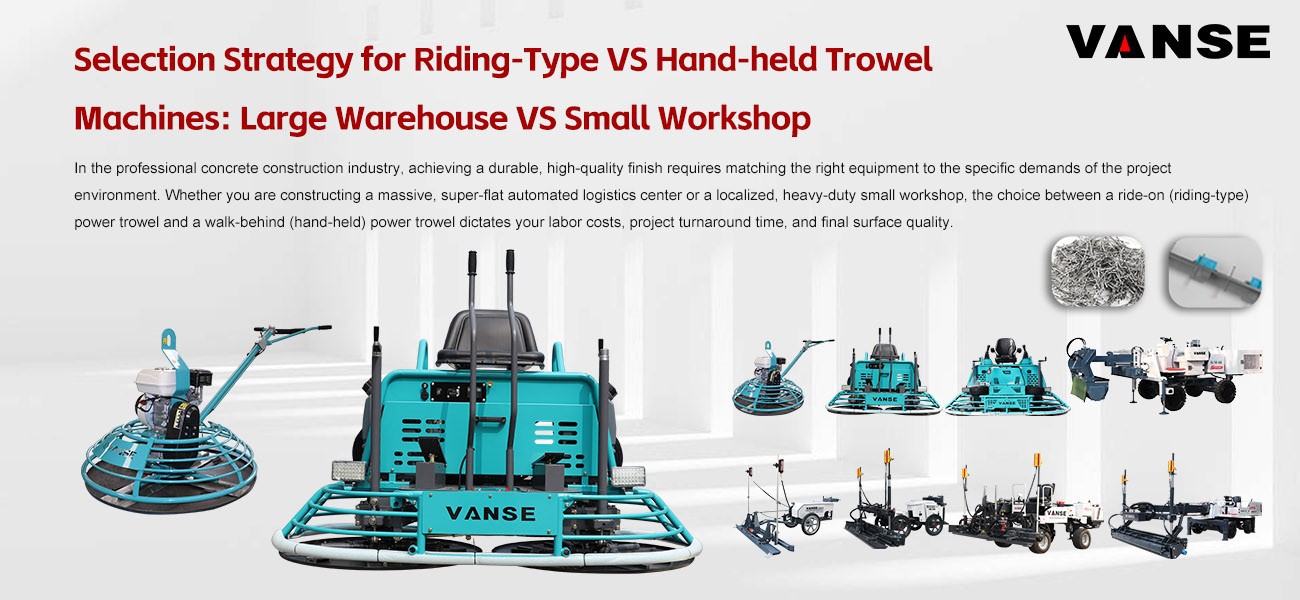
In the professional concrete construction industry, achieving a durable, high-quality finish requires matching the right equipment to the specific demands of the project environment. Whether you are constructing a massive, super-flat automated logistics center or a localized, heavy-duty small workshop, the choice between a ride-on (riding-type) power trowel and a walk-behind (hand-held) power trowel dictates your labor costs, project turnaround time, and final surface quality.
To maintain high E-E-A-T (Experience, Expertise, Authoritativeness, and Trustworthiness) standards in concrete flooring, contractors must deploy a strategic equipment selection process. Here is the ultimate guide to selecting the right concrete finishing machinery for your next project, featuring industry-leading insights and equipment solutions from Shandong Vanse Machinery Technology Co., Ltd. (www.vansemac.com).
Scenario 1: Large Warehouses and Logistics Centers
The Requirement: Massive daily pour volumes, strict international Floor Flatness (FF) and Floor Levelness (FL) tolerances, and high surface wear resistance.
The Solution: Ride-On Power Trowels
For expansive commercial and industrial spaces, the riding-type power trowel is the undisputed necessity. Utilizing walk-behind equipment in a massive warehouse is an operational bottleneck that dramatically inflates labor costs and risks the concrete curing before the finishing phase is complete.
Superior Surface Compaction: Ride-on trowels, such as the heavy-duty models offered by Vanse Machinery, feature dual-rotor systems and weigh significantly more than hand-held units. This intense mechanical weight drives coarse aggregates down and brings the cement paste to the top, resulting in a highly densified, burnished finish that resists the heavy dynamic loads of forklifts and automated storage and retrieval systems (ASRS).
Protecting FF and FL Metrics: When pouring super-flat floors, contractors rely on advanced Concrete Laser Screeds (like the Vanse YZ30-4E or YZ40-4E telescopic boom models) to establish the perfect grade. A ride-on trowel operator sits on the machine, meaning no human footprints disrupt the freshly leveled surface. The wide, overlapping stance of the machine acts as a massive smoothing plane, locking in the laser-guided levelness.
Exponential Efficiency (OpEx Savings): A single operator on a high-speed ride-on trowel can cover thousands of square meters in a fraction of the time it takes a manual crew. This rapid turnaround is essential for preventing cold joints and keeping international construction projects ahead of schedule.
Scenario 2: Small Workshops and Confined Spaces
The Requirement: Maneuverability, cost-effectiveness, and precision around structural obstacles.
The Solution: Walk-Behind (Hand-Held) Power Trowels
Not every project has the square footage to justify the deployment of heavy riding equipment. For small workshops, residential garages, retail expansions, or tight mezzanine decks, the walk-behind power trowel is the strategic choice.
Unmatched Maneuverability: Walk-behind trowels excel in confined spaces. They can easily navigate around plumbing stub-outs, structural columns, and tight corners where a bulky ride-on machine simply cannot fit or safely maneuver.
Lower Capital Expenditure (CapEx): For smaller contracting firms or specialized repair teams, hand-held trowels require a much lower initial investment while still providing the mechanized blade rotation necessary for a smooth, hard trowel finish.
Ease of Transport: Walk-behind units are lightweight and can be easily loaded into standard service trucks or elevated to upper-deck projects without the need for heavy-duty telehandlers or cranes.
The Hybrid Strategy: Why Elite Contractors Require Both
For global contractors handling comprehensive commercial builds, the selection strategy is rarely "either/or." It is highly recommended to view concrete finishing as an integrated ecosystem.
As demonstrated by the comprehensive product lineup at Vanse Group, a flawless commercial floor requires a hybrid deployment:
The Primary Output: Deploy the Ride-On Power Trowel to handle the vast 90% of the open warehouse floor space, matching the rapid advancement of the laser Leveling.
The Perimeter Polish: Simultaneously deploy a team with Walk-Behind Power Trowels to follow the perimeter, expertly finishing the critical edge work along the formwork, walls, and structural pillars where the ride-on machine cannot safely reach.
Conclusion
Selecting the correct concrete power trowel is a direct calculation of project scale, labor economics, and required floor specifications. For vast, seamless industrial floors, ride-on trowels are critical for efficiency and super-flat compaction. For confined workshops and precise edge-work, walk-behind trowels remain indispensable.
By equipping your fleet with a balanced combination of reliable, high-performance machinery from an authoritative manufacturer like Shandong Vanse Machinery, you ensure your contracting business can competitively bid on-and flawlessly execute-any project, from the smallest workshop to the largest global logistics center.
Note: The parameters provided in this document are for reference only and are not mandatory. Due to differences in technical characteristics between different brands and models of laser levelers, please consult the manufacturer for a suitable solution before actual operation. This reference document assumes no responsibility for any issues arising from failure to follow the manufacturer's instructions.
Thanks to All the Friends Who Support and Trust Shandong Vanse Machinery Technology Co., Ltd.
If you want to know more about Shandong Vanse Machinery Technology Co., Ltd. or have any questions, please feel free to contact us:
Our Factory
Shandong Vanse Machinery Technology Co., Ltd.








Share this article

About the Author: Shandong Vanse Machinery Technology Co., Ltd.
Shandong Vanse Machinery Technology Co., Ltd. is a high-tech manufacturer specializing in concrete construction machinery, including laser screeds and related equipment. The company integrates R&D, production, and global sales, with products exported to over 60 countries and widely used in infrastructure projects worldwide.
Previous Post
Next Post
Related Articles
You Might Also Like
Important steps in wear-resistant floor construction
Material selection: The correct choice of floor material can only be made after a detailed understanding of the requirements of the floor. We will detail the ground requirements below to avoid financial losses caused by mistakes or neglect. Design life: How long is the factory life, 2 years or 20 years? The final surface must be selected based on expected life or desired maintenance-free period. Construction: At what stage in the construction process will the ground system be deployed? Are the building's primary structures in place? Answering these questions will provide an idea of how the floor system will be constructed. There are two main construction methods: monolithic pouring or topping pouring. Overall pouring: This method uses a dry spreading process followed by surface troweling to form a monolithic concrete floor. These dry spread materials can only be used after the concrete floor has been poured and cannot be used on existing floors. Surface layer pouring: This method is used on existing floors by scraping or surfacing. This is a commonly used method to achieve the best bonding effect of the adhesive. The use of concrete-containing epoxy resin adhesives has better results and further increases the safety factor. Thickness: For the required floor coating, its thickness must be considered. Especially for existing buildings, increasing the thickness of the ground will cause threshold problems. In new construction projects, gaps should be reserved for the thickness of the coating. Structural load: The static and dynamic loads generated during building construction, renovation and maintenance must be considered. On the one hand, the ground system must be able to withstand these requirements, and on the other hand, the bearing capacity of the base layer should also be taken into consideration. Generally speaking, the minimum design value of the compressive strength of the base layer is 25Mpa. Traffic and mechanical wear and tear: Impact and wear and tear due to traffic must be considered. Wear is usually localized. The frequency, type and location of wear must be considered. Chemical spill: Make a list of all the types of chemicals that could leak in the area, noting the concentrations at which they leak, their temperatures, and their potential to mix on the ground. Consider what actions might be taken when leaks occur, whether these leaks are cleared immediately or remain for a considerable period of time, whether they become more corrosive as they evaporate, etc. Anti-skid: Is slip resistance an important consideration? The troweling process can be used to change the appearance of the floor as well as its slip resistance. However, in many situations, especially in wet sites, all workers are provided with anti-slip shoes to improve the anti-slip effect. Hygiene: Many modern industries, such as medicine, cosmetics, food, beverages, chemicals and electronics industries, have very high requirements on hygiene. These developing industries require clean indoor conditions. The floor must have no cracks or sharp corners, be completely dust-free, and easy to clean. They must also meet other industrial requirements, such as resistance to chemical corrosion, resistance to mechanical wear and other performance requirements. Anti-cracking ability: This is related to structural loads, especially dynamic loads. What impact will factory or traffic vibrations have on the ground? In some special areas of the building structure, such as the ground floor, the production area on the middle floor, etc. Temperature: Thermal shock may be the main cause of premature floor failure, so not only the temperatures generated by the product itself and the production process during mechanical operation need to be considered, but also the temperature of adjacent areas needs to be considered. Special attention should be paid to areas near sources of extreme cold or heat, such as cold storage or areas near blast furnaces. Beautiful colors: An attractive and pleasant environment can help increase productivity and improve industrial relations, although lighting can also play a role in this. Color can help quickly identify hazardous areas such as truck walkways, wet areas or chemicals. district. Easy to clean: For a floor system, if its cleaning agent is not considered in advance, especially for those companies with high hygiene requirements. In most cases, the corrosion of the floor caused by this cleaning agent is greater than the corrosion caused by the production process. Therefore, it is important to develop cleaning specifications that determine the frequency of cleaning and the cleaning agents to be used and their concentrations. Careful consideration should be given to using a floor varnish or sealant to facilitate cleaning and improve durability while maintaining the appearance of the floor. Drainage: When considering a floor drainage system, the final floor condition should also be considered. The combination of different building materials is particularly prone to cracks and leaks. Static electricity: Many companies are increasingly calling for anti-static floors. Anti-static floor protects sensitive electronic equipment from electronic interference and prevents spark discharges and explosions caused by static electricity accumulation. As the production speed continues to accelerate and the degree of automation continues to increase, the possibility of generating static electricity also increases, and anti-static requirements become even more important. Repair and maintenance: In any production plant, normal wear and tear of the floor is inevitable. This wear should be allowed for when selecting a flooring system. This is especially important when choosing a special color or finish, as future repairs may not be consistent with the original. Collision: Since collision causes damage to the ground, the degree and frequency of collision should be confirmed. Consider the drop height of the object. The final floor should be impact resistant. For areas that cannot meet this requirement, local protection measures should be considered, such as the use of steel plates.Why is my concrete floor dusty after power troweling?
It's a nightmare scenario for any contractor: you finish a massive warehouse pour, the floor looks like a mirror, but a week later, a fine white powder starts coming off the surface every time someone walks on it. In the industry, we call this "Dusting" (or powdering), and it usually means the top 1-3mm of the concrete is too weak. If you're asking "Why is my floor dusty?" the answer usually lies in the relationship between your technique and your Power Trowel settings. Here's a breakdown of the common culprits and how the right gear can prevent it. This is the #1 cause. If you start your first pass while there is still a "sheen" of water on the slab, you are essentially mixing that extra water into the top layer of cement paste. This destroys the water-to-cement ratio at the surface, leaving it soft and chalky. The Pro Fix: You have to wait until the bleed water has evaporated. Vanse Insight: When you're using a high-performance machine like the Vanse VS836 series, you have the stability and weight (up to 380kg+) to wait for the perfect window. Because Vanse machines are so efficient, you don't need to rush the start; you can wait for the concrete to set properly and still finish the entire bay on time. It's tempting to keep running the machine to get that ultra-black, burnished look. However, if your blades are at too sharp an angle or your RPM is too high on a surface that has already begun to dry out, you can actually "burn" the life out of the cement paste. You're essentially grinding the surface instead of finishing it. The Pro Fix: Use precise pitch control and don't over-work the slab once it has reached its density. Vanse Insight: This is where Vanse's precision blade pitch system really shines. Whether you're using the walk-behind or the Ride-on Power Trowel, the adjustment is smooth and immediate. This allows you to dial back the aggression as the floor hardens, preventing that localized friction that leads to dusting. We've all seen it-a crew member spraying a little water on the floor because it's "closing up" too fast. This is a guaranteed way to get a dusty floor. That "finishing water" never integrates into the slab; it just sits on top and creates a weak, unbonded film. The Pro Fix: If the floor is getting away from you, you don't need water-you need more "horsepower." Vanse Insight: Instead of reaching for the hose, pros reach for a Vanse VS1046. With a 35HP BRIGGS & STRATTON engine, these machines have the raw torque to move stiff concrete and close the surface without needing to "wet it down." High torque equals a harder finish without the dust. If the environment is too hot or windy, the surface dries before the bottom of the slab. This creates a "crust" that is brittle. The Pro Fix: Use a curing compound or wet-cure the floor immediately after the final pass. Cause of Dusting Prevention Strategy Vanse Advantage Premature Finishing Stable, heavy-duty compaction at the right time. Balanced Rotor Design for smooth early-stage floating. Surface Friction Precise control of blade angle. Micro-adjustable Pitch Control on all models. Weak Surface Paste Avoiding "finishing water" through high efficiency. High-Torque Honda Engines to handle dry, stiff mixes. Uneven Surface Consistent pressure across the rotor. Heavy-duty Gearboxes that prevent "chatter" marks. A dusty floor is usually a sign that the surface was "abused" during the finishing stage. By combining the right timing with a professional-grade Power Trowel from Vanse Machinery ( www.vansemac.com ), you ensure that the cement paste is compacted and densified, not ground down into powder. If you're tired of "dusty floor" callbacks, it might be time to look at the precision and power that a Vanse machine brings to your job site. Don't just finish the floor-densify it. Note: The parameters provided in this document are for reference only and are not mandatory. Due to differences in technical characteristics between different brands and models of laser levelers, please consult the manufacturer for a suitable solution before actual operation. This reference document assumes no responsibility for any issues arising from failure to follow the manufacturer's instructions.The necessity of choosing a laser leveling machine!
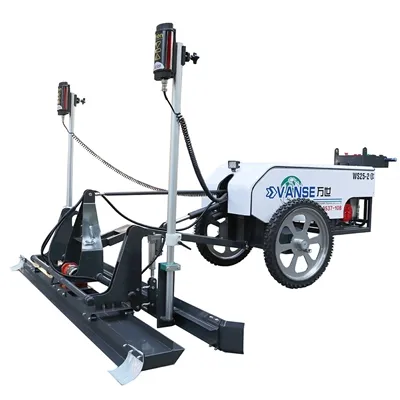
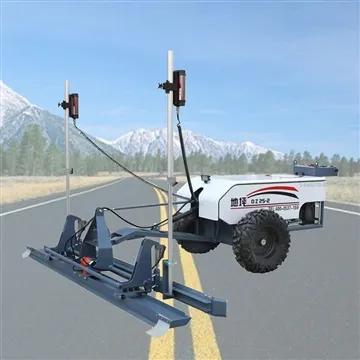
THE NECESSITY OF CHOOSING A LASER LEVELING MACHINE!!! The laser leveling machine uses laser to level the ground, which has higher accuracy and smaller ground error after paving. Moreover, the construction efficiency of this kind of equipment is basically more than three times that of manual work, and one piece of equipment can be done, saving labor investment and reducing capital cost investment. Definition of laser leveling machine: A device guided by a laser for leveling and leveling fresh concrete. A concrete construction method that uses a laser leveling machine to pave and level the newly poured concrete. Advantages of concrete laser leveling machine: 1. High construction quality The laser leveling machine can level the ground, which can significantly improve the flatness of the ground. For the ground constructed by the laser leveling machine and the traditional method, 22 points are detected (one point every 5mx4m), and the average flatness is 1.3mm and 4.1mm respectively. Laser leveling The leveling quality of equipment such as leveling machines is more than three times higher than that of traditional methods. The application of equipment such as laser leveling machines can realize large-scale construction, reduce a large number of construction joints, reduce the slump of concrete, ensure the strength of concrete, and make the ground integrity good and cracks are not easy to appear. 2. Fast construction speed The use of laser leveling machines and other equipment to construct large concrete slabs improves the work efficiency by 3 times compared with the traditional beam vibrator method and saves 30%. The construction area per hour is more than 300㎡, and the daily workload can be completed from 3000㎡ to 5000㎡. Work efficiency is greatly improved. Of course, high-quality and efficient large-area overall floor construction requires not only a high-quality and reliable laser leveler, but also a fast and convenient spreader. Somero STS-11M spreader equipment eliminates a series of defects that affect the final aesthetics and quality of the floor, such as uneven spread, dust pollution, footprints, and color differences caused by traditional wear-resistant aggregate spreader, and truly achieves high efficiency. Wear-resistant aggregate one-time mechanized distribution. 3. Save manpower and improve industrial efficiency 1)Integrated leveling head: It is composed of scraper, vibrator, vibrating plate, stirring cage and other components. It integrates multiple processes such as stirring, leveling, vibrating, and vibrating, and is completed by the machine at one time. Improve efficiency and save labor. 2)The high-frequency vibrator with 4000 times per minute and the uniform high-frequency vibration of the leveling head vibrating plate make the concrete floor dense and can avoid ground cracks caused by stress concentration caused by deformation. It can effectively solve the problems of hollowing, shelling, cracking and inequality on the ground. 3)The leveling head can maintain the level of the construction under the double transformation of the undulating foundation and the slope of the ground. 4)The laser measurement and control system automatically controls the elevation: the design elevation of the top surface of the floor is automatically controlled by the laser machine computer, which can ensure very high ground flatness, and can directly achieve accurate leveling on the concrete layer, and the ground flatness is not affected by the vibration of the construction formwork Influence, there is no need to support the formwork in the middle, reduce the input of artificial materials, reduce the construction procedure, and speed up the construction progress. Finally, it should be noted that if you want to use a concrete laser leveling machine, you must choose a professional concrete laser leveling machine brand equipment and pay attention to the method of use. Without professional training, the construction efficiency may not be able to keep up, and the effect will be poor. Big discount.