Technical Knowledge
Economic Value Analysis of Superflat Floors in VNA (Very Narrow Aisle) Warehouses
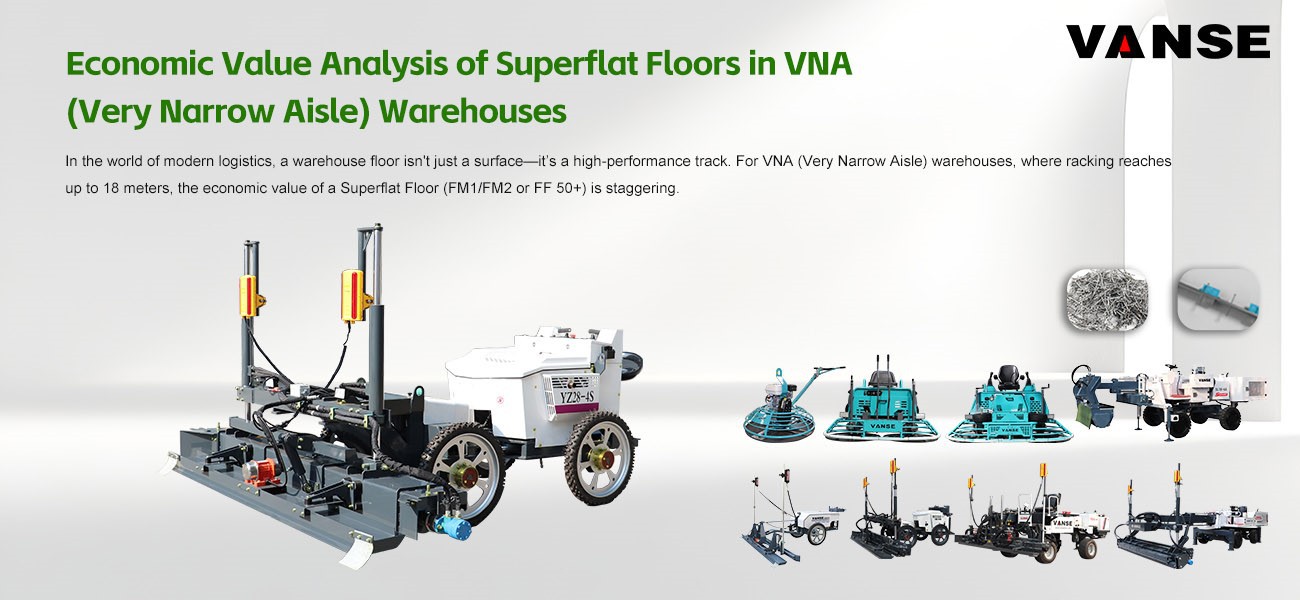
In the world of modern logistics, a warehouse floor isn't just a surface-it’s a high-performance track. For VNA (Very Narrow Aisle) warehouses, where racking reaches up to 18 meters, the economic value of a Superflat Floor (FM1/FM2 or FF 50+) is staggering.
A 1mm deviation at the base of a VNA forklift can translate into a dangerous 15cm "sway" at the top of the mast. If you’re a facility owner or developer, here is why investing in the "Vanse standard" for flooring isn't an expense-it’s a massive ROI driver.
1. Increased Throughput (Efficiency = Revenue)
In a VNA warehouse, the speed of the forklift is limited by the flatness of the floor. On a standard floor, trucks must slow down to avoid vibration and mast-lean.
The Economic Lift: A Superflat floor allows trucks to operate at maximum speed. This can increase "picks per hour" by 20% to 40%. In a high-volume logistics hub, that speed translates into millions of dollars in additional annual revenue.
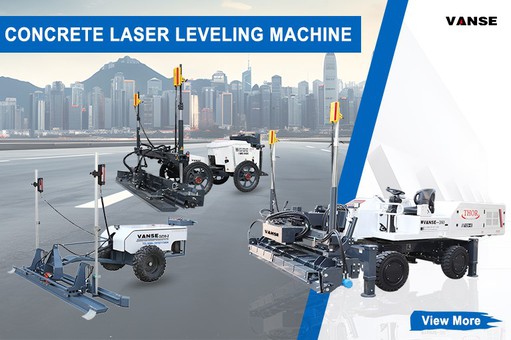
The Vanse Edge: To hit these numbers, the floor must be leveled with surgical precision. The Vanse YZ30-4E Telescopic Boomed Laser leveling allows for the long-strip pours essential for VNA lanes, ensuring the "track" is perfect from end to end without the "tire tracks" that traditional machines leave behind.
2. Massive Maintenance Savings (OpEx Reduction)
VNA trucks are expensive pieces of machinery with sensitive electronic components and high-pressure tires.
The Economic Lift: Bumpy floors cause "shock loading" on forklift axles and wear out tires 3x faster. A Superflat floor can reduce annual maintenance costs for a fleet of VNA trucks by up to 50%.
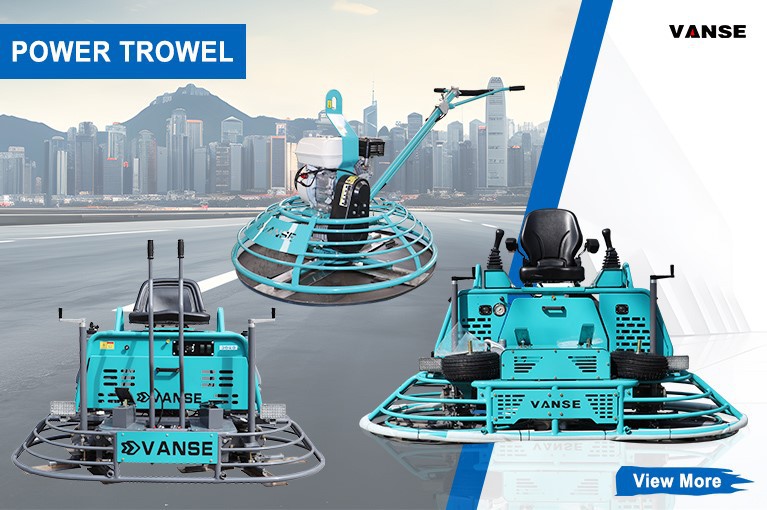
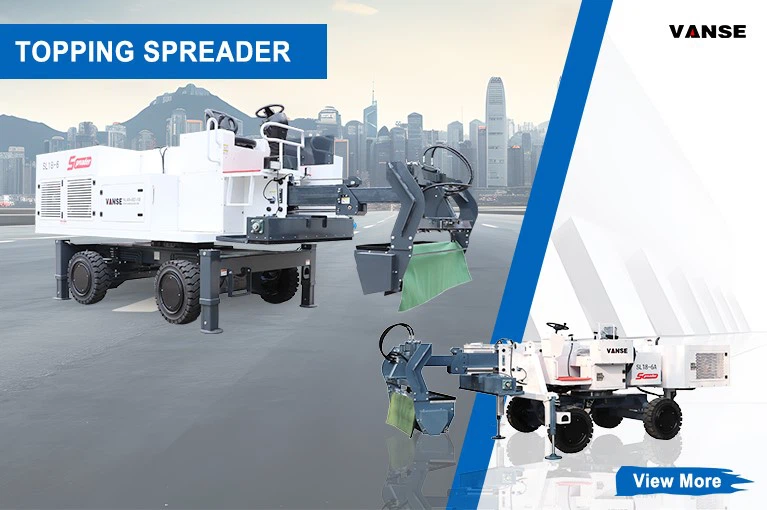
The Vanse Edge: Surface durability is just as important as flatness. By using a Vanse Automatic Topping Spreader to apply wear-resistant hardeners uniformly, followed by the high-torque burnishing of a Vanse VS1046H Ride-on Power Trowel, you create a rock-hard finish that won't "spall" or "dust," protecting your trucks for decades.
3. Maximum Space Utilization (Real Estate ROI)
The whole point of VNA is to pack more pallets into a smaller footprint.
The Economic Lift: Without a Superflat floor, you simply cannot use VNA racking safely. A high-quality floor enables you to build higher and narrower, potentially increasing your pallet capacity by 30% within the same building footprint.
The Vanse Edge: For multi-story or tight-access warehouses, the Vanse Mini Dumper and Concrete Distributor allow for precise material placement without disturbing the subgrade, ensuring that even the most difficult-to-reach bays meet the Superflat spec.
Economic Comparison: Standard vs. Vanse-Leveled Superflat Floor
| Feature | Standard Industrial Floor | Vanse Superflat (FM1/VNA) |
| Forklift Speed | Limited (40-60% capacity) | Maximum (100% capacity) |
| Truck Maintenance | High (Vibration damage) | Low (Smooth operation) |
| Space Density | Wide Aisles / Lower Racks | VNA Aisles / High-Bay Racks |
| Project Risk | High (Potential for grinding) | Low (Hit the spec first time) |
| Joint Integrity | Often spalled/ragged | Clean with Floor Saws |
The "Vanse Solution" for High-Value Flooring
When you browse www.vansemac.com, you’re not just looking at machines; you’re looking at Profitability Tools.
YZ Series Laser leveling: Hit the FF/FL specs that VNA trucks require.
Topping Spreaders: Guarantee the wear-resistance needed for repetitive wheel paths.
Power Trowels: Provide the dense, burnished finish that resists high-pressure tire wear.
Concrete Cutting Machines: Protect your joints from the heavy point-loads of VNA traffic.
Final Word
In the logistics world, the floor is the "engine room" of the business. A cheap floor is a constant drain on your profits through slow speeds and high maintenance. A Vanse-leveled Superflat floor is a one-time investment that pays dividends every single hour your warehouse is in operation.
Don't let your floor be a bottleneck. Visit Vanse Machinery today to see how we can help you maximize the economic value of your warehouse.
Note: The parameters provided in this document are for reference only and are not mandatory. Due to differences in technical characteristics between different brands and models of laser levelers, please consult the manufacturer for a suitable solution before actual operation. This reference document assumes no responsibility for any issues arising from failure to follow the manufacturer's instructions.
Thanks to All the Friends Who Support and Trust Shandong Vanse Machinery Technology Co., Ltd.
If you want to know more about Shandong Vanse Machinery Technology Co., Ltd. or have any questions, please feel free to contact us:
Our Factory
Shandong Vanse Machinery Technology Co., Ltd.
Share this article

About the Author: Shandong Vanse Machinery Technology Co., Ltd.
Shandong Vanse Machinery Technology Co., Ltd. is a high-tech manufacturer specializing in concrete construction machinery, including laser screeds and related equipment. The company integrates R&D, production, and global sales, with products exported to over 60 countries and widely used in infrastructure projects worldwide.
Previous Post
Next Post
Related Articles
You Might Also Like
How should the emery floor be maintained before and after construction?
Emery floor is widely used in industrial plants, parking lots, warehouses and other places due to its high wear resistance, high strength, anti-slip and beautiful appearance. However, in order for the emery floor to achieve the expected use effect and life, in addition to high-quality materials and scientific construction technology, maintenance work before and after construction is also crucial. This article will conduct an in-depth discussion on the maintenance of diamond floor before and after construction, in order to provide valuable reference for relevant practitioners. 1. Foundation treatment before construction The foundation treatment before the construction of diamond floor is a key step to ensure the quality and service life of the floor. First, the base floor should be thoroughly cleaned to remove oil, dust, debris, etc., to ensure that the surface of the base is dry, flat and free of slurry. Secondly, the strength and density of the base should be checked. If there are defects such as cracks and potholes, they should be repaired and leveled in time. In addition, for the newly poured concrete base, the diamond floor should be fully maintained to sufficient strength before the construction of diamond floor. During the foundation treatment process, the following points should also be noted: First, ensure that the bonding performance between the base layer and the diamond floor material is good to avoid problems such as delamination and sanding; second, control the moisture content of the base layer to avoid excessive or low moisture content affecting the quality of the floor; third, for special base layers, such as renovation of old floors, appropriate treatment plans should be formulated according to specific circumstances. 2. Preparation of construction materials The construction materials of diamond floor mainly include diamond aggregate, cementitious materials, additives, etc. During the material preparation stage, it should be ensured that the selected materials meet the design requirements and have good wear resistance, compression resistance, anti-slip properties, etc. At the same time, strict quality inspections should be carried out on the materials to ensure that there are no impurities, no lumps, no expiration, etc. During the transportation and storage of materials, attention should be paid to moisture-proof, sun-proof, and anti-pollution measures to prevent the materials from being damp, lumped or polluted and affecting the use effect. In addition, during the material mixing process, the water-cement ratio and mixing time should be strictly controlled to ensure the uniformity and fluidity of the mixture. 3. Construction process control The construction process of diamond floor includes primer construction, diamond aggregate laying, compaction, maintenance and other steps. During the construction process, the construction specifications and process flow should be strictly followed to ensure quality control of each link. First, the primer construction should be uniform and without omission to enhance the adhesion between the base and the diamond floor. Secondly, when laying diamond aggregate, the laying thickness and uniformity should be controlled to avoid uneven thickness or hollowing. At the same time, compaction should be carried out in time after laying to improve the density and strength of the floor. Finally, during the maintenance stage, the maintenance time and method should be reasonably controlled according to the ambient temperature and humidity conditions to ensure that the floor is fully hardened and dried. 4. Initial maintenance and protection After the construction of diamond floor is completed, initial maintenance is an important link to ensure the quality of the floor and extend its service life. During the maintenance period, heavy objects should be avoided from rolling on the floor or scratching with sharp objects to avoid damage to the floor. At the same time, the floor surface should be kept clean and dry to prevent moisture and dirt from penetrating and affecting the quality of the floor. In the initial maintenance stage, some measures can also be taken to improve the performance and aesthetics of the floor. For example, applying a layer of transparent or colored coating on the floor surface can increase the gloss and wear resistance of the floor; setting angle steel or corner guard strips on the edge of the floor can prevent damage caused by the impact of equipment such as forklifts. 5. Long-term maintenance and care The long-term maintenance and care of diamond sand floor is the key to ensuring its performance and service life. In daily use, the floor surface should be cleaned regularly to remove oil, dust and other debris to keep the floor clean and beautiful. At the same time, avoid using corrosive substances such as strong acids and alkalis to clean the floor to avoid damage to the floor. For floor areas with wear, scratches and other problems, they should be repaired and renovated in time. When repairing, the repair material compatible with the original floor material should be selected, and the operation should be carried out in accordance with the construction specifications to ensure the quality of the repair. In addition, according to the use and wear of the floor, the overall renovation can be carried out regularly to restore the performance and aesthetics of the floor. 6. Problem Solving and Prevention During the use of diamond sand floor, some problems may occur, such as delamination, sanding, cracking, etc. For these problems, the causes should be analyzed in time and corresponding solutions should be taken. For example, for delamination problems, it may be caused by improper base treatment or poor material quality. Therefore, the base treatment and material quality control should be strengthened; for cracking problems, it may be caused by improper construction or changes in ambient temperature. Therefore, the construction process should be optimized and the ambient temperature should be controlled. At the same time, in order to prevent the occurrence of problems, daily inspections and maintenance should be strengthened. During inspections, attention should be paid to changes in the flatness, glossiness, wear resistance, etc. of the floor, and potential problems should be discovered and dealt with in a timely manner. During maintenance, a reasonable maintenance plan should be formulated according to the use and wear of the floor, and regular cleaning, repairs and renovations should be carried out. 7. Summary and Precautions In summary, the maintenance work before and after the construction of diamond sand floor is of great significance to ensure the quality and service life of the floor. In actual operation, attention should be paid to the basic treatment before construction, the preparation of construction materials and the control of construction process to ensure the quality of construction; at the same time, it is necessary to strengthen the initial maintenance and long-term maintenance and maintenance work, and timely discover and deal with problems; finally, through the implementation of problem solving and preventive measures, ensure that the diamond floor always maintains good performance and appearance. It should be noted that when carrying out the maintenance of diamond floor, relevant specifications and safety requirements should be followed to ensure the safety of operators. In addition, a reasonable maintenance plan should be formulated according to the specific use environment and requirements to ensure that the diamond floor can meet the needs of long-term use. When summarizing the key points of maintenance before and after the construction of diamond floor, we can summarize the following points: First, ensure that the base is properly treated, which is the basis for ensuring the quality of the floor. The flatness, strength, moisture content and other indicators of the base must meet the construction requirements, otherwise it will have an adverse effect on the subsequent use of the floor. Secondly, pay attention to the selection and quality control of materials. High-quality materials are the key to ensuring the performance and service life of the floor. When selecting materials, full consideration should be given to performance indicators such as wear resistance, compression resistance, and anti-slip properties, and the supplier should be ensured to have a good reputation and stable supply capacity. Furthermore, the control of the construction process is also crucial. During the construction process, operations should be carried out strictly in accordance with the construction specifications and process flow to ensure quality control at each link. In particular, the compaction and maintenance links are of great significance for improving the density and strength of the floor. In addition, daily maintenance and care work should not be ignored. Regular cleaning, inspection of the wear of the floor, and timely repair and renovation can effectively extend the service life of the floor. At the same time, the use of corrosive substances such as strong acids and alkalis to clean the floor should be avoided to avoid damage to the floor. Finally, it is equally important to prevent the occurrence of problems. By strengthening daily inspections, optimizing construction processes, and controlling ambient temperature, potential problems can be discovered and dealt with in a timely manner to avoid the expansion and deterioration of problems. To sum up, the maintenance work of diamond abrasive floor before and after construction is a systematic and complex task, which requires comprehensive consideration of multiple factors. By strengthening the work in grassroots treatment, material selection, construction process control, daily maintenance and care, as well as problem prevention, the quality and service life of diamond abrasive floor can be guaranteed to the greatest extent.How to select the appropriate model of concrete laser leveling machine for large warehouses?
Combining the product line of Vanse Machinery and the typical characteristics of large warehouses (large area, long span, and high flatness requirements), we can conduct the selection and categorization from the following three aspects: Large warehouses are typically divided into "open areas" and "inter-column areas". According to Vanse Machinery's products, the selection suggestions are as follows: Applicable scenarios: Main areas of the warehouse, projects with a daily construction volume exceeding 2000 square meters. Vanse corresponding model: Similar to YZ30-4E or YZ40-4 and other large-sized machines. Reasons for selection: * Extremely efficient: These types of machines are usually equipped with a leveling head that is up to 4-6 meters long, covering a large area at one time. Advantages of telescopic arm: Telescopic arm models (such as those with rotatable/extendable machine heads) can complete large-scale laying without moving, reducing the damage to the base layer caused by the repeated tire pressing on the concrete. This is crucial for ensuring a **superflat floor**. High power: Large warehouses typically use high-strength, low-slump concrete. The vibration frequency and weight of large machinery can better compact the concrete. Applicable scenarios: Warehouses with many columns, construction of second floor floor slabs, parking lots. Corresponding models for Vanse: YZ25-4 or YZ28-4S. Reasons for Selection: Small turning radius: When the internal column grid of the warehouse is dense, large machines cannot turn around, but medium-sized machines can perform flexible operations around the columns. Light weight: If the warehouse is a multi-story structure, the floor load-bearing capacity of floors above the second floor is limited. Medium-sized machines are safer and more convenient for crane transportation. Applicable scenarios: Doorways, corners, auxiliary edge trimming. Vanse corresponding model: DZ25-2. Reasons for selection: As a supplementary means of transportation, it can access areas that large machinery cannot reach, ensuring uniform quality throughout the entire venue. When viewing the specific models on the official website of Vanse Machinery, please pay special attention to comparing the following parameters Leveling width and depth: Large warehouses require as few construction joints as possible. The model with a leveling head width of 2.5m – 3.0m or more should be preferred to reduce the number of trips. Laser system compatibility: Confirm whether an imported (such as American Trimble or Leica) laser control system is equipped. Large warehouses have strict requirements for FF/FL values, and the sensitivity of the laser system is the core. Vibration frequency: The ideal frequency should be between 3000 and 4000 rpm. High-frequency vibration can ensure the compactness of the warehouse floor and prevent the ground from cracking due to frequent forklift operations in the future. Turning method: Does it have the "four-wheel steering" or "crab walking" mode? This is very practical when operating in the corner of the warehouse. Based on the equipment characteristics of Vanse Machinery, we suggest that you ask the salesperson the following three questions when making a purchase: Question 1: Do you support the upgrade of the 3D slope detection system? If your warehouse has outdoor loading/unloading platforms (requiring drainage slope), the machine must be compatible with the 3D control system; otherwise, it can only operate on a horizontal plane. Question 2: Tire configuration. During warehouse construction, double-layer steel mesh is often used. It is recommended to choose solid puncture-resistant vacuum tires or wide tires with anti-slip function to avoid slipping on the steel mesh and affecting the flatness. Question 3: After-sales service and spare parts supply. The construction period of the large warehouse is extremely tight, and the loss will be huge if the machines are shut down. When choosing a domestic major brand like Vanse, it is necessary to confirm its response speed for maintenance in the region and the inventory of key vulnerable parts (such as sensor cables and filter elements). For a standard logistics warehouse with an area of over 20,000 square meters: Main machine: 1 unit YZ30-4 (large vehicle telescopic arm type), responsible for 80% of the large-scale laying work. Auxiliary machine: 1 unit YZ25-4 (medium-sized vehicle-mounted type), responsible for areas between columns and narrow corridors. Cutting machine: 1 unit DZ25-2 (hand-held type), responsible for handling leftover materials. This "large + small" configuration is currently the most mature commercial construction combination for customers of Vanse Machinery Note: The parameters provided in this document are for reference only and are not mandatory. Due to differences in technical characteristics between different brands and models of laser levelers, please consult the manufacturer for a suitable solution before actual operation. This reference document assumes no responsibility for any issues arising from failure to follow the manufacturer's instructions.How to effectively improve the construction efficiency of concrete laser leveling machine?
To improve the construction efficiency of the concrete laser leveling machine, you can start from the following aspects: 1. Choose the appropriate model and configuration According to the specific needs of the project and the construction environment, select the appropriate concrete laser leveling machine model and configuration. For example, for large-area, flat construction sites, you can choose models with high power and high efficiency; while for complex terrain or small spaces, you need to choose more flexible and adaptable models. In addition, the reasonable configuration of accessories and equipment, such as suitable formwork, conveyor belts, etc., can also improve construction efficiency. 2. Optimize the construction process ▲ Make construction preparations in advance, including cleaning the construction site, measuring and positioning, laying isolation layers, etc., to ensure that the construction environment meets the requirements and reduce interference factors during the construction process. ▲ Develop a reasonable construction plan, clarify the construction sequence and steps, and avoid repeated operations and ineffective labor during the construction process. ▲ Opti mize the concrete mix ratio, improve the working performance and strength of concrete, and reduce quality problems during the construction process. 3. Improve operational skills and proficiency ▲ Provide professional training to operators to familiarize them with the structure, principles and operating points of the equipment, and master the correct operating methods. ▲ Through practical operation and simulation training, improve the skill level and proficiency of operators and reduce operating errors and failure rates. 4. Strengthen equipment maintenance and upkeep ▲ Carry out regular maintenance and upkeep of the equipment, check various performance indicators and safety devices of the equipment, and ensure that the equipment is in good working condition. ▲ Regularly replace and inspect wearing parts and key components to avoid construction interruption due to equipment failure. 5. Optimize construction site management ▲ Strengthen the organization and coordination of the construction site, rationally arrange personnel, equipment and materials to ensure the smooth progress of the construction process. ▲ Implement strict construction site management systems and safety operating procedures to avoid potential safety hazards and quality problems during the construction process. 6. Adopt advanced technical means ▲ Use laser positioning technology and intelligent control system to improve leveling accuracy and efficiency. For example, a laser receiver is used to receive the laser signal from the laser transmitter, and the control system controls the lifting and movement of the leveling head to achieve high-precision leveling. Leveling work. ▲ Use automated control technology to reduce manual intervention and operation difficulty. For example, the automatic control system can realize automatic distribution, vibration and leveling of concrete to improve construction efficiency and quality. 7. Arrange work time and rhythm reasonably ▲ According to environmental factors such as weather and temperature, the construction time and operation should be reasonably arranged to save pollution. For example, in harsh environments such as high temperatures and strong winds, the operating time should be appropriately adjusted to avoid adverse effects on equipment performance and construction quality. ▲ Reasonably arrange the conversion of construction procedures and working surfaces to avoid waiting and idle time during the construction process, and improve equipment utilization and construction efficiency. To sum up, improving the construction efficiency of concrete laser leveling machines requires starting from many aspects, including selecting the appropriate machine model and configuration, optimizing the construction process, improving operating skills and proficiency, strengthening equipment maintenance and upkeep, and optimizing construction. On-site management and the use of advanced technical means, etc. Through the comprehensive application of these measures, the construction efficiency and quality of concrete laser levelings can be significantly improved, providing a strong guarantee for the smooth progress of project construction. It should be noted that the specific implementation of the above measures should be adjusted and optimized according to the actual situation of the project. At the same time, with the continuous advancement of science and technology and the changing construction needs, new methods and means need to be continuously explored to further improve the construction efficiency and quality of concrete laser leveling machines.