Compaction Degree of Sub-base in Superflat Floors and Its Impact on Final Flatness
May 7, 2026
Compaction Degree of Sub-base in Superflat Floors and Its Impact on Final Flatness 2
In the world of industrial flooring, we have a saying: "The floor is only as good as the ground it sits on." You can have the most expensive laser leveling in the world, but if your sub-base compaction is uneven or insufficient, your Superflat (FM1/FM2) dreams will turn into a "settlement" nightmare.
If you’re a contractor or facility owner, understanding the link between sub-base compaction degree and final flatness (FF/FL numbers) is critical. Here’s a professional breakdown of how to get the foundation right, featuring the technical workflow from Vanse Machinery.
1. The "Anvil Effect": Why Compaction is the Starting Line
Think of the sub-base as an anvil. When you use a Power Trowel to densify the concrete, the concrete is being compressed between the blades and the sub-base. If the sub-base has "soft spots" (low compaction degree), the slab will deflect under the weight of the machines and the concrete itself.
The Impact: Even a 2mm settlement in the sub-base during the pour can tank your FL (Levelness) scores. This is why a compaction degree of at least 95% to 98% Proctor density is usually the standard for high-spec warehouses.
2. Moving Material Without Creating "Ruts"
A common mistake is compacting the sub-base perfectly, then driving heavy concrete trucks over it, creating deep ruts that ruin the uniformity.
The Vanse Solution: Instead of heavy trucks, pro contractors use a Vanse Concrete Distributor or the Vanse Mini Dumper. These machines are designed to be agile. The Vanse Mini Dumper (available in electric or gasoline) allows you to move concrete to the exact spot without the massive point-load of a transit mixer, preserving the integrity of your compacted sub-grade.
3. Laser leveling on "Sensitive" Ground
Even with good compaction, the weight of a leveling machine can sometimes cause micro-movements in the sub-base.
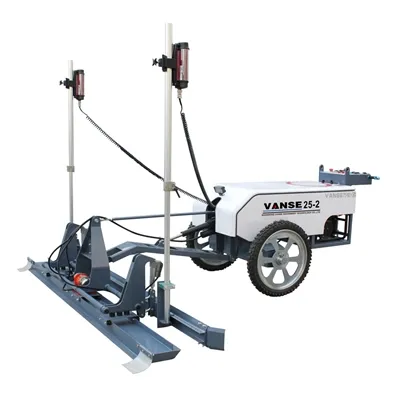
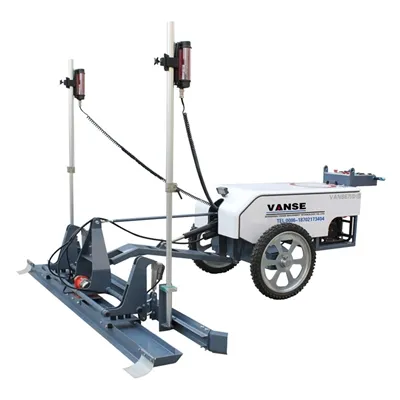
The Vanse Solution: This is where the Vanse YZ30-4E Telescopic Boomed Laser leveling is a game-changer. Unlike traditional "drive-in" leveling, the telescopic boom allows the leveling head to reach out 6 meters while the machine stays stationary. This minimizes the "footprint" on the compacted sub-base, ensuring that the laser-accurate strike-off is based on a stable reference point, not a moving one.
4. Surface Density & Long-term Flatness
If the sub-base isn't uniform, the concrete will cure at different rates, leading to "curling" at the joints-the #1 enemy of long-term flatness.
The Vanse Solution:
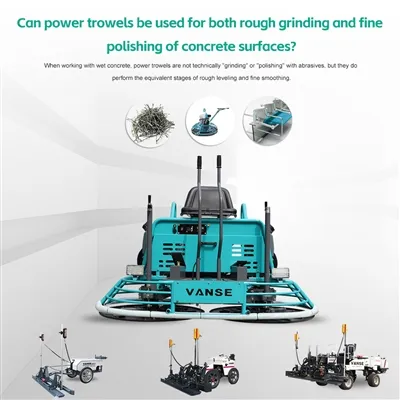
Use a Vanse Automatic Topping Spreader to apply hardener uniformly. This ensures the "skin" of the concrete is as tough as the base. Follow up with a Vanse VS1046H Ride-on Power Trowel. The high-torque 35HP BRIGGS & STRATTON engine provides the force needed to "burnish" the floor. If your sub-base is solid, this troweling process creates a rock-hard, Superflat surface that won't shift over time. Finally, protect those joints with a precision Vanse Concrete Cutting Machine (Floor Saw) to ensure stress is relieved exactly where it should be.
Summary: The ROI of Proper Sub-base Prep
Factor
Poor Compaction Result
Vanse-Enabled Professional Result
FF/FL Scores
Fails due to micro-settlement.
Hits FM1/FM2 consistently.
Joint Health
Spalling and curling.
Clean, stable transitions with Floor Saws.
Labor Cost
High (due to rework/grinding).
Low (Get it right the first time).
Equipment Performance
Machines "sink" or vibrate poorly.
Maximum precision with Telescopic leveling.
Final Word
You can’t cheat the physics of a Superflat floor. Hitting ±1mm over 3 meters requires a solid sub-base and the world's most precise machinery. By combining the placement agility of the Mini Dumper with the telescopic reach of the Vanse Laser leveling (www.vansemac.com), you ensure that your floor stays flat from the day of the pour until decades of forklift traffic later.
Don't build on a weak foundation. Explore the full Vanse fleet today and see how our technology supports your highest-spec projects.
Note:The parameters provided in this document are for reference only and are not mandatory. Due to differences in technical characteristics between different brands and models of laser levelers, please consult the manufacturer for a suitable solution before actual operation. This reference document assumes no responsibility for any issues arising from failure to follow the manufacturer's instructions.
About the Author: Shandong Vanse Machinery Technology Co., Ltd.


Shandong Vanse Machinery Technology Co., Ltd. is a high-tech manufacturer specializing in concrete construction machinery, including laser screeds and related equipment. The company integrates R&D, production, and global sales, with products exported to over 60 countries and widely used in infrastructure projects worldwide.

Life cycle management & replacement records of vulnerable parts (such as scrapers and hydraulic oil filters) of Concrete Laser Levelings
Scientific life cycle management and detailed replacement records of the vulnerable parts of the Concrete Laser Leveling are the keys to ensuring construction quality, reducing the total cost of equipment and avoiding unplanned shutdowns. The following provides you with a complete life cycle management and replacement record system for vulnerable parts, including management methods, record templates and practical operation suggestions. Life cycle management is not merely about "replacing when broken", but rather a comprehensive strategy that encompasses both preventive replacement and condition-based replacement. Name of vulnerable parts Life cycle (Reference Management strategy Key influencing factors Scraper 50,000-150,000 square meters Condition-based replacement Concrete corrosiveness, aggregate hardness, ground flatness requirements, and operating habits Hydraulic oil filter element 500 hours or one year Preventive replacement The cleanliness of the working environment, the quality of hydraulic oil, and the working time of the system Walking tires/track plates 1,000 to 2,000 hours Condition-based replacement Ground roughness, presence of sharp objects, and load conditions Laser receiver Depending on usage State check Collision, vibration, aging Engine filter element According to the engine manual Preventive replacement Environmental dust concentration, fuel/engine oil quality (Air filter, mechanical filter, diesel filter (Usually 250 to 500 hours Hydraulic oil 2,000 hours or 2 years Preventive replacement Working hours, oil temperature, and contamination conditions Strategy explanation Preventive replacement: Replace components based on running time or calendar time, regardless of whether they are damaged or not. It is applicable to hydraulic oil filter elements, engine filter elements, etc. Its failure will trigger a chain reaction (such as filter element blockage causing pump damage). Condition-based replacement: Whether to replace a component is determined based on its actual wear or performance condition. It is applicable to scrapers, tires, etc. The wear and tear is obvious. Replacing them too early will cause waste. ① Establish files: Create an independent "Wear Parts Life Cycle Management Card" for each piece of equipment. ② Data Recording: Strictly record the replacement time, square meters, reasons for replacement, etc. in the table below. ③ Regular inspection Daily inspection: Before starting work each day, the operator should check the wear of the scraper, the tire pressure and the wear condition. Weekly/Monthly inspection: The equipment administrator checks the appearance of the filter element and records the cumulative working time of the equipment. ④ Data analysis Regularly (such as every quarter) review the records and analyze the average lifespan of each vulnerable part. If the lifespan of a certain component is much lower than expected, the cause needs to be investigated (such as operational issues, material problems, environmental issues). ⑤ Optimization strategy: Based on the analysis results, adjust the preventive replacement cycle or increase the frequency of status checks to achieve the optimal balance between cost and efficiency. It is recommended to use paper forms for on-site record-keeping and summarize them into electronic forms for long-term analysis later. Equipment Number: ______ Equipment Model: ______ Person in Charge of Management: ______ Serial number Change date Name of vulnerable parts Specification and model Replacement reasons (wear/damage/prevention) Current device hours (h) Current leveled area (㎡) Supplier/Brand Replace the person Remarks 1 2023/10/26 Main scraper ABC-100 The edge wear exceeds 5mm 1250 58,500 XX brand A The area to be leveled this time starts from the previous 50,000 square meters 2 2023/11/15 Hydraulic oil filter element XYZ-01 Preventive replacement 1500 75,000 Original factory B Change the hydraulic oil at the same time 3 2024/3/10 Walking tire 8.5-24 The tread pattern is smoothed out 2100 110,000 YY brand C … … … … … … … … … … Instructions for Use Current equipment hours/leveled area: This is the most crucial indicator for measuring the life cycle and must be accurately recorded. Replacement reason: Clear record for easy distinction between normal wear and tear and accidental damage. Note: Record any abnormal conditions, related maintenance activities (such as whether the oil was changed when replacing the filter element), etc. Name of vulnerable parts Specification and model Applicable equipment Current inventory Safety stock Supplier Information Procurement Warning Main scraper ABC-100 Concrete Laser Leveling machine #01, #02 2 3 Contact person:… Telephone:… Triggered when inventory is less than or equal to safety stock Hydraulic oil filter element XYZ-01 Concrete Laser Leveling machine #01 5 4 Contact person:… Telephone:… Walking tire 8.5-24 Concrete Laser Leveling machine #01, #02 1 2 Contact person:… Telephone:… Warning … … … … … … … Inspection standard: When the blade of the scraper wears more than 3-5mm or irregular wear occurs that affects the scraping effect, it should be replaced immediately or flipped over for use (if the design permits). Best Practice Keep the scraper clean and remove the adhered concrete after each use. Prepare spare parts before the wear reaches the limit to avoid work stoppages due to lack of materials. Record the square meters completed by each scraper to calculate its true lifespan Replacement standard: Preventive replacement must be carried out strictly in accordance with the time or hours specified in the equipment manual. Under harsh working conditions, the replacement cycle should be shortened. Best Practice When replacing the filter element, change the hydraulic oil at the same time to ensure the cleanliness of the system. Before and after replacement, pay attention to cleaning the area around the filter element seat to prevent contaminants from entering the system. Use genuine or high-quality compatible filter elements. Inferior filter elements are the "killers" of hydraulic systems. For companies with multiple devices, it is advisable to consider upgrading to digital management Use equipment management software (such as CMMS) : Input the information of each device, maintenance plans, and replacement records into the system. Set up automatic reminders: The system can automatically send reminders to the administrator for preventive maintenance tasks such as filter element replacement and hydraulic oil replacement based on the operating hours or calendar time. Data analysis and Reporting: Easily generate equipment maintenance cost reports, wear and tear consumption analysis, etc., providing data support for management decisions. The core value of conducting meticulous life cycle management and record-keeping for the vulnerable parts of Concrete Laser Leveling machines lies in: Ensure construction quality: Worn scrapers will directly affect the flatness of the floor. Control maintenance costs: Avoid high repair fees caused by excessive maintenance and catastrophic damage. Enhance equipment availability: Minimize unexpected downtime through planned maintenance. Form a knowledge base: Long-term recorded data is a valuable asset for the company, which helps optimize procurement, training and equipment selection. Establishing and strictly implementing this system will shift your equipment management from "passive maintenance" to "active prevention", ultimately achieving cost reduction and efficiency improvement. Note: The parameters provided in this document are for reference only and are not mandatory. Due to differences in technical characteristics between different brands and models of laser levelers, please consult the manufacturer for a suitable solution before actual operation. This reference document assumes no responsibility for any issues arising from failure to follow the manufacturer's instructions.
Read More
May 22, 2024
Concrete laser leveling machine construction plan
Concrete laser leveling machine construction plan 1. Project background and requirements With the acceleration of urbanization, concrete construction occupies a pivotal position in the construction industry. To ensure the quality and efficiency of concrete construction, the use of advanced construction equipment and technology is crucial. This project aims to achieve efficient and accurate concrete floor leveling by using a concrete laser leveling machine to meet the high requirements of modern buildings for flatness, smoothness and construction efficiency. The project requirements are clear, including the area of the construction area, concrete strength grade, flatness requirements, and construction period. At the same time, factors such as the site environment, climatic conditions, and the skill level of construction personnel need to be fully considered to ensure the feasibility and effectiveness of the construction plan. 2. Leveling machine model selection Depending on the project needs, it is crucial to choose the right concrete laser leveling machine model. When choosing a leveler, you need to consider the following factors: ☑ Construction area and terrain conditions: Large projects or wide sites are suitable for large leveling machines, while narrow or complex terrain is more suitable for small or flexible leveling machines. ☑ Concrete type and requirements: Concrete of different strengths and grades have different performance requirements for the leveling. It is necessary to select a leveling machine model that can meet the construction requirements. ☑ Equipment performance and technical parameters: Pay attention to key technical parameters such as laser system accuracy, leveling efficiency, and control performance of the leveling machine to ensure that the equipment can meet the requirements of construction accuracy and efficiency. Combining the above factors, this project selected a machine with stable performance and Concrete laser leveling machine model that is easy to operate and highly adaptable to ensure construction quality and efficiency. 3. Preparation work before construction Before construction, sufficient preparations need to be made, including: ☑ On-site survey and measurement: Conduct detailed survey and measurement of the construction area to determine the construction scope and reference points to provide a basis for the installation and calibration of the leveling machine. ☑ Equipment and material preparation: Check the integrity of the leveling and related equipment to ensure that the equipment can operate normally; at the same time, prepare concrete materials and other auxiliary materials required for construction. ☑ Personnel organization and training: Organize a professional construction team and conduct safety and technical training before construction to ensure that construction personnel are familiar with equipment operation, safety regulations and construction technology. 4. Leveling machine operation process During the construction process of the leveling machine, the following operating procedures need to be followed: ☑ Equipment installation and calibration: Install and calibrate the leveler according to the equipment instructions, ensure that the laser transmitter and receiver are in optimal working condition, and perform initial testing and adjustment. ☑ Concrete laying and leveling: Lay concrete according to construction requirements and use a leveling machine for preliminary leveling. By adjusting the parameters and working mode of the leveler, high-precision leveling of the concrete surface is achieved ☑ Follow-up processing and maintenance: After leveling is completed, necessary follow-up processing is carried out, such as finishing, compaction, etc. At the same time, according to the maintenance requirements of the concrete, a reasonable maintenance plan is formulated to ensure that the quality and strength of the concrete meet the design requirements. During operation, please pay attention to the following points: Strictly operate in accordance with the equipment instructions and construction techniques to avoid misoperation or illegal operation. During the leveling process, it is necessary to observe the flatness and smoothness of the concrete surface at any time, and adjust the parameters and working mode of the leveling machine in a timely manner. Pay attention to safety matters, such as wearing safety helmets, protective glasses and other protective equipment to ensure the personal safety of construction workers. 5. Quality control and safety measures To ensure construction quality and safety, the following measures need to be taken: ☑ Quality control: During the construction process, special quality inspection personnel are set up to monitor the concrete laying and leveling process in real time to ensure that the construction quality meets the design requirements. At the same time, regular maintenance and upkeep of the leveling machine is carried out to ensure stable and reliable performance of the equipment. ☑ Safety measures: Establish a sound safety management system and provide safety education and training to construction personnel. Set up obvious safety warning signs at the construction site to ensure that construction workers understand and abide by safety regulations. At the same time, safety inspection and maintenance are carried out on the leveling machine to ensure that the equipment is safe and reliable during operation. 6. Construction progress and arrangements To ensure construction progress and efficiency, detailed construction plans and arrangements need to be made: ☑ According to the project needs and site conditions, formulate a reasonable construction plan and schedule, and clarify the tasks and time nodes of each stage ☑ Strengthen on-site management and coordination to ensure that the construction team can carry out construction in an orderly manner according to the plan ☑ Timely adjust construction plans and arrangements according to actual conditions to deal with various problems and challenges that may arise, 7. Later maintenance and upkeep After the construction is completed, post-maintenance and maintenance of the concrete laser leveling machine is a key link to ensure its long-term stable operation and extend its service life. Specifically include the following aspects: ☑ Cleaning and maintenance: After construction, clean the concrete residue and dust on the surface of the leveler in time to keep the equipment clean. Regularly clean and maintain the inside of the equipment, such as replacing filters, cleaning fuel tanks, etc., to ensure normal operation of the equipment. ☑ Lubrication and tightening: Regularly check the lubrication system and fasteners of the leveling machine, add lubricating oil or grease in time, and tighten loose parts to ensure the flexibility and stability of each component of the equipment. ☑ Repair and replacement; repair or replace faulty or damaged parts in a timely manner. During the maintenance process, operations must be carried out in accordance with the equipment instructions and relevant technical specifications to ensure maintenance quality and safety. At the same time, equipment maintenance files need to be established to record the maintenance and repair status of the equipment, so as to understand the operating status and maintenance history of the equipment at any time and provide a strong guarantee for the long-term use of the equipment. In summary, the concrete laser leveling machine construction plan covers the project background and needs, leveling machine model selection, pre-construction preparations, leveling machine operating procedures, quality control and safety measures, construction progress and arrangements, and subsequent maintenance. In terms of construction and maintenance, in actual construction, it is necessary to closely combine the specific conditions of the project, scientifically formulate construction plans, and rationally allocate resources to ensure construction quality and progress. At the same time, we should strengthen safety education and training for construction personnel, improve safety awareness, and ensure safety and stability during the construction process. Through the implementation of this concrete laser leveling machine construction plan, we can achieve efficient and accurate concrete floor leveling, improve construction quality, reduce construction costs, and contribute to the development of the modern construction industry. At the same time, it also provides useful reference and reference for the construction of subsequent similar projects. In terms of later maintenance and upkeep, in addition to routine cleaning, lubrication and repairs, the following points should also be noted: ☑ Strengthen technical training for equipment operators, improve their equipment operation and maintenance levels, and ensure that equipment is used and maintained correctly ☑ Establish a complete equipment management system, clarify the responsibilities and requirements for equipment maintenance, and ensure that equipment is maintained in a timely and effective manner. ☑ For equipment that has been idle for a long time, regular inspection and maintenance should be carried out to prevent damage or performance degradation due to long-term idleness. In addition, when selecting equipment, its reliability and durability should be considered to reduce the cost of later maintenance and replacement. At the same time, during the construction process, the construction quality should be strictly controlled to avoid increasing the maintenance burden of the equipment due to construction quality problems. . In short, the formulation and implementation of the concrete laser leveling construction plan requires comprehensive consideration of many factors, including project requirements, equipment performance, construction environment, personnel quality, etc. Through scientific planning, careful organization and strict management, we can ensure construction quality and safety, improve construction efficiency, reduce construction costs, and lay a solid foundation for the successful implementation of the project.
Read More
December 5, 2025
Discussion on the Standards for Regular Safety Inspection of Concrete Laser Leveling at Construction Sites
Regular safety inspections of Concrete Laser Leveling are crucial for preventing accidents and ensuring the safety of personnel and the integrity of equipment. At present, China does not have a national mandatory independent inspection standard for the specific equipment of Concrete Laser Leveling machines. However, its safety inspection must follow a composite standard system composed of general regulations, relevant standards, industry best practices and requirements of equipment manufacturers. The following is a systematic discussion on the regular safety inspection standards for Concrete Laser Leveling at construction sites: The "Work Safety Law of the People's Republic of China" stipulates the responsibility of production and business operation entities for ensuring the safety of equipment. Regulations on Safety Supervision of Special Equipment and related procedures: Although Concrete Laser Leveling machines are generally not included in the "Special Equipment" directory, the lifting components (if any), hydraulic systems, and electrical systems on them need to refer to relevant safety concepts. GB/T 25648-2010 "Laser Motor Graders for Road Construction and Maintenance Machinery" : This is the most direct relevant recommended national standard, covering safety requirements, performance test methods, etc., and is an important technical reference for inspection. GB 5226.1-2019 "Mechanical and Electrical Safety – Mechanical and electrical equipment – Part 1: General Technical Conditions" : Applicable to the safety inspection of the electrical system of equipment. GB/T 15706-2012 "General Principles for Mechanical Safety Design – Risk Assessment and Risk Reduction" : It provides methodological guidance for safety risk assessment. Equipment Operation and Maintenance Manual: This is the most specific and important standard. The manual clearly stipulates the items, cycles, methods and safety warnings for daily inspections and regular maintenance. Safety Operation Manual: It indicates the location, function and inspection methods of the safety devices of the equipment. The "Safety Management Measures for Large Equipment" and "Inspection Standards for Mechanical Equipment at Construction Sites" formulated internally by large construction groups (such as China State Construction Engineering Corporation and China Railway Group, etc.) usually include specific inspection requirements for Concrete Laser Leveling. The industry-wide principle of "management, utilization, maintenance and repair" and the "three determinations" system of fixed personnel, fixed machines and fixed positions. Regular inspections should be divided into three levels: daily inspection, monthly inspection and annual inspection. The key points are as follows: Appearance and structure: Inspect the main frame, scraper, and vibrator housing for any cracks, severe deformations, or loose bolts. Safety device Emergency stop switch: Whether the function is effective. Warning signs and lights: Are they clear and in good condition? Protective cover: Whether the protective covers of the moving parts (hydraulic rods, belts, drive shafts) are firm. Laser system: Check whether the receiver and sensor are clean, firmly connected, and whether the self-check upon startup is normal. Walking and lifting: Conduct a trial run to check whether the walking, turning, and lifting of the scraper are smooth and free from jamming. Leakage inspection: Visually inspect for obvious leakage of hydraulic oil, fuel oil and lubricating oil. Tires/tracks: Check if the air pressure is normal, if the tracks are neither too tight nor too loose, and if there is any damage. On the basis of the daily inspection, add: Hydraulic system Oil level and quality: Check the oil level of the hydraulic oil and observe whether the oil has emulsified or deteriorated. Pipelines and joints: Systematically inspect all high-pressure hoses for wear, bulging, aging, and for leakage at joints. Pumps and valves: Check the hydraulic pump and control valve blocks for any abnormal noise or overheating. Electrical system Insulation and fixation of the circuit: Check whether the main wire harnesses are damaged or aged, and whether the fixation is reliable to prevent them from being crushed. Battery: Check if the battery terminals are corroded and if the connections are firm. Control unit: Check whether the control panel, remote control (if any) buttons, and joystick functions are normal and reliable. Transmission and Vibration system Vibrator: Check whether the temperature and sound of the vibrator bearing are abnormal and whether the fastening bolts are secure. Reducer/transmission shaft: Check for any abnormal sounds, oil leakage, and whether the lubrication is good. Key parts of structural components: Use tools to recheck the torque of bolts at critical force-bearing parts (such as the hinge points of the lifting arm and the welding points of the frame). This is the most comprehensive inspection, approaching the performance and safety assessment of the equipment at the factory. Systematic performance testing Laser system accuracy calibration: Use professional tools to recheck and calibrate the elevation and slope control accuracy of the Leveling on a standard test site. Hydraulic system pressure test: Check whether the working pressure of the system is within the rated range and whether there is any internal leakage. Comprehensive engine inspection (if any) : including oil analysis, emission testing, power testing, etc. Non-destructive testing of key components: For welds and stressed parts of major structural components, magnetic particle or ultrasonic testing can be adopted to check for internal cracks. Brake system test: Test the effectiveness of parking brake and emergency brake. Comprehensive safety function verification: The system tests all functions such as emergency stop, limit, and overload protection. Document review and update: Check previous maintenance records and update equipment safety files. Inspection date, equipment number, model. Inspection type (day/month/year). Inspection items, standard requirements, and actual measurement conditions. Problems identified and handling measures (immediate rectification, rectification within a specified time limit, suspension of use). The inspectors and the reviewers sign. Standard gap: It is urgently necessary for industry associations or leading enterprises to take the lead in formulating more detailed group or industry standards for the "Safety Inspection Regulations for Concrete Laser Leveling Machines in Construction", unifying inspection items, methods and cycles. Technological upgrade: Encourage the application of Internet of Things (iot) technology to achieve remote monitoring and early warning of equipment operation data (oil pressure, temperature, vibration frequency), transforming "regular inspection" into "condition-based inspection". Personnel qualifications: Inspection personnel, especially those conducting monthly and annual inspections, should receive training from equipment manufacturers or professional institutions and possess the corresponding capabilities. For the regular safety inspection of Concrete Laser Leveling at construction sites, currently, the manufacturer's manual should be taken as the specific guideline, national standards such as GB/T 25648 as the technical support, and the enterprise's safety management system as the organizational guarantee, to establish a system covering different levels of day, month and year. A systematic, tabular and archived inspection system covering mechanical, hydraulic, electrical and laser systems. Its core objective is to proactively identify and eliminate risks, ensuring that the equipment is always in a safe and controllable working state, thereby guaranteeing construction safety, project quality and operation efficiency. Note: The parameters provided in this document are for reference only and are not mandatory. Due to differences in technical characteristics between different brands and models of laser levelers, please consult the manufacturer for a suitable solution before actual operation. This reference document assumes no responsibility for any issues arising from failure to follow the manufacturer's instructions.
Read More
Online now. Replies personally on WhatsAppFionaCustomer specialist
Hi! I am here to help you find the right solution for your project.
You can share your product, capacity, or project needs. Our specialist will help you work out the next step.
Would you like a quick answer? Tap below to speak directly with our specialist on WhatsApp.