Technical Knowledge
Vanse concrete laser leveling machine-bring you more benefits

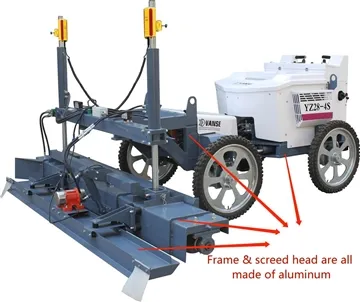
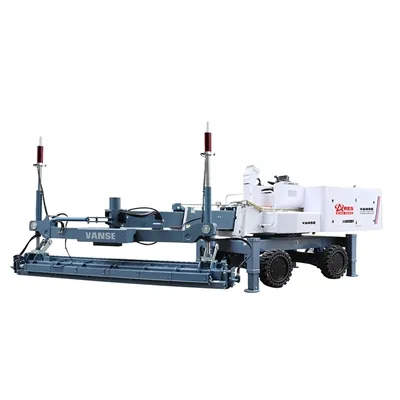
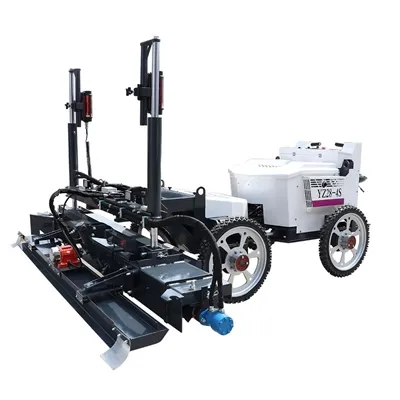
The concrete laser leveling machine is a new type of machine developed based on the ground quality such as strength and flatness of modern industrial plants, warehouses and other large-area cement concrete floors. It can be well constructed and has more perfect flatness and levelness for high quality and high requirements. Many customers will also have some questions, that is, how to judge the construction effect of the laser leveling machine. The professionals of Shandong Vanse Machinery Technology Co., Ltd. will explain it to you in detail.
Determination of the construction effect of the laser leveling machine
The laser leveling machine can significantly improve the flatness of the ground by leveling the ground. The ground constructed by the laser leveling machine and the traditional method is tested at 22 points (one point for every 5mx4m), and the average flatness is 1.3mm and 4.1mm respectively. The leveling quality of laser leveling machines and other equipment is more than 3 times higher than that of traditional methods. The application of laser leveling machines and other equipment can realize large-scale construction, reduce a large number of construction joints, reduce the slump of concrete, and ensure the strength of concrete, so that the ground has good integrity and is not easy to crack. Moreover, the construction effect of the laser leveling machine has reached international standards, 3 meters and 3 mm.
Comparison between laser leveling machine and traditional manual construction
1. Fast construction speed
Using laser leveling machine and other equipment to construct large concrete slabs can improve work efficiency by 3 times and save 30% compared with the traditional beam vibrator method. On average, 2,000 square meters can be completed every day, which is particularly suitable for concrete surface construction with simple shapes and large working areas.
2. Reduce the amount of side formwork support and removal
According to statistics on 20,000 square meters of concrete pavement, the traditional method requires the support and removal of 5,800 meters of side formwork, while the use of advanced equipment such as laser leveling machine only requires the support and removal of 2,500 meters, reducing the amount of formwork by more than 74%
3. High degree of automation and low labor intensity
The use of laser leveling machine and other equipment can transform heavy physical labor into mechanical paving, vibration, leveling, slurry, and plastering, reducing the number of operators by 30% and reducing labor intensity.
4. High economic benefits
The use of laser leveling machine and other equipment can save 2-3 yuan/square meter of cost compared with traditional processes, with fewer joints and lower maintenance costs in the later stage, thereby significantly improving economic benefits.
The above is how to judge the construction effect of the laser leveling machine and how it compares with manual work, explained by our professionals from Shandong Vanse Machinery Technology Co., Ltd. With the development of modern science, we try to demand perfection and high quality in life and work, and the same is true for machines. A machine that can help you make money and has excellent construction quality, what else can you refuse and worry about? The laser leveling machine produced by Shandong Vanse Machinery Technology Co., Ltd. can bring you greater profits, and can also solve all high-quality and high-demand flatness construction for you, based on the customer's own interests.
Thanks to All the Friends Who Support and Trust Shandong Vanse Machinery Technology Co., Ltd.
If you want to know more about Shandong Vanse Machinery Technology Co., Ltd. or have any questions, please feel free to contact us:
Our Factory
Shandong Vanse Machinery Technology Co., Ltd.








Share this article

About the Author: Shandong Vanse Machinery Technology Co., Ltd.
Shandong Vanse Machinery Technology Co., Ltd. is a high-tech manufacturer specializing in concrete construction machinery, including laser screeds and related equipment. The company integrates R&D, production, and global sales, with products exported to over 60 countries and widely used in infrastructure projects worldwide.
Previous Post
Next Post
Related Articles
You Might Also Like
What are the construction characteristics of laser leveling machine?
What are the construction characteristics of laser leveling machine? The precision laser leveling machine is developed according to the increasing demand for ground quality such as strength, flatness, levelness, etc. of modern industrial plants, large shopping malls, warehouses and other large-area cement concrete floors. The leveled cement concrete floor is paved with the VANSE precision laser leveling machine, and the quality of the ground paved by conventional methods is much better – the flatness and levelness of the ground are increased by more than 3 times, and the compactness and strength are increased by 20% above. At the same time, it can also improve work efficiency by more than 50%, and save about 35% of labor. In addition, it can easily place high-strength concrete, low-slump concrete and fiber cement concrete. Its laser system is equipped with a variety of automatic control components to monitor the elevation of the leveling head in real time at a frequency of 10 times per second to ensure that the flatness and levelness of the ground for paving are effectively controlled. At the same time, the vibrating frequency of its powerful vibrator reaches 3000 times/min, which ensures that the concrete is vibrated and compacted, so that the entire paved concrete matrix is homogeneous and dense. Laser leveling machine features: 01 The leveling principle of the laser leveling machine is realized under the automatic control of the computer by using precision laser technology, closed-loop control technology and highly precise hydraulic system. This is the most prominent difference between it and other floor construction processes. specialty. 02 The leveling principle of the precision laser leveling machine is to rely on the leveling head driven by hydraulic power, cooperate with the laser system and the computer control system to complete the leveling work while automatically leveling. The leveling head is equipped with an integrated scraper, vibrator and leveling plate, which integrates all leveling, leveling, vibration and compaction work, and completes it at one time. The computer control system automatically adjusts the elevation 10 times per second in real time, and the vibration frequency of the vibrator with a balanced design reaches 3000 times per minute. The leveling accuracy is 40 extension meters and the control is below 3mm 03 The laser transmitter used to control the ground level is arranged independently, so that the level of the ground is not controlled by the template, and no cumulative error will occur. 04 The laser leveling machine can also automatically control the longitudinal and transverse slopes, which is also completed by the laser system, computer system, hydraulic system, and mechanical system. For complex-shaped ground with high requirements such as drainage, a three-dimensional special-shaped ground treatment system can also be selected to achieve it. The above was introduced by VANSE Machinery, I hope it can help you understand, if you have any questions, you can browse our website more, and you can also communicate with our technical staff.Quality Control And Precautions In The Construction Process Of Concrete Laser Leveling Machine
Quality Control And Precautions In The Construction Process Of Concrete Laser Leveling Machine Concrete laser leveling machine is an indispensable equipment in construction machinery, and it is indispensable in the construction of building floors. Doing the following points well during construction will have a great effect on improving the productivity and construction quality of the concrete laser leveling machine. 1. Line setting and leveling on the wall (column): Since the laser leveling machine on the side of the wall cannot be touched, manual leveling is required within 40 cm along the side of the wall (formwork), so line setting is required as a reference for manual leveling . 2. Set up formwork (steel formwork is recommended) along the scope of pouring on the same day, reserve holes for dowel rods, and control the elevation of the formwork to avoid large deviations in the flatness of the joints of different warehouses. 3. Set templates or thin sheets along the walls, equipment foundations, columns, etc. (thickness and position are determined according to design requirements), and leave separation joints to avoid cracking of the concrete floor. 4. Laser transmitter erection: (1) The laser transmitter should be erected at the best position, and there should be no clips to be tightened; (2) There should be no large vibration sources around; (3) Reasonably set the concrete paving direction and leveling direction, and determine a reasonable construction walking route of the leveling machine to avoid leveling blind spots. (4) Feeding: The concrete conveying speed should be guaranteed to be a certain amount, and the feeding speed should be uniform, and the pause interval should be reduced in the middle to prevent cold joints and affect the progress of the project. The slump and initial setting time of the concrete sent to the site each time must be consistent. The concrete slump should be controlled at 14~16cm, and the initial setting time should be controlled at about 3 hours. Note: Some content of this quality control is for reference only, and the actual construction should be formulated according to the floor design requirements and the characteristics of the construction site.What are the special operating techniques of laser leveling machines in different construction environments?
Laser leveling machine is a kind of equipment used for large-area concrete paving and leveling. There are special operating skills in different construction environments: – Indoor space is usually limited, and the size of laser leveling machine is relatively large. Before entering the indoor construction site, accurately measure the size of doors, passages, etc. to ensure that the machine can enter smoothly. If the passage is narrow, some parts, such as detachable scrapers, may need to be removed and installed after the machine enters the room. – During operation, pay attention to the turning radius of the machine due to limited indoor space. Plan the leveling route in advance and minimize the machine's large-scale turning movements to avoid colliding with walls, columns and other building structures. – Pay special attention to dust control during indoor construction, because dust will affect indoor air quality and subsequent decoration processes. The laser leveling machine can be equipped with an efficient dust suction device to simultaneously remove dust during the leveling process. – For situations where there are more loose debris on the ground, use a broom or industrial vacuum cleaner for preliminary cleaning before construction to reduce the situation of debris being raised during the leveling process. – Indoor floors usually have high requirements for flatness, such as warehouse floors, exhibition hall floors, etc. Before construction, carefully calibrate the laser transmitter and receiver to ensure the accuracy of the laser signal. – According to the designed slope of the indoor floor (if any), accurately set the control system parameters of the laser leveler. For example, for indoor floors with drainage requirements, the leveling operation should be carried out according to the designed drainage slope (such as 0.3% – 0.5%), and the flatness should be checked regularly during the construction process. Tools such as rulers can be used for random inspections. – If there is an uneven original ground on the construction site, such as potholes, bumps, etc. Before construction, use equipment such as bulldozers to perform preliminary leveling on the site and deal with areas with large height differences. For small potholes, the thickness of the concrete can be appropriately increased during the construction of the laser leveler to fill them. – When the site has a certain slope, the working mode of the laser leveler should be adjusted according to the design requirements. For example, for the gentle slopes at the entrance and exit of the parking lot, they should be leveled according to the specified slope (such as no more than 7% – 10%), and the transition with the adjacent plane area should be natural and smooth. – Weather factors have a greater impact on outdoor construction. If high temperatures are encountered, the solidification speed of concrete will be accelerated. The leveling construction speed should be appropriately accelerated, and retarders can be added to the concrete to extend the working time of the concrete. At the same time, attention should be paid to providing heatstroke prevention measures for operators. – When encountering rainy weather, the laid but not completely solidified concrete should be covered with plastic film in time to prevent rain erosion. If there is water accumulation on the ground, drain it before construction, and check the water content of the ground to avoid affecting the quality of concrete due to excessive water content. – For large outdoor sites, in order to improve construction efficiency, multiple laser leveling machines can be used for collaborative operation. When dividing the construction area, the walking route of the machine should be reasonably planned to avoid mutual interference. – Arrange the supply of concrete in advance to ensure that concrete can be supplied to the construction area continuously and stably. Concrete mixer trucks can be used to unload directly near the construction area to reduce the concrete transportation time and improve the overall construction progress. – When constructing on narrow roads or corridors, the positioning of the laser leveler must be accurately controlled. Due to the narrow space, the machine may not be able to perform regular steering operations. The concrete can be spread and leveled by adjusting the angle of the scraper by alternating forward and backward movements. – Set up warning signs on both sides of the road or corridor in advance to prevent other vehicles or personnel from interfering with the construction, and also to avoid the machine from colliding with roadside facilities. – When constructing in narrow spaces, the safety of the operator is of vital importance. The operator should wear protective equipment, such as a helmet, reflective vest, etc. And ensure that the machine's emergency brake is in good condition so that it can stop in time in case of an emergency. – As roads or corridors may have a certain amount of traffic flow, during construction, it is necessary to work closely with on-site traffic management personnel and select periods with less traffic flow for construction, or adopt temporary traffic control measures.