Technical Knowledge
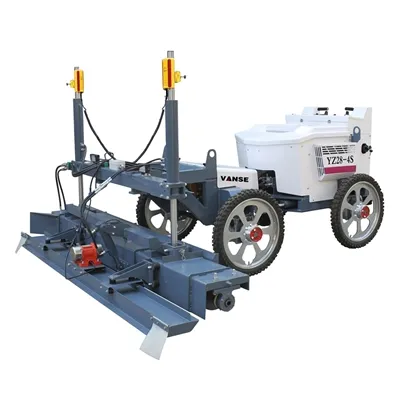
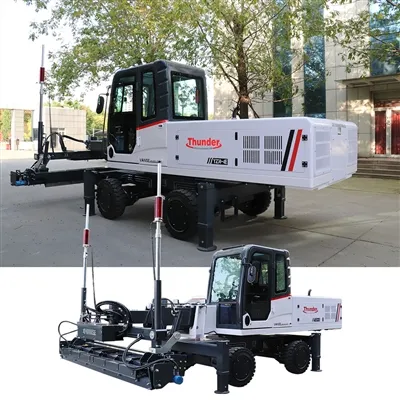
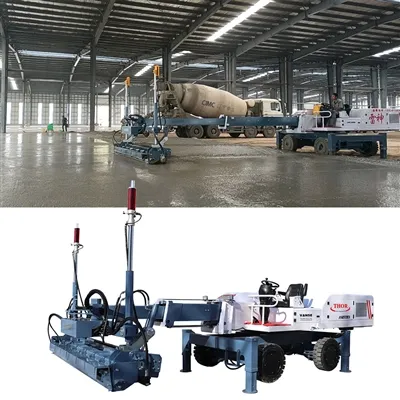
Where are the energy-saving & environmental protection performance of concrete laser leveling machine specifically reflected?

The energy-saving and environmental protection performance of concrete laser leveling machines is mainly reflected in multiple dimensions such as energy utilization efficiency, material loss control, pollutant emission optimization and sustainable design. The following are specific manifestations:

Improve energy efficiency and reduce energy consumption
1. Power system optimization
– The use of high-efficiency and energy-saving engines improves fuel efficiency by 10%-20% compared with traditional models, reducing fossil energy consumption. For example, some electric laser leveling machines rely on lithium batteries for power supply, and have zero fuel consumption during operation, reducing energy consumption costs by more than 30%.
– Equipped with an intelligent idling system, the equipment automatically reduces the engine speed when not in operation, avoiding idling energy waste and further reducing fuel consumption.
2. Energy-saving design of hydraulic system
– The use of load-sensitive hydraulic technology automatically adjusts the hydraulic oil flow and pressure according to the operating load to reduce energy loss. For example, during leveling operations, the system only provides the required power to avoid the conversion of excess hydraulic energy into heat energy loss.

Material saving and loss control
1. High-precision construction reduces material waste
– The laser positioning system achieves millimeter-level leveling accuracy (error ≤3mm), avoiding repeated concrete repairs or over-thick paving due to insufficient flatness in traditional manual construction, and can reduce the amount of concrete used by 5%-10%. Taking a 10,000㎡ site as an example, it can save about 50-100m³ of concrete, reduce material costs and reduce carbon emissions from cement production (about 0.9 tons of CO₂ per ton of cement production).
2. Automated construction improves efficiency
– Mechanized operations are 3-5 times more efficient than manual construction, shortening the construction period while reducing the energy consumption of on-site machinery and personnel. For example, traditional manual leveling requires multiple rounds of operations, while the laser leveling machine is formed in one go, reducing the energy consumption of repeated construction.
Pollutant reduction and environmental protection design
1. Low emission power technology
– Some models are equipped with engines that meet the emission standards of National VI, Euro V, and US EPA (or Euro V, Tier 4 Final), reducing nitrogen oxide (NOx) and particulate matter (PM) emissions by more than 50%, reducing air pollution. Electric models have completely zero tail gas emissions and are suitable for construction indoors or in environmentally sensitive areas.
2. Noise control
– Through the engine soundproof cover and hydraulic system noise reduction design, the operating noise can be controlled below 85 decibels (traditional models are about 95 decibels), reducing the noise pollution of the surrounding environment caused by construction, and meeting the environmental protection standards of urban construction.

Sustainable design and resource recycling
1. Modular components and easy maintainability
– Key components (such as hydraulic pumps and motors) adopt modular design, which can be replaced separately in case of failure, avoiding the scrapping of the entire machine and extending the service life of the equipment. According to statistics, modular design can reduce the equipment maintenance cost by 20% and extend the replacement cycle of parts by 3-5 years.
2. Intelligent monitoring system helps save energy
– Equipped with energy consumption monitoring display screen, real-time display of fuel consumption and power consumption data, to help operators optimize the operation mode. For example, by adjusting the construction speed through data feedback, the energy consumption per unit area can be reduced by 5%-8%.
Construction scene adaptation and environmental benefits
– Green construction certification support
Some models have passed ISO 14001 environmental management system certification or LEED green building certification, suitable for green construction projects, helping Party A to obtain environmental rating bonus points.
Summary: The core value of energy saving and environmental protection
The concrete laser leveling machine combines "high-efficiency power + precise construction + low-consumption design" to not only reduce the energy consumption and pollutant emissions of a single device, but also reduce the environmental load of construction projects from the perspective of the entire life cycle through material saving and construction efficiency improvement, which is in line with the current trend of green construction under the "dual carbon" goal.
Thanks to All the Friends Who Support and Trust Shandong Vanse Machinery Technology Co., Ltd.
If you want to know more about Shandong Vanse Machinery Technology Co., Ltd. or have any questions, please feel free to contact us:
Our Factory
Shandong Vanse Machinery Technology Co., Ltd.








Share this article

About the Author: Shandong Vanse Machinery Technology Co., Ltd.
Shandong Vanse Machinery Technology Co., Ltd. is a high-tech manufacturer specializing in concrete construction machinery, including laser screeds and related equipment. The company integrates R&D, production, and global sales, with products exported to over 60 countries and widely used in infrastructure projects worldwide.
Previous Post
Next Post
Related Articles
You Might Also Like
Small laser leveling machine pouring leveling construction and control matters
The LCD on the body of the small laser leveler also needs to be cleaned. You can use organic resin or lens cleaning cloth to wipe off the dirt. If there is too much dirt, it can be removed with a lens cleaning solution. The small laser leveling machine is a kind of equipment that takes the laser as the reference plane, adopts the original imported receiving and sending system, and controls the leveling head in real time to achieve high-precision and fast leveling of concrete. The leveling machine has a certain understanding, so how to maintain the small laser leveling machine after normal use? The small laser leveling machine manufacturer will explain to you how to maintain the small laser leveling machine after use. 1. The LCD on the body of the small laser leveler also needs to be cleaned. You can use organic resin or lens cleaning cloth to wipe off the dirt. If there is too much dirt, it can be removed with a lens cleaning solution. 2. There will be a lot of dust and mud on the small laser leveling machine after construction. First, wipe off the dust on the small laser leveling machine, and wipe off the dirt and oil stains with tissue paper or cotton cloth. 3. If the laser signal is lost during the construction of the small laser leveling machine, the machine needs to be restarted, and the interval should be more than ten seconds. 4. If there are too many stains, you can use a soft cloth to soak in water diluted with a neutral detergent, and then wring it out for cleaning. Small laser leveling machine manufacturers remind everyone not to use volatile oil, thinner, gasoline and other chemicals Clean and wipe. Small laser leveling machine pouring leveling construction and control items: 1. Preparation ①. After the base layer is processed, the small laser leveling machine is debugged, and the fixed reference level is drawn according to the original level; the non-woven fabric is laid, the side mold is supported, the laser transmitter is erected, and the ground is leveled according to the original level. Elevation introduced a small laser leveling machine. Small laser leveling machine manufacturer ②, conveying concrete Commercial concrete is used, and the commercial concrete is transported to the entrance and exit of the garage by tank truck, and then transported to the construction site by a three-wheel dump truck. ③, standard college verification Use a handheld laser receiver to check the level of the floor, introduce the level into a small laser leveler, and adjust the reference point (±0.00) on the leveler. 2. Concrete pouring Pouring steps: ① After the formwork is supported, the warehouse should be cleaned one day in advance and rinsed and soaked with water before pouring concrete. When pouring is approaching, drain the open water and sweep the cement slurry or interface agent. At this time, no obvious water accumulation is strictly prohibited. If there is, it must be resolutely removed before paving concrete. Small laser leveling machine manufacturer ②. After the concrete is put down, it should be preliminarily leveled, and the leveling height should be 3 cm thicker than the elevation. Then level it with a small laser leveler. The corners that cannot be leveled can be leveled with a gasoline leveler or manually. ③ When the warehouse near the wall is being poured, after the leveling machine walks over, it must be scraped with a scraper in time. and so on. ④. For areas where concrete mixer trucks cannot be driven to the site, tractors must be used to transfer concrete. After the pouring is completed, the floor finishing construction begins when the concrete is initially set. 3. Receiver signal adjustment during construction The laser signal (frequency of 10 times/second) received by the receiver of the small and medium-sized laser leveling machine in construction automatically adjusts the elevation in real time to ensure that the construction elevation is always at the set standard. Because the laser transmitter is fixed after being set up, it can ensure that the construction of a large area of ground does not produce cumulative errors. During construction, the operator uses a hand-held laser receiver to detect the ground after the construction of the machine to ensure that the flatness error is within the controllable range.Causes and treatment of ground cracks
Causes and treatment of concrete floor cracks 1. Introduction As an indispensable part of building structures, concrete floors are widely used in various construction sites. However, in actual use, cracks often occur in concrete floors, which not only affects the aesthetics of the floor, but also poses a potential threat to the integrity and safety of the structure. Therefore, it is particularly important to deeply study the causes of concrete floor cracks and take corresponding treatment measures. The formation of concrete floor cracks is a complex process involving many factors such as materials, design, construction, and environment. This paper aims to analyze the specific causes of concrete floor cracks, explore effective treatment methods and preventive measures, and provide theoretical support and practical guidance for crack control in actual projects. 2. Analysis of causes of concrete floor cracks ✔ Material factors The material selection of concrete floors is directly related to the generation of cracks. If the quality of raw materials such as cement, aggregates, and admixtures used is unqualified, or the mix ratio is improperly designed, it may lead to insufficient concrete strength and large shrinkage, thereby causing cracks. In addition, impurities, bubbles, and other defects added to concrete may also become the starting point of cracks. ✔ Design factors Improper design is also an important cause of concrete floor cracks. If the design load calculation is inaccurate, the structural layout is unreasonable, the ground thickness is insufficient or too thick, etc., the concrete floor may produce excessive stress concentration when subjected to force, resulting in cracks. ✔ Construction factors Improper operation during construction is also a common cause of cracks. For example, uneven vibration during concrete pouring leads to voids and stratification inside the concrete; failure to maintain in time after pouring causes shrinkage cracks due to excessive water loss during the hardening process; improper construction joint treatment forms weak links, etc. ✔ Environmental factors Environmental factors also have an important impact on the generation of cracks in concrete floors. For example, thermal expansion and contraction caused by temperature changes cause stress changes inside the concrete; humidity changes cause concrete to shrink or expand; foundation settlement, earthquakes and other natural disasters may also cause damage to the concrete floor and cause cracks. 3. Treatment measures for concrete floor cracks According to the different causes of concrete floor cracks, corresponding treatment measures need to be taken. The following are some common treatment methods: ✔ Surface repair method For cracks with smaller width and shallower depth, surface repair method can be used for treatment. Specific operations include cleaning the crack surface, applying repair materials such as ring gold resin to seal the cracks and restore the flatness and aesthetics of the ground. ✔ Filling method For cracks with larger width and deeper depth, the filling method can be used for treatment. First, clean the inside of the crack, and then use high-strength repair materials (such as epoxy mortar, polymer cement, etc.) to fill it to ensure that the filling is dense and tightly combined with the surrounding concrete. ✔ Pressure grouting method For cracks with larger width and deeper depth, the pressure grouting method can be used for treatment. The repair material is injected into the crack with a certain pressure through the grouting equipment, so that the material can be fully diffused and fill the crack space, thereby achieving the purpose of repair and reinforcement. ✔ Replacement method For cracks that are serious and affect structural safety, the replacement method may be required. That is, the damaged concrete part is excavated and new concrete is poured again to restore the integrity and structural safety of the ground. ✔ Structural reinforcement method While dealing with cracks, the overall structural performance of the concrete floor should also be considered. The crack resistance of the ground can be enhanced by adding steel mesh, increasing the thickness of the ground, and setting expansion joints. 4. Preventive measures In order to reduce the probability of cracks in concrete floors, preventive measures should also be taken from the aspects of design, materials, and construction: ✔ Rationally design the floor structure and thickness to ensure that the use requirements and load conditions are met. ✔ Select high-quality raw materials and strictly control the mix ratio to ensure the quality of concrete. ✔ Strengthen the management of the construction process to ensure the pouring, vibration, maintenance and other process operations are standardized. ✔ Fully consider the impact of environmental factors on the concrete floor and take corresponding measures to prevent it. 5. Case analysis In order to better illustrate the causes and treatment measures of cracks in concrete floors, this paper selects a real engineering case for analysis. During the construction process of this project, cracks appeared on the ground due to uneven vibration and untimely maintenance. After on-site investigation and cause analysis, the construction unit adopted the filling method and strengthened maintenance measures to deal with the cracks, and strengthened the management of the subsequent construction process, effectively preventing similar problems from happening again. 6. Technology development trend With the advancement of science and technology and the continuous accumulation of engineering practice, the technology for handling cracks in concrete floors is also developing. In the future, we can expect the emergence of more efficient, environmentally friendly and intelligent crack handling technologies. For example, using nondestructive testing technology to accurately identify and locate cracks; using new repair materials to improve the repair effect and durability; using intelligent monitoring systems to monitor and warn concrete floors in real time, etc. The application of these technologies will further improve the efficiency and accuracy of concrete floor crack treatment, and provide strong support for ensuring project safety and performance. 7. Conclusion The problem of concrete floor cracks is a complex and important engineering problem that requires us to analyze and deal with it from multiple angles. By deeply analyzing the causes of cracks, we can take targeted treatment measures and preventive measures to ensure the quality and safety of concrete floors. At the same time, we should also pay attention to the development trend of technology, continuously introduce and apply new technologies, new materials and new methods, and improve the level and effect of concrete floor crack treatment. In summary, the causes and treatment of concrete floor cracks are a highly comprehensive topic, involving both technical aspects and management and maintenance elements. In-depth research and discussion on the problem of concrete floor cracks will not only help improve the quality of the project, but also provide valuable experience and reference for future building design and construction. First of all, from the perspective of technology and materials, with the advancement of science and technology, new concrete materials and additives are constantly emerging, which have better strength, durability and crack resistance. At the same time, new construction processes and equipment have also improved the accuracy and efficiency of concrete construction and reduced the possibility of cracks. Therefore, we should actively pay attention to and apply these new technologies and new materials to improve the quality of concrete floors. Secondly, from the perspective of management and maintenance, establishing a sound construction management system and quality control system is an important means to prevent cracks in concrete floors. This includes training and supervision of construction personnel to ensure that they operate in accordance with specifications; strictly control the quality of raw materials to prevent unqualified materials from entering the construction site; monitor the construction process throughout the process, and promptly identify and deal with problems. At the same time, strengthening the post-maintenance and maintenance of concrete floors, and conducting regular inspections and repairs are also important measures to prevent the generation and expansion of cracks. In addition, we should also pay attention to the impact of environmental factors on cracks in concrete floors. By improving the construction environment, controlling temperature changes, and reducing humidity changes, the adverse effects of environmental factors on concrete floors can be reduced, thereby reducing the generation of cracks. Finally, we should also pay attention to the innovation and development of concrete floor crack treatment technology, and by introducing and developing new treatment technologies and equipment, improve the efficiency and effect of crack treatment and reduce damage to concrete floors during treatment. At the same time, strengthening the research and application of crack treatment technology and improving the professional level and skills of technicians are also important ways to promote the development of concrete floor crack treatment technology. In summary, the causes and treatment of concrete floor cracks are a complex and important issue. We need to take comprehensive measures from multiple perspectives to prevent and deal with crack problems. Through technological innovation, material upgrades, management optimization and environmental improvement, we can continuously improve the quality and durability of concrete floors and make greater contributions to the development of the construction industry. Of course, we should also realize that although we have achieved certain results, there are still many unknowns and challenges waiting for us to explore and solve the problem of concrete floor cracks. In the future, we need to continue to increase research efforts, deeply explore the mechanism and laws of crack generation, and find more effective treatment methods and preventive measures. At the same time, we should also strengthen international cooperation and exchanges, learn from and absorb international advanced experience and technology, and jointly promote the research and solution of concrete floor crack problems. In short, the problem of concrete floor cracks is an issue that requires long-term attention and continuous efforts. Through continuous exploration and practice, we believe that we will be able to find more effective solutions and make greater contributions to the sustainable development of the construction industry. Before concluding this article, I would like to emphasize that the prevention and treatment of concrete floor cracks cannot be achieved overnight, but requires us to constantly explore and improve in practice. We should always maintain our sensitivity to technology and pursuit of quality, and constantly improve our professional quality and practical ability to better cope with the challenges brought by the problem of concrete floor cracks. At the same time, we should also actively advocate and promote advanced concrete technology and concepts to promote the progress and development of the entire industry. In summary, the causes and treatment of concrete floor cracks is a topic that is both challenging and full of opportunities. Through in-depth research, technological innovation and practical exploration, we will definitely be able to find more effective solutions and make positive contributions to the prosperity and development of the construction industry.The Specific Content Of Maintenance Of Concrete Laser leveling Machine
What are the specific contents of maintenanc e of concrete laser leveling machine? As an important equipment in modern building construction, concrete laser leveling machine's maintenance work is crucial. Correct maintenance can not only ensure the normal operation and extend the service life of the equipment, but also improve construction efficiency and quality. Therefore, this article will elaborate on concrete laser leveling from the aspects of daily inspection and maintenance, regular cleaning and maintenance, wave pressure system maintenance, electrical system inspection, engine maintenance, cutting and wearing parts, lubrication system inspection, and storage and transportation precautions. Specific content of machine maintenance. 1. Daily inspection and maintenance Routine inspection is the basic work for the maintenance of concrete laser leveling machine, which mainly includes the following aspects: ☑ Check the appearance of the equipment: Check whether there are scratches, deformations or damage on the surface of the leveler. If so, repair or replace relevant parts in time. ☑Check the traveling system: Check whether the tires or tracks are severely worn, whether the bolts are tight, and whether the traveling mechanism is flexible. If there are any abnormalities, they should be dealt with in time. ☑Check the laser system: Check whether the laser transmitter, receiver and reflector are clean and intact to ensure stable laser signal transmission. ☑ Check the operation control system: Check whether the operating handle, buttons, switches, etc. are flexible and reliable, and whether their functions are normal. In addition, during daily use, you need to pay attention to the operating status of the equipment. If there are abnormal sounds, vibrations, or excessive temperatures, you should stop the machine in time for inspection and troubleshooting. 2. Regular cleaning and maintenance Regular cleaning and maintenance are key to keeping the concrete laser leveling in good operating condition, including: ☑Clean the body: Clean the body of the leveler regularly with clean water and a soft cloth to remove dust, oil and other stains to keep the equipment clean. ☑Clean the hydraulic oil tank and filter element: Change the hydraulic oil regularly and clean the oil tank and filter element to prevent oil contamination and blockage. ☑Clean the radiator: Clean the dust and debris on the radiator regularly to maintain good heat dissipation and prevent the device from overheating. In addition, the equipment needs to be rust-proofed regularly to prevent equipment from rusting and corroding. 3. Hydraulic system maintenance The hydraulic system is the core part of the concrete laser leveling machine, and its maintenance is crucial. Specific contents include: ☑ Check the hydraulic oil tank; regularly check the oil level and oil quality of the hydraulic oil tank to ensure that the oil is clean and sufficient, and replace the hydraulic oil in time according to usage. ☑ Check the hydraulic pipeline: Check whether the hydraulic pipeline is leaking, aging or damaged. If so, it should be replaced or repaired in time. ☑Check the hydraulic cylinder: Check the sealing and flexibility of the hydraulic cylinder. If there is leakage or stuck, deal with it in time. In addition, it is necessary to pay attention to the operating specifications of the hydraulic system and avoid overloading, overspeeding or illegal operations to ensure the stable operation of the system. 4. Electrical system inspection The electrical system is an important part of the concrete laser leveling machine, and its normal operation is crucial to the stability and safety of the equipment. Electrical system inspection mainly includes: ☑ Check the cable line: Check whether the cable line is intact and whether the connection is tight to prevent short circuit, open circuit or poor contact. ☑ Check the motor and controller: Check the working status of the motor and controller to ensure their normal operation. If there are any abnormalities, they should be dealt with in time. ☑Check electrical components: Check whether each electrical component is intact and working properly, such as relays, fuses, etc., to ensure the safe and stable operation of the electrical system. 5. Engine maintenance The engine is the power source of the concrete laser leveling machine, and its maintenance is equally important. Specific contents include: ☑ Check the engine oil: Check the oil level and oil quality of the engine oil regularly, and replace the oil and oil filter in time. ☑ Check the engine coolant: Make sure the engine coolant is sufficient and clean, and replace the coolant regularly to prevent the engine from overheating. ☑ Check engine accessories: Check whether the engine belts, chains and other accessories are intact. If they are worn or aged, they should be replaced in time. In addition, it is also necessary to pay attention to the engine starting and stopping operating specifications and avoid frequent starts or emergency stops to reduce damage to the engine. 6. Cutting and wear parts The cutting and wearing parts of the concrete laser leveling will gradually wear out during use and require regular inspection and replacement. Specific contents include: ☑Check the blade: Regularly check whether the blade is sharp and intact. If it is worn or damaged, replace or repair it in time. ☑ Check the scraper: Check whether the scraper is flat and not deformed or damaged. If there are any abnormalities, deal with them in time. ☑Check worn parts: Regularly check other worn parts, such as belt plates, chains, etc., and replace them in time according to the degree of damage. By replacing worn parts in time, the construction efficiency and quality of the concrete laser leveling can be ensured, while the service life of the equipment can be extended. 7. Lubrication system inspection The lubrication system is the key to ensuring the normal operation of all components of the concrete laser leveling, so the inspection of the lubrication system is also an important part of maintenance. Specific contents include: ☑Check lubrication points: Regularly check the grease condition of each lubrication point, such as bearings, chains, etc., to ensure adequate lubrication. ☑Replace lubricating oil: According to the equipment usage and instructions, replace the lubricating oil regularly to ensure clean oil quality. ☑Clean the lubrication system: Clean the lubrication system regularly to remove impurities and sediments and keep the system smooth. Through good lubrication system maintenance, equipment wear and failure can be reduced, and the service life and working efficiency of the equipment can be improved. 8. Storage and transportation precautions During the storage and transportation of the concrete laser leveling machine, some matters need to be paid attention to to ensure the safety and integrity of the equipment. The following are key points to note during storage and transportation: ☑Storage environment selection: When storing the concrete laser leveling machine, you should choose a dry, ventilated, and non-corrosive gas indoor environment to prevent the equipment from being eroded by moisture, dust or harmful gases. At the same time, ensure that the storage area is flat and stable to prevent equipment from being damaged due to uneven ground. ☑Equipment fixation and protection: When the equipment is stored, fixing measures should be taken to prevent the equipment from tipping or moving due to external forces. At the same time, vulnerable parts of the equipment should be protected, such as covering with dust covers, etc., to prevent dust, Debris, etc. cause damage to the equipment. ☑ Precautions during transportation: When transporting the concrete laser leveling machine, ensure that the equipment is firmly fixed to prevent shifting or collision during transportation. At the same time, avoid transporting in bad weather or poor road conditions to avoid unnecessary damage to the equipment. ☑Inspection before transportation: Before transportation, the equipment should be fully inspected to ensure that the equipment is in good condition and without damage or failure. At the same time, check whether the accessories, tools, etc. of the equipment are complete so that it can be put into use quickly after arriving at the destination. In addition, during storage and transportation, attention should be paid to keeping the equipment confidential to prevent equipment information from being leaked or illegally obtained. To sum up, the maintenance of concrete laser leveling machines involves many aspects, including daily inspection and maintenance, regular cleaning and maintenance, hydraulic system maintenance, electrical system inspection, engine maintenance, cutting and wearing parts, lubrication system inspection and storage and transportation precautions, etc. Only by completing these maintenance tasks comprehensively and meticulously can the normal operation and extended service life of the concrete laser leveling be ensured, providing a strong guarantee for construction quality and efficiency. In actual operation, specific maintenance plans should be formulated based on the specific conditions and usage environment of the equipment and strictly implemented. At the same time, it is necessary to strengthen the training and management of equipment operators, improve their operating skills and maintenance awareness, and ensure the safe and efficient operation of equipment. In addition, with the continuous development of science and technology, the maintenance technology of concrete laser leveling machines is also constantly updated and improved. Therefore, in actual work, we should also pay attention to the application of new technologies and new methods, continuously improve the maintenance level of equipment, and provide strong support for the improvement of construction quality and efficiency. In short, the maintenance of concrete laser levelinging machines is a long-term and important work. It requires us to continuously accumulate experience and sum up lessons in daily use, and constantly improve and optimize maintenance measures to ensure the stable operation of the equipment and extend its service life.