Technical Knowledge
What is the leveling effect of the laser leveling machine?
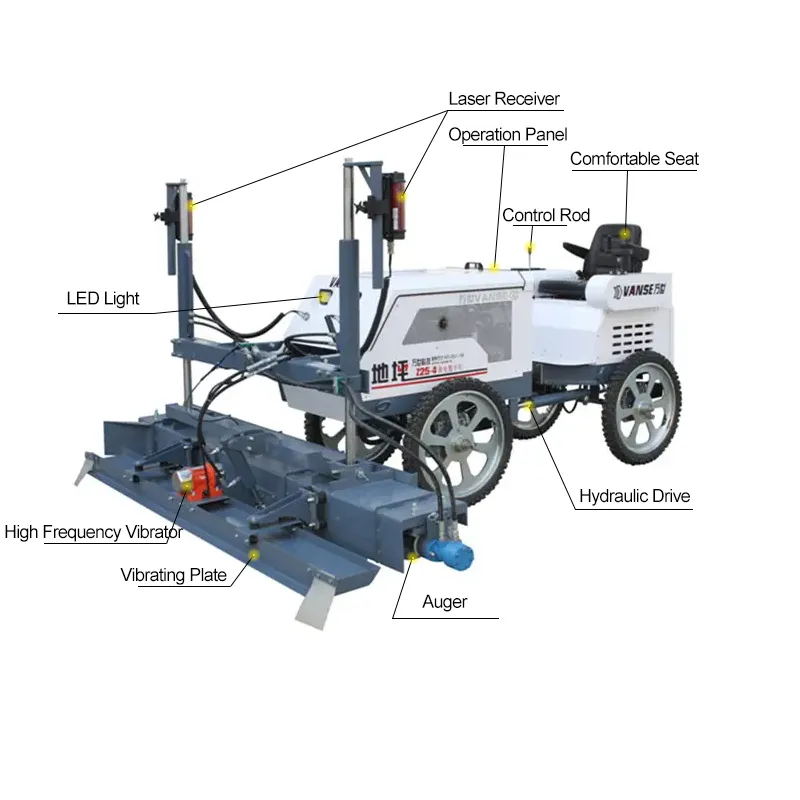
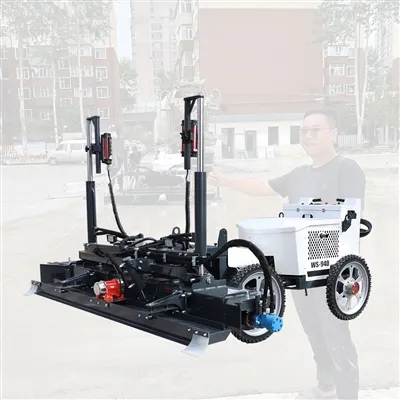
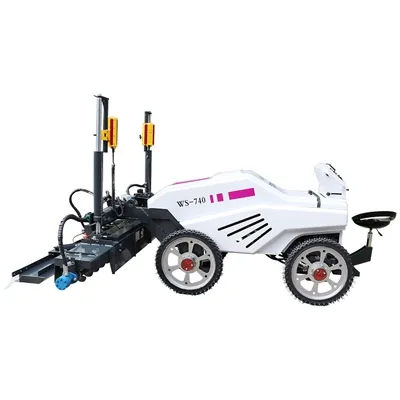
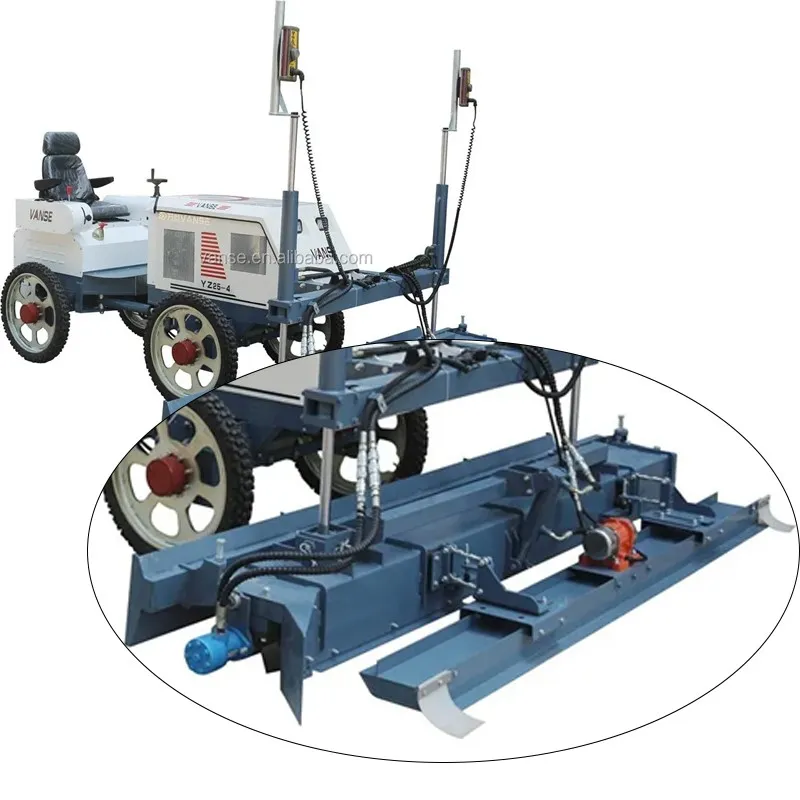
Concrete construction is generally leveled manually, and the appearance of laser leveling machines completely liberates the inconvenience of manual operation. It greatly reduces the labor cost for the construction site, and has a significant improvement in the leveling effect of the concrete.
Therefore, mechanized operations in this era can have a great impact on the construction industry. Concrete laser leveling is a scientific and reasonable design, and there is no need for manual assistance in the operation of the equipment, which is the convenience, science, technology, etc. in the design process.
Of course, the laser leveling equipment used in different construction fields is different. Because the concrete laser leveling equipment has a variety of models and sizes in the production process, it has a wide range of uses. All of these need to improve the advantages and technical characteristics in this aspect during the leveling process, so as to be able to occupy an advantage in the industry and improve the brand characteristics.
As in concrete laser leveling, it must be seen through the concrete construction process. This is the key to technological progress. It has full advantages and status in the field of various leveling and leveling equipment, and has been recognized and trusted by more builders, so it has been widely promoted in construction sites across the country.
Issues that should be noted:
(1) Due to the high construction efficiency, the later cutting must keep up. Generally, each laser leveling machine is equipped with 7-8 cutting machines to meet the requirements.
(2) In the early stage, plastic film should be used for maintenance, and non-woven fabric should be covered after cutting.
(3) During the construction process, due to the lateral pressure of the concrete, the steel mesh is easy to displace horizontally. For this reason, an isolation bench is placed directly on the adjacent steel mesh, so that the horizontal displacement of the steel mesh can be effectively controlled, and the bench can be used repeatedly.
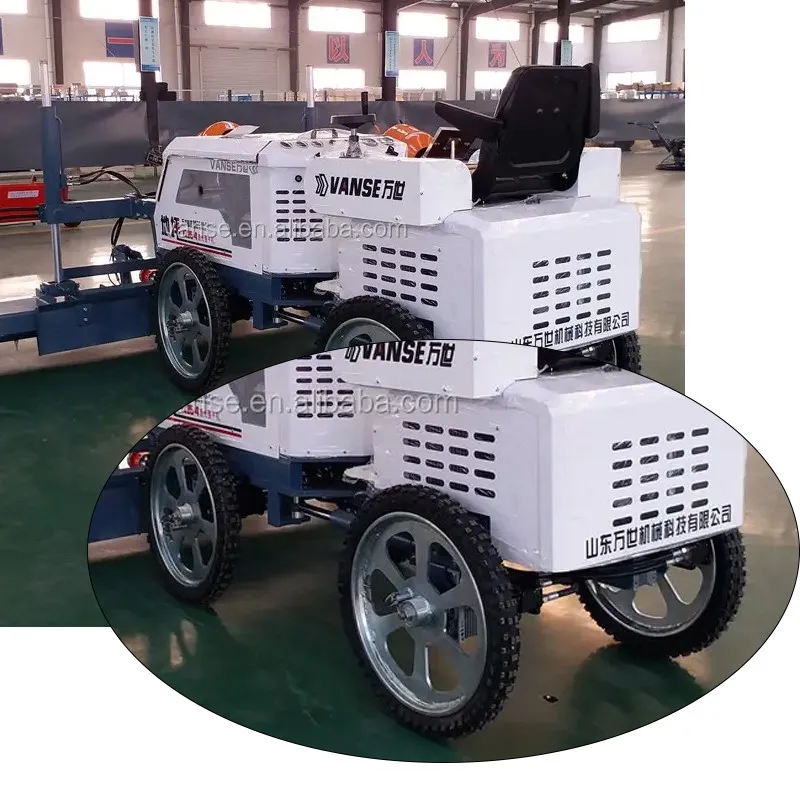
Advanced equipment such as laser leveling machines are especially suitable for projects such as docks, storage yards, expressways, airports, large squares, parking lots, and municipal roads that have relatively simple shapes, large amounts of action, and high construction quality requirements.
|
|
|
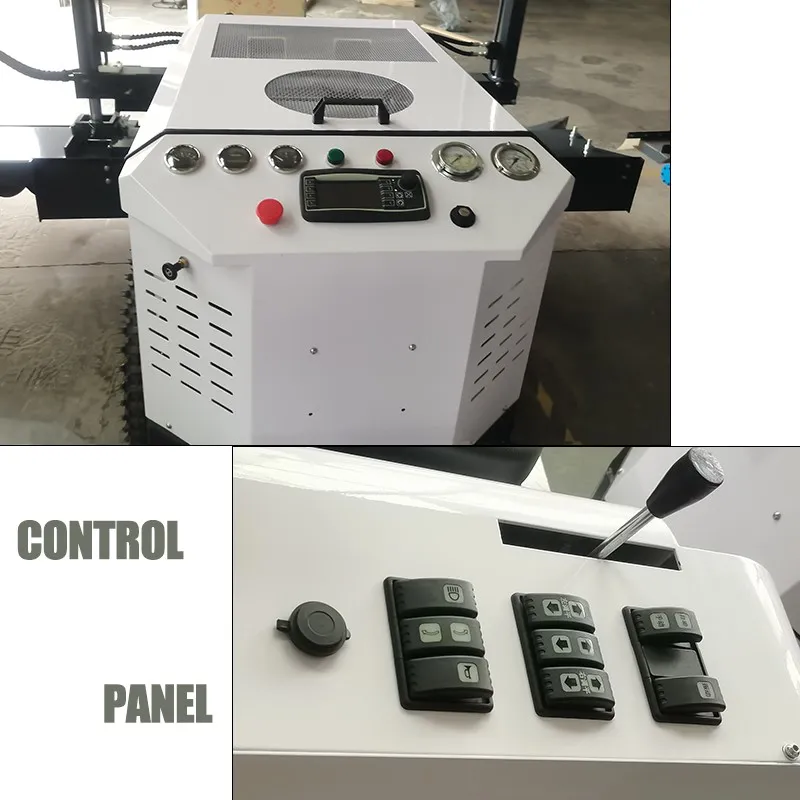
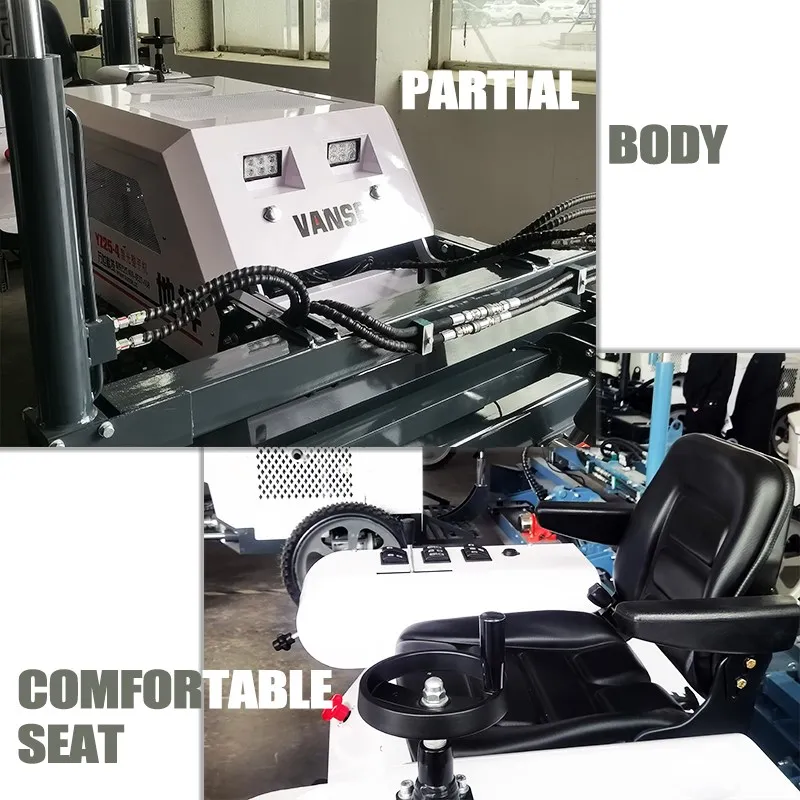
| DETAIL | IMAGES | |
|
|
Thanks to All the Friends Who Support and Trust Shandong Vanse Machinery Technology Co., Ltd.
If you want to know more about Shandong Vanse Machinery Technology Co., Ltd. or have any questions, please feel free to contact us:
Our Factory
Shandong Vanse Machinery Technology Co., Ltd.








Share this article

About the Author: Shandong Vanse Machinery Technology Co., Ltd.
Shandong Vanse Machinery Technology Co., Ltd. is a high-tech manufacturer specializing in concrete construction machinery, including laser screeds and related equipment. The company integrates R&D, production, and global sales, with products exported to over 60 countries and widely used in infrastructure projects worldwide.
Previous Post
Next Post
Related Articles
You Might Also Like
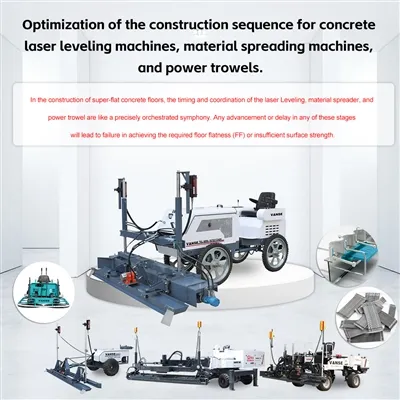
Optimization of the construction sequence for concrete laser leveling machines, spreading machines, and troweling machines
In the construction of super-flat concrete floors, the timing and coordination of the laser Leveling, material spreader, and power trowel are like a precisely orchestrated symphony. Any advancement or delay in any of these stages will lead to failure in achieving the required floor flatness (FF) or insufficient surface strength. The following is an optimized construction sequence plan for large-area super-flat concrete floor construction: The core logic of the construction process is to drive equipment deployment based on the setting state (degree of hardening) of the concrete. Stages Core Equipment Timing for application Construction Objectives 1. Spreading and leveling Laser Leveling machine When the concrete slump is maintained at the design value; To achieve high-precision initial leveling and compaction through vibration. 2. Water drainage treatment Rubber squeegee/slurry roller 0.5 – 1 hour after leveling; To remove surface bleeding water and prevent subsequent peeling. 3. Aggregate spreading Automatic material spreader When a person's footprint leaves an indentation of approximately 5mm; To evenly cover the surface with hardening aggregates, ensuring the thickness of the wear-resistant layer. 4. Rough troweling and slurry application Ride-on power trowel (disc type) After the dry-shake material has been applied and absorbed moisture, turning darker; To press the wear-resistant material into the base layer, achieving mechanical bonding. 5. Fine troweling and finishing Ride-on power trowel (blade type) When the surface has initially set and a person's footprint leaves only a shallow mark. To improve surface density, gloss, and flatness. Optimization Key Points: Laser Leveling must be completed within 30-45 minutes after concrete unloading. Path Planning: Use an "S" shape or a horizontal and vertical intersecting path to ensure smooth transitions at overlapping areas. Frequency Monitoring: The vibration frequency should be adjusted according to the concrete consistency to avoid over-vibration, which can lead to aggregate settling and excessive mortar thickness. Optimization Points: Manual spreading is strictly prohibited. The automatic spreading machine should be deployed during the "window period" after laser leveling. Staged Spreading: A 2+1 mode is recommended (i.e., spreading 60-70% first, then spreading the remaining portion after leveling).Speed Synchronization: The spreading speed must match the troweling speed of the power trowel to prevent the initially spread material from drying out too quickly and failing to bond with the base layer. Optimization Points: Power troweling is not a one-time process, but rather a multi-stage process involving varying speeds and angles. Disc Stage: Low speed, large area troweling to bring up the slurry and eliminate the small ripples left by laser leveling. Blade Stage: As the concrete hardens, gradually increase the blade angle and rotational speed. Cross-Directional Operation: Each pass of troweling should be perpendicular to the previous pass; this is the core technique for improving the FF value. Preventing "material waiting" cracks: The concrete mixing plant's supply speed must be greater than the paving speed of the laser Leveling (usually recommended at 40-60 m³/h). If the Leveling stops working for more than 1 hour waiting for materials, cold joints are highly likely to occur at the joints. Avoiding "forced finishing": If the ambient temperature is too high, causing rapid surface dehydration (false setting), direct watering for finishing is strictly prohibited. A special spray additive should be used; otherwise, the surface hardness will decrease significantly. Equipment Configuration Optimization: * 1 laser Leveling (medium-sized) Requires 1 automatic material spreader Requires 3-4 ride-on double-disc power trowels (to ensure full coverage before large-area hardening). To achieve the ultimate ultra-flat surface, it is recommended to incorporate laser scanning verification into the construction sequence: Before the final finishing pass with the power trowel, use a laser scanner to generate a heat map. Focus on grinding down the red areas (high points) and avoid the green areas (low points) as much as possible. Would you like me to prepare a table outlining adjustments to the construction sequence for different temperature environments (summer VS winter)? Contact us NOW Note: The parameters provided in this document are for reference only and are not mandatory. Due to differences in technical characteristics between different brands and models of laser levelers, please consult the manufacturer for a suitable solution before actual operation. This reference document assumes no responsibility for any issues arising from failure to follow the manufacturer's instructions.How can the performance and operation of a concrete laser leveling machine be optimized
Regarding the performance and operation optimization of concrete laser leveling machines, this is a systematic project that integrates equipment maintenance, advanced technology, and precise operation. Optimization can be approached from two perspectives: equipment performance optimization and operating method optimization. Equipment performance is the foundation for ensuring construction quality and efficiency. Optimization aims to ensure that the equipment is always in optimal working condition. Laser Transmitter: This is the "eyes" and "brains" of the equipment. Calibration: Perform a calibration check daily before starting work. Secure the receiver to a pole and verify that the elevation set by the laser transmitter matches the actual measurement. Even the slightest deviation can lead to extensive construction failure. Cleaning and Protection: Keep the laser transmitter lens clean to prevent dust and moisture from affecting the laser beam's accuracy. Store properly to prevent collisions. Leveling Head (Scraper and Vibrator): Check for wear: Regularly inspect the scraper for wear. Excessive wear can lead to reduced leveling accuracy and material waste. Replace or adjust promptly. Vibration Frequency Uniformity: Check that the vibrating rod is functioning properly to ensure uniform concrete compaction density across the entire leveling head to avoid localized honeycombing. Chassis and Travel System: Cleaning: After each construction phase, thoroughly clean any solidified concrete debris from the chassis, as this will significantly affect the smoothness of the next construction phase. Check Fasteners: Check all connecting components and bolts for looseness to ensure the structural stability of the equipment. Tires/Tracks: Check tire pressure and track wear to ensure stable ground contact. Multiple Laser Receivers: Equipping the leveling head with multiple laser receivers allows for more comprehensive monitoring of the head's real-time posture. This is particularly important for levelinging over large spans, effectively preventing errors caused by leveling head deformation. Intelligent Control System Upgrade: Monitor control system updates provided by equipment manufacturers. Newer systems may feature more advanced algorithms, enabling smoother control, fault diagnosis, and even grade control. High-Strength Components: For components subject to severe wear, such as scrapers, consider using more wear-resistant high-strength alloys or polyurethane materials to extend their service life. Advanced equipment requires scientific operating methods to maximize its effectiveness. Precise benchmark setting: This is the foundation of all work. A professional surveyor must use a high-precision level or total station to determine the position and elevation of the laser transmitter according to the design drawings. Ensure that the transmitter is set up in a stable, interference-free area. Formwork (steel formwork) installation: The top elevation of the formwork must be precisely aligned with the designed elevation of the laser leveling and securely fixed. The flatness of the formwork directly affects the construction quality of the edge areas. Base preparation and reinforcement mesh laying: The base layer (usually a crushed stone base) must be compacted and leveled; otherwise, uneven concrete thickness may occur, leading to cracking due to settlement. The steel mesh should be laid flat and supported with blocks to ensure its correct position in the concrete and prevent it from scraping against the rebar and shifting during equipment movement. Concrete material control: Slump: This is the key to success! The slump of concrete used for laser leveling must be strictly controlled, typically between 140-160mm. Excessive slump results in high concrete flow, causing backflow on both sides of the leveling as the leveling moves, forming waves. Excessive slump results in poor flow, high resistance to the leveling, prone to cracking, and difficulty maintaining density. Aggregate Size: Avoid using coarse aggregate with excessively large particle sizes to prevent it from clogging the leveling blade or vibrator. Unloading and Initial Spreading: Concrete should be evenly distributed during unloading to avoid piles. Initial spreading can be performed using a small excavator or manually, with a thickness slightly above the design elevation to reduce the load on the leveling. Equipment Path Planning: The operator should plan the leveling's path, typically adopting an S-shaped or spiral path, to avoid sharp turns on unset concrete, which can cause surface disturbance and elevation deviation. Matching Travel Speed and Vibration Frequency: The equipment should maintain a constant and slow speed. Excessive speed will result in incomplete vibration and surface ripples. Adjust the vibration frequency in real time based on the concrete slump. For high slumps, reduce the frequency appropriately; for low slumps, increase the frequency to ensure adequate vibration. Overlap Treatment: There should be a sufficient overlap between the two leveling paths (typically 10-20cm) to ensure a smooth transition at the joint with no height differences. Operator Skills: The operator must not only be able to operate the machine but also understand the characteristics of concrete. They should be able to observe the concrete's response (such as slurry seepage and surface gloss) to determine whether the vibration is sufficient and the speed is appropriate, allowing for immediate adjustments. Timely Curing: After initial setting, laser-leveled concrete floors should be immediately sprayed with a curing agent or covered with a film to retain moisture and prevent plastic shrinkage cracks caused by rapid water loss. The optimized leveled floor is denser, so early curing is particularly important. Connecting with Subsequent Processes: Time the joint cutting process appropriately (usually within 6-24 hours after construction, depending on the temperature and concrete strength development) to prevent random cracking. Optimize Category Specific Measures Purpose Equipment performance Daily laser system calibration Ensures absolutely precise elevation control Inspect and replace the leveling scraper Ensures levelinging results and smoothness Thoroughly clean the chassis of concrete debris Prevents elevation errors and equipment damage Operation Strictly control the concrete slump (140-160mm) Ensures proper fluidity, easy leveling, and no backflow Precisely set the formwork and laser reference Provides a foundation for high-quality construction Drive at a constant and slow speed, matching the vibration frequency Ensures adequate vibration and compaction of concrete Operator experience and fine-tuning Addresses unexpected on-site situations and enables dynamic optimization Timely water conservation and maintenance Prevents surface cracking and ensures overall quality By combining strict equipment maintenance, scientific construction preparation and refined operating procedures, the performance of the concrete laser leveling machine can be maximized, ultimately achieving ultra-high flatness, high density and high efficiency construction results. Note: The parameters provided in this document are for reference only and are not mandatory. Due to differences in technical characteristics between different brands and models of laser levelers, please consult the manufacturer for a suitable solution before actual operation. This reference document assumes no responsibility for any issues arising from failure to follow the manufacturer's instructions.How to ensure the safety of concrete structure construction through system management and education and training?
How to ensure the safety of concrete structure construction through system management and education and training 1. System management System management is one of the important means to ensure the safety of concrete structure construction. By formulating and implementing a series of safety management systems and operating procedures, safety risks during the construction process can be effectively reduced. 1. Develop a safety management system. Develop a complete safety management system to clarify the safety responsibilities of managers and operators at all levels to ensure that various safety measures during the construction process are effectively implemented. At the same time, corresponding reward and punishment measures should be formulated to severely deal with violations of safety regulations. 2. Strictly implement operating procedures. During the construction of concrete structures, relevant operating procedures should be strictly implemented to ensure that all processes comply with safety standards. Before construction, safety inspections of equipment, tools, etc. should be carried out to ensure that they are in good condition. During the construction process, the prescribed construction procedures and safe operation requirements should be followed, and illegal operations are prohibited. 3. Implement safety supervision and inspection. Establish a sound safety supervision and inspection mechanism, and conduct regular inspections on the Stinging site to ensure that various safety measures are effectively implemented. At the same time, discovered safety hazards should be promptly rectified to prevent accidents. 2. Education and training Education and training is an effective way to improve the safety awareness and skill level of construction personnel. Through regular safety education and training, construction personnel can fully understand the importance of construction safety and master necessary safety knowledge and skills. 1. Carry out safety awareness education Regularly organize safety awareness education activities to publicize safety production laws, regulations and rules to construction workers, emphasizing the importance of construction safety to individuals, families and society. Through case analysis, experience sharing, etc., we guide construction workers to establish safety awareness and enhance their self-protection capabilities. 2. Conduct safety skills training Carry out safety skills training based on the characteristics of concrete structure construction. The training content should include knowledge on construction equipment operation, emergency rescue measures, hazard source identification and prevention, etc. Through practical operations and simulation drills, construction personnel's safe operation skills and ability to respond to emergencies are improved. 3. Establish a training and assessment mechanism Establish a training and assessment mechanism to evaluate and assess construction personnel who participate in training. The assessment results should be used as an important reference for promotion and rewards of construction personnel. At the same time, construction personnel should be encouraged to participate in various safety training and qualification certifications to improve overall safety quality. 3. Summary Through a combination of system management and education and training, the safety of concrete structure construction can be effectively ensured. System management provides norms and constraints for the construction process so that various safety measures can be effectively implemented; education and training improves the safety awareness and skill level of construction personnel and enhances their self-protection capabilities. In actual work, relevant systems and training content should be continuously improved and optimized to improve safety management levels and ensure the safety and smoothness of the construction process. At the same time, construction units should actively introduce advanced safety technologies and equipment to improve the intrinsic safety level of the construction process. Only by comprehensively improving safety management levels can we create a safe and stable environment for concrete structure construction.