Technical Knowledge
How to ensure flatness during concrete pavement paving?

In the process of concrete pavement paving, ensuring the flatness requires multiple aspects such as the selection and adjustment of the paver, paving operation control, and auxiliary measures during the construction process, as follows:
🚢 Selection and adjustment of the paver
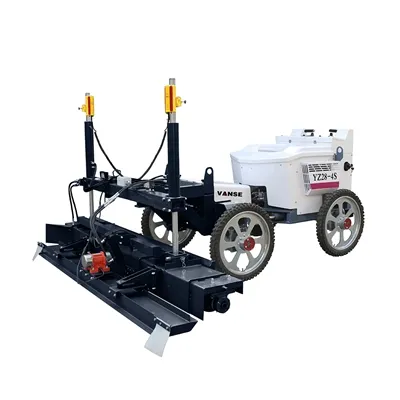
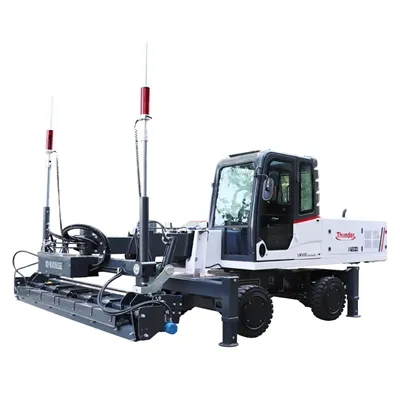
🌻Select a suitable paver: According to the width, thickness, construction progress and other requirements of the concrete pavement, select a paver with good performance and high paving accuracy. Large pavers have a larger paving width and stronger vibration capacity, which is suitable for large-area pavement paving; small pavers are flexible and suitable for narrow sections or local repairs. At the same time, the degree of automation of the paver should be considered. A paver with automatic leveling, automatic adjustment and other functions can better ensure the flatness of the road surface.
🌻Adjust paver parameters: Before paving, the parameters of the paver need to be carefully adjusted. The elevation angle of the leveling plate should be adjusted according to the consistency and paving thickness of the concrete, generally between 1.5° – 3°, to ensure that the concrete can be evenly spread under the leveling plate. The vibration frequency and amplitude should also be selected according to the characteristics of concrete. Usually, the vibration frequency is 3000-6000 times/minute and the amplitude is 0.3-0.8mm, so that the concrete can be fully vibrated and compacted, while avoiding over-vibration and concrete segregation.
🌻Check and calibrate the leveling system: The leveling system of the paver is a key device to ensure the flatness of the road surface. Before construction, check whether the sensors, controllers and other components of the leveling system are working properly, and calibrate and debug them. The paver can be automatically leveled by placing standard pads at different positions, and check whether the height change of the ironing plate meets the requirements. The error should be controlled within ±1mm.
🚢 Paving operation control
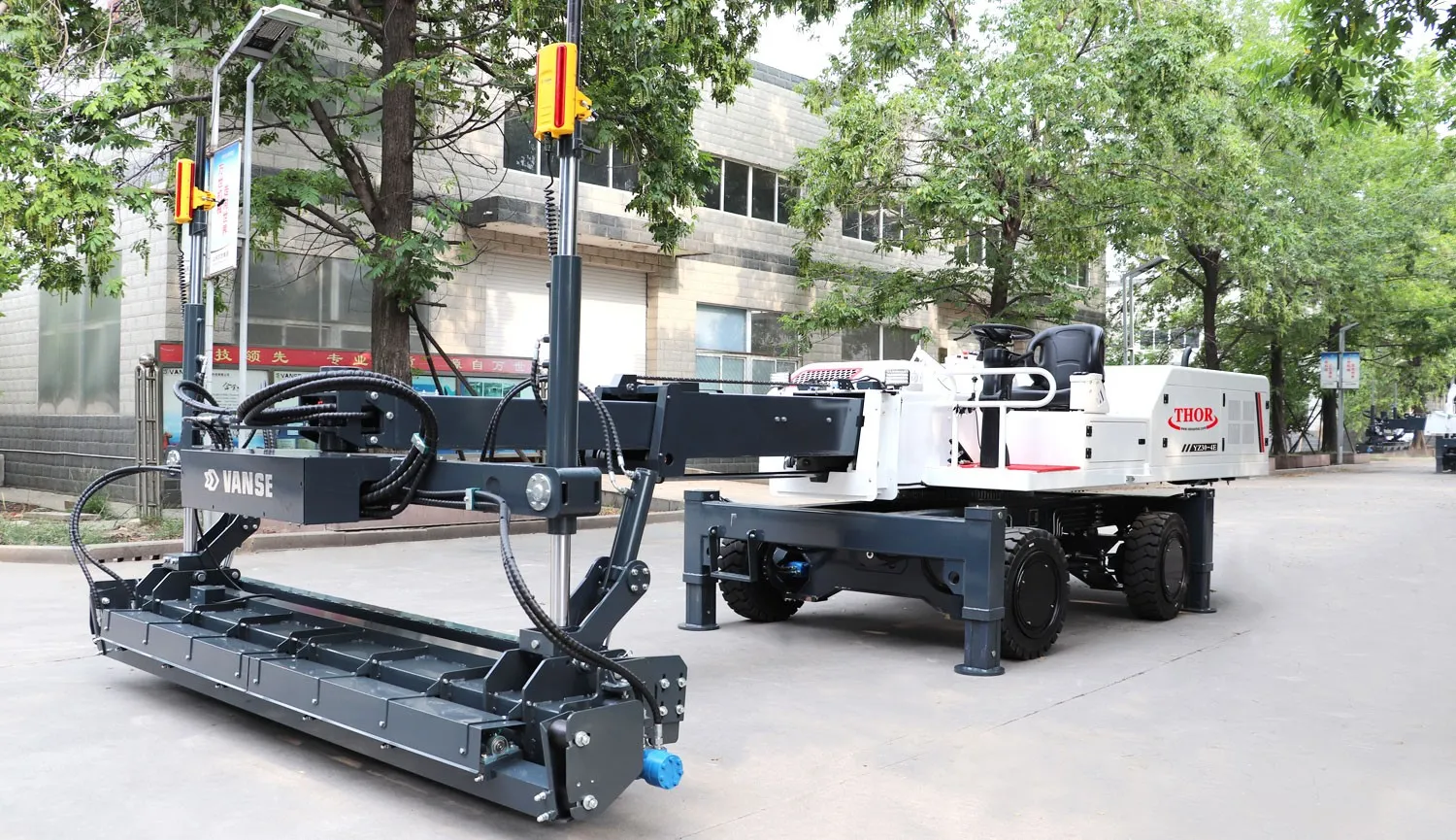
🌻Maintain uniform paving speed: The paver should maintain a uniform speed during the paving process, and the speed is generally controlled at 2-3m/min. Too fast speed will cause the concrete to not have time to vibrate and level, affecting the flatness; too slow speed will cause the concrete to accumulate in front of the paver, increasing the difficulty of paving. At the same time, try to avoid the paver to stop midway. If it needs to stop in special circumstances, the time should be controlled within 30 minutes. Otherwise, the paved concrete should be handled in time to prevent its solidification from affecting the flatness.
🌻Control paving thickness: Before paving, the paving thickness of the paver should be determined according to the design thickness of the pavement and the loose paving coefficient. The loose paving coefficient is generally between 1.1 and 1.3, and the accurate value can be determined by trial paving. During the paving process, use thickness sensors or manual detection methods to monitor the paving thickness in real time to ensure that the thickness deviation is within ±5mm.
🌻Ensure uniform feeding: The supply of concrete should be continuous and uniform to avoid insufficient or excessive feeding. The concrete in the hopper should maintain a certain height, generally not less than 1/3 of the hopper height, to ensure that the paver spiral distributor can evenly distribute the concrete over the paving width. At the same time, pay attention to the change in the slump of the concrete. If the slump changes significantly, the parameters of the paver should be adjusted in time or the concrete should be treated to ensure the paving quality.
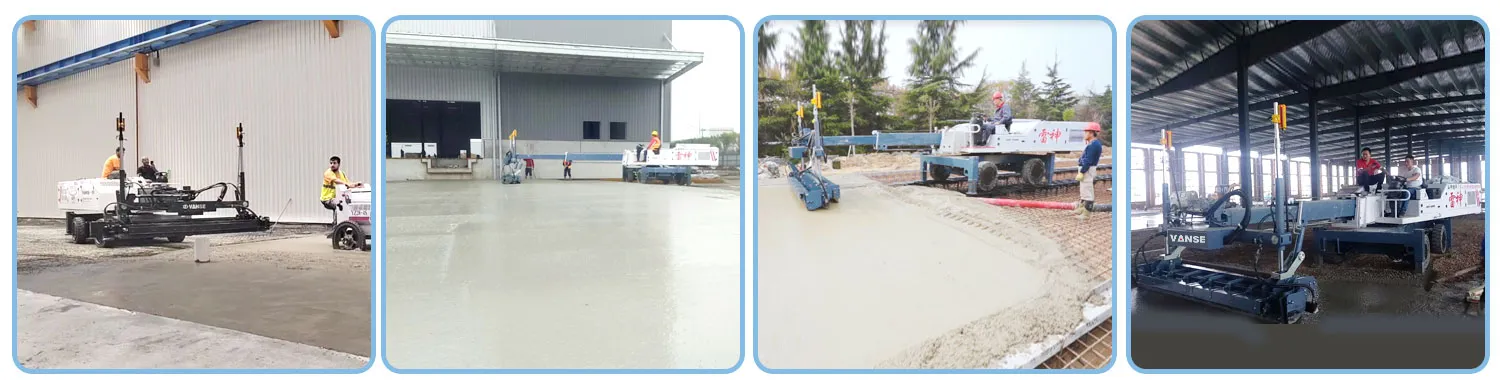
🚢 Auxiliary measures during construction
🌻Setting baseline: Before paving, baselines should be set along both sides of the road surface to provide accurate elevation and plane benchmarks for the paver. The baseline can be made of steel wire or aluminum alloy rails. The tension of the steel wire should be no less than 800N. A support point should be set every 5-10m to ensure the flatness and stability of the baseline. When using aluminum alloy rails, the installation accuracy of the rails should be guaranteed, and the straightness deviation should not exceed ±2mm/m.
🌻Arrange special personnel for assistance: Arrange special personnel behind the paver to assist in the operation and promptly deal with local unevenness, lack of material or excess material after the paver paving. For local low-lying areas, concrete can be used to fill them and vibrate them with a vibrator; for local high parts, shovels and other tools can be used to remove and trim them. At the same time, pay attention to trimming the concrete on both sides of the paver so that it fits tightly with the template or curbstone to ensure the flatness of the edge of the road surface.
🌻Strengthen quality inspection: During the paving process, the inspection of the road surface flatness should be strengthened. You can use a 3m ruler or a flatness meter to conduct real-time inspection. Inspect a point every 10-20m. If the flatness deviation exceeds the allowable value (generally ±5mm), analyze the cause and make adjustments in time. Mark the uneven parts detected so that they can be processed before the initial setting of the concrete.
Click the below to jump immediately!!!


LASER LEVELING MACHINE


SLIPFORM MACHINE


TOPPING SPREADER

TRACKED MINI DUMPER
Thanks to All the Friends Who Support and Trust Shandong Vanse Machinery Technology Co., Ltd.
If you want to know more about Shandong Vanse Machinery Technology Co., Ltd. or have any questions, please feel free to contact us:
Our Factory
Shandong Vanse Machinery Technology Co., Ltd.








Share this article

About the Author: Shandong Vanse Machinery Technology Co., Ltd.
Shandong Vanse Machinery Technology Co., Ltd. is a high-tech manufacturer specializing in concrete construction machinery, including laser screeds and related equipment. The company integrates R&D, production, and global sales, with products exported to over 60 countries and widely used in infrastructure projects worldwide.
Previous Post
Next Post
Related Articles
You Might Also Like
What benefits and drawbacks does a concrete laser leveling machine have?
– Using the laser system for positioning and control, the horizontality and elevation control of the concrete surface can be accurately achieved, and the error can be controlled within ±3 mm, which is much higher than the accuracy of traditional manual leveling. – The laser signal has a wide coverage range, which can ensure the consistency of flatness in a large construction area and avoid local unevenness. – Mechanized operation replaces manual work, which can quickly complete the paving, leveling and vibration of concrete, and can process hundreds of square meters per hour, which is 3-5 times more efficient than traditional methods. – The equipment is relatively easy to operate, and only a few operators are needed to complete the entire construction process, reducing labor costs and management difficulties. – High-precision leveling can reduce the waste of concrete and avoid excessive use of materials or rework and repair due to inaccurate leveling. – Although the equipment purchase cost is high, in the long run, efficient construction progress and reduced labor costs can reduce the overall construction cost. – Vibration is carried out simultaneously during the leveling process to make the concrete density uniform, reduce quality problems such as hollowing and cracks, and improve the bearing capacity and durability of the ground. – The flat surface provides a good foundation for subsequent decoration projects (such as laying floor tiles, epoxy flooring, etc.), reducing the difficulty and cost of subsequent construction. – It can be used in large-scale concrete construction scenes such as large factories, warehouses, parking lots, airport runways, squares, etc., especially suitable for projects with high flatness requirements. – It can adapt to concrete pouring of different thicknesses, from thin cushion layers to thick foundations. – The purchase price of a laser leveling machine usually ranges from hundreds of thousands to millions of yuan. For small construction companies or short-term projects, the initial investment pressure is relatively large. – The equipment needs regular maintenance and upkeep. For example, the maintenance costs of components such as laser transmitters and hydraulic systems are relatively high. – Before construction, it is necessary to ensure that there is no strong electromagnetic interference around the site to avoid affecting the reception and transmission of laser signals. – For areas with complex terrain or obstacles (such as special-shaped structures and narrow spaces), the operation of the equipment will be restricted, and manual assistance may be required to complete local construction. – The debugging and operation of the equipment requires professionals. If the operator is not familiar with the laser system and equipment performance, it may affect the construction accuracy and efficiency. – Once the equipment fails or the laser system fails, professional technicians are required to repair it, which may cause construction interruption. – The equipment is large in size and heavy in weight. Special vehicles are required for transportation, the transfer cost is high, and a certain amount of space is required when moving within the site. – The equipment needs to consume diesel or electricity when running, which consumes a lot of energy. At the same time, the engine and hydraulic system will produce a lot of noise, which may be restricted when working in residential areas or noise-sensitive areas. Concrete laser leveling machines are widely used in large-scale concrete projects due to their high precision, high efficiency and high-quality construction advantages, but their high cost and technical requirements also make them have certain limitations in small projects or complex scenes. Construction units can weigh their advantages and disadvantages according to the project scale, precision requirements and budget, and choose the appropriate construction equipment. Click the below to jump immediately!!! ARMOUR JOINT CONCRETE LEVELING MACHINE LIGHT TOWER POWER TROWEL SLIPFORM MACHINE STEEL FIBER TOPPING SPREADER TRACKED MINI DUMPERIn a construction environment, how to adjust construction technology and equipment parameters according to environmental changes?
In the construction environment, environmental changes are inevitable. These changes may include climate conditions, terrain features, material supply, and construction progress. Adjusting construction technology and equipment parameters according to environmental changes is an important measure to ensure construction efficiency and project quality. The following is a detailed analysis of how to adjust construction technology and equipment parameters according to environmental changes in the construction environment. The complexity and variability of the construction environment require the construction team to have the ability to adapt flexibly. By adjusting the construction technology and equipment parameters in a timely manner, we can adapt to environmental changes, reduce construction risks, and improve construction efficiency. First, it is necessary to establish an effective environmental monitoring and evaluation system: – **Environmental monitoring system**: Use sensors and monitoring equipment to monitor environmental factors such as temperature, humidity, and wind force at the construction site in real time. – **Environmental assessment mechanism**: Regularly evaluate the possible impact of environmental changes on construction and predict potential risks. According to environmental changes, the construction technology needs to be adjusted accordingly: – **Construction method selection**: Select a construction method suitable for the current environmental conditions, such as choosing a concrete pouring process that is more suitable for humid conditions in a high humidity environment. – **Optimization of construction sequence**: Adjust the construction sequence according to environmental changes, such as giving priority to indoor construction in rainy seasons. Adjustment of construction equipment parameters is the key to adapting to environmental changes: – **Parameter adjustment of laser leveling machine**: Adjust the vibration frequency and walking speed of the laser leveling machine according to the ground material and humidity. – **Parameter adjustment of concrete mixing station**: Adjust the proportion and mixing time of concrete according to temperature and humidity. The selection of construction materials should be adaptively adjusted according to environmental changes: – **Material performance evaluation**: Evaluate the performance of different materials in the current environment and select the best material. – **Material supply strategy**: Adjust the procurement and storage strategy of materials according to environmental changes to ensure the continuity and stability of material supply. The skills and adaptability of construction personnel are crucial to cope with environmental changes: – **Skill training**: Regularly conduct skill training for construction personnel to improve their mastery of construction processes under different environmental conditions. – **Emergency response training**: Strengthen the training of construction personnel's emergency response capabilities to environmental changes. The construction plan needs to have a certain degree of flexibility to adapt to environmental changes: – **Dynamic adjustment plan**: Dynamically adjust the construction plan according to the results of environmental monitoring to ensure the progress and quality of construction. – **Backup plan formulation**: Formulate backup construction plans to cope with sudden environmental changes. Improve and control the construction environment to reduce adverse effects: – **Construction site layout**: Reasonably arrange the construction site to reduce the direct impact of environmental factors such as wind, sand and rain on construction. – **Environmental control technology**: Apply environmental control technology, such as temperature and humidity control equipment, to improve the construction microenvironment. Regularly maintain and upgrade construction equipment in a timely manner to adapt to environmental changes: – **Equipment maintenance plan**: Formulate a detailed equipment maintenance plan to ensure that the equipment can operate stably in various environments. – **Technology upgrade**: Pay attention to the development of industry technology, upgrade the technology of equipment, and improve its adaptability and reliability. Collect and analyze construction data to provide a basis for adjusting construction technology and equipment parameters: – **Data collection system**: Establish a data collection system to collect various data during the construction process. – **Data analysis tools**: Use data analysis tools to analyze the impact of environmental changes on construction and guide process and parameter adjustments. Strengthen construction risk management and reduce the risks brought by environmental changes: – **Risk identification**: Timely identify construction risks that may be brought about by environmental changes. – **Risk assessment and control**: Assess the risk level and take corresponding control measures, such as adjusting construction methods or strengthening safety protection. Adjusting construction technology and equipment parameters according to changes in the construction environment is a dynamic management process. Through environmental monitoring and assessment, construction technology adjustment, equipment parameter adjustment, construction material selection, personnel training, construction plan flexibility, construction environment improvement, equipment maintenance and upgrade, data collection and analysis, and risk management, we can effectively respond to environmental changes and ensure the smooth progress of construction.How to judge whether the transmission parts of the concrete power trowel need to be replaced?
Wear: Regularly check the surface wear of the drive belt. If the belt surface has obvious cracks, peeling, or is worn to less than two-thirds of its original thickness, it is necessary to consider replacing it. For example, a new drive belt is 10 mm thick. When it is worn to less than 6-7 mm, its strength and transmission efficiency will drop significantly, and it is easy to slip. Observe whether there is wear or tear on the edges of both sides of the belt. Edge wear may be caused by misalignment of the pulley or excessive belt tension. Once the edge is damaged, the belt may be out of the groove during operation, resulting in interruption of power transmission. Elasticity and tension changes: Press the belt by hand to check its elasticity. If the belt loses its elasticity and becomes stiff, it may be because the belt is aging or has been under high load for a long time. In this case, the belt cannot effectively buffer and transmit power during transmission, which may easily lead to unstable power transmission. It is also important to check the tension of the belt. Appropriate tension can ensure good contact and power transmission between the belt and the pulley. If the belt is too loose, there will be obvious slippage. By observing the rotation of the pulley and the movement of the belt, it can be found that when the pulley rotates, the belt may slip on the pulley instead of rotating synchronously. If the belt is too tight, it will increase the wear of the belt and pulley, and will bring additional loads to components such as the motor and bearings. A belt tension meter can be used to accurately measure the belt tension. When the tension exceeds the specified range, the belt needs to be adjusted or replaced. Abnormal noise and vibration: When there is a problem with the drive belt, abnormal noise such as "chirp" or "snap" will be generated during the operation of the trowel. This noise is usually caused by abnormal friction between the belt and the pulley, which may be caused by belt wear, looseness, or impurities such as oil stains. At the same time, it will be accompanied by vibration, which can be felt by touching the body of the trowel or the bracket near the drive component. If the abnormal noise and vibration persist and are related to the belt after excluding other component failures, then the belt needs to be replaced. Wear and elongation: Check the wear of the chain links. If the rollers, sleeves and pins of the chain links are worn out, the pitch of the chain will increase, causing the chain to elongate. Generally speaking, when the chain elongates by more than 3% 5% of the original length, the accuracy and stability of power transmission will be affected. For example, a chain with an original length of 1 meter is prone to tooth skipping when it is elongated by more than 30 50 mm. Observe the side wear of the chain. If the side of the chain is severely worn during the meshing process with the sprocket, it will cause poor meshing between the chain and the sprocket, increasing the risk of the chain coming off the chain. This can be judged by observing whether there are shiny wear marks on the side of the chain. These shiny areas indicate that the friction between the chain and the sprocket at this part is abnormal. Sprocket wear: The sprocket of the transmission chain also needs to be checked. If the tooth profile of the sprocket is worn, the top of the tooth becomes sharp or the tooth groove becomes wide, it will affect the meshing effect of the chain and the sprocket. When the tooth wear exceeds a certain limit (such as tooth thickness wear exceeding 10% 15%), it is necessary to replace the chain and sprocket at the same time, because the old chain and the worn sprocket cannot guarantee good power transmission and will accelerate the wear of the new chain. Lubrication and operating status: Good lubrication is the key to the normal operation of the chain. If the chain becomes dry and stuck during operation, it may be due to insufficient lubrication or lubricant failure. At this time, check the chain's lubrication system and add or replace the appropriate lubricant. If the chain still does not run smoothly under normal lubrication, such as jamming, tooth skipping or abnormal noise (such as "clicking"), it may be that the chain or sprocket is severely worn and needs to be considered for replacement.