Technical Knowledge
What are the benefits of using a laser leveling machine for concrete construction?
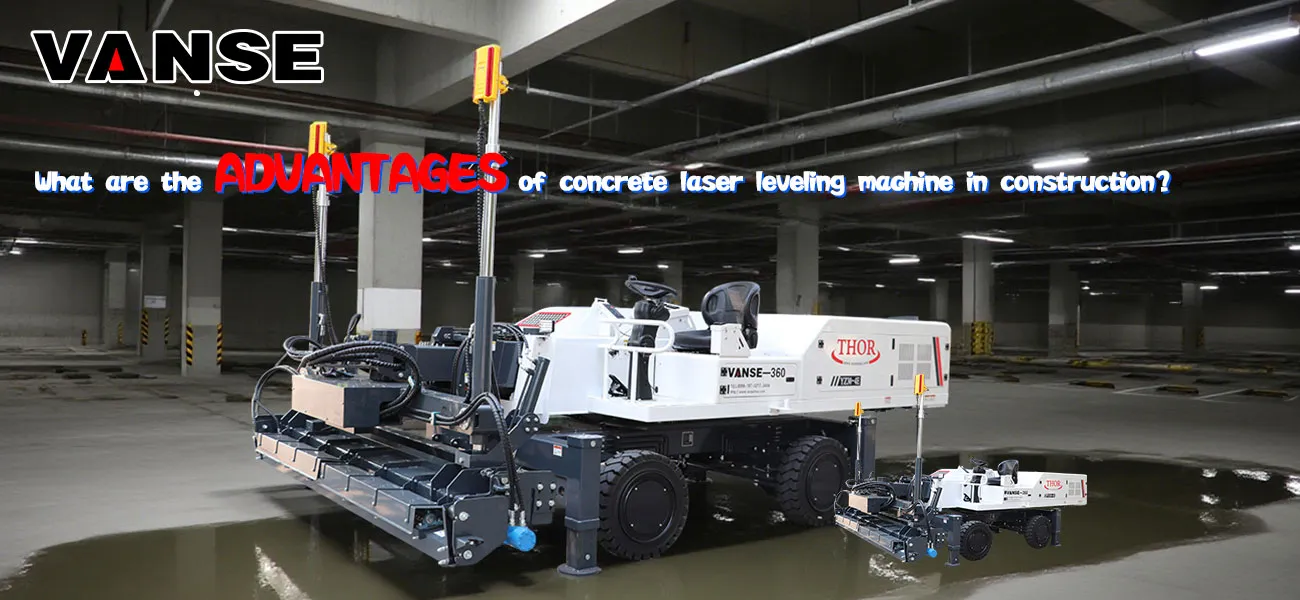
Concrete laser levelings have become a core piece of equipment for achieving high quality standards in modern floor construction. Their advantages are multifaceted and revolutionary, far surpassing traditional manual construction methods.
The following are the main advantages of concrete laser leveling machines in construction, divided into four aspects: efficiency, quality, cost and safety:
1. Construction quality and precision advantages (the most core advantage)
Extremely high flatness and levelness:
Technical principle: The leveling machine receives the rotating laser signal generated by the laser transmitter, and the control system automatically adjusts the height of the scraper in real time to achieve precise control of the concrete elevation.
Results: This completely eliminates the errors associated with manual rebar punching and leveling, easily achieving ultra-high precision of FF 50/FL 35 (American Concrete Institute standards) and even exceeding FF 100/FL 80. This is impossible to achieve manually, making it particularly suitable for logistics warehouses, large supermarkets, clean workshops, aircraft hangars, and other locations with extremely high floor requirements.
Excellent integrity:
Technical principle: The equipment's high-power vibrator produces uniform, high-frequency vibrations, making the concrete aggregate more evenly distributed and the thickness of the mortar floating layer consistent.
Effect: Greatly reduces the pores and bubbles in the base layer, making the concrete denser and stronger, thereby significantly improving the wear resistance, compression resistance, and impact resistance of the ground and extending its service life.
Seamless construction to avoid cracking in the later stage:
Technical principle: The construction efficiency of the laser leveling machine allows one-time continuous pouring of ultra-large areas (up to tens of thousands of square meters).
Effect: Construction joints formed by multiple pourings are reduced, thus fundamentally avoiding potential cracking problems caused by joints. The entire floor becomes a complete plate with better structural performance.
2. Construction efficiency advantage
Extremely fast construction speed:
A laser leveling machine can achieve an average productivity of 150-300 square meters per hour, 10-15 times faster than traditional manual construction methods. This significantly shortens construction timelines and saves valuable project time.
Simplify the process and reduce manpower:
Traditional craftsmanship: A large number of workers are required to perform heavy physical labor such as supporting formwork, making mortar cakes, scraping bars and leveling.
Laser leveling: It can be completed by only 1 equipment operator and 4-6 auxiliary workers responsible for paving concrete and operating the laser transmitter, saving more than 60% of labor, reducing dependence on skilled workers and management difficulty.
3. Economic Benefits and Cost Advantages
Direct labor cost reduction:
A substantial reduction in the number of employees directly means a significant drop in labor costs, which is particularly advantageous today when labor costs are increasing.
Low maintenance cost:
Because the floor is highly flat, has good integrity, and is less susceptible to dust and cracking, the frequency and cost of subsequent maintenance (such as repairs, polishing, and curing) are greatly reduced. This is a very important long-term value for the owner.
Material saving:
Precise elevation control avoids concrete waste caused by over-thick pouring. In theory, it can achieve "zero error" pouring thickness and save materials.
4. Safety and labor intensity advantages
Improve workers' working environment:
Workers are freed from heavy bending and squatting labor and can now focus on operating and maintaining machinery, greatly reducing labor intensity.
Safety benefits brought by early construction schedule:
The shortened construction period means that the exposure time of safety risks of the entire project site is reduced, which indirectly improves the overall safety of the project.
Summary comparison table
| Advantages | Traditional manual construction | Laser Leveling Installation | Results: |
| Flatness/Levelness | Relies on experience, low precision (FF20-30) | Fully automatic control, extremely high precision (FF50+) | Meets high-standard requirements, such as automated warehouses. |
| Construction Efficiency | Slow, 50-100 m2/day/group | Extremely fast, 1000-2000 square meters/day/machine | Significantly shortens construction timelines and accelerates project progress. |
| Number of Workers | Requires a large number of skilled workers (10-15 people) | Reduced staff requirements (5-7 people) | Reduces labor costs and management complexity. |
| Surface Integrity | Prone to delamination, uneven strength | High density, high strength, and excellent integrity | Durable and wear-resistant, with a long service life. |
| Maintenance | Prone to dust and cracking, frequent maintenance | Resistant to damage, extremely low maintenance costs | Saves long-term costs for owners. |
| Labor Intensity | High-intensity physical labor | Mechanically operated, low labor intensity | Improves the work environment and makes recruitment easier. |
In short, the concrete laser leveling represents not only an upgrade to construction tools but also a revolution in construction technology. Through automated, digital, and precise control, it achieves breakthroughs in quality, efficiency, cost, and safety, making it an indispensable and critical piece of equipment for modern large-scale floor construction.
Click the below to jump immediately!!!
Thanks to All the Friends Who Support and Trust Shandong Vanse Machinery Technology Co., Ltd.
If you want to know more about Shandong Vanse Machinery Technology Co., Ltd. or have any questions, please feel free to contact us:
Our Factory
Shandong Vanse Machinery Technology Co., Ltd.








Share this article

About the Author: Shandong Vanse Machinery Technology Co., Ltd.
Shandong Vanse Machinery Technology Co., Ltd. is a high-tech manufacturer specializing in concrete construction machinery, including laser screeds and related equipment. The company integrates R&D, production, and global sales, with products exported to over 60 countries and widely used in infrastructure projects worldwide.
Previous Post
Next Post
Related Articles
You Might Also Like
What is the standard maintenance procedure for laser leveling machine?
No matter what kind of mechanical equipment, if you want to effectively extend its service life, you need to do regular maintenance and maintenance of the equipment, and this is no exception for laser leveling machines. In view of the fact that there is no detailed analysis of the maintenance standards for laser leveling machines in the relevant technical materials, our company will combine years of work experience to make a simple summary of the correct maintenance methods for each component of the laser leveling machine. I hope that the majority of users and friends We must follow this standard scientific operation. ►Engine maintenance: Choose an antifreeze solution suitable for the local temperature and replace it every 1 year. Before winter, the winter fuel should be replaced with a laser leveler in advance to avoid waxing of ordinary diesel in the filter and pipeline due to low temperature. As a result, the engine does not start properly, the anti-icing device of the compressed air system is turned on, and the ether level is checked regularly. Many engines require some additive in the coolant, known as SCA (Supply Coolant Additive), which usually acts on aluminum. More effective protection against metal corrosion, mineral deposits, air pockets and blistering of the cylinder liner during fitting contact with coolant. ►Parts maintenance: Before the laser leveling machine is parked for a long time in winter, the bearings should be mechanically hinged, lubricated and maintained. Check the integrity of the dust cover of the concrete laser leveling machine, and replace the damaged sealing ring in time. The metal contact surfaces exposed to the air should be rust-proof, the engine should be started regularly, and all reduction gearboxes should be operated to prevent shaft seals in the gearbox, rubber seals from being damaged by parking and gear oil for a long time. ►Hydraulic system maintenance: Regularly start the laser leveling machine and turn on all hydraulic functions on the machine, so that the hydraulic drive parts work regularly to prevent the related seals from being damaged due to long-term parking, and the metal parts such as cylinder rods from rusting, as much as possible. Retract all cylinder rods into the hydraulic cylinder housing to better protect the surface of the cylinder rods. ►Electrical system maintenance: Please start the laser leveling machine engine every two months, charge the battery, and run all hydraulic actuators, such as rotary hydraulic motors, telescopic cylinders, etc., do not remove the battery from the machine to prevent long-term parking equipment to control internal software Program failure is lost. Special reminder: Once the laser leveling machine is improperly operated, maintained, and managed, it will affect the efficiency and life of the equipment, and may even cause equipment failure and shutdown. Therefore, only the daily maintenance and management of each system and the whole machine should be done well. , can effectively reduce the probability of equipment failure, ensure the normal operation of equipment, and improve production efficiency.How often should emery floors be cleaned and maintained?
Frequency of cleaning and maintenance of emery floor 1. Characteristics of emery floor Emery floor, as the common name for wear-resistant hardened floor in China, has quickly occupied an important position in the field of floor decoration such as industrial sites, docks, parking lots, commercial stores, and logistics warehouses with its excellent wear resistance, compression resistance, and impact resistance since it was introduced by foreign companies in the 1990s. This floor has various colors, including cement color, gray, green, yellow, red, etc. The surface is dense and not easy to dust, and it is easy to clean. Compared with traditional industrial floor terrazzo, emery floor not only has higher cost performance and service life, but also greatly simplifies the construction process. It can be constructed simultaneously with concrete, saving a lot of time and labor. However, the microstructure of emery floor shows that its surface is relatively rough, and there is a capillary structure of concrete, which makes the floor not resistant to penetration, pollution, and corrosion of substances such as acid, alkali, and oil. Therefore, in daily use, the cleaning and maintenance of emery floor is particularly important. 2. Factors affecting the use environment The use environment is a key factor affecting the frequency of cleaning and maintenance of emery floor. Emery floors are usually faced with a variety of harsh environmental challenges, such as the operation of heavy machinery, the splashing of chemicals, and the penetration of water. These factors will directly affect the life and performance of the floor. For example, the operation of heavy machinery will cause frequent impact and friction on the floor, accelerating the wear of the floor; the splashing of chemicals may cause corrosion and discoloration of the floor surface; and the long-term penetration of water may cause cracking and dusting of the floor. In addition, the way of use will also have an important impact on the frequency of cleaning and maintenance of the floor. If heavy objects are often placed on the floor or a large number of objects are operated, the pressure and load on the ground will increase, thereby accelerating the wear and aging of the floor. 3. Cleaning and maintenance cycle recommendations Considering the characteristics of emery floors and the influence of the use environment, we recommend regular cleaning and maintenance of emery floors. The specific frequency can be adjusted according to actual conditions, but it is generally recommended to clean the floor at least once a week. During the cleaning process, the garbage and debris on the ground should be cleaned up first, and then professional cleaning agents and tools should be used for deep cleaning. In addition, for oil stains or other difficult-to-remove stains, specific cleaning agents or tools may be required for treatment. At the same time, we also recommend regular maintenance and care for the Jinze sand floor. This includes checking the integrity of the floor, promptly discovering and dealing with possible cracks or damage: regularly waxing or applying protective agents to the floor surface to improve its wear resistance and corrosion resistance; and ensuring that the use environment is dry and clean to avoid excessive moisture and chemicals from damaging the floor. 4. Professional cleaning and maintenance process The professional diamond sand floor cleaning and maintenance process usually includes the following steps: first, conduct a comprehensive inspection of the floor and record the areas and problems that need special attention; second, use professional cleaners and tools to deep clean the floor to remove stains and grease; then, make necessary repairs and treatments to the floor surface, such as filling cracks and polishing uneven areas; finally, wax or apply protective agents to the floor as needed to enhance durability and beauty. During the cleaning and maintenance process, standard cleaners and tools should be used to avoid using chemicals or sharp tools that damage the floor. At the same time, the professional skills and operating specifications of the cleaning and maintenance personnel should be ensured to avoid unnecessary damage to the floor. 5. Selection of maintenance materials and equipment When choosing maintenance materials and equipment, attention should be paid to their quality and performance. For cleaning agents, products that are harmless to the diamond floor and have good cleaning effects should be selected; for waxing or coating protective agents, wear-resistant, corrosion-resistant and environmentally friendly products should be selected. In terms of equipment, cleaning and maintenance equipment with stable performance and easy operation should be selected, such as high-pressure cleaning machines, vacuum cleaners, polishing machines, etc. These equipment can not only improve the efficiency and quality of cleaning and maintenance, but also reduce damage to the floor. 6. Daily maintenance and precautions In addition to regular cleaning and maintenance, daily maintenance of diamond floors is equally important. First, the use environment should be kept dry and clean to avoid excessive moisture and chemicals from damaging the floor. Secondly, people and items entering the floor should be properly managed and controlled to avoid scratches or impacts on the floor caused by sharp or heavy objects. In addition, the integrity of the floor should be checked regularly to detect and deal with possible problems in a timely manner. During use, the following points should also be noted: First, avoid scratching the floor surface with hard objects; second, avoid direct contact of strong acids, alkalis and other chemicals on the floor surface; third, regularly clean and maintain to keep the floor clean and beautiful. 7. Common problems and solutions In the process of using diamond sand floor, you may encounter some problems, such as reflection, noise and cracking. For these problems, we can adopt some effective solutions. For example, for reflection problems, it can be handled by grinding, waxing or spraying; for noise problems, sound insulation materials or processes can be used to improve; for cracking problems, it is necessary to pay attention to basic treatment and material selection during construction and maintenance to ensure the integrity and stability of the floor. In addition, stains or scratches that occur during use should be handled and repaired in time. For stains, professional cleaning agents can be used to remove them; for scratches, local repairs or overall renovations can be performed according to the depth and area of the scratches. 8. Summary and long-term planning In summary, the cleaning and maintenance of diamond sand floor is the key to ensuring its long-term performance and aesthetics. Through regular cleaning and daily maintenance, the service life of the floor can be effectively extended and the maintenance cost can be reduced. At the same time, choosing appropriate maintenance materials and equipment and standardized operating procedures are also important factors to ensure the cleaning and maintenance effect. In the future, with the advancement of science and technology and the improvement of environmental protection requirements, the cleaning and maintenance technology of diamond sand floor will also be continuously updated and improved. From a long-term perspective, for the maintenance and management of diamond sand floor, we also need to consider the following points: First, strengthen the training and management of floor users. Through training and publicity, improve the awareness and attention of users to floor protection, and avoid floor damage caused by human factors. Secondly, establish a complete cleaning and maintenance file. Record the time, content, effect, etc. of each cleaning and maintenance, so as to track and analyze the use of the floor, and find and solve problems in time. In addition, pay attention to industry development trends and technological innovation. With the continuous development of the floor industry, new materials, processes and technologies continue to emerge. We should maintain a keen insight, timely understand and master new technologies and methods to improve the cleaning and maintenance effect and service life of the floor. Finally, strengthen the environmental protection management of the floor. When choosing cleaning and maintenance materials and equipment, attention should be paid to their environmental performance and reducing pollution to the environment. At the same time, discarded cleaning and maintenance materials and equipment should be properly handled to avoid adverse effects on the environment. In short, the cleaning and maintenance of diamond sand floor is a long-term and important task, which requires us to invest sufficient time and energy in management and maintenance. Through scientific cleaning and maintenance methods and standardized operating procedures, we can ensure the long-term performance and aesthetics of the floor, and provide strong support for the production and operation of the enterprise. In actual operation, we also need to flexibly adjust the frequency and methods of cleaning and maintenance according to the specific use environment and floor conditions. For example, in areas with heavy oil pollution, it may be necessary to increase the frequency of cleaning or use stronger detergents; in areas with dense traffic, it may be necessary to strengthen daily maintenance and maintenance work. In addition, for some special cases, such as large-scale wear or severe pollution of the floor, we need to take professional repair and renovation measures in time. This may require the help of a professional floor repair team and advanced repair technology to ensure that the integrity and aesthetics of the floor are restored. In future development, with the application of intelligent and automated technologies, the cleaning and maintenance of diamond sand floor is expected to achieve higher efficiency and lower costs. For example, by introducing intelligent cleaning robots and automated maintenance systems, we can achieve regular and fixed-point cleaning and maintenance of the floor, reducing the tediousness and errors of manual operations. In short, the cleaning and maintenance of diamond sand floor is a comprehensive task that requires us to consider and implement from multiple aspects. Through scientific management and maintenance measures, we can ensure the long-term performance and aesthetics of the floor, and provide strong guarantees for the sustainable development of the enterprise.Price And Cost-Effectiveness Evaluation Of Concrete Laser Leveling Machines
Price and cost-effectiveness evaluation of concrete laser leveling machine As an advanced floor construction equipment, concrete laser leveling machine has been widely used in construction, roads, bridges and other fields in recent years. For construction units, choosing a suitable concrete laser leveling is not only related to construction quality, but also to economic benefits. Therefore, this article will conduct an in-depth discussion on the price and cost performance of concrete laser leveling machines, with a view to providing valuable reference for construction units. ▷▪▪▪ Price structure of concrete laser leveling machine The price of concrete laser leveling machine is affected by many factors, including the following aspects: ☆ Equipment specifications and models: The prices of concrete laser leveling machines of different specifications and models vary greatly. Generally speaking, factors such as the working width, power, and degree of automation of the equipment will affect the price. For example, large, high-power, highly automated equipment tends to be more expensive. ☆ Brand and quality: Factors such as brand awareness, the technical level of the production company, the manufacturing process and quality of the equipment will also have an impact on the price. Equipment with well-known brands, leading technology, and reliable quality usually has higher prices. ☆ Market supply and demand relationship: Market supply and demand relationship is an important factor affecting the price of equipment. When market demand is greater than supply, equipment prices may rise; conversely, when market supply is greater than demand, equipment prices may fall. ▷▪▪▪ Cost-effectiveness evaluation of concrete laser leveling machine Cost-effectiveness is an important indicator for evaluating the value of a concrete laser leveling, which mainly includes the following aspects: ☆ Construction efficiency: The construction efficiency of the concrete laser leveling machine is much higher than the traditional manual leveling method. One piece of equipment can complete hundreds or even thousands of square meters of floor leveling work per hour, greatly shortening the construction period and saving labor costs. Therefore, the equipment price is relatively cost-effective relative to construction efficiency. ☆ Construction quality: The concrete laser leveling machine adopts a laser control system, which can accurately control the ground elevation and flatness to ensure construction quality. Compared with traditional manual leveling methods, concrete laser leveling machines can reduce construction errors and improve the integrity and aesthetics of the ground. Therefore, from the perspective of construction quality, the concrete laser leveling has a high cost performance. ☆ Comprehensive cost: In addition to the purchase cost of the equipment itself, subsequent costs such as equipment maintenance, maintenance, and consumables also need to be considered. Although the initial investment of a concrete laser leveling is high, in the long run, its overall cost is relatively low. Because the equipment can improve construction efficiency, reduce labor costs, reduce construction error rates, etc., thereby saving a lot of comprehensive costs, therefore, from the perspective of comprehensive costs, concrete laser levelings have a high cost performance. ▷▪▪▪ Actual case analysis Take a municipal road construction project as an example. The project uses a concrete laser leveling machine to perform ground leveling work. At the beginning of the project, the construction unit purchased a concrete laser leveling machine at a price of about 1 million yuan. During the project construction process, the equipment can complete approximately 2,000 square meters of floor leveling work every day, greatly improving construction efficiency. At the same time, because the equipment adopts a laser control system, the construction quality has been significantly improved and the construction error rate has been reduced. After comprehensive evaluation, the construction unit believes that the equipment has a high cost performance and is worthy of continued use in subsequent projects. ▷▪▪▪ Conclusion and outlook Through an in-depth discussion of the price and cost performance of concrete laser leveling machines, we can draw the following conclusions: Although the initial investment of concrete laser leveling machines is relatively high, it has relatively high performance in terms of construction efficiency, construction quality, comprehensive cost, etc. High cost performance. For construction units, choosing a suitable concrete laser leveling can significantly improve construction efficiency and quality, reduce overall costs, and achieve better economic benefits. Looking to the future, with the continuous advancement of technology and the growing market demand, concrete laser leveling machines will be used in more fields. At the same time, equipment manufacturers should also continue to improve product quality and technical level and reduce production costs to promote the rationalization of concrete laser leveling machine prices and improvement of cost performance. In addition, construction units should also fully consider their own needs and actual conditions when selecting equipment, and choose equipment models and brands that suit them to achieve the best economic and social benefits.