Technical Knowledge
Welfare! Four steps to clean the laser leveler

With the addition of concrete laser leveling machines in the construction industry and road construction, both quality and speed have been improved, and users have saved a lot of costs. However, in the face of high-frequency use, users cannot ignore the cleaning of the equipment. This step must not be sloppy. Let's take a look at the steps of cleaning the leveling machine!
1. The liquid crystal surface on the body of the laser leveling machine also needs to be cleaned. You can use organic resin or lens cleaning cloth to wipe the dirt. If there is too much dirt, you can use lens cleaning fluid to remove it.
2. There will be a lot of dust and mud on the laser leveling machine after construction. First, wipe the dust on the laser leveling machine clean, and wipe the dirt and oil stains with thin paper or cotton cloth.
3. If the laser signal is lost during the construction of the laser leveling machine, the machine needs to be restarted, and the interval time needs to be more than ten seconds.
4. If there are too many stains, you can soak a soft cloth in water diluted with a neutral detergent, wring it out and wash it. The best laser leveling machine manufacturers remind everyone not to use volatile oil, thinner, gasoline and other chemicals for cleaning and wiping.
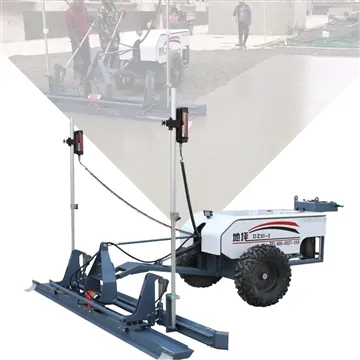
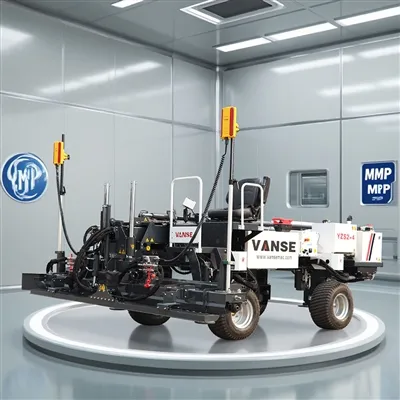
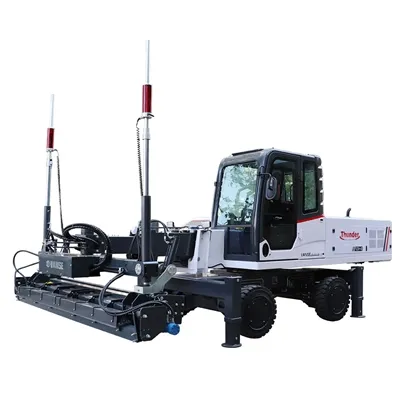
The laser leveling machine uses a scraper to take away the raised concrete and initially scrape it flat to reach the design elevation. The hydraulically driven vibration motor produces vibrations at a frequency of 4000 times/minute, driving the entire vibration plate to vibrate the concrete together. The laser paver does not need to pull a control line or support a side template to control the ground elevation. Instead, it is controlled in real time by the laser measurement and control system on the laser leveling machine. As long as the laser transmitter is not disturbed, no matter where the laser leveling machine moves, it can ensure that the overall elevation of the paved ground is not affected.
The concrete floor laser leveling machine is a construction machine that spreads the mixed concrete along the roadbed according to the given thickness, width and road type requirements, and then completes the paving of the concrete road through vibration, leveling and polishing procedures. The working device of the concrete floor laser leveling machine generally consists of a distributor, a scraper, a vibrator (including a vibrator and a vibrator), a leveler, a trowel and other devices. At the same time, it also requires the organic coordination of the frame, the walking mechanism, the operating control system and some other auxiliary mechanisms. Some models integrate all the devices into one, and some are divided into two or more independent units.
Thanks to All the Friends Who Support and Trust Shandong Vanse Machinery Technology Co., Ltd.
If you want to know more about Shandong Vanse Machinery Technology Co., Ltd. or have any questions, please feel free to contact us:
Our Factory
Shandong Vanse Machinery Technology Co., Ltd.








Share this article

About the Author: Shandong Vanse Machinery Technology Co., Ltd.
Shandong Vanse Machinery Technology Co., Ltd. is a high-tech manufacturer specializing in concrete construction machinery, including laser screeds and related equipment. The company integrates R&D, production, and global sales, with products exported to over 60 countries and widely used in infrastructure projects worldwide.
Previous Post
Next Post
Related Articles
You Might Also Like
Four reasons for you to choose laser self-leveling machine!
Four reasons for you to choose laser leveling machine! We choose the laser leveling machine in addition to the fast leveling of the equipment and the high degree of automation. After manual adjustment of the height, the equipment can operate by itself, integrating leveling, leveling, tamping, and compaction. All the work can be done. It can be completed at one time, which is very suitable for the leveling needs of large sites. (1) The leveling principle of the laser leveling machine is realized under the automatic control of the computer by using precision laser technology, closed-loop control technology and highly precise hydraulic system. This is the most prominent difference between it and other floor construction processes. specialty. (2) The leveling principle of the laser leveling machine is to rely on the leveling head driven by hydraulic power, cooperate with the laser system and the computer control system to complete the leveling work while automatically leveling. The leveling head is equipped with an integrated scraper, vibrator and leveling plate, which integrates all leveling, leveling, vibration and compaction work, and completes it at one time. The computer control system automatically adjusts the elevation 10 times per second in real time, and the vibration frequency of the vibrator with a balanced design reaches 3000 times per minute. (3) The laser transmitter used to control the ground level is arranged independently, so that the level of the ground is not controlled by the template, and no cumulative error will occur. (4) The laser leveling machine can also automatically control the longitudinal and transverse slopes, which is also completed by the laser system, computer system, hydraulic system, and mechanical system. For complex-shaped ground with high requirements such as drainage, a three-dimensional special-shaped ground treatment system can also be selected to achieve it. The laser leveling machine is developed according to the increasing demand for ground quality such as strength, flatness, levelness, etc. of modern industrial plants, large shopping malls, warehouses and other large-area cement concrete floors. Using Shenlong laser leveling machine to pave and level the cement concrete floor is much better than the ground paved by conventional methods-the ground flatness and levelness are increased by more than 3 times, and the compactness and strength are increased by more than 20%. At the same time, it can also improve work efficiency by more than 50%, and save about 35% of labor. In addition, it can easily place high-strength concrete, low-slump concrete and fiber cement. Its laser system is equipped with a variety of automatic control components to monitor the elevation of the leveling head in real time at a frequency of 10 times per second to ensure that the levelness and levelness of the ground being paved are effectively controlled. At the same time, the vibrating frequency of its powerful vibrator reaches 3000 times/min, which ensures that the concrete is vibrated and compacted, so that the entire paved concrete matrix is homogeneous and dense.What are the key points for maintaining the laser receiver of a concrete laser leveling? How to extend the service life?
The laser receiver of the concrete laser leveling is the "eye" of its precision and is a very precise electronic component. Proper maintenance and operation can greatly extend its service life and ensure construction accuracy. The following are the core points for maintaining laser receivers and specific methods to extend their lifespan: These steps are the first line of defense against problems from occurring. Gentle cleaning: Use a soft, dry cloth or suede to gently wipe the plastic/acrylic window on the surface of the receiver. Make sure it is free of dust, cement slurry and other contaminants. Avoid chemicals: Do not use alcohol, gasoline, thinners or other organic solvents or strong acid or strong alkali cleaners to wipe the window. These chemicals can corrode or make the surface blurred, affecting laser penetration. Clean the body: At the same time, clean the metal casing and bracket of the receiver to prevent the adhesion of concrete hard blocks, which may cause difficulties in disassembly or corrosion. Timely charging: After each use, regardless of the remaining power, the battery should be removed and fully charged in a timely manner. Use the original charger: Using a non-original charger may damage the battery or even the receiver circuit due to voltage/current mismatch. Storage of battery power: If you plan to leave the battery idle for a long time, charge it to 50%-70% and store it separately. Perform a charge and discharge cycle every 1-2 months. Check the appearance: Before each use and storage, inspect the receiver window for any scratches or cracks, the body for any dents or deformations, and the cables (if any) for any damage. It must be removed from the leveling machine and placed in a dedicated protective box. There should be a soft shock-absorbing inner lining inside the box. Store in a cool and dry place, avoiding high temperature, high humidity and direct sunlight. A lot of damage occurs during use, and good operating habits are of vital importance. This is the main reason for the immediate scrapping of the receiver. Whether it drops from the machine or is hit by other tools or materials, it may cause the internal components to shift, get damaged or the casing to crack. Operation suggestion: When installing and disassembling, there should be a soft object below to support it. When moving at the construction site, make sure to hold it firmly. Once the splashing cement slurry solidifies on the receiver window, it will greatly affect the signal reception sensitivity. Forcibly scraping it off is very likely to scratch the surface. Operation suggestion: If contaminated by cement slurry, it should be wiped clean immediately with a damp cloth. Do not wait for it to harden. Make sure the receiver is firmly installed on the matching bracket and the fixing knob/bolt is tightened to prevent loosening and falling off due to vibration. When disassembling, do not pull or drag roughly, especially for models with cables. Systematize the above key points to form a complete workflow. Assign specific personnel and responsibilities: Designate a specific person to be responsible for the collection, installation, disassembly, cleaning and return of the laser receiver. Make an inspection list: Prepare a simple inspection checklist, including items such as appearance inspection, cleaning, battery status, and storage. Have the person in charge sign to confirm before and after each construction. Purchase or customize a sturdy, shock-absorbing foam dedicated instrument case. This small investment can prevent losses of several thousand or even tens of thousands of yuan caused by improper storage. Even if well maintained, the receiver may experience slight drift in accuracy as it is used. It is recommended that the receiver and transmitter be sent to the equipment supplier or a professional metrology institution for accuracy calibration every 3 to 6 months or before the start of an important project. This can ensure the quality of your construction and detect potential problems early. For large or long-term projects, it is advisable to consider equipping a backup receiver. This not only ensures that the project schedule is not affected when one unit is damaged, but also allows the main equipment to have more sufficient time for maintenance and rotation. The secret to extending the lifespan of the laser receiver of a concrete laser leveling can be summarized as: Three parts use, seven parts care: Meticulous daily maintenance is more important than any subsequent repair. Anti-drop, anti-collision and anti-corrosion: Physical impact and chemical corrosion are the two major killers. Dedicated personnel, dedicated boxes, dedicated processes: Through standardized management and investment in professional storage tools, most damage risks are fundamentally eliminated. By following these key points, your laser receiver can not only work stably for a longer time, but also always ensure the high-precision quality of floor construction. Note: The parameters provided in this document are for reference only and are not mandatory. Due to differences in technical characteristics between different brands and models of laser levelers, please consult the manufacturer for a suitable solution before actual operation. This reference document assumes no responsibility for any issues arising from failure to follow the manufacturer's instructions.What are the advantages and limitations of concrete laser levelings?
Concrete laser levelings offer many advantages, including 1. High flatness: The concrete laser leveling machine uses laser technology, which can accurately control the height and slope of the ground to achieve high-precision ground leveling. 2. High efficiency: Compared with the traditional manual leveling method, the concrete laser leveling machine can greatly improve the construction efficiency and shorten the construction period. 3. Reduce material waste: Due to the high leveling accuracy, it can reduce the waste of concrete materials and reduce costs. 4. Easy to operate and maintain: The concrete laser leveling machine is simple to operate and requires low skills of workers. At the same time, the equipment is also easier to maintain. 5. Applicable to various floors: The concrete laser leveling machine can be applied to a variety of different floors, such as cement, asphalt, etc. However, concrete laser levelings also have some limitations: 1. Higher cost: The purchase and maintenance cost of a concrete laser leveling is higher, which may increase the total investment of the project. 2. Limited adaptability to terrain: The concrete laser leveler has limited adaptability to terrain, and may not be able to level some special terrain or obstacles. 3. Professional operation and maintenance are required: Although operation and maintenance are relatively simple, professionals are still required to operate and maintain the equipment to ensure the performance and life of the equipment. 4. Not suitable for small-area construction: For small-area construction projects, it may not be cost-effective to use a concrete laser leveler because of its higher cost. 5. Not suitable for short-term construction projects: Since concrete requires a certain amount of time to harden and stabilize, it may not be suitable to use a compact laser leveling for short-term construction projects. In general, concrete laser leveling machines have significant advantages in improving construction efficiency and achieving high-precision ground leveling. They are especially suitable for large industrial plants, logistics centers, airports and other places that require high-precision and high-strength floors. However, limitations such as its high cost and limited adaptability to terrain also need to be considered in practical applications.