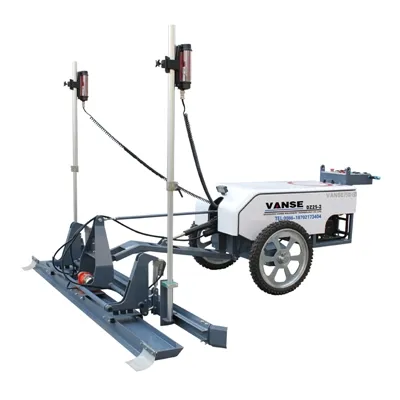
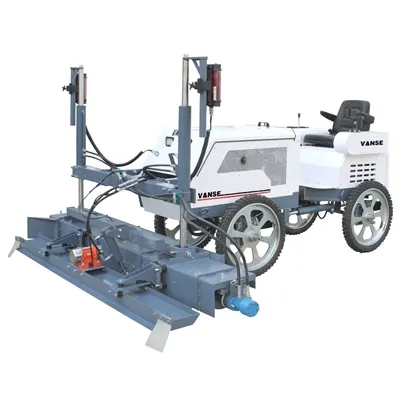
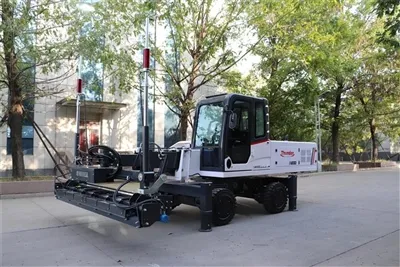
How can laser leveling machine manufacturers seize the opportunity?
October 25, 2024
How can laser leveling machine manufacturers seize the opportunity? 2
Concrete laser leveling machines have been developed for many years and have also been "flourishing" in the construction industry. However, it is difficult for us to continue to expand and strengthen the company by relying solely on traditional sales models and sales ideas, so the transformation of enterprises or sales models is unstoppable. So how should we seize the opportunity in this wave of transformation?
At present, after years of development, the laser leveling machine industry has become increasingly mature. Now the industry is also undergoing major changes. For example, with the use of the Internet and the development of e-commerce, the external environment of laser leveling machine companies is undergoing major changes, which profoundly affects the business behavior of all laser leveling machine companies. Mobile Internet has completely broken the information barrier, allowing users to obtain information anytime and anywhere. The information asymmetry between sellers and buyers gradually disappears. Therefore, the business that used to make money by information asymmetry will face death. At the same time, users are no longer easily fooled, and the saying that "buyers are not as smart as sellers" is being rewritten.
Big data helps laser leveling machine companies seize the opportunity
"Whoever masters big data will master the big future." Nowadays, many laser leveling machine companies have seen the opportunities brought by "big data". For example, with the support of big data, in addition to a specific laser leveling machine brand being able to implement product improvements, service enhancements, and order follow-up based on statistical data, it can also be associated with similar brands to achieve interactive marketing. In the past, the interactive marketing of the laser leveling machine industry relied on alliances, which were all spontaneously organized by enterprises and may not be in line with consumer needs. Now, through the intuitive presentation of big data, it can be found that users have a correlation with brand choices. Brands with a high correlation ratio can actively unite to provide users with preferential marketing or service interactions, thereby truly meeting consumer needs.
In terms of brand building, the e-commerce field is undoubtedly a blue ocean. Indeed, in today's era, mobile Internet has penetrated everywhere, and the business opportunities hidden in this world are extremely huge. If laser leveling machine companies seize the opportunity in these aspects and actively adjust their strategies, then they will definitely make a big splash in the future development.
Laser leveling machine companies can transform with big data:
In the next five years, the laser leveling machine industry will be reshuffled. Whether it is a listed company, a state-owned enterprise, or a private enterprise, they will face a very severe situation in the next five years. Especially in the next three years, the laser leveling machine industry will be dominated by big fish eating small fish and fast fish eating slow fish, which will be the norm of the industry, because the market space is so large, which is also the inevitable result of market rules. Non-listed companies may be basically eliminated or integrated. How to avoid being at a disadvantage in the competition? How to choose the direction of transformation? No one can predict the future. To grasp the market and predict the future, it is necessary to analyze a large amount of data. Moreover, the extremely popular e-commerce in recent years has provided great convenience for data collection. It is urgent for laser leveling machine companies to move towards "big data".
Although the development of the entire industry cannot be separated from leading enterprises, at the current stage, the strength of those small and medium-sized laser leveling machine manufacturers with vision, characteristics and strengths is also indispensable, especially for the application industry that is about to usher in great development. It is a time when hundreds of boats are competing for the current and thousands of sails are competing. The prospects of small and medium-sized laser leveling machine companies can still be grasped.
About the Author: Shandong Vanse Machinery Technology Co., Ltd.


Shandong Vanse Machinery Technology Co., Ltd. is a high-tech manufacturer specializing in concrete construction machinery, including laser screeds and related equipment. The company integrates R&D, production, and global sales, with products exported to over 60 countries and widely used in infrastructure projects worldwide.

Detailed explanation of application scope of laser leveling machine
Concrete laser leveling machine is widely used. It is an advanced machine used to super-flatten and level concrete floors. Its application range can be roughly divided into two categories: indoor floor engineering and outdoor floor engineering. These two categories are further subdivided. The following is a detailed introduction to the use of concrete laser leveling machine and the projects of this type that Vanse Machinery's products have done. Nowadays, concrete laser leveling machines are being used more and more widely. The specific scope of application can be divided into two categories: Vanse Machinery has done such projects as Harbin Haier workshop, Beijing Benz workshop, Baoding Great Wall Motors No. 5 spraying workshop, Shandong Classic Group steel structure production line workshop and other projects. Vanse Machinery has done such projects as: Suzhou Samsung Electronics Factory, Shandong Xingda Ecological Winery, Shandong Parkson Biological Workshop, Shandong Yuda Medical Workshop and other projects. Such projects that Vanse Machinery has done include: Xi'an Fuju Home Plaza, Shenzhen Walmart Supermarket, Wuhan Vipshop Logistics Park, Guangxi Convention and Exhibition Center, Tianjin Yupei Logistics Park and other projects. Such projects that Vanse Machinery has done include: Hubei Xiangzhou Industrial Park, Shanxi Shenlong Energy Coking and other projects. Such projects that Vanse Machinery has done include: Shandong Xinbaihui underground parking plant, Changchun FAW-Volkswagen parking lot, Hebei Hualian Supermarket large underground parking lot, Sichuan Wanda Plaza large underground parking lot, Hubei Xiangyang Dongjin Century City underground parking lot and other projects Such projects that Vanse Machinery has done include: Nanjing Huawei Electronics Company floor, Shenyang Electronics Factory floor integration, Sichuan Hualian Plaza, Hubei Xiangyang Dongjin Century City and other projects. Shandong Yanzhou Vanse Machinery Technology Co., Ltd. is the only high-tech enterprise in China that integrates R&D, manufacturing, sales, and technical services, specializing in concrete laser leveling machines. The use of "" brand concrete laser leveling machines can reduce about 60% of high-intensity labor, save about 50% of construction costs, shorten about 50% of construction period, and increase the strength and density of the floor by about 25%. The company has always been based on the tenet of "people-oriented, leading technology, honest management, and creating a well-known brand". We will provide customers with reliable products and perfect services, develop together, and create good results.

Read More
September 16, 2025
How to Control the Quality of Ultra-Large Laser-Leveled Wear-Resistant Concrete Floors
Quality control for ultra-large laser-leveled, wear-resistant concrete floors requires a comprehensive process encompassing "pre-construction prevention, in-construction control, and post-construction acceptance." Combining the technical characteristics (laser precision leveling and the synergistic effect of wear-resistant materials) with the challenges of ultra-large-scale construction (temperature cracking, flatness control, and interface bonding), a control system is established across five core dimensions: personnel, materials, equipment, process, and environment. This can be broken down into the following key steps: Pre-construction preparation for ultra-large flooring directly impacts subsequent quality stability, focusing on addressing three key issues: "unified technical standards, adequate resource allocation, and proactive risk mitigation." Drawing Refinement and Technical Briefing: Based on the building's function (e.g., load and flatness requirements for factories and logistics warehouses must be clearly defined), floor compartment design should be refined (extra-large areas should be divided into 6m×6m or 8m×8m compartments to avoid thermal stress cracking). Key parameters should be clarified, including laser leveling accuracy (typically ±3mm/2m), wear-resistant material dosage (approximately 5-7kg/m2 for metallic aggregates, 3-5kg/m2 for non-metallic aggregates), and concrete strength grade (minimum C30, flexural strength ≥4.0MPa). Technical briefings should be conducted for all employees, with a focus on training laser operators, concrete vibrators, and wear-resistant material spreaders to ensure that all positions understand the key technical aspects of flatness control, wear-resistant layer bonding, and crack prevention. Risk Contingency Plan Development: To address potential issues that may arise during large-scale construction (e.g., insufficient initial setting time for concrete resulting in inability to apply the wear-resistant layer, laser equipment failure resulting in uneven flatness, and cracking due to high summer temperatures), develop a contingency plan: Confirm the initial setting time of concrete with the commercial concrete mixing plant in advance (adjusted to the temperature; ≥4 hours in summer, ≥6 hours in winter), and add a retarder if necessary. Keep one or two spare sets of core concrete laser leveling components (such as laser transmitters and receivers) to prevent interruptions to construction due to equipment failure. Prepare awnings and spray cooling equipment for summer construction, and thermal blankets and electric blankets for winter construction to maintain a temperature difference between the inside and outside of the concrete at ≤25°C. Materials are the core of floor quality. Three key materials, concrete, wear-resistant materials, and surface treatment agents, require full-process inspection: Material Type Key Control Points Inspection Standards Ready-mixed concrete 1. Mix Ratio: Crushed stone particle size 5-20mm (avoid large particles that affect smoothness), sand content 35%-40%; Slump test for each truck upon arrival. Compressive/flexural test blocks are retained according to specifications (one set per 100m³; less than 100m³ is counted as one set). 2. Slump: 120 ± 20mm (slump too large will cause sanding, too small will make vibration difficult); 3. Initial Setting Time: Adapt to the construction schedule (single-chamber construction requires leveling and wear-resistant layer application to be completed before initial setting). Wear-resistant material 1. Composition: Metallic aggregates (such as iron filings and corundum) must have a carbon content ≤ 0.2%, and non-metallic aggregates (such as quartz sand) must have a hardness ≥ Mohs 7; Sampling is randomly sent for inspection upon arrival to test compressive strength (≥60MPa) and abrasion resistance (wear loss ≤0.3g/cm²). 2. Moisture Content: ≤ 1% (avoid clumping that affects spreading uniformity); 3. Adhesion: No risk of delamination at the concrete interface. Interface treatment agent Used at the interface between the concrete base and the wear-resistant layer (if separate-chamber construction requires treatment of the interface between new and old concrete), high adhesion and crack resistance are required. Bond strength is also tested upon arrival (≥1.5MPa). Expired or clumped products are strictly prohibited. The core equipment for laser-leveling wear-resistant flooring is the concrete laser leveling. Its accuracy directly determines the flatness of the floor, so key control measures are required: Equipment Calibration: 24 hours before construction, calibrate the concrete laser leveling blade, vibrator, and laser receiver using a standard calibration ruler (2m straightedge) to ensure the laser transmitter's leveling error is ≤0.1mm/m and the screed blade's flatness error is ≤0.5mm. Equipment Selection: For very large areas (single area ≥1000㎡), a "large concrete laser leveling" (working width ≥2.5m) should be used, combined with a small walk-behind concrete laser leveling for corners (within 300mm of the wall). Equipment Maintenance: Before construction daily, check the equipment's fuel, hydraulic oil, and vibrator motor. After work, clean the screed blade and laser head to prevent concrete residue from affecting subsequent use. Large-scale floor construction requires a "divided-cell flow" approach. The connection between processes within each cell (concrete pouring → laser leveling → wear-resistant layer application → joint cutting and maintenance) is central to quality control, requiring on-site supervision of these five key processes. Separate compartment pouring: Strictly divide the construction area according to pre-designed compartment gaps, using the "skip compartment method" (with ≥48 hours between each compartment) to avoid temperature cracking caused by continuous pouring. The "slant layer method" is used during pouring, with each layer ≤300mm thick. The placement speed is matched to the laser leveling speed (approximately 10-15 m³/h). Vibration Control: After concrete placement, first use an inserted vibrator (vibration interval ≤500mm, vibration time 15-20 seconds, until no bubbles escape) to achieve compaction. Then, use a laser leveler to perform a simultaneous "vibration + leveling" operation (vibration frequency 3000-5000 times/minute) to ensure concrete density (rebound strength must meet the standard) while avoiding excessive vibration that can cause aggregate sinking and surface sanding. Benchmark Setting: The laser transmitter must be set up in a location away from the construction area and free from vibration interference (such as nearby fixed structures). Set the laser baseline according to the design elevation and recheck the baseline every two hours to prevent transmitter drift. Working Path: The concrete laser leveling uses a staggered back-and-forth method (first pass horizontally, second pass vertically). The screed height must be fine-tuned based on the concrete slump (higher slumps, lower slumps). Ensure the finished concrete surface is ≤3mm/2m flat. (Use a 2m ruler for immediate inspection, and correct any unsatisfactory areas immediately.) Corner Treatment: For areas beyond the concrete laser leveling's reach, such as walls and column bases, manual leveling is performed using a small handheld concrete laser leveling with an aluminum alloy screed to ensure consistent flatness across the entire surface. The timing and uniformity of spreading wear-resistant material directly impacts its bond with concrete. Spreading should be done in two stages, with strict timing controls. First Spreading: After the concrete is poured and leveled, wait until the surface moisture has evaporated to the point where no visible indentation is observed when pressed with a finger (approximately 1-2 hours before initial setting). Apply 60% of the total amount of material, evenly spreading using a "plum blossom" pattern (avoiding any accumulation). After spreading, use a grinder (with a circular disc) at low speed to embed the wear-resistant material into the concrete surface. Second Spreading: 30-60 minutes after the first grinding, when the surface of the wear-resistant material has initially set, spread the remaining 40% of the wear-resistant material. Use a grinder (with a different blade) at high speed until the surface is smooth and scratch-free. Control the grinding pressure to avoid thinning the wear-resistant layer; the thickness should be ≥ 3mm. Large-area floors are most susceptible to shrinkage cracks, requiring stress relief through slitting. Key control points: Joint cutting time: Start 24-48 hours after concrete pouring (adjusted to the temperature, within 24 hours in summer and within 48 hours in winter), when the concrete strength reaches 25%-30% of the design strength (rebound value approximately 20 MPa). Avoid premature joint edge cracking and delayed joint cutting, which can cause random cracking. Joint cutting parameters: Compartment joints should be "through joints" (depth ≥ 1/3 of the floor thickness; for example, for a 150mm thick floor, the joint depth should be ≥ 50mm). Longitudinal and transverse joint spacing should be designed based on the compartment design (6-8m), with a joint width of 5-8mm. Polyurethane sealant should be applied promptly after joint cutting to prevent rainwater from seeping into the base layer. Temporary contraction joints: If the area of a single compartment is large (≥ 1000 m2), temporary contraction joints (one every 3-4m, 20-30mm deep) should be installed during pouring. These temporary contraction joints will be extended to through joints during subsequent joint cutting. Inadequate curing can lead to sanding and insufficient strength on the concrete surface. Therefore, a "covering + watering" curing method is necessary. Curing Time: Within 12 hours after finishing the wear-resistant layer, immediately cover with plastic film and geotextile (to prevent rapid evaporation). Curing period: ≥7 days (if using impermeable concrete, curing period: ≥14 days). Curing Frequency: Water 3-4 times daily (increase to 5-6 times in summer) to ensure the geotextile is constantly moist to prevent the concrete surface from drying out and cracking. During winter curing, cover with a thermal blanket and maintain an ambient temperature of ≥5°C (if temperatures fall below 5°C, winter construction measures, such as adding antifreeze, are required). After completion of ultra-large floor construction, a comprehensive inspection is required in accordance with the "Concrete Structure Construction Quality Acceptance Code" (GB50204) and the "Technical Code for Wear-Resistant Concrete Floors" (JGJ/T 337), focusing on the three core indicators of flatness, wear resistance, and crack control. Appearance Inspection: A comprehensive inspection of the floor surface is required. The floor must be free of sanding, peeling, exposed surfaces, or scratches. The wear-resistant layer must be uniform in color with no significant color variations. Crack Inspection: A crack width gauge is used to inspect for cracks. "Non-through surface cracks" (width ≤ 0.2mm) are permitted. "Through cracks" or cracks with a width greater than 0.2mm are strictly prohibited. If excessive cracks are found, the cracked area must be chiseled out (extending 100mm), and the concrete and wear-resistant layer must be re-poured. After rectification, re-inspection will be conducted. Test Items Testing Method Qualification Criteria Smoothness Using a 2m straightedge and a feeler gauge, test at five points (evenly distributed) per 100 m2, recording the maximum deviation. Deviation at any point ≤ 3mm/2m, and a pass rate ≥ 95% Abrasion Resistance Using the Taber Abrasion Test, sample a representative area (100 mm × 100 mm) and weigh it after 500 cycles of abrasion. Abrasion loss ≤ 0.3g/cm² (metal aggregate wear layer), ≤ 0.5g/cm² (non-metal aggregate wear layer) Compressive Strength Concrete test blocks were collected according to specifications (one per 1000 m2) and tested after 28 days of standard curing. Concrete compressive strength ≥ design value (e.g., C30 ≥ 30MPa), flexural strength ≥ 4.0MPa Adhesive Strength Using the Pull-Out Test, samples (50 mm diameter) were taken at the interface between the wear-resistant layer and concrete, and the pull-out strength was measured. Bond strength ≥ 1.0MPa, with failure mode being "cohesive failure of concrete" (not interfacial debonding) After acceptance, finished product protection measures must be implemented to prevent subsequent construction (such as equipment installation and pipeline laying) from damaging the floor: Do not allow heavy equipment (such as forklifts or cranes) to directly roll over the floor (a steel plate is required). Avoid sharp objects (such as rebar or steel pipes) from striking the floor surface. If holes need to be drilled in the floor (e.g., to install a floor drain), use specialized drilling equipment. Manual chiseling is strictly prohibited to prevent cracking of the surrounding concrete. Large-scale floor construction is susceptible to extreme environmental impacts, such as high temperatures, low temperatures, and strong winds. Targeted adjustments to control measures are required: During high-temperature construction (temperature ≥30°C): Adjust the concrete pouring time to the morning and evening (avoid the high-temperature period of 10:00 AM to 4:00 PM); Pour the concrete immediately after arrival to avoid prolonged standing (this shortens the initial setting time); Immediately cover the wear-resistant layer after finishing to maintain moisture, and increase the watering frequency (once every hour). Low-temperature construction (temperature ≤ 5°C): Add antifreeze to the concrete (dosage according to the instructions, strictly prohibit exceeding the standard) to ensure the concrete enters the mold at a temperature ≥ 10°C. After construction, cover with a thermal blanket and electric heating blanket to maintain an ambient temperature ≥ 5°C. Extend the curing period (≥ 10 days) and remove the insulation only after the concrete strength reaches 70%. In strong winds (wind speed ≥ 5m/s): Suspend the application of the wear-resistant layer (to prevent the material from being blown away by the wind); Immediately cover the concrete with plastic sheeting after pouring (to prevent rapid evaporation of surface moisture and resulting in sanding). Through the above full-process and multi-dimensional quality control, the three core quality problems of "poor flatness, peeling of the wear-resistant layer, and shrinkage cracks" of ultra-large-area laser-leveled wear-resistant concrete floors can be effectively solved, and ultimately the floor's "high strength, high wear resistance, and high flatness" requirements can be achieved. Note: The parameters provided in this document are for reference only and are not mandatory. Due to differences in technical characteristics between different brands and models of laser levelers, please consult the manufacturer for a suitable solution before actual operation. This reference document assumes no responsibility for any issues arising from failure to follow the manufacturer's instructions.
Read More
December 23, 2025
Are concrete laser leveling machines worth it
Excellent question. This is a common dilemma for contractors, serious DIYers, and farmers. The short answer is: Yes, they are absolutely worth it for professionals and for specific large-scale DIY projects. Let's break down the value proposition, the costs, and who should (and shouldn't) buy one. Also called a laser grader or concrete leveling screed, it's a machine that uses a rotating laser level and a sensor-equipped drag blade or screed to automatically grade soil or strike off concrete to a perfectly level or sloped plane. The operator sets the laser, and the machine does the work, moving material to achieve the specified grade. Unparalleled precision and consistency: This is the biggest selling point. You will achieve an extremely high level of flatness that is very difficult to achieve by hand, especially in large areas. This is crucial for warehouse floors, large courtyards, and any drainage or subsequent floor installation projects. Massive Time and Labor Savings: For large slabs (e.g., 1,000+ sq. ft.), a laser grader can do in 1-2 hours what would take a skilled 4-5 person crew using manual screeds and bull floats all day. It reduces the need for a large, highly experienced finishing crew. Reduced Physical Strain & Skill Dependency: It takes much of the "art" and back-breaking labor out of achieving a flat slab. The operator needs to understand the machine and concrete basics, but doesn't need the same level of finishing intuition as a master concrete finisher. Material Efficiency: By precisely cutting to grade, you can often use less concrete because you're not over-pouring to compensate for low spots. Precise subgrade preparation also saves on base material. Versatility: Most machines can handle both fine grading of compacted sub-base (dirt/gravel) and striking off/pouring concrete. This one-tool-does-both capability is a huge efficiency gain on a job site. Professional Credibility and Competitive Edge: Offering laser-graded flatwork is a major marketing point and allows you to bid on larger commercial or high-end residential projects that demand superior flatness. High initial investment: A new professional-grade machine may cost more than 40,000 US dollars. Even smaller riding models start at tens of thousands of dollars. Although the price of second-hand machines is reasonable, there is a risk of maintenance. Not for Small Jobs: The setup time (tripod, laser, calibration) means it's inefficient for tiny pours like a single sidewalk slab or a small porch. It shines on open areas. Learning Curve and Maintenance: You need to learn to set up the laser plane, operate the machine, and perform basic maintenance. It's a piece of mechanical/electronic equipment that can break down. Transportation: These machines are heavy and require a trailer and a capable vehicle to move them. Doesn't Replace All Skill: You still need a crew to place concrete, run vibrators, edge, and finish (broom, trowel) behind the machine. It doesn't automate the entire process. Professional Concrete Contractors: If you pour slabs for garages, warehouses, basements, or large driveways regularly, it's a no-brainer. The ROI in labor savings and competitive advantage is rapid. Site Preparation & Grading Contractors: For precise grading of building pads, sports fields, or arena floors before concrete. Large-Scale Agricultural Operations: For leveling barn floors, silage pads, or large equipment pads. The Extremely Serious DIYer/Homeowner: Only if you have a massive project (e.g., grading and pouring a 2,000+ sq. ft. shop yourself) and value perfection over cost. For 99% of homeowners, renting is the answer. This is often the perfect solution. Rental yards commonly carry laser screeds. You can typically rent one for: $300 – $800 per day $1,000 – $2,000 per week For a one-off large project (e.g., pouring your own backyard shop), renting for a day is extremely cost-effective and gives you all the benefits without the capital outlay and storage/maintenance headaches. Scenario Recommendation Professional Contractor YES. A business investment with clear ROI. Start by renting to try it, then buy when your volume justifies it. Regular Large DIY Projects POTENTIALLY. If you're building multiple outbuildings over years, buying used could pay off. One Big DIY Project RENT. This is the smartest financial move. Small Projects/Patios NO. Stick to traditional screeding methods. Final Thought: For anyone whose business or major project involves creating flat surfaces, a concrete laser leveling machine isn't just a tool-it's a force multiplier. It elevates quality, saves money on labor, and reduces physical wear on crews. For them, it's not just worth it; it's essential. For everyone else, the rental market makes the technology accessible without the long-term commitment. Note: The parameters provided in this document are for reference only and are not mandatory. Due to differences in technical characteristics between different brands and models of laser levelers, please consult the manufacturer for a suitable solution before actual operation. This reference document assumes no responsibility for any issues arising from failure to follow the manufacturer's instructions.