Technical Knowledge
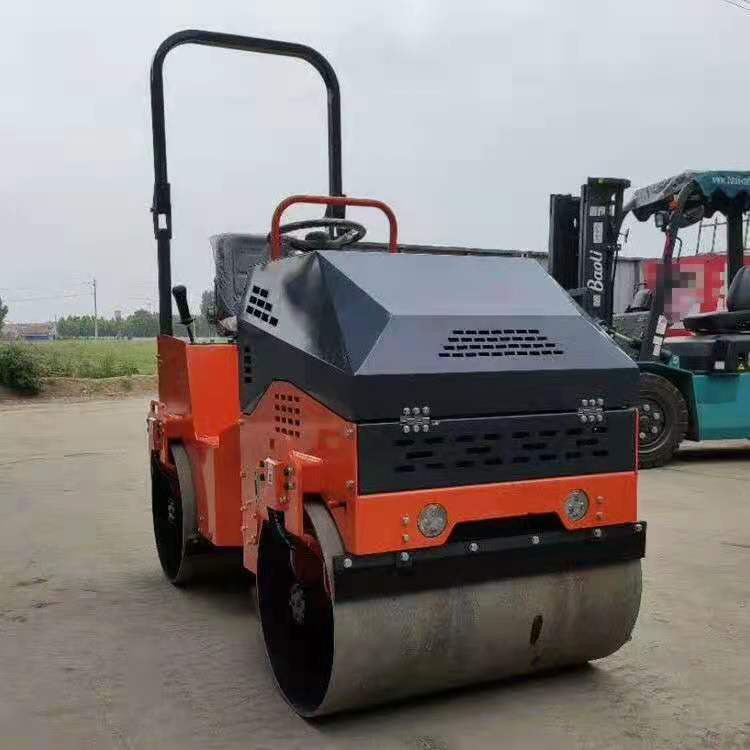
The Main Points of Small Roller in Subgrade Construction
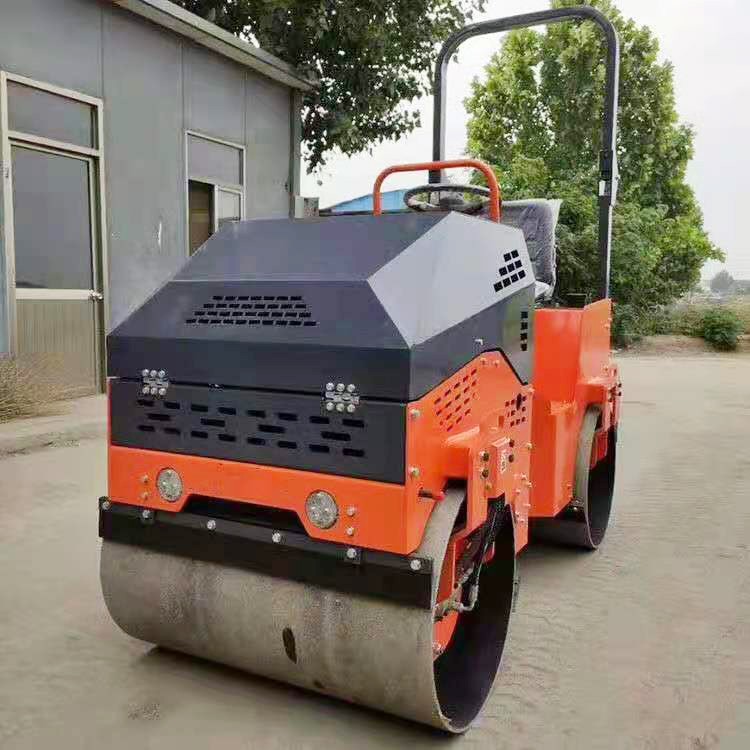
1, the use of small roller roadbed construction, in order to ensure that the first good drainage facilities to avoid flooding.
2, roadbed fill in the construction of the first embankment, remove the topsoil to the sidelines, fill the hole leveling and then compaction, embankment stability does not sink.
3, small roller manufacturers to remind you, roadbed filler must choose a good, to ensure that soil stability, strength particle size to meet the construction requirements.
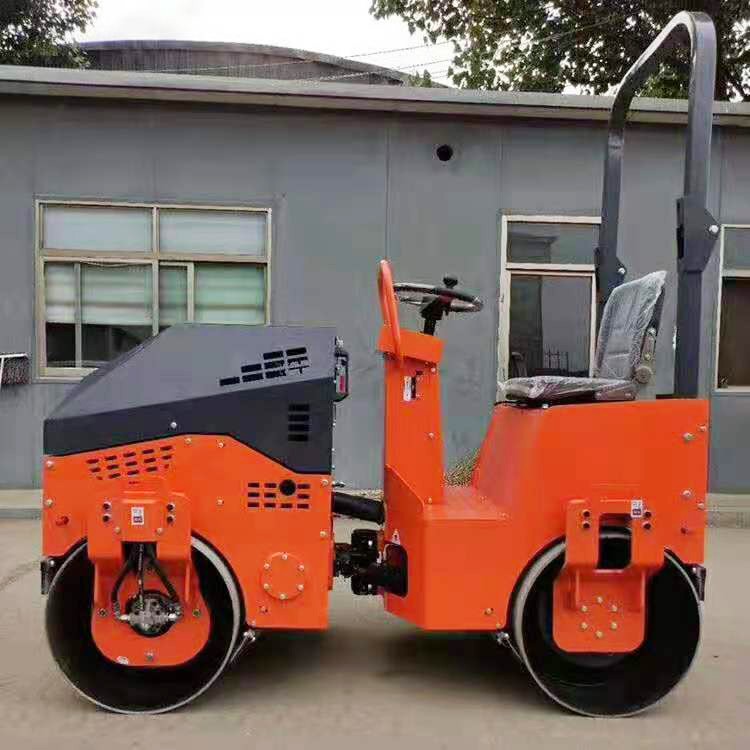
4, embankment fill ladder with each other to join the old and new interface to be linked to the slope on the digging steps, sub-section to fill the ladder, while the construction layer stack.
5, different soil fill embankment embankment fill is not the same, in accordance with the soil sub-layer, strength and permeability as the basis, to prevent roadbed instability.
Thanks to All the Friends Who Support and Trust Shandong Vanse Machinery Technology Co., Ltd.
If you want to know more about Shandong Vanse Machinery Technology Co., Ltd. or have any questions, please feel free to contact us:
Our Factory
Shandong Vanse Machinery Technology Co., Ltd.








Share this article

About the Author: Shandong Vanse Machinery Technology Co., Ltd.
Shandong Vanse Machinery Technology Co., Ltd. is a high-tech manufacturer specializing in concrete construction machinery, including laser screeds and related equipment. The company integrates R&D, production, and global sales, with products exported to over 60 countries and widely used in infrastructure projects worldwide.
Previous Post
Next Post
Related Articles
You Might Also Like
What methods can effectively extend the service life of the laser leveling machine?
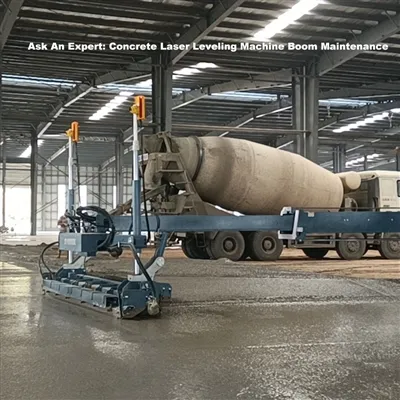
Laser leveling machine is a great helper for leveling machinery in construction, but road construction workers can always feel that after several years of use, the equipment is far from being as flexible and convenient as before. What is the reason? Many users only know the surface, but not the reason, and can only procrastinate, and regret it when they use it next time. During the use of laser leveling machine, due to the different intensity of work, it is very likely to have some minor faults after use. At this time, road construction workers should pay attention to it. After use, they should do some daily maintenance on the machine properly, which can extend the service life of the machine equipment. 1. Check the connection and fastening of each component of the laser leveling machine, whether the connecting bolts are loose or broken, and tighten or replace them if necessary. Check for leaks and eliminate leaks in various parts in time. Pay attention to the amount of engine oil, fuel, coolant and hydraulic oil, and add new oil to the oil mark as required. Is there an appropriate amount of grease in the centralized lubrication device? 2. Be careful not to work under a load that exceeds the load that the machine can bear, and use the machine to the best of your ability. As a laser leveling machine manager, when designating an operator, the laser leveling machine random data and operation manual should be handed over to the operator so that he can master the mechanical performance and operating procedures normally, and the relevant data should not be withheld at will. 3. Try to ensure the uniform addition and subtraction of the mechanical load to make the machine in a relatively gentle load change. Specifically, it is to add and subtract the throttle more evenly to prevent the ups and downs of the engine and working device. 4. There will be a lot of dust and mud on the laser leveling machine after construction. First, wipe the dust on the laser leveling machine clean, and wipe the dirt and oil stains with thin paper or cotton cloth. 5. If the laser signal is lost during the construction of the laser leveling machine and the machine needs to be restarted, the interval time needs to be more than ten seconds. 6. If there are too many stains, you can soak a soft cloth in water diluted with a neutral detergent, wring it out and wash it. Vanse Laser Leveling Machine Manufacturer reminds everyone to remember not to use volatile oil, thinner, gasoline and other chemicals for cleaning and wiping. Developing good habits of operating the laser leveling machine will be of great help in the future construction and storage of the laser leveling machine. This not only improves work efficiency, but also extends the service life of the machine to a certain extent.Ask An Expert: Concrete Laser Leveling Machine Boom Maintenance
This is an excellent, specific question. Vanse offers a range of concrete laser leveling machines with telescopic booms (like the YZ40-4E), and their maintenance philosophy is critical for machine longevity and leveling accuracy.1 Based on the general requirements for all laser levelings and the guidelines provided by Vanse, here is an expert summary focusing specifically on the telescopic boom. Vanse emphasizes comprehensive maintenance, including regular checks on lubrication points and the overall integrity of the machine.2 The key to maintaining a Vanse telescopic boom is managing friction, eliminating "slop," and aggressively fighting concrete abrasion. While some specialized brands (like Ligchine) advise strictly against grease on the boom tubes, Vanse machines often follow a more traditional heavy-duty equipment approach for their structural moving parts, requiring you to locate and service specific grease points. Zerk Fittings: Vanse machines have designated lubrication points (zerk fittings) on structural pivots, the leveling head, and potentially internal boom components like rollers or cylinders. You must consult your specific Vanse operation or maintenance manual for the location and frequency of these points. Expert Tip: When greasing any part on the boom near the telescoping tubes, be extremely careful not to over-grease. Wipe away all excess grease immediately, as it will attract concrete dust, forming an abrasive paste that damages the boom wear pads.Cylinder piston rod: Check for any scratches, bends or continuous leakage. Chain Lubrication: If your model uses an internal chain drive for boom extension, ensure the chain is regularly lubricated with the specified chain oil or Open Gear Lubricant (OGL) and that the tension is checked often. The most critical maintenance for your FF/FL numbers is ensuring the telescopic boom sections are supported properly to prevent lateral or vertical movement ("slop"). The Check: Fully extend the boom and manually attempt to wiggle the end section up/down and side-to-side. There should be almost zero discernible play. Any movement compromises the accuracy of your leveling head. The Process: Wear pads (shims) and rollers guide the boom. As they wear, the clearance increases. Regularly inspect the pads for deep scoring or embedding of concrete grit. Grit requires immediate cleaning or pad replacement. Refer to your Vanse manual for the specific procedure to add shims or adjust the tensioners/rollers. Maintaining the correct clearance is essential. Vanse guidelines stress the importance of cleaning, and for the boom, this is the most effective preventative maintenance. Concrete Slurry: Use a power washer to clean off all concrete slu rry and dust immediately after the pour. Hardened concrete on the boom tubes and the leveling head acts as abrasive sandpaper on the wear pads every time the boom moves. Hydraulic Rods: Pay special attention to the hydraulic cylinder rods that move the boom and leveling head. Ensure they are clean before retraction. Dust or concrete on the rod will damage the seals inside the cylinder, leading to premature hydraulic failure. Pressure maintenance: For the lifting cylinder, observe whether there is obvious "sinking" (i.e., internal leakage) after it is lifted. Maintenance Task Frequency Purpose Clean Boom Tubes After Every Use Prevent abrasive wear (scoring) and remove weight buildup. Grease Bearings/Pivots After Every Use / Daily Purge concrete slurry from high-speed bearings (e.g., auger, vibrator) and lubricate structural pins. Inspect Wear Pads/Rollers Weekly / Monthly Check for slop/wobble. Adjust clearance to maintain optimal tightness. Check Hydraulic Hoses Daily Inspect for rubbing, chafing, or kinks, especially where they track inside the boom. Note: The parameters provided in this document are for reference only and are not mandatory. Due to differences in technical characteristics between different brands and models of laser levelers, please consult the manufacturer for a suitable solution before actual operation. This reference document assumes no responsibility for any issues arising from failure to follow the manufacturer's instructions.Does the automatic elevation adjustment function of the intelligent concrete laser leveling have a high error rate in actual construction?
The simple and straightforward answer is: The automatic elevation adjustment function of the intelligent concrete laser leveling has an extremely low error rate in actual construction, and its precision and efficiency are far beyond those of traditional manual methods. Below, I will explain in detail why its error rate is low and in what circumstances errors might occur. The high precision of the intelligent laser leveling mainly relies on the closed-loop control composed of its three major systems: Laser emitter: A fixed laser emitter is set up in the center of the construction area, which will form an absolutely horizontal laser reference plane covering the entire working surface. The precision of this laser plane is extremely high, typically reaching ±1.0mm/10m or even higher. Compared with the traditional approach: It has replaced the visual and human errors caused by relying on manual threading, rulers, etc. in the traditional way. Laser receiver: The mast on the leveling is equipped with a laser receiver to capture laser signals in real time. The controller: The receiver transmits the signal to the on-board computer (PLC), which calculates in real time the precise height difference between the current bottom of the scraper of the leveling and the laser reference surface. Compared with the traditional way: This "brain" replaces the experience and judgment of the master, eliminating human uncertainty. Hydraulic cylinder: According to the instructions of the "brain", the hydraulic system will instantly (with a response time measured in milliseconds) drive the lifting cylinders at both ends of the flattening head, keeping the scraper precisely at the height set by the laser reference. Compared with the traditional method: No matter how the foundation undulates (such as being soft or hard below), the leveling head can automatically adjust and maintain a constant elevation, while manual operation will be "deceived" by the unevenness of the foundation, resulting in an uneven ground in the end. This "eye-brain-hand" system works in coordination to form a real-time, closed-loop automatic control system, thus ensuring the ultimate accuracy of the elevation. Elevation accuracy: Under normal operation, the intelligent laser leveling can control the flatness of the floor within ±3mm/3m. For large-area integral floors, the overall elevation error can be easily controlled within ±5mm. Some high-end models can even perform better under ideal conditions. Construction efficiency: Its efficiency is 10 to 20 times that of manual labor, significantly shortening the construction period. Ground quality: As high-frequency vibration and leveling are carried out simultaneously, the density of the concrete is uniform, which can effectively avoid problems such as hollowing and peeling. Although the machine itself is of extremely high precision, the principle of "garbage in, garbage out" still applies. The errors in actual construction mainly stem from factors outside the machine rather than the failure of the machine's own automatic adjustment function. Source of error Explanation How to avoid 1. Incorrect benchmark setting The laser emitter itself was not leveled or was set up unstably and knocked over. This is the most fatal mistake, which can cause the entire working surface to tilt or go wrong. After erection, conduct a double inspection to ensure its stability and accuracy within the allowable range. 2. Improper handling at the grassroots level The flatness of the foundation (crushed stone cushion layer) is too poor, and the height fluctuation is too large. Although the leveling can adjust automatically, extreme drops may exceed its adjustment range or cause uneven concrete thickness. Strictly control the laying and compaction flatness of the base layer. 3. Concrete batching and paving Unstable slump of concrete (sometimes dry and sometimes thin), uneven particle size of aggregates, or excessive differences in initial flatness during paving will all bring difficulties to fine leveling. Ensure the stability of concrete quality. When spreading, it should be roughly uniform, and there should be no piles of materials that are too high or too low. 4. Operator skills The operator's lack of proficiency and improper planning of the walking path have led to leakage vibration or height differences at the junctions. Employ experienced operators and receive professional training. 5. Later Maintenance and load If people or equipment are placed on the concrete before it reaches sufficient strength, or if it is improperly maintained (such as losing water too quickly), causing uneven shrinkage and cracking, it will damage the already formed flatness. Strictly carry out post-maintenance and prohibit loading until the strength is reached. The automatic elevation adjustment function of the intelligent concrete laser leveling is itself very reliable with an extremely low error rate. It is a mature technology, and its features of high precision and high efficiency have been fully verified in large-scale floor construction in factories, warehouses, shopping malls, etc. both at home and abroad. The final construction accuracy does indeed depend on the combination of "advanced equipment + standardized procedures + qualified personnel". The laser leveling machine has solved the problems of "equipment" and most of the "process", automating and digitizing the most crucial and labor-dependent link of elevation control, thereby minimizing human errors and fundamentally ensuring the ultra-high flatness of floor construction. Therefore, as long as the preparatory work in the early stage and the maintenance in the later stage are in place, the error rate of construction using it can be completely controlled at an extremely low level. Note: The parameters provided in this document are for reference only and are not mandatory. Due to differences in technical characteristics between different brands and models of laser levelers, please consult the manufacturer for a suitable solution before actual operation. This reference document assumes no responsibility for any issues arising from failure to follow the manufacturer's instructions.