Technical Knowledge
Testing methods and standards for the flatness of concrete floors
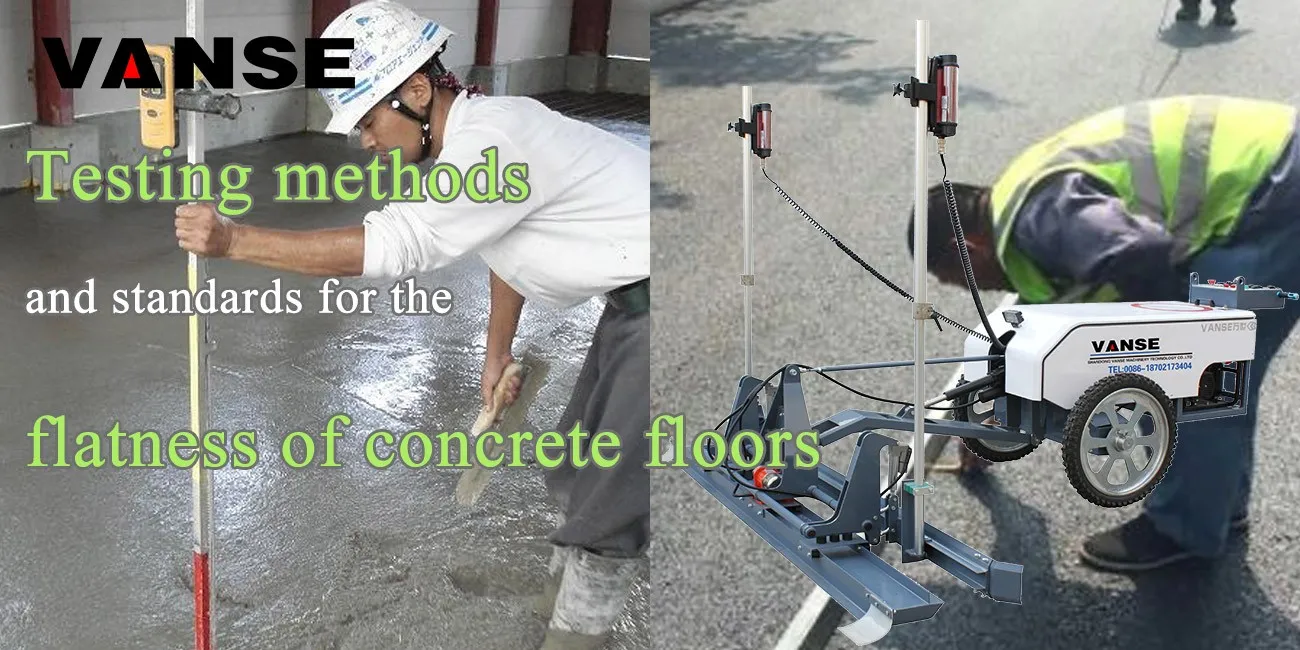
The detection of the flatness of concrete floors is crucial to ensure the quality of the floor and subsequent use functions. The following are its common detection methods and standards:
Detection method
– Ruler and feeler gauge detection:
This is the most commonly used method. Place the ruler vertically on the ground, and then use the feeler gauge to measure the size of the gap between the ruler and the ground. Usually multiple measuring points are selected on the ground, such as one point every 2-3 meters, and the flatness of different positions is detected and the data is recorded.
– Level detection:
Use the level to establish a horizontal reference plane, measure the elevation difference of different points on the ground relative to the reference plane, and then calculate the flatness of the ground. This method has high accuracy and is suitable for floors with high flatness requirements, such as industrial plants, precision instrument workshops, etc.
– Laser leveling instrument detection:
Use laser technology to measure the flatness of the ground. The instrument emits a laser beam, receives reflected light through the sensor, automatically measures the ups and downs of the ground, and directly obtains the flatness data. This method is efficient and accurate, and can quickly obtain a large amount of measurement data, but the equipment cost is high.
Testing standards
– General industrial and civil building floors:
According to the "Construction Quality Acceptance Code for Building Floor Engineering" (GB 50209 – 2010), the flatness deviation of cement mortar floors and concrete surface floors is 5mm.
– Industrial plant floors:
For industrial plants with special requirements, such as electronic plants, food processing workshops, etc., the ground flatness requirements may be higher. For example, the flatness requirements of electronic plant floors may reach 2-3mm to meet the installation and operation requirements of high-precision equipment.
– Outdoor concrete floors:
Such as roads, squares, etc., usually implement the "Urban Road Engineering Construction and Quality Acceptance Code" (CJJ 1-2008) and other relevant standards. For cement concrete pavement, the flatness is tested with a 3m ruler, and the allowable deviation is 7mm.
In actual testing, the appropriate testing method and acceptance standard should be determined according to the design requirements of the specific project and relevant specifications and standards to ensure that the flatness of the concrete floor meets the use requirements.
Click the below to jump immediately!!!


CONCRETE LASER LEVELING MACHINE


TRACKED MINI DUMPER
Thanks to All the Friends Who Support and Trust Shandong Vanse Machinery Technology Co., Ltd.
If you want to know more about Shandong Vanse Machinery Technology Co., Ltd. or have any questions, please feel free to contact us:
Our Factory
Shandong Vanse Machinery Technology Co., Ltd.








Share this article

About the Author: Shandong Vanse Machinery Technology Co., Ltd.
Shandong Vanse Machinery Technology Co., Ltd. is a high-tech manufacturer specializing in concrete construction machinery, including laser screeds and related equipment. The company integrates R&D, production, and global sales, with products exported to over 60 countries and widely used in infrastructure projects worldwide.
Previous Post
Next Post
Related Articles
You Might Also Like
The causes of excessively high oil temperature in the hydraulic system of the power trowel machine
Excessively high oil temperature in the hydraulic system of concrete power trowel is a common and highly worthy issue. Long-term high temperatures will rapidly accelerate the deterioration of hydraulic oil and the damage of components, leading to a decline in equipment efficiency or even paralysis. The following are the main causes of excessively high oil temperature in the hydraulic system. You can investigate them from simple to complex Low oil level: Insufficient oil volume causes the oil pump to be sucked empty, resulting in insufficient circulating oil volume. The oil rubs vigorously inside the pump and heats up quickly, while the cooling effect also deteriorates. Excessively high oil level: There is insufficient space for the oil in the fuel tank, making it difficult for foam and air to separate. The mixture of oil and air will accelerate oxidation and temperature rise. Improper oil viscosity: Hydraulic oil with a viscosity that is either too high or too low was used. The viscosity is too high, the internal frictional resistance is large, and more heat is generated. When the viscosity is too low, internal leakage increases, the efficiency of the oil pump decreases, and energy is converted into heat. Oxidation and deterioration of the oil: The hydraulic oil has been in use for too long and has been severely oxidized and contaminated. Deteriorated oil has a decline in lubrication performance and anti-wear performance, which will lead to increased friction and temperature rise among various components. This is one of the most common reasons. The relief valve is the safety valve of the system. If the set pressure is too high or the valve core is stuck in the normally open or normally closed position, it will cause the hydraulic oil to continuously flow back to the oil tank through the relief valve under high pressure. This "pressure relief" process will convert a large amount of hydraulic energy into heat energy, causing the oil temperature to rise rapidly. When the internal components of the pump (such as plungers, gears, and blades) wear out, internal leakage will be very severe. High-pressure oil leaked inside the pump into the low-pressure area, generating a large amount of heat. This is usually accompanied by the phenomenon of overall machine weakness and a decline in work efficiency. The valve core of the directional control valve that controls the lifting and Angle of the polishing disc is worn, and the seal fails, causing high-pressure oil to flow and leak inside the valve, generating heat. Air-cooled cooler: The heat dissipation fins are severely blocked by dust, oil sludge and cement powder, resulting in a sharp decline in heat dissipation efficiency. Insufficient rotational speed of the cooling fan or its complete stop can also cause the same problem. Water-cooled coolers: Scaling or blockage of impurities in the internal waterways affects the heat exchange efficiency. The motor driving the fan is damaged, the circuit malfunctions, or the drive belt slips or breaks, causing the fan not to rotate or the rotational speed to be too low, and thus unable to provide sufficient air volume to the cooler. In pursuit of efficiency, operators keep the equipment running at maximum power or under overload conditions continuously, maintaining a high pressure in the hydraulic system, which naturally generates a large amount of heat. Construction is carried out in the hot summer when the ambient temperature is already high. If the equipment is still operating in an environment with poor ventilation, heat will be even more difficult to dissipate. The return oil pipeline is not unobstructed, resulting in excessive back pressure of the return oil. When the oil returns to the oil tank, the resistance is large and additional heat will also be generated. When it is found that the hydraulic oil temperature of the power trowel machine is too high, the following sequence of "from outside to inside, from simple to complex" can be followed for troubleshooting: Stop the machine and check whether the hydraulic oil level is within the standard range. Observe the color and condition of the hydraulic oil to see if it turns black, has excessive foam or emulsification. Visually inspect whether the fins of the cooler are clogged with dirt. Listen/check if the cooling fan is rotating normally. Touch the hydraulic pipeline with your hand to feel which part has an abnormally high temperature, which helps to locate the fault point. Listen for any abnormal and persistent noises from the hydraulic pump and the relief valve. Use a pressure gauge to test whether the working pressure of the system and the set pressure of the relief valve are normal. Check the volumetric efficiency of the hydraulic pump (that is, determine whether the internal leakage is severe). Clean or replace the cooler. Check and clean the return oil filter. The key point is that excessively high oil temperature in a hydraulic system is rarely caused by a single factor; it is usually the result of the combined effect of multiple factors. Regular maintenance (replacing hydraulic oil and filter elements, cleaning the cooler) is the key to preventing such problems. Once high temperatures occur, they must be dealt with promptly; otherwise, it will cause irreversible and serious damage to the hydraulic system. Note: The parameters provided in this document are for reference only and are not mandatory. Due to differences in technical characteristics between different brands and models of laser levelers, please consult the manufacturer for a suitable solution before actual operation. This reference document assumes no responsibility for any issues arising from failure to follow the manufacturer's instructions.What are the market prospects & development trends of concrete laser leveling machines?
Concrete laser leveling machine is a device that uses laser technology to level the concrete surface. Compared with traditional manual leveling methods, concrete laser leveling machines have the advantages of high precision, high efficiency, and high quality, so they are widely used in various construction sites, such as highways, bridges, tunnels, airport runways, and squares. , parking lot, etc. The market prospects and development trends of concrete laser leveling machines will be discussed below from the aspects of application fields, technological innovation, etc. 1. Application fields As urbanization continues to accelerate, various infrastructure construction projects continue to increase, and the application fields of concrete laser leveling machines are becoming more and more extensive. In addition to use on construction sites, concrete laser levelings can also be used in the following areas: Urban road construction Urban roads are an important part of urban transportation, and their quality directly affects the development of the city and the quality of life of residents. The concrete laser leveling machine can quickly and accurately complete the leveling work of the road surface, improving the road quality and shortening the construction period. Bridge construction Bridges are an important part of urban transportation and have very high quality requirements. The concrete laser leveling machine can provide high-precision road leveling for bridge construction, effectively improving the quality and stability of the bridge. Tunnel construction Tunnels are an important part of urban traffic and have very high requirements for road surface quality. The use of concrete laser leveling machines can provide high-precision, high-quality road leveling for tunnel construction, effectively improving the quality and safety of tunnels. Airport runway construction The airport runway is an important place for aircraft to take off and land, and has very high requirements for the quality of the road surface. The use of concrete laser leveling machines can provide high-precision, high-quality road leveling for airport runways, effectively ensuring the safety of aircraft takeoffs and landings. Plaza and parking lot construction Squares and parking lots are one of the indispensable infrastructures in the city, and they have high requirements for the smoothness and quality of the road surface. The use of concrete laser leveling machines can provide high-precision, high-quality road leveling for squares and parking lots, effectively improving the quality and user experience of these places. 2. Technological innovation With the continuous advancement and innovation of science and technology, the technology of concrete laser levelings is also constantly upgraded and innovated. In the future, concrete laser leveling machines will develop in a more intelligent, automated, and efficient direction. Specifically, the technological innovation direction of concrete laser leveling machines includes the following aspects: Intelligent control system Intelligent control system is one of the important trends in the future development of concrete laser leveling machines. By introducing advanced sensors, controllers and other intelligent hardware and software, we can realize automatic control and intelligent management of concrete laser levelings and improve the accuracy, stability and reliability of the equipment. For example, the Internet of Things technology is used to realize remote monitoring and management of equipment; machine vision technology is used to realize automatic identification and measurement of equipment, etc. High efficiency engine system The engine system is one of the core components of the concrete laser leveling, and its performance directly affects the operating efficiency and stability of the equipment. In the future, the engine system of concrete laser leveling machines will develop in the direction of being more efficient, energy-saving and environmentally friendly. For example, high-pressure fuel injection technology is used to improve engine combustion efficiency; exhaust gas recirculation technology is used to reduce engine emissions. High-precision navigation system The navigation system is one of the key components of the concrete laser leveling, and its accuracy directly affects the leveling effect and quality of the equipment. In the future, the navigation system of concrete laser leveling machines will develop towards higher precision, stability and reliability. For example, inertial measurement unit (IMU) technology is used to achieve high-precision measurement of the attitude and position of the device; satellite navigation technology is used to improve the positioning accuracy of the device. Multifunctional operating system Multifunctional operating system is one of the important trends in the future development of concrete laser leveling machines. By adding a variety of operating devices and functional modules to the equipment, the equipment can be used for multiple purposes and improve the adaptability and utilization of the equipment. For example, a breaker hammer device can be added to realize the crushing function of the equipment; a smoothing device can be added to realize the smoothing and light-collecting functions of the equipment. In short, with the continuous progress and innovation of science and technology, the application fields of concrete laser levelings will be more extensive, and technological innovations will emerge in endlessly. In the future, concrete laser leveling machines will develop in a more intelligent, automated, efficient, and multifunctional direction, providing more efficient, accurate, and reliable concrete leveling services for various construction sites.How to control the power trowel speed and pressure to prevent surface cracking on super flat floors?
Achieving a "super flat" (SF) floor is a high-stakes game of timing. If you're too aggressive early on, you'll create ripples; if you're too late, you'll be fighting "burnt" spots and a surface that won't close. To prevent surface cracking-specifically crazing (fine spiderweb cracks) or plastic shrinkage cracks-you need to manage the relationship between the machine's RPM and the pitch of the blades. The general rule for super flat floors is: Slow and steady wins. High speeds create centrifugal force that can pull moisture to the surface prematurely or "tear" the paste. Initial Passes: Keep the engine at a low-to-medium throttle. You want just enough speed to move the machine smoothly without "digging in." Finishing Passes: Increase speed gradually as the slab hardens. However, on SF floors, avoid "redlining" the engine, as excessive vibration can interfere with the floor's levelness ($F_{L}$) and flatness ($F_{F}$) numbers. Uniformity: Maintain a consistent walking or riding speed. Sudden accelerations create "waves" in the concrete paste that are nearly impossible to flatten out later. Blade pitch is your primary tool for controlling how much pressure is exerted on the slab. Stage Blade Pitch Objective Panning (Float) Flat (0°) Use float pans to break open the surface, bring up "cream," and knock down high spots. First Power Trowel Slight Tilt (1-2°) Close the pores without tearing the surface. Late Finishing High Pitch (Increasing) Increase pressure to "burnish" or densify the surface. Pro Tip: If you notice "chatter marks" (rhythmic ripples), your pitch is likely too steep for the current hardness of the slab. Flatten the blades immediately. Cracking on super flat floors often happens because the surface dries faster than the base. Avoid "Dusting": Never throw dry cement or "shake" on a floor that has already lost its bleed water. This is a recipe for delamination and crazing. Watch the Wind: If you are working in an open bay, use windbreaks. Rapid evaporation is the #1 cause of plastic shrinkage cracks. The "Touch" Test: Do not start troweling until you can step on the slab and leave a footprint no deeper than 1/8 to 1/4 inch. For a high FF rating, your movement pattern is just as vital as your speed: Overlap: Ensure a 50% overlap on every pass. Direction: Always change your direction by 90 degrees on subsequent passes to "cross-cut" any minor ridges created by the previous pass. The "Sweet Spot": If the concrete begins to turn dark (the "burn"), you have reached maximum density. Stop pitching the blades higher, or you risk brittle surface cracking. Would you like me to create a checklist for the curing process to ensure those super flat specs hold up after the troweling is done? Contact us NOW Note: The parameters provided in this document are for reference only and are not mandatory. Due to differences in technical characteristics between different brands and models of laser levelers, please consult the manufacturer for a suitable solution before actual operation. This reference document assumes no responsibility for any issues arising from failure to follow the manufacturer's instructions.