Technical Knowledge
Know- how about laser leveling technology
Intellectual property assets such as patents are the core of many organizations and transactions related to technology.
Patents that contribute to products with a wide market appeal or that represent a considerable improvement to an existing product in an established market may be likely to generate significant economic returns.Thus, the commercial value of a patent may be, in part, a function of the size and nature of the market for the product to which the patent pertains.
Vanse passionate about being the premier manufacturer of placing . A patent provides a right to a technology holder to exclude others from exploiting the patented invention.There fore, other than the inventor cannot use, make or sell the patented invention without permission from the inventor.
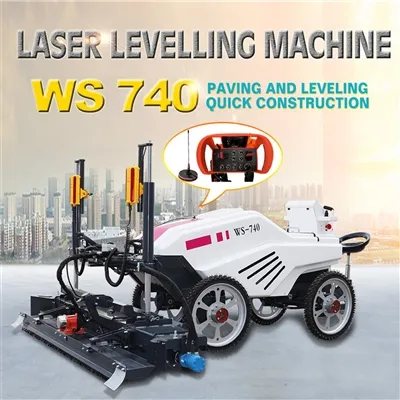
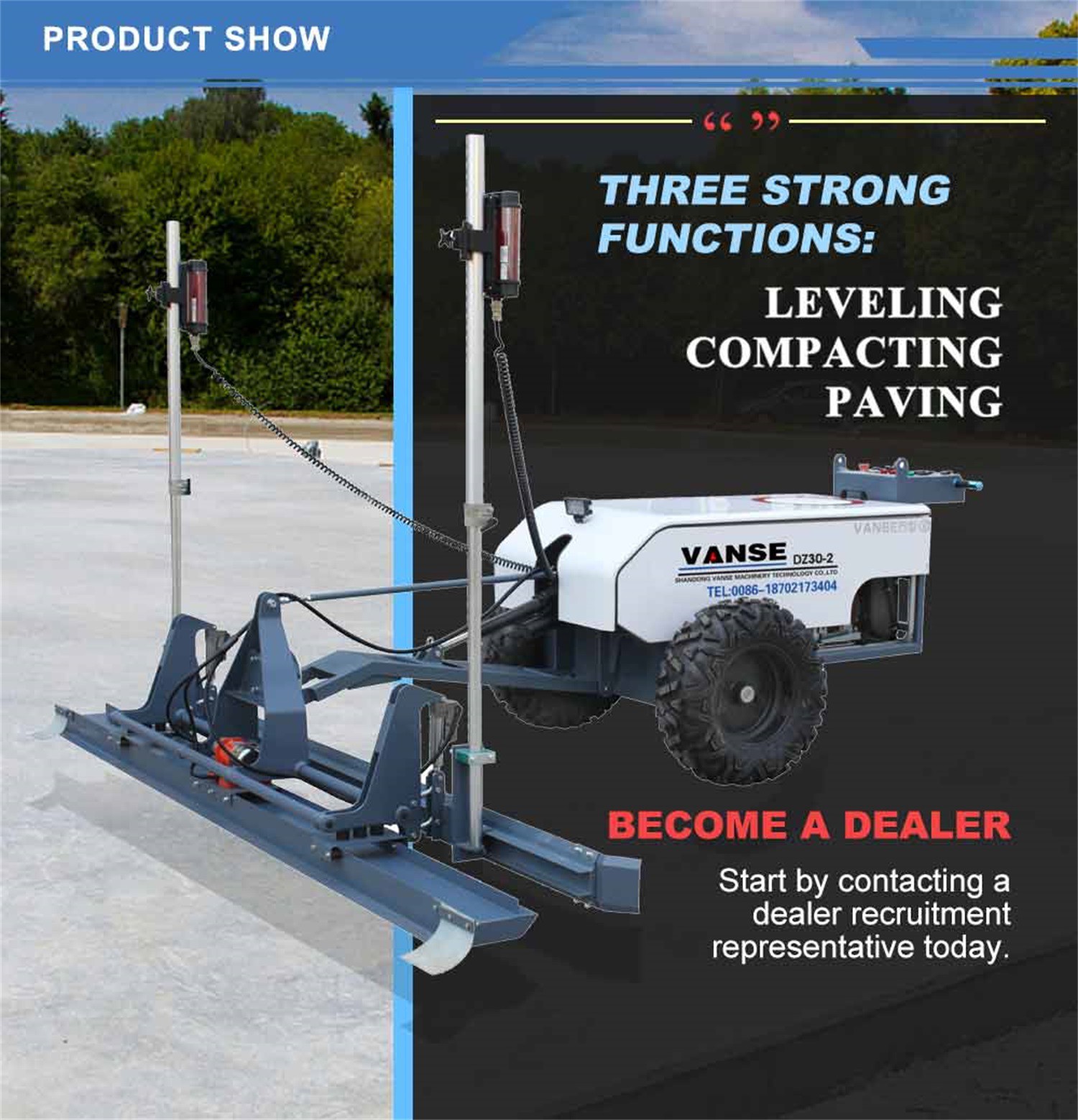
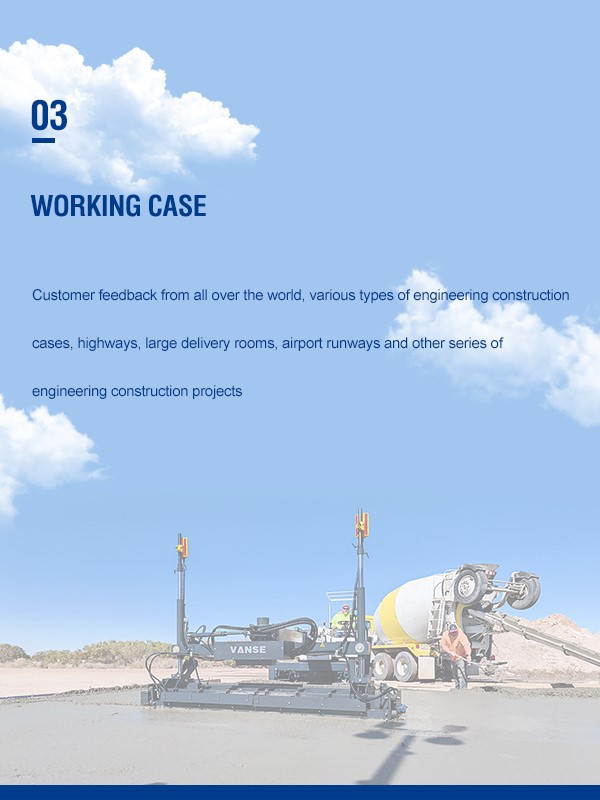
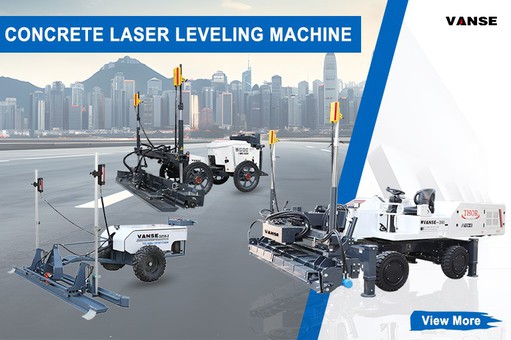
This is often referred to as the exclusive right of the invention. Vanse Concrete Laser leveling technology enables faster and flatter floors going for patented vanse laser leveling technology allows you to increase productivity, efficiency, and quality of each and every job.
Thanks to All the Friends Who Support and Trust Shandong Vanse Machinery Technology Co., Ltd.
If you want to know more about Shandong Vanse Machinery Technology Co., Ltd. or have any questions, please feel free to contact us:
Our Factory
Shandong Vanse Machinery Technology Co., Ltd.
Share this article

About the Author: Shandong Vanse Machinery Technology Co., Ltd.
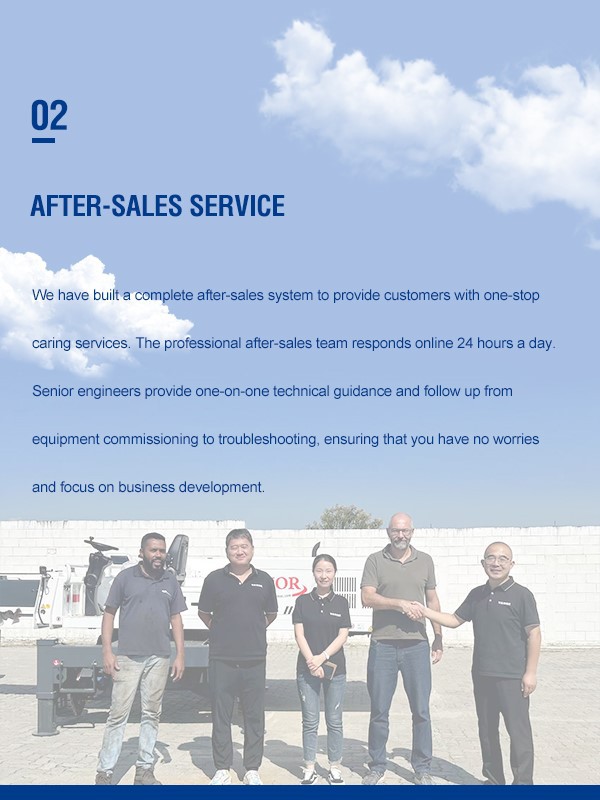
Shandong Vanse Machinery Technology Co., Ltd. is a high-tech manufacturer specializing in concrete construction machinery, including laser screeds and related equipment. The company integrates R&D, production, and global sales, with products exported to over 60 countries and widely used in infrastructure projects worldwide.
Previous Post
Next Post
Related Articles
You Might Also Like
What is the working principle of concrete laser leveling machine?
Concrete laser leveling machine is a kind of equipment used for concrete construction. Its working principle mainly involves laser technology and automatic control technology. The following is the working principle of concrete laser leveling machine 1. The laser transmitter emits a laser beam, which is projected onto the concrete surface. 2. The laser receiver receives the laser beam and detects the distance between the concrete surface and the laser beam. 3. After receiving the signal, the controller adjusts the horizontal movement mechanism and height adjustment mechanism of the leveler according to the received signal, so that the concrete surface and the laser beam are kept at a certain distance. 4. By constantly adjusting the position and height of the leveler, the concrete surface reaches the preset flatness requirements. Through this working principle, the concrete laser leveler can quickly and accurately complete the leveling work of the concrete surface, improving construction efficiency and quality.The official maintenance guide and recommended cycle for the power trowel machine
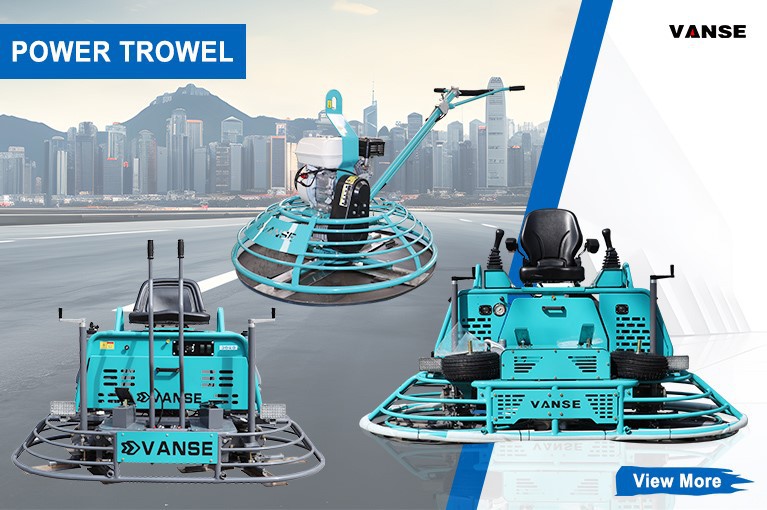
The power trowel (concrete power trowel) is a heavy-duty construction equipment, and its performance and service life are highly dependent on regular and correct maintenance. The following is a comprehensive official maintenance guide and recommended cycle, applicable to common fuel (gasoline/diesel) -driven power trowels. Safety first: Before any maintenance, make sure the machine is completely shut down, the engine is off, and the blades/power trowels have completely stopped. Use genuine accessories: Always use the engine oil, lubricating oil, air filter, spark plugs and other accessories recommended by the manufacturer. Record maintenance logs: Detail the date, items and usage hours of each maintenance. Immediately after use: Remove all concrete slurry, dirt and debris from the power trowel, blades, chassis and all parts of the machine. The remaining concrete will harden, causing imbalance and damage to the machine. Clean the body: Wipe the body with a damp cloth to prevent dust from clogging the heat sink and air filter. Check and tighten all bolts and nuts, especially the blade fixing bolts, the power trowel plate connecting parts and the engine base bolts. Vibration can easily cause it to loosen. Check the wear condition to ensure that its edges are flat and free from severe wear or cracks. Change or adjust the Angle as needed. Fuel tank: If the machine will be idle for more than 30 days, it is recommended to empty the fuel in the fuel tank and carburetor, or add fuel stabilizer to prevent clogging of the fuel lines and carburetor. Air filter In environments with extremely high levels of dust (such as concrete construction), it may be necessary to clean after each use. Remove the paper filter element and gently tap it to remove the dust. If there is compressed air, blow it clean from the inside out (the air pressure should not be too high). Check if the filter element is damaged. If it is, it must be replaced. Check and clean the sponge pre-filter element (if any). On a level ground, check the engine oil level with an oil dipstick. Add engine oil of the specified grade (SAE 10W-30 or as per the instructions) as needed. Check the lubricating oil level of the gearbox (if there is an observation window or dipstick), and add the specified gear oil if necessary. Change the engine oil (for four-stroke engines) : The first change should be made 25 hours after the first use, and then every 50 hours thereafter. When warming up the machine, drain the old oil and add new engine oil to the specified amount. Thoroughly clean the air filter and consider replacing it: Even if cleaned frequently, the paper filter element has a lifespan and should be replaced regularly. Check/clean the spark plugs: Remove carbon deposits, check the electrode gap, and adjust it to the value specified in the manual (usually 0.6-0.8mm). Use a grease gun to apply high-quality lithium-based grease to all oiling nozzles (steering bearings, lifting screws, connecting rods, etc.). Check the movable joint areas and apply lubricating oil manually to prevent rust. Inspect the drive belt/V-belt: Check for cracks, wear or looseness, and adjust the tension as required by the manual or replace it. Replace the air filter element: Regardless of its appearance, it is recommended to replace it regularly. Replace the fuel filter: Clean the fuel system and replace the fuel filter screen or filter. Check/adjust idle speed and throttle line: Ensure stable engine idle speed and flexible operation. Thoroughly inspect the gearbox oil: If there is turbidity or metal shavings, consider replacing the gear oil. Comprehensive major maintenance: It is recommended to send it to an authorized service center for handling. Deep cleaning: Thoroughly clean the entire machine. Replace all filters: air, fuel and oil filters (if any). Replace spark plugs: Replace with new spark plugs of the specified model. Inspect/Replace carbon brushes (for motorized power trowels) : For electric power trowels, check the wear of the motor carbon brushes and replace them in a timely manner. Fuel system completely drained Drain all the fuel from the fuel tank and carburetor. Or fill up the tank with fuel and add fuel stabilizer, and run the engine for a few minutes to allow the stabilizer to circulate to the carburetor. Battery maintenance (electric start model) Disconnect the negative terminal of the battery. Charge the battery and maintain it regularly (charge it once every 1-2 months). Storage location: Store the machine in a clean, dry and well-ventilated room and cover it with a cover. If the equipment is idle for more than one month during the non-construction season, the following steps must be carried out Fuel treatment: As mentioned above, drain or add stabilizer. Engine protection Inject a small amount of engine oil into the spark plug hole, pull the starting rope several times to lubricate the cylinder with the engine oil, and then install the spark plug. Place the engine at the top dead center of compression (stop when you feel resistance when pulling the start rope). Rust prevention treatment: Apply rust prevention oil to all exposed metal parts. Lift the power trowel: Use a wooden board to prop up the power trowel and lift it off the ground to reduce the pressure on the tires and suspension. Oil and water inspection: Engine oil, fuel oil. Visual inspection: Check for any oil leakage or damaged components. Operation test: Start the machine under no-load conditions in a safe area to check if the steering and lifting are flexible and if there are any abnormal noises. Protective devices: Ensure that all protective covers (belts, gears) are in good condition and firmly installed. Final reminder: This guide is general advice. For the most accurate maintenance requirements, please be sure to refer to the "User Operation and Maintenance Manual" of the polishing model you have purchased. Adhering to the cycles and norms specified in the official manual for maintenance is the key to ensuring the performance, safety and service life of the equipment. Note: The parameters provided in this document are for reference only and are not mandatory. Due to differences in technical characteristics between different brands and models of laser levelers, please consult the manufacturer for a suitable solution before actual operation. This reference document assumes no responsibility for any issues arising from failure to follow the manufacturer's instructions.Optimization of the collaborative workflow between power trowel and concrete laser leveling machine
The collaborative operation of laser Leveling and power trowels is key to achieving "ultra-flat surfaces." The laser Leveling is responsible for initial geometric accuracy (elevation and overall flatness), while the power trowel is responsible for subsequent physical compaction and surface finish. To optimize the collaborative workflow, the following four key stages can be addressed: Manual Pre-partitioning: Before the laser Leveling arrives, workers should pre-spread the concrete according to the elevation points. The material pile height should be slightly higher than the design elevation by 1-2cm to ensure the Leveling head has sufficient material for cutting and to avoid depressions caused by insufficient material. One-Way Operation Path: The laser Leveling should operate in a one-way backward motion. Real-Time Elevation Verification: The construction worker must use a handheld laser receiver to closely follow the Leveling head and conduct real-time inspections of edges, column bases, and other blind spots, and manually replenish material to ensure that the reference surface deviation is controlled within ±3mm before the power trowel enters the site. Moisture Management: After laser Leveling, a layer of slurry (bleeding water) will appear on the concrete surface. Direct operation is strictly prohibited at this time. Collaborative Observation: The laser Leveling operator should maintain communication with the power trowel operator. When the concrete hardens to the point where "a person's footprint is approximately 3-5mm deep," the power trowel must immediately begin operation. Optimization Suggestion: In summer or dry environments, a "production line" operation can be implemented in sections-after the laser Leveling completes 10-15 meters, the first rotary power trowel can be ready to be positioned at the rear. Float Pans First: The slurry machine must be equipped with float pans during this stage. The vibration and pressure of the float pans further eliminate the minute machine head marks left by the laser Leveling. Cross-cut Coverage: The slurry machine path should be perpendicular to (or intersect at 45°) the direction of travel of the laser Leveling. Overlap Requirement: Each slurry path should overlap by 50%, using high-frequency float pan smoothing to eliminate short peaks in large-area smoothness (FF). Angle and Speed Optimization: As the concrete hardens, the disc is removed, and blade trowels are used. By adjusting the blade angle (from flat to steep) and increasing the speed, the "smoothness" achieved after laser Leveling is converted into "density." Edge Closure: For construction joints and wall edges that are difficult for laser Leveling to handle, the power trowel unit needs to be used in conjunction with a hand trowel for final finishing. Stages Core Equipment Optimization Objectives: Key Parameters/Actions: Spreading Laser Leveling Overall Elevation $FL$ Pre-lay 1-2cm of extra height to ensure cutting pressure. Initial application Ride-on Power Trowel (with mounting plate) Smoothness $FF$ Operate in a cross pattern, overlapping 50%. Middle application Power Trowel (blades) Eliminate Sand Holes and Air Pit Maintain a small to medium angle and move at a constant speed. Final finishing High-Speed Power Trowel Surface Hardening and Gloss Increase the blade angle to perform "polishing". Regarding the collaborative work you mentioned, what is the current construction area? If it is a large venue with a daily construction volume of over 1000 square meters, I would suggest that you introduce a "ride-on double-disc power trowel" to match the high efficiency of the laser leveling machine, and provide you with an equipment matching plan. Note: The parameters provided in this document are for reference only and are not mandatory. Due to differences in technical characteristics between different brands and models of laser levelers, please consult the manufacturer for a suitable solution before actual operation. This reference document assumes no responsibility for any issues arising from failure to follow the manufacturer's instructions.