Technical Knowledge
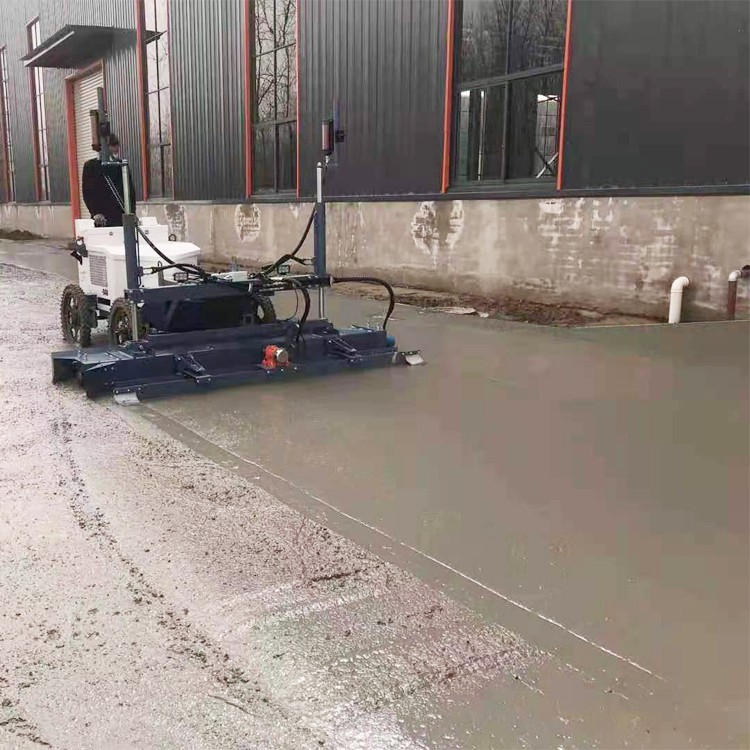
Introduction and working principle of floor concrete laser leveling machine
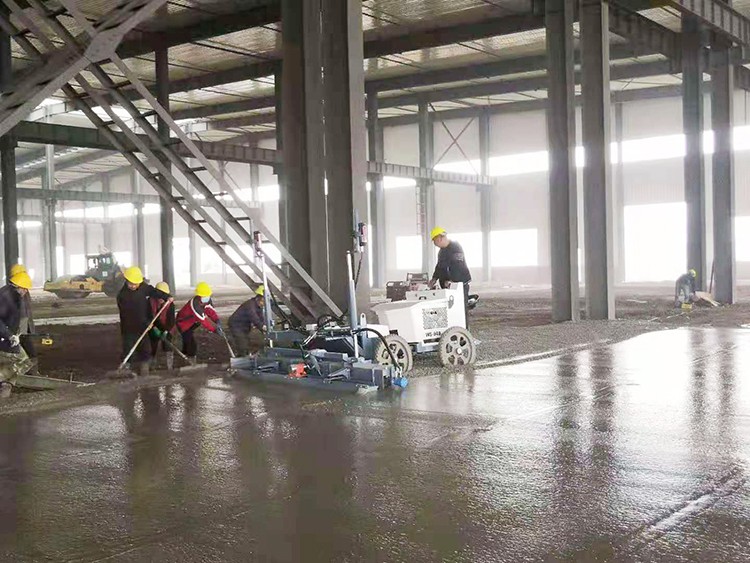
1. Definition:
1.1 Definition of laser leveling machine: guided by laser, used for leveling and leveling concrete a kind of machine equipment.
1.2 Definition of laser leveling: When large-area concrete floor is being constructed, laser leveling machine is used to vibrate,
level and control the ground elevation of newly poured concrete.
2. Introduction of floor concrete laser leveling machine
The technology principle of the laser leveling machine for floor concrete relies on gasoline generator to generate electricity,
and uses the flat head to drive the laser measurement and control system, computer control system and servo drive system
to complete the leveling work. The whole machine is composed of the fuselage and flat head, and the leveling of concrete
is mainly completed by the flat head part.
3. Preparation
3.1 After the basic level treatment, the laser leveling machine equipment debugging, according
to the original leveling point to a fixed reference level; Lay plastic film, tie steel mesh (according
to the design needs), set the edge die; Set up the laser transmitter, according to the original level
of the floor elevation into the laser leveling machine.
3.2 The concrete shall be transported by commercial concrete and transported to the construction
site by concrete truck.
3.3 Elevation check
Use the hand-held receiver to check the elevation of the floor, introduce the elevation into the laser
leveling machine, adjust the reference point of the leveling machine.
4. Concrete paving
Within the effective construction range of the flat head of the laser leveling machine, the concrete
is first made artificially to the height of 1-2㎝ (the specific height depends on the concrete slump),
and then the vibration, compaction and leveling work is completed by the laser leveling machine
of the floor concrete in one time.
Thanks to All the Friends Who Support and Trust Shandong Vanse Machinery Technology Co., Ltd.
If you want to know more about Shandong Vanse Machinery Technology Co., Ltd. or have any questions, please feel free to contact us:
Our Factory
Shandong Vanse Machinery Technology Co., Ltd.








Share this article

About the Author: Shandong Vanse Machinery Technology Co., Ltd.
Shandong Vanse Machinery Technology Co., Ltd. is a high-tech manufacturer specializing in concrete construction machinery, including laser screeds and related equipment. The company integrates R&D, production, and global sales, with products exported to over 60 countries and widely used in infrastructure projects worldwide.
Previous Post
Next Post
Related Articles
You Might Also Like
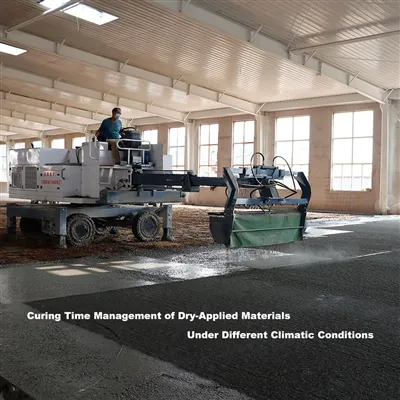
Curing Time Management of Dry-Applied Materials Under Different Climatic Conditions
Under different climatic conditions, managing the curing of dry-applied materials (such as wear-resistant floor hardeners) is crucial for ensuring floor strength. Environmental temperature, humidity, and wind speed directly determine the rate of water evaporation and the efficiency of cement hydration reactions. The following are curing time management strategies for different climatic conditions: In this environment, water loss is extremely rapid, easily leading to cracking or delamination of the dry-applied material. Curing time management: Shorten the "water absorption waiting period" after dry application. Begin troweling immediately after the material darkens (indicating absorption of moisture from the base layer) to prevent the material from failing to bond with the base layer due to rapid water loss. Core operation: Increase spraying or use film curing to ensure stable dissipation of hydration heat. Low temperatures significantly slow down the hydration reaction of cement, leading to a substantial increase in curing time. Curing Time Management: Extend the monitoring period for initial and final setting times. When the temperature approaches 0°C, heating or insulation measures must be taken; otherwise, the dry-mix material may freeze and fail before complete curing. Key Operation: Strictly control the amount of dry-mix material to prevent premature cessation of bleeding from the base layer, which would prevent the material from being properly wetted. In high-humidity environments, water evaporation is extremely slow, and the surface tends to remain wet or even accumulate water for extended periods. Curing Time Management: Appropriately extend the time before using the power trowel to prevent premature finishing, which can lead to bubbles or peeling on the surface. Core Operation: Enhance ventilation to aid in water evaporation. If working outdoors, strictly monitor rainfall forecasts, as uncured material will be washed away by rain. Climate Types Water evaporation rate Curing speed Key Management Points Hot and dry Very high Very fast Prevent cracking, expedite construction, and ensure proper wet curing. Cold winters Very low Slow Strengthen insulation and prevent frost damage. Humid and rainy Low Slower Control the timing of finishing work and enhance ventilation. Note: The parameters provided in this document are for reference only and are not mandatory. Due to differences in technical characteristics between different brands and models of laser levelers, please consult the manufacturer for a suitable solution before actual operation. This reference document assumes no responsibility for any issues arising from failure to follow the manufacturer's instructions.How to reduce the safety risks of concrete laser levelers and pavers during equipment operation?
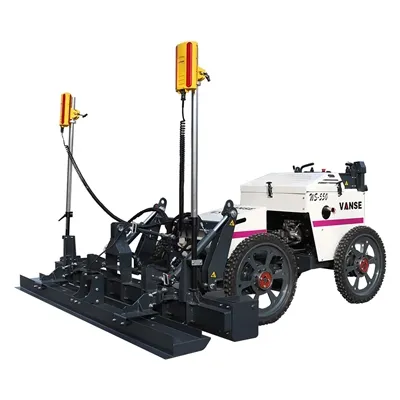
How to reduce the safety risks of concrete laser levelers and pavers during equipment operation? With the continuous advancement of modern construction technology, concrete laser levelers and pavers, as efficient and precise construction equipment, play an increasingly important role in various construction projects. However, the efficient operation of equipment is often accompanied by safety risks. How to effectively reduce these risks in equipment operation and ensure construction safety has become an important issue we face. This article will discuss in depth how to reduce the safety risks of concrete laser levelers and pavers during equipment operation from the aspects of establishing safe operation specifications, professional training of operators for regular equipment maintenance, safety protection at construction sites, risk identification and early warning mechanisms, emergency plans and drills, as well as supervision and management and responsibility implementation. 01 Establishment of safe operation specifications Safety operation specifications are the cornerstone for ensuring the safe operation of equipment. For concrete laser levelers and pavers, we should formulate detailed and practical safety operation procedures based on the equipment characteristics, usage scenarios and engineering requirements. The specifications should include the operating steps of each link of the equipment, such as startup, shutdown, adjustment, maintenance, as well as prohibited behaviors and safety precautions. At the same time, the specifications should be concise and clear, and easy for operators to understand and implement. In order to ensure the implementation of safe operation specifications, we should also establish a corresponding assessment mechanism to regularly check and evaluate the implementation of operators. Any violation of the specifications should be corrected and punished in a timely manner to form good safe operation habits. 02 Regular maintenance of equipment The normal operation of equipment is inseparable from regular maintenance. For concrete laser levelers and pavers, regular maintenance can not only extend the service life of the equipment, but also effectively prevent the occurrence of failures and accidents. We should establish an equipment maintenance system to clarify the maintenance cycle, content and responsible persons. Maintenance work should include inspection, tightening, lubrication, cleaning, etc. of key components of the equipment, as well as safety performance testing of electrical systems, hydraulic systems, etc. At the same time, maintenance records should be kept to track and evaluate the operating status of the equipment. In addition, we should also formulate targeted preventive maintenance measures based on the use of equipment and maintenance records to promptly discover and resolve potential safety hazards. 03 Professional training of operators The skill level and safety awareness of operators directly affect the safe operation of equipment. Therefore, strengthening professional training of operators is an important way to reduce equipment safety risks. We should establish an operator training system, including induction training, regular training and skills improvement training. The training content should cover equipment operation specifications, safety knowledge, maintenance skills, etc., so that operators can master the equipment operation skills and safety knowledge. At the same time, we should also focus on the combination of theory and practice, and improve the actual operation ability and ability to deal with emergencies of operators through simulation operation, case analysis and other methods. During the training process, we should also strengthen safety awareness education, so that operators can fully realize the importance of safe operation, consciously abide by the safety operation procedures, and achieve "safety first, prevention first" 04 Construction site safety protection The safety protection of the construction site is an important guarantee to reduce the safety risk of equipment. During the operation of the equipment, we should strengthen the safety management of the construction site to ensure the safety of operators and equipment:. First, the layout of the construction site should be reasonably planned to ensure that there is enough space and safe distance in the equipment operation area to avoid interference with other construction activities. At the same time, obvious safety warning signs and isolation facilities should be set up to remind personnel to pay attention to safety and prevent misoperation and non-operating personnel from entering the dangerous area. Secondly, the monitoring and management of the construction site should be strengthened to promptly discover and deal with factors that may cause safety accidents. For example, regularly check whether the electrical lines and fire-fighting facilities at the construction site meet the safety requirements, and deal with the existing safety hazards in a timely manner. In addition, communication and coordination with other construction personnel on site should be strengthened to ensure that all parties can abide by the safety regulations together, form a joint force, and jointly maintain the safety and stability of the construction site. 05 Risk identification and early warning mechanism Risk identification and early warning mechanism is an important means to reduce equipment safety risks. By timely identifying and analyzing the potential risks in the equipment operation process, we can take targeted measures to prevent and respond. We should establish a risk identification mechanism, regularly conduct risk assessments on the equipment operation process, and identify possible safety risk points. At the same time, a risk early warning system should be established to monitor the operating status of the equipment, working environment and other parameters, and timely detect abnormal situations and issue early warnings. On the basis of risk identification and early warning, we should also formulate corresponding risk response measures and emergency plans. For risk points that may cause serious safety accidents, a detailed emergency plan should be formulated to clarify the emergency handling procedures and responsible persons to ensure that they can be handled in a timely and effective manner in emergencies. 06 Emergency plans and drills Emergency plans and drills are effective means to deal with emergencies and reduce safety risks. In view of the emergencies that may occur during the operation of concrete laser levelers and push pavers, we should formulate detailed emergency plans and conduct drills regularly. The emergency plan should include various links such as identification, reporting, disposal and recovery of emergencies, and clarify the responsibilities and collaboration methods of each position. At the same time, targeted emergency disposal measures should be formulated according to the characteristics and usage scenarios of the equipment to ensure that they can be handled quickly and effectively in emergencies. In order to improve emergency disposal capabilities, we should also organize emergency plan drills regularly. By simulating actual scenarios, operators can be familiar with emergency disposal procedures and operating points, and improve their response capabilities and collaboration levels in emergency situations. 07 Supervision and management and responsibility implementation Supervision and management and responsibility implementation are key links to ensure that safety measures are effectively implemented. In equipment operation, we should strengthen the supervision and management of safety work to ensure that various safety measures are effectively implemented. First, a safety management responsibility system should be established to clarify the responsibilities and powers of managers and operators at all levels in safety work. By consolidating responsibilities layer by layer, ensure that there are people responsible and supervised in each link. Secondly, supervision and inspection of safety work should be strengthened, and safety inspections should be conducted regularly on the equipment operation site, and problems should be rectified in a timely manner. At the same time, a safety reward and punishment mechanism should be established to commend and reward individuals or teams that strictly abide by safety regulations and perform outstandingly in equipment operation, and severely deal with individuals or teams that violate safety regulations and cause safety accidents. In addition, the information management of safety work should be strengthened, and modern scientific and technological means should be used to improve the efficiency of safety management. For example, a safety management information system can be established to achieve real-time collection, analysis and sharing of safety data, providing strong support for safety management decisions. 08 Continuous Improvement and Innovation Reducing equipment safety risks is an ongoing process that requires us to continuously improve and innovate. We should actively pay attention to the development of new technologies, new processes and new equipment, introduce and apply advanced technologies and equipment in a timely manner, and improve the safety performance and use efficiency of equipment. At the same time, we should also focus on summarizing experience and lessons, analyzing the causes and lessons of safety accidents, identifying weak links and deficiencies in safety management, formulating improvement measures and implementing them. Through continuous improvement and innovation, we can continuously improve the safety level of equipment operation and reduce safety risks. In summary, reducing the safety risks of concrete laser levelers and pavers requires multiple aspects, including establishing safe operating specifications, strengthening equipment maintenance, improving the professional quality of operators, strengthening safety protection at the construction site, establishing risk identification and pre-management mechanisms, formulating emergency plans and strengthening drills, and strengthening supervision and management and responsibility implementation. Through the comprehensive application of these measures, we can effectively reduce the safety risks in equipment operation, ensure the smooth progress of the construction process and the safety and health of personnel. However, we should also be aware that reducing safety risks is not something that can be achieved overnight, but a long-term and arduous task. In future work, we should continue to explore and study new safety management methods and technical means, strengthen exchanges and cooperation with other fields, and jointly promote the improvement of construction safety levels. Only in this way can we better cope with various challenges and risks and ensure the safety, efficiency and sustainable development of construction.Laser leveling machine needs temperature control! ! !
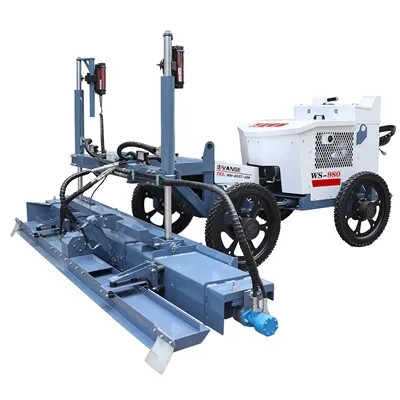
LASER LEVELING MACHINE NEEDS TEMPERATURE CONTROL ! ! ! No matter it is winter or summer, the use of laser leveling machine is inseparable from road construction. In the process of using leveling machine in summer, some parts inside the machine may overheat due to the increase in temperature. Thus affecting the leveling effect of the laser leveling machine. In order to improve the use value of the equipment and improve work efficiency, we need to do a good job of temperature control during the working process of the laser leveling machine. First of all, controlling the temperature of the laser leveling machine is one of the keys to ensure the quality of leveling. When the equipment is being leveled, it should meet the requirements of relevant standards according to the type of asphalt, label, consistency, ambient temperature, and leveling thickness. Secondly, when the construction temperature of expressways and highways is lower than 10°C, and when the construction temperature of other grades of roads is lower than 5°C, leveling is not suitable. If it is necessary to carry out leveling work, the temperature of the road leveling machine should be increased, and there are also low-temperature leveling requirements that meet the regulations. The transport vehicle must have insulation measures, and high-precision leveling machines should be used as much as possible to start paving. After the plate is heated and leveled, it is pressed immediately to shorten the length of the press. It should be remembered that during leveling, the requirements of relevant standards should be met according to the type of asphalt, label, consistency, ambient temperature, leveling thickness, etc. In this case, it is relatively simple and easy to control the temperature. Mastering the performance characteristics of the laser leveling machine will help us do a good job in temperature control. The above is the relevant knowledge that the manufacturer told you. I hope that through our narration, you can understand the temperature control method of the laser leveling machine during the construction process, and hope that your equipment can run smoothly. Contact us, we look forward to cooperating with you.