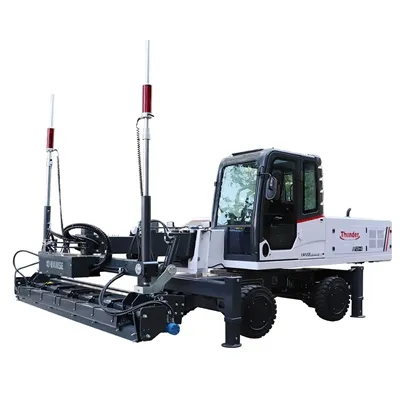
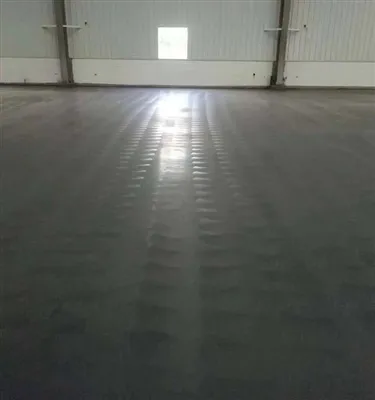
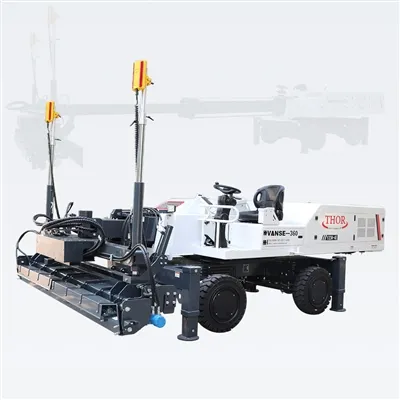
Technical Knowledge
How to monitor the status of the concrete laser leveling machine in real time during the construction process?


To monitor the status of the concrete laser leveling in real time during the construction process, the following methods can be used:
1. Vibration sensor:
Install a vibration sensor on the scraper or leveling beam of the concrete laser leveling machine to monitor the vibration status of the leveling machine in real time. If an abnormality is found, it may be dealt with immediately to ensure that the leveling machine is in good working condition.
2. Depth sensor:
Install a depth sensor to monitor the flatness of the concrete surface in real time. The sensor can transmit data to the control system, and the operator can adjust the operating status of the leveler based on the data to ensure that the flatness of the concrete surface meets the requirements.
3. Machine control system:
Through the machine control system, the operator can monitor various operating parameters of the leveling machine in real time, such as temperature, speed, working area, etc. The control system can automatically detect and diagnose abnormalities to ensure that the leveler is in good working order.
4. Sound and video monitoring system:
Set up a sound and video monitoring system around the concrete laser leveling machine to monitor the operating status of the leveling machine and the surrounding environment in real time. By observing the monitoring screen, the operator can detect abnormal situations in time and handle them.
5. Remote monitoring system:
Using the remote monitoring system, the operator can monitor the operating status of the leveling machine in real time away from the construction site. By transmitting data to the remote control center via wireless network, the operator can view and adjust the parameters of the leveling machine at any time.
To sum up, real-time monitoring of the status of the concrete laser leveling requires a combination of methods. Through vibration sensors, depth sensors, machine control systems, sound and video monitoring systems, and remote monitoring systems, the operating status of the levelinging machine can be fully understood, abnormal situations can be detected and handled in a timely manner, and the construction process can be ensured to proceed smoothly.
Thanks to All the Friends Who Support and Trust Shandong Vanse Machinery Technology Co., Ltd.
If you want to know more about Shandong Vanse Machinery Technology Co., Ltd. or have any questions, please feel free to contact us:
Our Factory
Shandong Vanse Machinery Technology Co., Ltd.








Share this article

About the Author: Shandong Vanse Machinery Technology Co., Ltd.
Shandong Vanse Machinery Technology Co., Ltd. is a high-tech manufacturer specializing in concrete construction machinery, including laser screeds and related equipment. The company integrates R&D, production, and global sales, with products exported to over 60 countries and widely used in infrastructure projects worldwide.
Previous Post
Next Post
Related Articles
You Might Also Like
How to effectively improve the construction efficiency of concrete laser leveling machine?
To improve the construction efficiency of the concrete laser leveling machine, you can start from the following aspects: 1. Choose the appropriate model and configuration According to the specific needs of the project and the construction environment, select the appropriate concrete laser leveling machine model and configuration. For example, for large-area, flat construction sites, you can choose models with high power and high efficiency; while for complex terrain or small spaces, you need to choose more flexible and adaptable models. In addition, the reasonable configuration of accessories and equipment, such as suitable formwork, conveyor belts, etc., can also improve construction efficiency. 2. Optimize the construction process ▲ Make construction preparations in advance, including cleaning the construction site, measuring and positioning, laying isolation layers, etc., to ensure that the construction environment meets the requirements and reduce interference factors during the construction process. ▲ Develop a reasonable construction plan, clarify the construction sequence and steps, and avoid repeated operations and ineffective labor during the construction process. ▲ Opti mize the concrete mix ratio, improve the working performance and strength of concrete, and reduce quality problems during the construction process. 3. Improve operational skills and proficiency ▲ Provide professional training to operators to familiarize them with the structure, principles and operating points of the equipment, and master the correct operating methods. ▲ Through practical operation and simulation training, improve the skill level and proficiency of operators and reduce operating errors and failure rates. 4. Strengthen equipment maintenance and upkeep ▲ Carry out regular maintenance and upkeep of the equipment, check various performance indicators and safety devices of the equipment, and ensure that the equipment is in good working condition. ▲ Regularly replace and inspect wearing parts and key components to avoid construction interruption due to equipment failure. 5. Optimize construction site management ▲ Strengthen the organization and coordination of the construction site, rationally arrange personnel, equipment and materials to ensure the smooth progress of the construction process. ▲ Implement strict construction site management systems and safety operating procedures to avoid potential safety hazards and quality problems during the construction process. 6. Adopt advanced technical means ▲ Use laser positioning technology and intelligent control system to improve leveling accuracy and efficiency. For example, a laser receiver is used to receive the laser signal from the laser transmitter, and the control system controls the lifting and movement of the leveling head to achieve high-precision leveling. Leveling work. ▲ Use automated control technology to reduce manual intervention and operation difficulty. For example, the automatic control system can realize automatic distribution, vibration and leveling of concrete to improve construction efficiency and quality. 7. Arrange work time and rhythm reasonably ▲ According to environmental factors such as weather and temperature, the construction time and operation should be reasonably arranged to save pollution. For example, in harsh environments such as high temperatures and strong winds, the operating time should be appropriately adjusted to avoid adverse effects on equipment performance and construction quality. ▲ Reasonably arrange the conversion of construction procedures and working surfaces to avoid waiting and idle time during the construction process, and improve equipment utilization and construction efficiency. To sum up, improving the construction efficiency of concrete laser leveling machines requires starting from many aspects, including selecting the appropriate machine model and configuration, optimizing the construction process, improving operating skills and proficiency, strengthening equipment maintenance and upkeep, and optimizing construction. On-site management and the use of advanced technical means, etc. Through the comprehensive application of these measures, the construction efficiency and quality of concrete laser levelings can be significantly improved, providing a strong guarantee for the smooth progress of project construction. It should be noted that the specific implementation of the above measures should be adjusted and optimized according to the actual situation of the project. At the same time, with the continuous advancement of science and technology and the changing construction needs, new methods and means need to be continuously explored to further improve the construction efficiency and quality of concrete laser leveling machines.What should we pay attention to when maintaining concrete?
Concrete curing is a key link to ensure the quality of concrete. The following points need to be noted: 1. Maintain appropriate humidity and temperature: During concrete curing, appropriate humidity and temperature should be maintained to promote the hardening and strength development of the concrete. Excessively high temperature and leakage may cause concrete to crack or deform, while too low temperature and humidity may cause drying shrinkage cracks on the concrete surface. Therefore, appropriate moisturizing and heat preservation measures need to be taken according to specific maintenance conditions and requirements. 2. Avoid excessive exposure time: During the condensation curing period, the exposure time of the surface mix should be minimized, and the exposed surface of the concrete should be tightly covered in a timely manner to prevent surface moisture from evaporating. Before the concrete of the exposed surface protective layer is initially set, the covering should be rolled up, and the surface should be rubbed with a trowel at least twice to make it flat and then covered again. At this time, care should be taken that the covering should not directly contact the concrete surface until the concrete is finally set. 3. Appropriately increase the thickness of the protective layer: In order to increase the wear resistance and durability of concrete, the thickness of the protective layer can be appropriately increased. When pouring concrete, you can lay a layer of plastic film or wet cloth on the surface to keep the concrete surface moist and smooth. During the maintenance period, the thickness of the protective layer should be checked regularly to ensure that it meets the design requirements. 4. Control the construction temperature: During the concrete construction process, the construction temperature should be controlled to avoid excessively high or low temperatures affecting the quality of the concrete. During summer construction, measures should be taken to reduce the temperature of concrete entering the mold to avoid the phenomenon of "thermal bridge"; during construction in winter, measures should be taken to increase the temperature of concrete entering the mold to avoid the phenomenon of "cold bridge". 5. Regular inspection and maintenance: During the concrete curing period, the concrete structure should be inspected and maintained regularly to ensure its quality and safety. If cracks, deformation or other problems are found in the concrete structure, timely measures should be taken to repair and reinforce it. In short, concrete curing is a key link to ensure the quality of concrete. It is necessary to pay attention to maintaining appropriate humidity and temperature, avoiding excessive exposure time, appropriately increasing the thickness of the protective layer, controlling construction temperature, and regular inspection and maintenance. Only in this way can we ensure that the strength and durability of the concrete structure meet the design requirements and provide a strong guarantee for the safety and quality of the construction project.What are the precautions for the safe operation procedures of concrete laser leveling machines?
The core of the safe operating procedures for concrete laser leveling machines is "personnel protection, equipment control, environmental avoidance, and emergency response." Focus on the following four key areas to ensure human and machine safety and construction compliance: Operators must undergo professional training and be familiar with the equipment's structure (laser system, hydraulic system, vibrating mechanism) and operating buttons. Operating the equipment without a license is strictly prohibited. Support personnel must understand the equipment's operating range and avoid entering hazardous areas. All personnel must wear hard hats and non-slip, insulated shoes during operation. When working with concrete, wear waterproof gloves. When cleaning the equipment, wear protective clothing to prevent burns from cement slurry splashes. It is strictly forbidden to adjust the laser transmitter/receiver while the machine is operating (this requires shutting down the machine and disconnecting the power supply). Avoid direct laser light into your eyes (the strong light may cause blindness). Do not stand under the scraper or vibrator or inside the machine's tracks/tires to prevent hydraulic system failure from causing components to fall or the machine to overturn. Do not be distracted during operation (e.g., answering or making phone calls). Two people working together must maintain communication (using hand gestures or a walkie-talkie) to avoid accidental collisions. Inspection Area Inspection Items and Standards Purpose Laser System The transmitter/receiver is fully charged, calibrated correctly, and free of signal interference. Avoid elevation errors and equipment misjudgment Hydraulic System The oil pipes are leak-free and the hydraulic oil level is within the upper and lower limits. Prevent hydraulic failure (such as scraper jamming) Power and Transmission The engine oil and coolant levels are normal, and the tires/tracks are undamaged. Ensure stable equipment operation Safety Devices The emergency stop button (red) is responsive, and the warning lights and horn are functioning properly. Enable rapid shutdown in emergencies After starting the equipment, allow it to idle for 1-2 minutes to confirm that the vibrator and scraper are operating smoothly without unusual noise or jamming before entering the work area. Strictly control the travel speed to 0.5-1.5 m/min. Reduce speed when turning (≤ 0.5 m/min) to avoid rollover caused by high-speed turns. Overloading is strictly prohibited (e.g., concrete pile thickness exceeds the maximum handling capacity of the equipment) to prevent motor overload and scraper deformation. Do not operate on rainy days or when the base is flooded. This can reflect the laser signal (causing elevation errors) and potentially short-circuit the equipment's electrical system. Avoid areas with strong electromagnetic interference (such as those near large transformers or welding machines) to prevent laser signal interference and equipment loss of control. For nighttime operations, ensure adequate lighting (≥50 lux) and display warning signs around the laser transmitter to prevent collisions. Warning tape or guardrails must be installed at the edges of the work area. Especially when working at height (such as pouring floors), edge protection (such as scaffolding) must be checked to prevent equipment from slipping or falling. The laser transmitter must be mounted on a stable, unobstructed support (≥1.5m in height) and supervised by a designated person. Unauthorized movement is prohibited. In the event of an emergency (such as laser signal interruption, unusual equipment noise, or hydraulic leakage), immediately press the emergency stop button, disconnect the power supply, and troubleshoot the problem. Do not operate with the equipment in a faulty state. If equipment overturns and causes injury, evacuate personnel to a safe area, call emergency services (such as 120), secure the scene, and report the incident to the responsible person. After completing the operation, first shut down the laser system, then the power supply, and use a high-pressure water jet to clean any remaining concrete (do not use water directly on electrical components). The equipment must be parked away from slopes and edges, with the handbrake engaged and triangular wood placed to prevent rolling. The laser transmitter and receiver must be stored in a moisture-proof box to prevent damage. All operations must comply with the "Technical Regulations for Safety in the Use of Construction Machinery" (JGJ 33) and the "Concrete Structure Construction Quality Acceptance Code" (GB 50204). Regular (every three months) professional verification of the equipment's safety devices and laser accuracy should be performed to ensure long-term compliance. Note: The parameters provided in this document are for reference only and are not mandatory. Due to differences in technical characteristics between different brands and models of laser levelers, please consult the manufacturer for a suitable solution before actual operation. This reference document assumes no responsibility for any issues arising from failure to follow the manufacturer's instructions.