Technical Knowledge
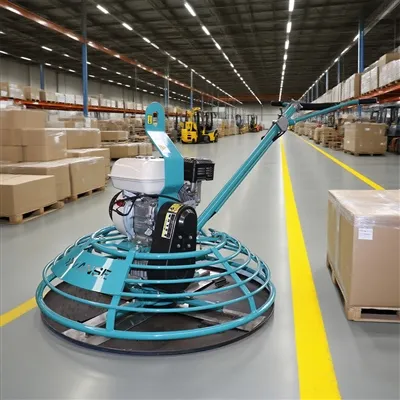
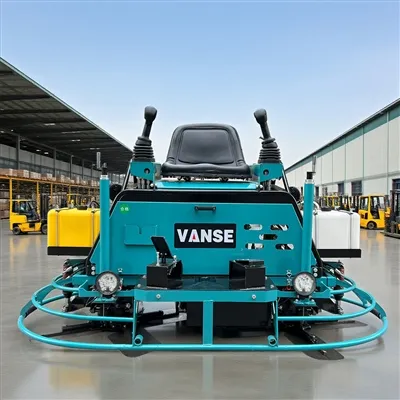
How to maintain a large pavement concrete trowel?

Ride-on trowels have now basically become the main equipment for pavement polishing. They are loved by everyone because of their simple and convenient operation and fast operation speed. Ride-on trowels with such good operating results also need to be well maintained on a daily basis. To work, it is correct and effective to start from these aspects.
1. Clean the fuselage regularly, and clean the sticky concrete on the fuselage and the trowel grinding disc promptly after the construction is completed to avoid damage to the inside of the machine;
2. The trowelling machine constantly vibrates and changes speed when working. Some bolts may become loose. The tightness should be checked frequently and adjusted in time;
3. During use, lubrication and maintenance of all parts of the machine must be done frequently to avoid wear and tear of the machine parts;
4. When the trowel is not in use, it should be placed on a flat ground to prevent the trowel disc from deforming and affecting its next use;
5. Check the oil levels of various oils frequently and add them in time when insufficient.
Taking good maintenance measures for your trowel machine will not only maintain the working efficiency of the machine, but also effectively extend the life of the machine and allow your project to be completed ahead of schedule. Therefore, all aspects of maintenance cannot be ignored.
Thanks to All the Friends Who Support and Trust Shandong Vanse Machinery Technology Co., Ltd.
If you want to know more about Shandong Vanse Machinery Technology Co., Ltd. or have any questions, please feel free to contact us:
Our Factory
Shandong Vanse Machinery Technology Co., Ltd.








Share this article

About the Author: Shandong Vanse Machinery Technology Co., Ltd.
Shandong Vanse Machinery Technology Co., Ltd. is a high-tech manufacturer specializing in concrete construction machinery, including laser screeds and related equipment. The company integrates R&D, production, and global sales, with products exported to over 60 countries and widely used in infrastructure projects worldwide.
Previous Post
Next Post
Related Articles
You Might Also Like
Common Problems in After-sales Service of Concrete Laser Leveling Machine
Concrete laser leveling machine is an indispensable and efficient construction equipment in modern construction projects. Its accurate leveling effect greatly improves the construction quality and efficiency. However, in the long-term use of the equipment, it is inevitable to encounter some common problems. This article will focus on several common after-sales problems of concrete laser leveling machine, combined with specific practical content, to provide detailed processing methods and suggestions, aiming to help users better use and maintain the equipment and ensure smooth construction. 1. Equipment startup failure handling Equipment startup failure is one of the common after-sales problems of concrete laser leveling machine. When the equipment cannot start normally, first check whether the power plug is plugged in and whether the power switch is in the on state. If the power supply is normal, it is necessary to further check whether the motor is damaged or the line is short-circuited. At this time, you can use tools such as a multimeter to troubleshoot. If it is determined that the motor is faulty, you should contact professional after-sales personnel for repair or replacement. At the same time, you should also pay attention to the voltage requirements when the equipment is started to avoid startup failures due to unstable voltage. 2. Laser system troubleshooting The laser system is the core component of the concrete laser leveling machine, and its stability and accuracy directly affect the leveling effect. The main manifestation of laser system failure is that the laser beam is unstable or cannot be emitted. When dealing with such problems, you should first check whether the laser transmitter is clean and whether there are any obstructions. At the same time, you should also check whether the position of the laser receiver is correct and whether the received signal is stable. If the laser system hardware is intact but there are still problems, you can try to calibrate or reset the laser system. If the problem still cannot be solved, you should contact professional after-sales personnel for inspection and repair. 3. Hydraulic system maintenance and care The hydraulic system is an important part of the concrete laser leveling machine, responsible for driving the movement of components such as the leveling blade. The maintenance and care of the hydraulic system is essential to ensure the normal operation of the equipment. In daily use, the oil level and quality of the hydraulic oil should be checked regularly to ensure that the oil is clean and free of impurities. At the same time, it is also necessary to check whether the hydraulic oil pipe has oil leakage or damage, and if so, it should be replaced in time. In addition, regular replacement of the hydraulic oil filter and cleaning of the oil tank are also necessary maintenance measures. During use, the equipment should be prevented from overloading for a long time to avoid damage to the hydraulic system. 4. Leveling effect adjustment method The leveling effect of the concrete laser leveling machine is affected by many factors, including the accuracy of the laser system, the angle and height of the blade, etc. When the leveling effect is not ideal, it can be improved by adjusting the relevant parameters. First, the parameters of the laser system, including the intensity and angle of the laser beam, can be adjusted to ensure that it can accurately reflect the height changes of the ground. Secondly, the angle and height of the blade can be adjusted so that it can better adapt to the ups and downs of the ground. In addition, the walking speed and leveling times of the equipment can be adjusted according to the specific construction requirements to achieve the best leveling effect. 5. Solution to motor overheating Motor overheating is one of the common faults of concrete laser leveling machines, which may cause equipment performance degradation or even damage. There may be many reasons for motor overheating, such as poor heat dissipation, excessive load or internal motor failure. When the motor is found to be overheated, first stop using the equipment immediately and check whether the cooling system is working properly. If there is no problem with the cooling system, check the load of the equipment to ensure that it is not overloaded. At the same time, it is also necessary to check whether the wiring of the motor is loose or in poor contact to avoid overheating due to excessive current. If the above measures cannot solve the problem, contact professional after-sales personnel for repair or replacement of the motor. 6. Replacement and purchase of wearing parts During the use of the Wenjie soil laser leveling machine, some wearing parts such as blades and filters will gradually wear or damage and need to be replaced regularly. When purchasing wearing parts, you should choose the brand and model that matches the original equipment to ensure that its performance and quality meet the requirements. At the same time, you should also pay attention to the installation and replacement methods of wearing parts to avoid damage to the equipment or affect the leveling effect due to improper operation. When replacing wearing parts, you should ensure that the power of the equipment is turned off and operate according to the instructions or the guidance of after-sales personnel. 7. Cleaning and maintenance suggestions for the whole machine Maintaining the cleanliness and good condition of the concrete laser leveling machine is crucial to extending the life of the equipment and improving work efficiency. In daily use, the equipment should be cleaned regularly, including cleaning the dust and dirt on the surface, wiping the mechanical parts and electrical components, etc. At the same time, it is also necessary to pay attention to the regular lubrication of the lubrication parts of the equipment to reduce friction and wear. In addition, when storing the equipment, you should choose a dry and ventilated place to avoid moisture or direct sunlight on the equipment. For equipment that is not used for a long time, it should be started and inspected regularly to ensure that its performance is not affected. In short, the handling of common after-sales problems of concrete laser leveling machines requires comprehensive consideration of the characteristics of the equipment itself and the use environment and other factors. Through in-depth understanding and effective handling of equipment startup failures, laser system failures, wave pressure system maintenance and maintenance alarm adjustment, motor overheating problem resolution, replacement and purchase of wearing parts, and cleaning and maintenance of the entire machine, the stable operation and efficient construction of the concrete laser leveling machine can be ensured. At the same time, users should also strengthen communication and cooperation with professional after-sales personnel so that they can get timely and effective support and help when encountering problems.Analysis of the Correlation between Common Surface Defects During Construction and Power Trowel Operation
The occurrence of surface defects in concrete is often not caused by a single factor, but rather the result of the combined effects of materials, the environment, construction techniques and equipment operation. As the final key process in floor forming, the operation mode of the power trowel machine directly affects the final quality of the surface. The following is a detailed analysis of the causes of common surface defects, with a focus on elaborating their correlation with the operation of the power trowel machine. The function of the power trowel machine is to compact, lift the slurry and smooth the surface of the concrete through the high-speed rotating power trowel. Improper operation can directly lead to or exacerbate the following problems: Disrupt the uniformity of concrete (such as bleeding and segregation). Change the water-cement ratio on the surface layer (such as by sprinkling water and grinding). Introduce inappropriate stress (premature heavy-load operation leads to cracking). It is impossible to effectively make up for the deficiencies of the previous processes. Defect description: Insufficient surface strength, loose cement and fine sand shedding. The fundamental cause The water-cement ratio on the surface is too high (bleeding or excessive watering). The cement grade is insufficient or the quality is poor. Improper maintenance causes the surface to lose water too quickly. The correlation with the operation of the power trowel machine (main reason) : Premature operation: Start smoothing the concrete when there is still a large amount of bleeding, removing the cement slurry and leaving only the sand. Excessive water sprinkling on flour grinding: This is the most fatal operation. When the surface is dry, workers sprinkle water to save effort, which greatly increases the water-cement ratio of the surface layer and seriously reduces the surface strength. The timing of power trowel is too late: The concrete has already begun to set, and the power trowel cannot effectively lift and compact the slurry. It merely "scraped" once and failed to bring the cement slurry to the surface. Improper blade Angle or severe wear: Unable to effectively compact the surface layer. Defect description: Irregular, shallow and fine reticular cracks appear on the surface. The fundamental cause The evaporation rate of surface moisture is greater than the bleeding rate (in high-temperature, windy, and low-humidity environments). Concrete itself has poor bleeding. Correlation with the operation of the power trowel machine: Failure to seal the surface in time: The first (bottom grinding) process of the power trowel is of vital importance. That is, under the aforementioned environmental conditions, when the concrete can reach the person mentioned above (about 25-30mm deep footprint), the power trowel should be used in conjunction with the disc to lift the slurry and seal it in time to prevent the water from evaporating too quickly. If the waiting time is too long and the crack has already formed, it will be of no avail to smooth it out. Improper operation aggravates water loss: The high-speed rotating power trowel generates heat by rubbing against the concrete and accelerates water evaporation under the influence of air flow. In harsh environments, attention should be paid to operational efficiency. After completing a certain area, timely maintenance should be carried out. Defect description: The ground is overall uneven, with a "ladle" or "wavy" feeling. The fundamental cause The initial flatness control of the laser screed is not good. The slump of the concrete is uneven. The correlation with the operation of the power trowel machine (main reason) : The operation method is not professional Without adopting the "horizontal and vertical cross" method: Always grinding in the same direction, it is easy to form a "furrow" effect, resulting in strip-shaped protrusions. If the machine body stays in one position for too long, the weight of the power trowel and vibration will cause that area to slightly sink, forming a "dent". Improper timing of raising or lowering the arm: When changing direction, failing to lift or lower the power trowel plate/power trowel smoothly can result in knife marks or local protrusions. Uneven walking speed: The inconsistent speed leads to different degrees of compaction, resulting in color differences and slight height differences. Defect description: The ground color varies in depth. The fundamental cause The raw materials (especially cement) vary from batch to batch. The pouring interval is too long, resulting in cold joints. Correlation with the operation of the power trowel machine: The timing of the finishing is not accurately grasped: There are slight differences in the initial setting time of concrete in different areas. If the operator stops the light in some areas when it is still bleeding (the color is bright), while in others when it is close to final setting (the color is dark), a color difference will occur. Repeatedly grinding the same area: Repeatedly grinding a relatively wet local area will result in excessive slurry in that area and a color that is different from other areas. Uneven watering: If water is sprinkled locally to grind the surface, it will directly cause the water-cement ratio in that area to be different, resulting in a lighter and whiter color. Defect description: The surface-hardened layer has detached from the lower layer. The fundamental cause The surface is over-polished, forming a dense but fragile cement paste layer, which is inconsistent with the contraction of the lower layer. The lower layer of concrete has severe bleeding, forming a water film and weakening the interlayer bonding force. The correlation with the operation of the power trowel machine (key reason) : Excessive finishing: Forcing the use of a power trowel machine after the concrete has r To avoid the above-mentioned defects, the operation of the power trowel machine should follow the principle of "timely and moderate". Operation stage Key points for correct operation Purpose and avoidable defects Initial grinding (pulp extraction Timing: When the foot sinks by about 3 to 5mm. Objective: To remove the slurry on the surface of the aggregate and seal the surface. Tool: Install the disc. Avoid: Cracking and sanding. Technique: Move at a constant speed and cover the entire area. Smooth (finely grind Timing: After initial grinding, the surface is free of moisture and has a matte color. Objective: To eliminate scratches, fine deviations and further compact. Tool: Replace with a fine power trowel (power trowel). Avoid: poor waviness and color difference. Technique: Use the horizontal and vertical intersection method, maintain a uniform speed, and lift the arm to press down steadily. Fine grinding (finishing) Timing: After smoothing, there is almost no trace left when stepped on (close to final setting). Objective: To obtain a dense and smooth surface. Tool: The same or thinner spatula, adjusted to a small Angle. Avoid: hollowing, color difference, and cracks caused by excessive dimming. Technique: Gentle and steady, succeed in one go, avoid repetition. The Golden Rule 1. No sprinkling water! If the surface does lose water prematurely, a very small amount of water should be sprayed with a sprayer, and this should be done before the initial grinding. Eliminate most surface defects fundamentally. 2. Timing is the key! Closely observe the setting state of the concrete rather than the rigid time. 3. "Intersection" and "uniformity" are at the core of flatness. An excellent power trowel operator is not only a machine operator but also an "observer" and "manager" of the concrete setting process. He needs to understand the fundamental principles of materials science, and through precise operation timing and proficient techniques, transform the solid foundation created by the laser screed into a high-quality floor with high strength, high flatness and no defects. Note: The parameters provided in this document are for reference only and are not mandatory. Due to differences in technical characteristics between different brands and models of laser levelers, please consult the manufacturer for a suitable solution before actual operation. This reference document assumes no responsibility for any issues arising from failure to follow the manufacturer's instructions.Establishment and sharing of a common fault troubleshooting manual for power trowel
Establishing a systematic and user-friendly manual can significantly reduce equipment downtime, lower maintenance costs, and enhance the skill levels of operators. 1. Clarify the structure and core content of the manual The manual should adopt a quick index structure of "problem – cause – solution". Chapter One: Safety First All safety regulations that must be followed before conducting any inspection operations (such as: power off, hanging warning signs, wearing protective gloves, etc.). Strictly prohibited non-professional operation tips. Chapter Two: Quick Fault Index Table Design a table listing the fault phenomena, directly corresponding to the detailed page numbers in the manual. Fault phenomenon: Possible causes: See page numbers |—|—|—-| The engine won't start. 1. Insufficient fuel. 2. Dead battery. 3. Spark plug failure: P10 Severe shaking of the power trowel disc: 1. Unbalanced installation of the blade 2. Damaged transmission shaft 3. Chassis deformation: P15 Poor polishing effect (with scratches) : 1. Blade wear 2. Improper rotational speed 3 The initial setting time of the concrete is incorrect Chapter Three: Detailed Troubleshooting Guide for Subsystems (Core) Power system failure Failed to start: Check the fuel, engine oil, battery, spark plugs, air filter and carburetor. Insufficient power: Check the fuel filter, air filter, spark plug clearance and cylinder pressure. Transmission and vibration system failure If the pan does not rotate or the speed is unstable: Check the throttle line, the drive belt (tightness or wear), and the clutch. Abnormal shaking of the machine body: Check whether the power trowel blade is installed flat, whether the fastening bolts are loose, and whether the transmission shaft is bent. Operation and control system failure The operating lever is not sensitive: Check whether the connecting rod mechanism is stuck and whether the control cable needs lubrication. Matte effect-related faults Uneven surface: Check the wear of the blade, whether the operation technique is uniform, and whether the concrete aggregates are uniform. Scratches appear: Check if the blade is damaged and if the bottom of the wiping plate is clean. Chapter Four: Regular Maintenance and Preventive Maintenance Plan Daily, weekly and monthly maintenance lists. Replacement cycle table of vulnerable parts (such as: blades, belts, spark plugs, engine oil). Chapter Five: Appendix Model specification table, official service contact information, essential tool list, basic parts drawing. 2. Enrich the manual by adopting multiple media forms Illustrated with pictures: Take high-definition photos of key components and disassembly steps and mark them with arrows. Video QR code: Make short videos of common inspection processes (such as "replacing the polishing machine blade", "cleaning the carburetor"), and attach QR codes at the corresponding positions in the manual. You can scan them with your mobile phone to watch. Digital interactive manual: Created using online document tools (such as Notion/ Yuque) or professional manual software, it supports full-text search and hyperlink jumps. 1. Select the sharing platform and form: Basic version: Printable PDF file. Advantages: Simple and universal, can be posted between devices. Disadvantages: Inconvenient to update and poor interactivity. Recommended version: Cloud-based Live Document. Tools: Tencent Docs, Feishu Docs, Notion, Enterprise Internal Wiki. Advantages Real-time updates: New issues can be supplemented at any time, and everyone can see the latest version immediately. Access anytime and anywhere: Workers can view it on their mobile phones, tablets and computers. Collaboration function: Employees can leave messages to ask questions and share their experiences, forming a virtuous cycle of the knowledge base. Advanced version: Integrated into the company's internal system. Embed the manual into the company's OA, EAM (Enterprise Asset Management System) or training platform. 2. Promotion and training to cultivate a culture of investigation Official release and training: Organize a special training session to explain the structure and usage methods of the manual to all equipment administrators and operators, with a focus on demonstrating the troubleshooting processes for several common faults. On-site visualization: Make the "Quick Fault Index Table" and "Daily Maintenance List" into large boards and post them in prominent positions in the equipment warehouse or maintenance area. Establish an incentive and feedback mechanism Encourage contributions: Establish rewards to encourage employees to submit unincluded fault cases or better solutions. After confirmation, update them to the manual and sign the contributor's name. Collect feedback: Regularly collect employees' suggestions for improving the manual, such as "Where do I not understand?" "What else needs to be added?" " . Only when users are involved in the construction can the manual have more vitality. Integrate into new employee training: Make the manual a compulsory textbook for the on-the-job training of new equipment operators. The goal of establishing the "Common Fault Troubleshooting Manual for power trowelers" is not merely to generate a document, but to build a continuously evolving, easily accessible, and participatory equipment management knowledge ecosystem for all. By taking a four-pronged approach of "structured content + multi-media presentation + cloud sharing platform + proactive promotion culture", what you will obtain is not just a manual, but a powerful tool that can effectively reduce operation and maintenance costs and improve construction efficiency. Note: The parameters provided in this document are for reference only and are not mandatory. Due to differences in technical characteristics between different brands and models of laser levelers, please consult the manufacturer for a suitable solution before actual operation. This reference document assumes no responsibility for any issues arising from failure to follow the manufacturer's instructions.