Technical Knowledge
A collection of questions about purchasing concrete laser levelers / leveling

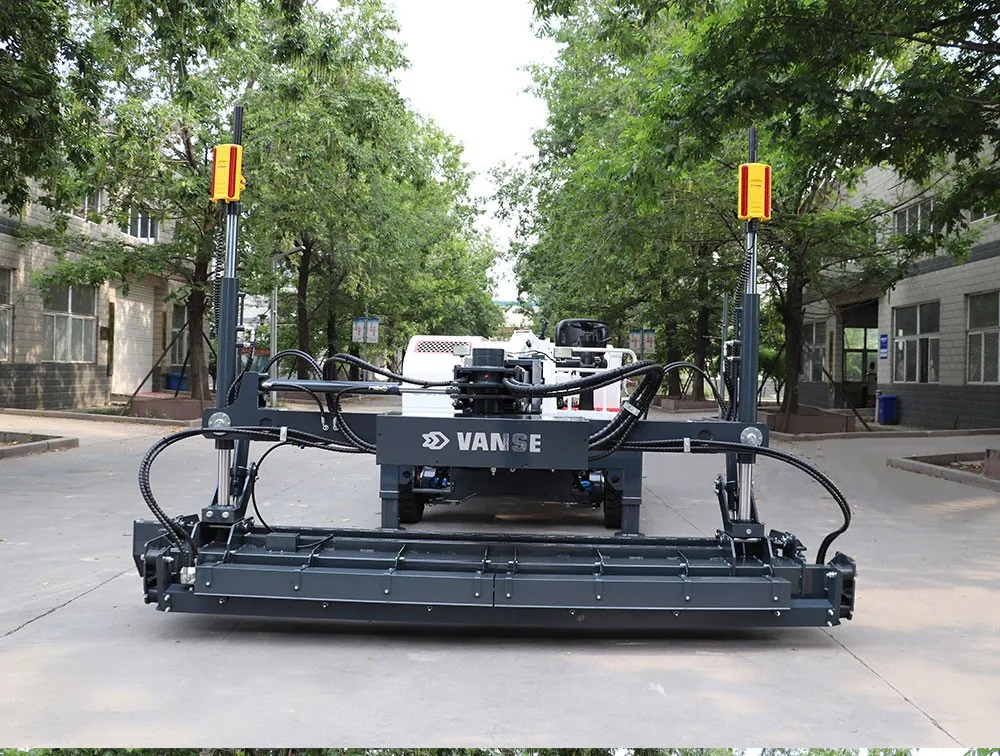
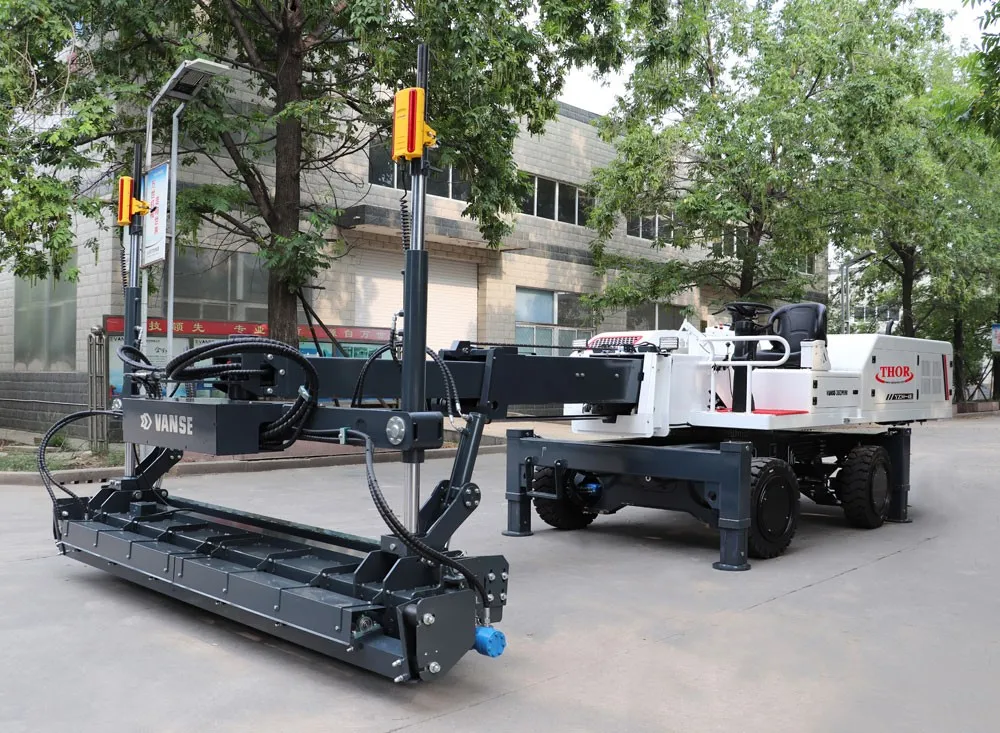
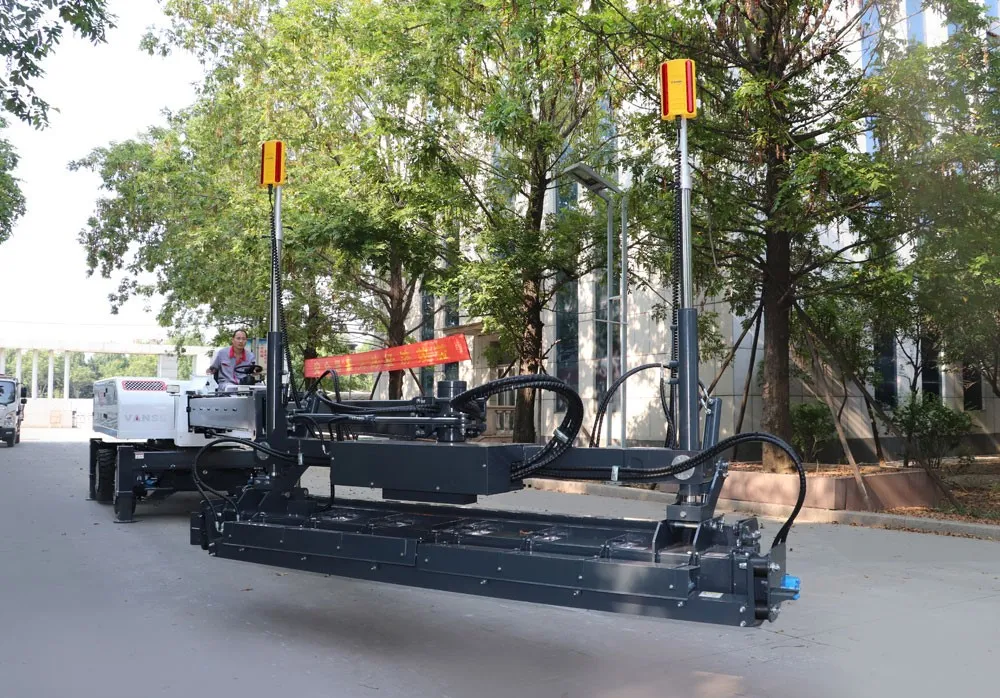
With the continuous increase in the use of laser leveling machines, the number of manufacturers and types of leveling machines is also increasing. The increase in the number undoubtedly creates conditions for users to choose, but at the same time, it also brings a lot of trouble. How to choose a more cost-effective laser leveling machine from among the many laser leveling machines with varying quality and widely different prices has become a challenge that every user must face. In order to help you choose a more desirable laser leveling machine equipment, our company has summarized some purchase questions about leveling machines in detail, and now I will give you detailed answers one by one.
Question 1: What brand of laser leveling machine is better?
Answer: What brand of laser leveling machine is better? This should be a question every user asks before making a purchase. After all, everyone hopes that what they buy is better, and they hope to worry less when using it. But as far as the current market situation is concerned, when it comes to which brand is better, many well-known brands of laser leveling machines are good, and they are doing well in terms of quality and after-sales service. So when choosing a brand, you can’t go wrong if you choose those with relatively guaranteed word-of-mouth and popularity. You can use it with confidence. You don’t have to worry about too many problems when the equipment is working. The most important point is the efficiency of the work. high.
Question 2: Is it cost-effective to buy a second-hand laser leveling?
Answer: Now the second-hand market of laser leveling machines is very hot, and there are a lot of people buying them. However, some people have expressed doubts, that is, is it worthwhile to buy this second-hand equipment? Judging from the current market situation, many people still trust second-hand laser leveling machines. I feel that the price of second-hand is affordable, and many second-hand ones are even 80% or 90% new. When I buy it, I can buy it at a second-hand price, which is very cheap. Therefore, in fact, it is also revealed that second-hand ones can be bought, but it still depends on the quality. If the price is affordable but the quality is not good, then this item is not worth buying, so as to avoid too frequent and expensive repairs after buying it in the future.
Thanks to All the Friends Who Support and Trust Shandong Vanse Machinery Technology Co., Ltd.
If you want to know more about Shandong Vanse Machinery Technology Co., Ltd. or have any questions, please feel free to contact us:
Our Factory
Shandong Vanse Machinery Technology Co., Ltd.








Share this article

About the Author: Shandong Vanse Machinery Technology Co., Ltd.
Shandong Vanse Machinery Technology Co., Ltd. is a high-tech manufacturer specializing in concrete construction machinery, including laser screeds and related equipment. The company integrates R&D, production, and global sales, with products exported to over 60 countries and widely used in infrastructure projects worldwide.
Previous Post
Next Post
Related Articles
You Might Also Like
There are two methods and techniques for leveling concrete pavement, which one is more suitable for actual construction?
Two methods and techniques for concrete pavement leveling: Comparative analysis of manual leveling and mechanical leveling In concrete pavement construction, leveling operations are an important step in ensuring the smoothness of the pavement and improving its performance and aesthetics. Depending on the construction conditions, the leveling operation can take two methods: manual leveling and mechanical leveling. This article will conduct a detailed analysis of these two methods and their techniques, and explore which method is more suitable based on actual construction conditions. Manual leveling mainly relies on the experience and skills of workers, using scrapers, wooden bars and other tools. After the concrete is poured, workers need to quickly and evenly scrape the concrete surface with a scraper, then use a wooden pole to check the flatness, and scrape repeatedly until the requirements are met. (1) Master the initial setting time of concrete to ensure that the leveling work is completed before the concrete begins to harden. (2) The scraper must be used evenly and forcefully to avoid unevenness. (3) The wooden poles should be kept level during inspection to ensure that the road surface is overall smooth. Advantages: The manual leveling method is flexible and convenient for small area or irregular-shaped road construction. Disadvantages: High technical requirements for workers, relatively low leveling efficiency, and difficulty in ensuring the smoothness of large-area road surfaces. Mechanical leveling mainly uses mechanical equipment such as vibrating rollers and plate vibrators. After the concrete is poured, the concrete is first compacted with a vibratory roller and then finely leveled with a plate vibrator. (1) Ensure that the mechanical equipment is in good working condition and adjust the vibration frequency and amplitude. (2) Control the driving speed of the road roller and plate vibrator to maintain uniform operation. (3) For corners and areas that are difficult to level mechanically, manual leveling is required. Advantages: The mechanical leveling method is highly efficient, can quickly complete the leveling of large areas of road surface, and the leveling quality is relatively stable. Disadvantages: It may not be suitable for small-area or irregular-shaped road construction, and requires certain equipment investment and maintenance costs. (1) For large-area, regular-shaped road construction, mechanical leveling method is more suitable because it can significantly improve construction efficiency and ensure leveling quality. (2) For small-area, irregular-shaped pavement construction, manual leveling may be more suitable because it is more flexible. (1) The manual leveling method has high technical requirements for workers and requires experienced workers to ensure the leveling quality. (2) The mechanical square rule is relatively simple but has certain requirements for the operation and maintenance of mechanical equipment. (1) The initial investment cost of manual leveling method is low, but the labor cost may be high, and the leveling efficiency is relatively low (2) The mechanical leveling method requires certain equipment investment and maintenance costs, but in the long run, its construction efficiency and quality advantages may bring higher economic benefits. When selecting a concrete pavement leveling method, factors such as construction conditions, technical requirements, and economic costs need to be comprehensively considered. The manual leveling method is suitable for small-area, irregular-shaped pavement construction, while the mechanical leveling method is more suitable for large-area, regular-shaped pavement construction. In actual construction, two methods can be flexibly used according to specific conditions to achieve the best leveling effect. (1) Strengthen technical training for workers and improve the quality and efficiency of manual leveling. (2) Optimize the configuration and maintenance management of mechanical equipment to ensure the stable progress of mechanical leveling work. (3) In actual construction, manual leveling and mechanical leveling are combined and used flexibly according to specific conditions to improve construction efficiency and quality. (4) Regularly conduct quality inspections and assessments of the construction process, identify problems in a timely manner and take appropriate measures to improve them. Concrete pavement leveling is a key link to ensure pavement quality and performance. When selecting a leveling method, factors such as construction conditions, technical requirements, and economic costs should be fully considered. Through detailed analysis and comparison of the two methods of manual leveling and mechanical leveling, the following conclusions can be drawn: In actual construction, these two methods should be flexibly used according to specific conditions to achieve the best leveling effect. At the same time, strengthening the technical training of workers and the management and maintenance of machinery and equipment are also important ways to improve the quality and efficiency of leveling. Note: The parameters provided in this document are for reference only and are not mandatory. Due to differences in technical characteristics between different brands and models of laser levelers, please consult the manufacturer for a suitable solution before actual operation. This reference document assumes no responsibility for any issues arising from failure to follow the manufacturer's instructions.How to choose the power trowel with appropriate power according to the construction scenario?
– The construction area of this type of scene is usually small, generally between tens of square meters and hundreds of square meters. For example, the floor area of the living room and bedroom of an ordinary residence may be around 20-50 square meters. The space is relatively narrow and there are many corners. – For this situation, a hand-held trowel with lower power is more suitable, with a power range of about 1-3kW. Because the low-power trowel has a small body and flexible operation, it can be easily moved in a limited space to perform trowel operations on narrow areas such as corners and walls. – Common indoor floor materials include cement mortar floors, fine stone concrete floors, etc. The thickness of these floor materials is relatively thin, generally within a few centimeters. – The precision requirements are high, and the trowel machine needs to be able to finely process the floor to achieve a high degree of flatness and glossiness. The speed and trowel force of the low-power trowel machine are relatively moderate, which can just meet this demand and avoid damaging the surface structure of the floor material due to excessive power. – The construction area is between a few hundred square meters and thousands of square meters, and the space is relatively open. For example, the area of a medium-sized warehouse may be 500-2000 square meters. – You can choose a moderately powered walk-behind or ride-on trowel. The power of a walk-behind trowel is generally 3-5kW, and the power of a ride-on trowel is 4-7kW. Ride-on trowels are more efficient when constructing large areas, and can quickly smooth the ground, saving time. Walk-behind trowels can be used in some corners that are difficult for ride-on trowels to reach. – The ground material may be thick concrete, about 10-20 cm thick. In this case, the trowel needs to have enough power to compact and smooth the ground. – Although the precision requirements are not as high as those for small indoor scenes, it is still necessary to ensure that the ground has a certain degree of flatness and smoothness to meet the needs of cargo storage or equipment installation. Medium-power trowels can complete the troweling task well while ensuring efficiency. – The construction area is very large, often exceeding thousands of square meters, or even tens of thousands of square meters. For example, a large city square may be 10,000 to 50,000 square meters in area, and an airport runway is even larger. – For this scenario, a high-power driving trowel should be selected, with a power of usually 7 to 15kW. Because large outdoor projects require a large amount of ground troweling work to be completed in a short period of time, a high-power trowel can provide sufficient power and high work efficiency to quickly cover a large area of the ground. – The ground material is generally a thick layer of high-strength concrete, which may be about 20 to 50 cm thick. The trowel needs to have strong power to handle this thick and hard ground material. – For precision requirements, large squares require good flatness and drainage slope of the ground, while airport runways have strict specifications for indicators such as flatness and roughness of the ground. High-power trowel machines can precisely control the trowel effect by adjusting components such as the trowel blade to meet these high standards.How to choose the right armoured joint
Why use armoured joints at all? Construction joints are an essential part of creating a concrete floor. But left unprotected, they will quickly become damaged once the building is brought into use –leaving the building owner or operator with repair costs and expensive down-time. A damaged construction joint is more than just unsightly. Materials handling vehicles can suffer costly damage too on an uneven surface; and it can even present a health and safety issue for forklift drivers. The best solution is to armour joint arrises during construction, to build in protection from the start. It is easy and cost-effective, and reaps benefits for the lifetime of the building. Guidance on choosing the right joint Here are some of the factors to consider when choosing an armoured joint. Our helpful joint selector can also guide you in choosing the best product to armour joint arrises on your project. Building use. Consider whether the building will have one use in its lifetime, or if this may change. You can future-proof the floor by choosing a versatile joint, such as Permaban Signature or Wave. These allow vehicles to cross the floor freely in any direction, now and in future. Traffic. Consider the type of vehicle wheel being used, plus traffic frequency and speed ('duty'). Vehicle direction determines how much impact a joint endures. Straight joints such as AlphaJoint are Eclipse are fine where vehicles won't cross directly. Otherwise, choose Signature or Wave to prevent impact (see below). Service. If cleaning chemicals are regularly used, a stainless steel joint (AlphaJoint CSS) will withstand these and look good for longer. If a joint is likely to be regularly exposed to wet conditions, choose our galvanised Signature, Eclipse or Wave. Hazards. If the building handles substances which must not leach into the ground, or where the joint gap itself would pose a hazard to pedestrians, then cover the gap permanently with SignatureSlide, or fill with a joint sealant. Floor construction. 'Jointless' floors include armoured joints, but not saw-cut joints, so the gap sizes can be slightly larger. Take the likely gap size into account, and how it might be filled. SignatureSlide handles larger gaps and ensures no joint gapis exposed. What is impact? If a vehicle crosses a straight joint at 90° there is a risk of impact damage. This is because the wheels drop momentarily in the gap between the two straight sides of the joint. Repeated impact on a saw-cut joint, or even a straight armoured joint,causes damage to the surrounding concrete, leading to maintenance costs and downtime. A shaped joint arris (Signature or Wave) has no straight lines–hence the wheels cannot fall between the two sides, so no impact can occur. Shaped joints therefore make the ideal choice for directional traffic situations, or where a building owner wants to ensure flexibility for how a building may be used in the future. The value-engineered approach Traditional-style armoured joints only account for about 5% of the material cost of the floor slab. Joints are a small part of the overall cost –but can make an enormous difference to the floor's lifetime performance. By using a combination of Permaban armoured joints you can create an optimum specification without a significant cost increase. For example, using Signature and Eclipse together in a specification will provide superior joint protection, but with a less than 1% increase in material cost. Using Signature alone means only a 3% increase in material cost. But remember that any additional up-front costs will be more than recouped over the life of the building, due to reduced floor and vehicle maintenance costs. The building's versatility, and saleability, can also be improved. Download our quick comparison guide to find the best product to armour joint arrises on your project.