Technical Knowledge
Jointing Process between Manual Trowel and Mechanical Troweling in Edge Areas
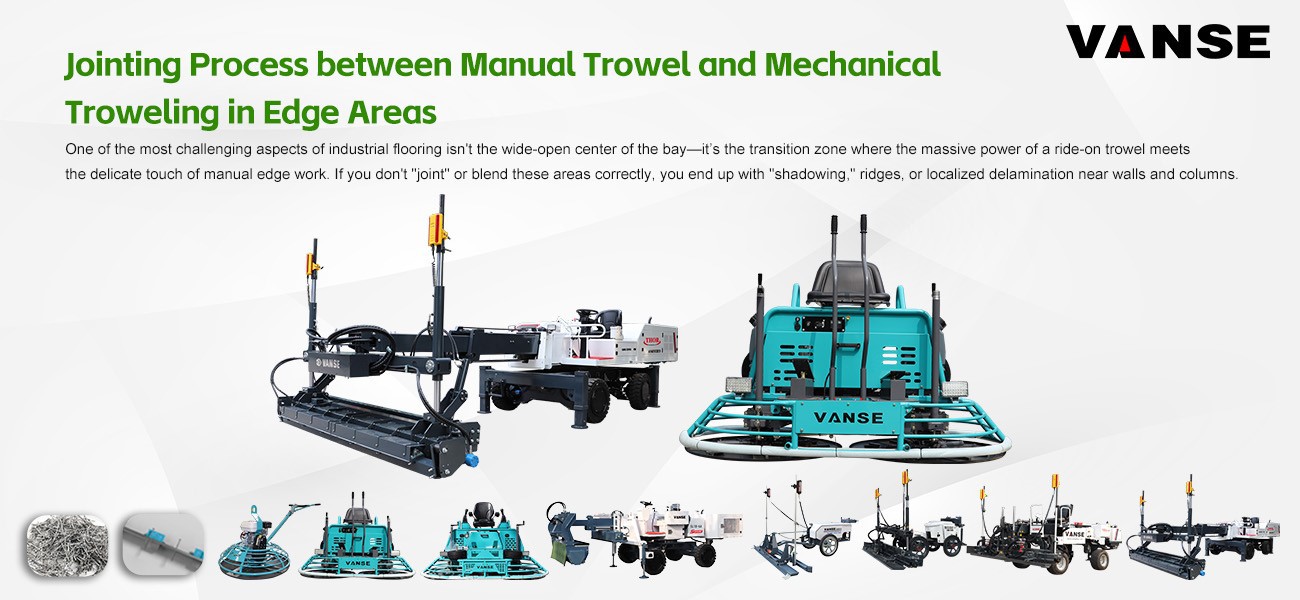
One of the most challenging aspects of industrial flooring isn't the wide-open center of the bay-it’s the transition zone where the massive power of a ride-on trowel meets the delicate touch of manual edge work. If you don't "joint" or blend these areas correctly, you end up with "shadowing," ridges, or localized delamination near walls and columns.
To achieve a seamless, professional finish that passes high-spec inspections, you need a workflow that bridges the gap between manual precision and mechanical force. Here is the pro’s guide to mastering the edge transition using the Vanse professional fleet.
1. Precision Placement: The "Zero-Spill" Edge
The transition starts before the concrete is even poured. If you have "mounds" of concrete near the formwork, the manual crew has to work twice as hard to get it flat.
The Vanse Workflow: Use a Vanse Concrete Distributor to place an even ribbon of material along the edges. For tight corners or indoor pillars where a truck can't reach, the Vanse Mini Dumper is the perfect "last-mile" tool. It allows you to dump concrete with surgical precision right up to the edge, reducing the manual labor needed to "pull" the concrete into place.
2. The Leveling Baseline: Getting Close to the Form
If the edge isn't level, the power trowel will "hop" when it hits the transition, creating a visible ridge.
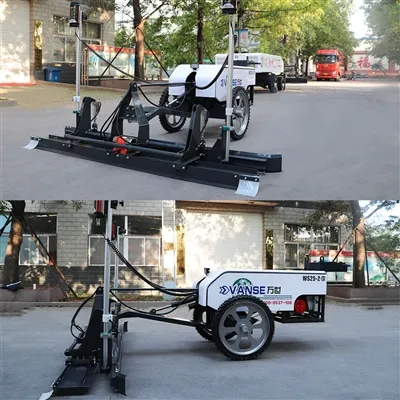
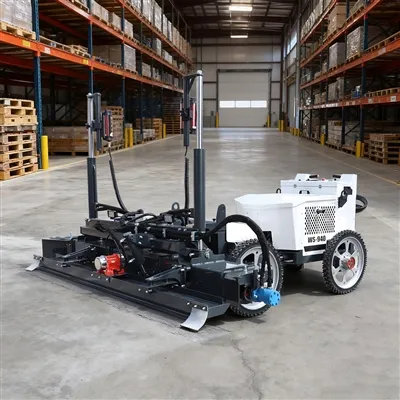
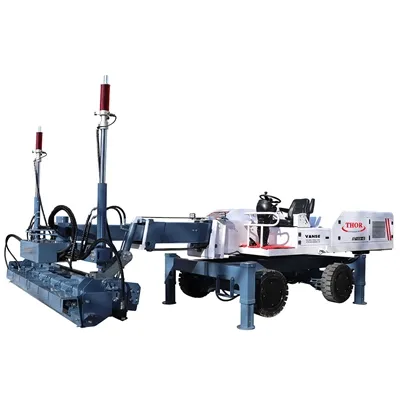
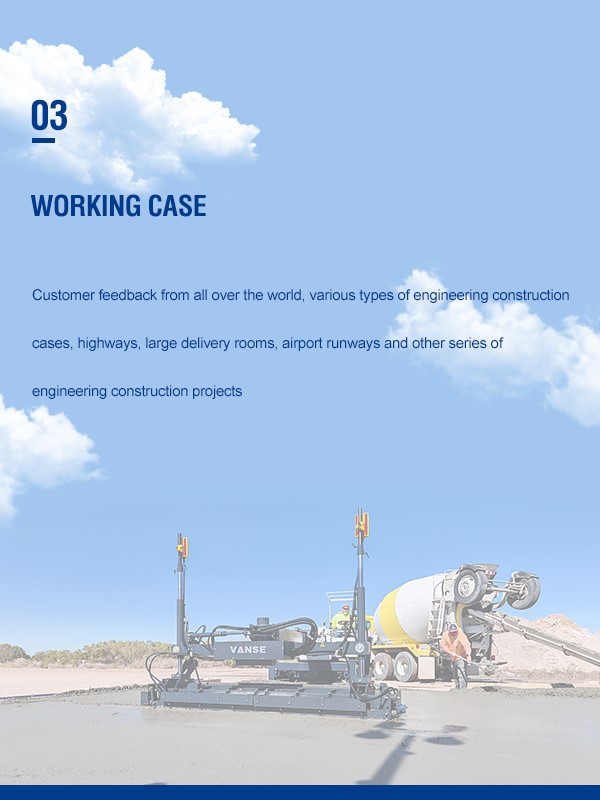
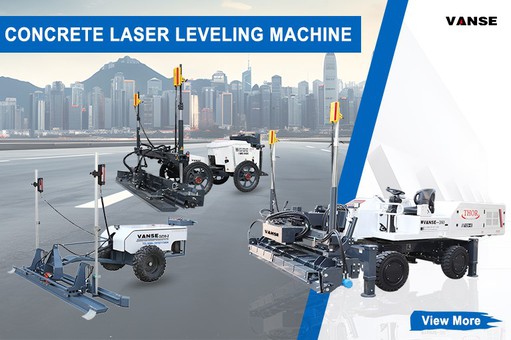
The Vanse Workflow: A Vanse Concrete Laser Leveling Machine (like the agile YZ25-4) is designed to get incredibly close to the formwork. The high-frequency vibration consolidates the edges just as effectively as the center. This creates a uniform "baseline" flatness, so the manual crew only has to focus on the final 15cm of finish rather than trying to fix the level.
3. Integrated Hardening: Don't Forget the Boundaries
A common failure point is the "soft edge"-where the center of the floor is hard as iron but the edges are dusty because the dry-shake wasn't applied correctly.
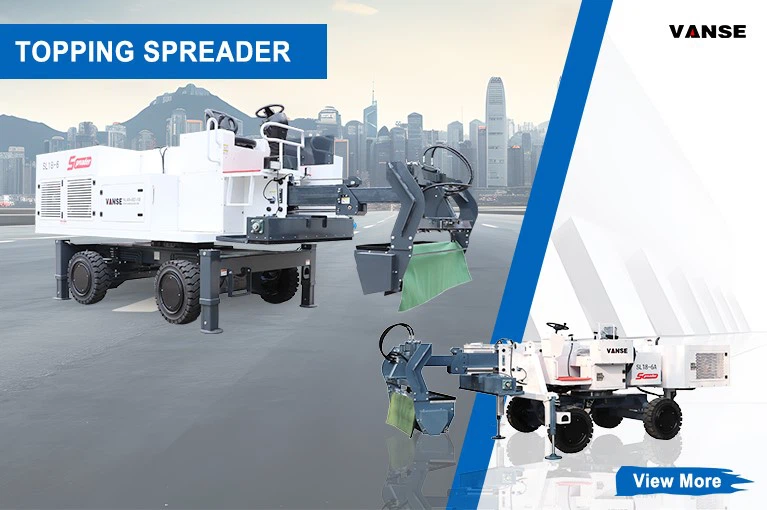
The Vanse Workflow: The Vanse Automatic Topping Spreader ensures that your wear-resistant hardener is applied uniformly right up to the boundary lines. This means the manual troweling in the edge area will have the same material density as the mechanically troweled center.
4. The "Seamless Blend" Troweling Technique
This is the critical "jointing" phase. The goal is to make it impossible to tell where the manual work ends and the machine work begins.
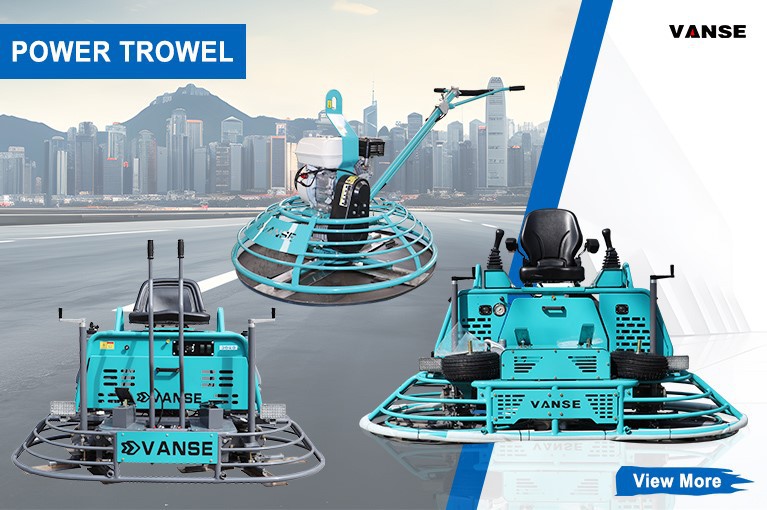
The Strategy: As the manual crew finishes the edges with hand floats, the Power Trowel operator (using a machine like the Vanse VS836 walk-behind or the VS1046H ride-on) must overlap the manual work by at least 15-20cm.
Vanse Edge-Friendly Tech: Vanse power trowels feature precision pitch control and balanced rotor designs. This allows the operator to "feather" the edge of the trowel pass, slowly decreasing the blade angle as they approach the manual work to create a perfectly flat, blended transition without "digging" into the fresh edge.
5. Final Stress Relief: The Clean Cut
Once the transition is blended, the edge area is under a lot of stress during the drying phase.
The Vanse Workflow: Use a Vanse Concrete Cutting Machine (Floor Saw) to execute the contraction joints near walls and columns. A stable, high-speed cut ensures that any shrinkage stress is relieved exactly where you want it, preventing "random cracks" from ruining your beautiful edge work.
Comparison: Manual vs. Mechanical Transition
| Stage | Manual Edge Focus | Vanse Mechanical Support |
| Placement | Pulling concrete by hand. | Mini Dumper / Distributor precision. |
| Leveling | Manual leveling (variable). | Laser Leveling Machine (±1mm accuracy). |
| Hardening | Hand-throwing (uneven). | Automatic Topping Spreader (uniform). |
| Finishing | Hand troweling (lower density). | High-Torque Power Trowel (dense/burnished). |
| Jointing | Hand-tooling joints. | Concrete Cutting Machine (clean/straight). |
Final Word
The quality of a floor is judged by its weakest point-which is usually the edges. By utilizing a complete "system" from Vanse Machinery (www.vansemac.com), you ensure that your edges aren't just an afterthought. They become a seamless extension of the superflat floor you’ve worked so hard to create.
Tired of "shadowed" edges? Visit Vanse today to see how our fleet can perfect your next project from center to boundary.
Note: The parameters provided in this document are for reference only and are not mandatory. Due to differences in technical characteristics between different brands and models of laser levelers, please consult the manufacturer for a suitable solution before actual operation. This reference document assumes no responsibility for any issues arising from failure to follow the manufacturer's instructions.
Thanks to All the Friends Who Support and Trust Shandong Vanse Machinery Technology Co., Ltd.
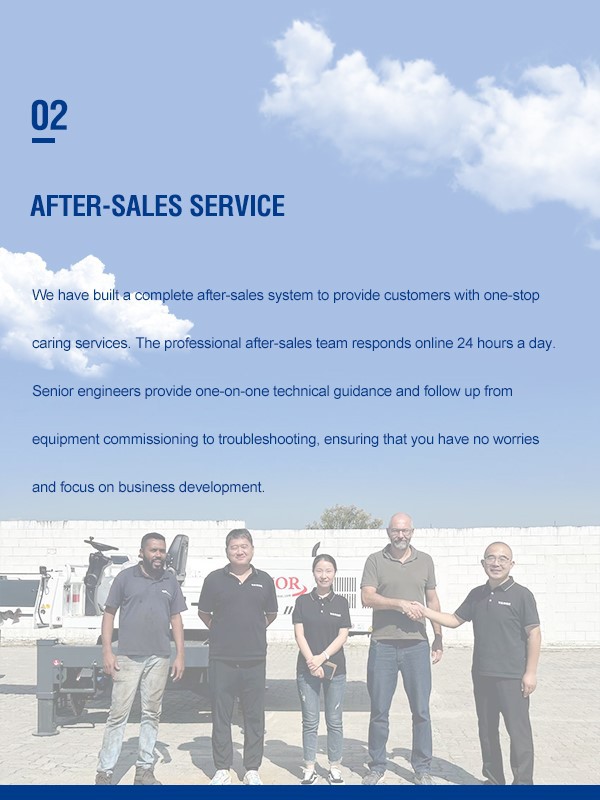
If you want to know more about Shandong Vanse Machinery Technology Co., Ltd. or have any questions, please feel free to contact us:
Our Factory
Shandong Vanse Machinery Technology Co., Ltd.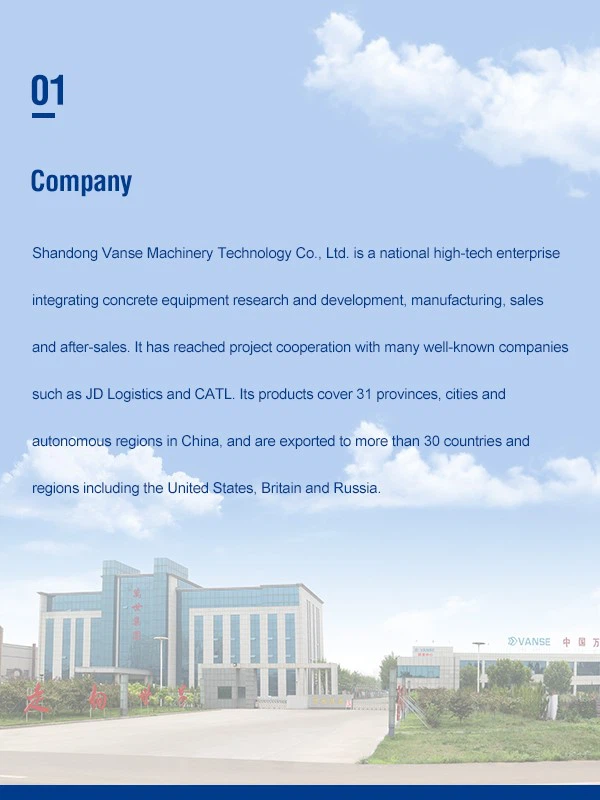
Share this article

About the Author: Shandong Vanse Machinery Technology Co., Ltd.
Shandong Vanse Machinery Technology Co., Ltd. is a high-tech manufacturer specializing in concrete construction machinery, including laser screeds and related equipment. The company integrates R&D, production, and global sales, with products exported to over 60 countries and widely used in infrastructure projects worldwide.
Previous Post
Next Post
Related Articles
You Might Also Like
How environmentally friendly is a concrete laser leveling machine?
Environmental protection of concrete laser leveling machine I. Introduction With the global emphasis on environmental protection, the construction industry has begun to turn to green and sustainable construction methods. As a modern construction machinery and equipment, concrete laser leveling machine has been widely used around the world. This kind of mechanical equipment can not only improve construction efficiency, but also play an important role in reducing energy consumption and environmental pollution. This article will take an in-depth look at the environmental friendliness of concrete laser levelings and their importance in the construction industry. 2. Working principle of concrete laser leveling machine Concrete laser leveling machines mainly use laser alignment technology to level the concrete surface. The laser transmitter emits a laser beam, and by adjusting the angle and position of the reflector, the laser beam is accurately projected onto the receiver. When the height of the concrete surface changes, the receiver can detect the deviation of the laser beam and feed this information back to the control system. The control system adjusts the driving path of the leveler and the working status of the vibrator based on this information to ensure a smooth concrete surface. 3. Environmental protection analysis ◆Low energy consumption: The concrete laser leveler uses advanced laser technology, which consumes less energy than traditional manual or manual leveling machines. This helps reduce carbon emissions from the construction industry, thereby slowing the rate of global warming. ◆Reduce material waste: Because the concrete laser leveling machine has a high-precision leveling effect, it can reduce the amount of concrete used and also reduce the dependence on additional materials. This not only reduces construction costs but also helps reduce pressure on natural resources. ◆Reduce noise pollution: The noise generated by the concrete laser leveling during the working process is relatively low, and no strong vibration is generated during the working process. This can reduce the impact on the surrounding environment and create a more comfortable working environment for the construction team. ◆Improve construction efficiency: The concrete laser leveling machine has high efficiency and can complete a large amount of concrete leveling work in a short time. This helps shorten the construction period, thereby reducing impacts on surrounding communities and issues such as traffic congestion. ◆Strong adaptability: The concrete laser leveling machine has strong adaptability and can work in different construction environments. Whether it is a large construction project or a small residential area project, efficient and environmentally friendly construction can be achieved with a concrete laser leveling. ◆Predictability: By using a concrete laser leveling, precise control of the concrete surface can be achieved, reducing the need for rework and repairs. This not only helps save energy and resources but also reduces environmental impact. ◆Low maintenance cost: The maintenance cost of concrete laser leveling machine is relatively low. Thanks to its advanced laser technology, maintenance personnel can quickly detect and repair equipment faults to ensure normal operation. This low maintenance helps reduce operating costs in the construction industry while also helping to reduce environmental impact. ◆Promote sustainable development: By using concrete laser leveling machines, the construction industry can better achieve sustainable development goals. This kind of mechanical equipment can not only improve construction efficiency, but also play an important role in reducing energy consumption, reducing material waste, and reducing noise pollution. These characteristics make the concrete laser leveling one of the important tools to promote sustainable development. 4. Conclusion To sum up, the environmental protection of concrete laser leveling is mainly reflected in the following aspects: lower energy consumption, reduced material waste, reduced noise pollution, improved construction efficiency, strong adaptability, predictability, low maintenance cost and Promote sustainable development, etc. These characteristics make concrete laser leveling an efficient and environmentally friendly construction method, providing strong support for the construction industry to achieve sustainable development goals.Are Shandong Vanse’s walk-behind laser leveling low-maintenance?
The later maintenance cost of Shandong Vanse's walk-behind laser leveling is relatively low, which is clearly reflected in multiple dimensions such as equipment design, quality of core components, maintenance convenience, after-sales service policies, and actual construction feedback. Specifically, it can be summarized as follows in combination with the details of the manual and actual market applications: The innovative structure simplifies the maintenance process. This equipment adopts a front and rear hood tilting design, which is an industry-first design that can quickly expose the internal key components (such as the generator and hydraulic system), and maintenance can be completed without disassembling a large number of peripheral components. Compared with the complex process of disassembling the body of traditional models, it not only saves more than 30% of maintenance time, but also avoids component damage caused by improper disassembly, indirectly reducing maintenance costs. Meanwhile, the body adopts a lightweight design, with the entire machine weighing only 325-350kg. When moving to another location, there is no need for large hoisting equipment, reducing the wear and tear on the tires and chassis during transportation. Moreover, the walking system is independently driven by two wheels. When a single wheel malfunctions, the entire machine does not need to be shut down for maintenance, reducing downtime losses. The service life of vulnerable parts is optimized and the replacement cycle is clearly marked. The manual clearly indicates the maintenance and replacement cycle of core components. Most vulnerable parts have a longer service life, reducing the cost of frequent replacement. Long-term durable components: The replacement cycle of the rubber shock absorber is 500,000 square meters of construction area, and the replacement cycle of the scraper connection shaft is 200,000 square meters, far exceeding similar models in the industry (usually requiring replacement for 200,000 to 300,000 square meters). Regular maintenance parts: The balance shaft bracket and the wheel axle head only need to be greased every 50 hours and do not need to be replaced frequently. The fixing bolts of the vibrator should be inspected once every 100 hours. They only need to be tightened and do not require regular replacement. Controllable consumable costs: The air filter should be cleaned every 70 hours and the gasoline filter every 100 hours. After cleaning, they can be reused without the need to frequently purchase new parts. The core components of the equipment (such as generators, laser systems, and drive parts) all adopt imported brands from Germany, the United States, and Japan, for example The generator is equipped with Jialing, Japanese YITENG (TY3600DC-2) or SAWAFUJI (SH6500EX) . It features stable power and a low failure rate. The manual indicates that the first oil change cycle for a new machine is 20 hours, and then it should be changed every 100 hours. The oil grade is clearly specified (10-30 gasoline oil for the south and 15-40 for the north). Avoid engine damage caused by improper oil compatibility.The laser control system adopts microcomputer scanning technology. The working diameter of the laser emitter reaches 300m and it has a protection level of IP66. It operates stably in an environment ranging from -10 to 60℃, with very few signal failures. Compared with domestic laser systems, it can reduce the frequency of debugging and maintenance by more than 50%. The durability of high-quality components directly reduces the probability of core system failures. According to market feedback, during continuous construction (such as 8 hours of operation per day), this equipment has no major failures on average within 1,000 hours and only requires regular maintenance, which is far superior to the performance of some domestic models that need repair within 500 to 800 hours. The maintenance process is standardized to reduce labor costs. The manual details a hierarchical maintenance list of "daily – every 50 hours – every 100 hours", and the operation is simple and easy to execute: Every day, only the cable connectors and laser communication interfaces (waterproof + loose) need to be inspected, and the oil of the lifting frame joint head needs to be added. One person can complete this in 30 minutes. Every 50 hours, maintenance items (such as adding grease to the balance shaft bracket and inspecting the distribution box) can be carried out by the construction team themselves without the need for professional maintenance personnel, thus saving on-site service fees (usually the cost of a single on-site maintenance is 300 to 500 yuan). The after-sales service policy reduces additional expenses. The manufacturer provides worry-free services throughout the entire life cycle. Core benefits include: Free regular maintenance: Every winter, we organize the "Winter Warmth Delivery Campaign", offering free inspections of the laser system, hydraulic pipelines, and electrical circuits for customers. We promptly identify potential issues (such as laser receiver calibration and aging of sealing parts) to prevent minor malfunctions from escalating into major repairs (for instance, if the laser receiver is not calibrated in time, it may lead to ground flatness errors, with subsequent rework costs exceeding 10 yuan per square meter). Overseas/Off-site service support: When the equipment is exported or construction is carried out in other places, the manufacturer can send engineers to the site for commissioning. The commissioning and training costs are already included in the purchase cost of the machine and no additional fees are required. Component supply guarantee: Vulnerable parts (such as puncture-resistant tires and vibration plate bolts) can be quickly allocated through dealers, with transparent unit prices (for example, the unit price of a tire is about 200 yuan per piece), which is 20%-30% lower than that of third-party repair shops. From the perspective of engineering application, the low maintenance cost of this equipment is also reflected in the indirect savings of later ground maintenance expenses: Laser leveling technology enables large-scale integral paving, reducing construction joints (traditional techniques leave joints every 6-8 meters, while this equipment can be seamless within 25 meters). The probability of ground cracking is reduced by 60%, and the later repair cost (typically 50-100 yuan for repairing a 1-meter crack) is significantly decreased. The construction accuracy meets the German standard (flatness error ≤1.3mm), and there is no need for post-construction grinding and leveling (traditional processes require additional grinding, with a cost of about 2 yuan per square meter). Considering the maintenance cost of the equipment itself, the overall cost is saved by 2-3 yuan per square meter compared to traditional processes. Taking the construction of a 10,000 square meter factory building as an example, the comprehensive cost can be saved by 20,000 to 30,000 yuan. Shandong Vanse walk-behind laser leveling machine achieves controllable later maintenance costs through "high-durability components + simplified maintenance design + free after-sales support" The cost of regular maintenance (including consumables) is approximately 5 to 8 yuan per hour (calculated based on oil changes and filter cleaning every 100 hours). In the absence of major malfunctions, the construction and maintenance cost per 10,000 square meters is approximately 200 to 300 yuan, which is much lower than the industry average of 500 to 800 yuan per 10,000 square meters. It is particularly suitable for long-term use in medium and small-sized construction sites (such as factories and underground garages), balancing economy and reliability. Note: The parameters provided in this document are for reference only and are not mandatory. Due to differences in technical characteristics between different brands and models of laser levelers, please consult the manufacturer for a suitable solution before actual operation. This reference document assumes no responsibility for any issues arising from failure to follow the manufacturer's instructions.One-step forming construction technology of super-large reinforced concrete floor laser leveling machine
Discussion on the one-time forming construction process of the laser leveling machine for super-large reinforced concrete floor I. Introduction and process overview In the field of modern construction engineering, the flatness and construction efficiency of the ground have a vital impact on the overall quality and construction period of the project. Especially for the construction of super-large reinforced concrete floors, traditional construction methods are often unable to achieve the ideal flatness and construction efficiency. Therefore, the one-time forming construction process using a laser leveling machine has become the preferred solution in the industry. This article will focus on the process, technical characteristics, application cases and benefit analysis of the one-time forming construction process of the laser leveling machine for super-large reinforced concrete floors, in order to provide a useful reference for the actual construction of construction projects. The one-time forming construction process of the laser leveling machine for super-large reinforced concrete floors is an advanced construction method that integrates multidisciplinary technologies such as laser technology, computer technology, and mechanical automation technology. This process uses a light transmitter to emit laser signals, and uses a laser leveling machine to receive and process these signals, thereby achieving high-precision leveling of the concrete floor. The one-time forming construction process refers to the fact that during the entire construction process, multiple processes such as concrete laying, leveling, vibration, and leveling can be completed continuously and efficiently, greatly improving construction efficiency. Ⅱ. Equipment composition and technical features The core equipment of the one-time forming construction process of the super-large reinforced concrete floor laser leveling machine is the laser leveling machine, which is usually composed of laser transmitters, receivers, leveling machinery and other parts. The laser transmitter is responsible for emitting laser signals, and the receiver receives and processes these signals, calculates the difference between the actual height and the theoretical height of the ground, and transmits this information to the leveling machine. The leveling machine adjusts its working state according to the received information to achieve high-precision leveling of the ground. The laser leveling machine has the following technical characteristics: First, the construction accuracy is high, which can meet the millimeter-level flatness requirements; second, the construction efficiency is high, which can greatly shorten the construction period; third, the operation is simple and convenient, reducing the dependence on the technical level of the construction personnel: fourth, the degree of automation is high, which reduces the intensity of manual work and improves the construction safety. Ⅲ. Ground treatment and preparation work Before the one-time forming construction of the super-large reinforced concrete floor laser leveling machine, strict ground treatment and preparation work must be carried out. First, ensure that the base of the construction area is dry and free of debris, and remove obstacles that may affect the quality of the construction. Secondly, set the initial reference point according to the design requirements to provide an accurate reference for the laser leveler. In addition, it is necessary to prepare the concrete materials and auxiliary tools required for construction to ensure the smooth progress of the construction process. IV. Construction process and key points The construction process of the one-time forming construction process of the super-large reinforced concrete floor laser leveler mainly includes the following steps: 1. Concrete paving: According to the design requirements, spread the evenly mixed concrete material on the treated ground, pay attention to controlling the paving speed and thickness to ensure that the concrete is evenly distributed. 2. Laser signal reception and processing: The receiver of the laser leveler receives the laser signal emitted by the laser transmitter in real time, and calculates the difference between the actual height and the theoretical height of the ground based on these signals. 3. Concrete floor leveling: The laser leveler automatically adjusts the working state according to the received information and performs high-precision leveling on the concrete floor. During the leveling process, it is necessary to pay attention to controlling the travel speed and leveling depth of the leveler to ensure that the ground flatness meets the requirements. 4. Vibration and leveling: During the leveling process, a vibrator is required to compact the concrete to improve the density and strength of the ground. At the same time, professional leveling tools are required to further level the ground to ensure that the flatness meets the design requirements. 5. Maintenance and finished product protection: After the construction is completed, the concrete floor needs to be properly maintained to improve its strength and durability. At the same time, measures need to be taken to protect the finished product to prevent damage during subsequent construction. During the construction process, the following points should be noted: First, strictly control the material quality and mix ratio of concrete to ensure the stability of the performance of concrete; Second, strengthen the technical training and management of construction personnel to improve the quality and efficiency of construction; Third, pay close attention to the impact of weather changes and environmental conditions on construction, and take timely measures to respond. V. Quality monitoring and assurance measures In order to ensure the construction quality of the one-time forming construction process of the super-large reinforced concrete ground laser leveling machine, a series of quality monitoring and assurance measures need to be taken. First of all, a complete quality management system and monitoring process need to be established to strictly control each link. Secondly, strengthen the inspection and acceptance of raw materials and semi-finished products to ensure that the quality of materials meets the requirements. At the same time, focus on monitoring and testing the key processes and hidden projects in the construction process to ensure that the construction quality meets the design requirements. In addition, it is necessary to conduct comprehensive inspection and acceptance of the finished products, and promptly deal with and rectify the parts that do not meet the requirements. VI. Safety management and environmental protection During the one-time forming construction process of the super-large reinforced concrete floor laser leveling machine, safety management and environmental protection should not be ignored. In terms of safety management, a sound safety management system and operating procedures need to be established, and construction personnel should be given safety education and training to ensure safety during the construction process. At the same time, it is also necessary to strengthen the maintenance and maintenance of construction equipment to ensure the normal operation and safe use of the equipment. In terms of environmental protection, a series of measures need to be taken to reduce the impact of construction on the environment, such as controlling noise and dust emissions, and rationally utilizing resources and energy. VII. Project Case and Benefit Analysis The one-time forming construction process of the super-large reinforced concrete floor laser leveling machine was adopted in the ground construction of a large factory building. During the construction process, the construction quality and efficiency were ensured by strictly controlling the quality of materials, strengthening technical training and management, and optimizing the construction process. Finally, the ground flatness of this project case met the design requirements, and the construction period was shortened by nearly one-third compared with the traditional method. In terms of benefit analysis, the application of this process not only improved the quality of the project and reduced the cost of later maintenance, but also significantly improved the construction efficiency, saving manpower and time costs for the enterprise. At the same time, since this process reduces material waste and environmental pollution, it is also in line with the concept of green construction and sustainable development. In addition, from the perspective of social benefits, the application of this process has promoted technological progress and innovative development in the field of construction engineering. By promoting and applying this advanced construction technology, the construction level of the entire industry can be improved, and the construction industry can be promoted to develop in the direction of higher quality and higher efficiency. VIII. Conclusion and Prospect The one-time forming construction process of the laser leveling machine for super-large reinforced concrete floor is a new construction method with significant advantages. Through practical application and benefit analysis, we can see that this process has significant effects in improving the flatness of the ground, improving construction efficiency, reducing costs, and reducing environmental pollution. Therefore, this process has broad application prospects and promotion value in the field of construction engineering. Looking to the future, with the continuous advancement of science and technology and the continuous development of the field of construction engineering, the one-time forming construction process of the laser leveling machine for super-large reinforced concrete floor is expected to be further improved and optimized. By developing more advanced laser leveling equipment and technology, we can further improve construction accuracy and efficiency, reduce construction costs, and promote the construction industry to develop in the direction of higher quality and higher efficiency. At the same time, we also need to pay attention to the problems and challenges that may be encountered in the actual application of this process. For example, how to further improve the stability and reliability of equipment, how to cope with construction needs under different geological and environmental conditions, how to strengthen the training and management of construction personnel, etc. Through continuous research and practice, we can gradually solve these problems and promote the application of the one-time forming construction process of the super-large reinforced concrete floor laser leveling machine in the field of construction engineering. In summary, the one-time forming construction process of the super-large reinforced concrete floor laser leveling machine is an advanced construction method with broad application prospects and promotion value. We should actively promote and apply this process to contribute to the high-quality and high-efficiency development of construction projects.