Technical Knowledge
Cost-Benefit Comparison of Laser Leveling Machine and Traditional Manual Leveling (Labor Savings VS Equipment Investment)
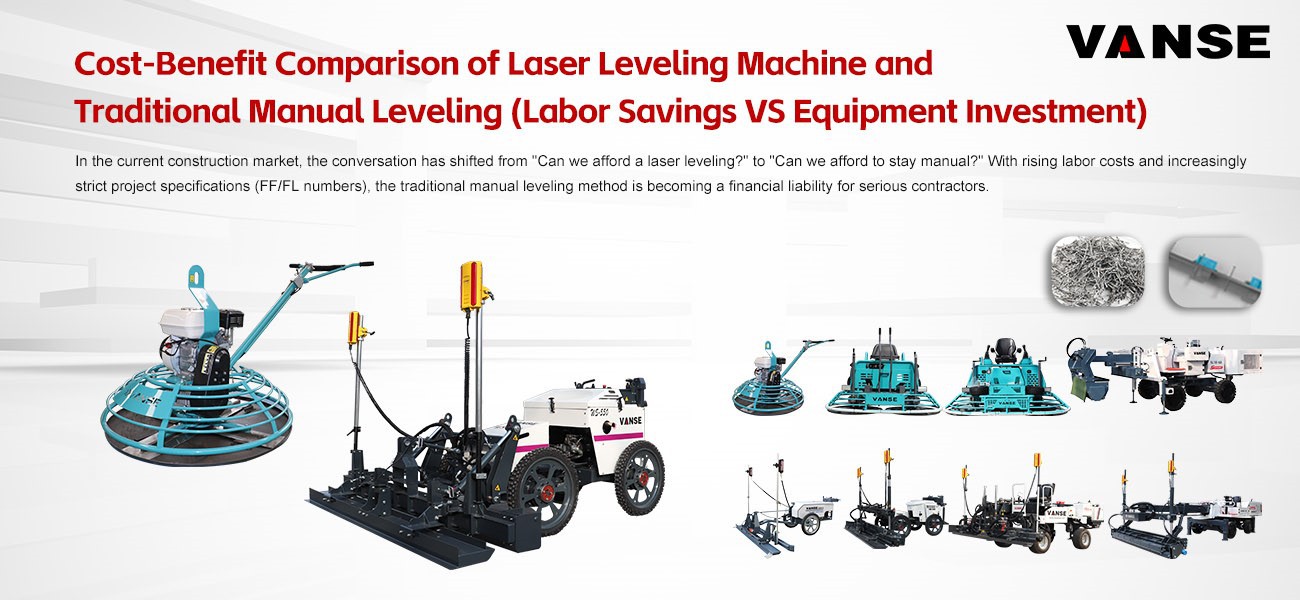
In the current construction market, the conversation has shifted from "Can we afford a laser leveling?" to "Can we afford to stay manual?" With rising labor costs and increasingly strict project specifications (FF/FL numbers), the traditional manual leveling method is becoming a financial liability for serious contractors.
If you’re weighing the Equipment Investment of a Vanse Concrete Laser Leveling Machine against the perceived "low cost" of manual labor, here is the professional breakdown of the real ROI.
1. The Productivity Gap: Square Meters per Hour
Manual leveling is slow, grueling, and dependent on the physical stamina of your crew.
Manual: A highly skilled 10-man crew might manage 600–800m² in a long, exhausting day.
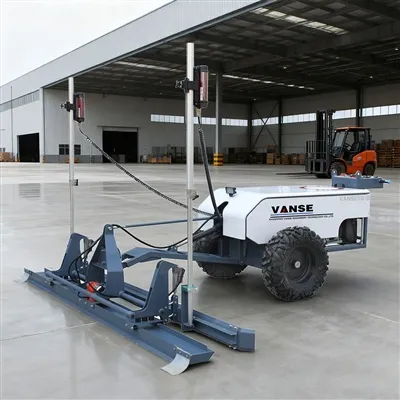
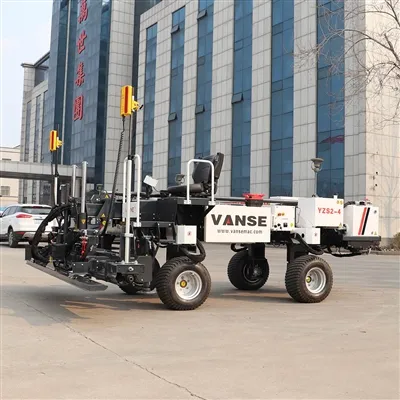
Vanse Workflow: With a Vanse YZ25-4/YZ28-4S/WS940/WS940C or the telescopic YZ30-4E, that same crew (or even a smaller one) can easily cover 2,500–3,500m² per day.
The Math: You are essentially quadrupling your output. In the international market, where project timelines are aggressive, this speed allows you to take on 3x more projects per year with the same headcount.
2. Labor Savings: From 12 Men to 5
The "hidden cost" of manual leveling isn't just the hourly wage; it’s the insurance, the management, and the human error.
Manual: You need a massive team for distribution, leveling, and vibrating.
The Vanse Fleet Solution:
Replace 4 guys with shovels with one Vanse Concrete Distributor or a Mini Dumper.
Replace the 6-man leveling team with one Concrete Laser Leveling Machine operator.
Instead of manual "dusting," use an Automatic Topping Spreader to ensure uniform wear-resistance.
Result: You cut your specialized labor requirements by over 50%. In regions like North America or Europe, the machine often pays for itself in labor savings alone within 6–9 months.
3. Quality Control: FF/FL Scores and Rework
Manual leveling rarely hits the "Superflat" specs required for modern VNA warehouses.
The Risk: If a manual floor fails an FF/FL test, you face the nightmare of grinding or, worse, a "rip and replace" order.
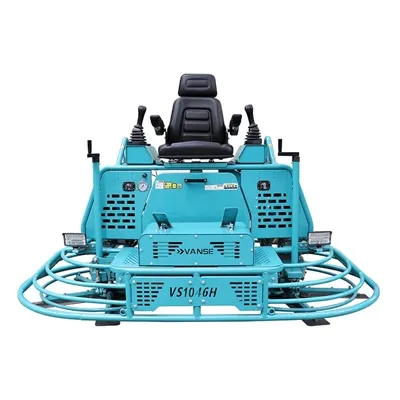
The Vanse Guarantee: Vanse machines react to laser signals 10 times per second. By using a Vanse Power Trowel following the laser leveling, you achieve a "burnished" mirror finish that passes inspection the first time. Precision Concrete Cutting Machines from Vanse then ensure the joints are clean, preventing late-stage cracking.
4. Comparison Table: Manual vs. Vanse Ecosystem
| Metric | Traditional Manual Leveling | Vanse Laser Leveling System |
| Crew Size | 10–15 Workers | 4–6 Workers |
| Daily Output | 500 – 800 m² | 2,500 – 3,500 m² |
| Precision (FF/FL) | Low to Medium (Subject to fatigue) | High to Superflat (Consistent) |
| Physical Strain | Extremely High (High turnover) | Low (Operated via joystick/seat) |
| Surface Hardness | Uneven (Manual spreading) | Superior (Automatic Topping Spreader) |
| Long-term Cost | High (Labor + Rework risk) | Low (Maintenance + Depreciation) |
The "Vanse Ecosystem" Advantage
When you visit www.vansemac.com, you aren't just looking at a price tag; you’re looking at a business transformation tool.
The Concrete Distributor and Mini Dumper handle the heavy lifting.
The Laser Leveling Machine handles the precision.
The Topping Spreader and Power Trowel handle the durability.
The Concrete Cutting Machine handles the finish.
Final Verdict: Is it worth the investment?
If your business goal is to stay small and handle residential driveways, manual is fine. But if you want to bid on Amazon-scale warehouses, logistics hubs, or high-end industrial bays, the equipment investment in a Vanse fleet is the only way to remain competitive.
The investment isn't just in the steel and hydraulics; it’s an investment in guaranteed quality and massive labor efficiency.
Explore the full range and request a quote at www.vansemac.com to see how the numbers work for your specific market.
Note: The parameters provided in this document are for reference only and are not mandatory. Due to differences in technical characteristics between different brands and models of laser levelers, please consult the manufacturer for a suitable solution before actual operation. This reference document assumes no responsibility for any issues arising from failure to follow the manufacturer's instructions.
Thanks to All the Friends Who Support and Trust Shandong Vanse Machinery Technology Co., Ltd.
If you want to know more about Shandong Vanse Machinery Technology Co., Ltd. or have any questions, please feel free to contact us:
Our Factory
Shandong Vanse Machinery Technology Co., Ltd.








Share this article

About the Author: Shandong Vanse Machinery Technology Co., Ltd.
Shandong Vanse Machinery Technology Co., Ltd. is a high-tech manufacturer specializing in concrete construction machinery, including laser screeds and related equipment. The company integrates R&D, production, and global sales, with products exported to over 60 countries and widely used in infrastructure projects worldwide.
Previous Post
Next Post
Related Articles
You Might Also Like
Causes and Treatment of Concrete Cracking
Concrete cracking is a very common and complex problem. Below, I will explain in detail the main causes of concrete cracking, how to identify different types of cracks, and the corresponding treatment and prevention measures. Concrete cracking can be categorized into two main types: early cracking and late cracking. Plastic settlement cracking: Cause: After pouring, concrete is still in a plastic state. Aggregates (gravel, sand) sink, while the cement slurry rises (called "bleeding"). When this settling is hindered by rebar, formwork, or larger aggregate, cracks develop on the concrete surface along the direction of the rebar. Characteristics: Surface cracks typically occur along the direction of the rebar. Plastic shrinkage cracks: Cause: Before the concrete finally sets, surface moisture evaporates faster than the rate at which moisture seeps upward, causing the surface to shrink rapidly while the concrete inside remains plastic, resulting in irregular, network-like cracks and crazing. Causes: High temperatures, strong winds, low humidity, and inadequate curing. Temperature stress cracks (caused by hydration heat): Cause: After pouring large volumes of concrete (such as foundation slabs and beams), the cement hydration reaction releases a large amount of heat, causing the internal temperature to rise sharply (up to 50-70°C). This rapid heat dissipation from the surface creates a significant temperature difference between the inside and outside, generating thermal stress. When the tensile stress exceeds the concrete's early tensile strength, cracking occurs. Characteristics: Cracks are deep and wide, often occurring at cross-sectional changes or in the middle of the structure. Construction process issues: Excessive water addition: Adding water arbitrarily for ease of construction increases the water-cement ratio, severely reducing concrete strength. Improper vibration: Excessive vibration causes aggregate sinking and water seepage; inadequate vibration results in loose concrete. Failure to apply a secondary trowel to the surface before initial setting prevents the closure of early plastic cracks. Drying shrinkage cracks: Cause: After concrete hardens, excess moisture gradually evaporates, causing volumetric shrinkage. When this shrinkage is constrained by external forces (such as foundations and columns) or internal forces (such as rebar), tensile stresses are generated, leading to cracking. This is the most common type of crack. Characteristics: Cracks are shallow and fine, often forming an irregular network or parallel lines. Load-induced cracking: Cause: The loads borne by the structure (such as deadweight or operational load) exceed its design capacity. Characteristics: The cracks are relatively wide, and their direction is related to the nature of the load (e.g., vertical cracks in the middle of the beam bottom are bending cracks, while diagonal cracks at the ends of the beam are shear cracks). These cracks require special attention, as they may affect structural safety. Uneven foundation settlement: Cause: Uneven foundation soil quality, softening due to waterlogging, or excessive loads lead to uneven foundation settlement, resulting in additional stress within the structure and cracking. Characteristics: Cracks are often penetrating, with their direction related to settlement. Alkali-aggregate reaction: Cause: The alkali in the cement reacts chemically with the active silica in the aggregate, forming an expansive gel. This gel expands in volume after absorbing water, causing concrete cracking. Characteristics: A map-like or network-like pattern of cracks with silicone gel seeping out of the surface. Rebar Corrosion Cracks: Cause: Insufficient concrete cover or carbonization reaching the rebar surface. In the presence of water and oxygen, the rebar rusts, causing the rust to expand several times in volume, cracking the concrete. Characteristics: Cracks run along the rebar, later accompanied by brown rust. Before treating cracks, it is necessary to first analyze and determine the crack type, width, depth, stability, and impact on structural safety. Treatment methods are primarily categorized as surface sealing and internal reinforcement. Surface Sealing Method (Suitable for Micro-Cracks <0.2mm) Brushing method: Apply a cement-based penetrating crystallizing waterproofing material, epoxy resin, or polymer-modified cement slurry directly to the crack surface to seal the crack and prevent the intrusion of moisture and harmful substances. Grooving and filling method (suitable for static cracks 0.2-0.5mm wide): Steps: Chisel a "V" or "U"-shaped groove along the crack → Clean thoroughly → Apply a primer → Fill with epoxy resin mortar, polymer cement mortar, or a specialized sealant. Low-pressure grouting (injection method) (suitable for cracks 0.1-1.5mm wide) Steps: Surface cleaning: Clean the area around the crack. Inserting grouting nozzles: Attach grouting nozzles at regular intervals along the crack. Crack sealing: Use sealant to seal the crack surface to prevent grout from leaking. Pressure grouting: Use a low-pressure syringe to inject epoxy or polyurethane grout into the crack from a grouting nozzle until grout is released from the adjacent grouting nozzle. Surface finishing: After the grout has solidified, remove the grouting nozzle and smooth the surface. Structural reinforcement method (suitable for wide cracks that affect bearing capacity) Bonding fiber composite materials (carbon fiber cloth/plate): High-strength carbon fiber cloth is bonded to the surface of the cracked area, utilizing its high tensile strength to share the load. Bonding steel plates: Steel plates are bonded to the concrete surface using structural adhesive to increase structural rigidity. Enlarging the cross-section: A layer of concrete is wrapped around the existing component to increase its cross-sectional dimensions and reinforcement. Prestressing: Prestressed tendons are used to actively apply pressure to the structure, offsetting some of the tensile stress. Important: For cracks caused by uneven foundation settlement, alkali-aggregate reaction, etc., the root cause must be addressed first (such as strengthening the foundation) before crack repair. Prevention is far better than cure. Strict control should be applied to all aspects of the process, including materials, design, construction, and maintenance. Materials: Optimize mix proportions, reduce the water-cement ratio, and use high-efficiency water reducers. Use well-graded aggregates and reduce cement dosage to reduce hydration heat and shrinkage. Use low-heat or medium-heat cement for large-volume concrete. Design aspects: Ensure proper reinforcement placement and add structural reinforcement (such as crack-resistant steel mesh) in areas prone to cracking (such as around holes and at cross-section changes). Properly establish expansion joints and post-cast joints (for extra-long structures). Ensure sufficient concrete cover thickness. Construction: The addition of water on site is strictly prohibited. Strictly control the pouring and vibration processes to ensure uniform compaction and avoid over-vibration and missed vibration. Implement cooling measures (such as water-cooling aggregates) during hot seasons and insulation measures in winter. Perform secondary troweling and compaction promptly to eliminate plastic cracks. Maintenance (critical!): Early Curing: Immediately cover with plastic sheeting or a curing blanket after pouring to prevent rapid evaporation. Sufficient Moisturization: After final set, begin regular watering or use a curing agent to keep the concrete surface moist for at least 7-14 days. Insulation Curing: For large concrete volumes, monitor the temperature difference between inside and outside, implement insulation and moisture curing, and maintain the temperature difference within 25°C. Crack Types Main causes: Treatment Focus Prevention of core problems Plastic Shrinkage/Settlement Cracks Early water loss and impeded settlement Surface Sealing Timely screeding and covering to retain moisture Temperature Cracks Heat of hydration and large temperature difference between inside and outside Grouting Reinforcement Use low-heat cement, cooling, and thermal insulation Desiccation Shrinkage Cracks Later water evaporation and shrinkage Surface Sealing/Grouting Reduce the water-cement ratio and enhance moisture retention Load/Settlement Cracks Overloading and foundation problems Structural Reinforcement + Root Cause Treatment Reasonable design to ensure construction quality When you encounter concrete cracks, don't blindly address them. First, determine their nature and severity. For cracks that are wide, persistent, or potentially impacting structural safety, consult a professional structural engineer or testing company for evaluation. Based on the results, develop a sound treatment plan. Note: The parameters provided in this document are for reference only and are not mandatory. Due to differences in technical characteristics between different brands and models of laser levelers, please consult the manufacturer for a suitable solution before actual operation. This reference document assumes no responsibility for any issues arising from failure to follow the manufacturer's instructions.How does the concrete laser leveling machine improve construction efficiency and quality?
Concrete laser leveling machine is a key equipment to improve efficiency and quality in modern concrete construction. Its core is to achieve high-precision leveling through the laser system, and to complete large-area concrete paving, vibration and leveling in combination with mechanical structure. The following is a detailed analysis of its advantages and mechanism of action from the two aspects of construction efficiency and construction quality: Traditional manual leveling requires multiple vibration and scraping in different areas, and is limited by manual physical strength and operating range (small single-person operation area). The laser leveling machine can cover a range of up to 3-6 meters (depending on the model) through a mechanical arm or scraper, and can achieve a construction area of 500-3000㎡/day (traditional manual only 100-300㎡/day), especially suitable for large areas such as factories, warehouses, and parking lots. – Advantages: Reduce the gap between manual shifts and tool adjustments, and realize the integrated continuous operation of "paving-vibration-leveling". The laser leveling machine establishes a horizontal reference plane through a laser transmitter, and the sensor receives signals in real time and automatically adjusts the scraper height, without the need for repeated manual measurement and adjustment. For example: – Traditional manual work requires frequent calibration of elevations with rulers and levels, measuring every 1-2 meters; the laser system can dynamically level in real time, with a response time of only 0.1-0.3 seconds, greatly reducing the time spent on measurement and adjustment. The bottom of the equipment is usually equipped with multiple sets of high-frequency vibrating rods (vibration frequency 200-300 times/minute), which complete the concrete vibration and compaction while leveling, avoiding the repeated process of manual vibration first and then leveling. The vibration depth can reach 10-30cm, the coverage range is synchronized with the leveling, and the efficiency is 3-5 times higher than manual vibration alone. The horizontal accuracy of the laser system can reach ±1mm/3m, which is much higher than the ±5-10mm error of manual leveling. The principle is: – The laser transmitter emits a 360° rotating laser beam to form a horizontal reference plane; – The fuselage sensor detects the height difference with the reference plane in real time, and automatically adjusts the scraper height through the hydraulic system to ensure that the surface flatness of the concrete meets high standards (such as precision workshops, airport runways, etc.). When paving manually, coarse aggregates are prone to sinking (segregation) due to uneven shovel throwing and vibration. The laser leveler pushes concrete at a uniform speed through the scraper, and cooperates with high-frequency vibration to make the aggregate distribution more uniform, avoiding defects such as honeycombs and hemp surfaces. At the same time, the vibration frequency can be adjusted according to the slump of the concrete (such as reducing the frequency when the slump is high to prevent over-vibration segregation), and it is more adaptable. Manual leveling is greatly affected by experience, physical strength, and environment (such as strong light and fatigue), and height differences may occur in the same area; laser leveling machines use mechanical automation to ensure the consistency of bid height and slope (supporting one-way/two-way slope settings) in large-scale construction, especially suitable for sites with drainage slope requirements (such as parking lots and roofs). Due to the high surface flatness and uniform density, there is no need for repeated finishing before the initial setting of concrete, and the maintenance stage can be quickly entered, indirectly reducing the quality risks caused by later repairs. The laser leveling machine reduces the inefficient links of manual intervention (such as multiple measurements and repeated vibration) through "automatic benchmark control + integrated process integration", and avoids the quality fluctuations of manual operation through high-precision systems. In actual application, its comprehensive benefits are reflected in: – Efficiency: Construction speed increased by 2-3 times, and labor costs reduced by more than 50%; – Quality: The flatness pass rate increased from 70%-80% of manual work to more than 95%, and the problems of cracking and sanding in the later stage of the ground were reduced by more than 60%. Therefore, in large-scale, high-standard concrete construction, laser leveling machines have become the core equipment to replace traditional processes. Click the below to jump immediately!!! AMOUR JOINT CONCRETE LEVELING MACHINE LIGHT TOWER POWER TROWEL SLIPFORM MACHINE STEEL FIBER TOPPING SPREADER TRACKED MINI DUMPERWhat are the advantages of the concrete trowel?
– Fast working speed: The working efficiency of the concrete troweling machine is much higher than that of manual troweling. For example, one ride-on troweling machine is equivalent to the workload of 6 walk-behind troweling machines. It can complete large-area concrete troweling operations in a short time, effectively shortening the construction cycle. – Strong continuous operation ability: It can run continuously for a long time without frequent breaks. It is especially suitable for large-area and large-scale concrete construction projects, such as ground construction in large factories, warehouses, parking lots, etc. – High surface flatness: The troweling machine can make the concrete surface smoother and smoother through mechanical rotation and pressure, reducing possible unevenness and errors caused by manual troweling, and improving the overall quality of the ground. – Strong compactness and wear resistance: The compactness of the concrete surface constructed by the trowel machine is significantly improved, which can effectively enhance the wear resistance of the ground and extend the service life of the ground. It is suitable for improving the quality of the ground. Places with higher requirements, such as airport runways, industrial workshops, etc. – Comfortable driving operation: The driving trowel is equipped with a comfortable seat and a good operating system. The operator can sit and operate, which greatly reduces the labor intensity and reduces the operator's fatigue, thus Improve work efficiency and construction quality. – Flexible steering: The mechanical steering operating system is responsive and easy to operate, allowing the trowel to turn quickly and accurately during the construction process, adapting to construction sites of different shapes and layouts, and better meeting construction needs. – Double wiping disc design: Some troweling machines adopt a double wiping disc configuration. Two troweling discs can be installed at the same time to quickly lift slurry. The two-way multiple blades have a larger weight and have a better compaction effect on the ground. Make the concrete surface stronger and stronger. – Stable and reliable: The trowel machine has a reasonable structural design and smooth operation, which can effectively reduce vibration and shaking during the construction process and reduce the risk of operator injury. – Equipped with safety devices: such as safety cut-off switches, etc. In an emergency, the operator can quickly shut down the engine to ensure construction safety. – Multiple construction scenarios: Can be widely used in the construction of various concrete surfaces such as construction sites, municipal roads, factory warehouses, park roads, community roads, rural streets, etc., whether indoors or outdoors, large or small areas It can be used for all kinds of concrete troweling work. – Different construction stages: It can be used for rough grinding, slurry extraction and compaction on the concrete surface, as well as fine grinding and polishing. One machine has multiple uses to meet the needs of different stages of concrete construction. – Simple structure: The structure of the concrete troweling machine is relatively simple, mainly composed of power unit, transmission parts, troweling working parts, operating handle and control device, body and chassis, etc. It is easy to manufacture and low cost. Moreover, daily maintenance and upkeep are also more convenient, which reduces the maintenance cost and usage cost of the equipment. – Durable parts and components: The use of high-quality materials and parts, such as wear-resistant manganese steel grinding discs and grinding discs, extremely large-diameter carbon structural steel trowel support arms that have undergone strict heat treatment, etc., makes the equipment more durable. Reducing the frequency of parts replacement and further reducing maintenance costs.