Technical Knowledge
Superflat floor construction technology
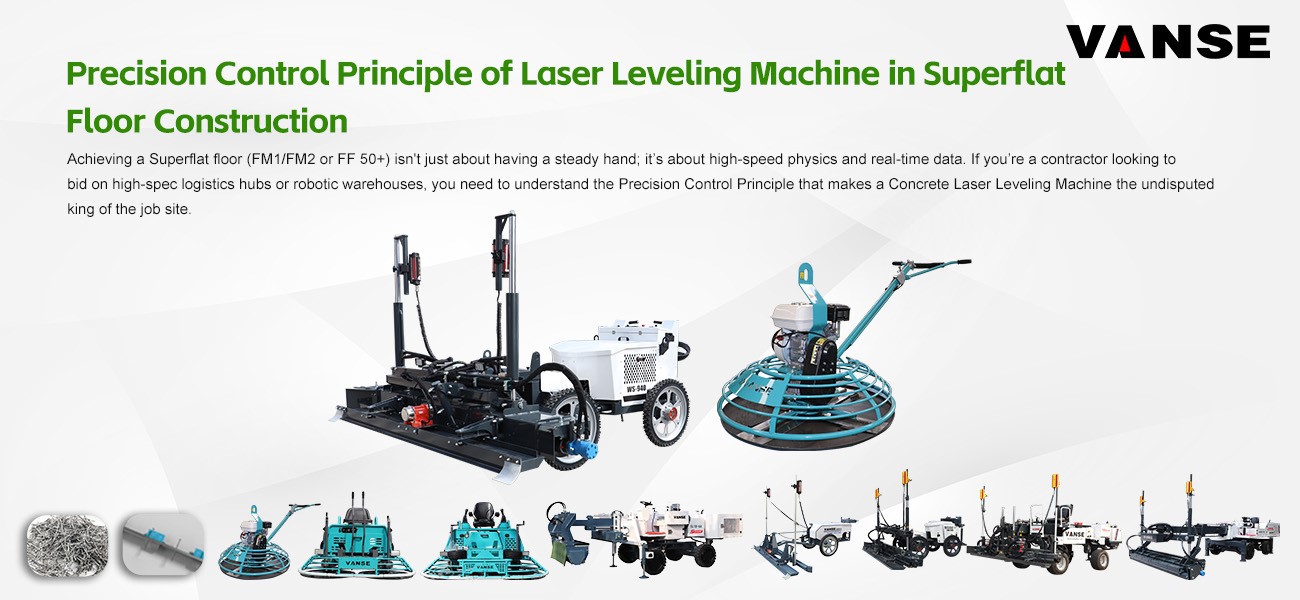
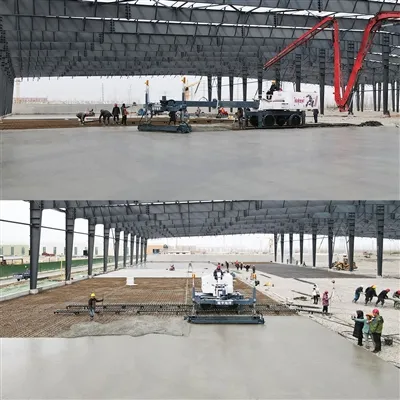
In the era of automated logistics and high-reach VNA (Very Narrow Aisle) warehouses, "flat" isn't just an aesthetic choice-it’s a functional requirement. Superflat floor construction technology is designed to meet extreme tolerances, typically measured as FF (Floor Flatness) and FL (Floor Levelness) numbers (e.g., FF 50+ or FM1 standards).
If you are a contractor looking to master this high-spec field, you don't just need workers; you need a synchronized ecosystem of precision machinery. Here is the ultimate professional workflow for Superflat success, featuring the specialized lineup from Vanse Machinery.
Phase 1: Controlled Placement & Material Handling
Superflat precision begins before the leveling starts. If your concrete distribution is uneven, you create "slump variations" that lead to dips later.
The Strategy: Use a Vanse Concrete Distributor to discharge the mix in uniform ribbons. To get material into tight strips or multi-level bays without the heavy footprint of a truck, the Vanse Mini Dumper (available in electric or gasoline) is the perfect "last-mile" tool. It allows your crew to place concrete with surgical precision, reducing the manual "shoveling" that often leads to inconsistencies.
Phase 2: High-Precision Leveling (The Core)
This is where the Superflat status is won or lost. Traditional manual leveling simply cannot hit FM1/FM2 numbers consistently.
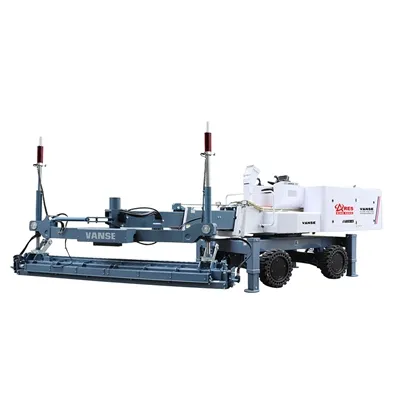
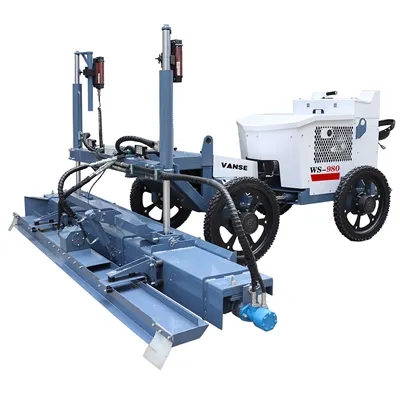
The Vanse Edge: The Vanse YZ30-4E Telescopic Boomed Laser leveling is the industry standard for large-scale precision. Its 6-meter telescopic boom allows the leveling head to strike off the concrete while the machine remains stationary, eliminating the "tire track" issues that ruin FL scores. For smaller projects, the agile Vanse YZ25-4 offers the same high-frequency vibration and laser-controlled precision in a compact frame, ensuring every square meter is consolidated from the bottom up.
Phase 3: Uniform Surface Hardening
VNA floors must be incredibly wear-resistant. However, manual "dry-shake" broadcasting is notoriously uneven, which can lead to color variations and localized "dusting."
The Strategy: Transition to a Vanse Automatic Topping Spreader. By mechanically applying the wear-resistant hardener immediately behind the laser leveling, you ensure a perfectly uniform grams-per-square-meter application. This creates a monolithic bond with the base slab, preserving the flatness achieved by the laser leveling machine while adding iron-clad durability.
Phase 4: Densification & The Mirror Finish
Once the concrete begins to set, you need to "seal" it. In Superflat flooring, this isn't just for looks; it’s about surface density.
The Vanse Edge: A machine like the Vanse Ride-on Power Trowel, provides the heavy compaction needed to "burnish" the floor. Its precision pitch control allows the operator to make micro-adjustments to the blades, smoothing out any remaining micro-imperfections to create a mirror-like finish that meets the highest FF (Flatness) requirements.
Phase 5: Precision Stress Relief (The Joints)
Even the perfect slab will fail if the joints are ragged. In VNA lanes, joint integrity is critical for forklift wheel health.
The Strategy: Use a Vanse Concrete Cutting Machine (Floor Saw) for early-entry or standard contraction joints. Its stable chassis and high-speed blade ensure clean, straight cuts that won't spall or lift, protecting the floor’s long-term FF/FL integrity.
Why Global Buyers are Investing in the "Vanse Workflow"
When you visit www.vansemac.com, you’re not just looking for a "smoothing tool"; you’re looking for a guaranteed result. Here is why international contractors are making the switch:
Labor Savings: A full Vanse fleet can turn a 12-man manual crew into a high-output 5-man team, often paying for itself in labor savings within 6-12 months.
Reduced Rework: Avoid the nightmare of "grinding" a floor that failed its F-number test. Vanse machines are designed to hit the spec the first time.
Reliability: By using world-class components (Honda, Rexroth, Danfoss), Vanse ensures your fleet stays on the job site, not in the repair shop.
Final Thought
Superflat floor construction is the "Formula 1" of the concrete world. You wouldn't take a family sedan to a race track-so don't take "standard" equipment to a Superflat job site. Equip your team with the precision of Vanse (www.vansemac.com) and transform every pour into a high-performance asset.
Ready to upgrade? Check out the full range of Superflat solutions at Vanse Machinery and see how we can help you set a new standard in your market.
Note: The parameters provided in this document are for reference only and are not mandatory. Due to differences in technical characteristics between different brands and models of laser levelers, please consult the manufacturer for a suitable solution before actual operation. This reference document assumes no responsibility for any issues arising from failure to follow the manufacturer's instructions.
Thanks to All the Friends Who Support and Trust Shandong Vanse Machinery Technology Co., Ltd.
If you want to know more about Shandong Vanse Machinery Technology Co., Ltd. or have any questions, please feel free to contact us:
Our Factory
Shandong Vanse Machinery Technology Co., Ltd.








Share this article

About the Author: Shandong Vanse Machinery Technology Co., Ltd.
Shandong Vanse Machinery Technology Co., Ltd. is a high-tech manufacturer specializing in concrete construction machinery, including laser screeds and related equipment. The company integrates R&D, production, and global sales, with products exported to over 60 countries and widely used in infrastructure projects worldwide.
Previous Post
Next Post
Related Articles
You Might Also Like
Why does the road appear uneven?Is there any chance of getting better with laser leveling?
Due to the limitation of construction technology, the road surface is uneven in many cases, and the vehicle cannot maintain a very good stability during driving, and it may cause ruts after repeated rolling, which is equivalent to being stuck in a car. vicious circle. Wouldn't it be better to use concrete laser leveling? Nowadays, many roads are uneven, and there are many reasons. Now I will introduce the reasons for uneven roads: 1. The unevenness of the base layer affects the flatness of the road surface, resulting in uneven paving thickness, and the control of the base layer construction is not strict. Some even use bulldozers and graders to lay the base layer. The construction quality and flatness are difficult to control. 2. The influence of road paving machinery and technology on the smoothness: A. Improper selection of paver structure parameters, resulting in uneven paving thickness and waves; B. Improper control of the base line of the paver, resulting in waves; C. Improper operation of the paver causes uneven paving speed and frequent starting, resulting in rough and uneven surface layers; D. When a slipform paver is used for the concrete pavement, it is affected by the paver itself, control datum line and operation. 3. The influence of the quality of surface paving materials on the flatness: A. The ratio of asphalt pavement materials, mixing, oil temperature and shutdown due to material failure; B. Raw materials, proportioning and stoppage of materials for concrete pavement. 4. Effect of rolling on flatness: A. The use of low-frequency, high-amplitude road rollers will cause jumping and tamping phenomena, and excessive initial tonnage will cause pushing deformation; B. Uneven rolling speed, sudden braking, sudden start, random parking and U-turn, parking on the rolled and formed road without turning off the vibration device will cause road congestion, and stopping on the uncooled road will cause sunken; C. Improper rolling route, if you don't pay attention to wrong wheel rolling, turning back at the same cross section every time will cause uneven road surface; D. The number of times of rolling is not enough, the compaction is not enough, and ruts are easy to form after opening to traffic. The leveling mechanism of the laser leveling machine is driven by hydraulic pressure, cooperates with the laser system and the computer control system to complete the leveling work while automatically leveling, and the work efficiency is extremely high. The laser transmitter used to control the ground level is arranged independently, and the level of the ground will not produce cumulative errors. Compared with the traditional method, the flatness of the super-large area is as easy to control, and at the same time, the construction joints and formwork usage of the floor are greatly reduced. Fast construction speed: use laser leveling machine and other equipment to construct concrete slabs, which improves the work efficiency by 3 times and saves 30% compared with the traditional beam vibrator method. It can complete 2000 square meters per day on average. It is especially suitable for simple shapes and large-scale operations. pavement construction. High degree of automation and low labor intensity: the use of laser leveling machines and other equipment changes heavy manual labor into mechanical paving, vibrating, leveling, slurry extraction, and surface plastering, reducing the number of operators by 30% and reducing labor intensity at the same time. High economic benefit: the application of laser leveling machine and other equipment saves the cost by 2-3 yuan/㎡ compared with the traditional process, with fewer joints and lower maintenance costs in the later period, so that the economic benefit is significantly improved. Advanced equipment such as laser leveling machines are especially suitable for projects such as docks, storage yards, expressways, airports, large squares, parking lots, and municipal roads that have relatively simple shapes, large amounts of action, and high construction quality requirements.The connection and interaction between concrete laser leveling and other construction machinery
As one of the commonly used equipment in modern construction projects, concrete laser leveling machine has close contact and mutual influence with other construction machinery. These connections and influences are not only reflected in the complementarity between equipment, but also in the coordination and optimization of the overall construction organization. The following will elaborate on the connection and interaction between the concrete laser leveling machine and other construction machinery from several aspects, as well as its status and role in the overall construction organization. 1. The relationship between concrete laser leveling machine and other construction machinery The concrete laser leveling machine is mainly used to smooth and smooth the concrete surface to improve the quality of the concrete surface. During the construction process, the concrete laser leveling needs to work closely with other construction machinery to ensure the smooth progress of the construction. Connection with the concrete mixing station: The concrete laser leveling needs to use the concrete provided by the mixing station, so there is a close connection with the concrete mixing station. During the construction process, the concrete mixing station needs to reasonably arrange the supply of concrete according to the construction progress and needs of the concrete laser leveling to ensure that the supply of concrete can meet the construction needs. Connection with transportation machinery: The concrete laser leveling requires the use of transportation machinery to transport concrete from the mixing station to the construction site, so there is a close connection with the transportation machinery. The transportation machinery needs to reasonably arrange the transportation time and transportation route according to the construction progress and needs of the concrete laser leveling machine to ensure that the concrete can reach the construction site in time. Connection with lifting machinery: The concrete laser leveling requires the use of lifting machinery for hoisting and movement, so there is a close connection with the lifting machinery. During the construction process, the concrete laser leveling needs to cooperate with the lifting machinery to ensure the accuracy and safety of hoisting and movement. 2. Interaction between concrete laser leveling machine and other construction machinery There are mutual influences between concrete laser leveling machines and other construction machinery. These influences are mainly reflected in the following aspects: Influence of construction efficiency: The construction efficiency of concrete laser leveling machines is affected by other construction machinery. For example, if the supply of the concrete mixing station is insufficient or the transportation machinery fails, the concrete laser leveling machine will not be able to perform normal construction, thus affecting the overall construction efficiency. Influence of construction quality: The construction quality of concrete laser leveling machine is affected by other construction machinery. For example, if the concrete is not smoothed in time after the transport machinery transports it to the construction site, it may cause problems such as cracks or bubbles on the concrete surface. Impact on construction safety: The construction safety of concrete laser leveling machines is affected by other construction machinery. For example, if the lifting machinery is operated improperly or does not properly cooperate with the concrete laser leveling for lifting and moving, safety accidents may occur. 3. The status and role of concrete laser leveling machine in the overall construction organization Concrete laser leveling machine plays an important role in the overall construction organization, which is mainly reflected in the following aspects: Improve construction efficiency: The concrete laser leveling can quickly and accurately complete the flatness and smoothness of the concrete surface, thereby improving construction efficiency. Guarantee construction quality: The concrete laser leveling can accurately control construction accuracy and quality, thereby ensuring construction quality. Reduce labor intensity: The concrete laser leveling machine can reduce the labor intensity of workers and improve work efficiency. Promote construction safety management: Concrete laser levelings can reduce the number of personnel on the construction site, thereby reducing safety risks on the construction site. To sum up, as one of the commonly used equipment in modern construction projects, concrete laser leveling machine has close contact and mutual influence with other construction machinery. In the overall construction organization, the concrete laser leveling has an important position and role. It can improve construction efficiency, ensure construction quality, reduce labor intensity, and promote construction safety management. It plays an important role. Therefore, during the construction process, the impact of various factors on the concrete laser leveling should be fully considered, and the relationship with other construction machinery should be coordinated to ensure the coordination and optimization of the overall construction organization.What are the quality concrete acceptance criteria for building ground projects?
Acceptance standards for quality concrete in building floor projects 1. General principles 1.1 Purpose This standard clarifies the specifications and standards for quality concrete acceptance of building ground projects to ensure that the project quality meets the design requirements and is safe to use. 1.2 Scope of application This standard applies to the acceptance of concrete materials in building ground projects, including requirements for raw materials, construction technology, quality inspection and acceptance, and safe and civilized construction. 2. Material acceptance standards 2.1 Cement When using cement, cement with product quality certificate and on-site inspection report should be selected, and on-site acceptance should be carried out in accordance with regulations. After the cement enters the site, it should be stored separately according to different varieties, labels, and factory dates, and signs should be set up. It is strictly prohibited to use expired, damp, or agglomerated cement. 2.2 Sand and stone Sand and stone should meet the design requirements, be free of impurities such as silt and stone powder, and have particle size and gradation that meet specification requirements. For projects with special requirements, special sand and stone should be used. 2.3 Water When using tap water or well water, make sure the water is clean and free of impurities such as oil, acid, and alkali. The chloride ion content in water should not exceed specification requirements. 2.4 Admixtures Admixtures should meet the design requirements, have product quality certificates and on-site inspection reports, and undergo on-site acceptance in accordance with regulations. The type and dosage of admixtures should comply with the design and specification requirements and should not contain ingredients harmful to the human body. 3. Construction process acceptance standards 3.1 Template installation Design calculations should be carried out before the formwork is installed, and the formwork should be made and installed in accordance with the design requirements. The strength and stiffness of the formwork should meet the construction requirements, and the joints should be tight, smooth, and free of slurry leakage. The formwork support system should be firm and stable and must not tilt or shake. After the formwork is removed, the surface should be kept clean and free of residue. 3.2 Steel bar binding Rust removal treatment should be carried out before the steel bars are bound. The specifications, models, quantities and spacing of the steel bars should meet the design requirements. The steel bars should be tied firmly and not loose. The joints of the steel bars should comply with the specification requirements, and the welding quality should comply with the design and specification requirements. The thickness of the protective layer of steel bars should meet the design requirements. When cement mortar pads are used, the number of pads should not be less than 4/m2. 3.3 Concrete pouring Before pouring the compacted soil, the formwork, steel bars, etc. should be inspected to ensure that they meet the construction requirements. The slump of concrete should comply with the design and specification requirements, and no water or additives should be added to the mixer at will. When pouring the compacted soil, it should be carried out in layers. The thickness of each layer should not be too large, and it should be vibrated densely without vibration leakage. After the concrete pouring is completed, the surface should be polished and compacted in time to prevent cracks. 3.4 Maintenance After the concrete pouring is completed, curing should be carried out in time, and the curing time should not be less than 7 days. During the curing period, the concrete surface should be kept moist to prevent shrinkage cracks. When using cover watering for curing, the frequency of watering should be enough to keep the concrete in a moist state. When using plastic film for curing, the plastic film should remain completely sealed and water-tight. After the curing is completed, the formwork should be removed promptly and the finished product should be protected in accordance with regulations. 4. Quality inspection and acceptance standards 4.1 Essentials The quality of building ground engineering should comply with the design requirements and relevant specifications, and the surface should be smooth, smooth, and free of cracks, pitting and other defects. The dividing joints should be neat and straight, and there should be no staggered joints. There should be no leakage at the junction between the floor and the wall. Ground engineering with functional requirements should meet the requirements of relevant functional functions.