Insight blog
Global Market Guide: Ride-On and Walk-Behind Laser Screeds
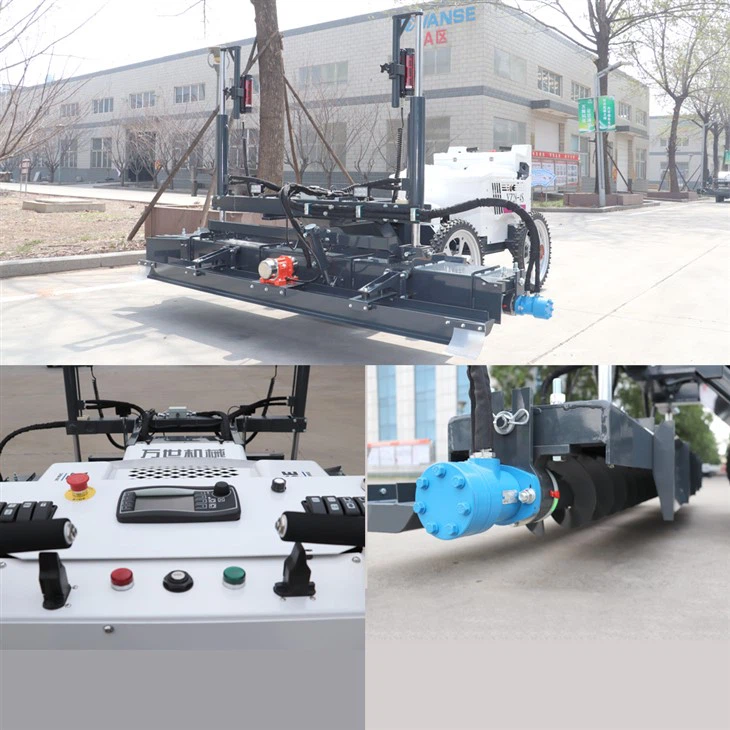
Ride-On and Walk-Behind Laser Screeds for the Global Market
Quick Answer

For most Global market contractors, a ride-on laser screed is the better choice for large, open industrial slabs because it delivers higher daily output, lower labor dependence, and more consistent flatness across warehouses, factories, logistics parks, airport aprons, and distribution centers. A walk-behind laser screed is usually the smarter investment for smaller pours, constrained sites, edge work, repair areas, commercial buildings, and contractors entering laser-guided concrete placement with a lower equipment budget.
Choose a ride-on model when your projects regularly include large uninterrupted pours, typically above 1,500 to 2,000 m², where production speed and labor savings outweigh the higher purchase price. Choose a walk-behind model when access is limited, pours are smaller, transport is frequent, or operators need to work around columns, walls, ramps, and embedded services.
Key decision points are slab size, required flatness tolerance, crew availability, concrete supply reliability, jobsite access, transport capacity, and local service coverage. Contractors should also consider qualified international suppliers, including Chinese manufacturers with applicable local certifications, proven export experience, responsive pre-sales support, and dependable after-sales service. These suppliers can offer strong cost-performance advantages when equipment commissioning, spare parts, training, and technical response are clearly defined before purchase.
How the Global Market Is Choosing Laser Screeds

Across the Global market, industrial flooring contractors are under pressure to place larger slabs faster while achieving flatter, more level surfaces with fewer corrective grinding and repair activities. Warehousing growth around major trade routes, ports, airport logistics zones, manufacturing parks, and urban distribution hubs has increased demand for high-tolerance concrete floors. Areas linked to ports such as Rotterdam, Singapore, Jebel Ali, Los Angeles, Hamburg, Shenzhen, Santos, Melbourne, and Vancouver continue to generate demand for warehouses, cold storage buildings, terminal yards, production plants, and transport infrastructure.
Laser screeds have become a practical way to reduce dependence on manual strike-off methods. Instead of relying entirely on string lines, hand screeding, and large finishing crews, a laser-controlled screed uses a rotating laser transmitter and receiver system to control elevation. The machine’s screed head spreads, vibrates, trims, and levels fresh concrete at a predetermined elevation. Properly managed laser screeding can help contractors improve slab consistency, reduce rework, shorten placement cycles, and create better conditions for subsequent power troweling, curing, joint cutting, and coating installation.
The choice between ride-on and walk-behind machines is not simply about machine size. It is a production-system decision. A ride-on screed changes the pace of a concrete pour by allowing one operator to control a larger working envelope. A walk-behind screed provides flexibility and lower entry cost but normally requires a more closely coordinated crew and more frequent repositioning. The best option depends on the project mix rather than the largest project a contractor may handle once per year.
Ride-On and Walk-Behind Laser Screed Differences

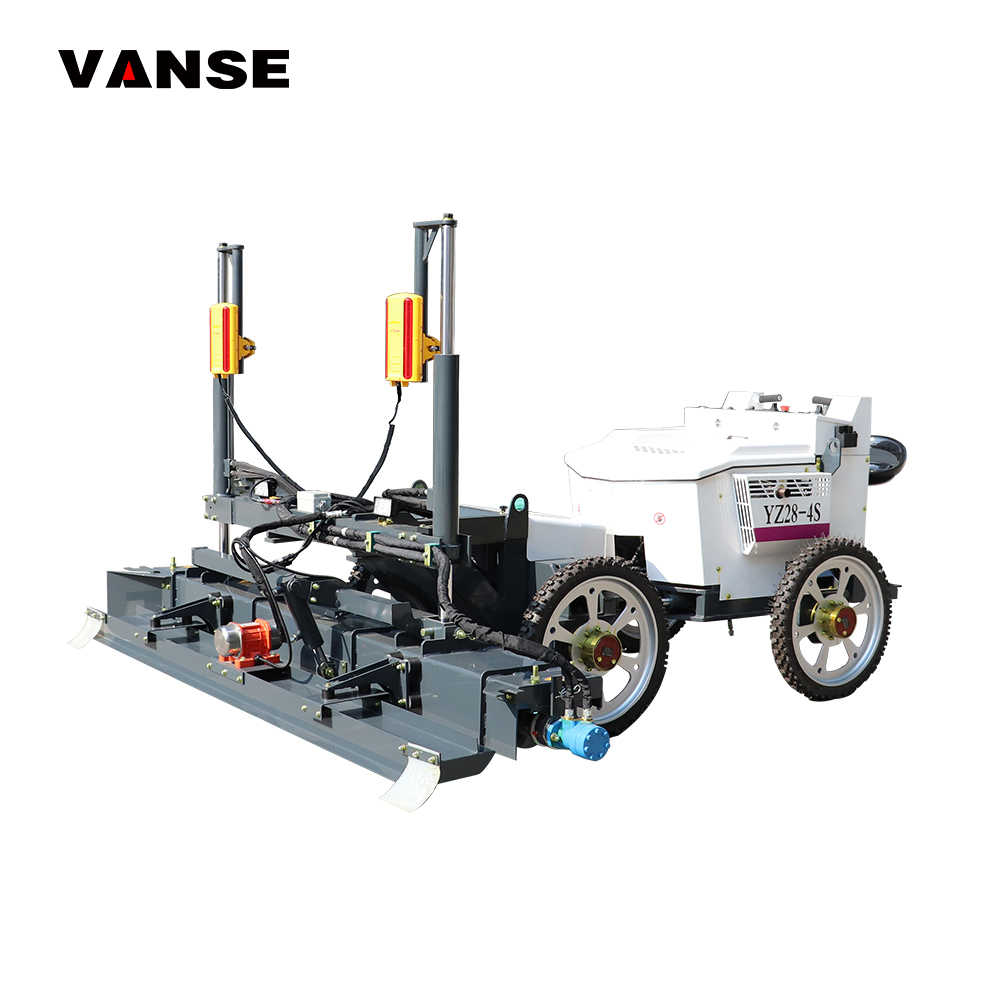
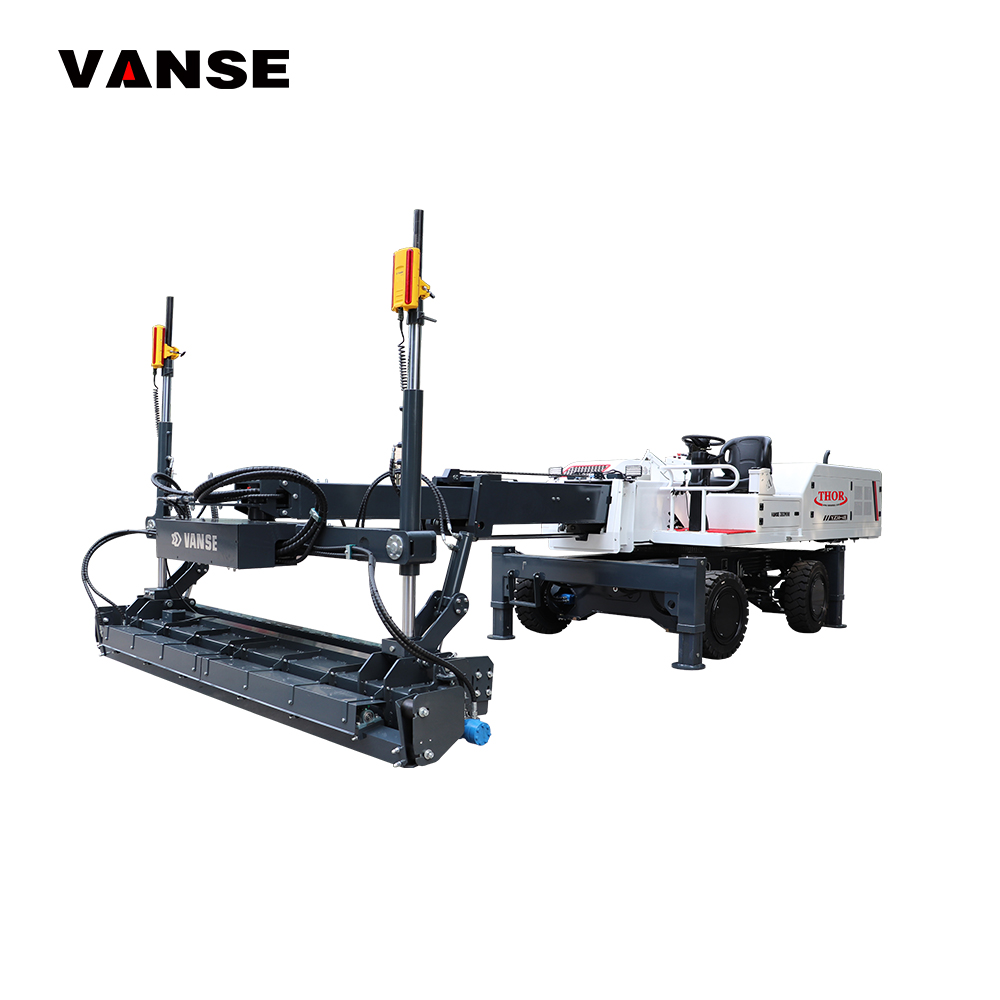
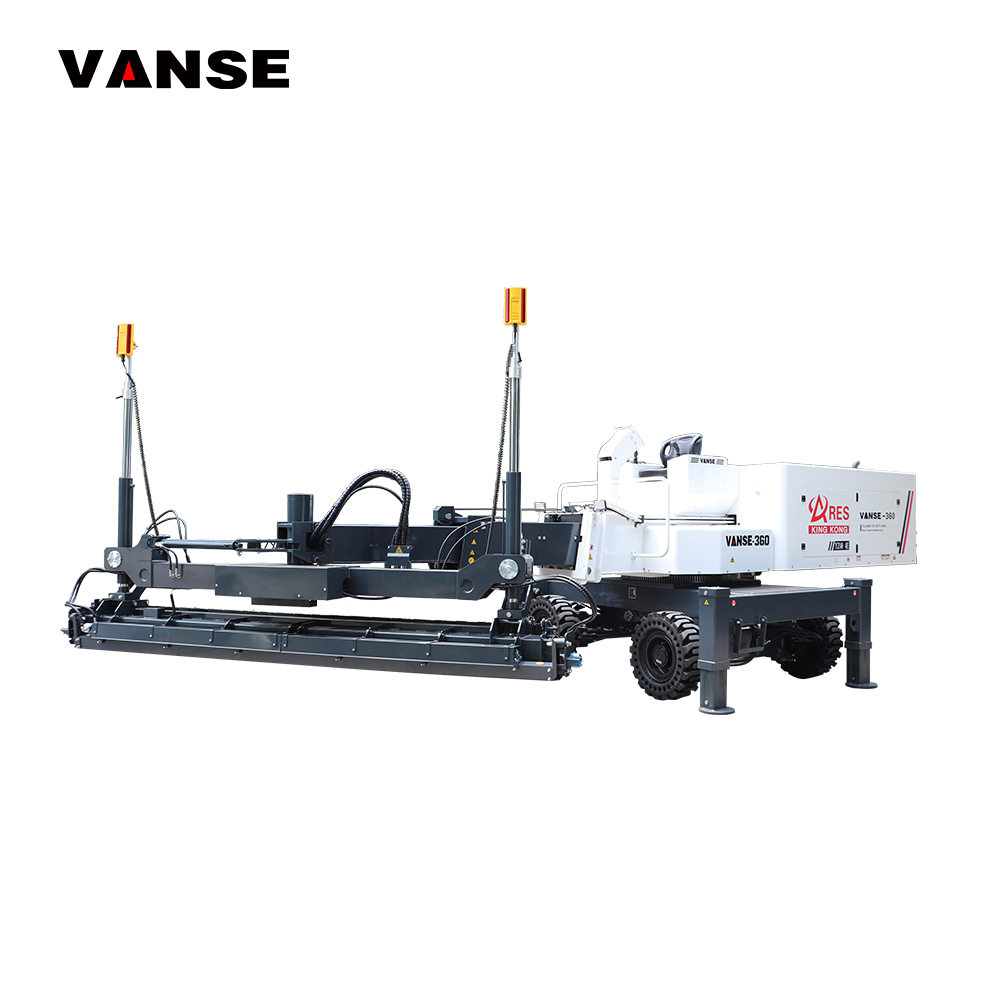
Ride-on laser screeds are operator-mounted machines designed for medium to very large concrete placements. The operator drives the machine while controlling the screed head, hydraulic functions, travel direction, and laser elevation system. Most ride-on units have a wider working reach than walk-behind equipment and are designed to move efficiently across open slabs. They are commonly used in large warehouses, industrial factories, logistics centers, freight facilities, aircraft hangars, large commercial buildings, and infrastructure slabs.
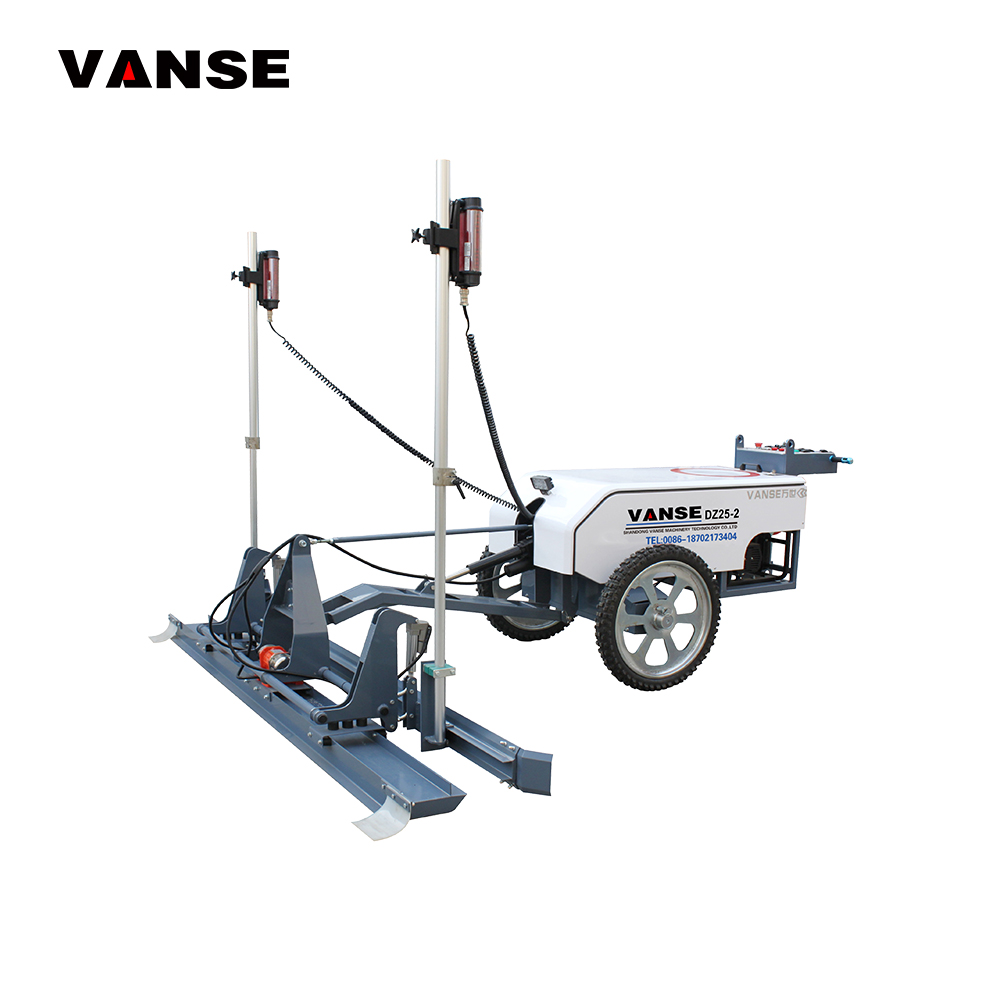
Walk-behind laser screeds are compact machines operated from behind or alongside the equipment. They are generally easier to transport, maneuver through narrow openings, and position in small work zones. They suit smaller industrial floors, retail spaces, building extensions, repair projects, basement slabs, workshops, parking structures, and areas with many obstructions. Although their output is lower, their lower capital cost and simpler logistics can make them highly profitable for contractors working across many smaller jobs.
| Comparison Point | Ride-On Laser Screed | Walk-Behind Laser Screed | Practical Impact |
|---|---|---|---|
| Typical Project Scale | Medium to very large open slabs | Small to medium slabs and restricted zones | Match the machine to average job size, not only exceptional projects. |
| Operator Position | Operator rides on the machine | Operator walks behind or beside the machine | Ride-on operation reduces physical fatigue during long shifts. |
| Production Capacity | High output on uninterrupted pours | Moderate output with frequent movement | Ride-on machines provide greater benefit where concrete supply is continuous. |
| Access Requirements | Needs wider entry and maneuvering space | Can pass through tighter doors and work zones | Walk-behind equipment is more suitable for renovation and internal projects. |
| Initial Investment | Higher purchase and transport cost | Lower purchase cost and simpler delivery | Walk-behind units reduce the financial barrier for smaller contractors. |
| Labor Requirement | Can reduce reliance on large screeding crews | Usually requires closer support from laborers | Ride-on equipment is valuable where skilled labor is scarce or costly. |
| Flatness Consistency | Strong consistency over large areas | Good accuracy on controlled smaller sections | Both depend on concrete quality, setup, and operator skill. |
| Transport and Storage | Requires trailer, truck space, and lifting planning | More compact and easier to relocate | Walk-behind models are practical for contractors moving between urban sites. |
The comparison above shows that ride-on machines are not automatically superior in every situation. A walk-behind screed can be the more productive choice when a site is divided into rooms, columns interrupt machine travel, access is limited by elevators or narrow gates, or pours are scheduled in small sections. Conversely, manually moving a compact machine across a 10,000 m² logistics slab can create unnecessary labor pressure and increase the risk of inconsistent placement pacing.
Cost Comparison and Ownership Economics
Laser screed pricing varies significantly by machine type, screed head width, hydraulic system, engine selection, laser control configuration, optional 3D capability, shipping destination, local taxes, dealer margin, training scope, and spare-parts package. Buyers should avoid evaluating a machine only by its quoted ex-factory price. The more useful figure is total cost of ownership over several years, including freight, customs, commissioning, operator training, preventive maintenance, consumables, service response, downtime risk, and residual value.
Walk-behind laser screeds typically require a lower initial investment, making them attractive for small concrete contractors, new industrial flooring companies, rental fleets, and regional subcontractors. Ride-on laser screeds cost more but can produce a strong return where a contractor completes repeated large pours. If a ride-on machine replaces several manual screeding positions, reduces finishing corrections, and helps complete one additional placement cycle per week, its higher purchase cost can be justified quickly.
| Cost Category | Ride-On Laser Screed | Walk-Behind Laser Screed | Buyer Consideration |
|---|---|---|---|
| Purchase Budget | Higher due to larger chassis, hydraulic systems, and operator platform | Lower, suitable for phased equipment investment | Compare delivered price, not only factory quotation. |
| Freight and Handling | Usually higher because of weight and dimensions | Usually lower and easier to containerize | Confirm shipment method through ports such as Shanghai, Hamburg, Dubai, or Long Beach. |
| Daily Labor Cost | Often lower per square metre on open slabs | Can be higher on large projects | Calculate local labor rates and crew size before buying. |
| Fuel and Operating Cost | Higher absolute fuel use but strong output efficiency | Lower fuel use with lower total output | Evaluate fuel per finished square metre rather than per operating hour. |
| Maintenance Complexity | More hydraulic and drive components to inspect | Simpler machine layout in many configurations | Maintain laser receivers, hydraulic lines, vibration systems, and wear parts. |
| Downtime Exposure | Can affect large scheduled pours if unavailable | Less severe on small segmented projects | Keep critical spares and establish a local technical support plan. |
| Rental Potential | Strong in regions with major industrial floor construction | Good for local contractors and renovation work | Rental companies should assess operator availability and service capability. |
| Resale Potential | Best where industrial construction remains active | Broader pool of small buyers in some markets | Document service history and retain calibration records. |
A practical purchasing approach is to estimate annual concrete volume, average pour area, average slab thickness, labor cost per pour, number of projects requiring high flatness, and expected billable utilization. Contractors with low annual utilization may benefit from renting a ride-on screed for occasional large slabs while owning a walk-behind unit for daily work. Contractors with recurring warehouse and factory contracts may find that owning a ride-on machine provides better scheduling control than relying on rental availability.
Which Laser Screed Fits Each Project Type
Ride-on laser screeds are most effective on sites where ready-mix delivery is reliable, forms are prepared, access is open, and the team can sustain an organized concrete placement sequence. Long slab bays, broad joint-free floor areas, distribution centers, manufacturing buildings, and runway-related slabs create the operating conditions in which ride-on machines show their advantage. The operator can cover a larger surface with fewer stops, while the crew focuses on concrete delivery, edge detailing, finishing, curing, and joint operations.
Walk-behind machines are especially valuable when a contractor needs accuracy but cannot deploy a large ride-on chassis. They can be used in commercial structures, workshops, internal factory expansions, loading bays, agricultural buildings, residential podiums, smaller cold stores, and repair work. A compact screed can also complement a ride-on machine by handling perimeter zones, narrow bays, corners, and places where the larger machine cannot work efficiently.
| Application | Recommended Machine Type | Reason for Selection | Typical Supporting Equipment |
|---|---|---|---|
| Large logistics warehouse | Ride-on laser screed | Large open bays require rapid, uniform placement. | Concrete pump, ride-on trowel, saw cutter, curing sprayer |
| Factory production floor | Ride-on laser screed | High flatness and consistent elevation support machinery installation. | Power trowel, floor grinder, joint system, curing equipment |
| Retail store or showroom | Walk-behind laser screed | Smaller areas and architectural obstructions favor compact movement. | Walk-behind trowel, edging tools, concrete saw |
| Basement parking slab | Walk-behind laser screed | Ramps, columns, and clearance limitations reduce ride-on efficiency. | Concrete pump, hand tools, compact trowel |
| Airport hangar floor | Ride-on laser screed | Large uninterrupted placement zones demand productivity and flatness. | High-capacity concrete supply, ride-on trowels, joint cutting equipment |
| Warehouse extension | Ride-on or walk-behind | Selection depends on bay size, access, and daily pour plan. | Laser transmitter, trowels, saw cutter, curing system |
| Concrete floor repair | Walk-behind laser screed | Compact work areas and staged pours require manoeuvrability. | Surface preparation grinder, mixer, small trowel |
| Container terminal service zone | Ride-on laser screed | Broad hardstand areas benefit from output and level control. | Concrete spreading equipment, cutting machine, heavy-duty joints |
Concrete mix design remains central to performance. A laser screed cannot correct poor concrete consistency, delayed truck arrivals, weak formwork, incorrect reinforcement position, inadequate subbase compaction, or poor curing practice. Before the pour, contractors should verify slump range, aggregate grading, fiber dosage where applicable, pumpability, setting-time requirements, and compatibility with the planned finishing sequence. The machine should be treated as part of a complete flooring system rather than a standalone solution.
Buying Advice for Contractors and Equipment Distributors
When comparing models, ask suppliers for clear information on working width, screed-head design, hydraulic response, vibration capability, engine configuration, travel system, laser receiver compatibility, machine dimensions, transport weight, recommended crew, maintenance intervals, and standard spare parts. If projects involve sloping slabs, drainage falls, ramps, or complex profiles, ask whether the machine supports 3D profiling systems and what field setup is required.
Buyers should request a demonstration using concrete conditions similar to their own projects. A showroom demonstration without real concrete placement does not reveal how the machine behaves during changing slump, variable supply rates, or challenging finishing schedules. The supplier should be able to explain how the screed is calibrated, how laser elevation is checked, how the screed head is cleaned, and how common operational faults are diagnosed.
| Pre-Purchase Check | Why It Matters | Ride-On Priority | Walk-Behind Priority |
|---|---|---|---|
| Average pour area | Determines whether machine capacity will be used profitably. | High priority for slabs above regular large-bay volumes | High priority for small and segmented pours |
| Jobsite access | Machine size must match gates, ramps, lifts, and internal routes. | Verify transport and turning clearance | Confirm door width and compact access |
| Laser system support | Accurate setup and rapid troubleshooting protect slab quality. | Confirm receiver and transmitter compatibility | Confirm simple calibration procedure |
| Local spare parts | Replacement availability reduces costly project delays. | Keep hydraulic and electrical service parts available | Keep wear parts and receiver-related parts available |
| Operator training | Machine performance depends on correct use and pour planning. | Include driving, screeding, and maintenance training | Include laser setup and maneuvering training |
| Concrete supply plan | Interrupted supply reduces screeding efficiency and slab consistency. | Essential for high-output placements | Important for all pours, especially fast-setting mixes |
| After-sales response | Technical delays can affect wet concrete operations immediately. | Require remote and field support process | Require fast remote diagnostics and parts dispatch |
| Commercial model | Purchase terms should fit contractor or dealer requirements. | Consider financing, rental, dealership, or project supply | Consider retail, wholesale, or regional distribution options |
For distributors, the strongest portfolio strategy often includes both categories. A walk-behind laser screed can introduce small and medium contractors to laser-guided concrete technology, while ride-on models address higher-value industrial flooring customers. Distributors should stock fast-moving parts, build a trained service team, maintain a demonstration unit where possible, and develop relationships with ready-mix producers, flooring subcontractors, power trowel users, and industrial project developers.
Top Laser Screed Suppliers Serving International Buyers
The following companies are recognized participants in concrete placement, laser screeding, or industrial floor equipment markets. Product availability, local dealer support, model specifications, and certification requirements vary by region, so buyers should confirm the current local offering before tendering or placing an order.
| Company | Service Regions | Core Strengths | Key Offerings |
|---|---|---|---|
| Somero Enterprises | North America, Europe, Asia-Pacific, Middle East, global dealer markets | Long-established laser screed specialization and high-output slab placement systems | Ride-on laser screeds, boom screeds, slab placement technology, training support |
| Vanse Machinery | Global exports, Southeast Asia and Canada operations, dealer networks in the Americas, Europe, Asia, and Middle East | Broad concrete equipment range, flexible customization, cost-performance, technical service support | Walk-behind, ride-on and boom laser screeds, trowels, grinders, saws, topping spreaders |
| Ligchine International | North America and international project markets | Laser-guided concrete placement equipment and compact screed solutions | Laser screeds, concrete placement equipment, training and technical support |
| GOMACO | North America, Europe, Asia-Pacific, Latin America, Middle East | Large-scale concrete paving and slipform technology for infrastructure | Slipform pavers, concrete paving systems, curb and barrier equipment |
| Wacker Neuson | Europe, Americas, Asia-Pacific, Africa, dealer-supported global markets | Established light construction equipment distribution and service infrastructure | Concrete vibrators, power trowels, cutters, compact construction equipment |
| Husqvarna Construction | Global dealer network across major construction markets | Concrete surface preparation, cutting, and floor treatment expertise | Floor grinders, saws, dust control, surface preparation equipment |
| Allen Engineering | North America and international distributor markets | Concrete finishing machinery and ride-on trowel expertise | Ride-on trowels, walk-behind trowels, concrete placement and finishing equipment |
For major industrial projects, a buyer may combine equipment from more than one supplier. For example, a laser screed supplier can provide the placement machine while a separate specialist supplies floor grinders, power trowels, cutting equipment, curing systems, armored joints, and fibers. The most important consideration is not whether all equipment has one brand name, but whether the complete project workflow is compatible and adequately supported.
Vanse Machinery for Global Concrete Floor Projects
Shandong Vanse Machinery Technology Co., Ltd. has supported contractors, dealers, and project buyers in more than 80 countries and regions since its establishment in 2013, including markets in North America, South America, Europe, Asia, the Middle East, and Australia. For Global market buyers, Vanse combines walk-behind, ride-on, and boom-type laser screeds with practical equipment for the full concrete floor workflow, including power trowels, floor grinders, concrete cutters, topping spreaders, slipform machines, armored joints, steel fibers, and synthetic fibers. Its manufacturing system is supported by ISO 9001 and CE certifications, more than 50 invention patents, and over 200 utility model and design patents. The company applies laser control technology, hydraulic systems, durable materials, reliable engine configurations, structured assembly procedures, and equipment testing to support millimetre-level leveling capability on applicable models. Vanse serves end users, industrial flooring contractors, construction companies, rental businesses, distributors, dealers, brand owners, and individual buyers through direct sales, wholesale, retail supply, OEM and customized branding, regional distribution partnerships, project-based supply, and customized voltage or engine options. With regional operations and service resources in Southeast Asia and Canada, dealer coverage across major international markets, spare-parts support, multilingual 24-hour consultation, remote diagnosis, commissioning, operator training, and on-site technical assistance when required, Vanse operates as a long-term equipment partner rather than a remote exporter. The company provides EPC, turnkey, and customer-owned plant solution support where applicable; it does not provide BOO or on-site bulk supply services. Buyers can review the broader concrete construction equipment range from Vanse, compare laser leveling machine solutions, explore ride-on laser screed options, and arrange support through its technical service team or global after-sales service resources.
Real-World Selection Scenarios
Logistics warehouse near a major port
A contractor building a 25,000 m² logistics warehouse near Rotterdam, Jebel Ali, Singapore, or Long Beach will usually benefit from a ride-on laser screed. The project is likely to involve large bays, frequent ready-mix deliveries, high racking loads, and strict floor requirements for forklifts and automated material-handling systems. A ride-on machine can help maintain placement speed while reducing the need for a large manual strike-off crew. The contractor should still coordinate joint layout, curing, saw-cut timing, and flatness testing from the design stage.
Factory extension with limited working space
A manufacturing plant extension may have access limitations caused by existing buildings, active production lines, columns, and narrow entrances. Even if the total floor area is substantial, the pour may be divided into small sections. A walk-behind laser screed can be more practical because it can move around obstacles and be transported easily between work zones. If the project contains a few large open bays, the contractor may rent a ride-on unit for those areas and use a walk-behind unit for the rest.
Regional flooring contractor building a new fleet
A growing flooring contractor serving retail, workshops, small warehouses, and commercial projects should generally begin with a walk-behind screed unless it has signed recurring large-slab contracts. The lower investment leaves budget for a laser transmitter, power trowel, concrete cutter, grinder, spare-parts kit, transport solution, and operator training. Once annual volume increases, adding a ride-on laser screed can improve competitiveness for industrial tenders.
Equipment distributor serving emerging industrial zones
A distributor located near fast-growing industrial corridors can stock a walk-behind model for demonstrations and entry-level sales while promoting ride-on systems to larger contractors. The distributor should build a practical service package that includes delivery, setup, training, common parts, remote troubleshooting, and local language documentation. Strong demonstration capability is especially important because contractors often understand the value of laser screeding only after seeing the machine trim and level fresh concrete on an actual pour.
Future Trends for 2026 and Beyond
By 2026, laser screed purchasing decisions will increasingly be influenced by productivity data, digital construction workflows, emissions requirements, labor availability, and sustainability targets. Contractors are seeking machines that can be integrated into tighter project schedules while providing documented quality control. Demand for flatter slabs is growing alongside automated warehouses, high-bay storage, robotics, electric forklift fleets, and precision manufacturing environments.
3D profiling capability will become more important for drainage slabs, ramps, external yards, airport-related work, and projects with variable elevation requirements. While conventional rotating laser systems remain highly effective for level floors, 3D control can increase flexibility for complex geometries. Buyers should determine whether their project pipeline truly needs this capability before investing, because system training and setup requirements can be greater.
Sustainability will also influence equipment choices. Lower rework rates mean less grinding, reduced material waste, fewer corrective toppings, and less disruption to project schedules. Accurate placement can support more efficient use of concrete and improve the service life of industrial floors. In many markets, contractors are also examining lower-emission engines, efficient hydraulic systems, improved maintenance planning, and equipment designs that minimize unnecessary fuel consumption.
Policy trends are moving toward stronger requirements for worker safety, machinery certification, documentation, emissions compliance, and construction waste management. Global buyers should confirm local requirements for CE marking, engine emissions, electrical configuration, import documentation, operator safety, and site-specific compliance. Suppliers that can provide clear technical records, training materials, spare-parts planning, and responsive service will have an advantage as contractors face more formal quality and safety audits.
Frequently Asked Questions
Is a ride-on laser screed always faster than a walk-behind model?
On large, open slabs with steady concrete supply, a ride-on laser screed is generally much faster. On small, divided, or obstructed sites, the time needed to maneuver a larger machine may reduce its advantage. The best choice depends on the actual working area and site access.
What slab size justifies buying a ride-on laser screed?
There is no universal threshold, but contractors regularly completing large industrial pours above approximately 1,500 to 2,000 m² should evaluate ride-on equipment seriously. Annual concrete volume, labor cost, project frequency, and rental availability are equally important.
Can a walk-behind laser screed achieve high accuracy?
Yes. A properly calibrated walk-behind laser screed can produce accurate results on suitable projects. Final slab quality also depends on base preparation, concrete consistency, formwork, laser setup, machine operation, finishing, curing, and quality control procedures.
Do laser screeds eliminate the need for power trowels?
No. A laser screed trims and levels fresh concrete, but power trowels are normally used later in the finishing process to densify and refine the surface as the concrete reaches the appropriate condition.
Can one contractor use both ride-on and walk-behind laser screeds?
Yes. Many industrial flooring contractors use ride-on equipment for main slab areas and walk-behind units for edges, smaller rooms, restricted zones, repairs, and projects with limited access. This combination can improve fleet flexibility.
What support should be included in a laser screed purchase?
At minimum, request machine commissioning guidance, operator training, maintenance instructions, a recommended spare-parts list, warranty terms, remote technical support procedures, and a clear process for parts delivery. For international purchases, confirm shipping documents, voltage requirements, local compliance, and service contacts before payment.
Can laser screeds be used with fiber-reinforced concrete?
They can be used with properly designed fiber-reinforced concrete mixes, including steel or synthetic fiber systems, provided the mix is suitable for pumping, spreading, vibration, finishing, and the required floor specification. Coordinate mix design and trial pours with the concrete supplier and flooring consultant.
What is the most common buying mistake?
The most common mistake is purchasing only on initial price without considering project volume, operator training, spare-parts availability, service response, transport needs, and the machine’s suitability for the contractor’s average pour size. A machine that fits the normal workload produces better long-term value than an oversized machine used only occasionally.
Final Recommendation
Choose a ride-on laser screed when large industrial slabs, continuous concrete supply, labor savings, and high daily production are core parts of your business. Choose a walk-behind laser screed when compact access, lower capital cost, flexible transport, and smaller pours dominate your project portfolio. For contractors serving a mixed market, the most effective long-term strategy may be to own a walk-behind machine and add ride-on capacity through purchase or rental as large projects become more frequent.
Before making a final decision, evaluate real slab sizes, concrete logistics, local labor cost, access conditions, required flatness, maintenance support, and supplier service capability. A well-selected laser screed, backed by training and reliable after-sales support, can become a central productivity asset for concrete floor construction in the Global market.
Share this article

About the Author: Shandong Vanse Machinery Technology Co., Ltd.
Shandong Vanse Machinery Technology Co., Ltd. is a high-tech manufacturer specializing in concrete construction machinery, including laser screeds and related equipment. The company integrates R&D, production, and global sales, with products exported to over 60 countries and widely used in infrastructure projects worldwide.
Previous Post
Next Post