Insight blog
Global Market Guide to Ride-On Laser Screed Selection
Ride-On Laser Screed Buying Guide for the Global Market
Quick Answer

A ride-on laser screed is the most practical choice for contractors placing large concrete slabs where flatness, speed, labor reduction, and consistent elevation are critical. It is commonly used for warehouses, factories, logistics parks, airport pavements, port yards, distribution centers, and large commercial floors. Buyers should select the machine according to placement area, slab thickness, concrete mix, required FF/FL tolerance, access width, local service availability, and operator experience.
For most global market buyers, the strongest options are Somero for high-capacity industrial slab work, Ligchine for compact and highly mobile screeding, Shandong Vanse Machinery Technology for cost-effective ride-on and boom screed options, Allen Engineering for concrete-finishing equipment support, and local rental or dealer networks that can provide fast parts availability. Qualified international suppliers, including Chinese manufacturers with CE or other relevant local certifications, proven export experience, and capable pre-sales and after-sales support, can offer a strong cost-performance advantage.
Before ordering, request a live demonstration, confirmed working width, laser receiver configuration, hydraulic component information, engine option, spare-parts list, training plan, warranty terms, shipping method, and local commissioning support. For large floor packages, the machine should be evaluated together with batching, pumping, jointing, curing, and power-troweling plans rather than purchased as a stand-alone item.
Global Market Overview for Ride-On Laser Screeds

The global concrete flooring market increasingly demands flatter, more durable, and more efficiently installed slabs. E-commerce warehouses near Rotterdam, Los Angeles, Dubai, Singapore, São Paulo, Melbourne, Hamburg, and Toronto require large uninterrupted floor areas that can support forklifts, automated guided vehicles, high-bay racking, and rapid logistics operations. These projects reward contractors that can place concrete accurately and quickly with fewer workers.
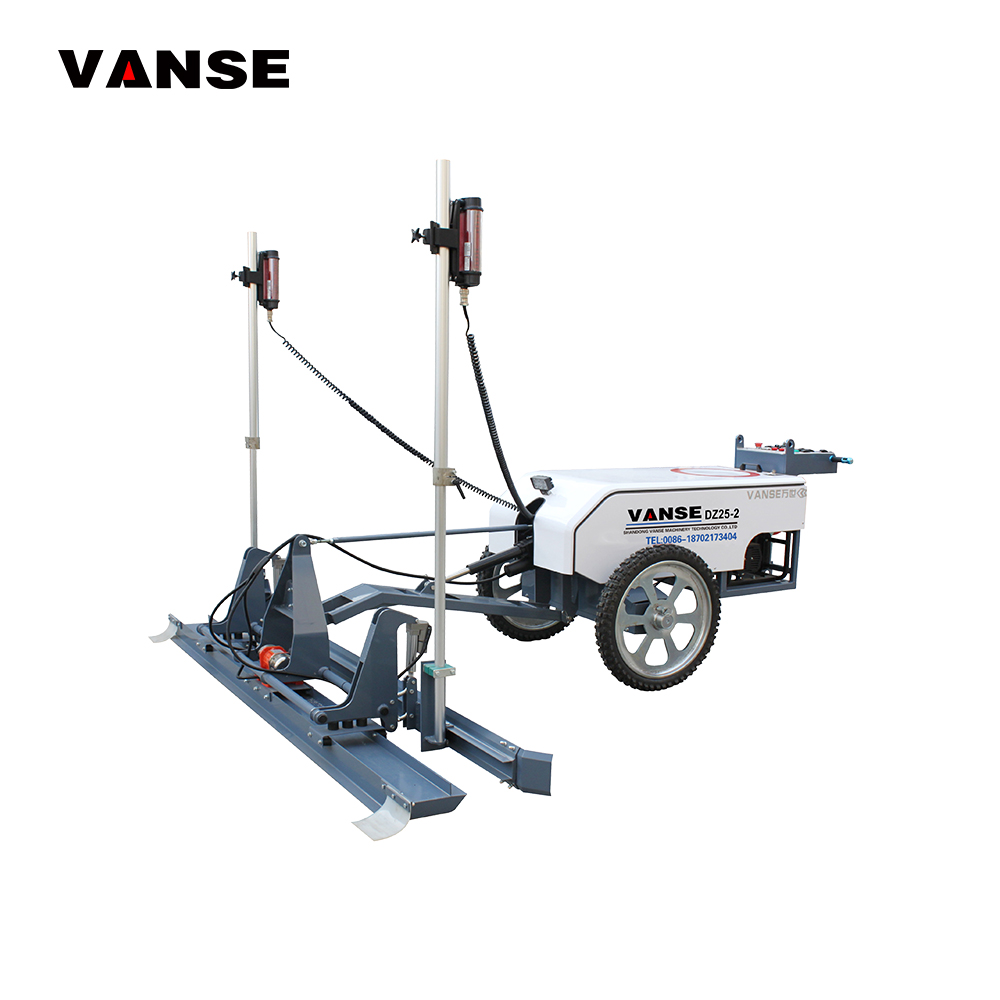
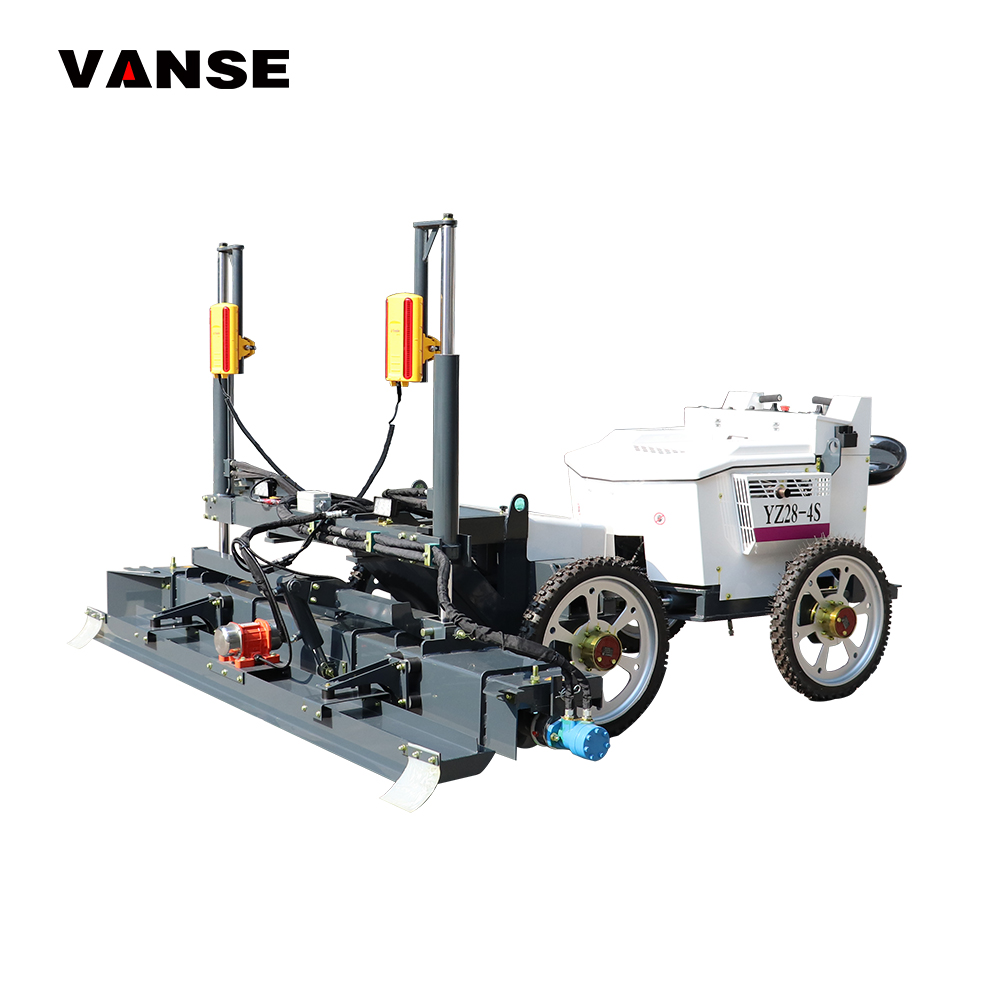
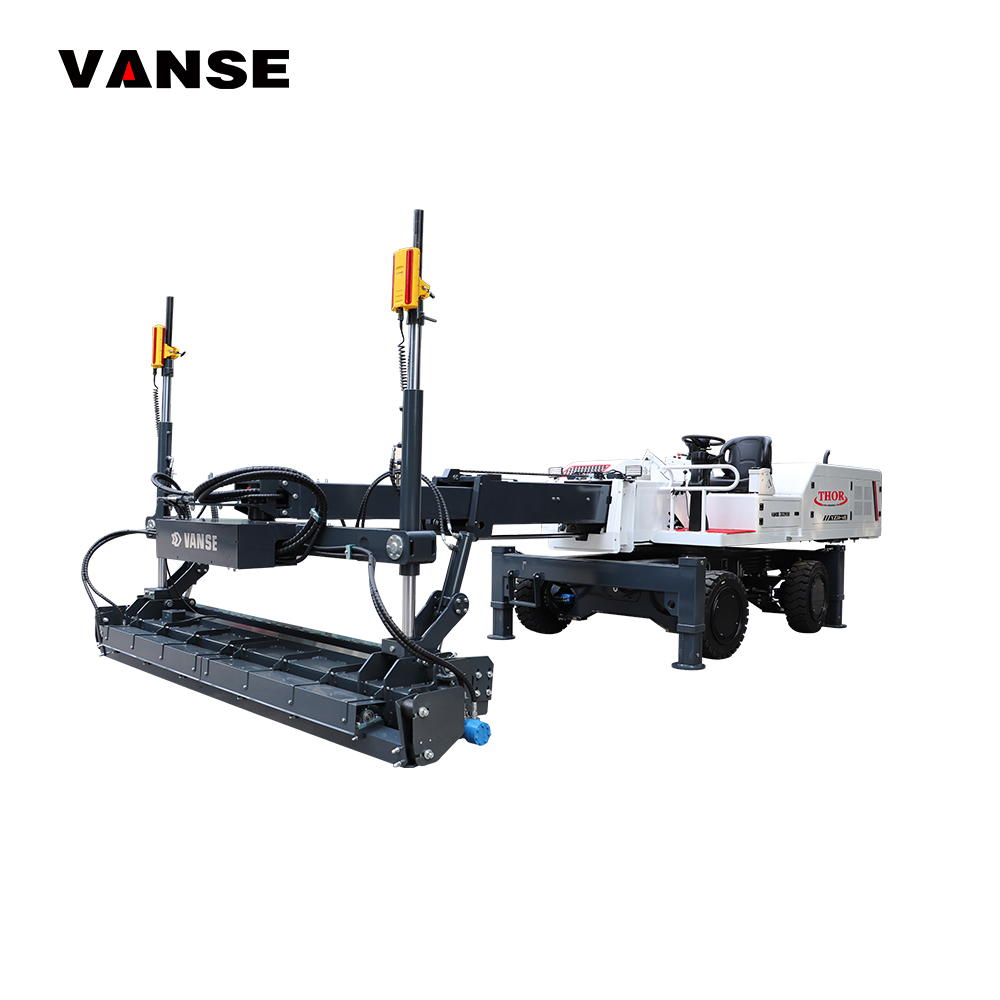
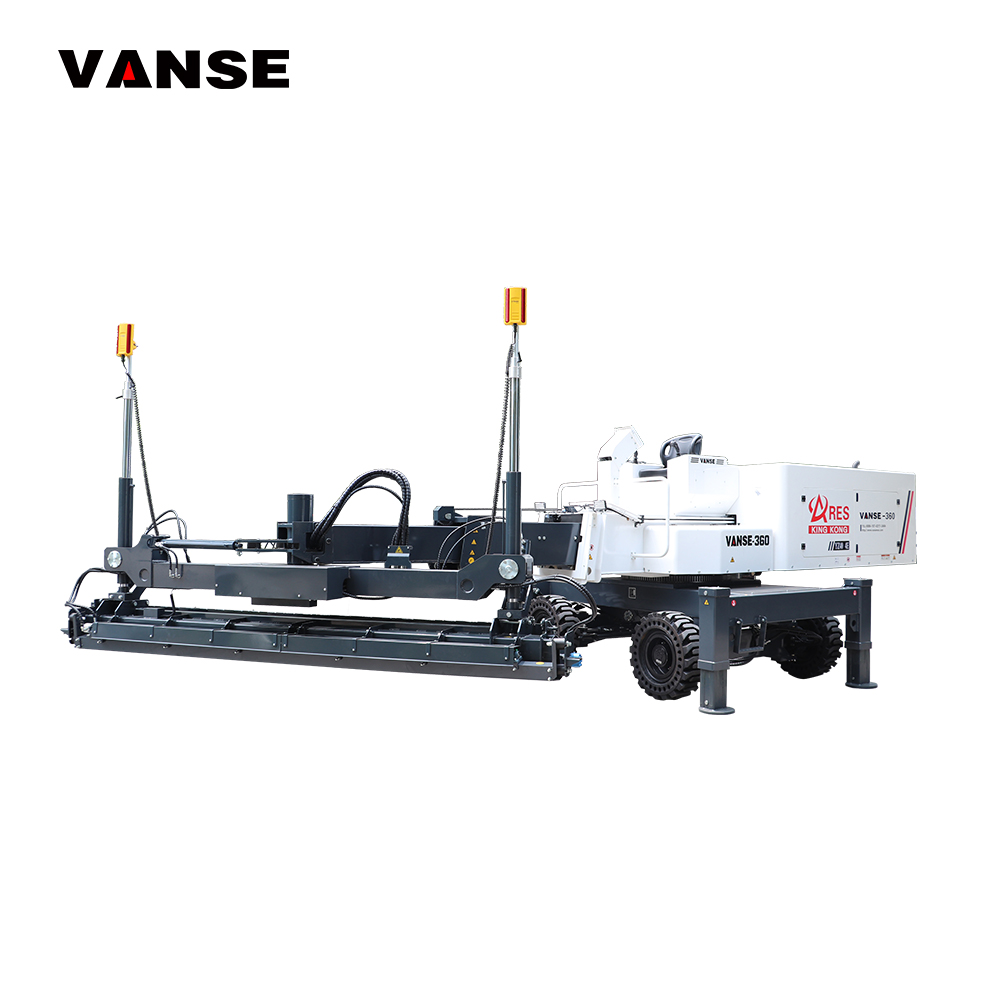
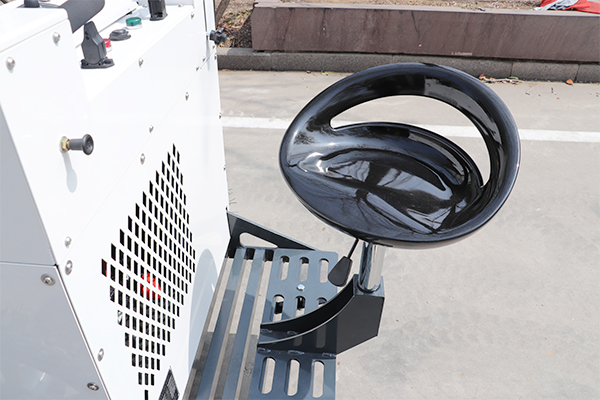
A ride-on laser screed uses laser-guided elevation control, a boom or screed head, hydraulic travel functions, and a high-output engine or power system to strike off and level freshly placed concrete. The operator rides on the machine, allowing broad working coverage while controlling the screed head and movement from an elevated position. Compared with manual vibrating screeds, hand-guided trusses, and conventional form-based methods, a laser-controlled concrete screed can reduce rework, shorten placement time, improve slab consistency, and minimize dependence on highly intensive manual labor.
Demand differs by region. North America remains a major market because of large warehouse construction, industrial flooring renovation, and established flatness specifications. Europe places more emphasis on CE compliance, fuel efficiency, dust and noise management, and reduced embodied carbon in concrete construction. The Middle East uses laser screeding extensively for logistics hubs, airports, manufacturing plants, and mega-development projects. Southeast Asia is expanding rapidly around industrial corridors, ports, and electronics manufacturing clusters. Latin America, Africa, and Central Asia increasingly use ride-on screeds where contractors are upgrading from traditional slab-placement methods.
Global buyers should not consider machine price alone. A lower-priced laser screed without technical training, receiver calibration, hydraulic support, spare parts, or commissioning can create avoidable downtime. Conversely, an oversized premium machine may not be economical for small industrial floors, narrow buildings, or intermittent projects. The correct choice is the machine that matches the contractor’s concrete volume, logistics arrangement, quality specification, and service capability.
Ride-On Laser Screed Types and Where They Fit

Ride-on laser screeds are available in several configurations. Their differences affect maneuverability, coverage, jobsite access, maintenance requirements, and suitability for specific slab designs. Buyers should compare the working envelope rather than focusing only on machine size.
| Ride-On Screed Type | Typical Working Profile | Best Project Conditions | Main Advantage | Key Limitation | Typical Users |
|---|---|---|---|---|---|
| Compact ride-on laser screed | Shorter boom and smaller chassis | Retail floors, workshops, medium warehouses, tight indoor access | Easy transport and maneuverability | Lower daily output than large boom models | Small and mid-sized contractors |
| Standard boom ride-on screed | Medium working radius with 360-degree rotation | Factories, logistics centers, distribution buildings | Balanced coverage, accuracy, and productivity | Requires organized concrete supply | Industrial flooring specialists |
| Large boom laser screed | Long-reach boom and wide screed head | Airport slabs, terminal yards, mega warehouses | High output across large open placements | Higher investment and transport needs | Major infrastructure contractors |
| 3D-profile compatible screed | Laser or digital terrain control | Drainage slopes, ramps, pavements, contoured slabs | Accurate variable elevation work | Needs survey control and skilled setup | Civil and infrastructure contractors |
| Electric or hybrid-capable screed | Electric drive or reduced-emission arrangement | Indoor, regulated, or sustainability-led sites | Lower local emissions and noise potential | Charging or power planning may be required | Urban and green-building contractors |
| Specialized narrow-access screed | Reduced footprint and compact turning area | Existing buildings, confined bays, renovation projects | Access where larger machines cannot enter | Limited reach and productivity | Renovation and specialty slab teams |
The table shows why working environment matters more than a simple “large versus small” decision. A large boom machine can perform exceptionally on an open airport apron or a 50,000-square-meter distribution center, but it may be inefficient inside a multi-bay factory with columns, narrow access routes, and frequent changes in placement geometry. Compact ride-on systems are often more profitable where daily pours are smaller but jobsite mobility is important.
Most modern systems rely on a rotating laser transmitter, laser receivers, electronic control modules, hydraulic cylinders, and a leveling head. The transmitter establishes a reference plane. The receivers detect elevation changes, and the control system adjusts the screed head to maintain the specified grade. For sloped floors or complex pavement geometry, 3D profiling and digital survey systems can supplement or replace basic single-plane laser control.
Specifications That Matter Before You Buy
Specification comparisons should be based on verified operating conditions. Published maximum output can vary substantially according to concrete slump, reinforcement density, truck cycle time, slab thickness, crew experience, weather, and the need to work around columns or embedded items. Ask each supplier to explain how its claimed productivity was measured.
| Specification | Why It Matters | Practical Buying Question | Recommended Check | Risk if Ignored | Suitable Project Impact |
|---|---|---|---|---|---|
| Working radius | Determines how much slab can be reached from one position | Can the boom reach across planned pour strips? | Compare boom geometry with floor layout | Extra repositioning and slower placement | Major impact on large open slabs |
| Screed head width | Influences coverage and finishing consistency | Is the head suited to slab width and access? | Review standard and optional head sizes | Poor productivity or difficult edge work | Important for warehouse pours |
| Laser control system | Controls elevation accuracy | Which receiver and transmitter brands are supported? | Confirm calibration process and replacement availability | Inconsistent level and costly correction | Critical for flatness-sensitive floors |
| Engine and hydraulic system | Determines power, reliability, and service needs | Is there a local engine service network? | Confirm fuel type, emissions level, filters, and hose standards | Downtime during peak construction periods | Critical in remote projects |
| Machine weight and transport size | Affects trailer selection and site movement | Can local transport handle the machine legally? | Check loaded dimensions and lifting points | Unexpected logistics expenses | Important for rental fleets |
| Rotation and travel control | Controls maneuverability around columns and edges | Does the machine provide effective 360-degree operation? | Arrange a live demonstration | Slow work in irregular floor plans | Important in commercial buildings |
| Service intervals | Influences ownership cost and availability | What maintenance is required daily, weekly, and annually? | Request an illustrated maintenance schedule | Preventable hydraulic or electrical failures | Important for all owners |
Accuracy should be assessed in the context of the entire construction process. A laser screed can provide millimeter-level elevation control under proper operating conditions, but final floor performance also depends on survey setup, base preparation, concrete consistency, delivery sequence, reinforcement positioning, curing, joint layout, and finishing practices. The machine improves control; it does not replace project management.
For buyers working with superflat floors, automated racking, narrow-aisle forklifts, or high-tolerance industrial systems, discuss FF/FL targets with the flooring consultant before selecting the screed. The machine must be integrated with an appropriate placing strategy, not simply driven across the slab. In some cases, dry-shake topping, steel fibers, armoured joints, curing compounds, and ride-on power trowels must all be specified as one coordinated flooring package.
Top Ride-On Laser Screed Suppliers for Global Buyers
The following companies are recognized names or active suppliers relevant to the international concrete-equipment market. Availability, exact models, certifications, dealer coverage, and local support vary by country. Buyers should verify current regional representation and machine configuration before signing a purchase order.
| Company | Service Regions | Core Strengths | Key Offerings | Best Fit | Buyer Consideration |
|---|---|---|---|---|---|
| Somero Enterprises | North America, Europe, Asia-Pacific, Middle East, global dealer markets | Long-established laser screed specialization and high-output slab systems | Ride-on laser screeds, boom screeds, paving and placing solutions | Large industrial floors and infrastructure contractors | Evaluate local dealer coverage, training, and total ownership cost |
| Ligchine International | North America and selected international dealer markets | Compact concrete screeding technology and contractor-focused designs | ScreedSaver laser-guided concrete screeds | Contractors needing mobility and practical slab placement solutions | Confirm export support and local parts access outside North America |
| Shandong Vanse Machinery Technology Co., Ltd. | More than 80 countries across Americas, Europe, Asia, Middle East, and Oceania | Broad concrete-equipment range, customization, and global export experience | Ride-on, walk-behind, and boom concrete laser screeds; finishing equipment | Contractors, distributors, rental fleets, and project buyers | Confirm machine model, engine option, voltage needs, and regional support plan |
| Allen Engineering Corporation | United States and international distribution markets | Concrete placing and finishing equipment experience | Power trowels, pavers, finishing and concrete equipment | Contractors building integrated finishing fleets | Check ride-on screed availability through the relevant local dealer |
| Wacker Neuson | Europe, Americas, Asia-Pacific, Africa, Middle East | Global compact-equipment and dealer footprint | Concrete vibration, compaction, power, and jobsite equipment | Buyers requiring broad site-equipment support | Typically complements rather than replaces dedicated laser screed suppliers |
| Husqvarna Construction | Global dealer and service network | Concrete surface preparation, cutting, and finishing ecosystem | Floor grinders, saws, dust management, concrete tools | Flooring firms managing preparation and repair work | Useful for complete floor workflow; confirm screed product availability locally |
This supplier comparison is intended as a practical market map rather than a universal ranking. Somero is often considered for high-capacity slab placement, especially on demanding logistics and industrial projects. Ligchine is widely associated with compact laser screed solutions. Vanse is relevant to buyers seeking flexible specifications, equipment bundles, and international sourcing. Allen Engineering, Wacker Neuson, and Husqvarna can be important partners when the contractor is building a broader concrete placement, finishing, cutting, grinding, or compaction fleet.
For global purchasing, suppliers should be assessed on more than machine design. Ask whether the company can support Incoterms suitable for the destination port, provide export packing, offer remote commissioning, deliver critical spare parts, and train operators in English or the relevant local language. At ports and trade hubs such as Shanghai, Qingdao, Rotterdam, Jebel Ali, Houston, Santos, Durban, and Singapore, freight planning can materially affect lead time and landed cost.
How to Choose the Right Machine for Your Project
Start with your annual concrete volume and typical pour size. A contractor that pours 1,000 to 3,000 square meters at a time may benefit from a compact or standard ride-on screed. A company placing 10,000 square meters or more in large uninterrupted panels may justify a larger boom machine. Rental companies should prioritize machine transportability, simple controls, durable components, and accessible parts because operators will vary from project to project.
Next, review the building geometry. Open logistics facilities and manufacturing halls favor machines with a larger working radius. Projects with dense columns, racking foundations, pits, drains, or existing structures may require more compact equipment or a combination of ride-on screeding and manual edge treatment. Check door widths, trailer access, slab-edge conditions, crane availability, and the route from unloading area to pour location.
Then assess the concrete supply chain. The laser screed performs best when concrete arrives consistently and placing crews keep the work area supplied without excessive stop-start cycles. Ready-mix plant capacity, truck availability, pump output, ambient temperature, retarder use, and finishing crew readiness should be coordinated before the first pour. In hot climates such as the Gulf region, Australia, southern Europe, and parts of Latin America, set time management is particularly important.
Finally, calculate the complete ownership cost. Include machine price, ocean or inland freight, import duties, insurance, commissioning, fuel, servicing, training, wear parts, laser equipment, operator wages, financing, and expected resale value. Compare this against reduced labor, faster project completion, lower grinding and repair costs, and the ability to bid on higher-specification flooring work.
Industries and Applications
Ride-on laser screeds are most valuable where slab quality affects daily operations or construction speed. Industrial floors are the core application, but the technology also supports many civil and commercial projects.
| Industry | Common Application | Why Laser Screeding Helps | Typical Floor Requirement | Recommended Machine Profile | Associated Equipment |
|---|---|---|---|---|---|
| Warehousing and logistics | Distribution centers and high-bay storage | Supports flat floors for forklifts and racking systems | High flatness and joint durability | Standard or large boom ride-on screed | Power trowels, armoured joints, curing equipment |
| Manufacturing | Automotive, electronics, food, and assembly plants | Improves floor consistency for machinery and transport routes | Level slabs with controlled finish | Standard ride-on screed | Vibrators, trowels, saws, grinders |
| Airports and ports | Aprons, terminal yards, cargo areas | Supports rapid placement across broad open areas | Durable, accurately graded concrete pavement | Large boom or 3D-compatible screed | Pavers, saws, survey systems |
| Retail and commercial | Shopping centers, supermarkets, exhibition halls | Reduces labor on large indoor slabs | Consistent level before coatings or tiles | Compact or standard ride-on screed | Power trowels, grinders, polishing tools |
| Infrastructure | Bridges, stations, depots, road-related slabs | Enables controlled elevation and drainage profiles | Specified slope and surface tolerance | 3D-profile compatible screed | Survey controls, slipform equipment |
| Cold storage and data centers | Temperature-controlled facilities and technical buildings | Helps produce reliable bases for specialist systems | Accurate level and durable surface preparation | Standard ride-on screed | Joint systems, curing compounds, grinders |
The table demonstrates that the ride-on laser screed is rarely used alone. In warehouse construction, for example, the contractor may use a screed for initial level control, ride-on power trowels for finishing, concrete cutting machines for joint timing, armoured joints for traffic protection, and floor grinders for localized correction or refurbishment. A supplier able to support the entire concrete-floor workflow can simplify procurement, operator training, and maintenance planning.
Project Examples and Practical Lessons
In a large logistics warehouse project, the main objective is often to place wide concrete panels rapidly while maintaining consistent elevation for future racking and forklift traffic. The contractor typically uses a standard or long-boom ride-on laser screed, organizes concrete truck arrivals in sequence, and establishes laser reference points before placement begins. The lesson is that screed productivity depends heavily on uninterrupted concrete supply. A machine waiting for concrete is not generating value.
For a manufacturing floor with many columns and machine bases, maneuverability may be more valuable than maximum boom reach. A compact ride-on screed can work efficiently between structural elements, while crew members complete perimeter strips and difficult corners with supplementary tools. The lesson is to map column grids, pits, drains, and construction joints before choosing the machine configuration.
For airport terminal yards and paved cargo areas, elevation and drainage are central concerns. A 3D-control-capable screed can support complex profiles, but the project requires accurate survey data, stable control points, and experienced operators. The lesson is that digital control equipment must be planned with the survey team and civil engineer, not added at the last minute.
For a contractor entering the industrial flooring sector for the first time, the safest approach may be to buy a versatile mid-range unit, receive thorough training, and build a disciplined operating procedure. This includes daily inspection of hydraulic hoses, receiver calibration, lubrication, engine servicing, cleaning after each pour, and documented operator checklists. The lesson is that consistent workmanship comes from the machine, crew, and process working together.
Why Vanse Is a Practical International Partner
Shandong Vanse Machinery Technology Co., Ltd. provides a practical equipment route for global contractors and distributors seeking ride-on laser screeds alongside a wider concrete-construction product range. Founded in Jining, China in 2013, Vanse is a national high-tech enterprise with more than 50 invention patents, over 200 utility model and design patents, ISO 9001 and CE certifications, and export experience in more than 80 countries and regions. Its concrete laser screed range combines laser control, hydraulic technology, reliable engine configurations, durable machine structures, and practical designs intended for high-efficiency slab construction; models can support millimeter-level leveling accuracy, 360-degree operation, and 3D profiling compatibility when specified. The company serves end users, industrial flooring contractors, rental companies, distributors, dealers, brand owners, and individual buyers through direct sales, wholesale supply, OEM and customized branding, engine and voltage options, project-based equipment packages, and regional distribution partnerships. Vanse supports EPC, turnkey, and customer-owned plant solutions for concrete-construction equipment planning, but does not provide BOO or on-site bulk supply services. Its physical market commitment includes overseas branches and service resources in Southeast Asia and Canada, plus dealer coverage across North America, South America, Europe, Asia, and the Middle East. Buyers can receive online consultation, remote diagnosis, multilingual 24-hour technical communication, installation guidance, operator training, spare-parts support, and on-site technical assistance when required, supported by a team of more than 100 technical experts, engineers, and after-sales specialists. This established international service structure gives customers more protection than purchasing from a remote exporter without commissioning capability or parts planning.
Buyers can review Vanse’s concrete construction equipment portfolio when comparing systems for warehouse, factory, pavement, and infrastructure projects. The company’s concrete laser leveling machine range includes options for different placement capacities, while its dedicated ride-on laser screed solutions can be discussed according to slab area, local engine preference, working radius, and export destination. For commissioning, training, and parts planning, buyers can also consult Vanse’s technical service support and global after-sales service arrangements.
Future Trends Through 2026
By 2026, ride-on laser screed development will increasingly focus on digital accuracy, lower emissions, better machine connectivity, and improved operator productivity. Contractors will expect easier integration with 3D surveying systems, real-time machine diagnostics, remote maintenance guidance, and project reporting. Digital records of machine operation, service intervals, and screeding coverage can help fleet owners manage utilization and protect resale value.
Sustainability will also influence buying decisions. Concrete construction is under pressure to reduce material waste, improve mix efficiency, use supplementary cementitious materials, and lower equipment emissions. Accurate screeding can support sustainability goals by reducing overdesign, minimizing grinding and repair work, and helping contractors place slabs closer to specification the first time. In markets with stricter environmental requirements, buyers may increasingly prioritize efficient engines, electric-support systems, lower-noise equipment, and suppliers that can document relevant compliance.
Policy trends will vary by country, but CE compliance, machine guarding, operator safety, emissions rules, and construction-site noise restrictions will continue to affect equipment selection. Public infrastructure and large multinational developments may also demand documented quality systems, training records, traceable spare parts, and safety procedures. Contractors should prepare by selecting suppliers that can provide complete technical documentation and responsive service rather than only a low initial quotation.
Frequently Asked Questions
What is the main benefit of a ride-on laser screed?
The main benefit is faster and more accurate leveling of large concrete slabs with reduced labor requirements. It is especially valuable where floor flatness, levelness, and placement productivity affect project cost or facility operation.
Can a ride-on laser screed replace manual finishing?
No. The screed performs strike-off and primary leveling. Concrete still requires proper placing, edge work, bull floating where needed, power troweling, curing, joint cutting, and quality inspection according to the specified floor system.
How accurate is a laser screed?
Under correct setup and stable operating conditions, laser screed systems can achieve millimeter-level elevation control. Final slab performance depends on survey accuracy, concrete consistency, crew skill, finishing practice, and curing procedures.
Which projects justify buying rather than renting?
Buying is often justified for contractors with recurring warehouse, industrial, logistics, airport, or infrastructure work. Renting may be more suitable for occasional projects, new contractors testing the market, or companies without trained operators and maintenance capacity.
What should be included in the supplier quotation?
The quotation should identify the exact model, laser system, engine option, working range, standard accessories, optional parts, warranty, packing method, delivery terms, training, commissioning support, spare-parts package, and estimated lead time.
Do global buyers need local service support?
Yes. Local or regional service support reduces downtime when a laser receiver, hydraulic hose, electrical control component, or engine service item requires attention. Remote technical support is useful, but it should be backed by a clear spare-parts and response plan.
Can one machine handle both flat and sloped slabs?
It depends on the model and control system. Standard laser setups are effective for flat reference planes, while drainage slopes, ramps, and complex profiles may require 3D control compatibility, accurate survey data, and experienced operators.
What training is required for operators?
Operators should be trained in laser setup, machine controls, boom positioning, hydraulic inspection, safe travel, daily maintenance, cleaning, calibration checks, concrete placement coordination, and emergency procedures. Training should include actual slab-placement practice whenever possible.
Final Buying Checklist
A successful ride-on laser screed purchase begins with a clear project profile: expected annual slab area, average pour size, floor specification, concrete supply capacity, access restrictions, transport method, local regulations, and planned maintenance resources. Compare at least three suppliers using the same technical checklist, request a detailed commercial offer, and verify the service plan before making a decision.
For global market contractors, the best machine is not necessarily the largest or most expensive model. It is the unit that delivers reliable level control, matches the actual pour layout, fits available crew skills, has serviceable components, and is supported by a supplier prepared to provide training, spare parts, remote troubleshooting, and long-term technical cooperation.
Share this article

About the Author: Shandong Vanse Machinery Technology Co., Ltd.
Shandong Vanse Machinery Technology Co., Ltd. is a high-tech manufacturer specializing in concrete construction machinery, including laser screeds and related equipment. The company integrates R&D, production, and global sales, with products exported to over 60 countries and widely used in infrastructure projects worldwide.