Insight blog
Global Market Guide to Automated Concrete Screeding Machines
Global Market Guide to Automated Concrete Screeding Machines
Quick Answer

An automated concrete screeding machine is the best choice for contractors who need faster slab placement, tighter floor tolerances, lower labor demand, and more consistent results than manual vibrating screeds. For the Global market, laser screeds are usually the preferred solution for warehouses, factories, logistics hubs, airport aprons, distribution centers, and large commercial floors. Walk-behind units fit smaller and restricted sites, ride-on laser screeds suit medium-to-large slabs, and boom-type systems are designed for high-output industrial projects.
Buyers should first match machine reach, daily output, laser-control accuracy, engine configuration, local service coverage, and spare-parts availability to the project. Established suppliers such as Somero, Ligchine, Allen Engineering, Wacker Neuson, Husqvarna Construction, and Shandong Vanse Machinery offer different strengths across the Global market. Qualified international manufacturers, including Chinese suppliers with CE or ISO quality systems, local certification support, and reliable pre-sales and after-sales resources, can also be practical choices because of their cost-performance advantages.
What Is an Automated Concrete Screeding Machine?

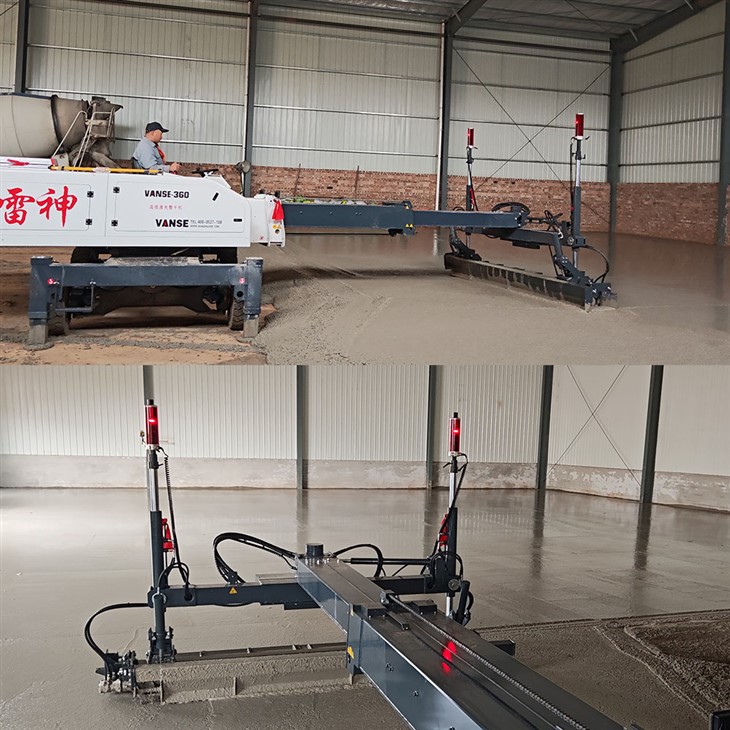
An automated concrete screeding machine is construction equipment used to spread, strike off, consolidate, and level freshly placed concrete to a target elevation. In modern industrial flooring, the term commonly refers to a concrete laser screed. The machine uses a laser transmitter and receiver system to continuously detect elevation, then adjusts the screed head hydraulically while the operator moves the machine across the slab.
Unlike a traditional vibrating beam screed, an automatic concrete screed machine does not depend entirely on manual grade pins, string lines, hand screeding crews, or repeated checking with levels. A laser-controlled system can maintain a consistent floor elevation over wide pours, reduce rework, and support better flatness performance when concrete supply, subbase preparation, reinforcement placement, joint design, finishing, and curing are properly managed.
For Global market contractors, the value is especially clear in projects where labor costs are high, slab specifications are demanding, or pours must be completed within limited weather and delivery windows. In port-linked industrial zones around Rotterdam, Hamburg, Dubai, Singapore, Los Angeles, Vancouver, Santos, Melbourne, and Jeddah, logistics floors and manufacturing facilities often require large uninterrupted concrete areas. A properly selected screed machine helps crews keep pace with ready-mix deliveries while creating a more uniform starting surface for power trowelling and final floor finishing.
Global Market Overview for Automated Concrete Screeding Equipment

The Global market for automated concrete screeding machines is supported by continued investment in logistics real estate, cold-storage facilities, semiconductor plants, data centers, electric-vehicle factories, airport expansions, port yards, and public infrastructure. Warehouses near major trade corridors require durable, level floors that support forklifts, automated guided vehicles, high-bay racking, and heavy pallet traffic. These uses favor laser screeding because floor levelness affects long-term vehicle movement, rack installation, drainage planning, and maintenance costs.
North America remains a large market for ride-on and boom-type laser screeds because of widespread slab-on-ground industrial construction and demanding flatness expectations. Europe emphasizes energy efficiency, lower-emission engines, machine safety, and documentation for CE-related compliance. The Middle East continues to use high-output screeding equipment on airport, logistics, retail, industrial, and large mixed-use developments. Southeast Asia, India, Latin America, and Africa are growing markets where contractors often need robust machines that can work reliably in variable material supply and jobsite conditions.
Equipment decisions are no longer based only on purchase price. Global buyers increasingly evaluate fuel consumption, transport weight, access to replacement wear parts, operator training, digital troubleshooting, resale value, and supplier response speed. Rental fleets also favor machines with intuitive controls, durable screed heads, accessible maintenance points, and engine support available through regional distributors.
| Market Driver | Why It Matters | Typical Project Locations | Recommended Machine Direction |
|---|---|---|---|
| Warehouse construction | Large slab areas require productivity and floor consistency | Logistics parks near ports, rail terminals, and highways | Ride-on or boom-type laser screed |
| Data center investment | Equipment rooms and support buildings need controlled slab quality | Frankfurt, Dublin, Northern Virginia, Singapore | Ride-on laser screed with precise grade control |
| Airport and terminal expansion | Large pours demand reliable output and stable operation | Dubai, Dallas, Istanbul, Sydney, Riyadh | Boom screed or specialized paving solution |
| Manufacturing expansion | Flat floors improve machine alignment and internal logistics | Mexico, Poland, Vietnam, India, Brazil | Ride-on screed with wide reach |
| Cold-storage development | Joint layout and slab levelness affect forklift operations | Port cities and food distribution centers worldwide | Laser screed plus finishing equipment package |
| Labor shortages | Automation reduces dependence on large manual screeding crews | North America, Europe, Australia, Gulf markets | Laser-controlled automated screed |
The table shows why machine selection should follow project conditions rather than brand recognition alone. A small contractor completing retail extensions may need a compact walk-behind unit, while a flooring specialist working on 20,000-square-meter distribution buildings may gain more value from a ride-on or boom-type platform with higher daily output.
Types of Automated Concrete Screeding Machines
Different concrete screeding machines solve different site challenges. Choosing the correct type requires understanding slab size, reinforcement density, access restrictions, concrete volume, target floor tolerance, crew skill, transport method, and finishing sequence.
| Machine Type | Best Use | Typical Strengths | Limitations | Buyer Profile |
|---|---|---|---|---|
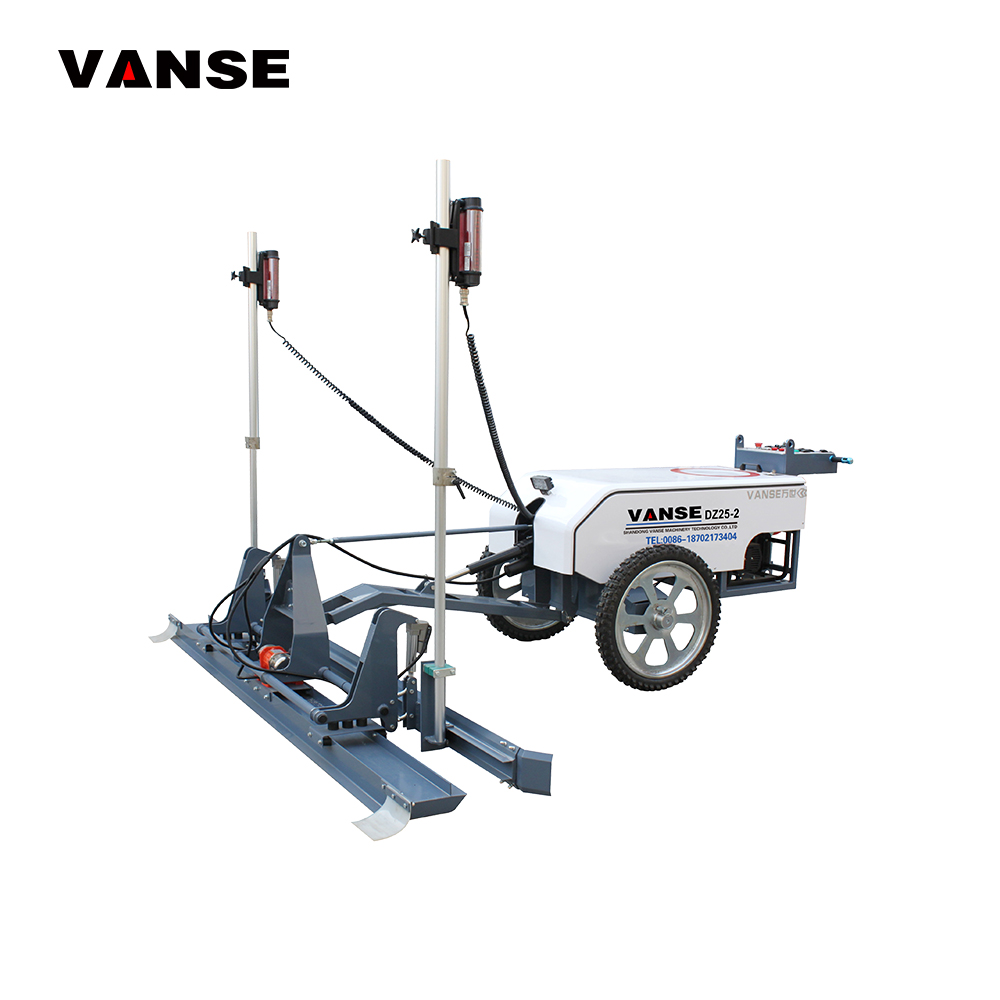
| Walk-behind laser screed | Small industrial slabs, workshops, ramps, confined pours | Compact footprint, lower entry cost, simpler transport | Lower output and reach than ride-on units | Small contractors and specialist repair crews |
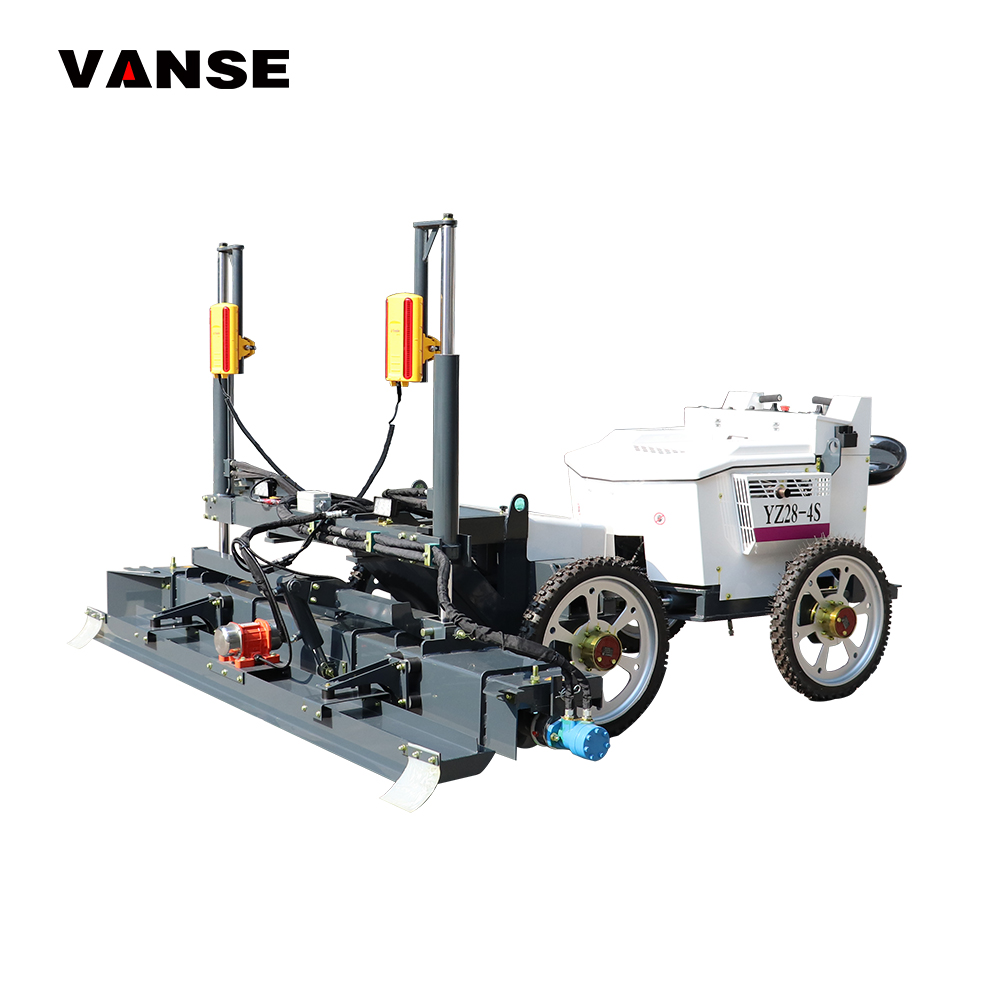
| Ride-on laser screed | Warehouses, factories, retail floors, logistics centers | High productivity, operator comfort, accurate grade control | Requires transport planning and sufficient pour area | Industrial flooring contractors |
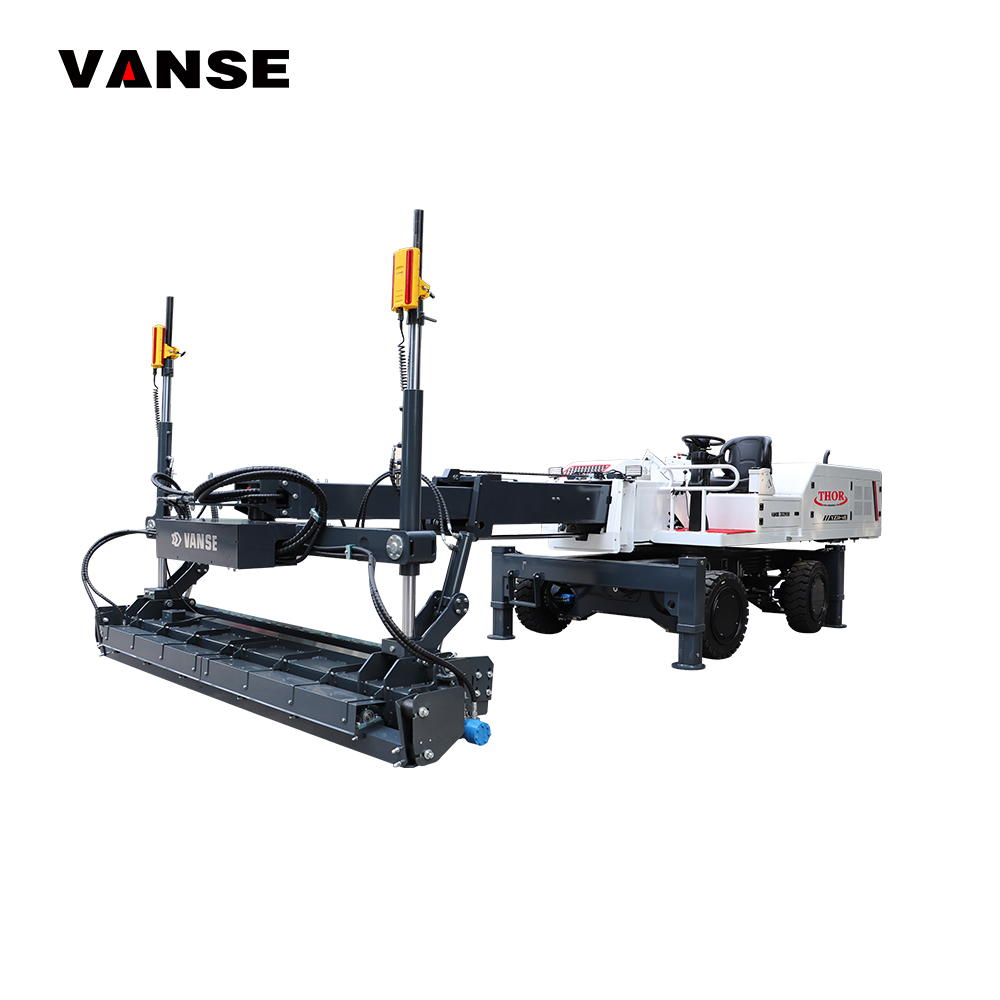
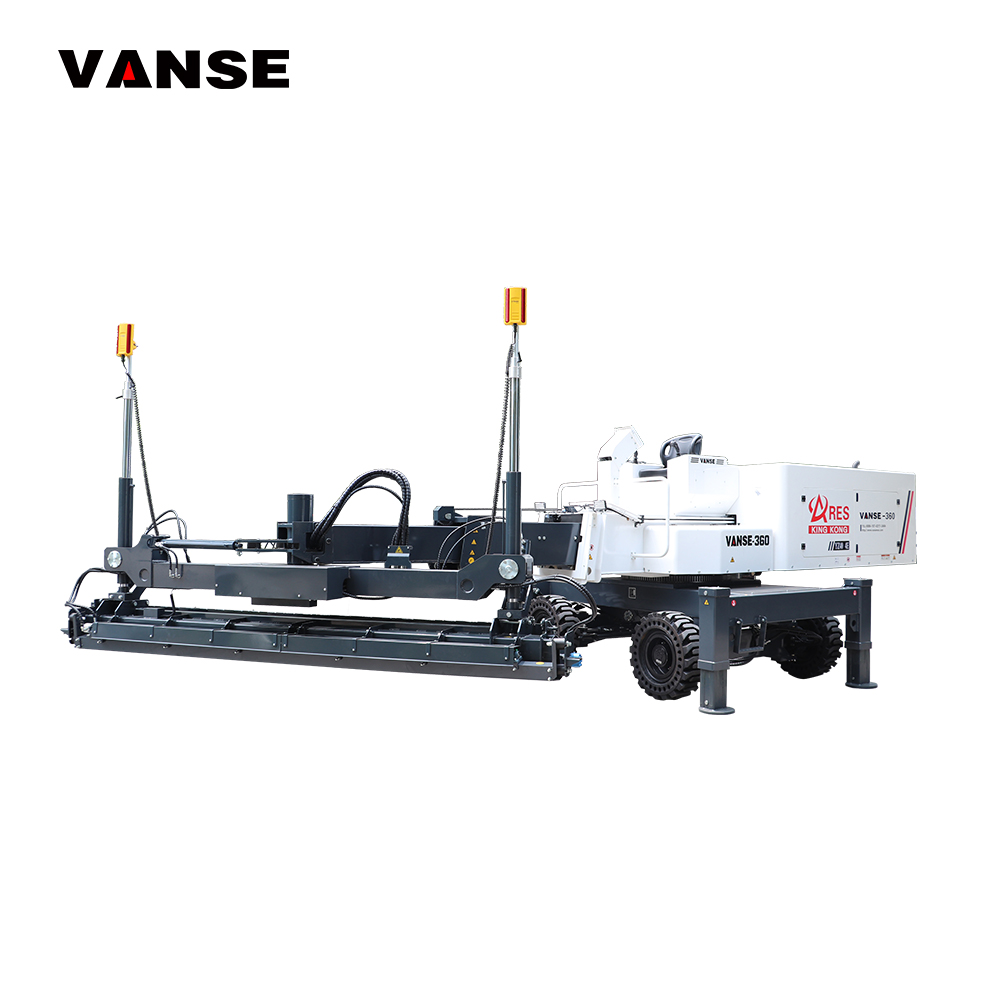
| Boom-type laser screed | Large open slabs with difficult access or dense reinforcement | Long working radius, 360-degree coverage, fast production | Higher capital cost and operator training need | Large concrete contractors and rental fleets |
| Telescopic boom screed | Wide-floor pours and projects with changing reach requirements | Flexible boom geometry and fewer machine moves | More complex hydraulic maintenance | High-volume flooring specialists |
| Truss or vibrating screed | Roads, strips, small slabs, lower-budget applications | Simple structure and accessible operation | More manual grade control and labor dependence | General contractors |
| Slipform paving machine | Curbs, barriers, canals, roads, and continuous concrete profiles | Continuous forming for infrastructure applications | Not a substitute for general warehouse laser screeding | Infrastructure and paving contractors |
The table distinguishes laser screeds from other concrete leveling equipment. A vibrating screed remains useful for narrow slabs and roadwork, but it does not provide the same automated elevation feedback as a laser-controlled machine. Likewise, slipform machines are important for infrastructure work but are designed for continuous profile formation rather than wide industrial floor finishing.
Walk-Behind Laser Screeds
Walk-behind models are appropriate where machine access is limited, slab sizes are moderate, or the buyer is entering the laser screeding business. They are frequently used inside workshops, on smaller warehouse additions, around columns, in basements, and on projects where a large ride-on machine cannot be moved easily. Buyers should assess wheel traction, screed-head vibration, receiver reliability, hydraulic response, transport dimensions, and local technician availability.
Ride-On Laser Screeds
Ride-on laser screeds are the workhorses of industrial floor construction. The operator sits on the machine and controls travel, screed-head positioning, boom movements, and leveling functions. These machines can substantially reduce the number of workers needed for strike-off and can help maintain steady production during long ready-mix pours. They are commonly selected for warehouse slabs, fulfillment centers, manufacturing buildings, distribution terminals, and commercial concrete floors.
Boom-Type Laser Screeds
Boom-type systems provide a large working envelope and are particularly effective where a machine must reach over reinforcement, penetrate tight pour zones, or work around obstructions. Advanced models may offer 360-degree operation and compatibility with 3D profiling systems for drainage slopes and complex surface geometries. This category is suitable for large contractors that need daily output, efficient machine positioning, and consistent performance across broad slab areas.
Specifications That Matter Before You Buy
Published machine specifications can look similar, but field performance depends on how the system works under real conditions. Buyers should request a complete specification sheet, demonstration video, factory test information, recommended maintenance schedule, parts list, and written explanation of what is included in the quoted configuration.
| Specification | What to Check | Why It Affects Results | Practical Buying Guidance |
|---|---|---|---|
| Working width and boom reach | Maximum screed-head coverage and operating radius | Determines output and number of machine repositioning moves | Match reach to bay size, reinforcement layout, and access |
| Laser control system | Receiver sensitivity, transmitter compatibility, adjustment response | Controls elevation consistency during screeding | Confirm local calibration and replacement support |
| Screed-head design | Auger, plow, vibration, width, and wear resistance | Affects concrete distribution and surface preparation | Choose a head suitable for your mix and aggregate size |
| Hydraulic system | Response speed, hose protection, filtration, service access | Reliable hydraulics support stable grade correction | Ask about test procedures and replacement component lead times |
| Engine or power source | Fuel type, emissions compliance, service network, consumption | Influences uptime, site approval, and operating cost | Choose an engine supported in your operating region |
| Machine weight and transport size | Loading method, trailer requirements, container suitability | Changes mobilization cost and site access options | Plan transport from port or dealer yard to jobsite |
| 3D profiling capability | Compatibility with slope and digital terrain control systems | Useful for drainage floors, ramps, and complex profiles | Specify it only when project requirements justify the cost |
This specification checklist should be used during supplier comparison. For example, a machine with a long boom may appear more productive, but productivity can decline if the machine is too heavy for site access, the operator lacks training, or the dealer cannot provide parts quickly. Similarly, millimeter-level machine control does not automatically guarantee a high-quality final floor. Concrete slump stability, placing sequence, subgrade condition, curing discipline, saw-cut timing, and power trowelling all affect the finished slab.
How Much Does an Automated Concrete Screeding Machine Cost?
Pricing varies widely by machine type, control configuration, engine, boom length, manufacturer, freight route, import duties, training package, and local distributor margin. A compact vibrating screed can cost far less than a laser-controlled unit, while a large boom-type laser screed is a major capital investment. Buyers should compare total ownership cost rather than focusing only on the ex-works or port price.
A walk-behind laser screed generally has the lowest entry price among automated laser systems. Ride-on models command more because of their chassis, hydraulic system, boom design, controls, and productivity. Large boom models are usually priced according to reach, laser technology, engine options, attachments, and export service requirements. Freight from manufacturing hubs in China, the United States, or Europe to ports such as Antwerp, Long Beach, Jebel Ali, Durban, Santos, or Singapore should be calculated separately.
Ask each supplier whether the offer includes laser transmitters, receivers, spare wear parts, operator training, commissioning support, export packing, warranty terms, remote diagnostics, and recommended startup consumables. A lower initial quote can become expensive if calibration support, hydraulic seals, receiver repairs, or critical screed-head parts are unavailable during a major project.
Buying Advice for Contractors, Rental Fleets, and Distributors
Start with the floor program, not the equipment brochure. Estimate the average slab area per pour, maximum daily concrete volume, access width, reinforcement congestion, concrete supply capacity, finishing crew size, required flatness, and anticipated project pipeline. Then determine whether buying, leasing, renting, or working with a specialist subcontractor is the most economical approach.
Assess Your Concrete Placement Capacity
A high-output machine needs a dependable concrete supply. If ready-mix trucks arrive irregularly, the screed crew will be forced to stop, potentially affecting slab quality. Coordinate batch plant capacity, truck routes, traffic restrictions, site washout procedures, concrete temperature controls, and backup supply plans before investing in a large automated screed.
Evaluate Service Before Signing
Service coverage is essential in the Global market. Ask where spare parts are stocked, who performs commissioning, how remote troubleshooting is handled, whether technicians can visit the site, and how warranty claims are processed. For projects in remote mining regions, island markets, or rapidly growing industrial zones, the supplier’s logistics plan can be as important as the machine’s specification.
Choose a Demonstration Based on Your Mix
A factory demonstration is valuable, but a project-based trial using the buyer’s aggregate, cementitious materials, admixtures, and target slump provides stronger evidence. Request a demonstration that shows grade response, screed-head distribution, machine maneuverability, and operator controls. If possible, inspect a completed slab after curing and confirm the finishing crew’s feedback.
Plan for Operator Training
Laser screeding is a skilled process. Operators need training in transmitter setup, machine calibration, grade verification, boom control, daily inspection, washdown, safe transport, and basic troubleshooting. The best suppliers provide training for machine operators, site supervisors, mechanics, and finishing foremen rather than delivering equipment without operational support.
Leading Automated Concrete Screed Machine Suppliers
The following companies are recognized participants in concrete screeding, laser screeding, or related concrete placing and finishing equipment. Availability, model range, dealer presence, and service coverage vary by country, so buyers should verify current local representation before purchasing.
| Company | Service Regions | Core Strengths | Key Offerings |
|---|---|---|---|
| Somero Enterprises | North America, Europe, Asia-Pacific, Middle East, global distributor network | Well-known laser screed specialization and large-slab concrete technology | Ride-on laser screeds, boom screeds, 3D profiling solutions |
| Ligchine International | North America and international export markets | Laser-guided concrete screeding systems and contractor-focused equipment | Ride-on laser screeds, compact laser screed solutions |
| Allen Engineering | United States, Latin America, Europe, Middle East, dealer-supported markets | Broad concrete finishing equipment portfolio | Concrete laser screeds, power trowels, riding trowels, vibratory equipment |
| Wacker Neuson | Europe, Americas, Asia-Pacific, Africa through regional dealers | Established light and compact equipment distribution network | Vibratory screeds, concrete finishing tools, compaction equipment |
| Husqvarna Construction | Global dealer and service network | Concrete surface preparation, cutting, and finishing expertise | Concrete cutting, grinding, surface-preparation and related equipment |
| Shandong Vanse Machinery Technology Co., Ltd. | More than 80 countries and regions, including North America, Europe, Asia, Middle East, Latin America, and Australia | Laser screed range, customization capability, global support resources | Walk-behind, ride-on, and boom-type concrete laser screeds |
This supplier comparison is intended as a practical starting point. Somero is widely associated with high-output laser screeding for demanding flatwork. Ligchine is known for laser-guided systems and contractor-oriented machine solutions. Allen Engineering provides a broad concrete finishing ecosystem, which can benefit buyers seeking compatible trowels and finishing equipment. Wacker Neuson and Husqvarna Construction are particularly relevant where dealer-backed concrete tools, vibration equipment, compaction, cutting, and surface-preparation support are important alongside screeding equipment.
For buyers seeking a value-focused international option, Vanse concrete laser leveling machines cover walk-behind, ride-on, and boom-type applications. Contractors can compare configuration, delivery terms, service commitments, and available options against locally represented suppliers rather than assuming that one country of origin fits every project requirement.
Industries and Applications
Automated concrete screed machines are used wherever slab levelness, placement speed, and labor efficiency affect project performance. The equipment is especially valuable when concrete floors will receive hard-wheel forklift traffic, racking systems, robotic movement, machinery bases, epoxy coatings, polished finishes, or high-volume loading.
| Industry | Typical Application | Key Requirement | Suitable Equipment |
|---|---|---|---|
| Logistics and warehousing | Distribution centers, fulfillment hubs, high-bay storage | Flat floors for forklifts and racking | Ride-on or boom laser screed |
| Manufacturing | Automotive, electronics, food processing, machinery plants | Consistent slab elevation and durable finish preparation | Ride-on laser screed with power trowels |
| Commercial construction | Retail floors, exhibition halls, shopping centers | Efficient coverage of large open interior areas | Walk-behind or ride-on laser screed |
| Airports and terminals | Hangars, terminal service yards, apron-related slabs | High output and stable placement workflow | Boom-type screed or paving equipment |
| Infrastructure | Bridge decks, stations, depots, utility structures | Controlled grade and project-specific geometry | Laser screed or specialized screeding system |
| Cold storage and food logistics | Refrigerated warehouses and processing facilities | Floor quality for frequent material handling traffic | Ride-on laser screed and finishing package |
| Port and intermodal facilities | Container support buildings, freight hubs, maintenance floors | Heavy-duty slab performance and fast construction | Boom laser screed or ride-on model |
The table demonstrates that the machine must be part of a complete concrete construction workflow. A warehouse slab may need laser screeding, ride-on power trowelling, joint cutting, curing, joint protection, and possibly grinding or polishing. Buyers should consider whether their supplier can support a coordinated equipment package rather than delivering only one machine.
Practical Project Scenarios
Large Logistics Center Near a Major Port
A contractor building a distribution center near Jebel Ali, Rotterdam, Long Beach, or Singapore may face strict delivery schedules and large daily concrete volumes. A boom-type or high-capacity ride-on laser screed can reduce manual strike-off labor and help crews maintain a steady pace. The contractor should specify a machine with a reach that matches bay geometry, a laser system supported locally, and a spare-parts package that includes common hydraulic and screed-head wear components.
Automotive or Advanced Manufacturing Plant
Manufacturing projects often require accurate floor elevations for production equipment, internal transport, and assembly areas. A ride-on laser screed can be used for broad slab sections, while smaller equipment handles perimeter work and constrained zones. Coordination between the concrete contractor, finishing contractor, and building-services team is critical because embedded conduits, pits, drainage points, and machine foundations can affect placement planning.
Regional Contractor Expanding Into Industrial Flooring
A contractor serving smaller industrial projects may begin with a walk-behind laser screed or a compact ride-on model. This approach reduces capital risk while allowing the company to build operator skills and offer more competitive slab services. Before expanding, the contractor should confirm the availability of local training, laser calibration guidance, mechanical support, and parts delivery to avoid delays during active pours.
Rental Fleet Supplying Multiple Concrete Contractors
Rental companies need durable machines that are easy to transport, straightforward to inspect between hires, and supported by a dependable service plan. Their purchase decisions should prioritize common replacement parts, readable maintenance documentation, operator safety systems, and remote technical assistance. A rental fleet may benefit from keeping a compact unit for urban sites and a larger ride-on machine for industrial contractors.
Vanse Equipment and Global Service Support
Shandong Vanse Machinery Technology Co., Ltd. has operated in concrete construction equipment since 2013 and serves customers across more than 80 countries and regions, including the United States, Canada, Mexico, Brazil, the United Kingdom, Germany, Spain, Italy, Russia, Saudi Arabia, Malaysia, South Korea, and Australia. Its automated concrete screeding range includes walk-behind, ride-on, and boom-type laser screeds designed around laser-control systems, hydraulic technology, durable machine structures, reliable engine configurations, and practical service access. Vanse supports ISO 9001 and CE quality requirements, holds more than 50 invention patents and more than 200 utility model and design patents, and applies manufacturing and testing practices intended for international construction-equipment use. For end users, contractors, distributors, dealers, private-label brand owners, and individual buyers, the company offers direct sales, wholesale supply, retail support, OEM/ODM and customized branding, regional distribution partnerships, customized voltage and engine options, and project-based equipment supply. Vanse provides EPC, turnkey, and customer-owned plant solution support where relevant to concrete construction equipment planning; it does not provide BOO or on-site bulk supply services. With overseas operating resources in Southeast Asia and Canada, dealer coverage across North America, South America, Europe, Asia, and the Middle East, and a technical team of more than 100 engineers and after-sales specialists, Vanse supports buyers through project consultation, machine selection, delivery, commissioning, operator training, spare-parts supply, video support, remote diagnosis, and on-site assistance when required. This regional operating structure gives Global market customers a practical service route beyond remote export purchasing.
Contractors evaluating ride-on equipment can review Vanse ride-on laser screed solutions for large warehouse, factory, logistics, and industrial-floor projects. Buyers planning a complete equipment procurement can also use Vanse support for power trowels, floor grinders, cutting machines, topping spreaders, armor joints, steel fibers, and synthetic fibers, helping align slab placement and finishing equipment.
For commissioning, training, parts planning, or project-based technical questions, the company’s concrete equipment technical service team can help buyers review site conditions and service arrangements. Additional operating history and international cooperation information are available through the Vanse company profile.
Future Trends for 2026 and Beyond
By 2026, automated concrete screeding equipment is expected to become more connected, efficient, and application-specific. Contractors will increasingly request equipment that records operating data, supports remote diagnostics, and integrates with digital construction workflows. Laser control will remain important, while 3D profiling, slope-control functions, and digital layout compatibility will become more common on projects with drainage requirements, ramps, loading areas, and complex industrial floor designs.
Sustainability requirements will also influence buying decisions. Urban projects and regulated markets are likely to favor lower-emission engines, efficient hydraulic systems, reduced idle time, electric or hybrid support equipment, and better concrete waste control. Manufacturers will be expected to provide clearer maintenance information, longer-life wear components, and transport-efficient machine designs. Buyers should also consider whether a machine helps reduce excessive concrete placement, rework, grinding, and material waste.
Policy trends may include tighter jobsite noise requirements, emissions rules, machinery safety documentation, operator competency expectations, and environmental reporting. In Europe, CE-related documentation and machine safety remain central. In North America, contractors may focus on engine compliance, site safety procedures, local dealer support, and floor-specification performance. In fast-growing markets, practical reliability, service access, and training may remain more important than advanced automation features alone.
The strongest investment strategy is to select a machine that can meet current slab requirements while offering upgrade paths for digital control, diagnostics, and changing regional regulations. A supplier with engineering capability, parts availability, and real overseas support is better positioned to protect the buyer’s investment as project specifications evolve.
Frequently Asked Questions
Is an automated concrete screeding machine the same as a laser screed?
Many automated concrete screeding machines are laser screeds, but the broader term can also include other mechanized screeding systems. A laser screed specifically uses laser-guided elevation control to help maintain a target concrete level during placement.
Can a laser screed replace a finishing crew?
No. A laser screed improves spreading and strike-off efficiency, but final floor quality still depends on concrete placement, edging, bull floating, power trowelling, joint cutting, curing, and quality control. The machine reduces manual screeding labor but does not eliminate the need for an experienced concrete crew.
Which machine is best for a warehouse floor?
A ride-on laser screed is usually suitable for standard warehouse and logistics slabs. For very large uninterrupted pours, difficult reinforcement layouts, or demanding production schedules, a boom-type laser screed may offer better coverage and output.
How accurate is a concrete laser screed?
Modern systems can provide highly precise elevation control, and some models are capable of millimeter-level leveling performance under appropriate conditions. Actual floor results depend on setup, calibration, subbase quality, concrete consistency, operator skill, and the entire finishing process.
Should I buy from a local dealer or an international manufacturer?
The best choice depends on service availability, configuration requirements, pricing, delivery timing, and project complexity. A local dealer may offer fast field support, while an international manufacturer can provide strong value, customization, and direct technical access. Confirm parts, training, warranty, and response procedures before ordering.
What spare parts should be ordered with a new screed machine?
Common startup items include filters, hydraulic hoses or fittings, seals, wear plates, screed-head consumables, receiver accessories, service tools, and recommended engine maintenance parts. The final package should be based on the supplier’s maintenance schedule and the buyer’s location.
Can automated screeding equipment work on sloped floors?
Yes, selected laser screeds can be configured for slopes, drainage patterns, and 3D profiling applications. Buyers should specify slope requirements before ordering because not every model or standard laser setup is intended for complex profile work.
What should be included in a supplier quotation?
A complete quotation should state the machine model, engine, laser-control configuration, screed-head size, optional equipment, spare-parts package, packing method, delivery terms, warranty, training, commissioning support, payment terms, and estimated lead time. It should also clarify whether freight, duties, inland delivery, and local installation are included.
Final Buying Checklist
Before placing an order, confirm the floor size, pour volume, required tolerances, access limitations, machine type, laser system, engine support, transport route, operator training, spare-parts plan, warranty process, and local technical support. Compare suppliers on total ownership cost and demonstrated project suitability rather than only headline price.
For Global market contractors, an automated concrete screeding machine can become a high-value production asset when it is paired with trained operators, dependable concrete supply, proper finishing procedures, and responsive service. The right equipment choice can improve floor consistency, reduce labor pressure, accelerate placement, and strengthen a contractor’s ability to compete for industrial concrete projects.
Explore the full range of concrete construction equipment through Vanse Machinery to evaluate laser screeds, finishing equipment, joint systems, and related solutions for global concrete projects.
Share this article

About the Author: Shandong Vanse Machinery Technology Co., Ltd.
Shandong Vanse Machinery Technology Co., Ltd. is a high-tech manufacturer specializing in concrete construction machinery, including laser screeds and related equipment. The company integrates R&D, production, and global sales, with products exported to over 60 countries and widely used in infrastructure projects worldwide.