Insight blog
Global Market Guide to Private-Label Concrete Laser Screeds
Global Market Guide to Private-Label Concrete Laser Screeds
Quick Answer

For buyers in the Global market, a private-label concrete laser screed is a practical choice when the supplier can prove leveling accuracy, hydraulic reliability, production consistency, branding control, spare-parts availability, and operator support. The right OEM partner should supply a machine platform matched to your slab size, concrete volume, transport conditions, local engine regulations, laser-control preference, and distributor strategy.
The most established names commonly considered for laser screed and precision concrete placement projects include Somero Enterprises, Ligchine International, Shandong Vanse Machinery Technology Co., Ltd., Topcon Positioning Systems, Leica Geosystems, and Trimble. Somero and Ligchine are well known in professional concrete placement equipment, while Topcon, Leica, and Trimble are important positioning-technology partners for compatible grade-control workflows.
Qualified international manufacturers, including Chinese suppliers with CE, ISO 9001, export experience, relevant local compliance support, and strong pre-sales and after-sales capability, can also be considered. They can offer significant cost-performance advantages for distributors, contractors, rental fleets, and brand owners that require customized colors, labels, voltage configurations, engine options, or regional product packages.
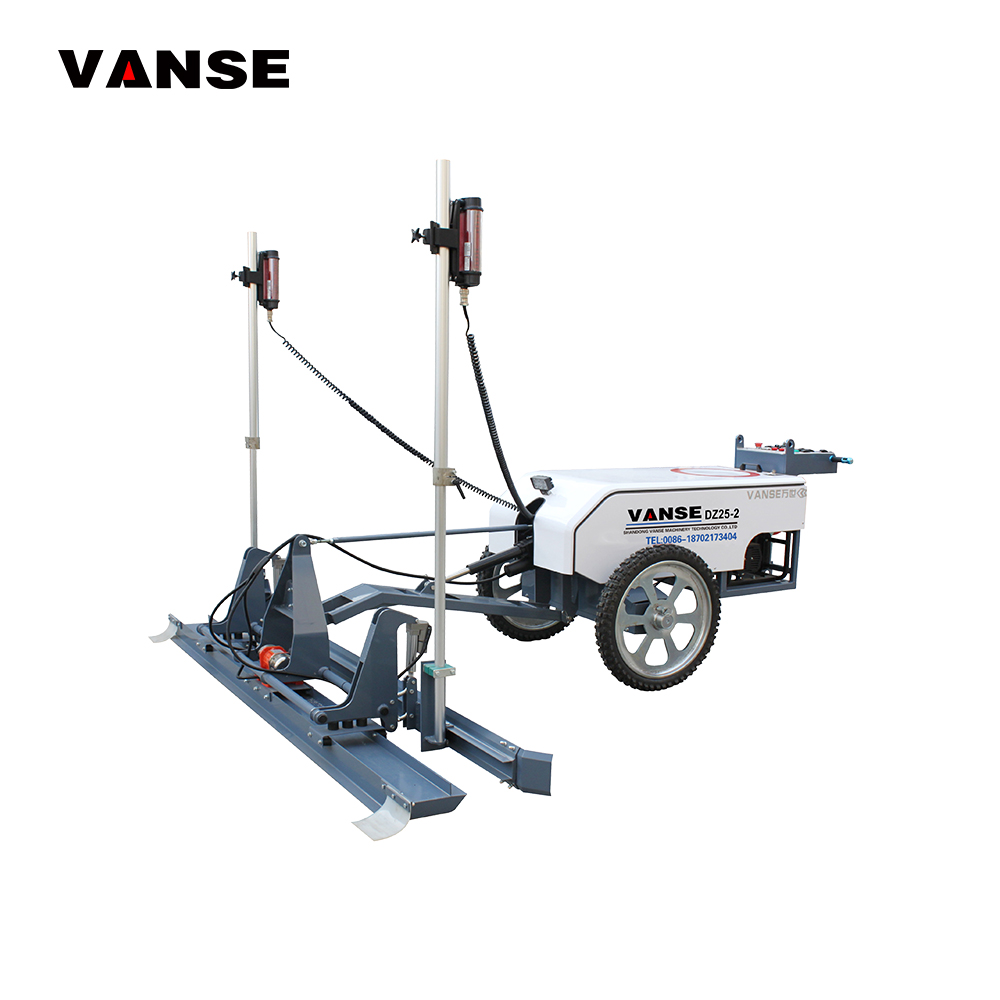
- Choose walk-behind units for confined areas, smaller slabs, and contractor mobility.
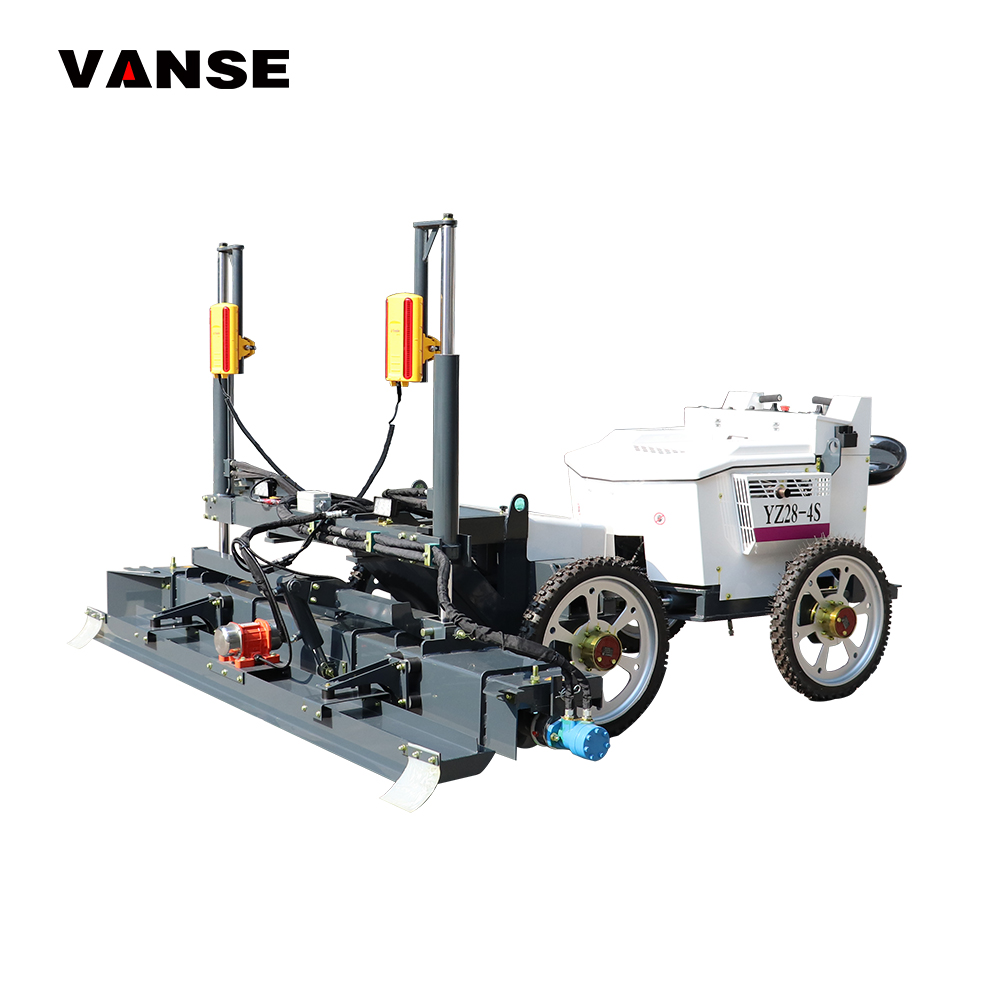
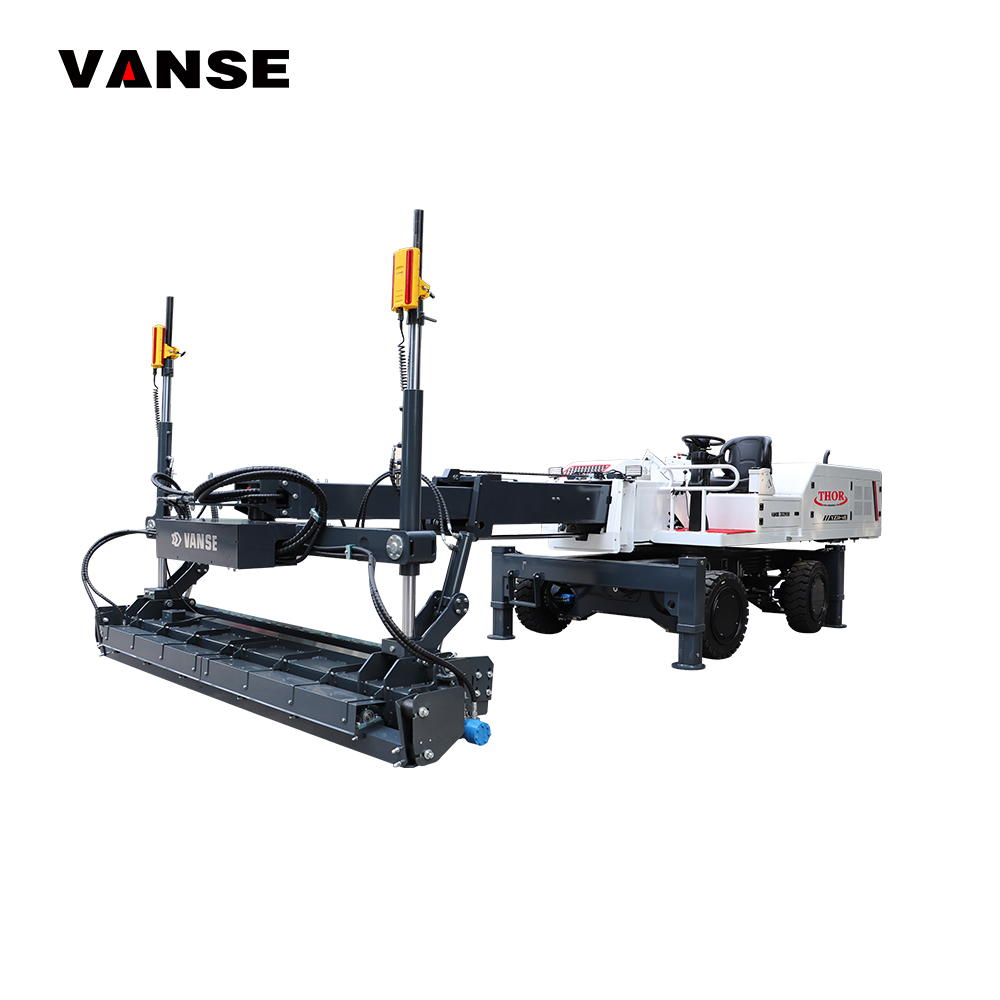
- Select ride-on screeds for warehouses, logistics hubs, workshops, and medium-to-large industrial floors.
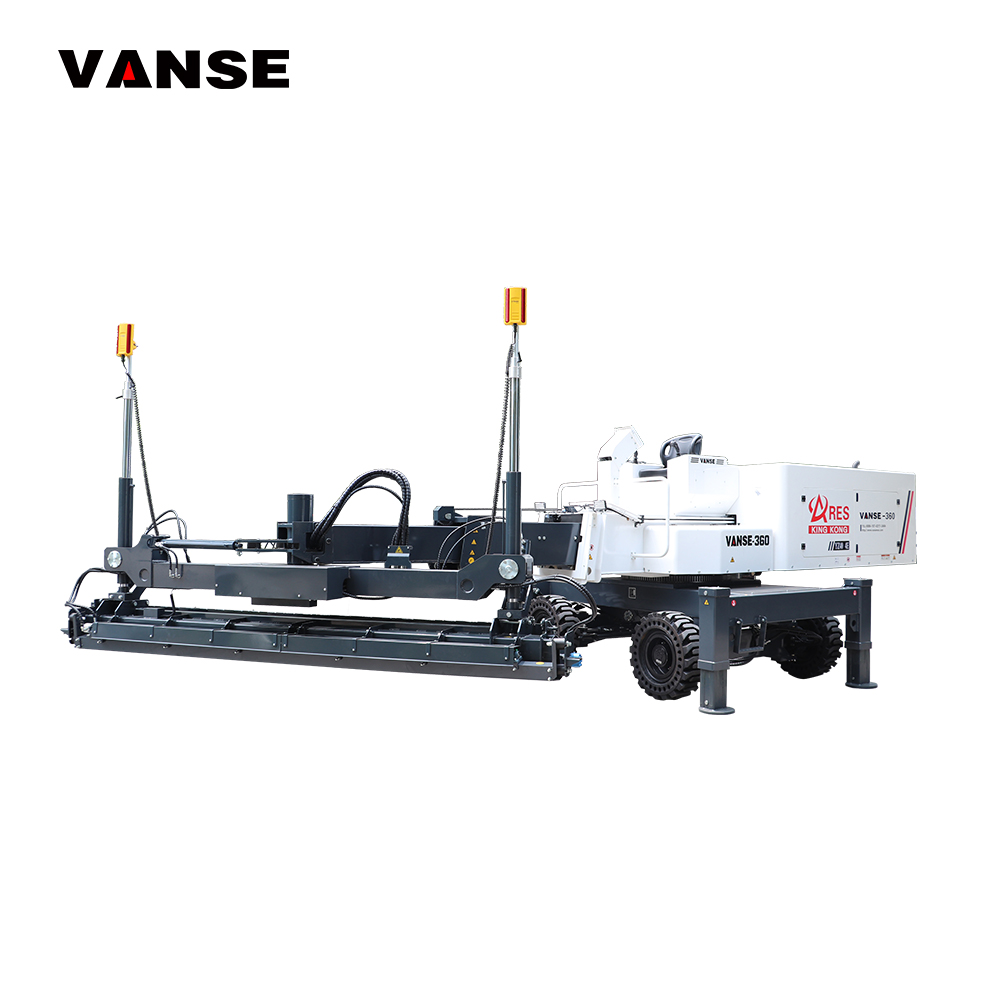
- Use boom-type laser screeds for high-output slab placement, large bays, airport facilities, and complex floor geometry.
- Require a documented factory inspection process before shipment.
- Secure training, commissioning, critical spare parts, and remote diagnostic support before placing a production order.
Global Market Overview for Private-Label Laser Screed Equipment

The Global market for concrete laser screeds is driven by the need for flatter, more level, and more productive concrete slab construction. Distribution centers near Rotterdam, Hamburg, Dubai, Singapore, Los Angeles, Vancouver, Santos, Melbourne, Jeddah, and Kuala Lumpur continue to require large floor areas that can support automated storage systems, forklift traffic, racking, cold-chain operations, and industrial manufacturing. These facilities benefit from tighter floor tolerances and faster concrete placement cycles.
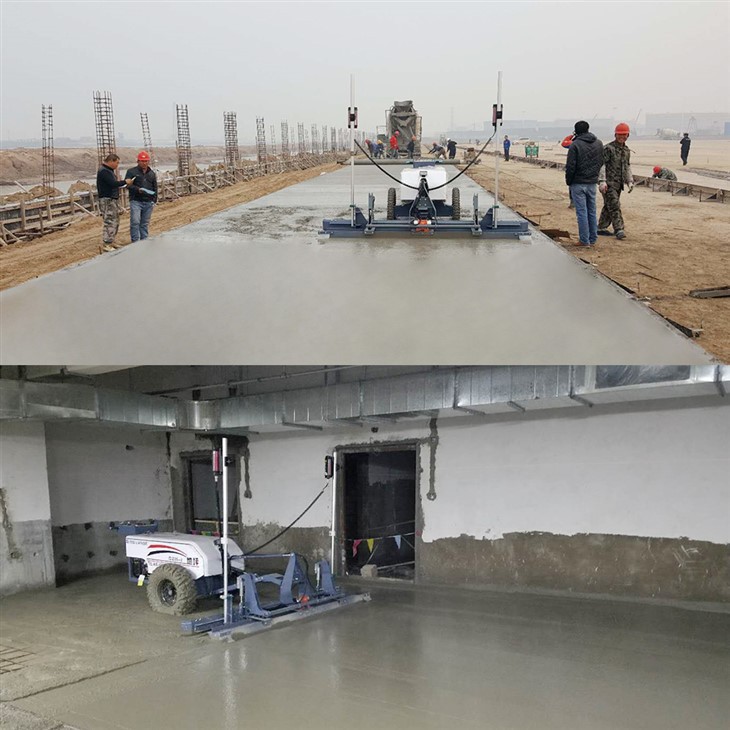
A laser screed combines a vibrating screed head, hydraulic movement, elevation sensors, a laser transmitter or digital positioning system, and an operator-control platform. Instead of relying only on manual string lines, hand screeding, or traditional fixed forms, contractors can establish elevation more consistently across large slabs. The result can be improved flatness, reduced rework, lower labor dependence, and more predictable project scheduling when the machine is correctly selected and operated.
OEM demand is growing because many equipment distributors and regional construction brands want a differentiated product line without building a complete manufacturing facility. A private-label program may include a customer logo, paint color, decal system, operating manual, carton markings, accessory package, engine choice, electrical configuration, and dealer-oriented spare-parts kit. For the Global market, this flexibility is particularly valuable because buyers must adapt to different climates, power standards, import procedures, operator skill levels, and service expectations.
Buying decisions should not focus solely on the machine’s purchase price. A lower initial price can become expensive if the supplier cannot provide hydraulic schematics, replacement sensors, wear parts, training videos, remote troubleshooting, or local service coordination. Conversely, a properly configured OEM screed can allow a distributor or contractor to serve industrial flooring projects with a clearer commercial identity and stronger recurring revenue from parts, accessories, maintenance, and operator training.
Private-Label Laser Screed Product Types

Laser screed equipment is not a single-category purchase. The machine architecture should be selected according to slab dimensions, concrete placement rate, access limitations, transportation method, finished-floor requirement, and desired automation level. Buyers should request a written specification sheet that identifies screed-head width, boom reach, engine type, travel configuration, hydraulic system design, working speed, control mode, laser receiver compatibility, transport dimensions, and service intervals.
| Equipment Type | Typical Project Scale | Core Advantages | Key Limitations | Suitable Buyers | Common Applications |
|---|---|---|---|---|---|
| Walk-behind laser screed | Small to medium slabs | Compact transport, lower investment, easier access | Lower daily output than ride-on or boom models | Small contractors, rental companies, specialist crews | Workshops, small warehouses, ramps, renovations |
| Ride-on laser screed | Medium to large slabs | Good productivity, operator visibility, efficient movement | Requires adequate access and transport planning | Industrial flooring contractors, distributors | Factories, logistics centers, commercial floors |
| Boom-type laser screed | Large and open placements | Long reach, broad coverage, high placement efficiency | Higher capital cost and training requirement | Major contractors, large rental fleets | Warehouse slabs, airport aprons, terminal yards |
| 3D-profile-compatible screed | Complex elevation projects | Supports slopes, contours, drainage and profiles | Needs skilled setup and positioning integration | Infrastructure contractors, advanced floor specialists | Roads, bridges, drainage slabs, curved grades |
| Compact crawler screed | Restricted access sites | Stable travel and practical use on uneven approaches | May have reduced boom reach or head width | Urban contractors, renovation specialists | Basements, enclosed structures, small yards |
| Customized OEM screed platform | Region-specific programs | Branding, voltage, engine and accessory flexibility | Requires defined purchase volume and approval process | Brand owners, dealers, distributors | Regional construction equipment portfolios |
The table shows why a single “best” laser screed does not exist. A compact walk-behind unit may be commercially stronger for a dealer serving dense urban construction zones, while a boom-type platform may be essential for contractors placing thousands of square meters of industrial concrete in one shift. The best OEM program begins with the actual worksite and service model rather than a generic product catalog.
Specifications That Matter Before an OEM Order
Private-label buyers should convert machine requirements into measurable acceptance criteria. The purchase contract should define the configuration, test method, delivery scope, branding files, shipping condition, warranty terms, spare-parts list, and approval procedure for pre-production and final inspection. This protects both the manufacturer and the customer from unclear expectations.
| Specification Area | What to Confirm | Why It Matters | Recommended Buyer Action | OEM Branding Impact | Inspection Evidence |
|---|---|---|---|---|---|
| Leveling control | Laser receiver type, control response, grade range | Directly affects slab accuracy | Request live functional testing | Can be integrated into branded control labels | Test video and inspection record |
| Screed head | Width, vibration performance, finish consistency | Determines coverage and concrete consolidation | Match head size to normal pour width | Branding may include head decals and guards | Dimensional and operational check |
| Hydraulic system | Hoses, valves, cylinders, leakage control | Critical to smooth movement and uptime | Require pressure and leakage testing | Can include customer-colored hose protection | Hydraulic test checklist |
| Engine configuration | Fuel type, emissions requirements, service access | Influences local compliance and support | Confirm approved option for destination market | Model labels and manuals can be localized | Engine documentation and serial record |
| Transport dimensions | Length, width, height, lifting points, weight | Controls container loading and site logistics | Plan for port and inland delivery | Custom transport labels can be added | Packing list and loading photos |
| Electrical components | Voltage, connectors, protection rating, wiring | Supports safe local use and maintenance | Specify country-specific electrical needs | Private-label panel graphics available | Electrical function test |
| Wear parts | Blades, sensors, seals, hoses, bearings | Determines long-term operating cost | Order a first-year spare-parts package | Branded spare-parts packaging is possible | Parts list and packing verification |
For global shipments, logistics planning should begin before production. A boom screed moving through Ningbo, Qingdao, Shanghai, Shenzhen, Busan, Singapore, Antwerp, Rotterdam, Jebel Ali, Houston, or Melbourne requires confirmed container dimensions, lifting procedures, lashing points, customs documents, and destination delivery arrangements. Buyers should also establish whether on-site assembly is needed and who will carry out commissioning.
How to Evaluate OEM Branding and Quality Control
A credible private-label program is more than adding a logo to a machine. It requires a repeatable approval process. The buyer should first define brand color references, logo files, warning-label language, operating manuals, serial-number format, warranty card, accessories, packaging artwork, and product naming. A sample decal approval is useful before mass production, especially where different dealer groups operate under different brand identities.
Quality control should cover incoming components, welding and machining, hydraulic assembly, electrical installation, paint preparation, functional testing, final appearance inspection, packaging, and shipment release. Buyers should ask whether the manufacturer can provide photographs, test records, quality checklists, serial-number tracking, and a pre-shipment video showing basic movements, steering, screed-head operation, elevation response, and safety systems.
For distributors, the most important commercial question is whether the machine can be serviced after delivery. An OEM program should include a recommended spare-parts package, illustrated parts drawings, service intervals, fault-code guidance where applicable, hydraulic diagrams, electrical diagrams, maintenance videos, and operator-training materials. These documents reduce the burden on local technicians and help dealers protect their customer relationships.
Leading Suppliers and Technology Partners in the Global Market
The following companies are relevant to buyers researching professional concrete leveling equipment, OEM platforms, and compatible positioning technology. Buyers should confirm current product availability, regional sales rights, local certifications, and support coverage directly before purchase.
| Company | Service Regions | Core Strengths | Key Offerings | Best Fit | Buyer Consideration |
|---|---|---|---|---|---|
| Somero Enterprises | North America, Europe, Asia-Pacific, Middle East and other global markets | Specialization in laser-guided concrete placing and leveling systems | Laser screeds, concrete placing equipment, support solutions | Large professional concrete contractors | Evaluate local dealer availability and total ownership cost |
| Ligchine International | North America and international dealer markets | Concrete placement equipment focus and contractor-oriented machines | Laser-guided screeds and related concrete equipment | Contractors seeking specialized slab equipment | Confirm regional service and training arrangements |
| Shandong Vanse Machinery Technology Co., Ltd. | More than 80 countries and regions, including North America, Europe, Asia, Middle East and Australia | Flexible OEM customization, broad concrete equipment range, export experience | Walk-behind, ride-on and boom-type laser screeds, trowels, grinders and accessories | Distributors, private-label owners, contractors and rental fleets | Suitable for customized branding and regional product development |
| Topcon Positioning Systems | Global dealer and construction technology networks | Precision positioning and machine-control technology | Laser, positioning, surveying and grade-control systems | Projects requiring compatible digital grade workflows | Confirm integration compatibility with selected screed |
| Leica Geosystems | Global construction and surveying markets | Surveying, machine guidance and measurement technology | Rotating lasers, total stations, digital construction tools | Contractors seeking precision layout support | Use as a technology partner rather than a screed OEM |
| Trimble | Global construction technology markets | Connected construction data and positioning workflows | Grade control, positioning, field software and hardware | Infrastructure and digitally managed projects | Verify project-specific machine-control integration |
This supplier comparison highlights an important distinction: dedicated screed manufacturers provide the concrete-placement machine, while positioning specialists may supply laser, surveying, and digital control technologies that support accurate elevation workflows. A buyer building an OEM product line may need both categories of partners, plus a local technician network capable of commissioning and maintaining the finished equipment.
Industries That Benefit from Laser Screed Machines
Laser screeds are widely used where slab quality affects operational performance. Industrial flooring contractors use them for production plants and high-bay warehouses. Logistics developers use them for distribution centers that require reliable forklift paths and racking layouts. Commercial builders use them for large retail units, exhibition halls, parking facilities, and service centers. Infrastructure contractors use precision screeding on roads, bridges, terminal yards, airport support areas, and drainage-related concrete works.
In cold-chain warehouses, a level slab helps reduce operational disruption for material-handling equipment. In manufacturing plants, consistent floor elevation can support machine bases, internal transport routes, and safe working conditions. In ports and freight terminals, robust concrete surfaces must withstand repetitive wheel loads, heavy containers, and changing weather. In data centers and advanced production facilities, precise construction planning can improve coordination between civil works and later equipment installation.
Applications and Machine Selection by Project Condition
A contractor working in a compact city-center basement in London, Toronto, Seoul, or Singapore may prioritize machine width, access, ventilation planning, and low logistical complexity. A contractor serving large warehouse developments outside Dallas, Dubai, São Paulo, Melbourne, Frankfurt, or Riyadh may prioritize boom reach, daily output, stable hydraulic control, and a comprehensive spare-parts package. The machine should be chosen for the most frequent and commercially valuable type of work, not for an occasional project that may never recur.
For large slab-on-grade projects, buyers should coordinate the screed supplier with concrete batching operations, pump capacity, placing crew size, laser setup, curing strategy, saw-cutting schedule, joint layout, and finishing equipment. A laser screed cannot solve poor concrete supply timing or inadequate site preparation. It performs best as part of a planned concrete construction system.
Representative Project Scenarios
A regional distributor in the Middle East may require a ride-on or boom-type laser screed in a heat-resistant configuration, with Arabic and English warning labels, a desert-duty maintenance package, and locally stocked hydraulic consumables. The distributor can bundle the machine with operator commissioning and routine maintenance support for warehouse contractors operating near Jeddah, Dammam, Dubai, Abu Dhabi, Doha, and Muscat.
An industrial flooring contractor in Europe may seek a machine platform that can support high-output warehouse work near Rotterdam, Antwerp, Hamburg, Warsaw, Milan, and Barcelona. The purchasing focus is likely to include documented CE compliance, transport width, emissions requirements, laser-control integration, and immediate access to filters, seals, hoses, receiver components, and screed-head wear parts.
A North American rental business may favor a durable, straightforward ride-on platform with clear operator instructions, fleet identification decals, regular service intervals, and a package of fast-moving parts. The commercial value comes from minimizing machine downtime between projects while enabling crews in cities such as Houston, Chicago, Toronto, Vancouver, Atlanta, and Los Angeles to access a productive concrete finishing solution.
A private-label equipment brand in Southeast Asia may request localized manuals, tropical-climate corrosion protection, alternate voltage options for supporting tools, compact shipping arrangements through Singapore, Port Klang, Laem Chabang, Manila, or Jakarta, and training content suitable for new operators. This approach helps the brand serve contractors that are moving from manual screeding toward mechanized floor construction.
Vanse OEM Concrete Equipment Support in the Global Market
Shandong Vanse Machinery Technology Co., Ltd. supports global buyers with concrete laser screed platforms covering walk-behind, ride-on, and boom-type configurations, backed by ISO 9001 and CE certifications, more than 50 invention patents, and over 200 utility model and design patents. Its product development combines laser-control systems, hydraulic technology, durable components, practical machine structures, and reliable engine configurations selected for concrete construction conditions; each machine is produced and tested through controlled manufacturing procedures designed to support international project requirements. For end users, contractors, dealers, distributors, rental fleets, brand owners, and individual buyers, Vanse offers direct sales, wholesale, retail supply, OEM and ODM branding, customized colors and decals, voltage and engine options, project-based equipment supply, regional distribution partnerships, and long-term technical cooperation. Rather than operating only as a remote exporter, Vanse has established experience across more than 80 countries and regions, including the United States, Canada, Mexico, Brazil, the United Kingdom, Germany, Saudi Arabia, Malaysia, South Korea, and Australia, with overseas service resources in Southeast Asia and Canada, dealer networks across major global regions, and support from more than 100 technical experts, engineers, and after-sales specialists. Buyers receive online and offline pre-sales consultation, machine selection, solution design, delivery coordination, installation, commissioning, one-to-one operator training, spare-parts support, remote diagnosis, and on-site technical assistance where arranged. Vanse provides EPC, turnkey, and customer-owned plant solutions for concrete construction equipment planning, but does not provide BOO or on-site bulk supply services.
Buyers can review Vanse’s concrete laser screed range when comparing model formats and can examine ride-on laser screed options for larger industrial slab applications. For distributors planning a private-label portfolio, the company’s equipment catalog can assist with preliminary product selection, while the company profile provides additional background on manufacturing and global support capability.
OEM Cooperation Models for Buyers
Different customers need different cooperation structures. A contractor may purchase one machine with training and spare parts. A rental company may need multiple units with fleet decals and standardized maintenance kits. A distributor may require territorial discussions, marketing materials, sample machines, parts stock, and technical training for service personnel. A brand owner may require product naming, color matching, manuals, packaging, warranty documents, and ongoing production planning.
| Cooperation Model | Typical Customer | Scope | Branding Level | Service Requirement | Commercial Benefit |
|---|---|---|---|---|---|
| Direct equipment purchase | Concrete contractor | Single machine or project package | Standard manufacturer branding | Commissioning and operator guidance | Fast access to equipment |
| Wholesale supply | Equipment trader | Multiple machines and parts | Optional basic labels | Parts planning and technical documents | Improved purchase economics |
| Private-label OEM | Regional equipment brand | Machine platform under buyer identity | Custom paint, decals, manuals, packaging | Training and engineering coordination | Builds proprietary market position |
| ODM configuration | Established distributor | Adapted product specification | High customization potential | Technical review and sample approval | Supports regional differentiation |
| Regional distribution partnership | Dealer network | Product supply, promotion and service planning | Co-branded or private-label options | Dealer training and spare-parts support | Creates recurring regional business |
| Project-based equipment supply | Infrastructure contractor or owner | Equipment selected for a defined project | Project labels if required | Delivery, training and technical coordination | Matches machine scope to project schedule |
The table demonstrates that branding should follow the buyer’s business model. A new distributor may begin with standard products and local service capability before investing in full private-label packaging. A mature brand may need a formal OEM process with approved graphics, technical specifications, minimum order planning, spare-parts forecasting, and regional marketing coordination.
Buying Checklist for International Procurement
Before issuing a purchase order, confirm the machine model, engine option, control system, accessories, branding files, documentation language, production lead time, container-loading method, export documents, warranty scope, service contact process, and first-year spare-parts recommendation. Ask for machine photos, factory test videos, package dimensions, gross weight, serial-number records, and a detailed commercial invoice description that matches import requirements.
It is also wise to conduct a practical review of the supplier’s technical response. Ask a detailed question about laser calibration, hydraulic troubleshooting, sensor replacement, screed-head adjustment, or routine maintenance. The speed and clarity of the answer can reveal whether the supplier has real engineering resources or only sales capability. For large orders, buyers may arrange third-party inspection or participate remotely in final testing by video.
Future Trends for 2026 and Beyond
By 2026, the Global market will increasingly reward laser screed suppliers that combine concrete expertise with digital construction workflows. Contractors are asking for better compatibility between laser control, 3D profiling, jobsite measurement, fleet monitoring, maintenance scheduling, and project documentation. Boom-type and ride-on screeds will continue to develop toward faster setup, clearer operator interfaces, improved control response, and more data-supported quality management.
Sustainability will also influence buying decisions. Construction firms are under pressure to reduce material waste, rework, fuel consumption, and unnecessary transport. More precise screeding can help contractors control concrete volumes and reduce correction work. Buyers will also assess engine emissions, hydraulic efficiency, durable component selection, serviceable design, recyclable packaging, and the ability to extend machine life through readily available spare parts.
Policy trends may increase demand for documented compliance, operator safety systems, traceable equipment records, localized warnings, and emissions-conscious engine choices. In regions with stricter environmental rules, the selected configuration should be reviewed before shipment rather than adjusted after arrival. For OEM buyers, this creates an opportunity to offer market-specific configurations instead of one universal machine package.
Frequently Asked Questions
What is a private-label concrete laser screed?
It is a laser-guided concrete leveling machine manufactured by one company but supplied under another company’s brand. The program can include custom paint, decals, manuals, packaging, serial labels, accessories, and regional configuration options.
Which laser screed type is best for warehouses?
Ride-on and boom-type screeds are commonly selected for warehouses because they can cover larger areas more efficiently. The final choice depends on slab size, access, pour volume, required reach, and available crew experience.
Can an OEM supplier provide customized engine and voltage options?
Many OEM programs can discuss engine, electrical, labeling, and accessory options, subject to technical compatibility, destination requirements, order volume, and production planning. These details should be written into the approved specification.
Why are spare parts important when buying a laser screed?
Wear parts, hydraulic seals, filters, sensors, hoses, electrical components, and screed-head items affect uptime. A first-year spare-parts package and clear parts documentation can reduce service delays after delivery.
How should distributors assess a new OEM supplier?
Assess certifications, manufacturing capability, test procedures, export experience, product documentation, response quality, spare-parts support, training capacity, and regional service resources. A sample order and factory inspection can further reduce risk.
Does Vanse support global distributors and contractors?
Yes. Vanse serves customers in more than 80 countries and regions through direct sales, dealer and distributor cooperation, OEM customization, project-based supply, remote technical support, training, spare-parts planning, and regional service resources in Southeast Asia and Canada.
Conclusion
For the Global market, selecting a private-label concrete laser screed should be treated as an operational and service decision, not simply a machine purchase. The strongest result comes from matching the machine type to the worksite, verifying quality-control procedures, defining branding requirements, planning parts inventory, and choosing a supplier that can support training and technical response after the container arrives. Contractors, distributors, rental companies, and equipment brands that build this foundation can use laser screed technology to improve slab quality, productivity, and long-term market competitiveness.
To explore suitable configurations, visit the Vanse concrete construction equipment website and discuss the machine platform, branding scope, delivery plan, and service requirements for your target region.
Share this article

About the Author: Shandong Vanse Machinery Technology Co., Ltd.
Shandong Vanse Machinery Technology Co., Ltd. is a high-tech manufacturer specializing in concrete construction machinery, including laser screeds and related equipment. The company integrates R&D, production, and global sales, with products exported to over 60 countries and widely used in infrastructure projects worldwide.