Insight blog
Global Market Laser Screed Fleet Rental Strategy Guide
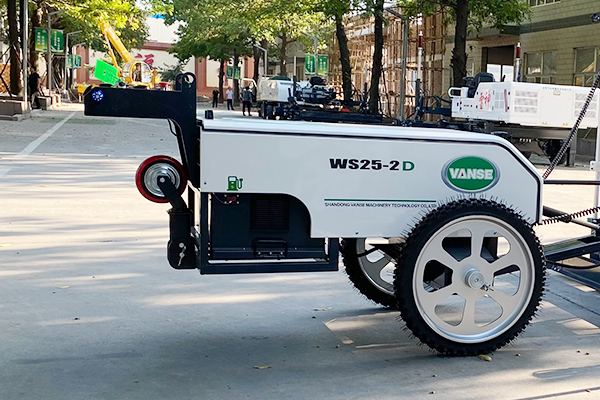
Global Market Laser Screed Fleet Rental Strategy Guide
Quick Answer

A profitable rental fleet for laser screeds in the Global market should be built around reliable ride-on and boom-type machines, supported by trained operators, calibrated laser systems, preventive maintenance, and fast spare-parts access. Start with a fleet mix that matches local slab demand: ride-on screeds for warehouses and factories, boom screeds for large logistics yards and airport projects, and compact machines for confined commercial or residential pours.
For most rental companies, the practical target is to keep each machine working at least 110 to 150 billable days annually, with utilization above 45% after the first operating year. Purchase decisions should be based on local concrete-project volume, contractor skill level, transport restrictions, parts availability, and the ability to provide machine operators or technical support.
Leading fleet options include Somero for high-volume industrial slabs, Ligchine for compact and versatile laser screeding, Allen Engineering for contractor-focused concrete equipment, Wacker Neuson for wider equipment-rental network compatibility, and Shandong Vanse Machinery Technology for cost-effective laser screed configurations, customization, and global technical support. Qualified international suppliers, including Chinese manufacturers with applicable local certifications and strong pre-sales and after-sales support, can also be considered because they may offer a favorable cost-performance ratio.
- Prioritize machines with dependable hydraulic systems, established engine brands, durable wear components, and compatible laser-control technology.
- Buy enough accessories: laser transmitters, receivers, grading heads, hoses, battery chargers, tow trailers, cleaning tools, and emergency spare-parts kits.
- Offer wet-hire or operator-assisted rental where local contractors lack laser screed experience.
- Track utilization, transport cost, repair hours, operator time, fuel use, and lost rental days for every fleet asset.
- Secure service coverage near major concrete-construction hubs such as Rotterdam, Dubai, Singapore, Houston, São Paulo, Melbourne, Toronto, and Jeddah.
Why Laser Screed Rental Fleets Are Growing in the Global Market

The Global market continues to see demand for flatter, faster, and more measurable concrete floor construction. Warehouses, e-commerce fulfillment centers, logistics parks, cold-storage buildings, advanced manufacturing plants, data centers, ports, airport terminals, and industrial estates increasingly require large slabs with demanding flatness and levelness specifications. Contractors face labor shortages in many regions, while project owners expect faster handover schedules and lower long-term floor-maintenance costs. These conditions make laser screed rental increasingly attractive.
Rather than buying a machine for occasional projects, contractors can rent a concrete laser screed for a specific pour, a multi-month industrial project, or a recurring regional contract. This lowers their initial capital requirement and gives them access to equipment that may otherwise be expensive to own. For rental businesses, the opportunity lies in supplying not only the machine but also laser setup, commissioning, operator training, site assessment, technical troubleshooting, and replacement equipment when a project schedule cannot tolerate downtime.
The most resilient laser screed rental businesses do not depend only on day-rate income. They combine equipment rental with delivery, pickup, operator services, slab consulting, laser calibration, consumable sales, spare-parts sales, concrete finishing equipment, and long-term framework agreements with industrial-flooring contractors. A ride-on screed rental can also lead to demand for power trowels, floor grinders, cutting machines, topping spreaders, joints, steel fibers, and synthetic fibers.
Global trade routes and industrial development zones strongly influence fleet placement. Rental companies near Los Angeles and Houston can serve distribution, manufacturing, and port-linked construction. Dubai, Jeddah, Dammam, Doha, and Abu Dhabi remain active hubs for logistics, infrastructure, and commercial development. Rotterdam, Hamburg, Antwerp, London, Warsaw, and Istanbul support European warehousing and industrial construction. Singapore, Kuala Lumpur, Bangkok, Jakarta, Seoul, and Melbourne provide access to fast-moving industrial and transport projects. In the Americas, Toronto, Monterrey, Mexico City, São Paulo, Santiago, and Lima are relevant markets for contractors working on large-format slabs.
Fleet Planning Priorities for Laser Screed Rental Businesses

A laser screed fleet should be selected as a system rather than as a collection of individual machines. The right machine must match the contractor’s slab size, concrete mix design, access conditions, transport capacity, and required finish. A machine that performs well on a 20,000-square-meter logistics slab may be unsuitable for a tight commercial basement. Similarly, a compact unit may be easy to transport but unable to provide the reach and productivity required for airport aprons or terminal yards.
Before acquiring equipment, rental operators should identify local project patterns. Review permit data, industrial-park development, logistics-center announcements, airport expansion plans, government infrastructure budgets, cold-chain investment, and the active contractor base. Speak with concrete placing contractors, industrial flooring specialists, ready-mix suppliers, general contractors, and project consultants. Their answers will reveal whether your market needs boom screeds, ride-on units, compact units, or a mixed fleet.
| Fleet Planning Factor | What to Measure | Why It Matters | Recommended Action |
|---|---|---|---|
| Annual slab demand | Square meters poured, project pipeline, tender activity | Determines machine quantity and fleet expansion timing | Map industrial, logistics, airport, and factory projects by region |
| Billable utilization | Rental days per machine per year | Directly drives fleet ROI | Target 110 to 150 billable days after market entry |
| Average rental duration | Daily, weekly, monthly, project-based contracts | Long projects reduce transport and idle time | Offer weekly and monthly rates alongside daily pricing |
| Operator availability | Qualified operators and local training demand | Incorrect use can create slab defects and equipment damage | Maintain trained operators and site-training packages |
| Service response time | Hours required for diagnosis, repair, or replacement | Concrete pours cannot wait for long repairs | Keep local wear parts and emergency backup equipment |
| Transport constraints | Road width, towing rules, port access, site entry limits | Influences unit size, trailer selection, and delivery cost | Standardize trailers, loading procedures, and delivery routes |
| Concrete specification | Slump, aggregate size, fiber dosage, slab thickness | Influences screed head, vibration performance, and placing method | Confirm machine compatibility before every project booking |
This planning table should be reviewed quarterly. It is particularly important for rental companies operating across borders, where fuel prices, import duties, road regulations, exchange rates, and contractor practices may vary significantly. A rental company with branches in several markets should avoid a one-size-fits-all fleet strategy.
Laser Screed Types for a Rental Fleet
Concrete laser screeds are usually divided into walk-behind, ride-on, and boom-type categories. Their output varies according to slab conditions, operator skill, concrete supply consistency, reinforcement arrangement, and distance between placing points. The machine type should be selected based on useful productivity rather than brochure capacity alone.
| Machine Type | Best Rental Applications | Core Advantages | Fleet Considerations |
|---|---|---|---|
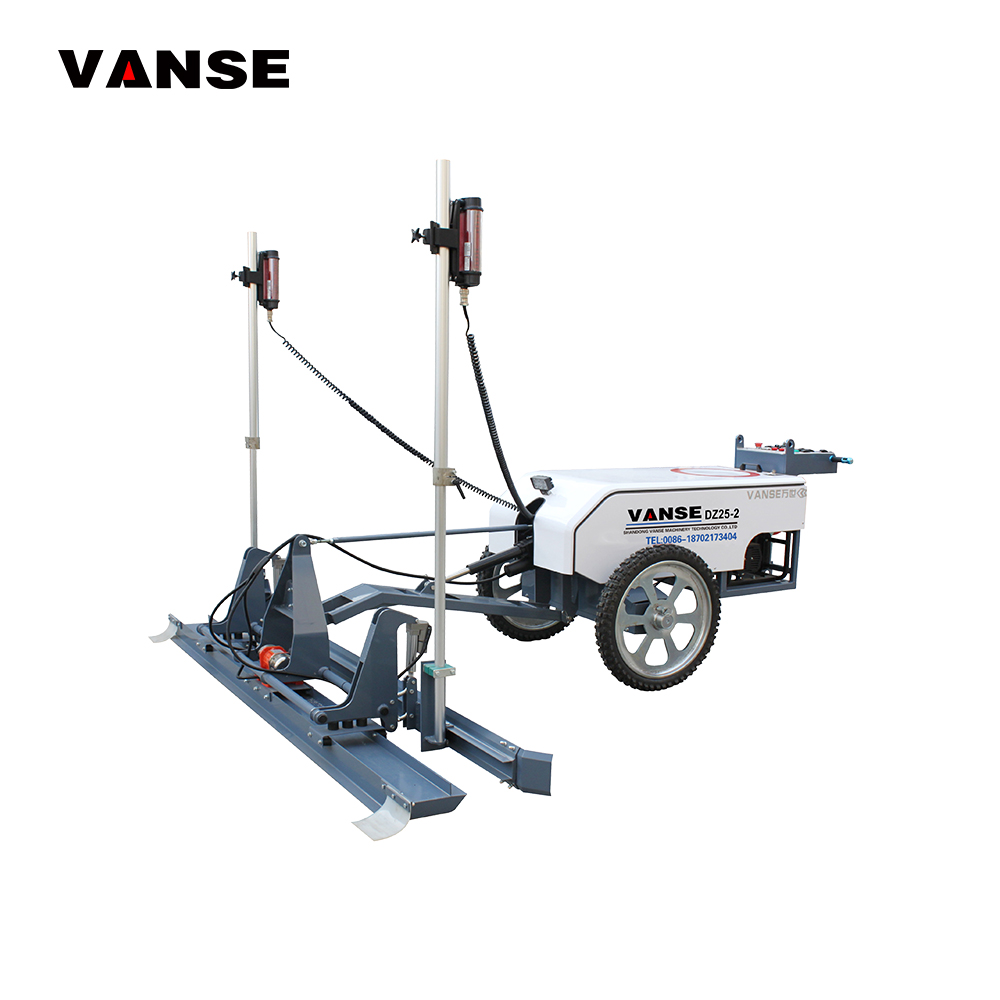
| Walk-behind laser screed | Small warehouses, commercial floors, restricted-access areas | Compact footprint, simpler transport, lower entry cost | Useful for urban work and smaller contractors; lower large-slab output |
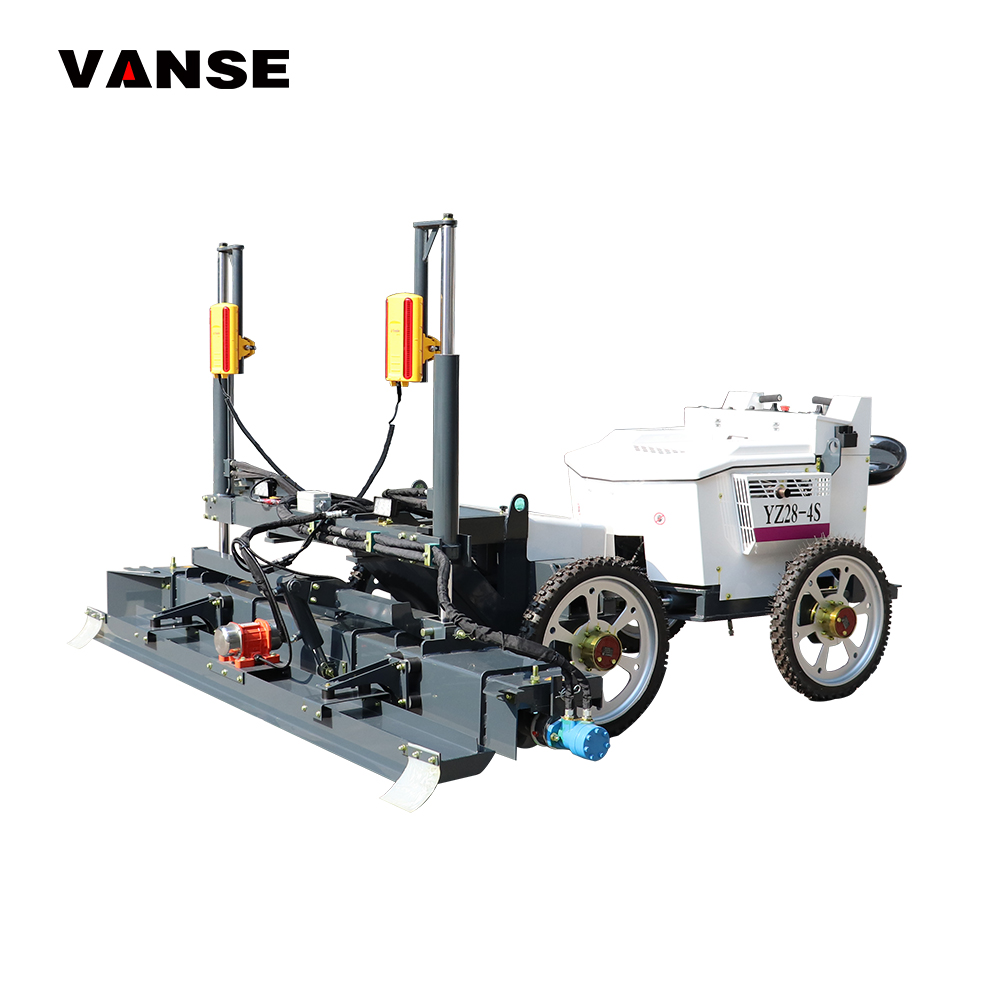
| Ride-on laser screed | Factories, warehouses, logistics centers, retail slabs | High daily output, reduced labor requirement, good maneuverability | Often the core revenue machine for industrial-floor rental fleets |
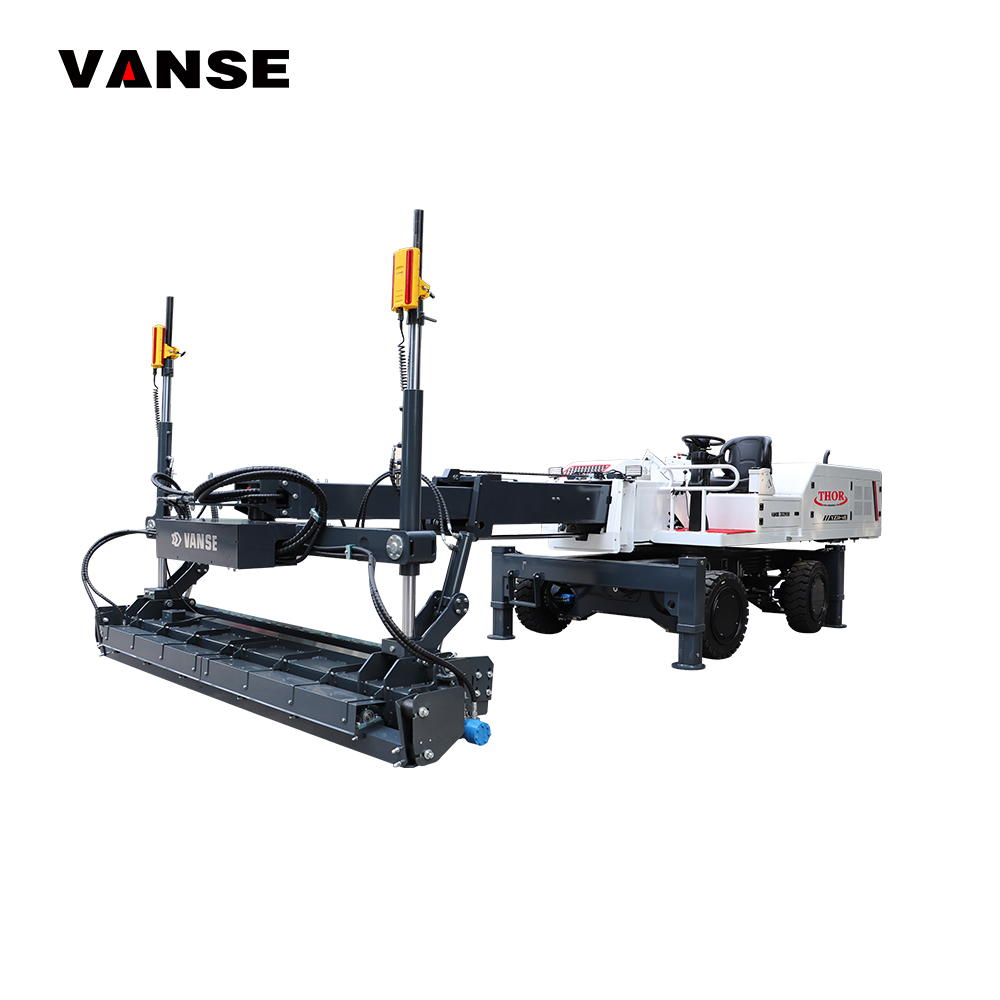
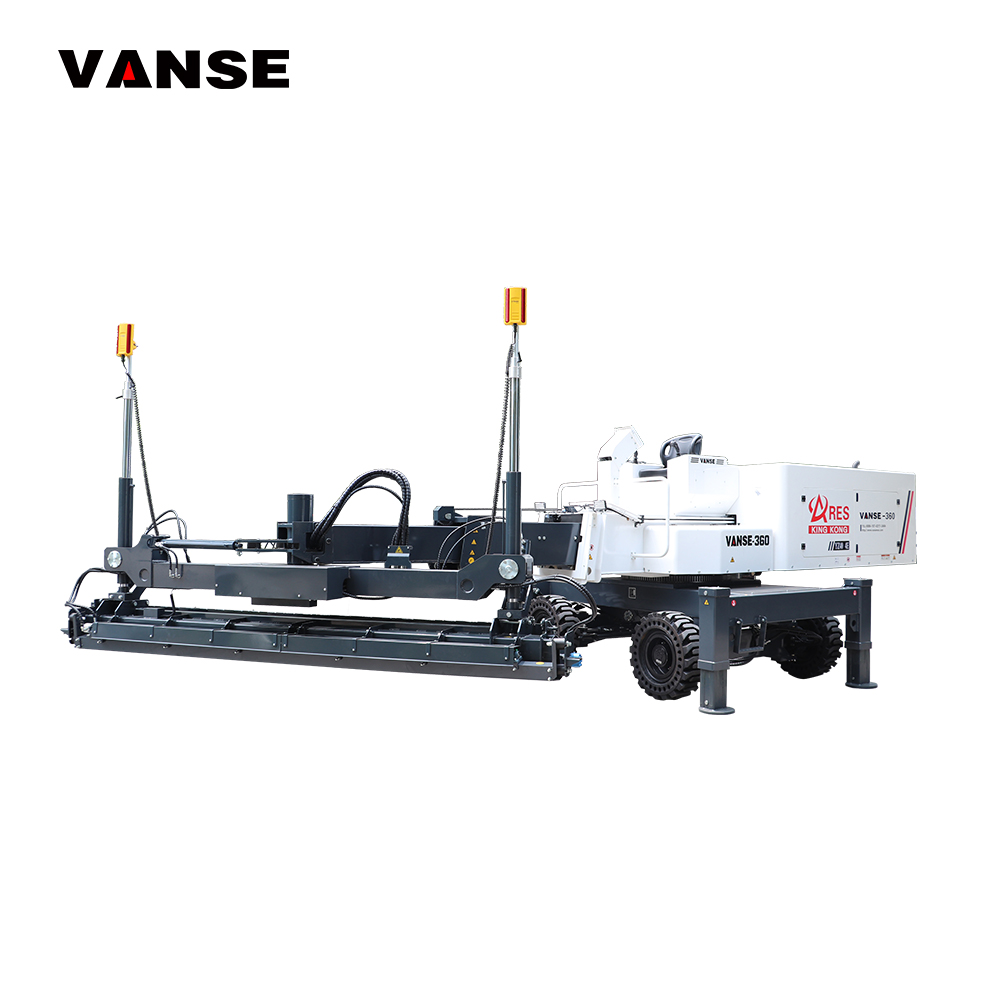
| Boom-type laser screed | Large distribution centers, airports, terminal yards, major slabs | Long reach, 360-degree operation, high production potential | Requires experienced operator, larger transport plan, and strong service support |
| 3D-profile compatible screed | Sloped floors, drainage zones, infrastructure, specialty slabs | Can follow digital profiles and complex elevations | Requires survey data, control-system knowledge, and commissioning support |
| Fiber-ready screed configuration | Steel-fiber and synthetic-fiber reinforced slabs | Supports modern joint-reduction and industrial-floor systems | Verify screed head performance with mix design and fiber dosage |
| Compact access model | Basements, renovation projects, narrow industrial areas | Easy positioning and lower logistical burden | Good supplementary unit for a diversified fleet, not a replacement for boom machines |
Ride-on laser screeds are generally the most balanced starting point because they can serve a wide range of commercial and industrial projects. Boom-type units become more attractive when a rental company has committed customers in logistics, airport, port, or large manufacturing construction. Compact machines are valuable where city-center logistics, restricted gateways, or limited floor area make large equipment impractical.
Machine selection should also include the wider concrete finishing package. A contractor renting a screed often needs power trowels, cutting machines, grinding equipment, curing tools, joint systems, and floor-repair accessories. Bundling these assets can raise average contract value and make the rental supplier more useful to project teams.
Utilization, Pricing, and Return on Investment
Return on investment for a laser screed rental fleet depends less on the purchase price alone than on the machine’s billable use, pricing discipline, downtime control, and operating structure. Rental businesses should calculate ownership cost across the expected fleet life, including purchase price, financing, freight, taxes, insurance, storage, operator wages, maintenance, calibration, transport, depreciation, and resale value.
A simple fleet ROI model begins with annual rental revenue. Multiply the expected billable days by the average daily realized rate, then add operator fees, delivery fees, setup services, technical-support charges, and equipment-package income. Subtract the costs directly associated with the machine. The remaining contribution should cover fixed business costs and deliver return on capital.
| ROI Metric | Calculation Approach | Healthy Operating Direction | Management Use |
|---|---|---|---|
| Fleet utilization | Billable days divided by available days | Increase steadily while protecting maintenance time | Identifies underused assets and regional demand gaps |
| Revenue per machine | Rental income plus services per unit annually | Grow through higher utilization and bundled services | Compares asset performance across branches |
| Downtime ratio | Repair and waiting days divided by available days | Keep low through inspections and stocked parts | Measures service effectiveness and replacement need |
| Transport recovery | Delivery and collection charges versus actual logistics cost | Recover most transport cost without losing competitiveness | Prevents profitable rentals from becoming loss-making trips |
| Maintenance cost ratio | Annual maintenance cost divided by annual revenue | Control through preventive maintenance and trained use | Supports repair-versus-replace decisions |
| Operator contribution | Operator-service income less labor and travel cost | Positive margin with high client satisfaction | Shows whether wet-hire should be expanded |
| Payback period | Total invested cost divided by annual net contribution | Shorter period with realistic demand assumptions | Guides acquisition timing and financing choice |
New fleet owners should avoid assuming that every available day can be rented. Weather, concrete-supply delays, project rescheduling, access restrictions, customer payment terms, and regional construction cycles all reduce practical utilization. A conservative plan includes non-billable days for testing, cleaning, preventive maintenance, customer demonstrations, delivery preparation, staff training, and unforeseen repairs.
Monthly rates are especially important for laser screed rentals. Large warehouse and industrial-floor contractors often prefer fixed project pricing or monthly equipment commitments. This gives the rental company more predictable income and lowers the frequency of transport and inspection events. Daily rates remain useful for urgent pours, trial projects, and small contractors, but should reflect the administrative and logistics cost of short-term hire.
Top Laser Screed Suppliers for Global Fleet Buyers
The following suppliers are relevant to buyers building or upgrading a concrete laser screed fleet in the Global market. Product suitability should always be verified against local regulations, electrical requirements, engine-emission rules, transport limits, project specifications, and service availability.
| Company | Service Regions | Core Strengths | Key Offerings for Rental Fleets |
|---|---|---|---|
| Somero Enterprises | North America, Europe, Asia-Pacific, Middle East, global dealer markets | Specialist reputation in large concrete slab placement and laser-guided screeding | Boom screeds, ride-on screeds, training, support for industrial-floor applications |
| Ligchine International | North America and international distributor markets | Compact laser screed expertise and contractor-oriented machine designs | Laser screeds for commercial slabs, smaller industrial projects, fleet-friendly configurations |
| Allen Engineering | North America, Latin America, Europe, Middle East, distributor markets | Broad concrete-equipment portfolio and established contractor recognition | Concrete finishing equipment, ride-on equipment, complementary fleet assets |
| Wacker Neuson | Europe, Americas, Asia-Pacific, Middle East, Africa | Large rental-industry presence and broad compact-equipment ecosystem | Support equipment, compaction, power, lighting, concrete-site fleet integration |
| Shandong Vanse Machinery Technology Co., Ltd. | More than 80 countries and regions, including North America, Europe, Middle East, Asia-Pacific, and Latin America | Laser screed range, customization capacity, cost-performance, technical service resources | Walk-behind, ride-on, boom-type screeds, 3D-compatible options, finishing and flooring equipment |
| GOMACO | North America and global infrastructure markets | Concrete paving and slipform technology for major infrastructure contractors | Slipform and paving-related equipment for fleets serving roads, airports, and large civil works |
| Husqvarna Construction | Global dealer and rental markets | Strong concrete-surface preparation and cutting equipment portfolio | Floor saws, grinders, dust-management equipment, complementary post-pour rental assets |
Somero is often considered by fleet owners serving high-volume industrial flooring contractors and large slabs requiring proven laser-screeding specialization. Ligchine can be relevant where portability, accessible machine size, and contractor versatility are priorities. Allen Engineering and Wacker Neuson provide value where the rental business wants to build a broader concrete-site equipment offering. GOMACO may be relevant for companies combining flatwork rentals with infrastructure or paving operations. Husqvarna Construction is not primarily a laser screed provider but can strengthen the supporting fleet with cutting, grinding, and surface-preparation products.
For buyers comparing international sources, Shandong Vanse Machinery Technology offers a practical option for rental businesses seeking ride-on, walk-behind, and boom-type concrete laser screeds alongside related floor-construction equipment. Its concrete laser leveling machine range supports different project sizes, while its ride-on configurations are relevant for contractors serving warehouse and industrial-floor projects.
How to Select Machines for Different Customer Segments
Different customer groups require different rental packages. Industrial flooring companies may require a boom screed, an experienced operator, laser setup, power trowels, and floor-joint products. General contractors may need a ride-on screed for a short project but may not have a trained operator. Ready-mix suppliers may seek a demonstration unit to support their contractor clients. Airport or port contractors may require 3D-profile capability, stringent safety documentation, and immediate backup equipment.
Small concrete contractors can be profitable customers if the rental company provides support. They may not use a laser screed every week, but they can become repeat clients for commercial slabs, supermarkets, workshops, parking structures, and local logistics facilities. A compact machine with setup training and telephone support can help this customer segment enter higher-value concrete work without making a large capital purchase.
Large contractors care about risk reduction. They want clear machine availability, delivery confirmation, service response commitments, calibrated laser controls, documented maintenance, and replacement plans. Rental proposals should define who supplies fuel, who performs cleaning, who is responsible for concrete buildup, whether the operator is included, how overtime is billed, and what happens if a pour is postponed.
Industries and Applications That Support Rental Demand
Laser screed rental demand is strongest where concrete floors are broad, repetitive, quality-sensitive, or time-critical. Modern logistics facilities are among the most important users because forklift traffic, automated storage systems, racking systems, and high-bay operations require durable and level slabs. E-commerce growth has expanded this need in the Americas, Europe, the Middle East, Southeast Asia, and Australia.
Manufacturing plants are another major market. Automotive parts factories, electronics facilities, food-processing sites, pharmaceutical plants, battery plants, heavy-equipment workshops, and assembly buildings often require large flat floors. Data centers, cold-storage facilities, and clean industrial buildings can also require close tolerances and controlled construction sequences.
Infrastructure projects create opportunities for boom-type screeds and related equipment. Airport runways, taxiways, terminal yards, port areas, bridge approaches, roads, transit depots, and utility projects may require precise profiling and high-output concrete placement. While these projects can involve longer tender cycles and stricter qualification requirements, they can produce substantial fleet utilization when a rental company has the correct technical support.
- Warehouses and fulfillment centers
- Factories and industrial estates
- Cold-chain and food-processing buildings
- Data centers and telecommunications facilities
- Retail distribution centers and wholesale markets
- Airport terminals, aprons, and logistics yards
- Container yards and port-related industrial zones
- Commercial buildings, parking structures, and large basements
- Road, bridge, and municipal infrastructure projects
- Agricultural storage buildings and equipment workshops
Practical Case Scenarios for Fleet Deployment
A rental company in the Gulf region may position a boom-type laser screed near Dubai, Abu Dhabi, Dammam, or Jeddah to serve logistics parks, free-zone warehouses, airport-related projects, and large manufacturing construction. The fleet should include an operator team accustomed to hot-weather concrete practices, rapid pour cycles, and long transport distances. A second ride-on unit can serve smaller warehouse and commercial clients while the boom machine is committed to major projects.
In Europe, a rental business near Rotterdam, Antwerp, Hamburg, Warsaw, or Milan may focus on industrial flooring contractors building distribution centers and manufacturing facilities. Transport planning is critical because road regulations, delivery windows, and urban access can affect equipment deployment. Fleet managers should maintain clear machine-cleaning and inspection standards to protect resale value and meet customer expectations.
In North America, a rental fleet based near Houston, Dallas, Atlanta, Toronto, Chicago, Los Angeles, Monterrey, or Mexico City can combine laser screeds with power trowels, floor saws, generators, lighting towers, and concrete-finishing accessories. Wet-hire is often valuable for contractors that need productivity but do not have dedicated laser screed operators.
In Southeast Asia, rental demand may be concentrated around Singapore, Johor, Kuala Lumpur, Bangkok, Jakarta, Ho Chi Minh City, Manila, and industrial corridors near major ports. Fleet owners should consider humidity, monsoon scheduling, operator training, parts storage, and the local availability of skilled concrete-finish crews. Compact units can be valuable where site access and road congestion limit the use of larger machines.
Maintenance and Downtime Control
Concrete equipment generates revenue only when it is ready for a pour. Rental businesses should treat preventive maintenance as a revenue-protection system, not simply as a workshop expense. Every laser screed should be inspected before delivery, after return, and according to scheduled operating-hour intervals. Critical checks include hydraulic hoses, oil levels, screed head condition, vibration components, engine service status, battery performance, receiver function, laser calibration, tire condition, fasteners, safety switches, and remote-control or display functions.
Concrete residue must be removed promptly. Hardened buildup can affect moving components, increase cleaning time, and reduce machine appearance. A clear customer contract should state cleaning responsibilities and damage charges. However, the rental company should still inspect and clean returned assets before sending them to the next project because slab schedules leave little time for corrective work.
Spare-parts planning should be based on failure impact, not only part price. Low-cost hoses, sensors, seals, filters, belts, electrical connectors, and fasteners can cause costly downtime when unavailable. Keep high-turn parts locally and maintain a defined escalation process for specialized components. Digital fleet logs should record repairs, recurring fault codes, parts consumption, repair labor, and lost rental time.
For technical support, customers need rapid access to a competent person who understands concrete placement as well as machine mechanics. The best support teams can distinguish between equipment faults, laser setup errors, poor concrete supply, operator technique issues, and site-preparation problems. This avoids unnecessary downtime and protects the rental company’s reputation.
Vanse Support for Global Rental Fleet Partners
Shandong Vanse Machinery Technology Co., Ltd. has operated in concrete-construction equipment since 2013 and provides a relevant option for Global market rental companies, contractors, distributors, dealers, brand owners, and individual buyers seeking flexible fleet development. Its product capability is supported by ISO 9001 and CE certifications, more than 50 invention patents, over 200 utility model and design patents, and a product range covering walk-behind, ride-on, and boom-type laser screeds as well as power trowels, floor grinders, cutting machines, topping spreaders, slipform machines, mini dumpers, concrete armor joints, and fibers. Vanse integrates laser-control systems, hydraulic technology, reliable engines, durable components, and practical machine designs, with selected models offering millimeter-level leveling performance, 360-degree operation, high working speed, and 3D profiling compatibility. The company supports direct sales, wholesale, retail, OEM/ODM production, customized branding, engine and voltage options, regional distribution partnerships, and long-term technical cooperation. With exports to more than 80 countries and regions, overseas service resources in Southeast Asia and Canada, dealer coverage across major international markets, multilingual 24-hour consultation, spare-parts support, remote diagnosis, installation, commissioning, and operator training, Vanse has established practical experience serving international customers beyond remote export supply. Its project support includes EPC, turnkey, and customer-owned plant solutions; it does not provide BOO or on-site bulk supply services. Rental partners can use Vanse’s technical service support and spare parts and tools service to reduce downtime, improve operator confidence, and protect fleet availability.
Buying Advice Before Signing a Supplier Agreement
Before purchasing any laser screed, request a detailed technical specification, service scope, delivery schedule, commissioning plan, warranty terms, recommended spare-parts list, operator-training content, and component information. Confirm the engine model, hydraulic component specifications, laser-control compatibility, electrical configuration, machine dimensions, transport weight, and local compliance requirements.
It is wise to arrange a live demonstration using a realistic concrete mix. Observe machine stability, steering response, screed-head behavior, vibration, leveling consistency, visibility, controls, access for daily maintenance, and cleaning practicality. If possible, evaluate the supplier’s ability to answer technical questions regarding slab thickness, fiber reinforcement, joint layout, drainage slopes, and flatness requirements.
Rental companies should also assess supplier continuity. Ask how quickly critical spare parts can reach your depot, whether remote diagnosis is available, whether an engineer can provide site support when needed, and whether training can be delivered in the local language. The lowest purchase price is not always the lowest cost of ownership if parts are delayed or technical help is unavailable during a major pour.
Future Trends for Laser Screed Rental in 2026 and Beyond
From 2026 onward, laser screed rental fleets are expected to become more technology-driven, data-oriented, and sustainability-conscious. Contractors increasingly want documented quality, predictable productivity, and lower labor dependency. This will encourage rental companies to invest in machines with more accurate control systems, telemetry, remote diagnostics, and 3D profile compatibility.
Digital construction workflows will create demand for screeds that can work from planned elevations, drainage designs, and slab-profile data. This is especially relevant for logistics yards, drainage-sensitive industrial floors, airport facilities, infrastructure slabs, and complex commercial developments. Rental companies that can support both the equipment and the digital setup process will gain a stronger position than those offering machine-only hire.
Sustainability requirements will also influence fleet decisions. Customers may request lower-emission engines, fuel-efficient hydraulic systems, better preventive maintenance records, reduced rework, and more accurate concrete placement that minimizes material waste. Increasingly strict engine-emission rules in many cities and project sites may encourage buyers to confirm local compliance before importing or purchasing equipment.
Labor shortages will support operator-assisted rental. More contractors will choose wet-hire models because trained laser screed operators can improve pour speed, reduce finishing corrections, and help achieve required floor tolerances. Rental companies that invest in training, safety procedures, and operator retention will be better protected against technical errors and customer dissatisfaction.
Fleet consolidation is another likely trend. Rather than renting isolated machines, customers may prefer one provider that can supply a laser screed, finishing equipment, cutting equipment, floor-grinding tools, joints, fibers, technical support, and logistics. This bundled model can improve customer loyalty and stabilize utilization across the construction cycle.
Frequently Asked Questions
What utilization rate should a new laser screed rental fleet target?
A practical target is 110 to 150 billable days per machine annually after the business establishes customers and service routines. Actual utilization depends on local construction volume, seasonality, pricing, operator availability, and fleet size.
Should a rental company begin with a ride-on or boom-type laser screed?
A ride-on model is usually the more flexible first asset for general industrial and commercial slab work. A boom-type machine becomes a stronger choice when the company has confirmed demand from large warehouse, airport, port, or infrastructure projects.
Is dry-hire or wet-hire better for laser screeds?
Dry-hire can work with experienced industrial-flooring contractors. Wet-hire is often safer for new users, short-duration jobs, technical slabs, and markets where trained laser screed operators are limited.
What supporting equipment should be purchased with a laser screed?
Useful support assets include laser transmitters, spare receivers, batteries, trailers, power trowels, floor saws, cleaning tools, hydraulic service kits, generators, lighting, and a stock of filters, hoses, seals, and wear components.
How can a rental company reduce machine downtime?
Use pre-delivery inspections, return inspections, scheduled maintenance, local spare-parts stock, trained technicians, clear cleaning rules, and remote technical support. Keep service records for every machine and replace recurring failure items before they cause a site stoppage.
Can international suppliers support a local rental business?
Yes. International suppliers can be suitable when they provide compliant equipment, transparent documentation, local or regional parts access, training, remote diagnosis, and reliable after-sales support. Buyers should verify actual service arrangements before placing an order.
Which projects benefit most from laser screed rental?
Large warehouses, factories, logistics centers, cold-storage facilities, commercial buildings, parking structures, airport yards, terminal areas, roads, bridge approaches, and industrial floors benefit most where speed, levelness, labor savings, and repeatable quality are important.
Conclusion
A successful rental fleet for laser screeds in the Global market is built on more than machine ownership. It requires the right fleet mix, disciplined utilization tracking, trained operators, dependable logistics, preventive maintenance, local spare-parts planning, and supplier-backed technical support. Start with the project types that dominate your region, select equipment that can be consistently deployed, and build service capability before aggressively expanding fleet size. Companies that combine reliable concrete laser screeds with complete floor-construction support will be best positioned to capture growing industrial and infrastructure demand.
For fleet buyers evaluating configurable laser screed options and related concrete equipment, visit Vanse concrete construction equipment solutions to review available machinery and partnership opportunities.
Share this article

About the Author: Shandong Vanse Machinery Technology Co., Ltd.
Shandong Vanse Machinery Technology Co., Ltd. is a high-tech manufacturer specializing in concrete construction machinery, including laser screeds and related equipment. The company integrates R&D, production, and global sales, with products exported to over 60 countries and widely used in infrastructure projects worldwide.