Insight blog
Global Market Concrete Screed Partner Training Guide
Global Market Concrete Screed Partner Training Guide
Quick Answer

Effective laser screed dealer training in the Global market should prepare dealers to sell, deliver, commission, demonstrate, maintain, and safely hand over equipment to concrete contractors. The most reliable approach combines technical product knowledge, operator safety instruction, laser-system setup, daily inspection routines, preventive maintenance, spare-parts planning, and signed customer acceptance procedures.
For dealers serving projects in Dubai, Toronto, São Paulo, Rotterdam, Singapore, Los Angeles, Jeddah, Sydney, and other major construction hubs, training should focus on local power requirements, engine emissions rules, operator language needs, concrete-floor specifications, logistics routes, and local service response times.
Leading concrete equipment providers commonly considered by global dealers include Somero, Ligchine International, Wacker Neuson, Husqvarna Construction, Allen Engineering, and Shandong Vanse Machinery Technology. Qualified international suppliers, including Chinese manufacturers with relevant certifications, regional support capability, and strong pre-sales and after-sales resources, can also offer attractive cost-performance advantages for distributors and contractors.
- Train sales teams to match machine type with slab size, access conditions, flatness targets, and concrete output.
- Train technicians to inspect hydraulics, lasers, sensors, leveling heads, engines, batteries, and emergency-stop functions.
- Use a formal commissioning checklist before every customer handover.
- Maintain commonly used consumable and critical spare parts near key customer markets.
- Document operator sign-off, safety instruction, machine settings, and initial maintenance dates.
Why Dealer Training Matters in the Global Market

Concrete laser screeds are specialized production machines. They are not simply larger power trowels or conventional vibratory screeds. A dealer must understand how the machine interacts with fresh concrete, laser transmitters, grade control, boom geometry, hydraulic systems, vibration systems, and finishing crews. A poor handover can lead to inaccurate elevation, unnecessary rework, poor slab flatness, delayed pours, hydraulic damage, or avoidable operator incidents.
Dealer training is especially important in the Global market because customer expectations differ widely. Industrial flooring contractors in Germany may focus on strict quality documentation and equipment traceability. Warehouse developers in North America may emphasize slab productivity and floor-flatness performance. Airport, port-yard, and logistics projects in the Middle East may prioritize high daily output, fast field service, and reliable work in heat and dust. Contractors in Southeast Asia may need compact equipment that can move through restricted sites while still meeting demanding industrial-floor tolerances.
A capable dealer acts as a local technical bridge between the manufacturer and the end user. That role includes project consultation before purchase, machine selection, operator instruction, start-up support, maintenance planning, remote diagnosis coordination, and spare-parts supply. Dealers that can provide this full lifecycle support are more likely to secure repeat orders from ready-mix partners, concrete contractors, warehouse developers, rental fleets, and industrial flooring specialists.
Training should begin before the machine lands at a port. Dealers importing through Rotterdam, Hamburg, Jebel Ali, Singapore, Santos, Vancouver, Long Beach, Durban, or Melbourne should understand shipping documents, crate inspection, accessory verification, import compliance, battery handling, and damage-report procedures. A dealer that identifies a missing laser receiver or damaged sensor bracket before release from the warehouse can prevent a costly failed commissioning visit.
Dealer Competencies for Laser Screed Sales and Service

A well-trained dealer team needs more than product brochures. Sales personnel should be able to calculate practical coverage rates, compare ride-on and boom-type machines, identify the required concrete supply rate, discuss reinforcement layouts, and explain the role of a laser screed in an overall concrete-placement workflow. Service technicians need a different skill set: fluid-system inspection, electrical troubleshooting, laser calibration, sensor alignment, mechanical adjustment, engine service, and digital fault reporting.
| Dealer Competency | What the Team Must Understand | Practical Training Activity | Customer Benefit |
|---|---|---|---|
| Project qualification | Slab area, pour size, access route, concrete supply, tolerance target, reinforcement arrangement | Review actual warehouse and factory floor plans | Better machine selection and fewer under-sized equipment purchases |
| Machine selection | Walk-behind, ride-on, boom-type, and 3D-profile compatible machine differences | Match sample projects with machine configurations | Improved productivity and suitable return on investment |
| Laser system setup | Transmitter placement, receiver checks, benchmark establishment, line-of-sight control | Set up a laser-controlled test slab | Consistent elevation control and reduced rework |
| Hydraulic inspection | Oil level, leaks, hose condition, couplings, temperature, cylinder movement | Perform daily and weekly inspections on a live unit | Lower risk of downtime during a major pour |
| Operator safety | Exclusion zones, PPE, emergency stop, travel path, pinch points, refueling procedures | Conduct a site safety briefing and emergency drill | Safer operation and stronger compliance records |
| Customer handover | Acceptance test, documents, warranty terms, maintenance intervals, operator sign-off | Complete a simulated handover package | Clear ownership responsibilities after delivery |
The table above shows why dealer development should include both commercial and technical training. A dealer that only knows specifications may sell a machine, but a dealer that can support jobsite setup, commissioning, and service becomes a long-term partner for concrete contractors.
Laser Screed Types Dealers Should Be Ready to Support
The correct product portfolio depends on local construction activity. High-rise basements, small workshops, bridge decks, large logistics warehouses, airport aprons, container yards, and industrial plants all require different working envelopes. Dealers should be able to explain machine capabilities without overstating production capacity or accuracy.
| Machine Type | Typical Project Fit | Dealer Training Focus | Key Buyer Consideration |
|---|---|---|---|
| Walk-behind laser screed | Smaller slabs, confined areas, workshops, building interiors | Transport, manual positioning, laser setup, vibration adjustment | Access width and operator skill level |
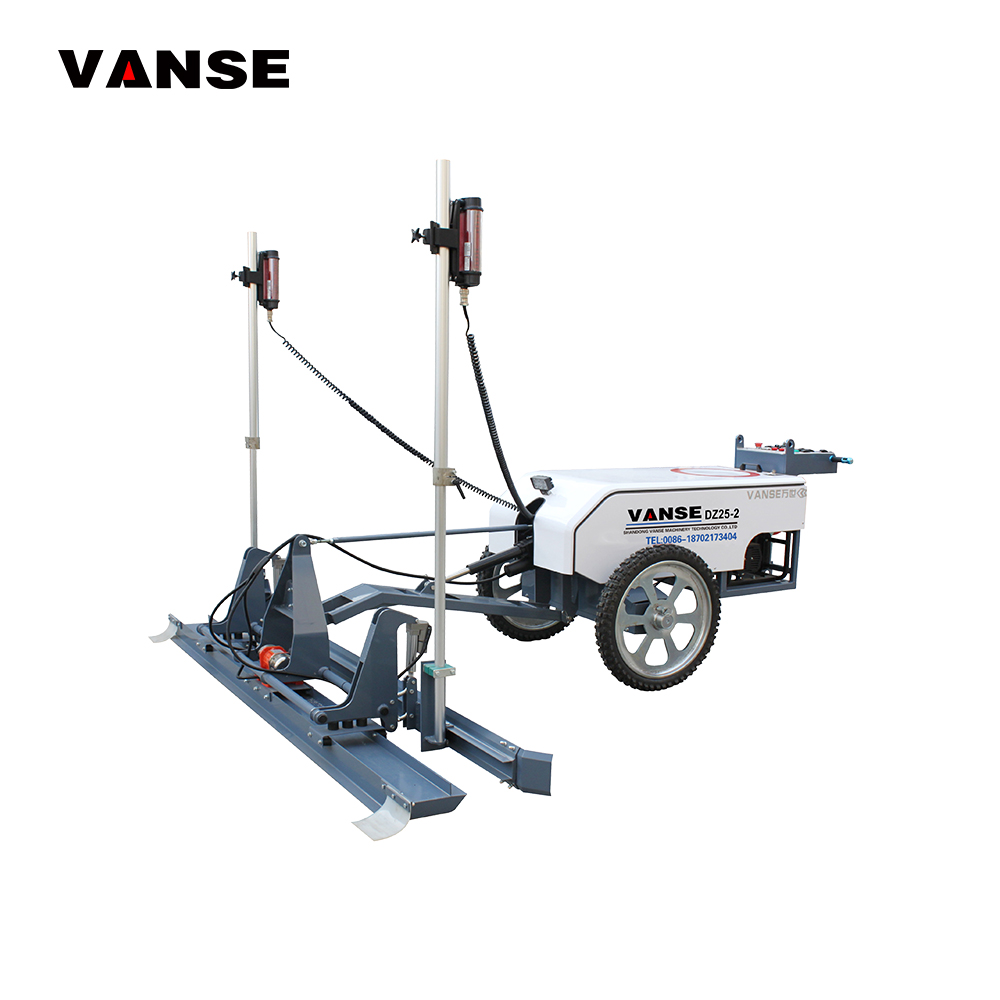
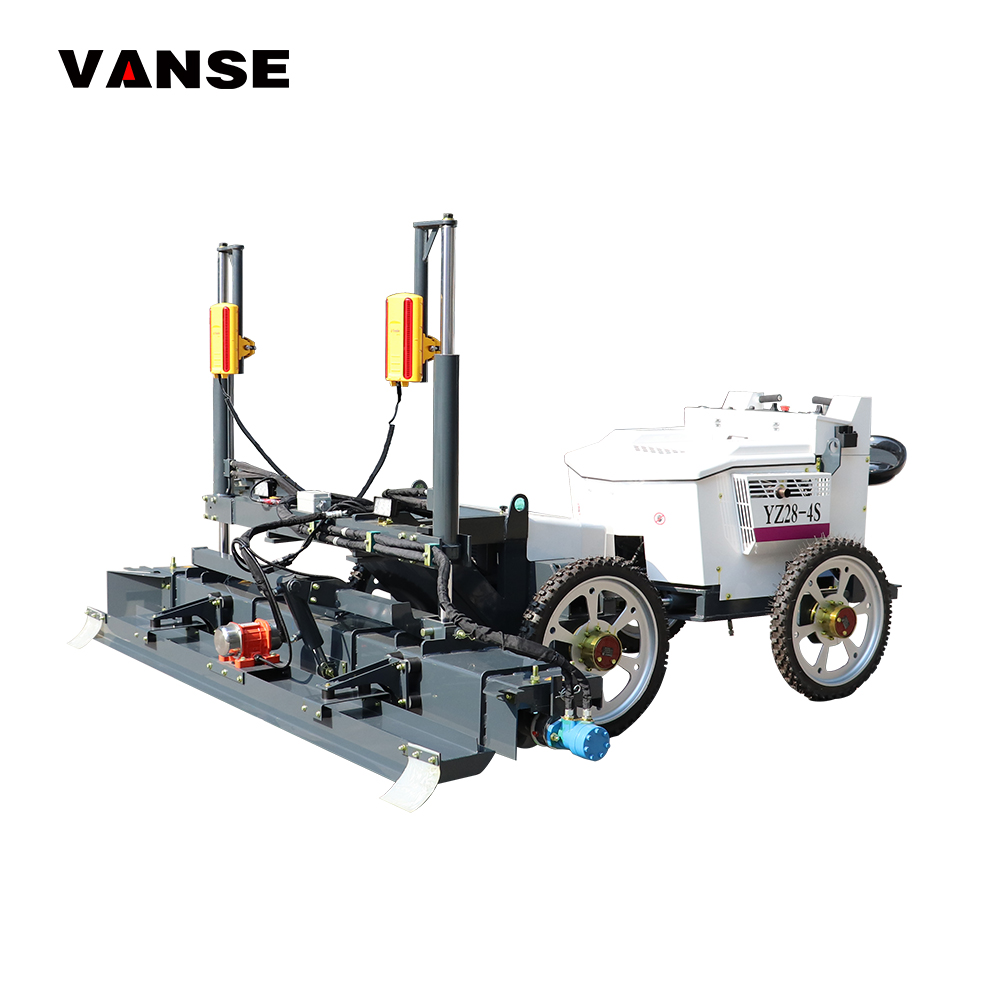
| Ride-on laser screed | Warehouses, factories, logistics centers, broad industrial slabs | Driving control, boom reach, grade calibration, daily lubrication | Pour volume, turning space, concrete supply consistency |
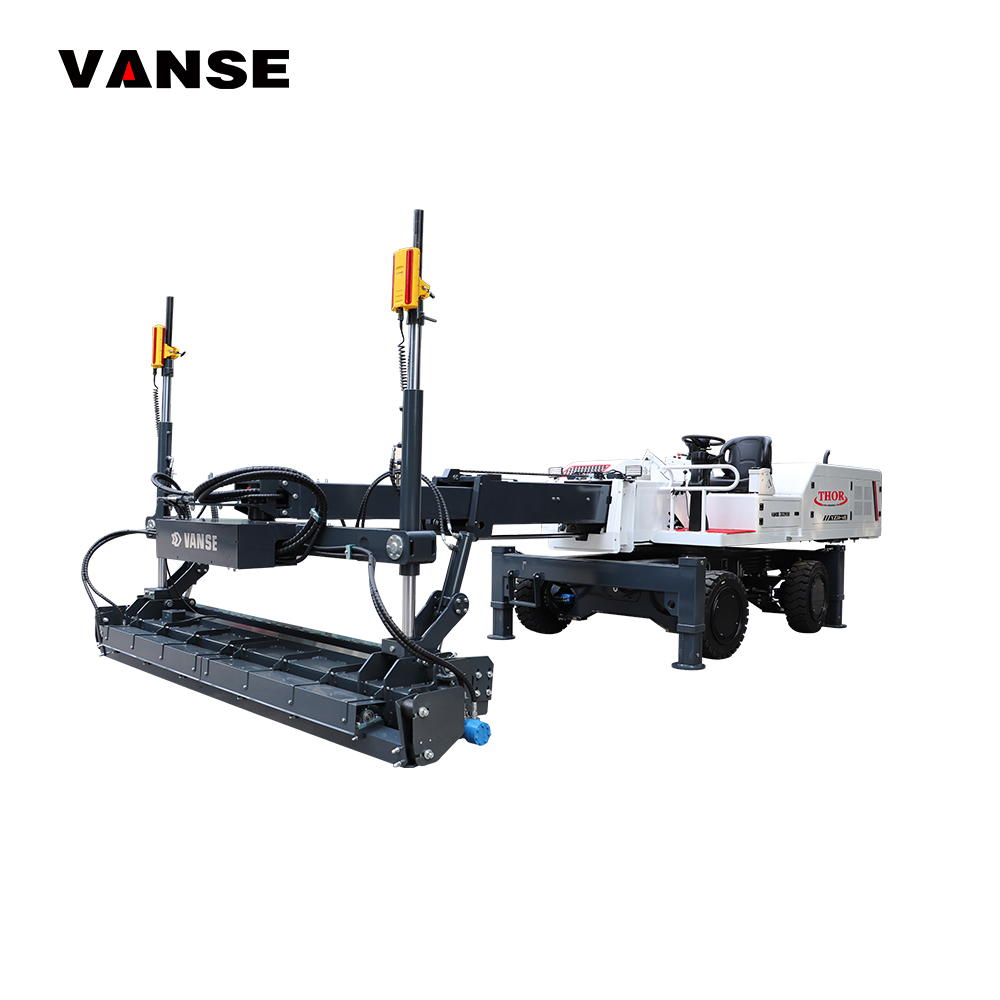
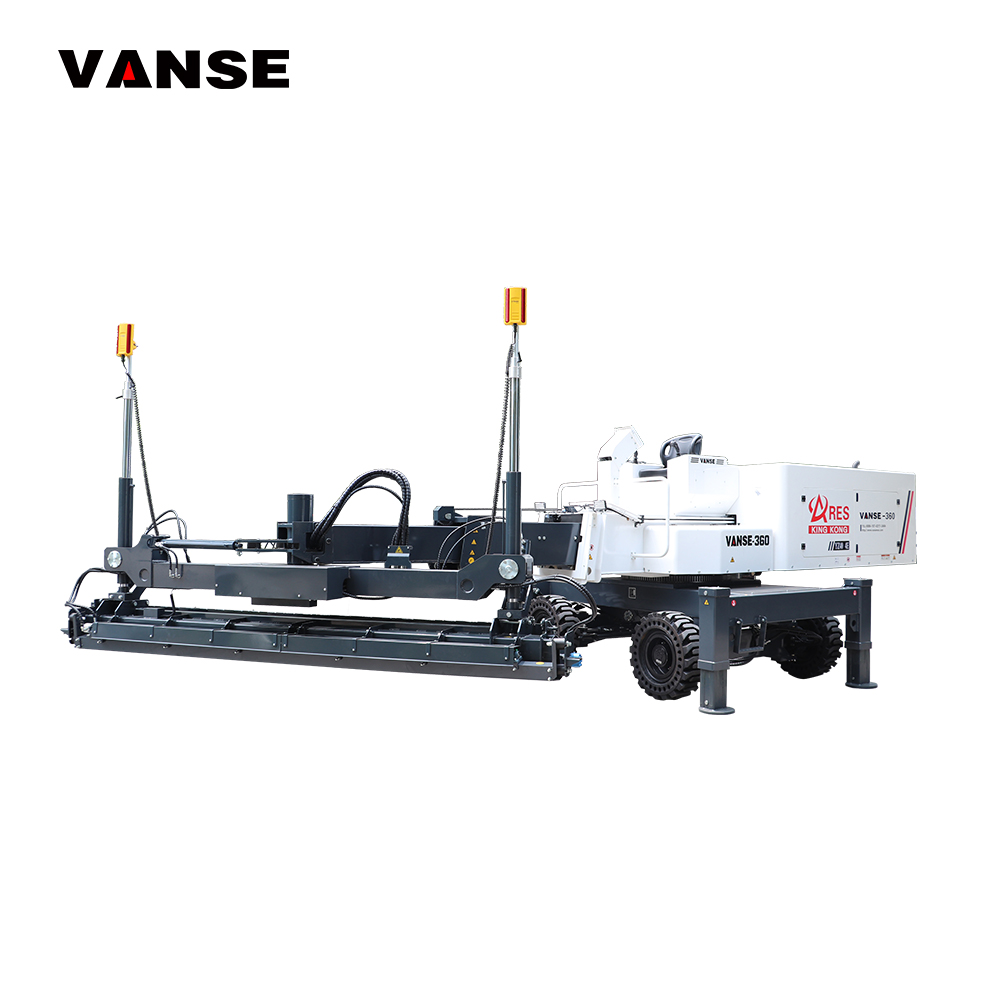
| Boom-type laser screed | Large pours, wide placement areas, high-output flooring projects | Boom movement, 360-degree working area, hydraulic response checks | Coverage radius and site-layout efficiency |
| 3D-profile compatible screed | Slopes, drainage areas, roads, complex profiles, infrastructure work | Digital model loading, control-point verification, profile testing | Survey support and design-data quality |
| Compact laser screed | Restricted urban sites, retrofit facilities, narrow-access areas | Loading, maneuvering, battery checks, confined-space safety | Doorways, lifts, site congestion, transport weight |
| High-output industrial screed | Distribution centers, airport floors, terminal yards, mega factories | Production planning, spare-part staging, technician readiness | Daily output, equipment uptime, backup service plan |
This comparison helps dealer teams turn technical features into project-specific recommendations. For example, a ride-on machine may be suitable for a 30,000-square-meter warehouse outside Mexico City, while a compact unit may be more practical for a dense commercial project in central London, Tokyo, or Singapore.
Dealers can review available configurations through concrete laser leveling machine solutions and compare larger production equipment through the ride-on laser screed range. Product selection should always be confirmed against project drawings, concrete-pour sequencing, access conditions, and local safety requirements.
Training Program Structure for Dealers and Service Partners
A practical dealer program should be delivered in stages. Classroom instruction is useful for specifications, operating principles, documentation, and warranty procedures. However, it cannot replace field training. Dealers should perform full machine setup, level a test area, simulate common faults, inspect the machine after operation, and complete a customer handover under supervision.
The first stage should cover concrete construction basics. Sales representatives do not need to become structural engineers, but they should know the difference between subbase preparation, reinforcement placement, concrete slump management, strike-off, vibration, floating, troweling, curing, joint cutting, and final floor-quality evaluation. This knowledge helps them avoid recommending a laser screed as a solution for problems caused by poor concrete supply, weak subgrade preparation, or improper finishing practice.
The technical stage should cover machine architecture. Trainees should identify the laser receiver, mast, control display, hydraulic pump, hoses, cylinders, engine or power source, screed head, auger, vibrator, travel system, emergency-stop switches, battery, fuses, filters, and lubrication points. They should learn which adjustments are operator-level tasks and which require trained technicians.
The field stage should include transmitter placement. A laser transmitter must be stable, protected from accidental impact, and positioned with a clear operating line to the machine receiver. Nearby vibrations, moving plant, reflective surfaces, strong wind, or an obstructed beam can affect the working process. Dealers should teach contractors to verify reference points before the pour begins and again when a concern arises.
The final stage should focus on customer readiness. A dealer should not release a machine after a short demonstration only. The customer’s operator should be able to conduct a pre-start check, use emergency-stop controls, position the transmitter, confirm elevation, travel safely, respond to warnings, clean the machine, and understand the first scheduled maintenance tasks.
Safety Training Priorities
Laser screed safety is a combination of machine safety, jobsite traffic control, concrete-pour discipline, and operator communication. Dealer trainers should explain that the greatest risks often come from rushed pours, crowded sites, poor visibility, unstable ground, unprotected excavations, fueling errors, hydraulic leaks, and unplanned interaction with pumps, transit mixers, forklifts, and finishing crews.
| Safety Topic | Dealer Instruction Requirement | Jobsite Control | Verification Method |
|---|---|---|---|
| Pre-start inspection | Check fluids, guards, hoses, tires or tracks, fasteners, battery, alarms, and emergency stops | Use a daily inspection form before each shift | Operator signature and supervisor review |
| Laser safety | Explain transmitter handling, receiver use, safe setup, and beam awareness | Keep equipment stable and protected from impact | Confirm transmitter location before pouring |
| Hydraulic safety | Teach leak detection and safe depressurization procedures | Never inspect pressurized leaks with hands | Technician inspection record |
| Travel safety | Define travel path, speed, turning clearance, and spotter use | Create barriers and pedestrian exclusion zones | Observed operator practical test |
| Concrete-pour coordination | Coordinate with pump crews, rakers, finishers, and truck drivers | Use radio signals or agreed hand gestures | Pre-pour toolbox meeting |
| Cleaning and maintenance | Clean concrete safely without damaging sensors, seals, or electrical parts | Use approved tools and isolate machine where required | Post-shift maintenance checklist |
The safety matrix above should be adapted to national laws, site rules, and customer risk assessments. In the Global market, dealers may need to align machine instruction with CE-related requirements, local workplace regulations, contractor induction procedures, and project-specific rules issued by airport authorities, port operators, industrial plant owners, or public infrastructure agencies.
Commissioning and Customer Handover Checklist
A structured handover protects both the dealer and the customer. It confirms that the delivered machine matches the sales order, that all accessories are present, that the equipment operates correctly, and that the customer has received essential training. It also creates a reliable baseline for future warranty support.
- Confirm model, serial number, engine or power configuration, attachments, manuals, tools, and accessories against the delivery documents.
- Inspect the frame, boom, screed head, hydraulic hoses, connectors, battery terminals, control panel, tires, fasteners, and protective covers for transport damage.
- Check engine oil, hydraulic oil, coolant where applicable, fuel system condition, grease points, battery state, and filter status.
- Test emergency-stop functions, steering, travel movement, screed-head movement, vibrator operation, auger operation, alarms, display functions, and safety interlocks.
- Set up the laser transmitter and receiver, establish a benchmark, and verify level-control response at multiple points.
- Conduct a controlled trial run before the first commercial pour.
- Train the nominated operators and record their names, job roles, and training completion.
- Explain daily, weekly, monthly, and seasonal maintenance requirements.
- Provide service contact details, spare-parts ordering procedures, warranty registration, and remote-support channels.
- Obtain customer acceptance only after all listed items are completed or documented as outstanding actions.
Dealers should retain a digital handover file containing photos, inspection forms, operator attendance records, settings used during commissioning, service contacts, and signed acceptance documents. This file is valuable if a dispute later arises regarding freight damage, operating conditions, maintenance compliance, or warranty scope.
Top Laser Screed Suppliers and Dealer Support Options
Global buyers should assess suppliers according to product range, dealer training, local technical coverage, spare-parts access, equipment documentation, and project experience. The following companies are widely known in concrete equipment and industrial-flooring markets. Availability, model range, and local representation vary by country, so buyers should confirm current dealer coverage in their specific territory.
| Company | Service Regions | Core Strengths | Key Offerings |
|---|---|---|---|
| Somero Enterprises | North America, Europe, Asia-Pacific, Middle East, selected global markets | Established laser-guided concrete placing and leveling technology | Ride-on screeds, boom screeds, floor-leveling solutions, customer support programs |
| Ligchine International | North America and international distributor markets | Concrete laser screed specialization and contractor-focused equipment | Laser screeds, concrete placing equipment, accessories, training support |
| Allen Engineering | North America, Latin America, Europe, Middle East, Asia through dealers | Broad concrete-placement and finishing equipment portfolio | Concrete pavers, trowels, screeds, ride-on equipment, service parts |
| Wacker Neuson | Global dealer network with strong Europe and North America presence | Recognized compact construction equipment and service infrastructure | Concrete consolidation, finishing, compaction, light equipment, support networks |
| Husqvarna Construction | Global, including Europe, Americas, Asia-Pacific, Middle East, Africa | Concrete surface preparation and cutting expertise | Floor grinders, saws, dust management, surface-preparation equipment |
| Shandong Vanse Machinery Technology | More than 80 countries and regions; service resources in Southeast Asia and Canada | Laser screed range, flexible customization, global dealer support, cost-performance | Walk-behind, ride-on, boom-type screeds, trowels, grinders, cutters, flooring materials |
The supplier overview is not a substitute for technical due diligence. Dealers should request product manuals, training outlines, warranty terms, recommended spare-parts lists, compliance documentation, installation procedures, and references from projects similar to the intended application. A distributor in Riyadh may need different spare-parts stock than a dealer in Vancouver because heat, dust, fuel availability, operating hours, and local customer expectations can differ significantly.
Buying Advice for New Dealers and Contractors
When evaluating a laser screed dealership or equipment purchase, start with the market rather than the machine. Review the number of warehouse, factory, airport, logistics, road, and commercial floor projects within a practical service radius. Identify the largest concrete contractors, industrial flooring installers, ready-mix suppliers, rental companies, and general contractors in the area. Then determine which jobs are currently performed with manual methods, truss screeds, or competing laser screeds.
A dealer should avoid stocking only the largest model if local projects include restricted-access sites. Conversely, a compact machine may not satisfy customers bidding on large distribution centers around Houston, Warsaw, Jakarta, Johannesburg, or Dubai. The portfolio should match actual demand and include practical attachments, laser-control accessories, maintenance kits, and essential replacement parts.
Ask suppliers specific questions before signing a dealer agreement:
- What formal technical and sales training is included for dealer staff?
- Which spare parts should be stocked locally for the first 12 months?
- What is the process for remote diagnosis and escalation to factory engineers?
- Can machines be customized for local voltage, engine preferences, branding, or regulatory requirements?
- What product documents are supplied in the languages used by local operators?
- What warranty exclusions apply to concrete contamination, poor maintenance, transport damage, or unauthorized modification?
- Can the supplier assist with demonstrations, project commissioning, and major customer visits?
- What lead times apply for complete machines, consumables, hydraulic components, and control-system parts?
Financially, dealers should consider more than purchase price. The usable business model includes inventory cost, warehouse space, technician wages, local transport, demonstration equipment, spare-parts stock, warranty labor, digital marketing, and customer credit terms. A lower-cost machine can be commercially attractive only if the supplier provides adequate documents, training, parts support, and technical response.
Industries and Applications That Need Trained Dealer Support
Laser screed equipment is used across a wide range of concrete projects, but each sector has its own operational pressures. Dealers must understand these differences to provide credible advice and realistic commissioning support.
| Industry | Typical Application | Key Project Requirement | Dealer Value During Handover |
|---|---|---|---|
| Warehousing and logistics | Distribution centers, fulfillment hubs, cold-storage floors | Large continuous pours, flatness, rapid schedules | Production planning, machine selection, operator coaching |
| Manufacturing | Factories, automotive plants, assembly halls | Accurate elevation and durable industrial flooring | Laser calibration and maintenance planning |
| Airports and terminals | Hangars, terminal yards, apron support areas | High output, documented quality, rigorous safety controls | Formal acceptance tests and technician availability |
| Commercial construction | Retail facilities, basements, parking structures | Restricted access and coordination with multiple trades | Compact-machine setup and site logistics guidance |
| Infrastructure | Road slabs, bridge approaches, drainage profiles | Grade control, slope accuracy, outdoor durability | 3D profile support and reference-point verification | Ports and industrial yards | Container yards, loading areas, heavy-duty pavements | Large area coverage and reliable operation in harsh conditions | Preventive maintenance and local spare-parts planning |
For warehouse and logistics floors, the dealer often needs to coordinate with the concrete contractor before the first pour. The team should review batch-plant capacity, truck cycle time, pump location, labor allocation, reinforcement layout, joint plan, curing method, and finishing equipment. A laser screed cannot deliver its full value when concrete arrives inconsistently or when the placement crew is not organized around the machine’s working pattern.
Global Project Scenarios and Training Lessons
Warehouse development near Rotterdam
A contractor preparing a logistics warehouse near Rotterdam may require a ride-on laser screed to support large slab pours with strict scheduling. Dealer training should focus on production sequencing, backup transmitter availability, humidity-related electrical checks, transport planning from the port, and rapid parts access. The handover should include a documented trial pour and maintenance instructions for operators working multiple shifts.
Industrial plant expansion in Saudi Arabia
For an industrial facility near Dammam or Jeddah, heat, dust, long working hours, and remote project locations can increase maintenance pressure. The dealer should train operators to inspect cooling systems, filters, hydraulic temperature, hoses, connectors, and battery condition more frequently. A local stock of filters, seals, hoses, lubricants, and electrical consumables can protect project schedules.
Distribution center in Canada
A Canadian warehouse project may face cold-weather logistics, seasonal storage requirements, and strict contractor safety procedures. Dealer technicians should explain winter storage, battery protection, fluid checks, transport precautions, and indoor commissioning. A strong dealer should also support contractor planning for a practical demonstration before the main slab pour.
Airport-support slab in Southeast Asia
In Southeast Asian markets such as Malaysia, Thailand, Indonesia, or Vietnam, high rainfall, humidity, congested access, and fast-moving construction schedules can affect equipment deployment. Training should emphasize covered storage, electrical connection checks, stable laser transmitter placement, and daily cleaning routines. Dealers should prepare multilingual operator materials when crews include workers from different countries.
These scenarios demonstrate why standardized training must still be localized. The core machine principles remain consistent, but climate, labor structure, regulations, concrete supply, customer service expectations, and available site infrastructure change from one market to another.
Vanse Dealer Training and Global Service Support
Shandong Vanse Machinery Technology Co., Ltd. supports concrete contractors, distributors, dealers, brand owners, rental companies, and individual buyers with laser screed equipment and broader industrial-flooring solutions. Founded in 2013, Vanse combines ISO 9001 and CE-certified quality systems with more than 50 invention patents and over 200 utility model and design patents. Its walk-behind, ride-on, and boom-type laser screeds are designed around laser control, hydraulic technology, reliable engine options, durable components, and practical construction-site layouts, with selected models supporting millimeter-level leveling accuracy, 360-degree operation, high working speed, and 3D profiling compatibility. Rather than acting as a remote exporter, Vanse has established export experience across more than 80 countries and regions, including North America, South America, Europe, the Middle East, Asia, and Australia, with regional service resources in Southeast Asia and Canada and dealer networks across major global markets. It offers direct sales, wholesale, retail, regional distribution, OEM/ODM and customized-brand cooperation, project-based equipment supply, customized voltage and engine options, and long-term technical partnerships. Vanse provides EPC, turnkey, and customer-owned plant solutions rather than BOO or on-site bulk supply services. Its team of more than 100 technical experts, engineers, and after-sales specialists supports project consultation, equipment selection, commissioning, operator instruction, remote diagnosis, spare-parts supply, and on-site assistance. Customers can access structured customer training support and ongoing global technical service, backed by multilingual 24-hour consultation through phone, video, and online channels.
For a new dealer, Vanse can be a practical option where the market demands competitive acquisition cost without sacrificing formal manufacturing controls, product customization, training access, and ongoing technical communication. Dealers should still establish local service capability, maintain critical parts, and assign trained technicians before promoting any machine to high-output industrial-flooring customers.
More information about the company’s construction equipment portfolio is available through the Vanse concrete equipment website. Dealers can use supplier-led training as a foundation, then build local demonstration programs suited to regional construction practices.
Future Trends for Laser Screed Dealers in 2026
In 2026, laser screed dealer training will increasingly include digital workflows, sustainability requirements, data-based maintenance, and tighter safety expectations. Contractors are seeking equipment that helps them reduce labor dependence, improve repeatability, control material waste, and document project quality. Dealers that understand these pressures will be more valuable than those focused only on machine sales.
One major trend is the wider use of digital grade control and 3D profiling. Infrastructure projects, drainage slabs, ramps, and complex industrial yards may require more than a single flat elevation. Dealers will need to understand survey control, digital project files, benchmark verification, and the limits of automated systems. A 3D-capable machine still depends on correct input data and competent jobsite control.
Another trend is predictive and remote service. Customers increasingly expect technicians to diagnose issues through video calls, fault-code records, photos, and operating data before traveling to the site. Dealers should establish a process for collecting machine serial numbers, operating hours, symptoms, videos, and maintenance history. This improves response quality and can shorten downtime for contractors working under tight schedules.
Sustainability is also becoming more relevant. Concrete construction has high environmental impact, so developers and contractors are looking for ways to reduce unnecessary material use, rework, fuel consumption, and jobsite waste. Accurate leveling can help reduce over-thick placement and corrective grinding in suitable applications. Dealers should discuss sustainability responsibly: machine accuracy can support material efficiency, but final results remain dependent on design, concrete supply, subbase preparation, placement discipline, and finishing quality.
Policy trends may include stricter machinery documentation, emissions requirements, workplace safety enforcement, traceability expectations, and local-language operator instructions. Dealers should monitor equipment-import rules and site standards in their own territories, particularly in markets with established regulatory systems such as the European Union, United Kingdom, Canada, Australia, Japan, South Korea, and Gulf Cooperation Council countries.
FAQ
What is included in laser screed dealer training?
A complete program should include sales qualification, machine selection, laser setup, operation, daily inspection, safety procedures, basic troubleshooting, preventive maintenance, spare-parts planning, warranty processes, commissioning, and customer handover documentation.
How long should dealer technician training take?
Training duration depends on product complexity and technician experience. Initial classroom and workshop instruction may take several days, but meaningful competence requires supervised field practice, test pours, and follow-up support during early customer commissioning visits.
Should dealers stock spare parts locally?
Yes. Dealers should stock fast-moving maintenance items and critical downtime parts based on local machine population, climate, operating conditions, freight lead times, and customer project schedules. Typical priorities include filters, seals, hoses, electrical consumables, sensors, fittings, lubricants, and selected hydraulic components.
Can a laser screed be used on every concrete slab?
No. Machine suitability depends on access, slab geometry, reinforcement, elevation requirements, concrete supply, pour size, surface specifications, and project conditions. Some small, heavily obstructed, elevated, or complex areas may require alternative methods or specialized equipment.
What should be checked before the first pour?
Check machine condition, safety systems, fluids, fasteners, laser transmitter stability, receiver operation, benchmark accuracy, concrete supply plan, travel route, exclusion zone, operator readiness, fuel or charging status, spare tools, and communication arrangements with the placement crew.
Why is a signed handover form important?
A signed handover form records the machine condition, completed training, supplied documents, accessories, commissioning results, maintenance guidance, and customer acceptance. It protects both parties and provides a baseline for future service or warranty discussions.
Can Chinese laser screed manufacturers support global dealers?
Yes, provided the supplier can demonstrate relevant certifications, reliable manufacturing controls, technical documentation, responsive communication, spare-parts support, and practical dealer training. Buyers should assess regional service resources and verify that the supplier can support local operating conditions.
What should a dealer do if a customer reports poor leveling accuracy?
The dealer should first verify the benchmark, laser transmitter position, receiver function, machine calibration, hydraulic response, screed-head condition, ground stability, and operator setup. The investigation should also consider concrete consistency, placement technique, and whether the machine was used within its intended operating conditions.
Share this article

About the Author: Shandong Vanse Machinery Technology Co., Ltd.
Shandong Vanse Machinery Technology Co., Ltd. is a high-tech manufacturer specializing in concrete construction machinery, including laser screeds and related equipment. The company integrates R&D, production, and global sales, with products exported to over 60 countries and widely used in infrastructure projects worldwide.
Previous Post
Next Post