Insight blog
Global Market Guide to High-Capacity Concrete Laser Screeds
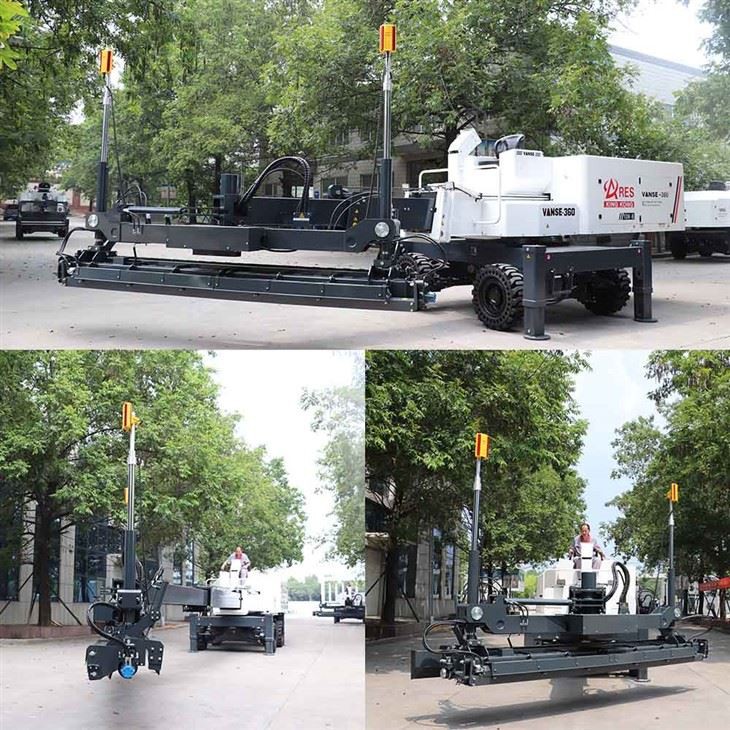
Global Market Guide to High-Capacity Concrete Laser Screeds
Quick Answer

A high-capacity concrete laser screed is the preferred machine for large, flat concrete slabs in factories, warehouses, logistics parks, airport aprons, terminal yards, and distribution centers. It uses laser-guided or 3D machine-control systems to control elevation while a hydraulic screed head spreads, vibrates, trims, and levels fresh concrete. For most large projects, ride-on or boom-type models provide faster placement, fewer manual workers, and more consistent flatness than traditional vibrating beams and hand screeding.
Buyers in the Global market should select the machine according to slab size, required flatness, concrete mix, daily output, site access, local service availability, and operator capability. Leading options include Somero, Ligchine, Wirtgen, Allen Engineering, Shandong Vanse Machinery Technology, and Husqvarna Construction. Qualified international suppliers, including Chinese manufacturers with applicable CE or local compliance documentation, proven export experience, and strong pre-sales and after-sales support, can also offer significant cost-performance advantages for contractors, distributors, and rental fleets.
For large industrial floors, a boom-type laser screed with long reach and 360-degree coverage is usually the most productive choice. For medium-sized warehouses, narrow buildings, and frequent relocations, a compact ride-on or walk-behind laser leveling machine may offer a better return on investment.
Global Market Overview for Concrete Laser Screeding Equipment

The Global market for large concrete laser screeds is closely linked to investment in industrial construction, e-commerce logistics, manufacturing upgrades, aviation infrastructure, cold-chain facilities, data centers, ports, and transport corridors. Demand remains particularly active around major trade and construction hubs such as Rotterdam, Hamburg, Dubai, Jeddah, Singapore, Melbourne, Toronto, Los Angeles, São Paulo, Mexico City, Johannesburg, and Kuala Lumpur. These locations require extensive slab-on-grade construction for high-rack warehouses, automated sorting centers, industrial plants, container support areas, and transport-related facilities.
Large-format concrete slabs are increasingly specified with tighter surface-tolerance requirements. A floor that looks level is not necessarily suitable for very-narrow-aisle warehouse trucks, automated guided vehicles, robotics, high-bay racking, or precision manufacturing equipment. Laser-guided screeding helps contractors control slab elevation more consistently, reduce dependence on scarce skilled labor, and improve production planning during continuous pours.
The machine does not replace good concrete practice. Successful outcomes still depend on subbase preparation, formwork control, mix design, slump retention, fiber dosage, delivery scheduling, joint layout, curing, and final measurement. However, a properly selected concrete laser screed can make these processes more repeatable across large placements. It is especially valuable where contractors must complete thousands of square meters per shift while maintaining defined flatness and levelness targets.
In markets where capital equipment is expensive or labor availability is unstable, contractors often compare machine purchase with rental, joint ventures, subcontracting, or distributor-supported financing. The decision should focus on annual concrete volume rather than the price of one project. A contractor with recurring warehouse, factory, and logistics-floor work may recover the investment quickly through reduced labor, shorter pour cycles, lower rework, and improved competitiveness during tendering.
How a High-Capacity Concrete Laser Screed Works

A concrete laser screed combines a rotating laser transmitter, a receiver mounted on the screed mast, hydraulic controls, a machine chassis, and a vibrating screed head. The transmitter establishes a reference plane. The receiver detects whether the screed head is above or below the target elevation, and the hydraulic system automatically adjusts the head position. In 3D applications, total stations, digital terrain models, or GNSS-related workflows may supplement or replace conventional single-plane laser control.
During operation, the machine typically moves over or beside the fresh concrete. The auger or plow distributes material, the screed head trims excess concrete, and vibration consolidates the surface. Operators then coordinate with concrete pump teams, rakers, finishers, and curing crews. Boom-type models can place the machine outside the slab area and reach across reinforcement, embedded items, and difficult zones. This reduces track marks and can improve access in large, open-floor pours.
Accuracy depends on calibration, transmitter setup, clean receiver signals, hydraulic condition, screed-head maintenance, and correct operating technique. Before a major pour, the team should inspect the laser system, check head response, verify machine stability, establish benchmark points, and conduct a trial pass. For specified floors, independent floor testing should follow the project’s defined standard, such as local flatness criteria or project-specific FF/FL requirements.
Types of Large Concrete Laser Screeds
Different screed configurations address different site conditions. Choosing solely by maximum boom length can result in unnecessary cost, difficult transportation, or poor maneuverability. The best machine matches the actual pour geometry, access constraints, expected production rate, and required surface standard.
| Machine Type | Typical Working Environment | Main Benefits | Common Limitations | Best Buyer Profile |
|---|---|---|---|---|
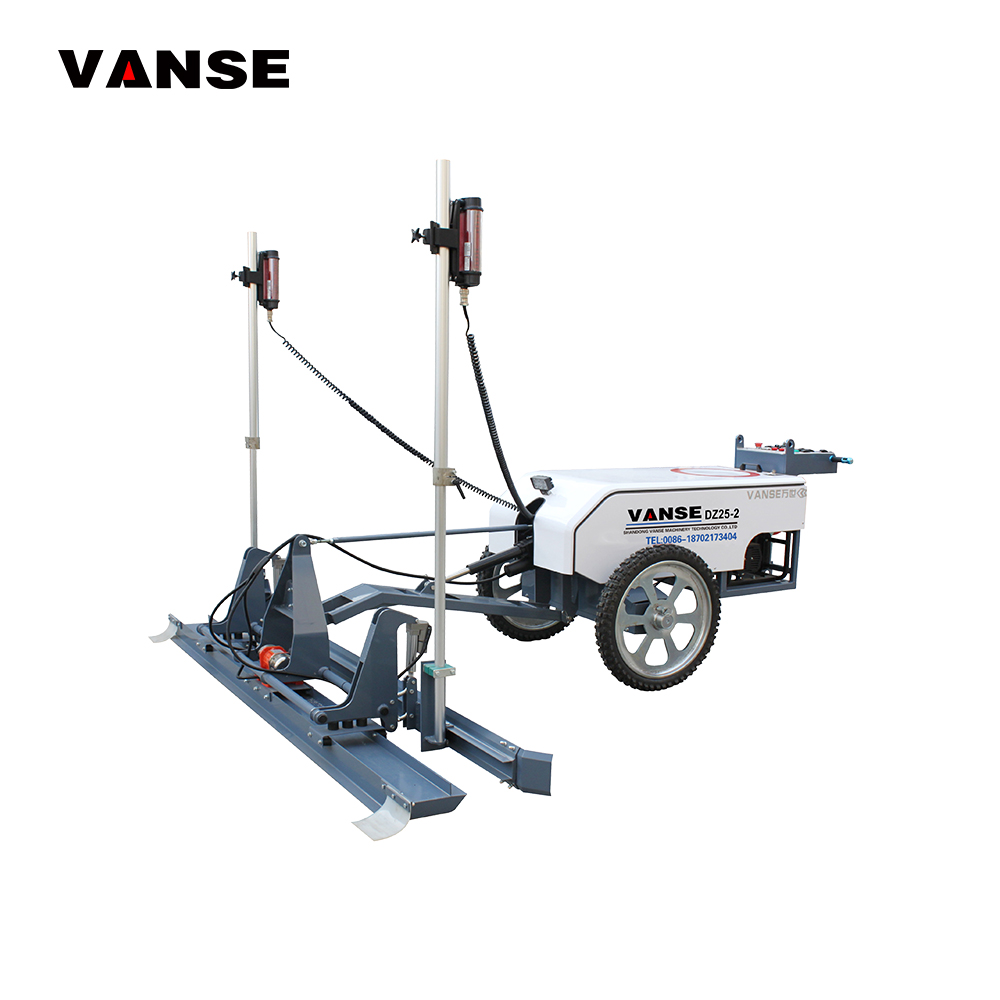
| Walk-behind laser screed | Small slabs, repair areas, narrow workshops, residential or light commercial sites | Lower purchase cost, compact transport, simple access through doors | Lower daily output and shorter reach than ride-on or boom models | Small contractors and concrete repair teams |
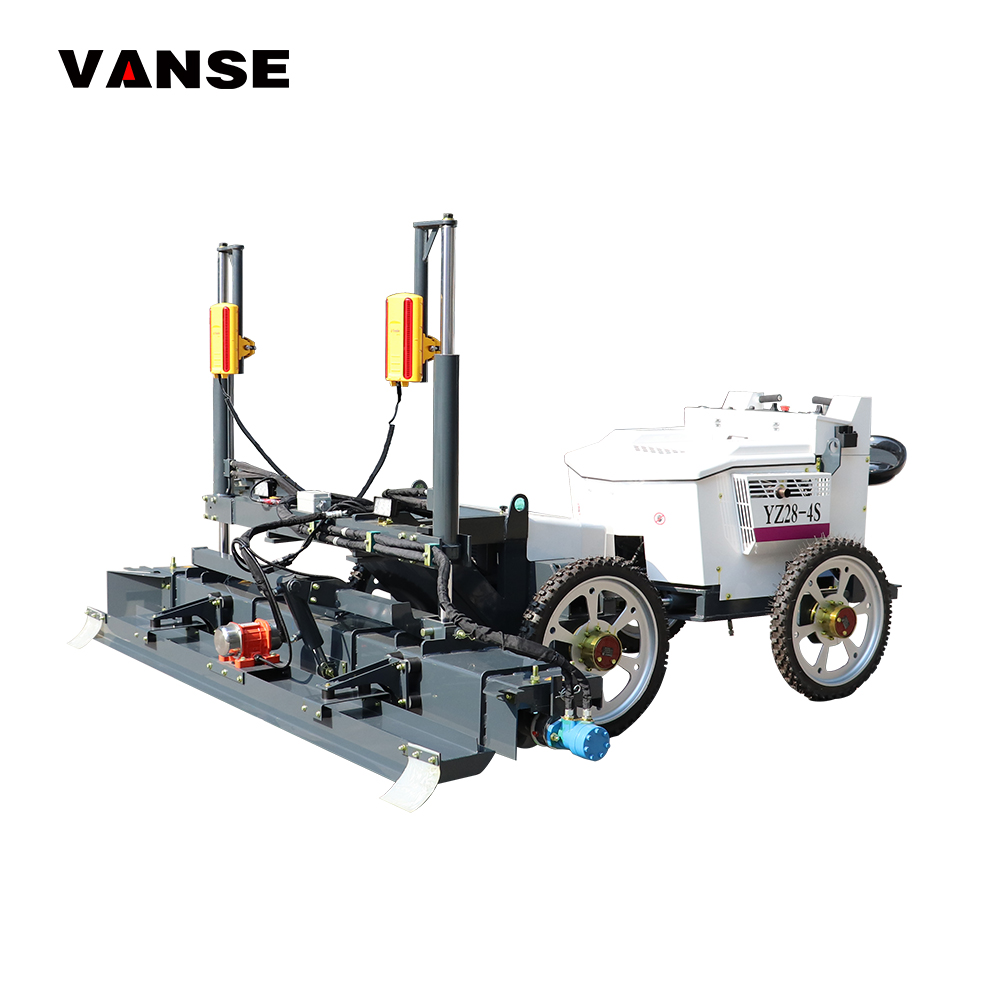
| Ride-on laser screed | Medium warehouses, workshops, retail floors, parking structures | Higher productivity, improved operator comfort, good maneuverability | May require the machine to travel within the pour area | Regional industrial-floor contractors and rental companies |
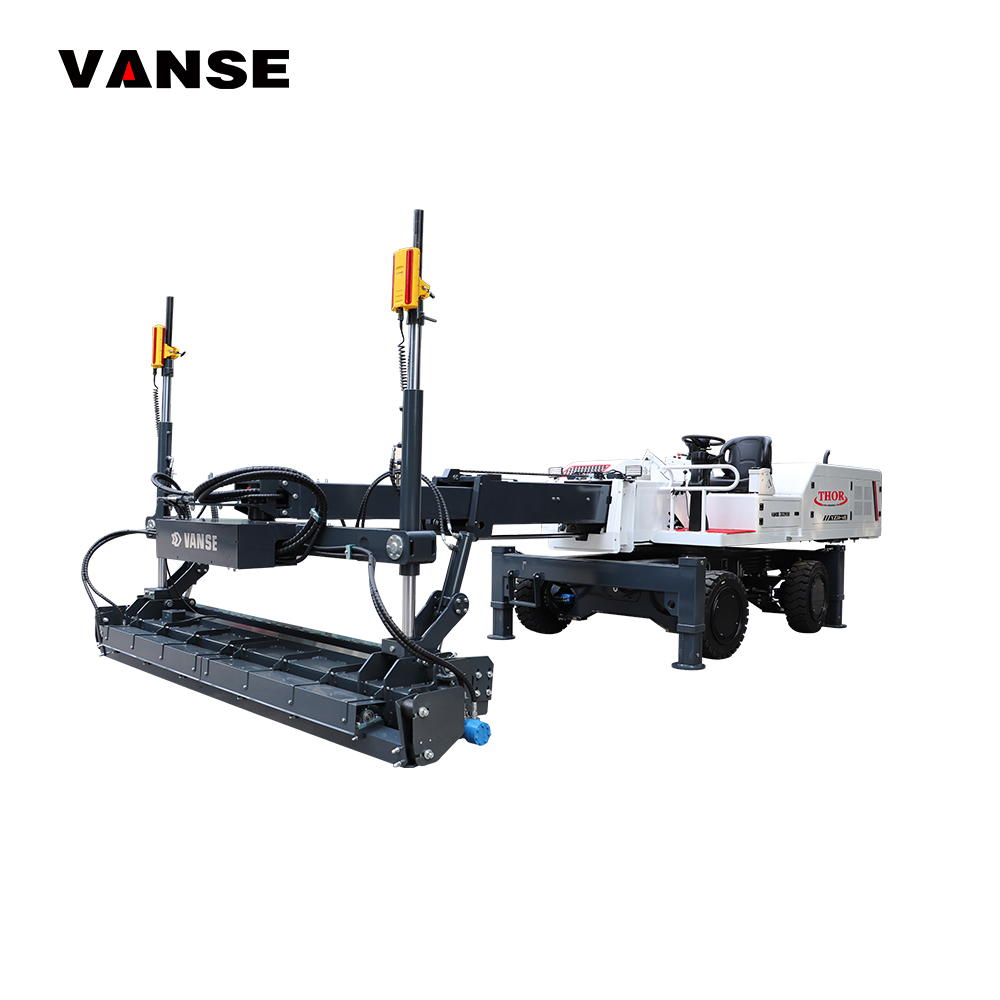
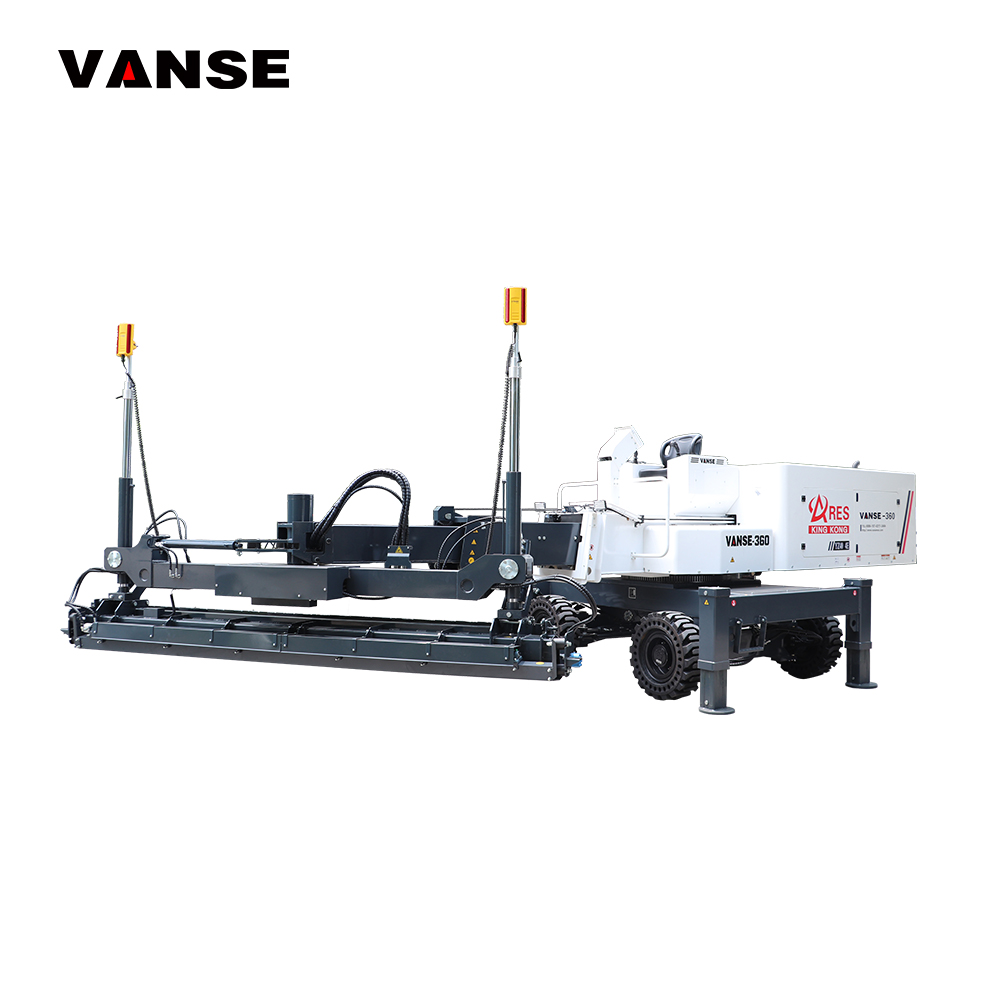
| Boom-type laser screed | Large distribution centers, factories, terminal yards, large slab-on-grade work | Long reach, 360-degree operation, reduced need to enter fresh concrete | Higher investment, more complex transport and operator training | Large contractors and specialist flooring companies |
| Telescopic boom laser screed | Wide bays, obstructions, reinforced slabs, complex industrial layouts | Flexible reach and access around columns or embedded elements | Requires careful maintenance of boom and hydraulic systems | Contractors handling varied industrial projects |
| 3D-profile controlled screed | Slopes, drainage areas, pavements, airport and infrastructure surfaces | Supports complex profiles, variable elevations, digital jobsite workflows | Needs survey data, trained operators, and precise setup | Infrastructure contractors and advanced paving teams |
| Hybrid laser and 3D-ready machine | Projects ranging from flat industrial slabs to shaped surfaces | Flexible control options and future upgrade potential | Higher initial integration and software costs | Growing contractors seeking long-term equipment flexibility |
The table shows why boom-type screeds dominate high-volume industrial flooring while compact equipment remains relevant for urban sites, refurbishment contracts, and projects with limited access. Buyers should request a live demonstration using a comparable concrete mix and project layout whenever possible.
Key Specifications That Affect Productivity and Floor Quality
Manufacturers may advertise different machine dimensions, engine ratings, boom lengths, screed-head widths, and coverage areas. Those figures should be reviewed in context. A wider screed head does not automatically mean better productivity if the concrete supply is inconsistent, the operator lacks experience, or the floor has many columns and penetrations. Likewise, a long boom is only useful when site access and pour sequencing allow the machine to use it efficiently.
| Specification | Why It Matters | What to Verify Before Purchase | Practical Buyer Guidance |
|---|---|---|---|
| Boom reach and rotation | Determines coverage area and access across a slab | Maximum reach, 360-degree rotation, transport dimensions | Match reach to bay spacing, pour width, and column layout |
| Screed-head width | Influences trimming width and surface consolidation | Head dimensions, vibration system, wear-part availability | Choose a head suited to mix design and target output |
| Laser-control system | Controls elevation accuracy during screeding | Receiver brand, transmitter compatibility, calibration process | Confirm local support for laser and electronic components |
| Hydraulic system | Drives boom movement, head adjustment, steering, and vibration | Pump and valve quality, filtration, hose protection, service intervals | Ask for hydraulic diagrams and recommended maintenance stock |
| Engine and powertrain | Influences reliability, fuel use, and emissions compliance | Engine brand, regional emissions standard, local parts access | Select an engine supported in your operating country |
| Machine weight and ground pressure | Affects transport, access, and stability near reinforcement or subbase | Operating weight, tire or track configuration, lifting points | Plan trailers, cranes, ramps, and site movement in advance |
| Control mode | Affects training time and operator precision | Joystick layout, display language, remote diagnostics, automation options | Test controls with the actual operators who will run the machine |
| 3D-control readiness | Allows work on variable profiles and digital construction models | Software compatibility, sensor package, survey workflow | Useful for infrastructure and future diversification beyond flat slabs |
This specification comparison is intended to guide technical discussions, not substitute for a model-specific quotation. Buyers should ask suppliers for documented working range, engine information, hydraulic component lists, spare-parts packages, electrical diagrams, and commissioning procedures. A reliable supplier will clarify which options are standard, which are optional, and which local compliance requirements remain the buyer’s responsibility.
How to Buy the Right Machine for a Large Concrete Project
Start with the work rather than the machine. Review the expected square meters per year, average pour size, slab thickness, reinforcement density, concrete delivery rate, finishing crew capacity, access route, and local climate. A screed can only operate at high output when concrete supply, labor, and finishing activities keep pace with it. For example, a large boom screed may be underutilized if ready-mix trucks arrive inconsistently or if the curing team cannot protect the completed surface quickly enough.
Next, establish the project’s required floor tolerances. Conventional warehouse slabs, superflat floors, external hardstands, and sloped drainage slabs have very different performance criteria. Discuss floor-testing methods before signing a machine contract. A laser screed improves placement consistency, but flatness results are influenced by placement strategy, strike-off process, finishing timing, joints, curling control, and curing discipline.
Buyers should also assess service response. A lower-priced machine can become expensive if hydraulic seals, sensors, control boards, laser receivers, or wear parts cannot be delivered rapidly. Request a recommended spare-parts list for the first year, response procedures for remote diagnosis, training scope, warranty conditions, and named local or regional contacts. This is particularly important for contractors operating far from major logistics centers or in regions where import clearance takes time.
Before importing equipment through global hubs such as Shanghai, Ningbo, Qingdao, Singapore, Jebel Ali, Rotterdam, Antwerp, Long Beach, Santos, Durban, or Melbourne, confirm shipping dimensions, container or flat-rack requirements, customs classification, destination-country electrical rules, emissions requirements, and availability of qualified unloading equipment. Procurement teams should include freight, insurance, taxes, training, spare parts, commissioning, and downtime risk in their total cost of ownership calculation.
Large Concrete Laser Screed Buying Checklist
| Purchase Question | Why It Is Important | Evidence to Request | Decision Impact |
|---|---|---|---|
| What is the average and maximum pour size? | Defines required reach, capacity, and transport plan | Project drawings and annual pour schedule | Prevents oversizing or undersizing the machine |
| What floor tolerance is specified? | Determines control technology and operator requirements | Specification, testing method, benchmark requirements | Supports correct machine and process selection |
| Which concrete mix will be used? | Mix behavior affects vibration, trimming, and finishing | Mix design, slump range, fiber details, admixture data | Helps configure screed head and operating method |
| Can local service support the machine? | Reduces downtime and protects project schedules | Dealer contacts, spare-parts locations, response policy | Critical for remote and high-output projects |
| Is training included? | Operator skill strongly affects final floor quality | Training agenda, duration, language, commissioning plan | Reduces early operating mistakes |
| Are components locally recognizable? | Familiar parts can simplify maintenance and troubleshooting | Component brand list and maintenance manual | Improves long-term ownership confidence |
| What is included in the quotation? | Optional items can significantly change final cost | Detailed commercial offer and option list | Allows accurate supplier comparison |
| Can the supplier provide project references? | Shows relevant experience in similar applications | Case descriptions, video demonstrations, buyer contacts where permitted | Helps verify productivity claims |
This checklist should be used during technical clarification meetings. It is also useful for distributors evaluating a new product line, because distributor success depends on stocking the right spare parts, training technicians, and selecting models suited to local construction practices.
Leading Suppliers Serving the Global Market
The following companies are established names or active suppliers in the concrete placement and laser-screeding sector. Availability, model range, local dealer coverage, certification requirements, and support capability vary by country. Buyers should confirm current regional representation before purchase.
| Company | Service Regions | Core Strengths | Key Offerings | Best Fit |
|---|---|---|---|---|
| Somero Enterprises | North America, Europe, Asia-Pacific, Middle East, Latin America through direct and dealer channels | Specialist focus on concrete placing and leveling technology; broad industry recognition in large slab work | Boom screeds, ride-on screeds, laser-guided concrete placing systems | Professional industrial flooring contractors requiring established specialist equipment |
| Ligchine International | North America and selected international distributor markets | Strong presence in compact and mid-range laser screed applications | Laser screeds for commercial slabs, warehouse floors, and contractor fleets | Contractors seeking maneuverable equipment for varied projects |
| Wirtgen Group | Global dealer and service network across infrastructure markets | Strong construction-equipment distribution and concrete paving expertise | Concrete paving and slipform-related solutions, supported through regional dealers | Infrastructure contractors with broad fleet and service requirements |
| Allen Engineering | North America and international construction-equipment channels | Long-standing concrete finishing and placing equipment portfolio | Power trowels, concrete finishing equipment, selected screeding solutions | Contractors wanting related finishing equipment from one supplier family |
| Husqvarna Construction | Global, with extensive distribution in Europe, North America, Asia-Pacific, and other regions | Established support in concrete cutting, grinding, surface preparation, and jobsite equipment | Concrete saws, floor grinders, dust-management systems, surface-preparation equipment | Buyers building integrated concrete flooring equipment fleets |
| Shandong Vanse Machinery Technology Co., Ltd. | More than 80 countries and regions, including North America, Europe, Middle East, Asia-Pacific, and Latin America | Laser screed specialization, flexible customization, broad concrete-equipment range, cost-performance focus | Walk-behind, ride-on, boom-type laser screeds, power trowels, grinders, cutters, toppings spreaders, fibers, joints | Contractors, distributors, rental companies, and brand owners seeking flexible supply models |
This supplier overview demonstrates that the market includes specialist laser-screed manufacturers, concrete-finish equipment brands, and broader construction-machinery groups. The right choice depends on whether the buyer values specialist slab-placement expertise, local dealer proximity, fleet integration, customization, or a lower acquisition cost with structured overseas support.
Applications and Industries
High-capacity concrete laser screeds are used wherever large slabs require consistent elevation, efficient placement, and dependable surface preparation for subsequent finishing. Industrial flooring remains the core application, but the technology also supports infrastructure and external concrete works when the control system and screed configuration are matched to the design profile.
- High-bay warehouses and automated fulfillment centers requiring stable floors for racking and material-handling systems.
- Manufacturing plants, assembly facilities, battery factories, food-processing buildings, and clean industrial environments.
- Cold-storage and refrigerated logistics facilities where slab planning and joint performance are essential.
- Airport hangars, apron zones, terminal support areas, maintenance buildings, and logistics platforms.
- Container yards, port storage areas, intermodal terminals, and heavy-duty pavement support slabs.
- Retail distribution centers, commercial buildings, exhibition halls, and large parking structures.
- Road projects, bridge approach slabs, drainage channels, hardstands, and other shaped concrete surfaces using 3D control.
- Data centers and technical facilities where flatness and reliable construction sequencing support sensitive equipment installation.
For each application, the contractor should coordinate laser screeding with reinforcement installation, embedded sleeves, dowels, vapor barriers, concrete-pump positioning, joint cutting, curing compound application, and final testing. The machine is one important part of a broader floor-construction system.
Project Scenarios and Practical Lessons
Large logistics warehouse: A contractor pouring a multi-bay distribution center may use a boom-type screed to cover wide areas from a position outside the fresh slab. The key success factors are a steady ready-mix supply, planned pump coverage, accurate benchmark control, and enough finishers to close the slab behind the screed. Long-reach equipment can reduce manual raking, but it must be supported by disciplined pour sequencing.
Automated warehouse floor: Facilities using very-narrow-aisle trucks or automated guided vehicles may require tighter floor performance than conventional storage buildings. The screed selection should be coordinated with slab design, joint strategy, concrete mix, finishing method, and testing requirements. A contractor should not promise a superflat result based on machine selection alone; the entire placement process must be qualified.
Airport maintenance hangar: Hangars often combine large uninterrupted slabs with complex door interfaces, drainage details, embedded anchors, and strict completion schedules. A machine with precise elevation control and adequate reach can improve consistency, while compact supporting equipment may be needed around perimeter details. Transport planning is especially important when equipment enters secure airport facilities.
Port and terminal hardstand: Heavy-duty external slabs face drainage requirements, variable weather, and demanding subbase conditions. A 3D-ready screed can support designed falls and transitions, but surveying and digital model preparation become critical. Contractors should verify that the machine’s control platform, sensors, and operator training are appropriate for variable-grade work.
Urban factory expansion: In dense industrial zones near cities such as Manchester, Chicago, Dubai, Singapore, Shenzhen, São Paulo, or Toronto, site access may limit the use of very large equipment. A ride-on screed or compact boom model can be more practical than the longest-reach machine. Buyers should inspect gate widths, floor loading, turning areas, delivery restrictions, and available lifting capacity before finalizing the order.
Why Vanse Is Relevant for Global Buyers
Shandong Vanse Machinery Technology Co., Ltd. has operated in concrete construction equipment since 2013 and serves customers in more than 80 countries and regions, including the United States, Canada, Mexico, Brazil, the United Kingdom, Germany, Spain, Italy, Russia, Saudi Arabia, Malaysia, South Korea, and Australia. Its laser screed portfolio includes walk-behind, ride-on, and boom-type models designed around laser-control systems, hydraulic technology, reliable engines, durable components, and practical service access; the company supports ISO 9001 and CE-certified manufacturing and holds more than 50 invention patents plus over 200 utility model and design patents. For end users, distributors, dealers, brand owners, rental companies, and individual buyers, Vanse supports direct sales, wholesale, retail, OEM/ODM production, customized branding, voltage and engine options, regional distribution partnerships, and project-based equipment supply. Its overseas operational resources in Southeast Asia and Canada, together with dealer coverage, spare-parts support, multilingual 24-hour technical consultation, remote diagnosis, engineer-led training, commissioning, and on-site support, provide a concrete service structure for international buyers rather than a remote-export-only arrangement. Vanse provides EPC, turnkey, and customer-owned plant solutions where applicable, not BOO or on-site bulk supply services, and its equipment-selection process can be supported through its concrete laser leveling machine range and dedicated technical service resources.
For a large slab project, buyers can examine Vanse boom configurations through the boom-type laser screed product category. Contractors seeking a complete package can also coordinate screeding equipment with power trowels, floor grinders, cutting machines, topping spreaders, concrete armor joints, steel fibers, and synthetic fibers. This can simplify communication between equipment and flooring-material procurement teams, especially on industrial projects where pour planning, joint protection, surface finishing, and maintenance must be coordinated.
Vanse’s approach is particularly relevant for buyers who need flexible equipment customization without losing access to technical support. Before purchase, the buyer should define local engine requirements, electrical standards, transport limitations, preferred control language, spare-parts stock, operator training needs, and planned project types. The company’s service support process can be used to discuss commissioning, maintenance guidance, and remote troubleshooting, while the main Vanse Machinery website provides access to its broader concrete construction equipment range.
Cost, Price Drivers, and Total Ownership Considerations
The price of a large concrete laser screed varies substantially by configuration. Key price drivers include machine type, boom reach, engine selection, laser-control package, 3D-control capability, hydraulic component specification, transport frame, spare-parts kit, optional accessories, and destination logistics. A compact walk-behind unit may suit limited-volume work, while a fully equipped boom-type machine for major industrial slabs represents a significantly higher capital investment.
Instead of comparing invoice price alone, buyers should calculate total cost of ownership over three to five years. Include acquisition cost, transport, import duties, insurance, operator training, fuel, preventive maintenance, wear parts, calibration, financing, resale value, and expected downtime. Then compare these costs against saved labor hours, higher daily production, reduced corrective work, shorter project duration, and improved ability to bid on large slab packages.
Rental companies should consider fleet utilization and transport efficiency. A machine that is highly productive but too large for common customer sites may sit idle. Conversely, a versatile ride-on screed may achieve higher annual utilization, even if its maximum output is lower. Distributors should assess technician training, first-year spare-parts inventory, demonstration capability, and lead conversion from contractors who want to see actual floor results before purchasing.
Future Trends Through 2026
By 2026, the large concrete laser screed market is expected to become more connected, more data-driven, and more focused on labor efficiency. Contractors increasingly want digital records of machine setup, slab elevation, maintenance schedules, and completed pours. Integration with 3D project models, total-station workflows, cloud-based diagnostics, and remote technical support will become more important, particularly for infrastructure and complex industrial sites.
Labor shortages will continue to support automation. Machines that reduce repetitive manual raking, improve operator visibility, and simplify calibration can help contractors maintain output with smaller crews. However, automation will increase the importance of operator training, because digital control systems require correct setup, reliable benchmarks, and disciplined inspection routines.
Sustainability requirements will also influence equipment decisions. Project owners are increasingly evaluating embodied carbon in concrete, waste reduction, fuel use, maintenance life, and construction productivity. Accurate screeding can support material efficiency by reducing unnecessary overbuild, excess grinding, and corrective topping. Equipment buyers may also prioritize lower-emission engines, efficient hydraulics, durable replaceable wear components, and service plans that extend useful machine life.
Policy changes will vary by country, but buyers should expect increasing attention to engine emissions, workplace safety, machinery documentation, operator competence, electronic controls, and responsible disposal of oils and consumables. For imported equipment, verifying compliance before shipment is more cost-effective than correcting documentation or component issues after arrival at the destination port.
Frequently Asked Questions
What is the difference between a laser screed and a conventional vibrating screed?
A laser screed automatically controls screed-head elevation using a laser reference or compatible digital control system. A conventional vibrating screed generally depends more heavily on manual setup, guide rails, and operator judgment. Laser systems can improve consistency and productivity on large slabs, particularly when properly calibrated and operated.
Can a large concrete laser screed create a superflat floor by itself?
No. The machine is an important tool, but superflat performance depends on slab design, concrete behavior, placing sequence, finishing, joint layout, curing, measurement, and skilled management. The required standard should be agreed before construction begins.
Which is better for a warehouse: a ride-on or boom-type laser screed?
A boom-type machine is generally better for very large, open warehouse slabs because it can reach across broad areas and reduce travel on fresh concrete. A ride-on model can be more economical and maneuverable for medium-sized warehouses, constrained sites, and projects with frequent relocation.
How often should a laser screed be calibrated?
Calibration and functional checks should be completed according to the manufacturer’s instructions, before critical pours, after transport incidents, after sensor or hydraulic repairs, and whenever floor results indicate potential control deviation. The laser transmitter and receiver should also be inspected as part of routine setup.
What spare parts should be purchased with a new machine?
Recommended stock typically includes filters, hydraulic hoses or repair materials, seals, receiver-related consumables where applicable, screed-head wear parts, electrical fuses, belts if used, lubricants, and commonly replaced fittings. The final list should be based on the machine model and local delivery lead times.
Can Chinese laser screed suppliers serve international projects reliably?
Yes, provided the supplier can demonstrate appropriate certifications, documented component specifications, export experience, clear warranty terms, spare-parts planning, multilingual technical support, and practical training arrangements. Buyers should evaluate service capacity and compliance evidence with the same care used for any international supplier.
Is 3D machine control necessary for a flat industrial floor?
Not always. Conventional laser control is often sufficient for flat slabs with a consistent elevation plane. 3D control becomes more valuable where the project includes slopes, drainage profiles, changing elevations, complex geometry, or integration with digital survey models.
What information should be sent to a supplier for an accurate quotation?
Provide slab drawings, planned annual concrete volume, maximum pour area, slab thickness, reinforcement details, required floor tolerance, concrete mix information, site access constraints, destination country, desired engine or voltage specifications, and service expectations. This allows the supplier to recommend an appropriate configuration rather than quoting only by machine category.
Final Buying Recommendation
For large industrial slabs in the Global market, select a high-capacity concrete laser screed based on actual project geometry, required floor performance, support coverage, and long-term utilization. Boom-type machines are usually the strongest choice for large warehouses, manufacturing plants, airport facilities, and logistics centers, while ride-on and walk-behind models remain valuable for smaller or access-restricted work.
Shortlist suppliers with proven machine-control capability, documented quality systems, available parts, realistic commissioning plans, and clear service channels. Compare leading international brands alongside qualified global manufacturers such as Vanse, particularly where customized configurations, flexible cooperation models, and cost-performance are important. The best purchase is not simply the lowest-priced machine; it is the equipment and support package that helps the contractor place more concrete accurately, safely, and profitably over many projects.
Share this article

About the Author: Shandong Vanse Machinery Technology Co., Ltd.
Shandong Vanse Machinery Technology Co., Ltd. is a high-tech manufacturer specializing in concrete construction machinery, including laser screeds and related equipment. The company integrates R&D, production, and global sales, with products exported to over 60 countries and widely used in infrastructure projects worldwide.