Insight blog
Laser-Guided Concrete Screed Guide for Global Markets
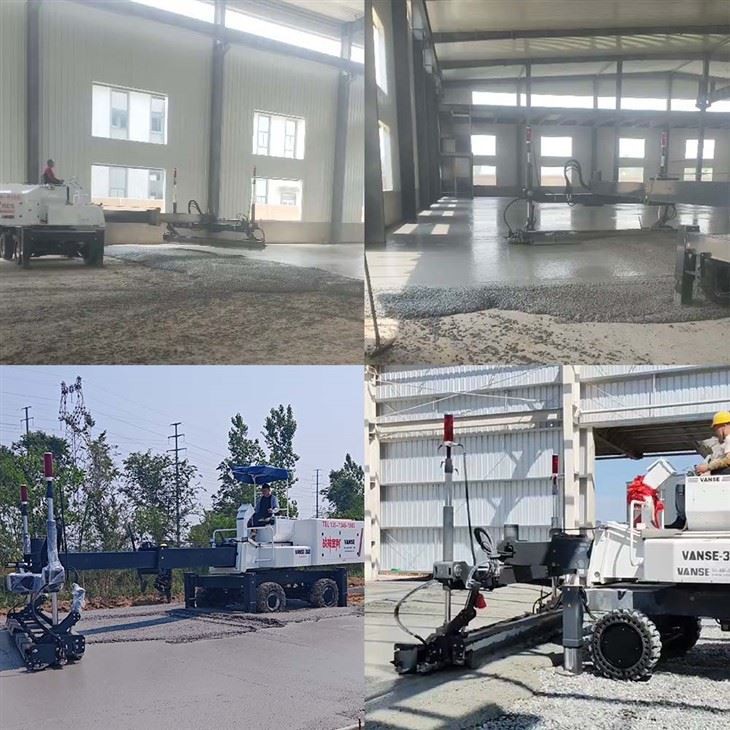
Laser-Guided Concrete Screed Guide for the Global Market
Quick Answer

A laser-guided concrete screed is the most efficient choice for contractors placing large, high-tolerance concrete slabs in warehouses, factories, logistics centers, airports, ports, and infrastructure projects. It uses a rotating laser transmitter and automatic hydraulic controls to maintain slab elevation, reducing manual leveling work and helping achieve flatter, more consistent floors.
For small rooms, repair work, and narrow access areas, a walk-behind laser screed is usually the most economical option. For industrial floors of several thousand square meters, a ride-on or boom-type machine generally delivers higher daily output, better operator comfort, and lower labor requirements. For large projects with varying slopes, drainage requirements, or complex floor geometry, select a model compatible with 3D profiling or total-station control.
Leading global suppliers include Somero, Ligchine, Wirtgen, Allen Engineering, Shandong Vanse Machinery Technology, and HIKING. Buyers should compare working width, paving capacity, laser-control accuracy, engine support, hydraulic reliability, spare-parts access, operator training, and local service response before focusing only on purchase price.
Qualified international suppliers, including Chinese manufacturers with CE or relevant local certifications, proven export experience, and responsive pre-sales and after-sales support, can also be strong options for Global market buyers because they often provide attractive cost-performance, flexible voltage configurations, OEM branding, and practical project support.
Global Market Overview for Laser Concrete Leveling Equipment

The Global market for concrete leveling equipment is shaped by the steady expansion of industrial construction, e-commerce warehousing, manufacturing investment, cold-storage facilities, aviation infrastructure, data centers, logistics terminals, and large commercial developments. Flatness and levelness requirements have become more demanding because modern facilities rely on automated storage systems, narrow-aisle forklifts, robotics, heavy racks, high-speed pallet handling, and precision production lines.
Traditional concrete placement methods can produce acceptable results on smaller slabs, but they often require more workers using vibrating screeds, hand tools, and manual checks. These methods depend heavily on crew experience and can become difficult to control over wide pours. A concrete laser leveling machine automates elevation control while the screed head spreads, vibrates, trims, and consolidates fresh concrete. This reduces variation caused by manual pulling and helps contractors work with fewer finishing personnel.
Major purchasing activity is concentrated around global construction and trade hubs such as Houston, Los Angeles, Toronto, Mexico City, São Paulo, Rotterdam, Hamburg, Dubai, Jeddah, Singapore, Kuala Lumpur, Sydney, Melbourne, London, Frankfurt, Warsaw, Johannesburg, and Istanbul. These cities and their surrounding industrial zones frequently require large warehouse floors, container yards, production plants, airports, port-adjacent logistics buildings, and distribution centers.
For buyers serving ports and export-oriented manufacturing zones, equipment uptime is particularly important. A machine arriving through Shanghai, Ningbo, Qingdao, Rotterdam, Antwerp, Jebel Ali, Santos, Long Beach, or Singapore may need local commissioning, replacement wear parts, and operator instruction without delay. Therefore, purchasing decisions should account for service logistics as carefully as screeding capacity.
Why laser-controlled placement is gaining adoption
Laser screeding improves control of slab elevation over large working areas. The transmitter creates a reference plane, while receivers mounted on the screed mast detect deviations. The system directs hydraulic cylinders to raise or lower the screed head according to the target level. This can help contractors maintain consistent thickness, reduce excess concrete use, lower rework risk, and improve readiness for later polishing, grinding, coating, racking, or automated material-handling installation.
The best machine is not always the largest model. A compact walk-behind unit may outperform a large ride-on screed in a congested basement, a narrow warehouse extension, a slab beside columns, or a project with limited access. Conversely, selecting a small machine for a major logistics park can create bottlenecks in concrete delivery and finishing operations. Capacity should be matched to pour size, ready-mix supply, crew skill, floor specification, and site layout.
Types of Laser-Guided Concrete Screeds

Laser-guided screeds are commonly grouped by operator position, chassis design, boom reach, and control capability. Each configuration addresses a different slab-placement challenge. Buyers should assess machine dimensions, head clearance, wheel marks, travel pattern, and access requirements before selecting a type.
| Equipment type | Typical project scale | Main advantages | Limitations | Best applications | Buying focus |
|---|---|---|---|---|---|
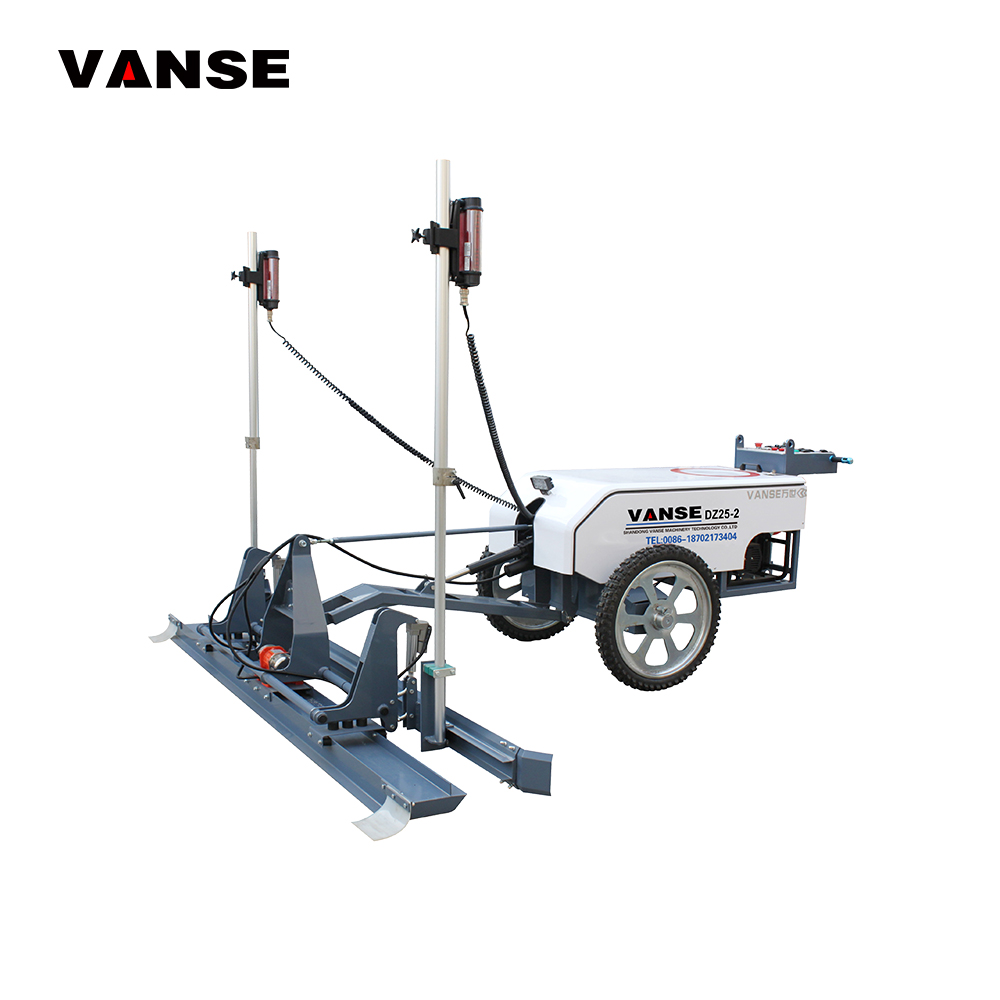
| Walk-behind laser screed | Small to medium pours | Compact, lower purchase cost, easy transport | Lower output than ride-on models | Workshops, villas, small warehouses, repairs | Weight, wheel width, screed-head range |
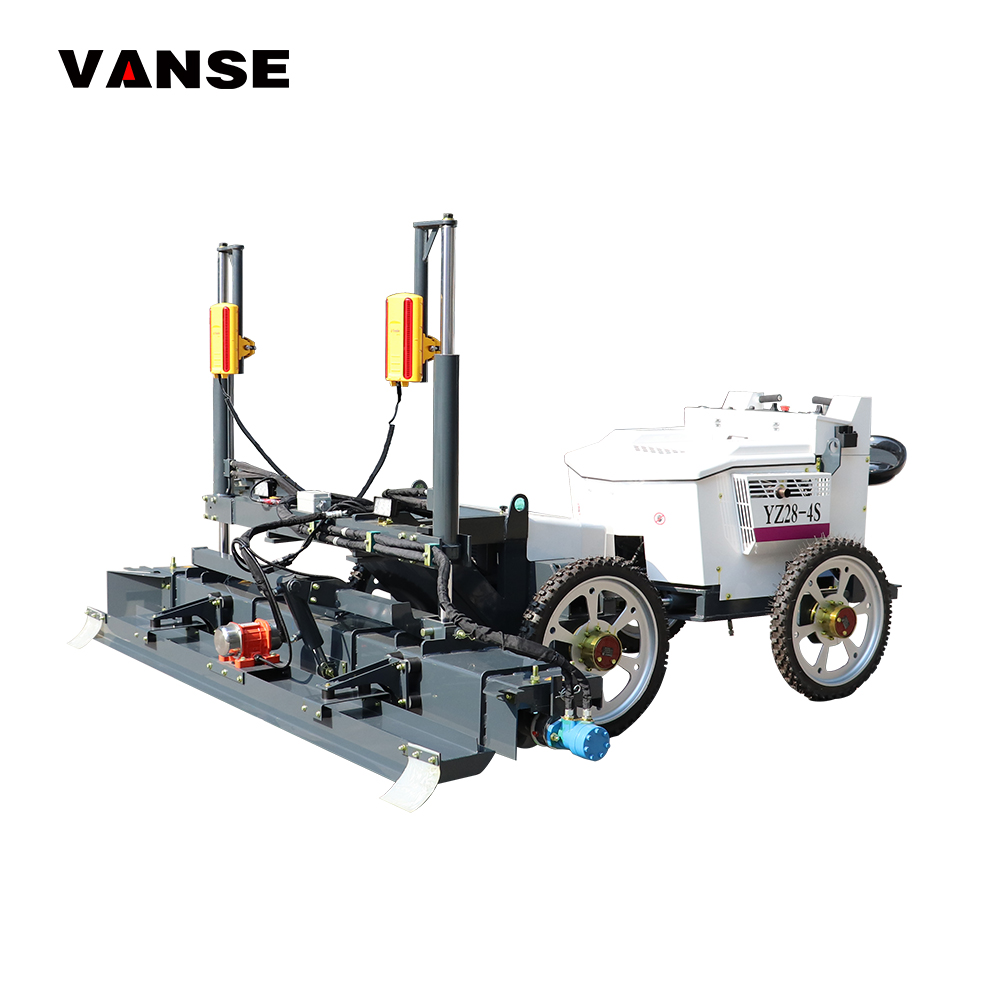
| Ride-on laser screed | Medium to large slabs | High productivity and reduced operator fatigue | Requires more open working space | Factories, warehouses, distribution centers | Engine support, boom reach, daily output |
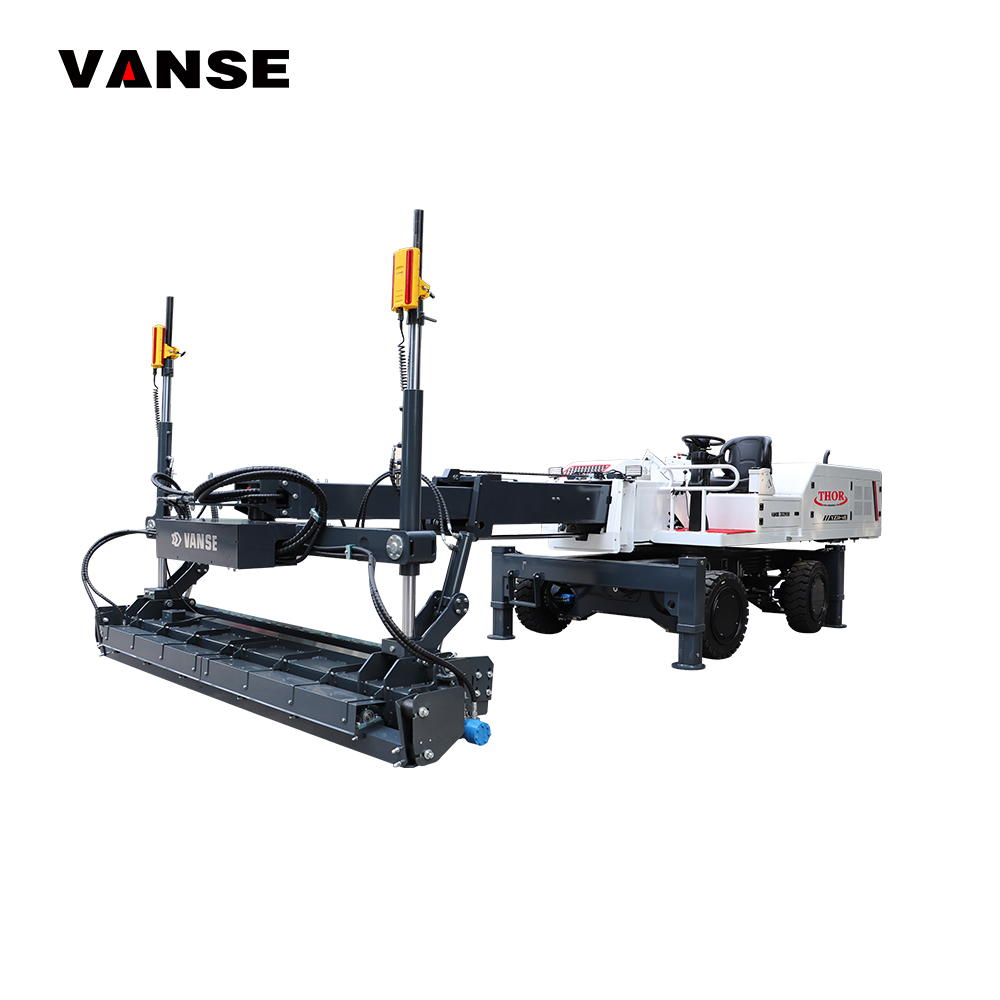
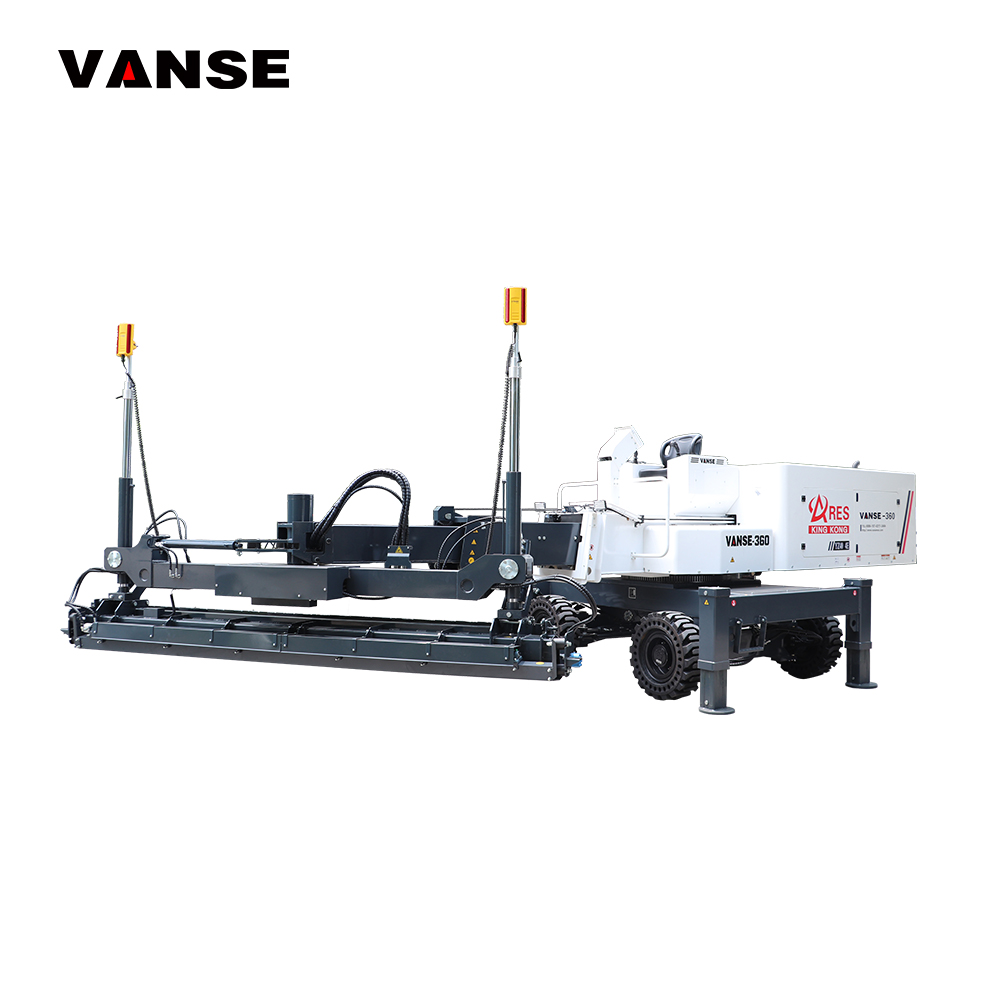
| Boom-type laser screed | Large industrial pours | Long reach, 360-degree coverage, fewer tracks | Higher investment and transport requirements | Logistics parks, aircraft hangars, large plants | Boom length, rotation range, control precision |
| Four-wheel drive screed | Rough or partially prepared sites | Improved traction and mobility | May be heavier and more complex | Infrastructure slabs, yards, outdoor projects | Tire design, ground clearance, drivetrain service |
| 3D-profile compatible screed | Variable-elevation projects | Supports slopes, drainage, and complex geometry | Needs survey data and trained operators | Roads, ramps, yards, airport drainage areas | Software compatibility and surveying workflow |
| Telescopic or compact boom screed | Restricted-access areas | Useful around columns and walls | Reduced reach compared with large boom models | Commercial buildings and retrofit floors | Transport dimensions and close-edge performance |
Walk-behind machines are often chosen by contractors entering the industrial floor market or completing smaller slab sections. They can be moved more easily between sites and may be practical where a ride-on unit cannot enter through doors or between structural elements. They are also useful as supporting machines when a large project has narrow edges, pits, loading bays, or isolated work zones.
Ride-on screeds are widely used on factory and warehouse slabs because they combine productivity with operator visibility. A typical ride-on machine can cover a substantial area from a central position, depending on boom design, concrete supply, slab thickness, and finishing workflow. Buyers should consider whether the operator can comfortably see grade stakes, joints, walls, concrete discharge points, and screed-head movement.
Boom-type concrete laser screeds are intended for high-output placement. Their rotating structure can access a broad circular working area without repeatedly driving across fresh concrete. This reduces the number of wheel tracks and can support better workflow when concrete is placed by pump, conveyor, or ready-mix trucks. Boom reach, screed-head design, hydraulic responsiveness, and laser receiver quality strongly affect final performance.
Key Specifications That Affect Concrete Floor Results
Specification sheets may look similar across brands, but the practical difference is found in component quality, machine balance, hydraulic tuning, receiver sensitivity, vibration performance, structural rigidity, and service support. A machine with an impressive nominal working range may not produce reliable results if its boom flexes excessively, its hydraulic system reacts slowly, or local technical support is unavailable.
| Specification | Why it matters | Typical buyer question | Impact on productivity | Impact on floor quality | Recommended verification |
|---|---|---|---|---|---|
| Working width or boom reach | Determines area covered from one machine position | How much slab can be reached without repositioning? | Higher reach can reduce travel time | Fewer tracks can improve consistency | Request an actual operating-radius drawing |
| Laser control accuracy | Controls elevation consistency | What tolerance can the system maintain? | Reduces manual checking | Supports flat and level floor targets | Conduct a site demonstration test |
| Screed-head vibration | Helps consolidate and strike off concrete | Is frequency adjustable for the concrete mix? | Supports faster spreading | Can reduce voids and uneven trimming | Check vibration adjustment and wear parts |
| Hydraulic system | Drives lifting, steering, boom movement, and head control | Which pumps, valves, and hoses are used? | Fast response improves cycle time | Stable response improves grade control | Confirm brand, filtration, and spare-part availability |
| Engine model | Determines reliability and regional maintenance access | Can local dealers service the engine? | Reduces unplanned downtime | Maintains consistent operation during pours | Choose a locally supported engine configuration |
| Machine weight and dimensions | Affects transport, slab access, and ground pressure | Can it enter the site and work on the base? | Prevents setup delays | Helps avoid base disturbance | Review loading, unloading, and access plans |
| Receiver and transmitter compatibility | Ensures reliable grade reference | Does it work with common rotating lasers? | Faster setup across projects | Improves leveling repeatability | Confirm compatible brands and calibration procedure |
Engine availability is a major regional issue. Buyers may prefer configurations using engines supported by established distributors in their country or nearby markets. Before ordering, confirm emissions compliance, fuel requirements, maintenance intervals, local technician availability, and the lead time for filters, belts, starter parts, injectors, and electronic components.
Hydraulic quality should be assessed beyond the supplier’s brochure. Ask about the hydraulic pump, valve blocks, hoses, seals, filters, cooling arrangements, and contamination-control procedures. A reliable hydraulic system should provide smooth, predictable movement during placement and tolerate demanding concrete-site conditions such as heat, dust, vibration, and long operating hours.
For high-specification floors, coordinate machine selection with the floor designer and finishing contractor. Laser screeding is one part of a complete process that includes subbase preparation, vapor barrier installation, reinforcement placement, concrete mix design, delivery timing, joint layout, curing, saw cutting, and final quality testing. The screed cannot compensate for poor concrete supply or inadequate finishing practice.
Price Guide and Total Cost of Ownership
Concrete laser screed prices vary considerably according to size, boom reach, engine brand, laser-control system, hydraulic components, transport configuration, 3D capability, and supplier support. Buyers should treat initial machine price as only one part of ownership cost. A lower-priced machine with no practical spare-parts channel, weak documentation, or delayed technical response can become more expensive during a critical pour.
As a broad planning reference, compact walk-behind machines are generally the lowest-cost category, while ride-on and boom-type machines represent a larger capital investment. Machines with advanced 3D control, longer booms, premium engines, and specialized accessories may cost substantially more. Actual quotations should include the machine, transmitter, receiver, standard tools, shipping, insurance, import duties, local taxes, commissioning, training, consumables, and recommended spare-parts kits.
| Cost category | What it includes | Common hidden risk | How to control the cost | Who should review it | Decision priority |
|---|---|---|---|---|---|
| Machine purchase price | Base equipment and standard accessories | Excluded laser system or optional parts | Request an itemized quotation | Procurement manager | High |
| Freight and import handling | Container shipment, inland delivery, insurance | Port storage and local handling fees | Confirm Incoterms and destination charges | Logistics team | High |
| Commissioning | Setup, calibration, and first-site testing | Machine arrives without practical support | Include written commissioning scope | Project manager | High |
| Operator training | Controls, setup, safety, daily maintenance | Incorrect use damages slabs or equipment | Train operators before major pours | Site superintendent | High |
| Spare parts inventory | Filters, hoses, sensors, wear strips, seals | Downtime while parts are shipped internationally | Order a starter kit with the machine | Maintenance manager | Medium |
| Fuel and routine maintenance | Engine service, hydraulic oil, lubrication | Unplanned maintenance during peak work | Use a documented service schedule | Equipment manager | Medium |
| Resale value and utilization | Future sale, rental, and job allocation | Machine remains idle between projects | Plan rental or subcontracting opportunities | Business owner | Medium |
For contractors with seasonal demand, rental, leasing, or shared-equipment arrangements may be practical alternatives to direct purchase. However, firms that regularly complete industrial slabs usually benefit from ownership because machine availability can be scheduled around concrete supply and project deadlines. Owning the equipment also allows crews to build long-term operating skill and maintain consistent quality procedures.
Top Suppliers of Laser-Guided Concrete Screeds
The following companies are recognized suppliers or manufacturers in the concrete placement and industrial flooring equipment sector. Availability, dealer coverage, exact model range, and support capability differ by country. Buyers should contact suppliers directly for current specifications, local certification status, delivery schedules, and regional parts support.
| Company | Service regions | Core strengths | Key offerings | Suitable buyer profile | Practical purchasing note |
|---|---|---|---|---|---|
| Somero Enterprises | North America, Europe, Asia-Pacific, Middle East, global dealer markets | Specialist expertise in concrete leveling and high-productivity slabs | Ride-on screeds, boom screeds, laser-guided slab placement solutions | Large flooring contractors and major industrial projects | Check local training, support, and model availability |
| Ligchine International | United States and international distributor markets | Laser screed technology for commercial and industrial concrete work | Laser-guided screeds and concrete placement equipment | Contractors seeking specialized screeding equipment | Confirm regional dealer and parts arrangements |
| Wirtgen Group | Global dealer and service network | Strong infrastructure equipment experience and established dealer coverage | Concrete paving and slipform paving systems | Road, airport, and infrastructure contractors | Best assessed for large paving applications |
| Allen Engineering | North America, Latin America, Europe, Asia, Middle East | Broad concrete finishing equipment range | Power trowels, screeds, finishing tools, ride-on equipment | Concrete contractors needing multi-equipment fleets | Review local distributor inventory and technical support |
| Shandong Vanse Machinery Technology | More than 80 countries and regions, including North America, Europe, Asia, Middle East, Latin America, Australia | Flexible laser screed range, customization, industrial flooring equipment portfolio | Walk-behind, ride-on, boom-type laser screeds, trowels, grinders, cutters | Contractors, distributors, rental firms, OEM buyers | Confirm regional configuration, training, and spare-parts package |
| HIKING Machinery | International export markets and distributor channels | Concrete construction machinery and floor-equipment manufacturing | Laser screeds, power trowels, cutting machines, floor equipment | Buyers seeking competitively priced construction equipment | Verify configuration and local after-sales arrangements |
Somero is widely associated with laser-guided concrete leveling systems for demanding slab projects. Its equipment is often considered by established industrial flooring contractors where productivity, floor tolerances, and technical process support are central to the purchasing decision.
Ligchine is another recognized name in laser screeding, especially in markets where contractors seek specialized slab-placement machinery. Buyers should evaluate which machine size fits their concrete placement volume, job access conditions, and local support coverage.
Wirtgen Group is particularly relevant for buyers handling road slabs, airport pavements, and infrastructure concrete paving. Its product focus differs from warehouse-floor laser screeding, but its global network and concrete-paving experience make it important for large infrastructure procurement comparisons.
Allen Engineering is known for a broad concrete finishing equipment range. Contractors may consider Allen when they need ride-on trowels, vibrating screeds, finishing equipment, and other tools to build a coordinated concrete floor fleet.
How to Choose the Right Machine
Start with the actual slab program rather than the supplier’s largest model. Record the annual square meters to be placed, average pour size, slab thickness, concrete slump, delivery method, required flatness and levelness, structural obstacles, door sizes, and distance from ready-mix discharge points. This information provides a realistic basis for matching machine capacity to site conditions.
Match the screed to your concrete delivery rate
A high-output screed requires a reliable concrete supply. If ready-mix trucks arrive inconsistently, the screed may wait while concrete begins to set, increasing finishing risk. If concrete is supplied by pump, verify that the pump can deliver material at a controlled rate without segregation. The placing crew, vibrator operators, screed operator, finishers, and curing team should work as one coordinated system.
Specify the floor quality target early
Warehouse floors may be designed for conventional forklift traffic, while very narrow aisle facilities may require stricter defined-traffic tolerances. Free-movement floors, superflat floors, high-bay storage floors, polished concrete slabs, and automated distribution centers each require different planning. Discuss floor tolerances with the project consultant, structural engineer, floor designer, and equipment supplier before purchasing.
Assess local technical support
Ask each supplier where technicians, spare parts, and service partners are located. A supplier should be able to explain how it will handle first commissioning, remote diagnosis, warranty claims, calibration questions, hydraulic failures, sensor replacement, and emergency support during an active pour. A written service plan is more valuable than a general promise of support.
Request a realistic demonstration
When possible, evaluate the machine on fresh concrete rather than only watching a showroom video. Observe setup time, laser detection, boom movement, trim quality, vibration response, edge access, operator visibility, cleanup process, and transport preparation. Ask the supplier to explain daily inspections and show how operators calibrate the system.
Industries and Applications
Laser-guided concrete screeds are used wherever large slabs require consistent elevation, efficient placement, and reduced manual labor. They are especially valuable on projects where slab quality directly affects operational performance after construction.
| Industry | Common project | Why laser screeding helps | Preferred machine style | Important project concern | Typical follow-up work |
|---|---|---|---|---|---|
| Logistics and warehousing | Distribution centers and high-bay warehouses | Supports flatter surfaces for forklifts and racking | Ride-on or boom-type | Large uninterrupted pours | Joint cutting, curing, hardener, polishing |
| Manufacturing | Assembly plants and production halls | Improves floor consistency for machinery and traffic | Ride-on screed | Embedded services and column layouts | Coating, epoxy, machinery installation |
| Aviation | Hangars, aprons, terminal yards | Improves large-area grade control | Boom-type or 3D-compatible | Drainage and strict geometry | Joint sealing and pavement finishing |
| Ports and container yards | Terminal pavements and logistics buildings | Supports efficient placement over large zones | Four-wheel drive or boom-type | Heavy loading and weather exposure | Surface treatment and joint protection |
| Commercial construction | Shopping centers and parking structures | Reduces manual leveling effort | Walk-behind or compact boom | Restricted access and columns | Floor finishes and drainage work |
| Infrastructure | Road slabs, bridges, stations, utility yards | Helps maintain specified profiles and levels | 3D-compatible screed or paving equipment | Variable slope and survey control | Curing, texturing, saw cutting |
| Cold storage and food facilities | Refrigerated warehouses and processing plants | Supports even floors for equipment and drainage planning | Ride-on screed | Insulation, vapor barriers, joint design | Protective coatings and sealing |
In logistics facilities, slab quality affects forklift movement, pallet stability, rack performance, and maintenance costs. In manufacturing facilities, smoother floors can improve the installation of machines, conveyors, automated guided vehicles, and production equipment. In airports and ports, laser control supports broad-area grade management where drainage and surface durability are essential.
Project Examples and Practical Lessons
Large warehouse floor near Rotterdam
A contractor working on a warehouse near Rotterdam may need to place several large slab sections under strict delivery schedules. A boom-type screed can reduce labor demands by covering wide areas from a central operating zone. The contractor should coordinate concrete truck arrivals through the port-area road network, maintain standby finishing crews, and keep wear parts and laser accessories on site. The key lesson is that screed productivity only works when concrete supply and finishing capacity are equally reliable.
Manufacturing plant expansion in Mexico
For a manufacturing expansion near Monterrey or Mexico City, a ride-on screed may be suitable for large internal slabs with regular column spacing. The project team should confirm access for equipment unloading, secure fuel availability, review local engine-emissions requirements, and plan training in Spanish where required. A floor layout with embedded conduits and machine foundations should be reviewed before concrete placement begins.
Logistics center in Southeast Asia
In Singapore, Kuala Lumpur, Bangkok, Ho Chi Minh City, or Jakarta, industrial projects may face humid weather, intense rainfall, and tight construction schedules. Contractors should prepare drainage, protect laser equipment during rain, plan curing carefully, and verify concrete workability under local temperatures. A reliable service partner and remote technical support are valuable because weather-related schedule changes can compress pouring windows.
Airport service building in the Middle East
For projects in Dubai, Abu Dhabi, Riyadh, Jeddah, or Doha, heat management is essential. Concrete temperature, evaporation rate, curing method, fuel storage, hydraulic cooling, and operator safety should be addressed in the work plan. A 3D-capable system may be beneficial where floor slopes and drainage channels must be controlled precisely.
Shandong Vanse Machinery Technology for Global Buyers
Shandong Vanse Machinery Technology Co., Ltd. has served concrete contractors, industrial flooring companies, distributors, rental businesses, project owners, and equipment brands since 2013 from Jining, China, with exports to more than 80 countries and regions including the United States, Canada, Mexico, Brazil, the United Kingdom, Germany, Saudi Arabia, Malaysia, South Korea, and Australia. Its concrete laser screed range includes walk-behind, ride-on, and boom-type models designed around laser-control systems, hydraulic technology, durable structural materials, reliable engine options, and practical maintenance access; the company supports ISO 9001 and CE requirements, holds more than 50 invention patents and over 200 utility model and design patents, and applies manufacturing and testing procedures intended for international construction conditions. Vanse supports direct sales, wholesale supply, retail orders, regional distribution, dealer partnerships, OEM and ODM production, custom branding, voltage and engine selection, and project-specific equipment configurations for end users, distributors, dealers, brand owners, and individual buyers. Its Southeast Asia and Canada service resources, overseas market operations, dealer network, regional spare-parts support, multilingual 24-hour online consultation, video diagnosis, operator training, and on-site technical assistance demonstrate a long-term commitment to international buyers rather than a remote-export model. For concrete equipment procurement, Vanse provides EPC, turnkey, and customer-owned plant solutions where relevant, not BOO or on-site bulk supply services.
Buyers can review Vanse’s laser-guided concrete screed solutions when comparing machine types for warehouse, factory, and infrastructure projects. Contractors seeking ride-on productivity can also explore the available ride-on concrete screed range for larger slab placements.
For distributors and project teams, the company’s technical service capability is relevant when planning commissioning, maintenance guidance, remote troubleshooting, spare-parts support, and operator training. More information on manufacturing background, export coverage, and concrete construction equipment categories is available through the Vanse company profile and the main Vanse Machinery website.
Future Trends for 2026 and Beyond
By 2026, more contractors are expected to adopt digitally connected slab-placement workflows. This includes 3D profiling, machine data collection, remote diagnostics, digital maintenance records, and better integration between survey data, concrete delivery planning, and finishing quality control. Machines that can accept accurate project geometry and provide consistent control across large areas will become more important for airports, logistics parks, automated warehouses, and infrastructure facilities.
Sustainability will also influence equipment selection. Contractors are under growing pressure to reduce concrete waste, avoid unnecessary slab thickness, control rework, improve fuel efficiency, and use lower-carbon concrete mixes where approved. Accurate screeding can support sustainability goals by helping crews place the required concrete volume more consistently and reduce material overuse caused by poor grade control.
Policy trends may include stricter engine-emission requirements, workplace safety rules, operator training expectations, noise controls, and requirements for documented equipment maintenance. Buyers should select engines and electrical components that are appropriate for their destination market and confirm compliance before shipment. For projects funded by public agencies, airport authorities, or multinational developers, documentation may be as important as machine capacity.
Demand for polished concrete, joint-protected industrial floors, high-rack warehouses, automated logistics buildings, data centers, and electric-vehicle manufacturing facilities will continue to support investment in precision concrete placement. Suppliers that provide training, parts planning, remote support, and locally relevant configurations will have an advantage over suppliers that only ship machinery.
Frequently Asked Questions
What is a laser-guided concrete screed?
It is a concrete placement machine that uses a rotating laser reference and automatic controls to maintain the required slab elevation while trimming and vibrating fresh concrete. It is commonly used for industrial floors and large concrete slabs.
Can a laser screed replace all manual concrete finishing?
No. The machine improves strike-off and grade control, but finishing crews are still needed for edging, joint preparation, bull floating, power troweling, curing, saw cutting, and final surface inspection.
Which is better: walk-behind or ride-on?
Walk-behind machines are better for smaller areas, restricted access, and lower investment budgets. Ride-on machines are usually better for larger warehouse and factory pours where higher daily output and reduced labor are required.
How accurate is a concrete laser leveling machine?
Performance depends on the laser transmitter, receiver quality, calibration, hydraulic response, setup procedure, concrete condition, and operator skill. Some professional systems can support millimeter-level elevation control under suitable site conditions.
Do I need a 3D control system?
A standard laser plane is sufficient for many flat industrial slabs. A 3D system becomes more useful when the project includes slopes, drainage lines, ramps, varying elevations, complex pavement profiles, or survey-controlled geometry.
What spare parts should be ordered with a new machine?
A practical starter kit may include filters, hydraulic hoses, seals, screed-head wear components, receiver accessories, electrical fuses, lubrication supplies, belts where applicable, and other parts recommended by the manufacturer for the first operating period.
How long does operator training take?
Basic familiarization may take one to several days, while consistent production-level skill requires supervised site experience. Training should cover laser setup, calibration, machine movement, concrete workflow, daily inspections, cleaning, safety, and troubleshooting.
Can international suppliers support local buyers?
Yes, provided they offer the relevant certifications, clear documentation, local or regional spare-parts arrangements, remote technical support, training, and responsive after-sales service. Buyers should confirm these commitments in writing before placing an order.
Share this article

About the Author: Shandong Vanse Machinery Technology Co., Ltd.
Shandong Vanse Machinery Technology Co., Ltd. is a high-tech manufacturer specializing in concrete construction machinery, including laser screeds and related equipment. The company integrates R&D, production, and global sales, with products exported to over 60 countries and widely used in infrastructure projects worldwide.