Technical Knowledge
Laser leveling VS manual leveling for Superflat floors
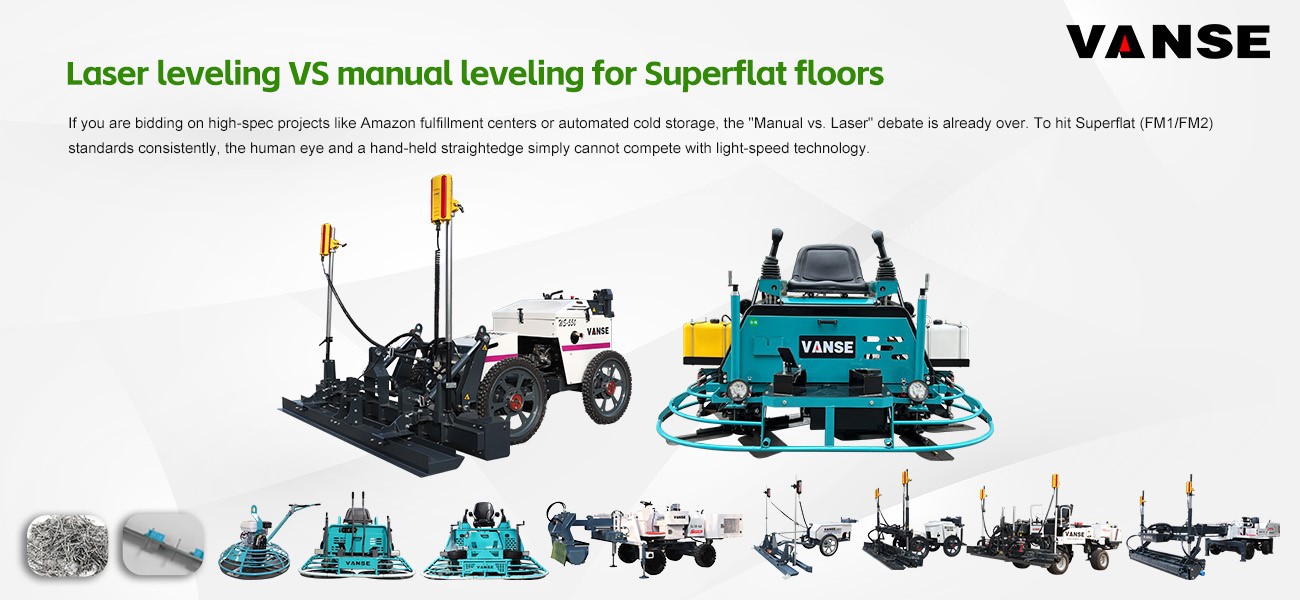
If you are bidding on high-spec projects like Amazon fulfillment centers or automated cold storage, the "Manual vs. Laser" debate is already over. To hit Superflat (FM1/FM2) standards consistently, the human eye and a hand-held straightedge simply cannot compete with light-speed technology.
But why exactly is the shift happening globally? If you’re a contractor weighing the investment, here is the professional breakdown of Laser leveling vs. Manual leveling and why the "Vanse System" is the modern industry standard.
1. The Precision Gap: FF/FL Numbers Don't Lie
Manual leveling relies on the physical stamina of the crew. By the 4th hour of a pour, fatigue sets in, and those "tight" tolerances begin to slip.
Manual: Even the best crew will struggle to hit FF 30 consistently across a 1,000sqm slab.
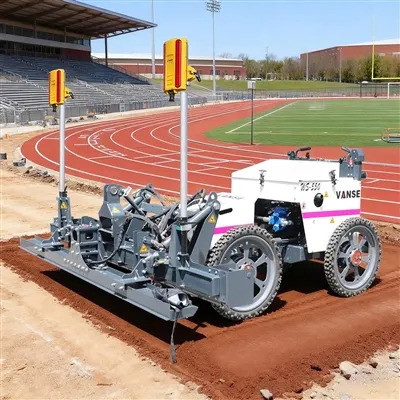
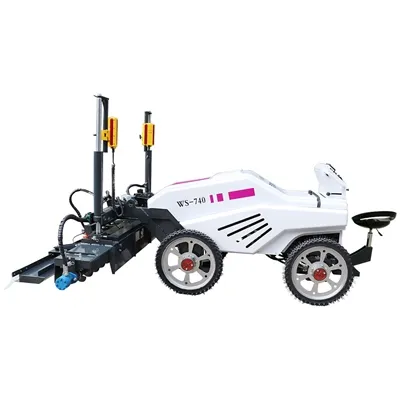
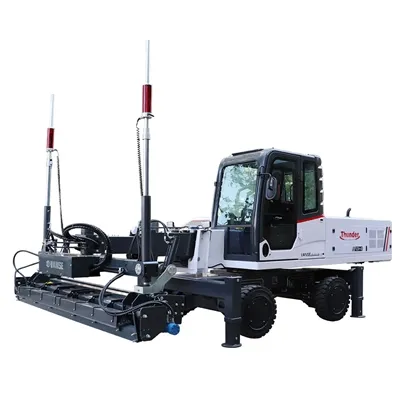
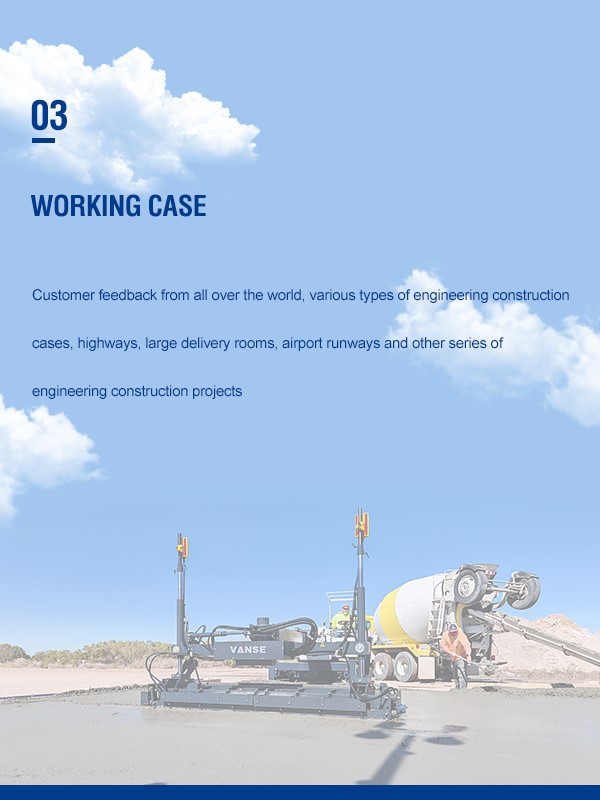
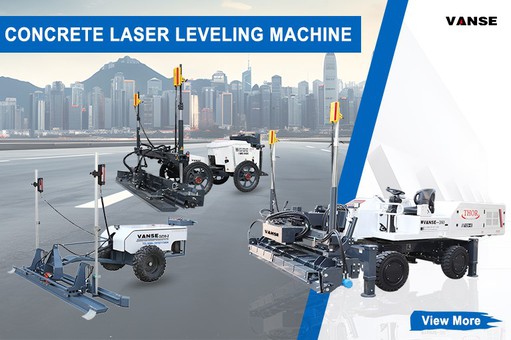
The Vanse Edge: A Vanse Concrete Laser Leveling Machine receives signals 10 times per second. It makes micro-adjustments to the hydraulic head in real-time. This automated precision is how you hit FF 50+ (Superflat) without breaking a sweat. It removes human error from the most critical stage of the pour.
2. The Efficiency Workflow: From Placement to Finish
A Superflat floor isn't just about the leveling; it’s about the entire "Value Chain." Manual crews often struggle with the sheer logistics of a large pour.
Placement: Instead of 6 guys with shovels struggling to move wet concrete, pros use a Vanse Concrete Distributor or a Mini Dumper. These tools place the concrete exactly where it needs to be, preventing the "mounds" that make leveling difficult.
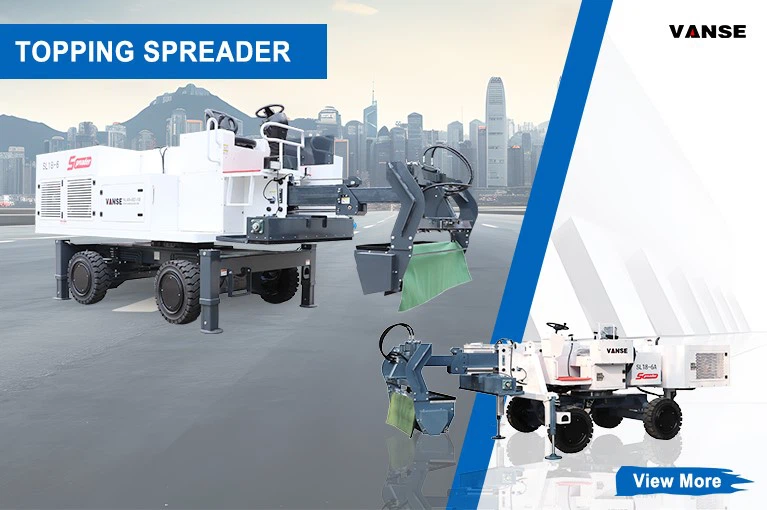
Leveling: While the Laser Leveling Machine strikes off the floor, the Vanse Automatic Topping Spreader can follow behind to apply wear-resistant hardener with mechanical uniformity-something a manual thrower can never achieve.
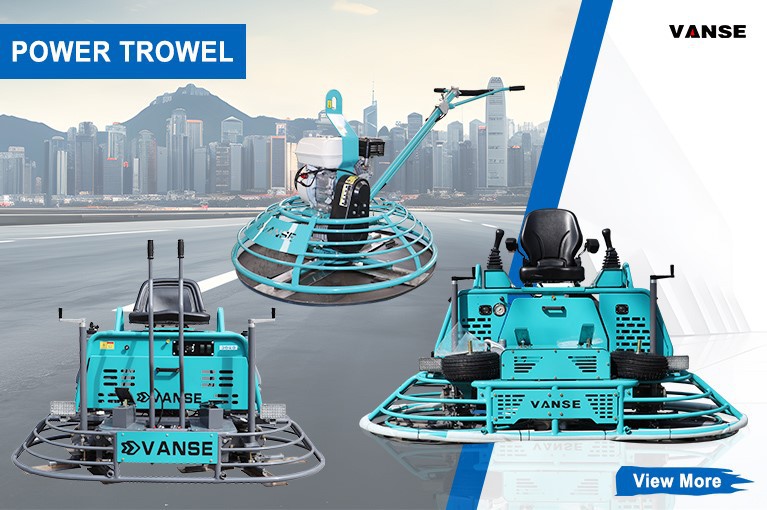
Finishing: To turn that level slab into a mirror, you need torque. A Vanse Ride-on Power Trowel provides the heavy compaction needed to "burnish" the floor, closing the pores that manual floating leaves open
3. Labor Savings: From 12 Men to 5
In the international market, labor isn't just expensive; it’s hard to find.
The Math: A manual Superflat pour requires a "dream team" of 10–15 highly skilled laborers.
The Vanse Reality: With the right equipment, you can cut your specialized crew by 60%. One operator on the laser leveling, one on the Mini Dumper, and two on the Power Trowels. You produce 3x the square meters with half the people. The machine doesn't get tired, doesn't call in sick, and produces the same quality at 4 PM as it did at 8 AM.
4. Risk Management: Avoiding the "Grind"
If a manual floor fails the FF/FL test, your profits vanish into "rework" (grinding and patching).
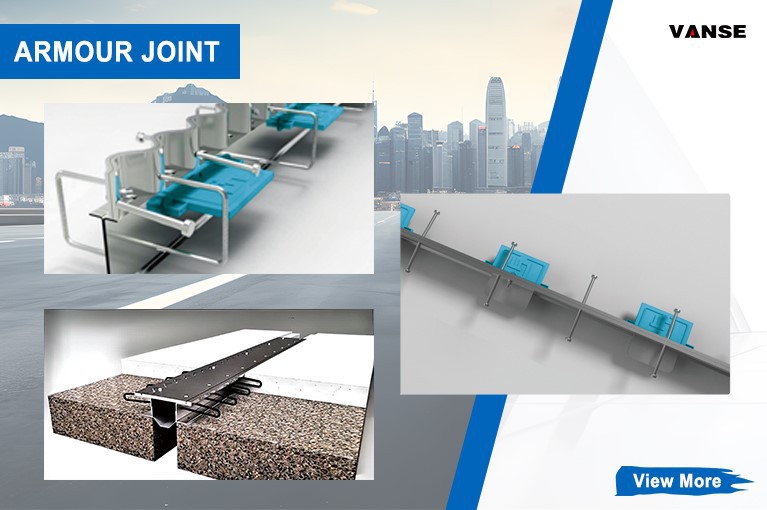
Long-term Quality: Once the floor is set, a Vanse Concrete Cutting Machine (Floor Saw) ensures the joints are crisp and straight. This prevents the "spalling" and cracking that often plagues manually-leveled floors where the concrete wasn't consolidated uniformly.
Comparison Summary: Which One Wins?
| Feature | Manual leveling | Vanse Laser leveling System |
| Precision (FF/FL) | Variable (Human Error) | High/Superflat (Automated) |
| Production Speed | 400 – 600 m²/day | 2,500 – 3,500 m²/day |
| Labor Requirement | High (12+ people) | Low (4-6 people) |
| Surface Hardness | Uneven | Superior (Uniform Compaction) |
| Physical Strain | Extreme | Low (Machine-driven) |
| ROI | Low (High Labor + Rework Risk) | High (Speed + Guaranteed Spec) |
Final Word
Manual leveling belongs to the past. If you want to bid on the world's most demanding logistics and industrial projects, you need the precision of a Vanse fleet. From the initial transport with a Mini Dumper to the final pass of the Power Trowel, Vanse (www.vansemac.com) provides the technology to turn a simple concrete pour into a world-class asset.
Ready to upgrade your production? Explore the full range of Superflat solutions at Vanse Machinery and start hitting those high FF numbers today.
Note: The parameters provided in this document are for reference only and are not mandatory. Due to differences in technical characteristics between different brands and models of laser levelers, please consult the manufacturer for a suitable solution before actual operation. This reference document assumes no responsibility for any issues arising from failure to follow the manufacturer's instructions.
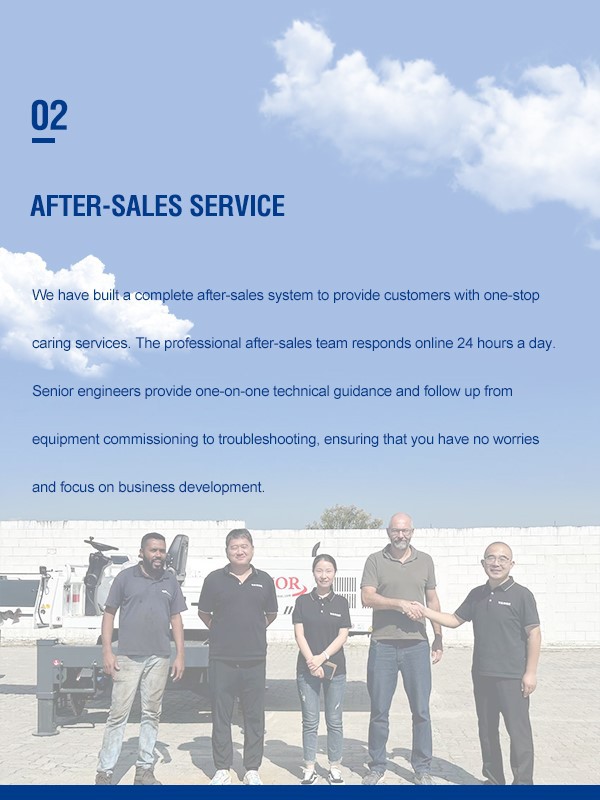
Thanks to All the Friends Who Support and Trust Shandong Vanse Machinery Technology Co., Ltd.
If you want to know more about Shandong Vanse Machinery Technology Co., Ltd. or have any questions, please feel free to contact us:
Our Factory
Shandong Vanse Machinery Technology Co., Ltd.
Share this article

About the Author: Shandong Vanse Machinery Technology Co., Ltd.
Shandong Vanse Machinery Technology Co., Ltd. is a high-tech manufacturer specializing in concrete construction machinery, including laser screeds and related equipment. The company integrates R&D, production, and global sales, with products exported to over 60 countries and widely used in infrastructure projects worldwide.
Previous Post
Next Post
Related Articles
You Might Also Like
Analysis of the correlation between the causes of common surface defects (such as color difference, scratches, and peeling) during construction and the operation of concrete laser leveling machine
Concrete laser leveling machines are powerful tools for achieving high-precision floors, but if not operated properly, they can also directly cause or exacerbate various surface defects. The following will conduct a detailed analysis of the causes of three common defects: color difference, scratches, and peeling, and will focus on elaborating their correlation with the operation of laser leveling machines. The laser leveling machine itself is a neutral tool, but parameters such as its operation timing, traveling speed, knife plate Angle, and vibration frequency will directly affect the bleeding, slurry distribution, and density of the concrete surface, thus becoming the "cause" or "inducement" of surface defects. Defect description: After the floor was completed, there were uneven colors, with some areas being darker and others lighter. The essence of color difference lies in the uneven composition of the surface slurry and the distribution of moisture. Specifically, it is manifested as Uneven water-cement ratio: Excessive or insufficient moisture in some areas. Bleeding phenomenon: Water is overly vibrated or squeezed onto the surface. After evaporation, it leaves cement slurry, which is bluish and dark in color. Slurry deficiency: Insufficient surface mortar, exposed aggregates, light and grayish color. Operational issues The mechanism causing color difference Intensity of correlation 1. The timing of the leveling was inappropriate • Premature leveling: When the concrete is still bleeding in large quantities, the knife plate of the leveling machine will stir and mix the water and slurry, disrupting the natural bleeding process and causing local water spots. Extremely high • Late leveling: The concrete has already begun to set, and the trowel cannot bring sufficient slurry to the surface, resulting in slurry loss, exposed aggregates, and the formation of light-colored patches. 2. Uneven walking speed • Excessive speed: The knife plate fails to bring sufficient mortar to the surface in time, resulting in uneven coverage of the mortar. High • Speed fluctuates: In the slow zone, the equipment will rub the concrete excessively, causing concentrated bleeding and darkening of the color. In the rapid area, the slurry is insufficient and the color becomes lighter. 3. Improper vibration frequency • Excessive vibration frequency: Especially when the slump of concrete is large, excessive vibration will intensify bleeding, causing a large amount of water and fine particles to float up, forming dark water marks or slurry spots. High 4. The Angle and height of the knife plate were set incorrectly • Too flat Angle (too small attack Angle) : The blade mainly serves to level rather than lift the slurry, which may result in insufficient surface slurry. Medium • Too steep Angle: Excessive compression of concrete can also promote bleeding. • The height setting is too low: The knife plate overly compresses the concrete surface, forcing the slurry and water to float up. Summary: Improper operation of the laser leveling machine is one of the direct causes of color difference. By controlling the "waiting time" (allowing the concrete to have a stable bleeding process), maintaining a uniform speed, and adjusting the vibration frequency according to the state of the concrete, color differences can be greatly avoided. Defect description: Obvious knife plate scratches or "serpentine" trajectories appear on the surface. The direct cause of the scratches is that the knife plate of the leveling machine left marks on the initially formed surface, and these marks cannot heal by themselves before the concrete solidifies. Operational issues The mechanism that causes scratches Intensity of correlation 1. The knife plate is not clean The initially set concrete blocks bonded on the knife plate will create deep grooves on the new surface. This is the most common reason. Extremely high 2. The timing for leveling was too late The concrete has entered the initial setting period and lost its fluidity. At this moment, the blade was not leveling but plowing the land, and the marks left could not be smoothed and healed. Extremely high 3. Walking too fast The blade quickly cuts across the surface, and the concrete has no time to level and merge behind the blade, forming waves and marks. High 4. The equipment jolts up and down The base layer is uneven or the equipment's tracks/tires are moving on the soft concrete, causing the leveling head to rise and fall accordingly. The knife plate cuts into the surface too deeply, forming periodic dents. High The laser signal receiver is subject to vibration and constantly corrects the height of the machine head, which can also cause slight jolts. 5. The material or type of the knife plate is inappropriate For fast-setting concrete, using hard plastic knife plates can reduce scratches more effectively than using metal knife plates. Medium Summary: Scratches are almost 100% related to the operation of the leveling. Keeping the knife board clean, mastering the correct construction window period, and maintaining a uniform and stable operation on a flat base layer are the keys to eliminating scratches. Defect description: A layer of slurry or mortar on the surface separates from the lower layer of concrete, with extremely low strength. It can be easily scraped off by hand or with a hard object. The mechanism of peeling is that a weak layer with an excessively high water-cement ratio and low strength is formed on the surface, which fails to combine well with the main structure. This weak layer mainly comes from: Excessive bleeding: A large amount of water rises to the surface, forming a layer of cement slurry with an extremely high water-cement ratio. Secondary surface finishing damage: When there is bleeding on the surface, troweling is carried out to press the cement slurry back to the surface layer. Surface loss of mortar: The operation of the leveling machine "takes away" or "destroys" the valuable mortar on the surface. Operational issues The mechanism causing peeling Intensity of correlation 1. Excessive vibration frequency/premature timing Excessive vibration during the bleeding period of concrete is the primary cause of excessive bleeding. A large amount of water and fine particles are forcibly discharged to the surface, forming a weak layer. This layer of slurry has a large shrinkage and low strength, and is very prone to peeling. Extremely high 2. The height of the knife plate is set too low The knife plate penetrates deep into the concrete like a "plough", not only squeezing and bleeding water, but also destroying the already compacted aggregate structure, causing segregation between the slurry and the aggregates, and forming a rich slurry layer without aggregates on the surface, which is prone to peeling. High 3. Too many leveling operations Repeatedly leveling the same area back and forth is equivalent to repeatedly disturbing and rubbing the surface, which aggravates bleeding and damage to the surface structure. Medium 4. Indirect impact: Creating adverse conditions Improper operation of the leveling machine can cause severe bleeding or color difference. When workers operate on it later, improper finishing timing (working when there is standing water) will increase the risk of peeling. Indirect Summary: The laser leveling machine is the key cause of peeling. Excessive vibration and improper pressure on the knife plate are the main culprits for the formation of a weak surface layer. Controlling vibration and avoiding excessive leveling are at the core. Defect Key control points of the laser leveling machine Supporting management measures Color difference Seize the opportunity: Wait until the bleeding stabilizes before starting to level it. Ensure the stability of the concrete mix ratio and the consistency of the slump. 2. Walk at a constant speed: Maintain a stable and appropriate speed. Ensure uniform unloading and avoid uneven local dryness and wetness. 3. Adjust the vibration properly: Dynamically adjust the frequency according to the slump of the concrete. Scratch 1. Keep clean: Clean the adhesive material on the knife plate at all times. • Ensure proper equipment maintenance to guarantee the stability of the hydraulic and control systems. 2. Seize the time: Complete all leveling work before the initial setting. Train the operators to be familiar with the setting characteristics of concrete. 3. Smooth operation: Ensure the base is flat and the equipment moves smoothly. Peeling 1. Avoid over-vibration: It's better to have less than more, especially during the bleeding period. Optimize the concrete mix proportion to reduce bleeding. 2. Set the height: The height of the knife plate should be set just to level it. Do not press it down. The education light collection team must carry out the light collection when there is no bleeding. 3. Reduce the frequency: Plan the path well to avoid repetitive work. Conclusion: The operator of a laser leveling machine is not only the equipment driver but also the "sculptor" of the concrete surface. He must have a profound understanding of the rheological properties of concrete (bleeding and setting), and through precise control of the parameters of the equipment in his hand, guide the concrete to form a uniform, dense and smooth surface. Any mechanized operation that is detached from the state of the concrete (" acting on the material ") is highly likely to cause surface defects. Note: The parameters provided in this document are for reference only and are not mandatory. Due to differences in technical characteristics between different brands and models of laser levelers, please consult the manufacturer for a suitable solution before actual operation. This reference document assumes no responsibility for any issues arising from failure to follow the manufacturer's instructions.The good choice to improve efficiency, the most cost-effective concrete laser leveling machine
With the continuous development of the world economy and the continuous increase of the world's population, the construction industry is also booming. The technical level of the construction industry continues to improve. Take floor construction for example! In the past, our floors may have been finished manually, but now laser leveling machines have appeared. It is completely suitable for occasions that could only be handled manually. However, with the rapid development of the economy, there are more and more such machines, so that people do not know how to choose them. So how do we choose a cost-effective machine? It should not be difficult for us to know that there is a concrete laser leveling machine used for large-area floor construction, so we first need a machine with a small flatness error to complete the project to avoid major changes in the entire project due to a small error. So the second question is, how long will it take us to complete such a large-area project? Therefore, we have to choose a machine with a large workload. For example, Aolide has a small machine that can complete an area of more than 1,500 square meters in just half a day. It is a good choice in this regard. Finally, it's cost-effectiveness. Many machines are high-priced but low-profile equipment, which costs a lot of money. Well, according to my experience, when constructing a building and watching their workers complete the construction bit by bit, using a small laser leveling machine, the entire project is very beautiful. . Although this small machine has a small body and head, it does have a great effect. Therefore, this type of small machinery is very popular on the market now, and it can also be recycled, recycled and disassembled to meet individual needs.What else should we pay special attention to in the safe operating procedures of concrete laser leveling machines?
✔ Equipment inspection and preparation Before operating a concrete laser leveling, you must ensure that the equipment has been thoroughly inspected and is in good working order. The following are specific requirements for equipment inspection and preparation: 1. Equipment appearance inspection: Check whether the appearance of the leveler is intact and there is no obvious damage, deformation or rust. 2. Power system inspection: Check whether the fuel, lubricating oil and water levels are normal, and whether the engine starts and runs smoothly without abnormal sounds. 3. Laser system inspection: Ensure that the laser transmitter, receiver and control system are working properly, and the laser beam is stable and has no deviation or flickering. 4. Tire and track inspection: Check whether the tires or tracks are intact, whether the air pressure or tension meets the requirements, and whether there is any damage or excessive wear. 5. Safety protection device inspection: Check whether all safety protection devices, such as guards, safety switches, etc. are intact and installed correctly. 6. Electrical system inspection: Check whether electrical components such as cables, plugs, and sockets are intact and free of damage or aging. Special note: During the equipment inspection, if any abnormalities or failures are found, you must stop using it immediately and contact professionals for repair in a timely manner. ✔ Personnel training and safety Personnel operating concrete laser levelings must receive professional training and have corresponding operating skills and safety awareness. The following are specific requirements for personnel training and safety. 1. Professional training: Operators should receive operational training provided by manufacturers or professional training institutions to understand the structure, principles, operating procedures and safety precautions of the equipment. 2. Operating skills: Operators should be proficient in basic operating skills such as starting, stopping, adjusting, maintaining and maintaining equipment. 3. Safety awareness: Operators should have a high degree of safety awareness, understand potential safety risks, and know how to prevent and respond to these risks. 4. Wear protective equipment: Operators should wear protective equipment that meets the requirements during work, such as safety helmets, work shoes, gloves, etc. Special note: Personnel without professional training or without corresponding operating skills are strictly prohibited from operating the concrete laser leveling. ✔ Work environment assessment Before using the concrete laser leveling, the working environment must be evaluated to ensure that the equipment can work in a safe and stable environment. The following are specific requirements for a work environment assessment. 1. Ground conditions: Evaluate the flatness, hardness and stability of the working ground to ensure that the equipment can drive and work normally. 2. Climatic conditions: Pay attention to the climatic conditions of the work area, such as temperature, humidity, wind, etc., to ensure that the equipment can adapt to the current environment. 3. Traffic and obstacles: Assess the traffic conditions and obstacles in the work area to ensure that the equipment will not collide with other objects during driving and operation. 4. Power supply: Ensure a stable power supply in the work area to meet the needs of equipment charging or power supply. Special note: During the work environment assessment process, if any factors that may affect equipment safety or operating results are discovered, corresponding measures must be taken promptly to improve them. ✔ Safety during work During the operation, operators should strictly abide by operating procedures to ensure the safety of themselves and equipment. The following are safety requirements during operations: 1. Stay focused: Operators should stay focused at all times, pay close attention to the operating status of the equipment and the working environment, and promptly discover and deal with potential safety risks. 2. Standardized operation: Operators should start, drive, operate and stop the equipment in accordance with operating procedures. Child-violating operation or speeding is strictly prohibited. 3. Pay attention to the laser system: During the operation, the operator should always pay attention to the operation of the laser system to ensure that the laser beam is stable and guide the operation correctly. 4. Maintain a safe distance: During the operation, the operator should maintain a safe distance from the equipment and other personnel to prevent accidents such as collision or extrusion. 5. Timely shutdown and inspection: During the operation, if any abnormality or safety hazard is found in the equipment, the operator should immediately stop the machine for inspection and contact professionals for repair in a timely manner. Special note: During the operation, any behavior that violates operating procedures or may lead to safety accidents must be stopped immediately and corresponding measures must be taken to correct it. ✔ Maintenance and care In order to ensure the normal operation of the equipment and extend its service life, the equipment must be maintained and maintained regularly. The following are the specific requirements for maintenance and upkeep: 1. Regular cleaning: Clean the equipment regularly to remove dust and stains on the surface and keep the appearance of the equipment tidy. 2. Check and replace lubricating oil: Check and replace the lubricating oil of the equipment according to the manufacturer's recommended intervals and requirements to ensure the lubrication and normal operation of the equipment's moving parts. 3. Check and tighten connecting parts: Regularly check whether the connecting parts of the equipment, such as bolts, nuts, etc., are loose or damaged, and tighten or replace them in time. 4. Check the wear of tires and tracks: Check the wear of tires or tracks regularly. If the damage is serious, replace it in time. 5. Laser system calibration: Calibrate the laser system regularly to ensure the accuracy and stability of the laser beam. Special note: When performing maintenance and upkeep, the manufacturer's operating instructions and safety requirements must be followed to ensure the safety and effectiveness of the operation process. ✔ Emergency response When equipment malfunctions or emergencies occur, operators should quickly take appropriate emergency measures. During the operation of the concrete laser leveling, equipment failures, safety accidents or other emergencies may be encountered. Therefore, operators must have emergency response capabilities to ensure the safety of personnel and equipment. The following are the specific requirements and measures for emergency response: 1. Equipment fault handling: * Once a malfunction or abnormality is found in the equipment, the operator should stop it immediately and cut off the relevant power supply or power source. * Quickly assess the nature and possible scope of the fault, and take necessary precautions to prevent the fault from expanding or causing secondary accidents. * Notify equipment management personnel or professional maintenance personnel to come to the scene for troubleshooting and repair. Operators should cooperate with maintenance personnel in carrying out maintenance work. 2.Safety incident handling: * When a safety accident occurs, first ensure the safety of personnel, quickly evacuate the scene, and take necessary first aid and rescue measures. * Immediately report to superior management or relevant departments, and initiate emergency response procedures in accordance with the emergency plan. * Cooperate with the accident investigation team to conduct accident investigations, analyze the causes of accidents, propose corrective measures, and accept corresponding treatment. 3. Emergency handling: * In case of emergencies, such as natural disasters or emergencies such as fires and earthquakes, operators should stop the machine immediately and follow the emergency evacuation procedures in the emergency plan to ensure the safe evacuation of personnel. * Cut off the power supply of the equipment and other potential sources of danger to prevent the accident from expanding or causing secondary disasters. * Report emergencies to relevant departments in a timely manner and coordinate responses in accordance with the instructions of the emergency plan. ✔ Special Note: • Operators should be familiar with the contents of emergency plans and emergency response procedures, and conduct regular emergency drills and training to improve emergency response capabilities. • During emergency response, stay calm and decisive, follow the instructions in the emergency plan, and do not panic or act blindly. • During emergency response, priority should be given to ensuring the safety of personnel while minimizing equipment losses and environmental impact. ✔ Summary The safe operating procedures of concrete laser leveling machines are an important guarantee to ensure the safety and stable operation of the equipment and the safety of the operators. Through the specific requirements and measures described in this article for equipment inspection and preparation, personnel training and safety, working environment assessment, safety during operation, maintenance and emergency response, etc., we can effectively reduce the probability of safety accidents and protect personnel. life safety and improve the reliability and service life of equipment. Therefore, operators and managers should strictly abide by these procedures and continuously strengthen safety awareness training to ensure the safe and efficient operation of concrete laser leveling machines.