Technical Knowledge
Can self-leveling cement repair concrete floors?
Self-leveling cement is a special concrete material with the characteristics of strong fluidity, high strength, low shrinkage and high density. Therefore, it can be used to repair cement floors, but there are some issues that need to be paid attention to.
First of all, for cement floors that are not seriously damaged, you can clean the floor first, and then use an appropriate amount of self-leveling cement to repair it. Before repairing, you can mix the self-leveling cement with an appropriate amount of water, stir evenly, and then pour it on the damaged floor to allow it to level naturally. After the self-leveling cement dries, you can get a repaired flat floor.
Secondly, for severely damaged cement floors, the damaged floors need to be completely removed first and then repaired with self-leveling cement. Before repairing, the ground needs to be leveled first, using cement mortar or concrete. After leveling, mix the self-leveling cement with an appropriate amount of water, pour it on the ground, and let it level naturally. After the self-leveling cement dries, you can get a repaired flat floor.
It should be noted that the amount of self-leveling cement should not be too much, otherwise it will increase the thickness of the ground and affect its service life. At the same time, the ground needs to be cleaned and leveled before repairing, otherwise the repair effect will be affected.
In short, self-leveling cement can be used to repair cement floors, but it needs to be selected and used according to the actual situation. If used properly, good repair results can be obtained and the service life of the floor can be extended.
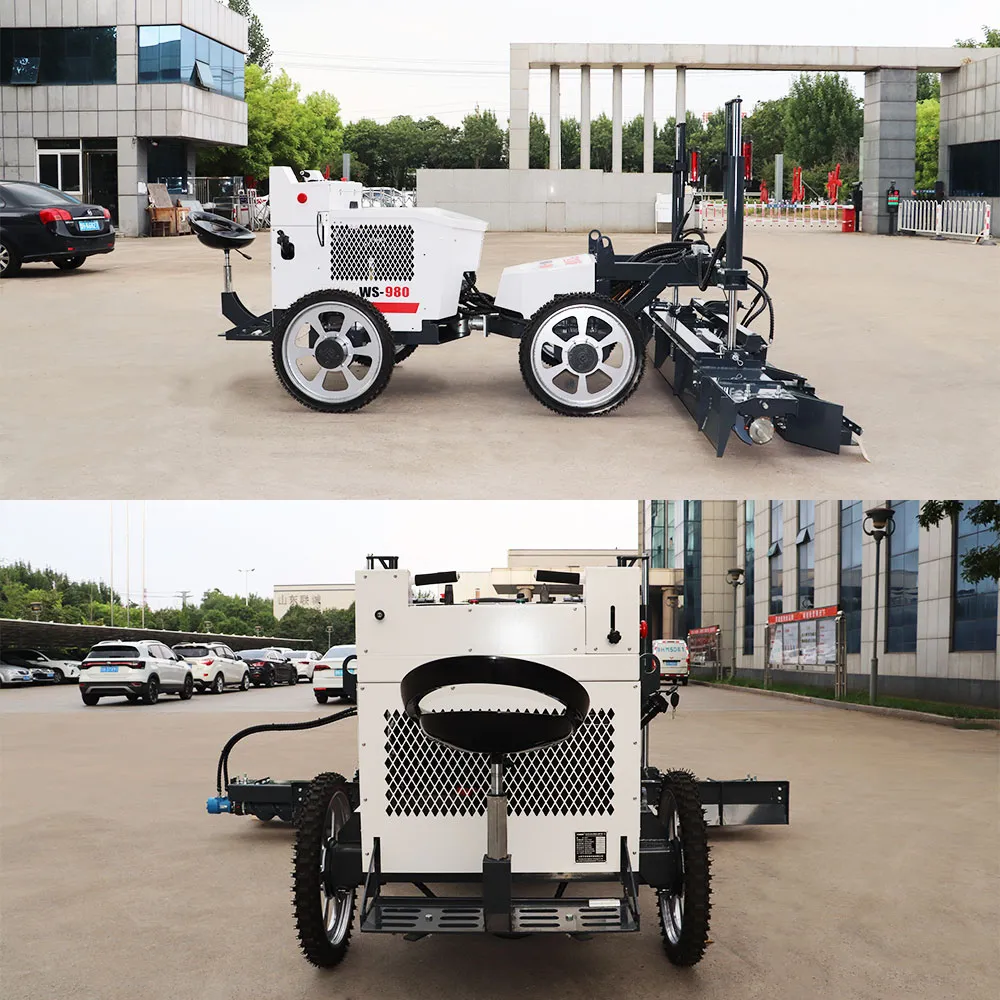
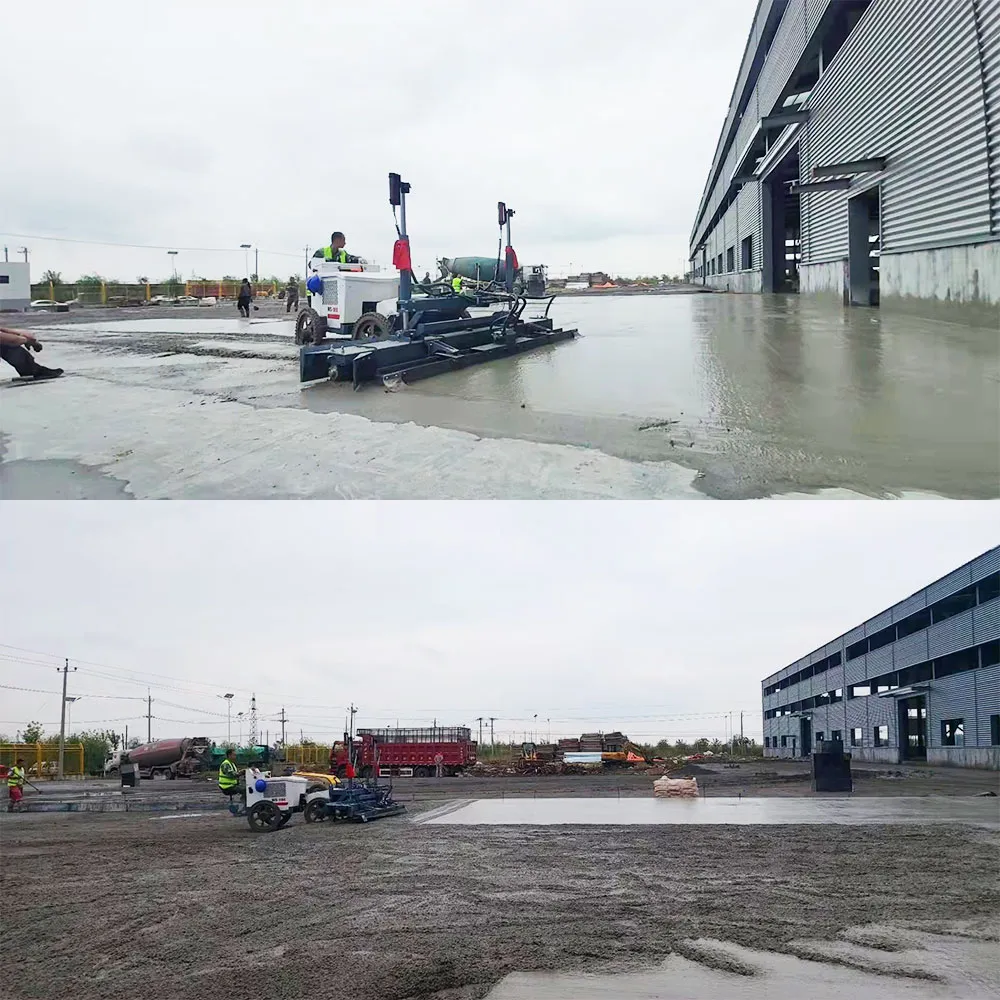
Thanks to All the Friends Who Support and Trust Shandong Vanse Machinery Technology Co., Ltd.
If you want to know more about Shandong Vanse Machinery Technology Co., Ltd. or have any questions, please feel free to contact us:
Our Factory
Shandong Vanse Machinery Technology Co., Ltd.








Share this article

About the Author: Shandong Vanse Machinery Technology Co., Ltd.
Shandong Vanse Machinery Technology Co., Ltd. is a high-tech manufacturer specializing in concrete construction machinery, including laser screeds and related equipment. The company integrates R&D, production, and global sales, with products exported to over 60 countries and widely used in infrastructure projects worldwide.
Previous Post
Next Post
Related Articles
You Might Also Like
What’s the advantage of a concrete power trowels? How to choose?
A trowel is a device used to polish and polish concrete surfaces. It can help the construction team make the surface smoother and flatter when building concrete structures such as floors, floors, and bridges, and improve the strength and durability of the structure. Trowel machines have the following advantages: 1. Improve work efficiency: The trowel machine has high working efficiency and can quickly polish large concrete structures, such as floors, floors, bridges, etc., improving construction efficiency. 2. Improve surface quality: The surface of concrete polished by a trowel is smoother and smoother, and can meet high standards of surface quality requirements. 3. Reduce labor costs: Compared with traditional manual polishing methods, troweling machines can greatly reduce labor costs and improve construction efficiency. When purchasing a trowel machine, you need to consider the following factors: 1. Power and speed: The trowel needs to have sufficient power and speed to polish the concrete surface quickly and improve work efficiency. 2. Weight and size: The trowel needs to have a certain weight and size for stable operation during construction and for easy portability and storage. 3. Operation comfort: The trowel machine needs to be comfortable to operate so that construction workers can use it for a long time and reduce fatigue and labor intensity. 4. Brand and quality: Choosing a well-known brand and high-quality troweling machine can ensure the performance and durability of the machine, and you can also get better after-sales service. In short, the trowel is an efficient and high-quality concrete surface treatment equipment that can help the construction team improve construction efficiency and quality. When purchasing a troweling machine, you need to consider factors such as power and speed, weight and size, operating comfort, etc. At the same time, choosing a well-known brand and high-quality troweling machine can ensure the performance and durability of the machine.Differentiated considerations for the selection of concrete laser leveling machine in indoor and outdoor projects
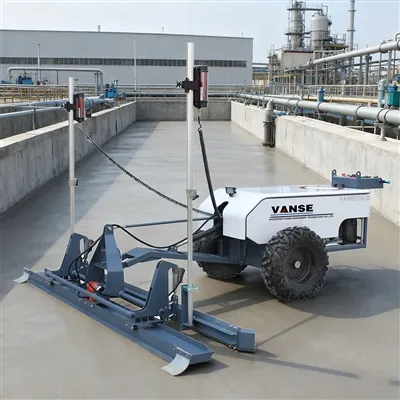
There are significant differences in the selection considerations of concrete laser leveling machine for indoor and outdoor projects, mainly due to the differences in engineering environments, concrete properties, technical requirements, and the quality goals of the final products. The following will elaborate on this differentiated consideration in detail from multiple dimensions: Interior engineering: Greater emphasis is placed on precision, efficiency, flexibility and environmental protection. The ground, as the final finish or the foundation for supporting precision equipment, has extremely high requirements for flatness and levelness. Outdoor engineering: More emphasis is placed on equipment power, passability, anti-interference ability and adaptability to the base layer. In the face of harsh environments, large aggregate concrete and complex base conditions, the stability and "brute force" of the equipment are the key. Dimension of consideration Dimension of consideration Interior engineering Outdoor engineering 1. Ground accuracy requirements Extremely high Relatively low The flatness (FF/FL) requirement is high, and it is often necessary to meet the super-flat floor standard (such as FF≥50, FL≥35). Most of them are road surfaces, storage yards, squares, etc., and the requirement for flatness is lower than that for indoor areas. It is used in warehouses, logistics centers, precision manufacturing workshops, etc., directly affecting the operational efficiency of equipment and the stability of shelves. The allowable error range is larger, but it is necessary to ensure that the drainage slope meets the design requirements. 2. Device type preference First choice: Wheeled concrete laser leveling machine First choice: Wheeled (large tire) laser leveling machine • Advantages: Low grounding specific pressure, which will not cause damage to the base layer or the already laid steel mesh. It walks smoothly with low vibration and has the highest leveling accuracy. It turns flexibly and is suitable for areas with complex shapes. • Advantages: Good mobility and fast transfer speed; It has a high ground clearance, strong passability and can adapt to uneven base surfaces. Tires have better tolerance for rough substrates. 3. Grassroots conditions and passability Good conditions The conditions are complex and changeable. The base layer is usually compacted and leveled, with a smooth and solid surface. The base layer may be compacted soil base or crushed stone layer, which may be uneven and soft. There may be obstacles such as columns and walls in the space, which requires the equipment to be mobile and flexible. There may be slopes and potholes, so the equipment is required to have good passability and strong driving force. 4. Concrete properties The slump is small Large slump and large aggregate Most of them are fine aggregate concrete with small aggregate particle size and low slump (dry-hard concrete), which is convenient for laser leveling machines to complete compaction and leveling in one go. Coarse aggregate concrete is often used, and the aggregate particle size is large. The slump may be relatively high, and the requirements for the disturbance and subsidence control capabilities of the leveling are different. 5. Laser system High precision and multi-adaptability Strong anti-interference ability A laser system must be used and the accuracy of the receiver is required to be high. Both laser systems and GPS systems can be used. In multi-storey buildings, the deflection of floor slabs needs to be taken into account. Sometimes, multi-point laser or GPS systems are required to simulate the preset camp. GPS has obvious advantages in large outdoor areas, with no problem of visual obstruction and no need to frequently move base stations. The laser system needs to take into account the influence of strong outdoor light and strong wind on the stability of the laser signal. 6. Power system Mainly electric or electric + hydraulic Mainly high-power diesel engines • Electric: Zero emissions, low noise, highly suitable for construction in confined Spaces, meeting indoor environmental protection requirements. • Diesel engine: It offers powerful traction and vibration power, capable of handling large-aggregate concrete and complex substrates. The power demand is relatively low. The requirements for emissions and noise are relatively lenient. 7. Environmental Protection and Working Environment Demanding The requirements are lenient It must be low-noise and have zero emissions to avoid polluting the indoor air. It has relatively low requirements for noise and emissions. The size of the equipment should take into account the size restrictions of construction elevators and door openings. The working environment is harsh (sun exposure, rain, and dust), which requires the equipment to have a high protection level and a sturdy and durable structure. 8. Construction efficiency and area High efficiency, medium and small area Continuous operation over an extremely large area The daily construction area is large, but the individual operation surface is usually smaller than the outdoor area. It is commonly seen in airports, highways and large squares, with a huge single pouring area. Efficiency is reflected in the rapid leveling with high precision, reducing subsequent manual repairs. Efficiency is reflected in the continuous and uninterrupted large-scale paving and leveling capabilities. Step 1: Clarify the project attributes (indoor/outdoor) If it is an interior project Precision requirement: Does it meet the standard of super-flat floor? Yes -> Give priority to high-precision tracked types. Space limitations: Are there any obstacles such as columns or walls? Is the size of the door opening restricted? Yes -> Choose small-sized or equipment with column anti-blocking function, such as Vanse YZ30-4E Environmental protection requirements: Is it a sealed or clean environment? Yes -> Electric power must be chosen. Concrete type: Is it fine aggregate low slump concrete? Yes -> Suitable for all types of levelings. If it is an outdoor project Area and terrain: Is the area large (> 10,000 square meters) and the terrain open? Yes -> Give priority to wheeled +GPS systems. Base conditions: Is the base soft and uneven? It is -> Choose wheeled equipment with large tires, high ground clearance and strong driving force. Concrete type: Is it aggregate concrete? Yes -> Choose equipment with powerful vibration power. Slope control: Are there any complex requirements for the drainage slope? Yes -> The GPS system has more advantages in three-dimensional slope control (Vanse YZ30-4E/WS940C supports 3D system construction). In conclusion, choosing a concrete laser leveling machine for indoor and outdoor projects is essentially a trade-off between "precision" and "robustness". The core of interior selection is to find a "meticulous artist" who can carve out an extremely smooth floor within a small space in a clean environment. Wheeled, electric/diesel, and high-precision laser are its labels. The core of outdoor selection is to find a "strong warrior" that can overcome wind, rain and rough terrain, and efficiently complete the paving task in the vast expanse of the world. Wheeled and diesel power are its weapons. Correct selection not only ensures construction quality but also greatly enhances construction efficiency, reduces labor costs and safety risks. Therefore, before purchasing or leasing equipment, it is essential to conduct a comprehensive assessment based on the specific characteristics of the project. Note: The parameters provided in this document are for reference only and are not mandatory. Due to differences in technical characteristics between different brands and models of laser levelers, please consult the manufacturer for a suitable solution before actual operation. This reference document assumes no responsibility for any issues arising from failure to follow the manufacturer's instructions.What accessories can be added to power trowels to enhance their functionality for super flat floor projects
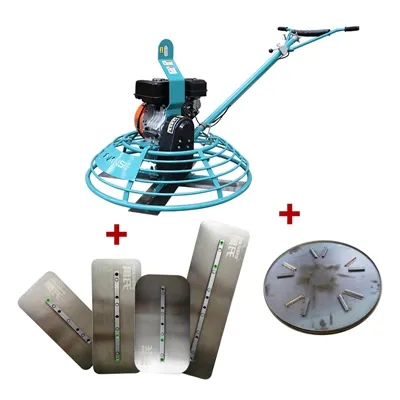
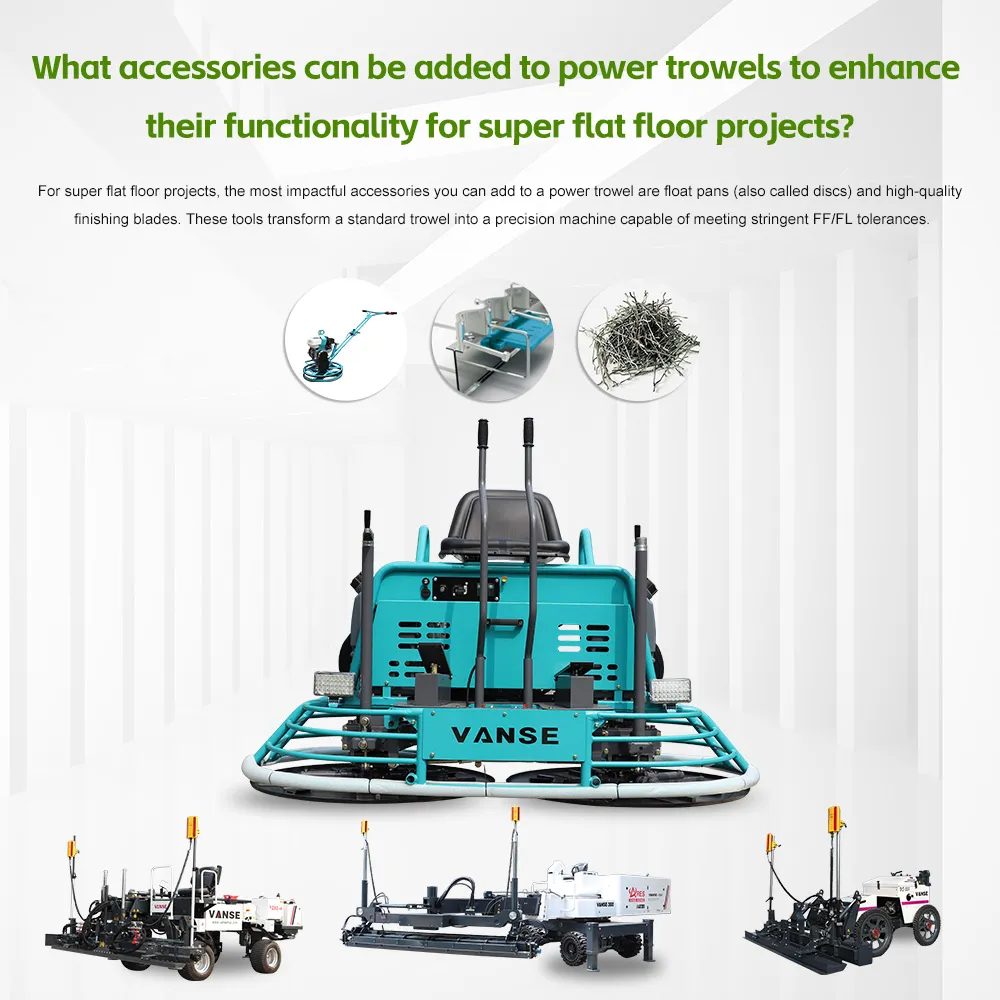
For super flat floor projects, the most impactful accessories you can add to a power trowel are float pans (also called discs) and high-quality finishing blades. These tools transform a standard trowel into a precision machine capable of meeting stringent FF/FL tolerances. Here's a breakdown of the key accessories and how they contribute to achieving a super flat finish. Objective: To prevent problems before they occur and promptly identify potential issues through daily observation. Accessory Type Function Why It's Crucial for Super Flat Floors Examples & Key Features Float Pans (or Discs) Attach over the trowel blades for the initial finishing stages Acts as a mechanical straightedge. The pan's large, flat surface bridges low and high spots, aggressively leveling the concrete and removing the swirl marks left by blades . This is the first and most critical step for establishing flatness . Superflat Pans: Specifically designed to minimize overlap lines . Z-Clip Pans: Offer secure, easy attachment . Sizes range from 30" for edgers to 47-3/4" for large ride-on trowels . Finishing Blades Used after panning to densify and polish the surface. Provide the final, smooth surface.آ For super flat work, stiff, high-quality steel blades are essential for achieving a hard, dense, and glossy finish without introducing new surface imperfections. Combination Blades: Versatile for both floating and finishing, though finish blades are preferred for the final pass on high-tolerance floors . Finish Blades: Offer a sharper edge for the final "burnishing" passes. Look for blades made from wear-resistant materials like 65MN manganese steel . While pans and blades do the direct work, these accessories improve the operator's ability to achieve and maintain flatness: Precise Blade Pitch Control: The ability to make fine, on-the-fly adjustments to the blade angle is non-negotiable. This allows the operator to control the pressure on the concrete, crucial for transitioning from panning to final finishing without creating ridges . Integrated Wheel Kits: Built-in wheel kits allow for easy and safe transport across fresh joints without damaging the newly finished slab, protecting your hard work . Onboard Lights: LED light kits enable work to continue in low-light conditions or at night, ensuring a consistent finishing process across a large pour without the interruptions of changing daylight . For the best results, consider your trowel and its accessories as a system. Many manufacturers now design their machines to be multi-stage finishing platforms. To sum it up: For a super flat floor, your essential kit is a ride-on trowel equipped with a high-quality float pan for initial leveling, a set of precision finish blades for the final polish, and the control systems to use them effectively. Would you like to know more about the specific blade materials (like alloy steel vs. polyurethane) and which is best for different types of concrete or final surface requirements? Contact us NOW Note: The parameters provided in this document are for reference only and are not mandatory. Due to differences in technical characteristics between different brands and models of laser levelers, please consult the manufacturer for a suitable solution before actual operation. This reference document assumes no responsibility for any issues arising from failure to follow the manufacturer's instructions.