Technical Knowledge
Concrete laser leveling compared to other construction methods
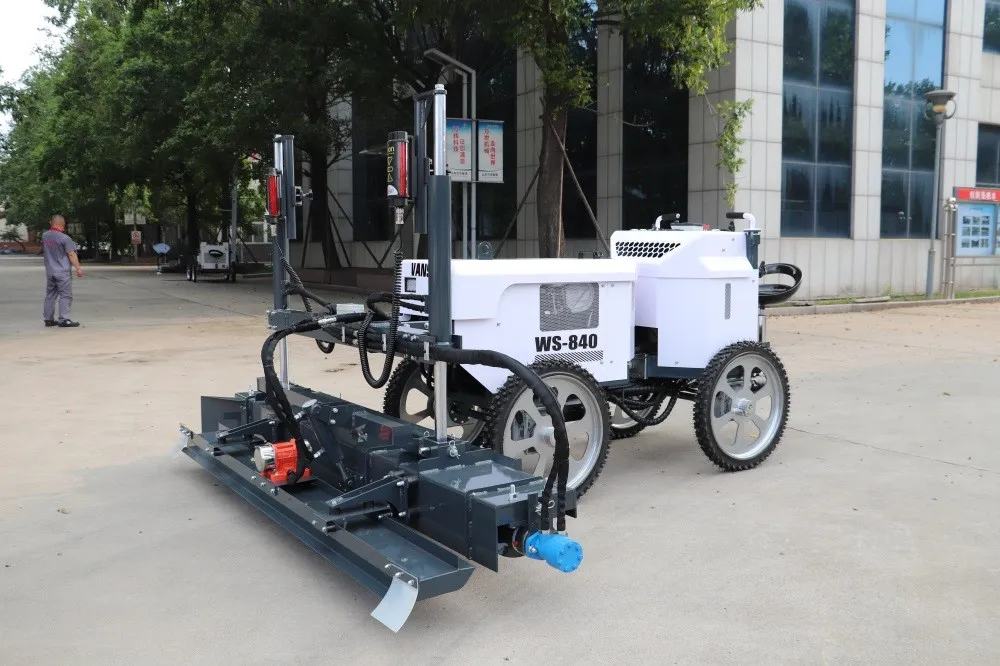
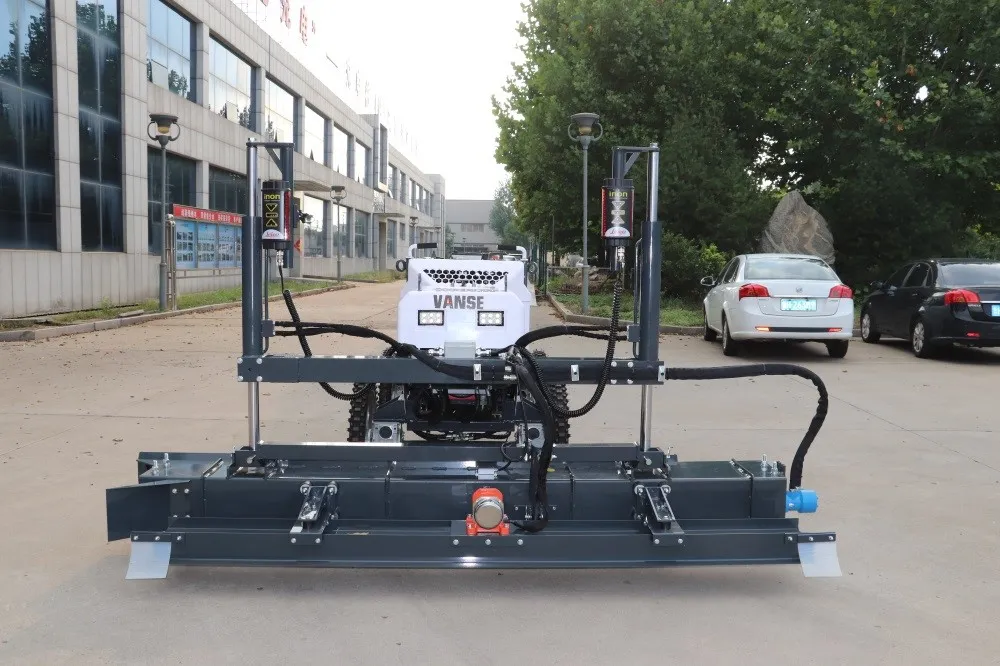
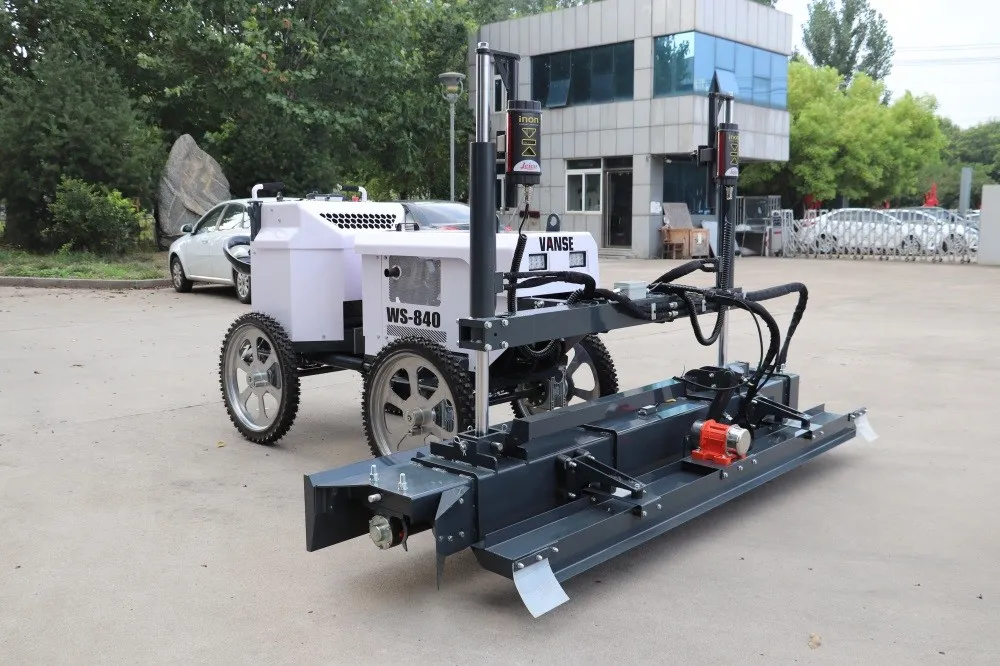
The concrete laser leveling is an advanced concrete construction equipment that uses laser technology to achieve high-precision concrete leveling. Concrete laser levelings offer many advantages over traditional manual construction methods. The following will compare the concrete laser leveling with other construction methods in terms of construction efficiency, construction quality, economic benefits and production safety.
Construction efficiency
The traditional artificial concrete leveling method requires a lot of manpower and time, and is limited by the workers' operating skills and fatigue, so the efficiency is low. In comparison, concrete laser leveling machines have higher construction efficiency. This equipment uses advanced laser technology to quickly and accurately complete large areas of concrete leveling. At the same time, the concrete laser leveling machine is simple to operate, which can reduce the interference of human factors and make the leveling work more stable and reliable. Therefore, from the perspective of construction efficiency, concrete laser levelings have obvious advantages.
Construction Quality
The quality of artificial concrete leveling methods is limited by the skills and operating accuracy of workers, and problems such as insufficient flatness and uneven concrete thickness often occur. These problems may affect the structural strength and stability of concrete, leading to safety risks. In contrast, concrete laser leveling machines use laser technology to precisely control the thickness and flatness of concrete, making the leveling work more precise and uniform. In addition, the concrete laser leveling machine can also monitor and control errors during the construction process in real time, thereby improving construction quality. Therefore, from the perspective of construction quality, concrete laser levelings have obvious advantages.
Economic benefits
Although the manufacturing cost of the concrete laser leveling is relatively high, its service life is long and it can improve construction efficiency and construction quality, thereby reducing the cost of the entire project. In contrast, traditional manual construction methods require a lot of manpower and time, and may require multiple reworks and repairs, increasing the cost of the entire project. Therefore, from the perspective of economic benefits, concrete laser levelings have obvious advantages.
Production safety
The traditional artificial concrete leveling method requires a large number of workers to be exposed to the construction site, and is susceptible to hazards and dangerous factors at the construction site, such as mechanical damage, falling objects from high altitude, etc. In contrast, concrete laser levelings are safe to operate and can reduce the time and frequency of personnel exposure to hazardous environments, thereby reducing the risk of safety accidents. In addition, the concrete laser leveling machine has a high degree of automation, which can reduce operator errors and mistakes, thereby avoiding accidents caused by human factors. Therefore, from the perspective of production safety, concrete laser levelings have obvious advantages.
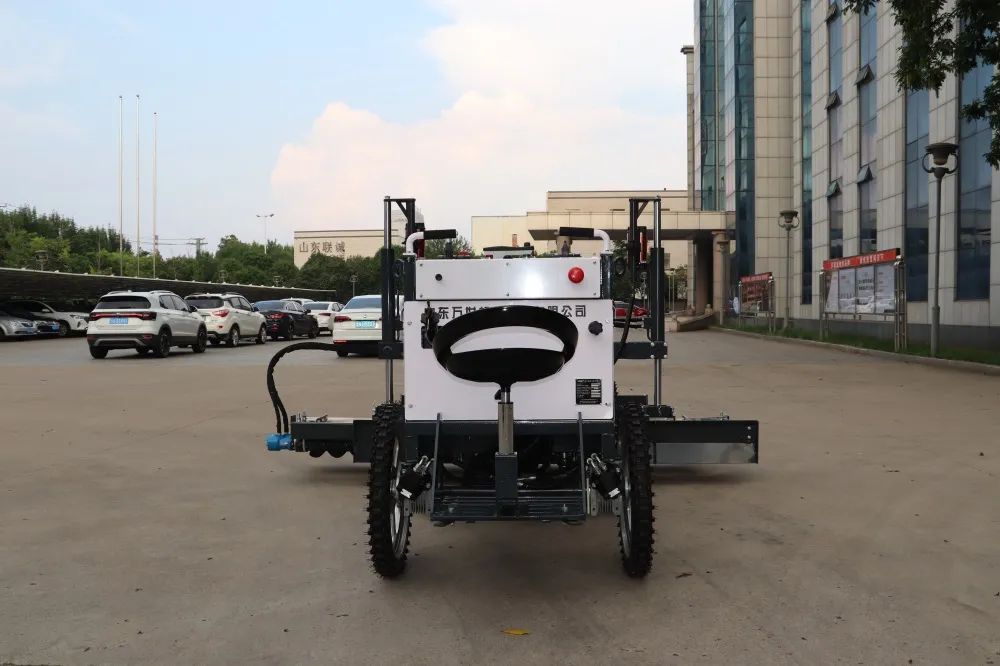
To sum up, concrete laser leveling has obvious advantages compared with other construction methods. It can not only improve construction efficiency and quality, but also improve economic benefits and production safety. With the continuous development and advancement of technology, the application prospects of concrete laser leveling machines will be broader. Therefore, when choosing a concrete construction method, the advantages and application conditions of concrete laser levelings should be fully considered in order to better meet construction needs and improve project quality.
Thanks to All the Friends Who Support and Trust Shandong Vanse Machinery Technology Co., Ltd.
If you want to know more about Shandong Vanse Machinery Technology Co., Ltd. or have any questions, please feel free to contact us:
Our Factory
Shandong Vanse Machinery Technology Co., Ltd.








Share this article

About the Author: Shandong Vanse Machinery Technology Co., Ltd.
Shandong Vanse Machinery Technology Co., Ltd. is a high-tech manufacturer specializing in concrete construction machinery, including laser screeds and related equipment. The company integrates R&D, production, and global sales, with products exported to over 60 countries and widely used in infrastructure projects worldwide.
Previous Post
Next Post
Related Articles
You Might Also Like
Compared with manual construction, laser leveling machine has obvious advantages
In recent years, not only the construction industry continues to grow, the price of labor is also rising, and the construction has put forward higher requirements for the quality of construction, so the laser leveling machine is rapidly popular in the construction, then, the use of laser leveling machine for concrete floor leveling construction compared with manual construction, what are the advantages? The following article makes some introductions for you, I hope you can be interested. 1, save labor: each laser leveling machine can save 7-8 people The use of manual concrete leveling construction, each team is composed of at least 15 people, the use of laser leveling machine for concrete leveling construction, each team is equipped with 8 people, according to the price of about 200-300 yuan per person per day to calculate, one equipment can save labor input of about 2000-3000 yuan. 2, improve the construction efficiency, shorten the construction period The laser leveling machine is used for construction, and the width of the leveling head is 2.5-3 meters. According to the normal driving speed of construction, 300-500 square meters can be constructed per hour, and 3000-5000 square meters can be constructed per shift. The use of manual construction, each shift is completed within 800 square meters, the same shift, the machine construction efficiency is about 5 times the manual construction efficiency, so it will greatly shorten the construction period, and do not need to repeatedly support the mold, saving construction costs. 3, the use of laser leveling machine leveling, greatly improve the quality of floor construction The original manual floor construction, the use of vibration pump, point vibration, often appear empty drum, cracking, leveling inaccurate problems, the construction quality is far lower than the machine construction quality. The use of laser leveling machine for concrete floor construction, the use of laser control leveling level, the use of motor 3000 times per minute, each 2000N (200KG) exciting force surface extrusion, greatly improve the density of concrete, enhance the construction quality. 1, look at the model; Mainly according to the construction site and area to choose the appropriate concrete laser levelling machine. 2, look at the use of the machine effect; The high quality concrete laser levelling machine has stable effect. 3, leveling speed; High quality laser levelers are fast. 4, leveling accuracy requirements; High quality concrete laser levelling machine leveling accuracy is higher. 5, the technical strength of laser leveling machine manufacturers directly affects the quality of equipment. 6, look at security; In the selection of concrete laser levelling machine, but also fully consider the braking performance of the concrete laser levelling machine, operation safety. Based on the above, it is not difficult to see that the use of laser levelling machine to replace the original manual construction in the construction process of concrete floor not only has the characteristics of saving labor and improving construction efficiency, but also can improve the construction quality, and has been favored by the industry. Thank you for your reading and support.What is the impact of the compaction effect of the concrete power trowel on the durability of the ground?
– Principle: Good compaction makes the concrete surface denser. When the internal pores of concrete are reduced and the particles are more tightly bound, the ground can better resist wear when subjected to external forces such as friction, pedestrians walking or vehicles driving. For example, in places such as factory workshops or parking lots, fully compacted concrete floors can effectively reduce the damage caused by friction of vehicle tires and scratches of cargo handling equipment. – Comparative case: In two similar parking lot floors, one is well compacted by a trowel and the other is poorly compacted. After a period of use, the poorly compacted floor may show sanding and surface peeling, while the well-compacted floor still maintains good integrity and has significantly lower wear. – Principle: Concrete with good compaction has low internal porosity, forming a relatively continuous structure that can effectively prevent the penetration of moisture, chemicals, etc. Moisture is one of the key factors affecting the durability of concrete, which may cause problems such as steel corrosion and concrete freeze-thaw damage. For example, on the concrete surface of hydraulic structures, good compaction can prevent water from penetrating and protect the internal concrete structure from water erosion. – Experimental data support: Through experimental tests, concrete specimens with low porosity (such as less than 8%) after compaction have a significantly higher impermeability grade (such as reaching P8 or above) than specimens with high porosity. This means that concrete with good compaction effect can better resist the invasion of external moisture, thereby improving the durability of the ground. – Principle: During the solidification process, fully compacted concrete can reduce the possibility of cracks due to uneven shrinkage due to more uniform internal stress distribution. Concrete will shrink in volume during the hardening process. If the internal structure is uneven, cracks are likely to form in weak parts. For example, in large-area concrete floor construction, good compaction can make the strength and stiffness of each part of the concrete closer, reducing the risk of cracks due to shrinkage differences. – Actual application scenarios: In the floor panels of buildings or road pavements, poorly compacted concrete is more likely to crack early, which will become channels for moisture and harmful chemicals to enter the concrete, accelerating the damage of the concrete. Well-compacted ground can maintain the integrity of the structure and extend its service life. – Principle: The dense concrete structure can prevent the intrusion of chemicals (such as acid rain, industrial wastewater, deicing salt, etc.). When the pores on the concrete surface are reduced, it is difficult for chemicals to penetrate into the interior, thereby reducing the damage to the concrete caused by chemical reactions. For example, on roads using deicing salt in winter, concrete pavements with good compaction can reduce the penetration of chloride ions in the deicing salt and reduce the risk of corrosion to the steel bars inside the concrete. – Long-term effect observation: In environments with more exposure to chemicals such as chemical parks, long-term observations of ground durability have found that well-compacted concrete floors can maintain good performance over many years of use, while poorly compacted floors may experience surface corrosion and peeling in a relatively short period of time.Flooring construction mainstay – telescopic arm type concrete laser leveling machine
Nowadays, when it comes to flooring, we all know that laser leveling machine, large Telescopic Arm Type Concrete Laser leveling machine adopts advanced laser scanning control system to strictly control the construction accuracy error, the width of the leveling plate is 4.0m, the arm length can be telescoped to 6m, and the leveling head adopts 360° rotation, which is applied for large construction environment. That is to improve the construction efficiency, and improve the levelness and compactness of the ground. It ensures less cracks in the later concrete ground, thus reducing the repair cost of the later ground. In today's flooring construction gradually replace the application of manual and small laser leveling machine, become the main force of the new era of flooring. Advantageous features of Vanse Ares Concrete Laser leveling machine: 1, 360 degree telescopic arm up to 6 meters long, fast and efficient rotating platform, the leveling head can rotate and swing, and it can finish the leveling of 24 square meters of concrete each time. With the newly designed eccentric vibrating beam and 4.15m super long scraper, the construction speed is fast, the construction effect is super flat without construction joints, and the work head lifting cylinder stroke is large, fully applicable to bridge operation. 2, Four hydraulic support legs can realize one-touch lifting in just 3 seconds, electric operation longitudinal rod control steering, driving, telescopic arm and rotation, as well as one-touch out of staging mode. 3, Added two-speed anti-skid valve set, the speed can be fast or slow, and can prevent the single wheel from slipping when unable to walk; tires are larger, wider, more stable, large tread pattern, not easy to slip. 4, the United States imported engine, 4 wheel hydraulic drive, laser control system, automatic head rotation, electrical diagnosis, double ramp launcher. 5, the upper frame storage space, 4-wheel steering, 2-wheel steering, can crab walk and rotate in place, color large operation display. 6, Large color LCD display can show the number of engine revolutions, parameters, alarm failure, etc. 7, Flexible and efficient hydraulic system can control the height of the scraper and fabric spiral, keep the leveling layer flatness, and have higher advantages in construction efficiency and ground leveling. 8, Three years warranty, and two visits per year, free maintenance for life, the world's customers no worries.